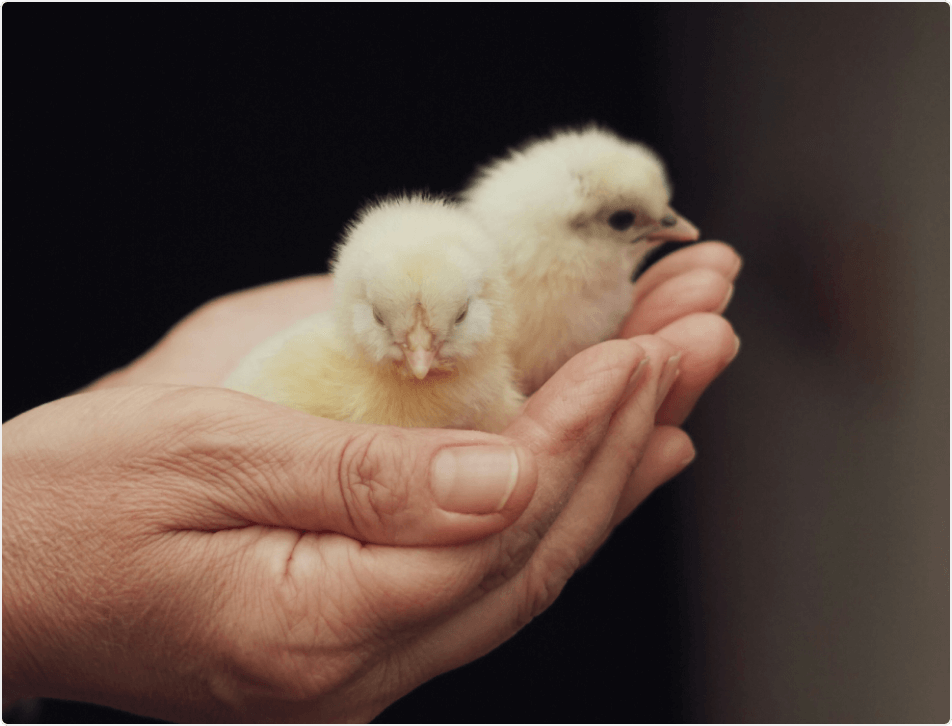
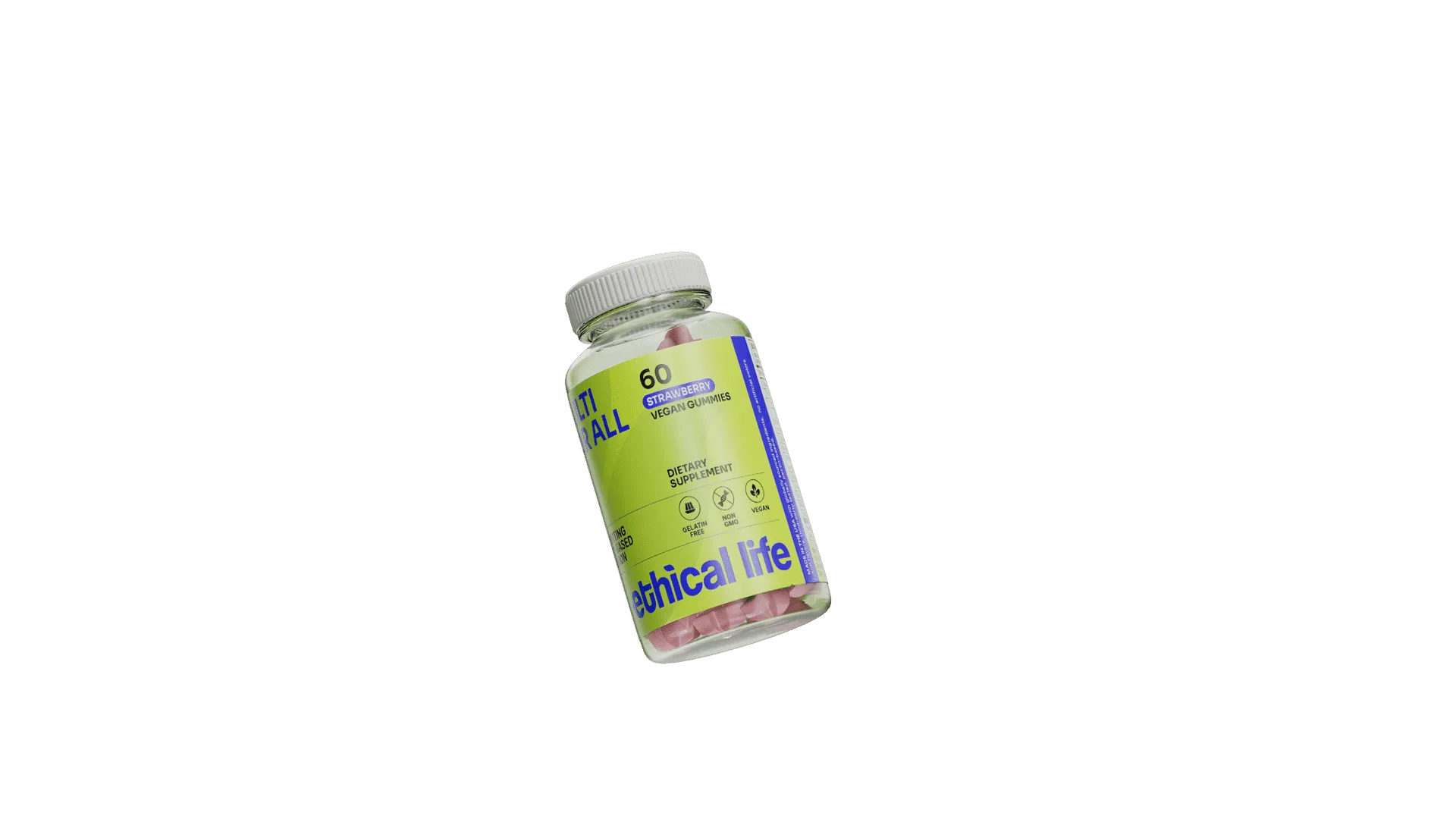
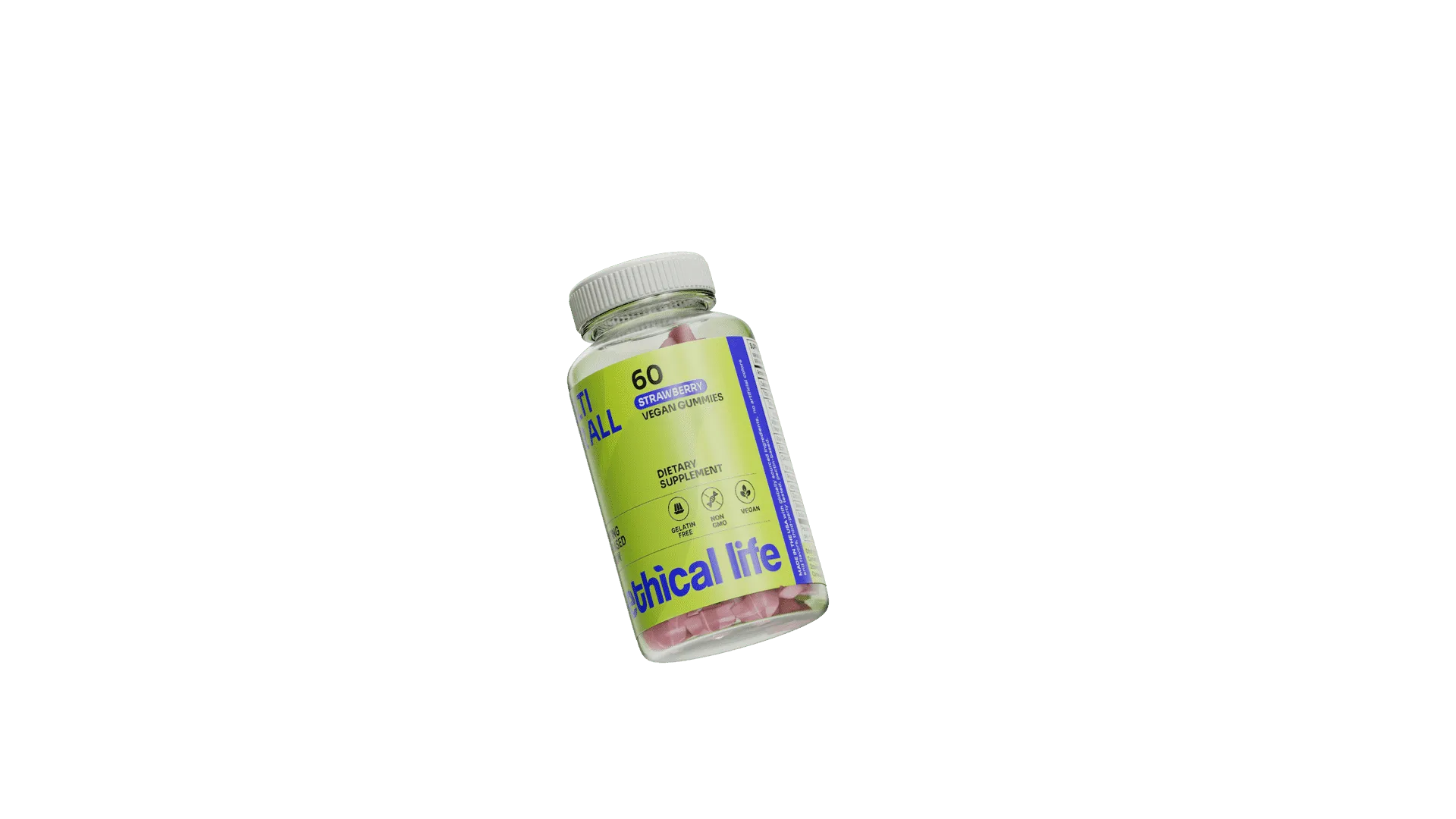
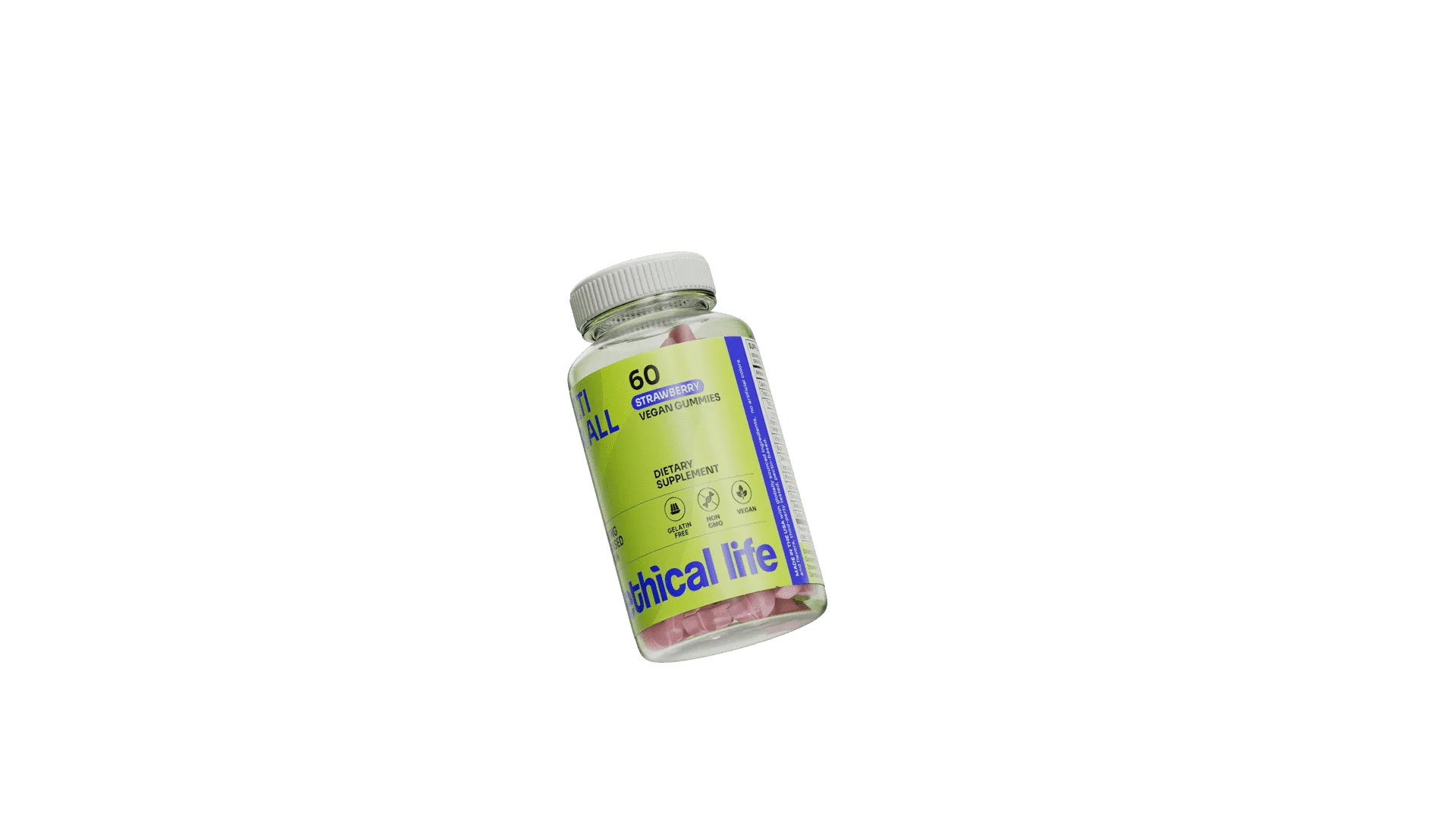
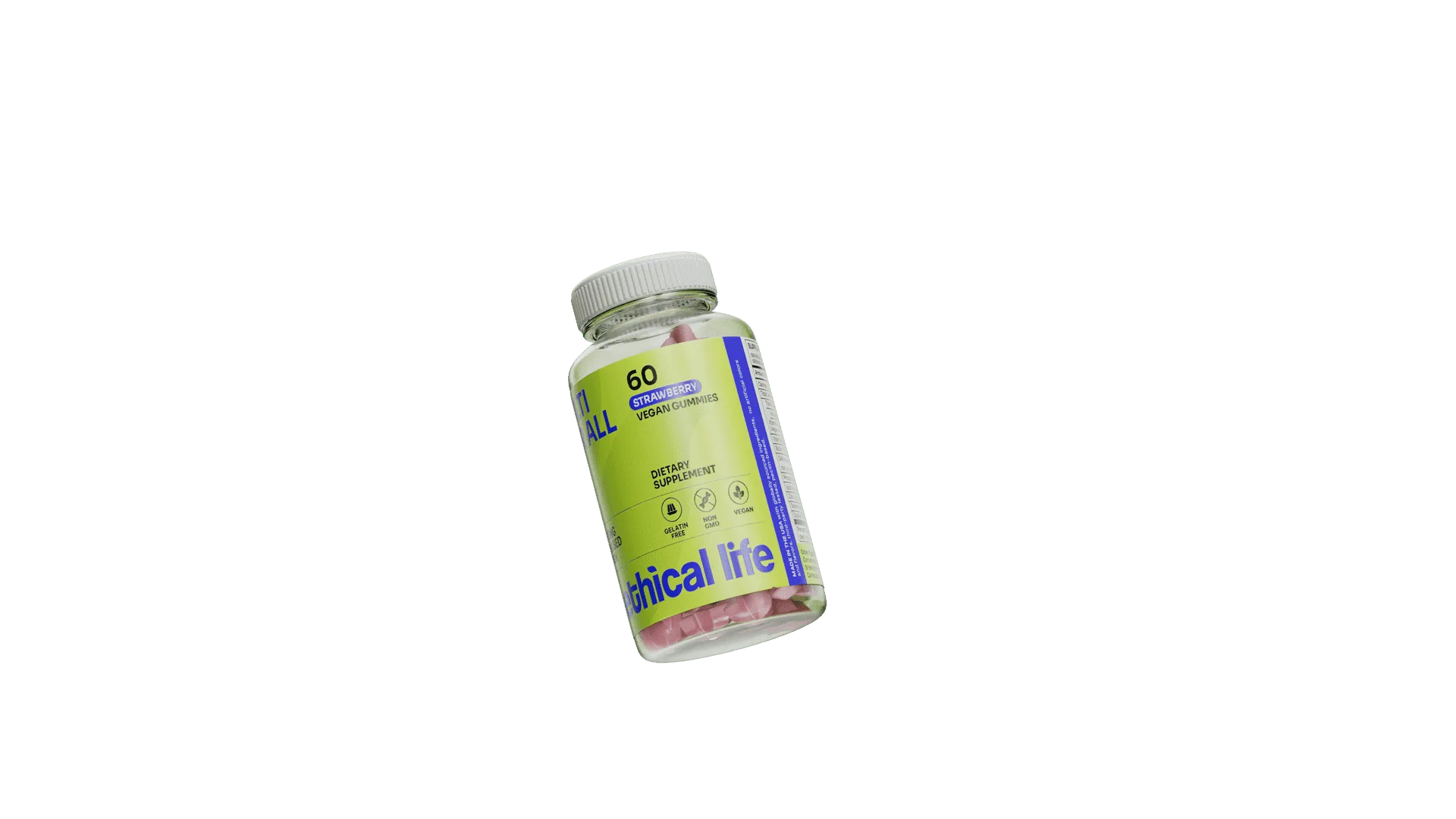
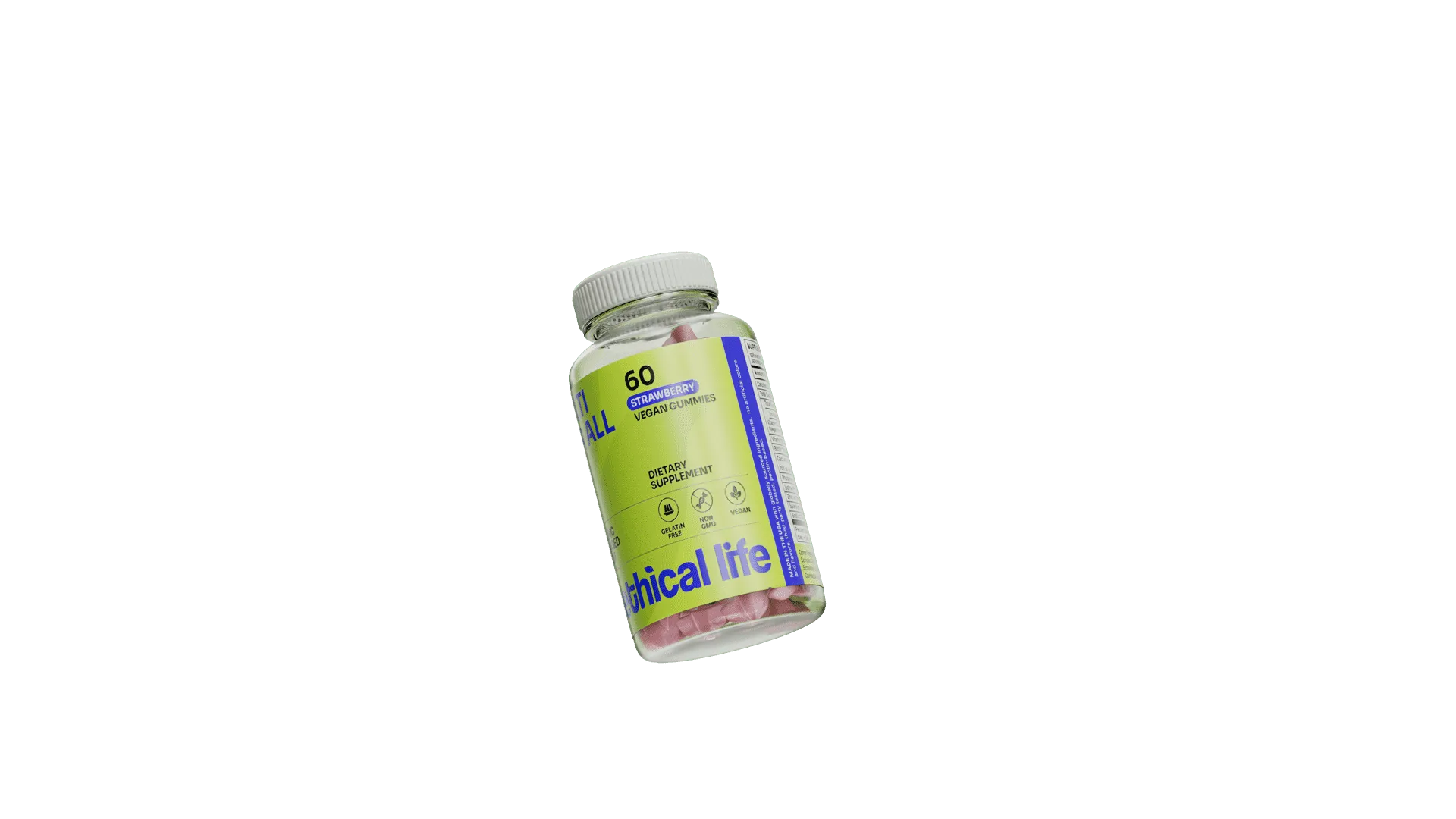
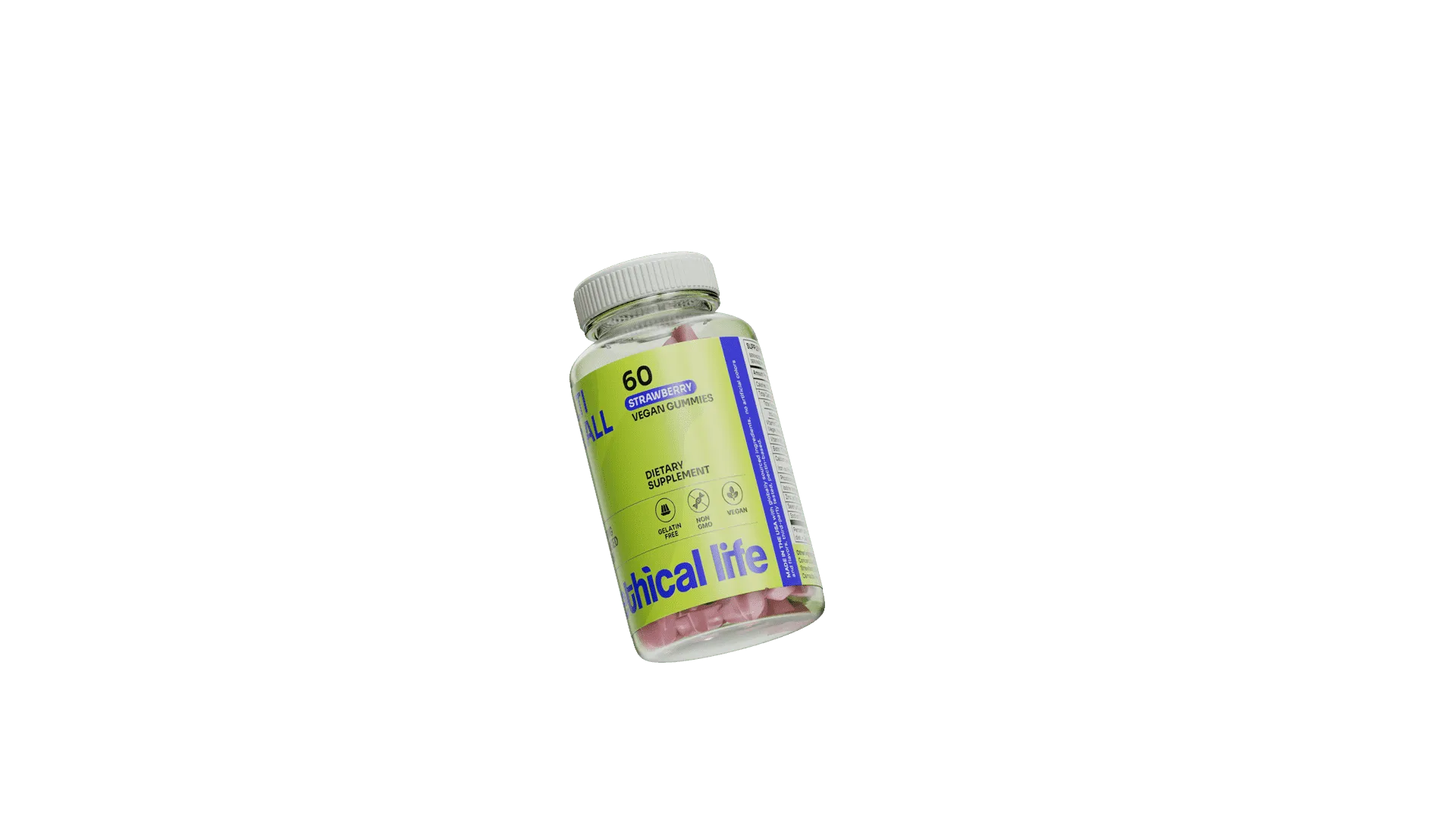
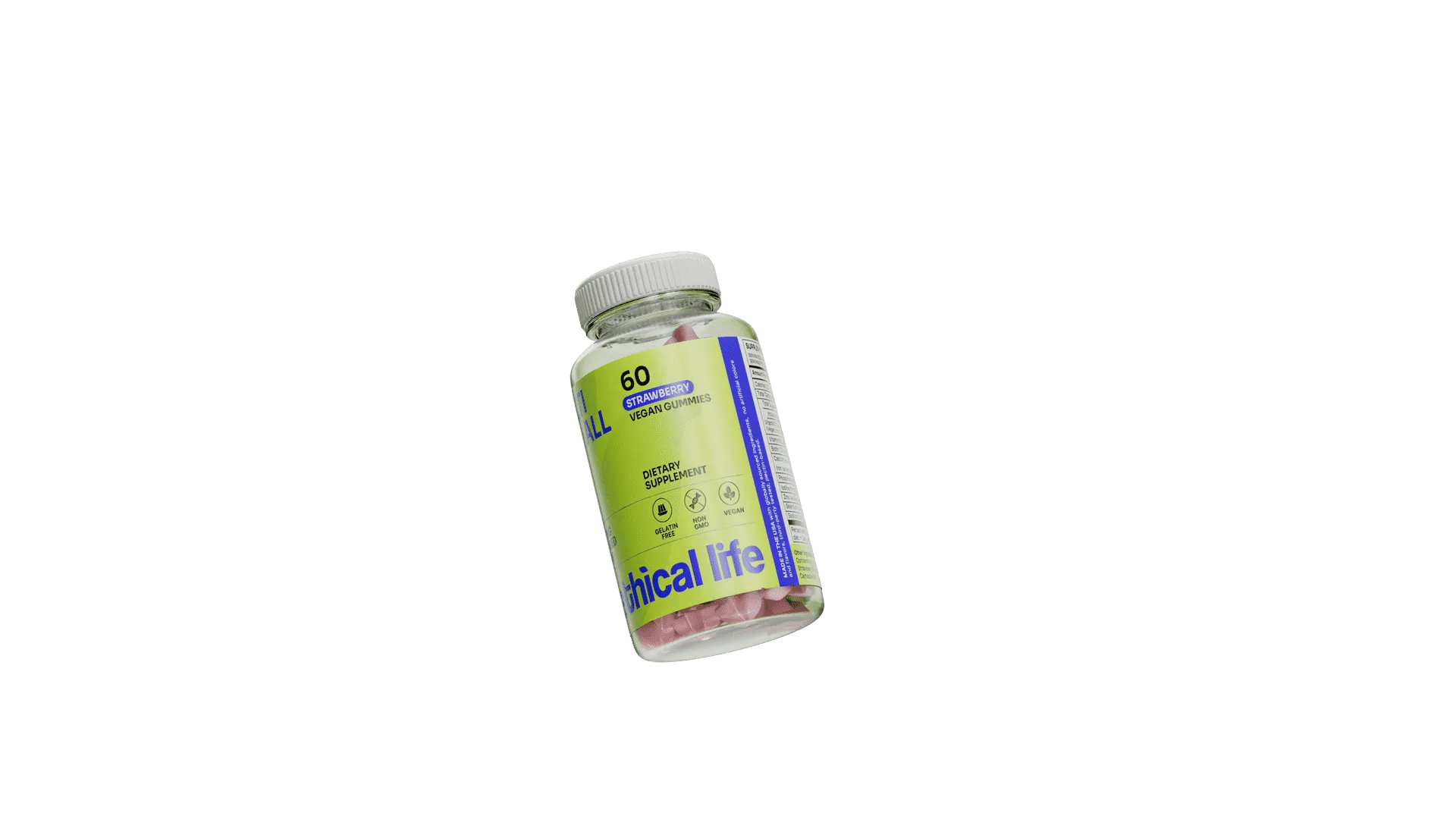
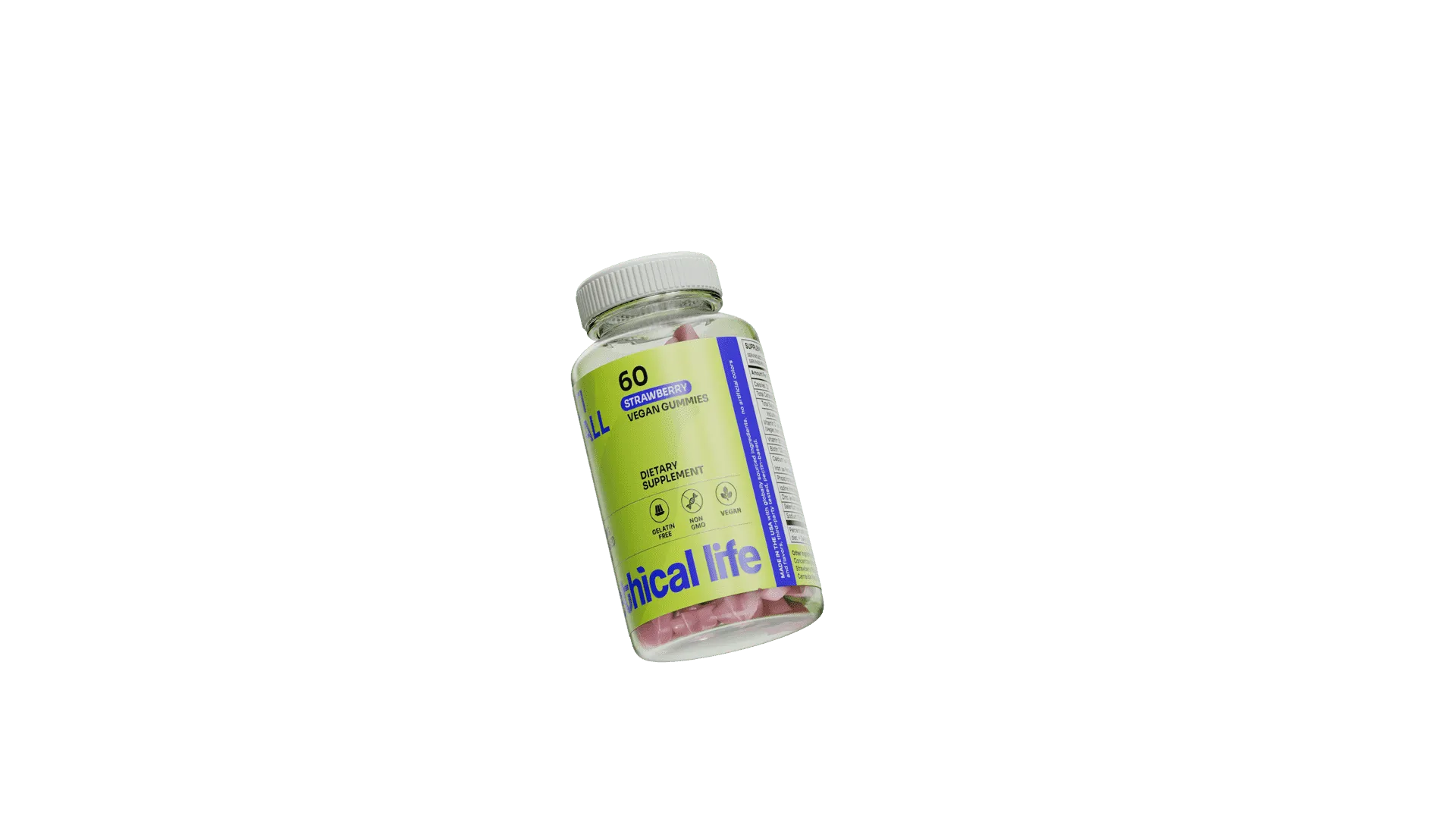
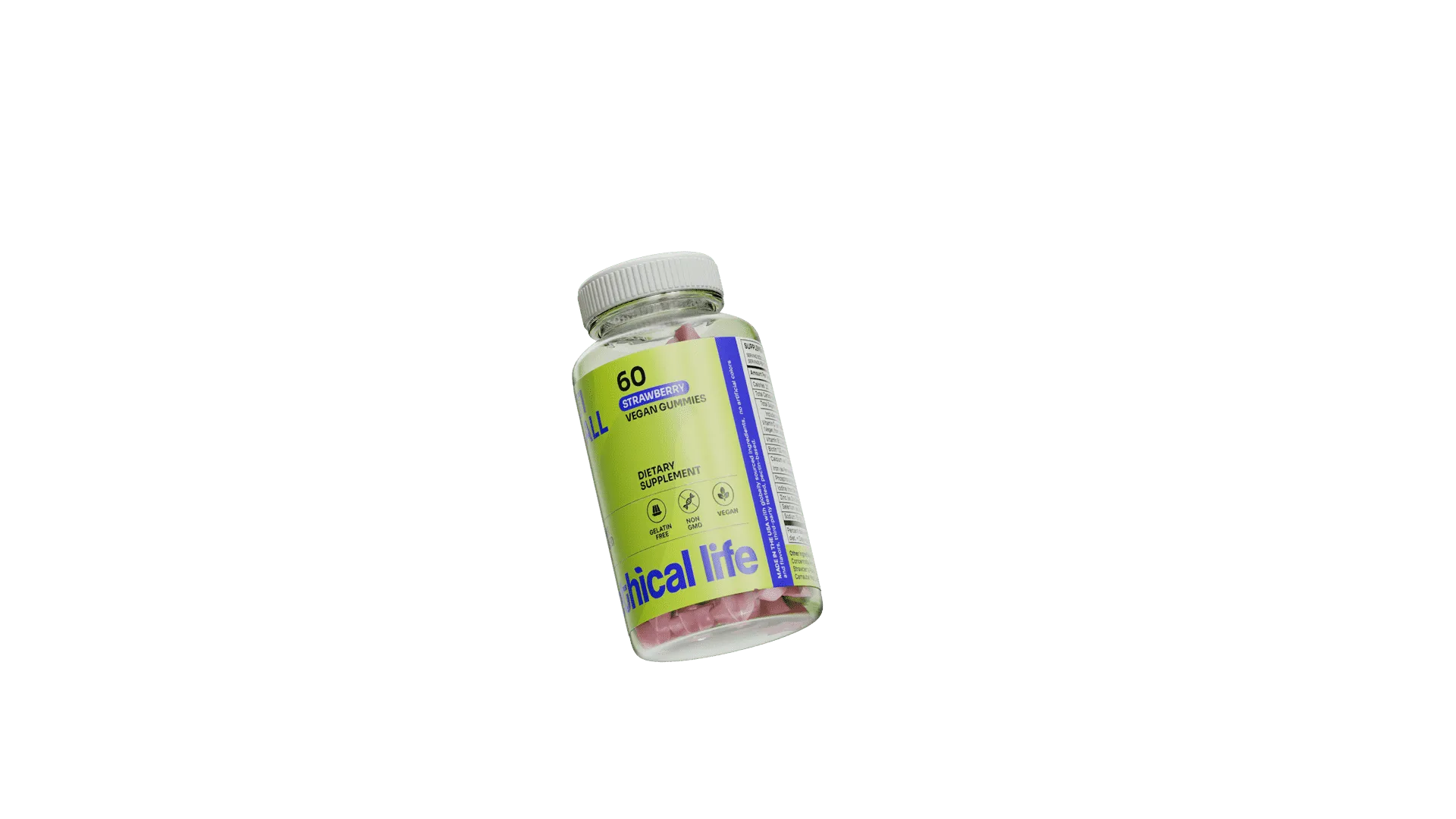
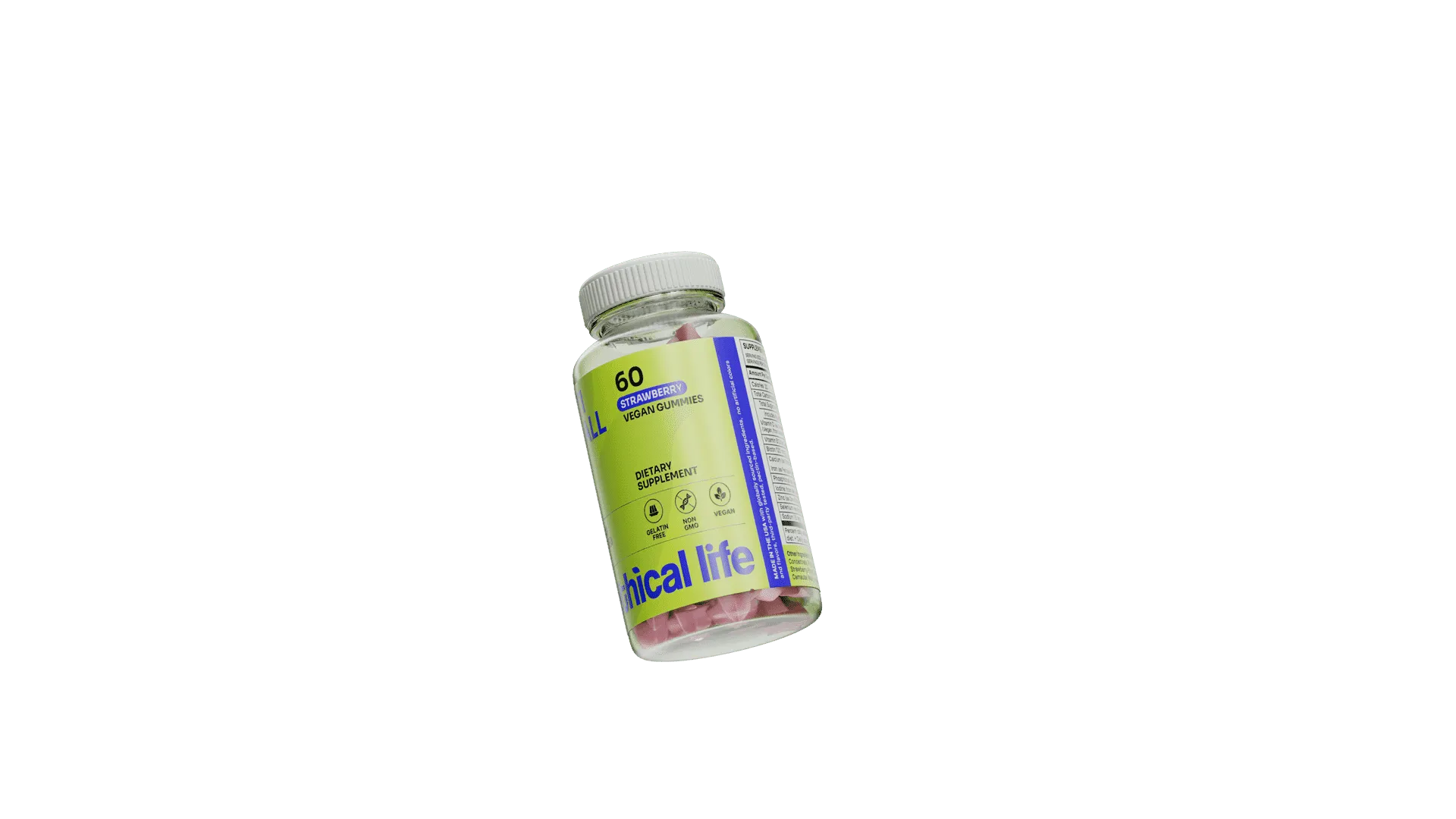
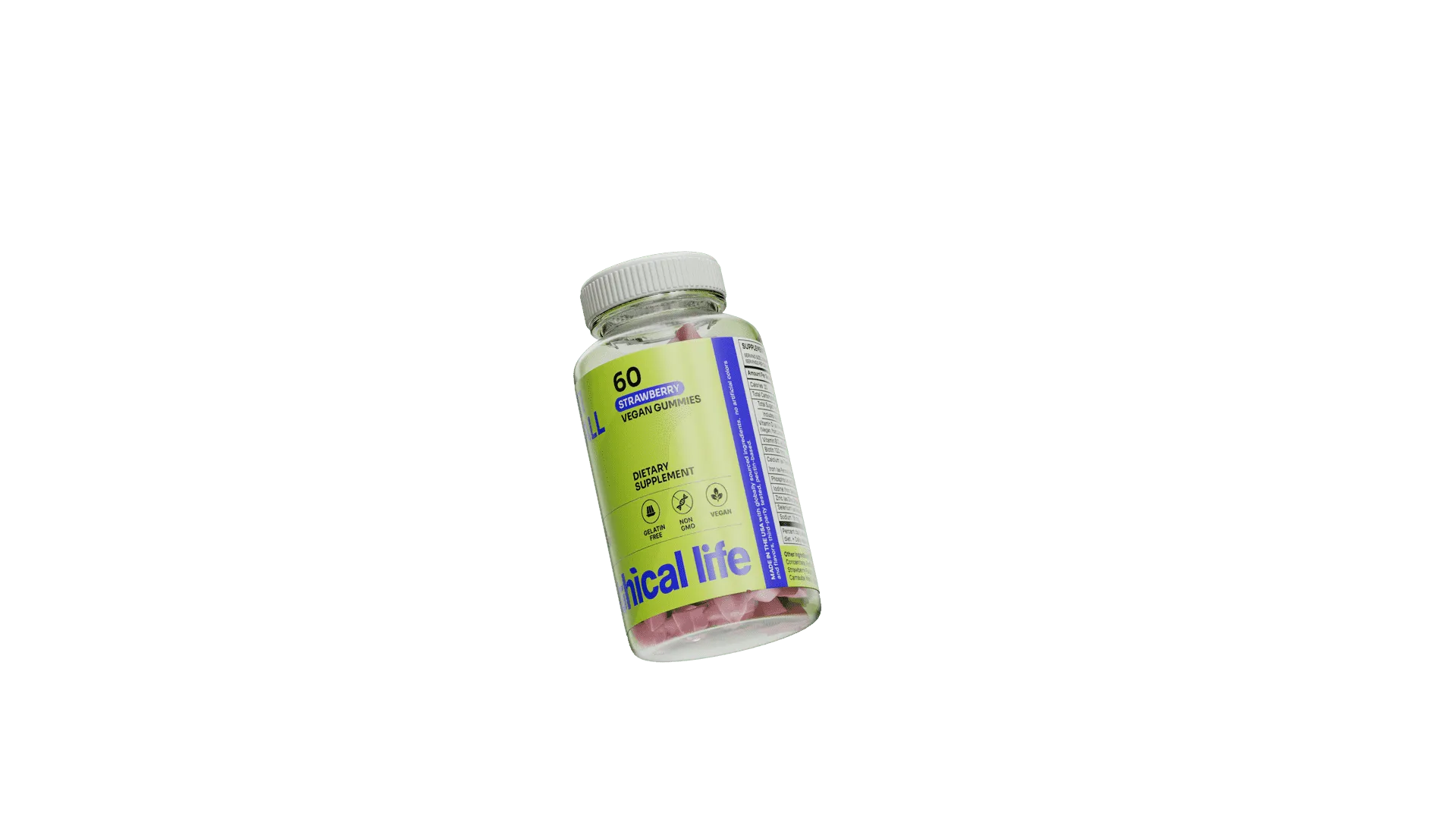
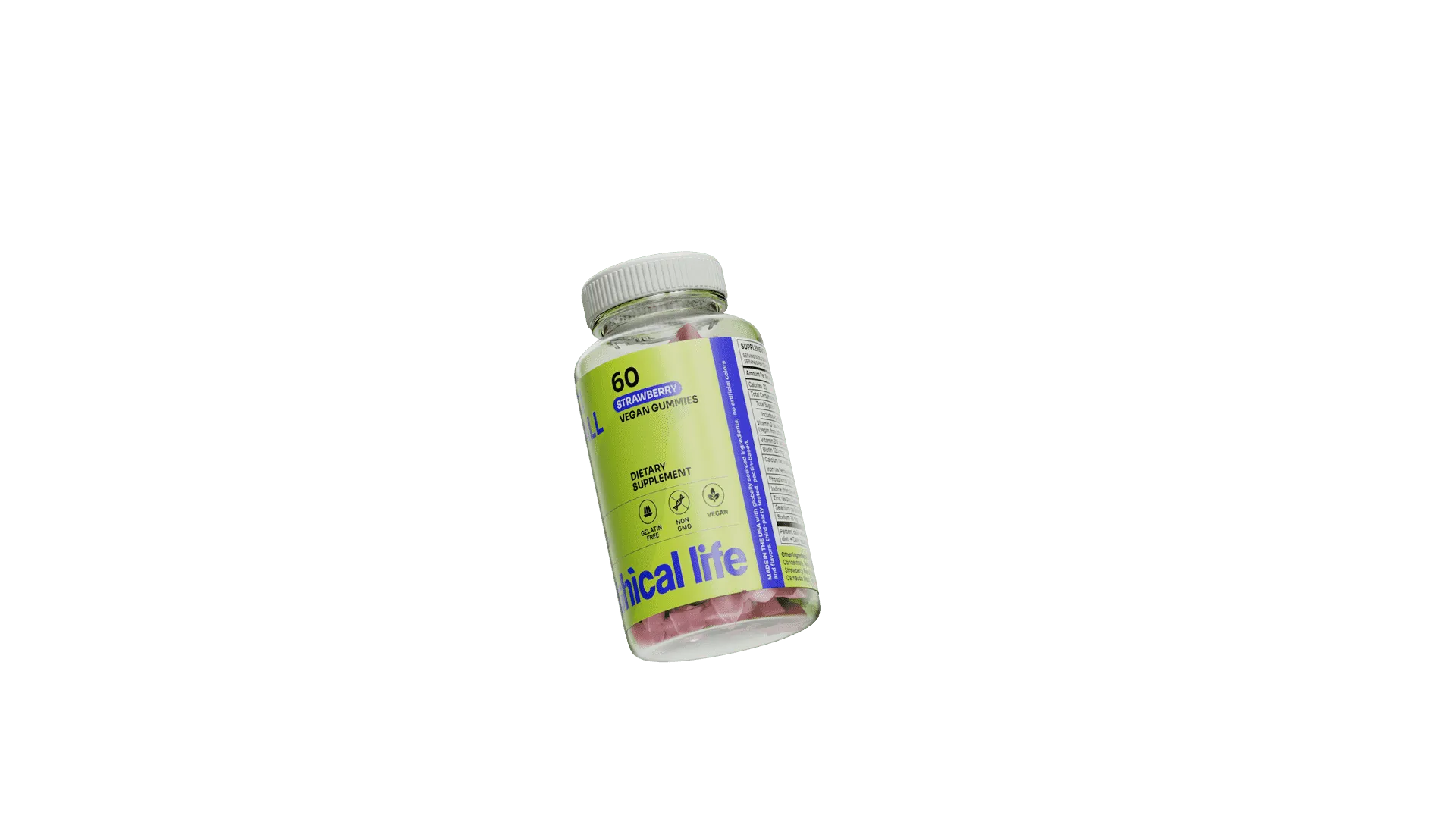
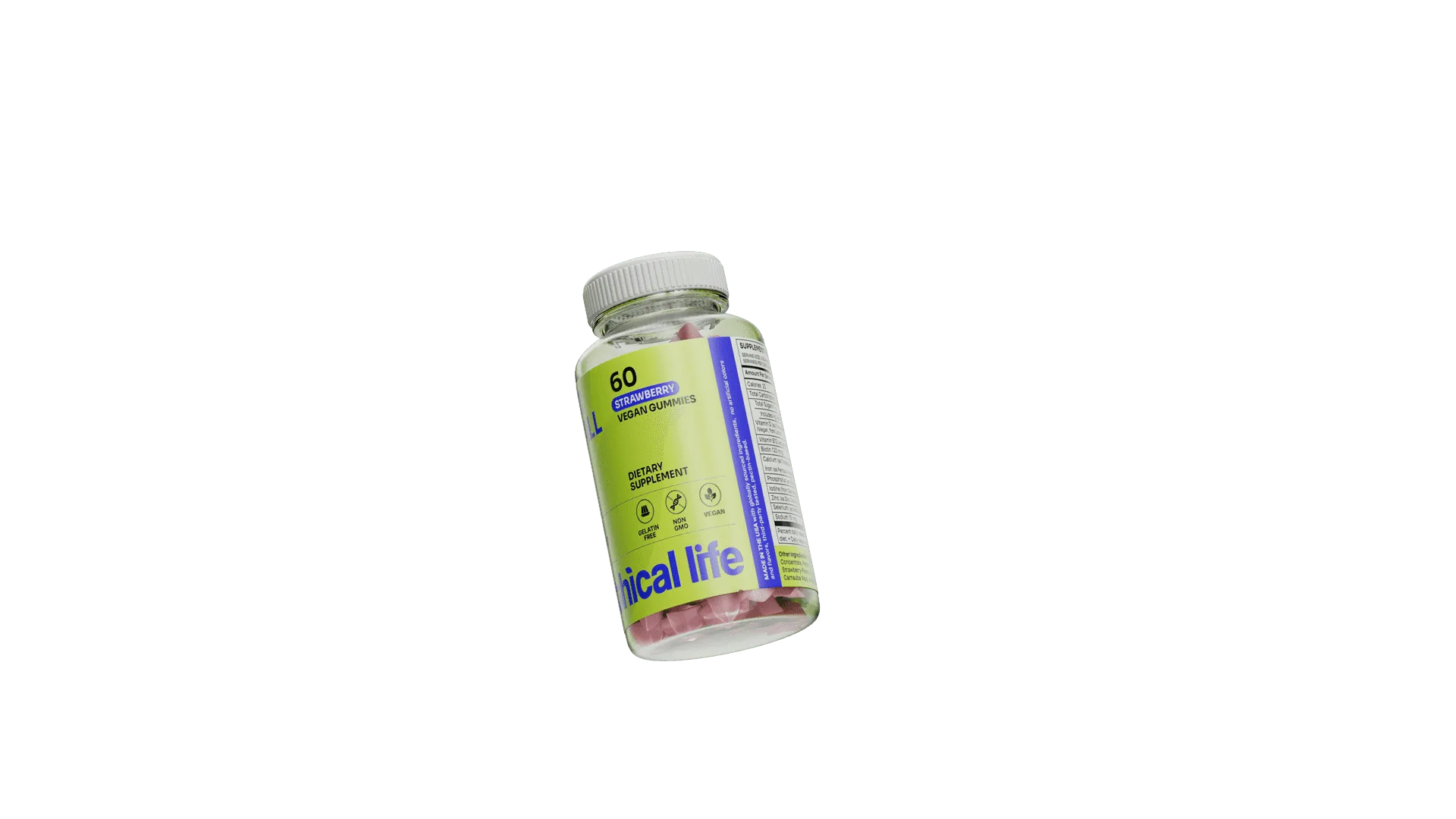
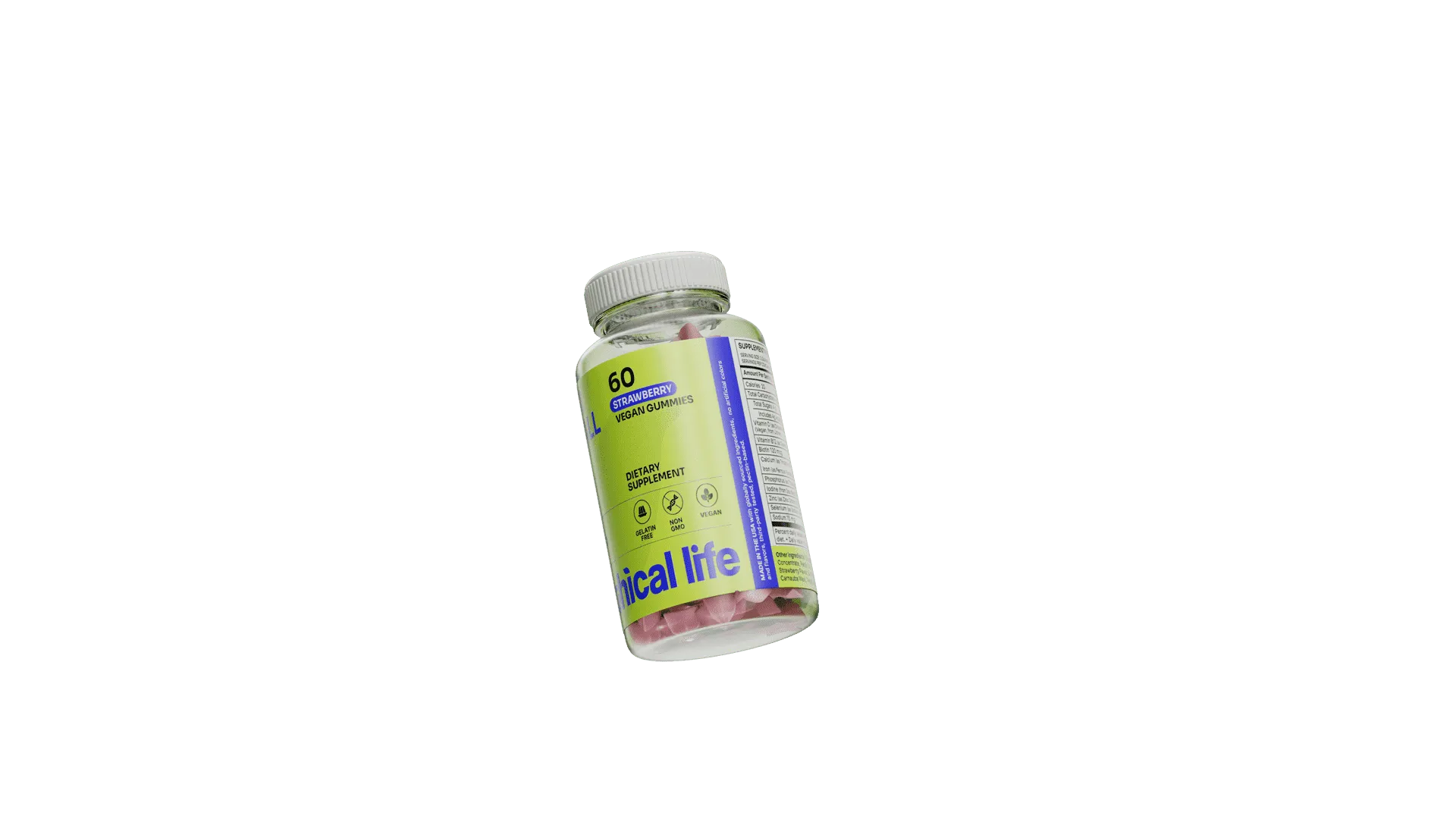
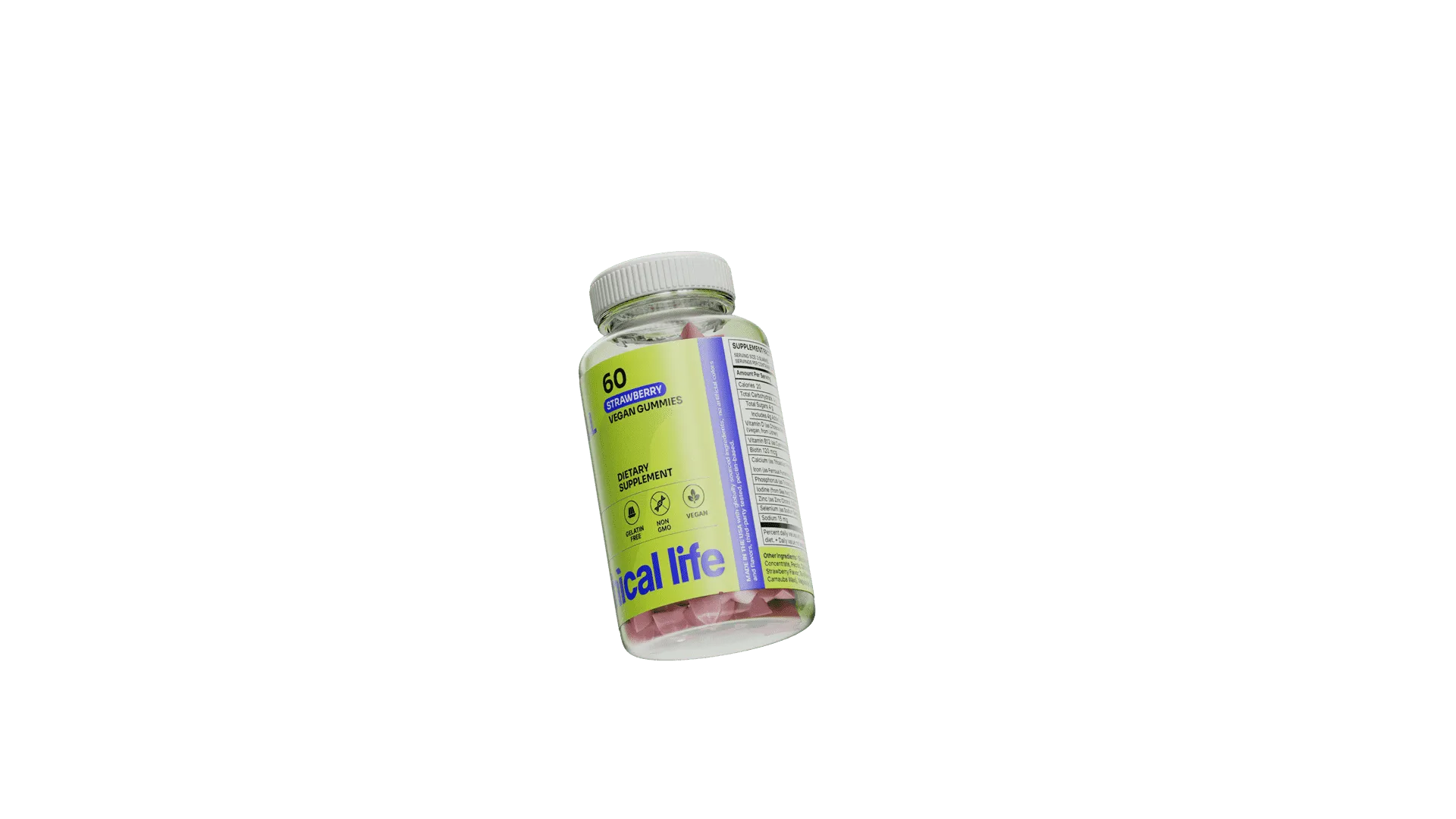
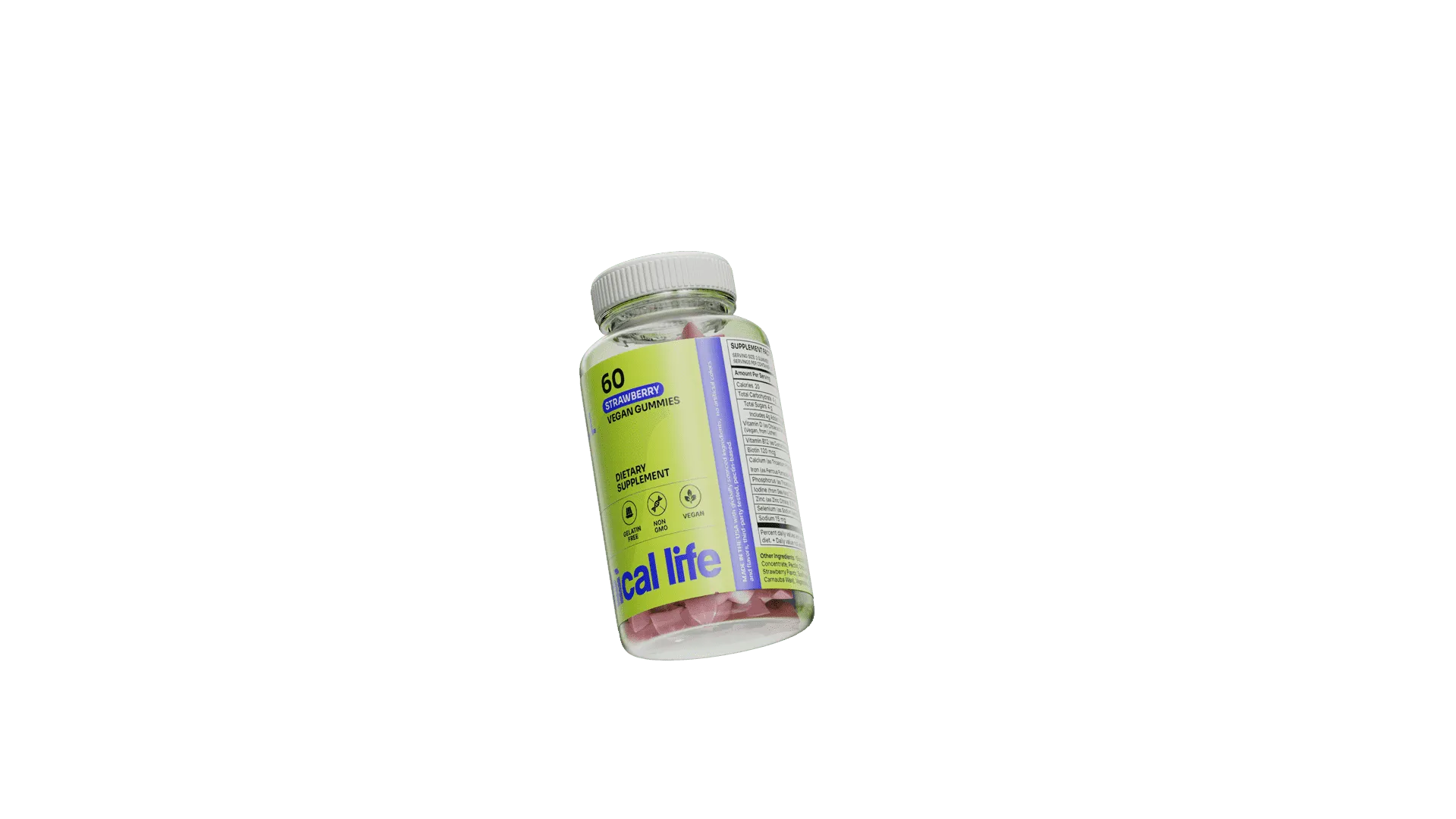
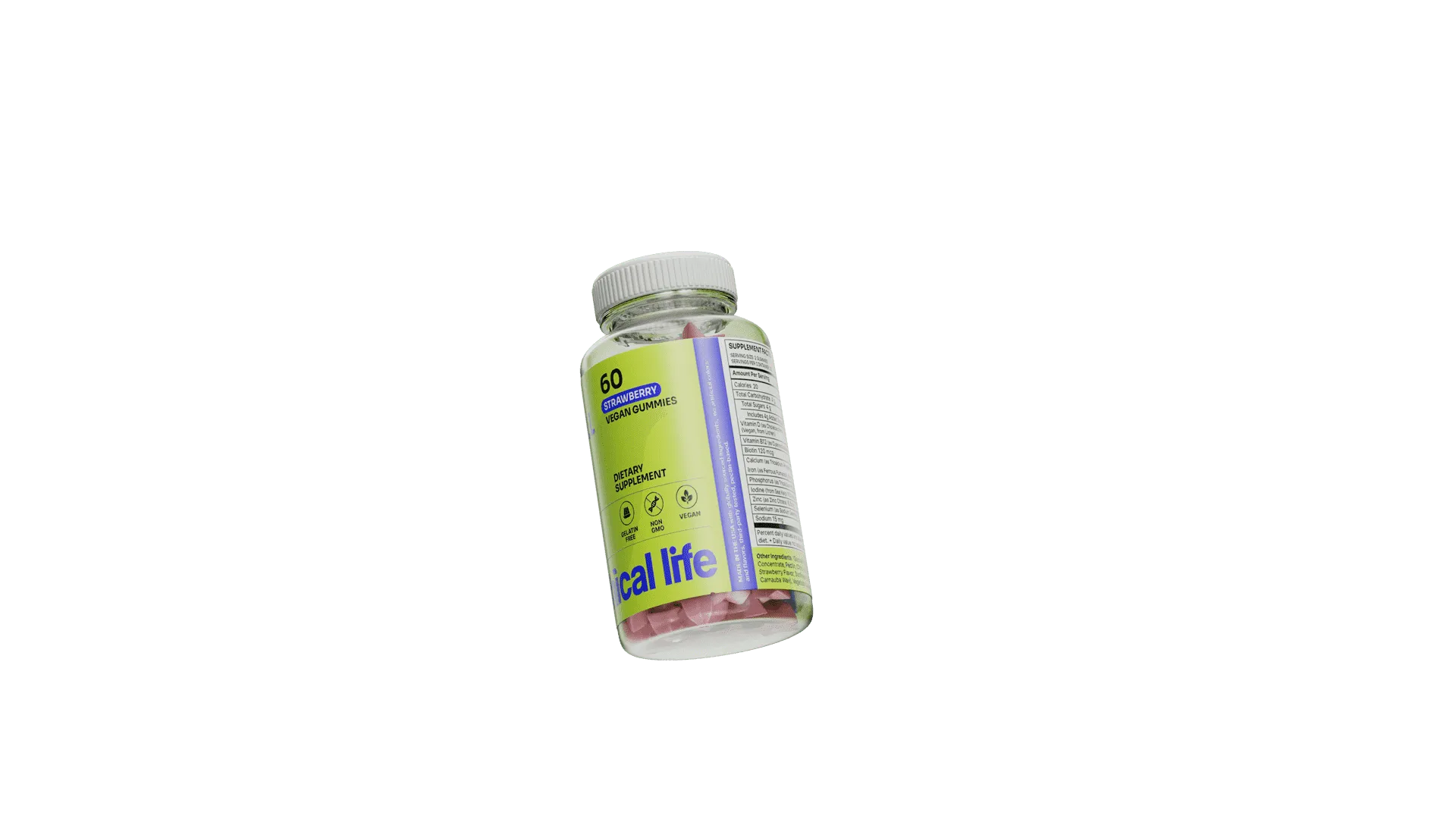
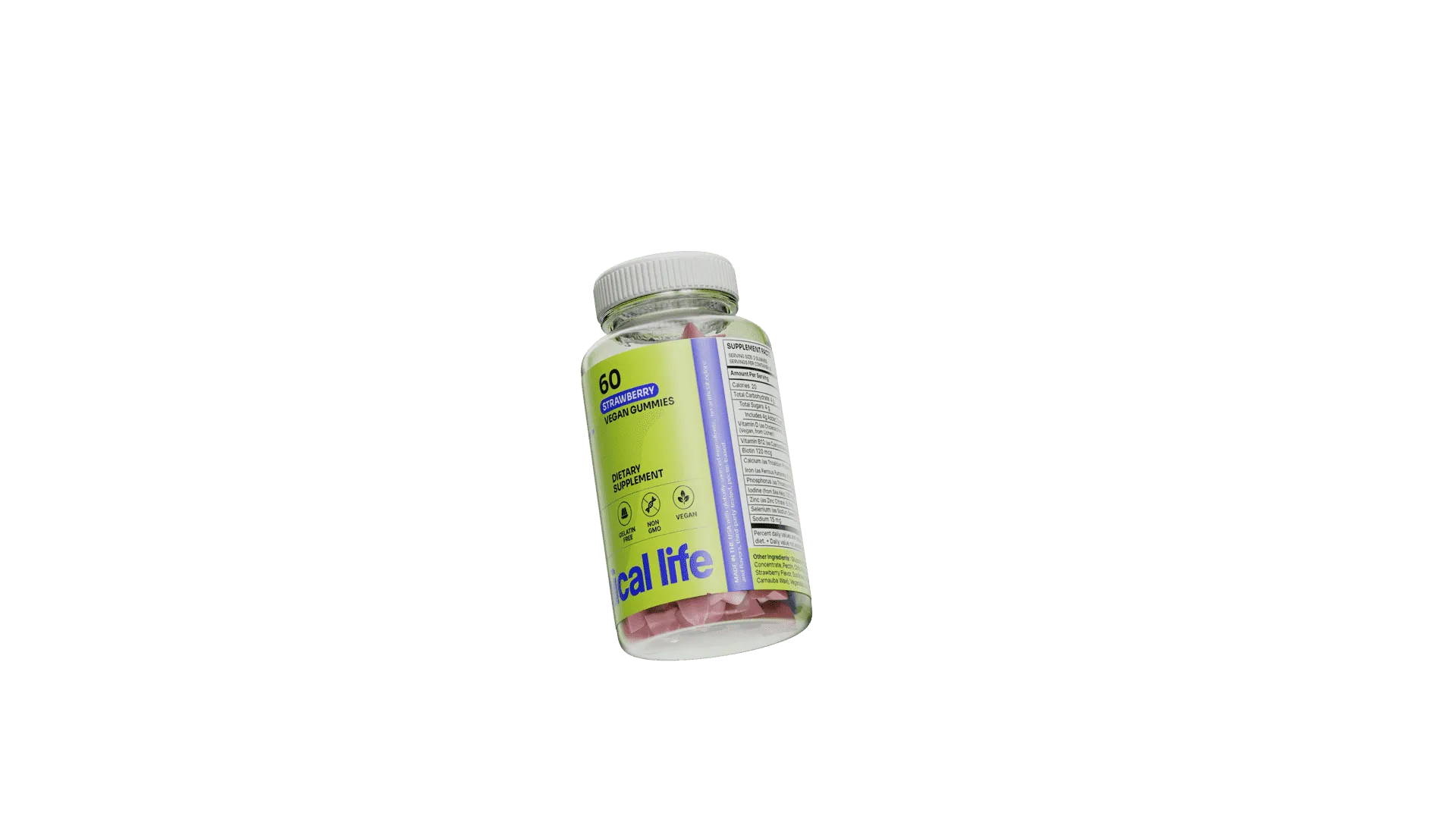
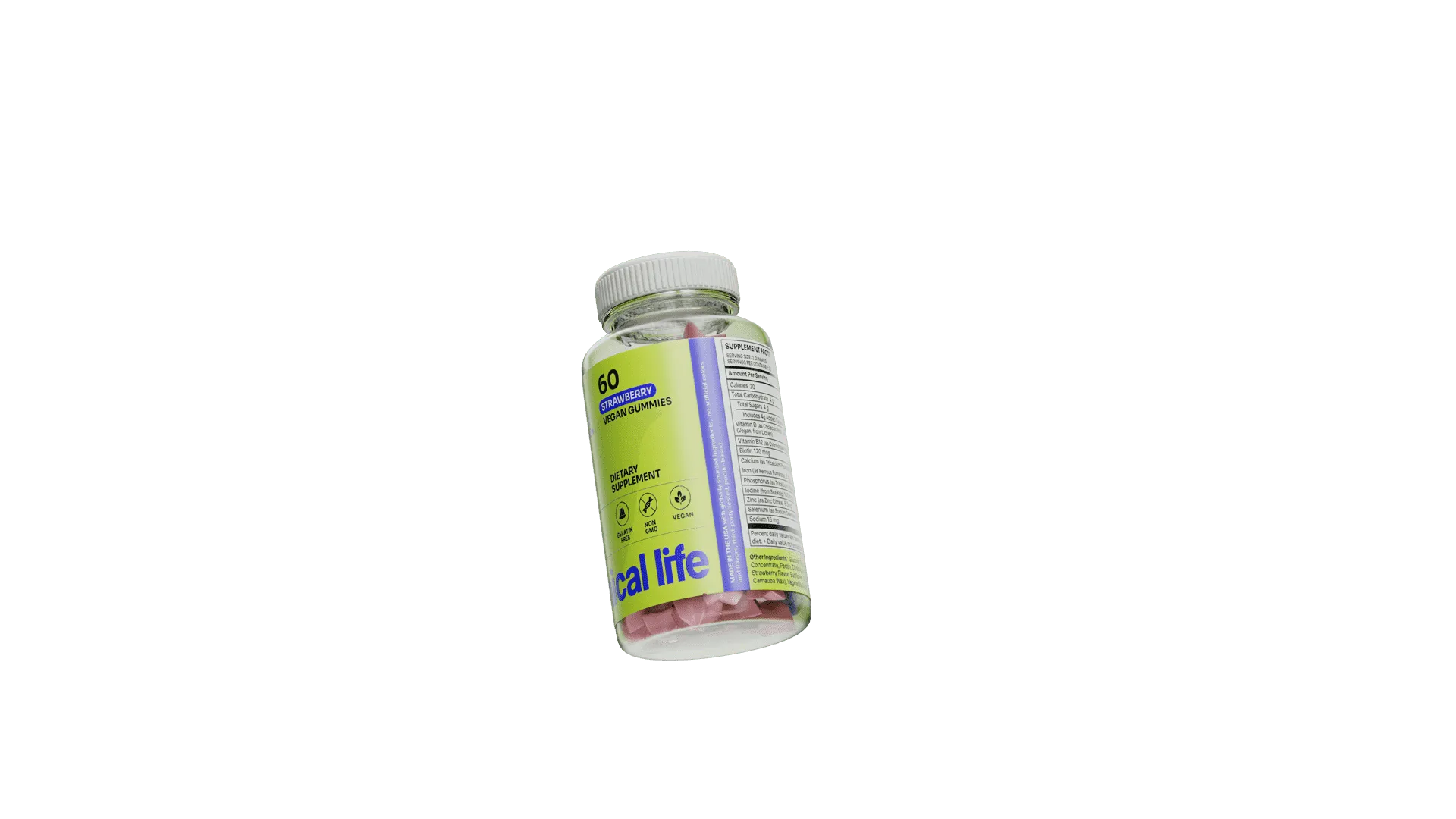
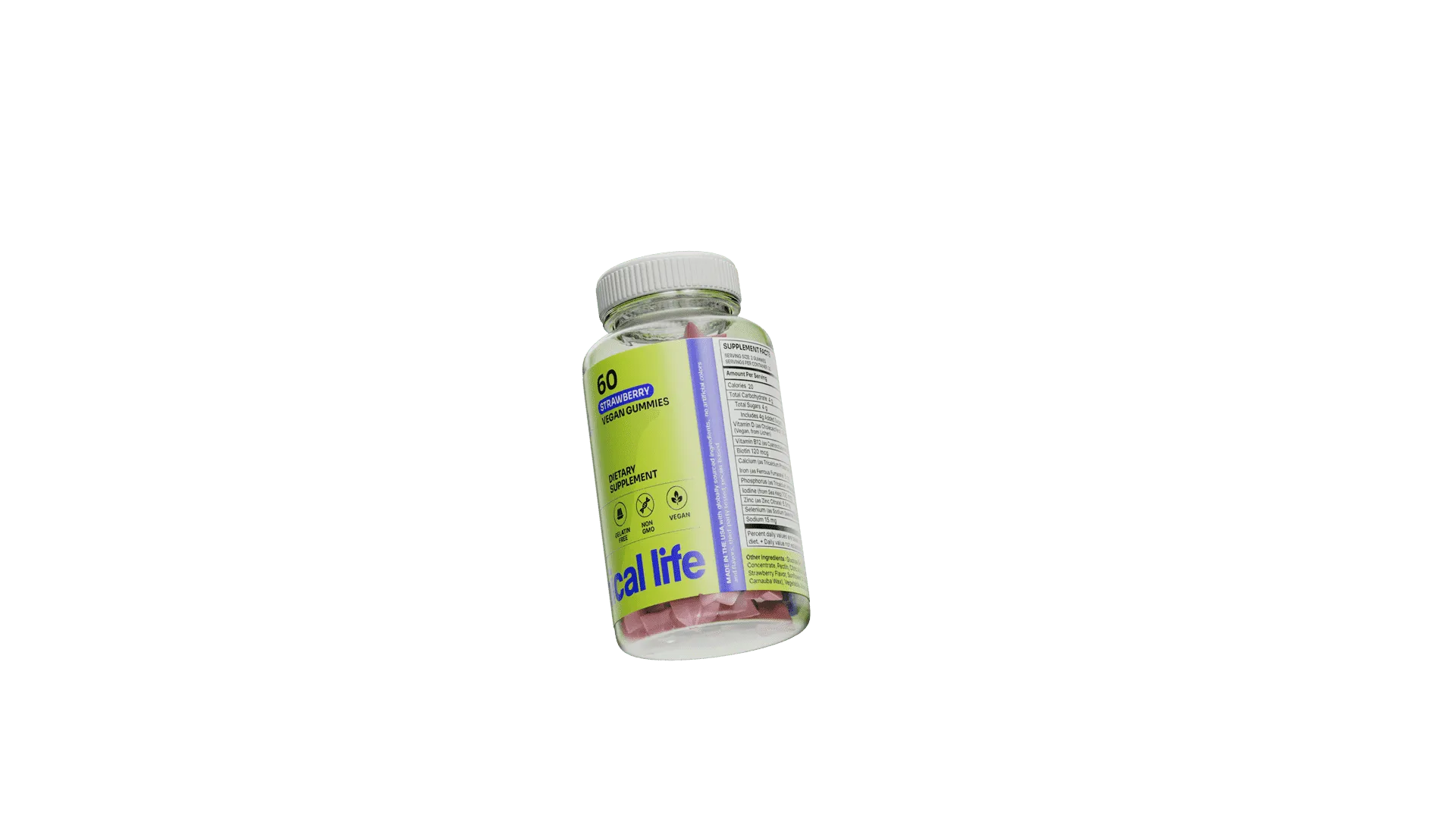
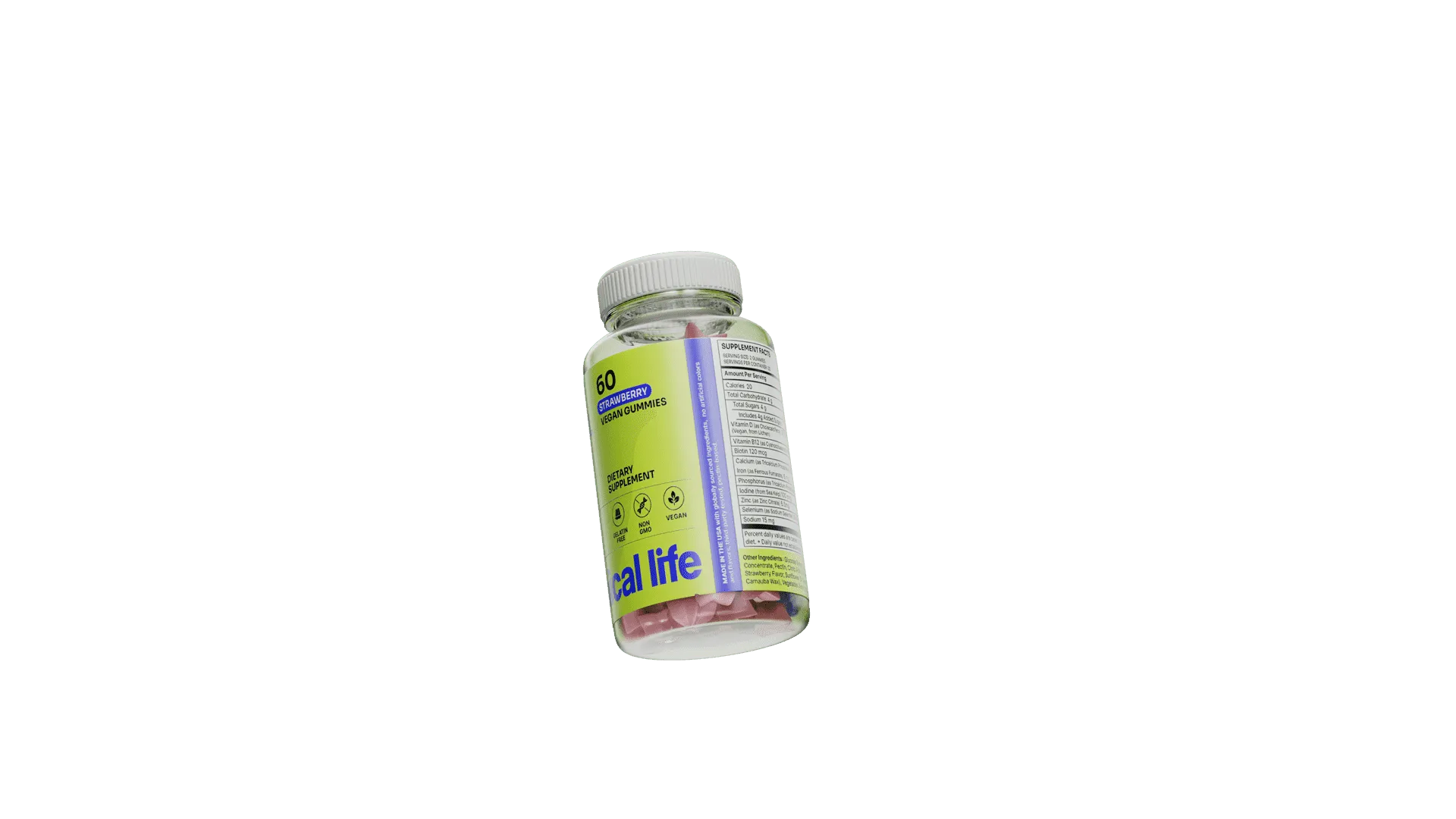
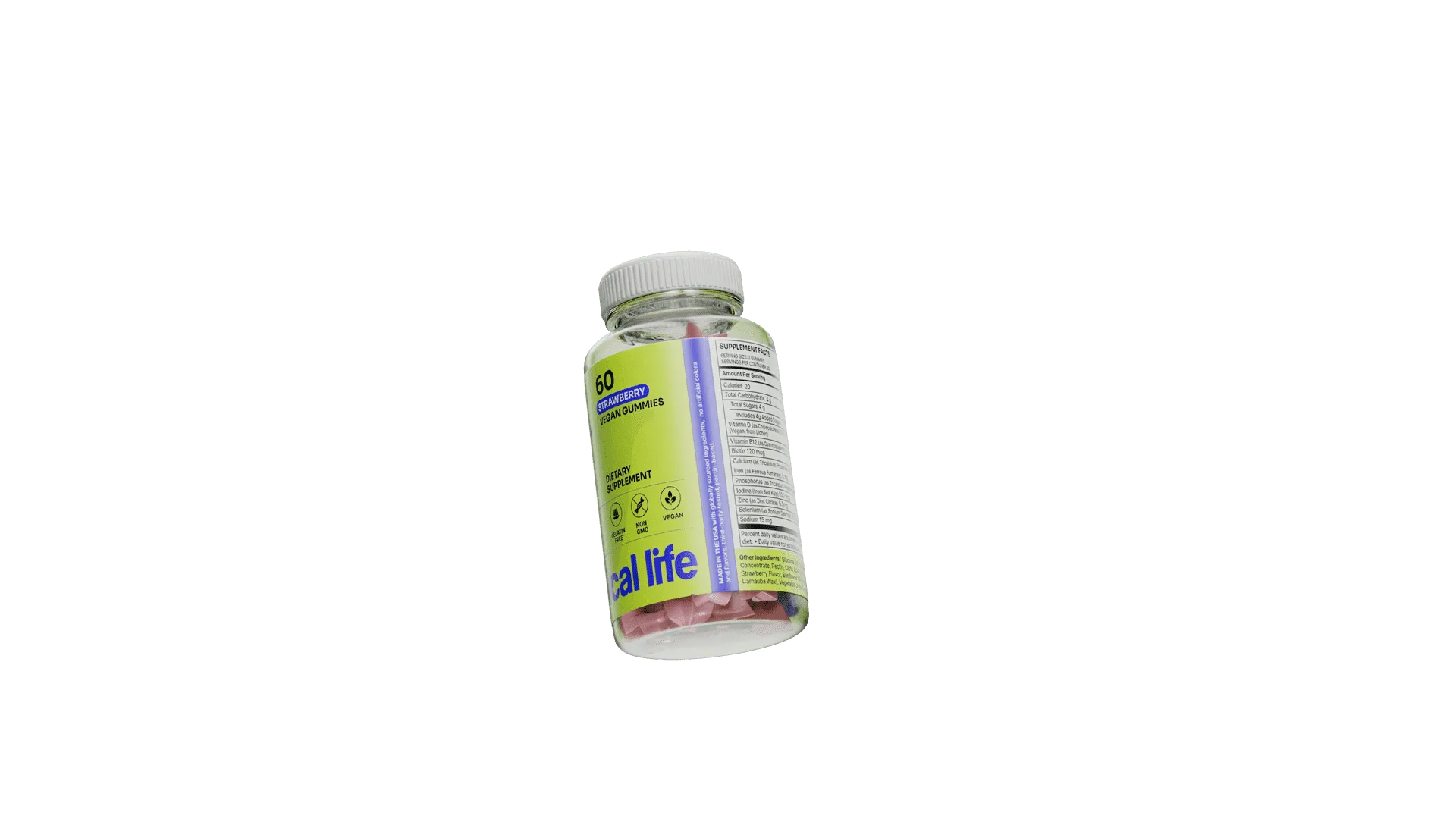
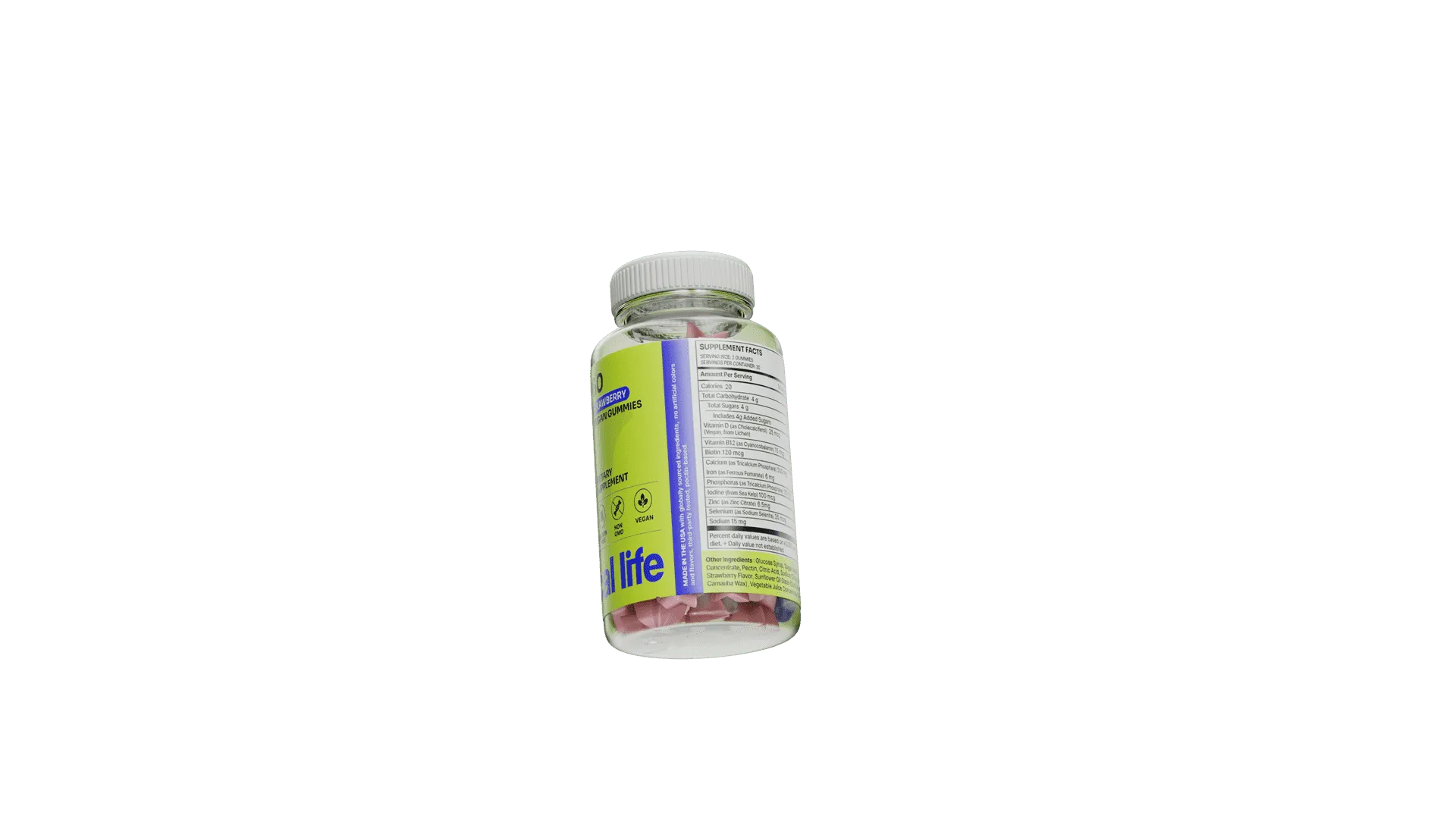
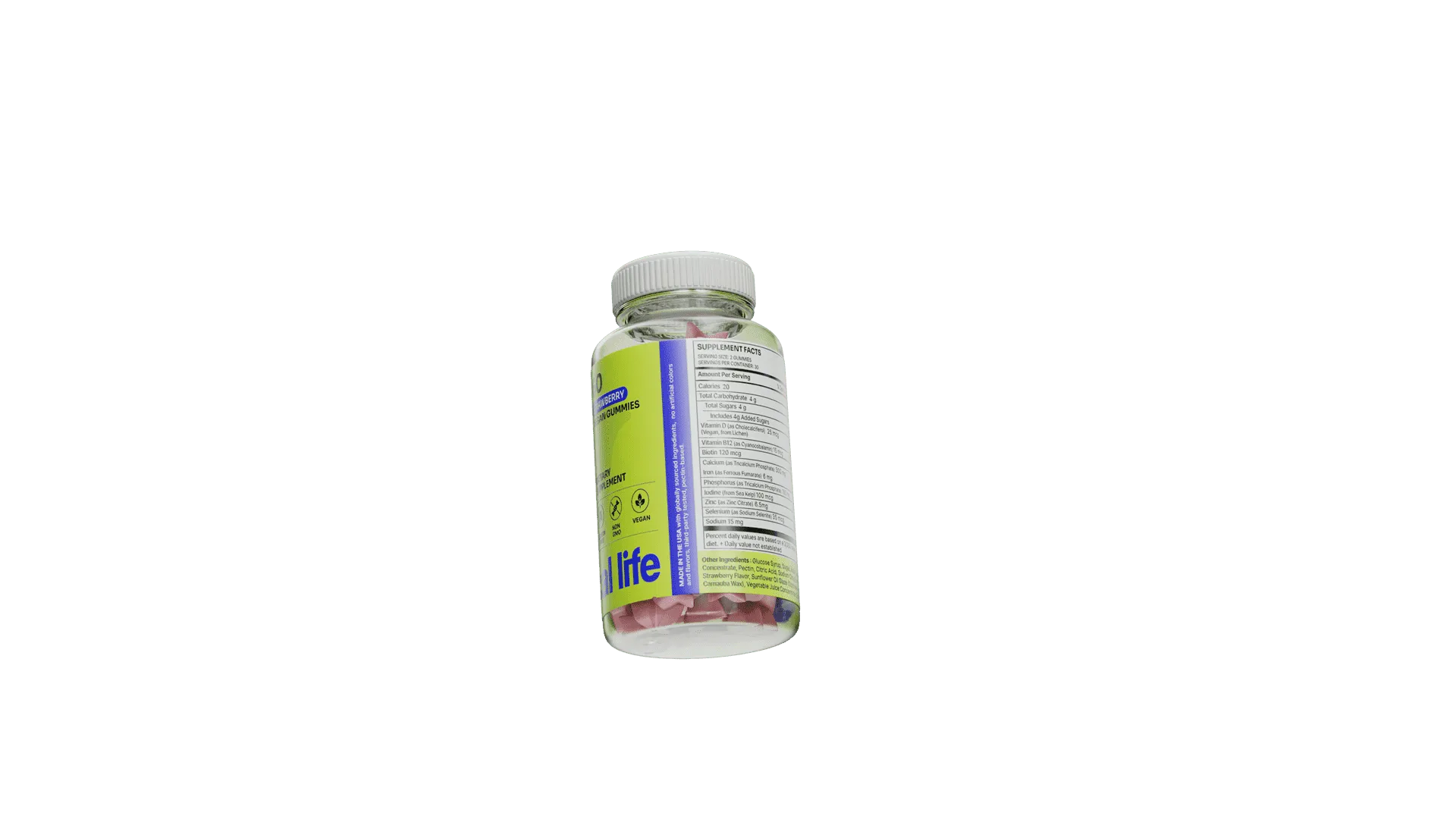
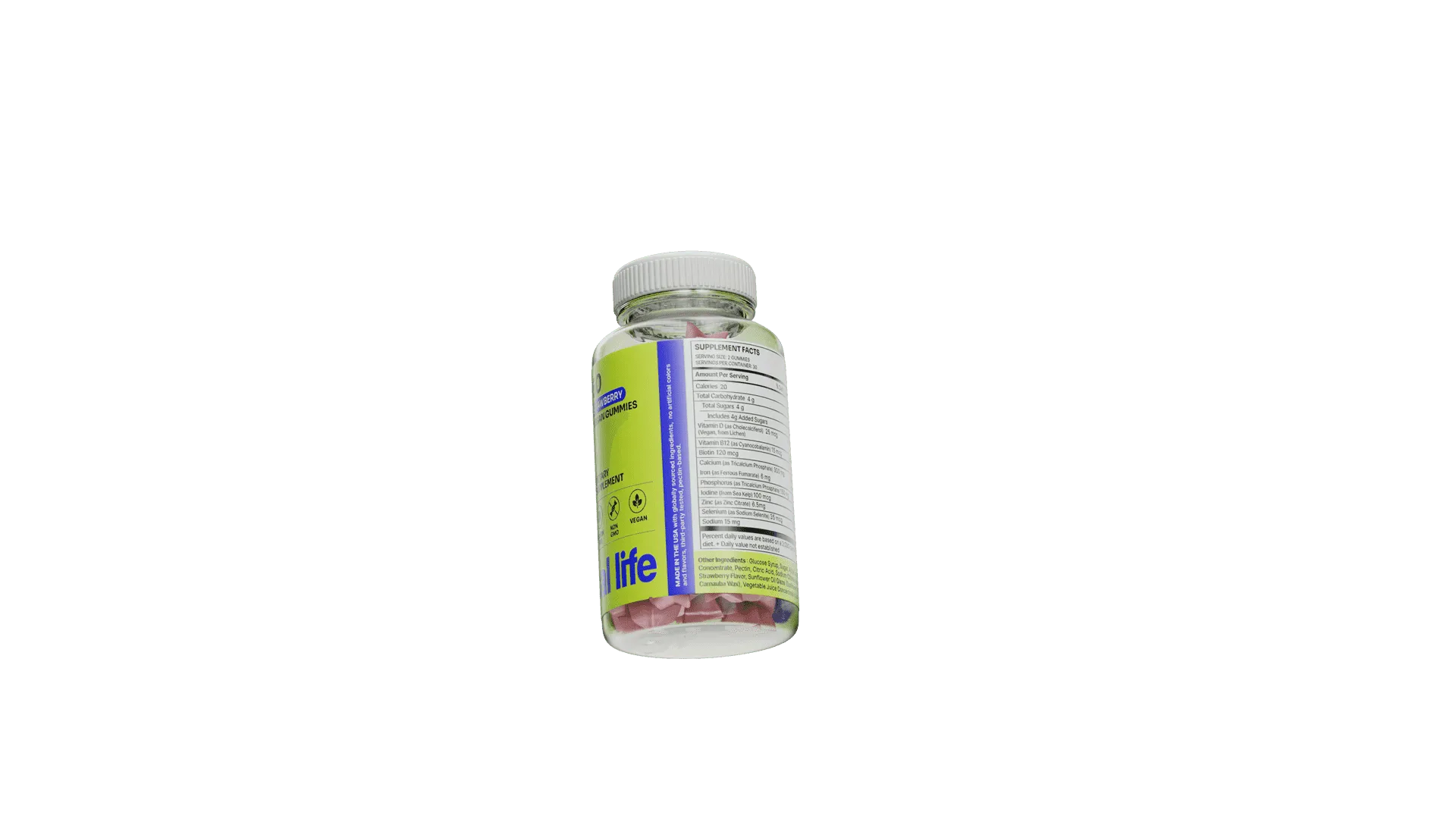
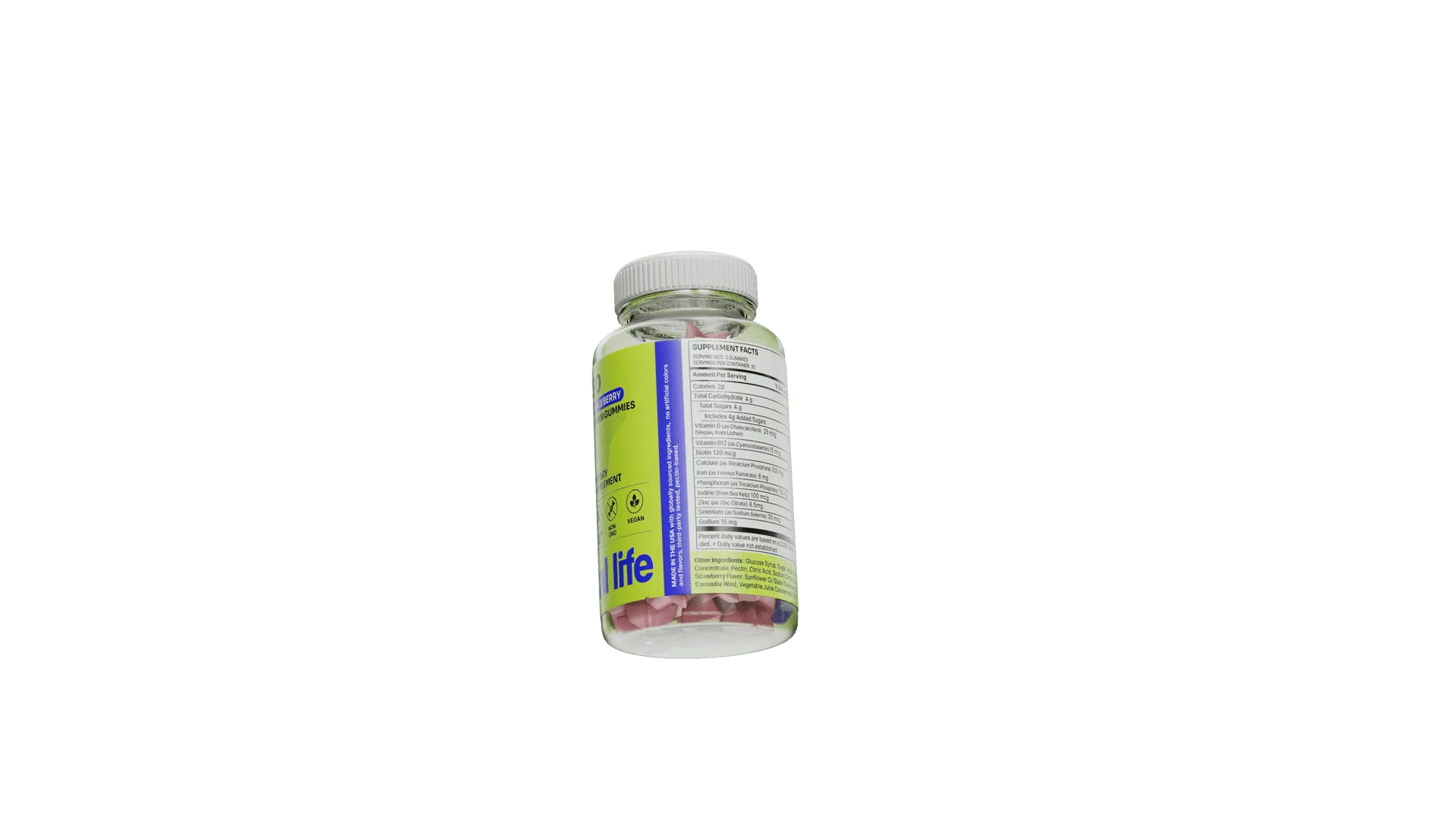
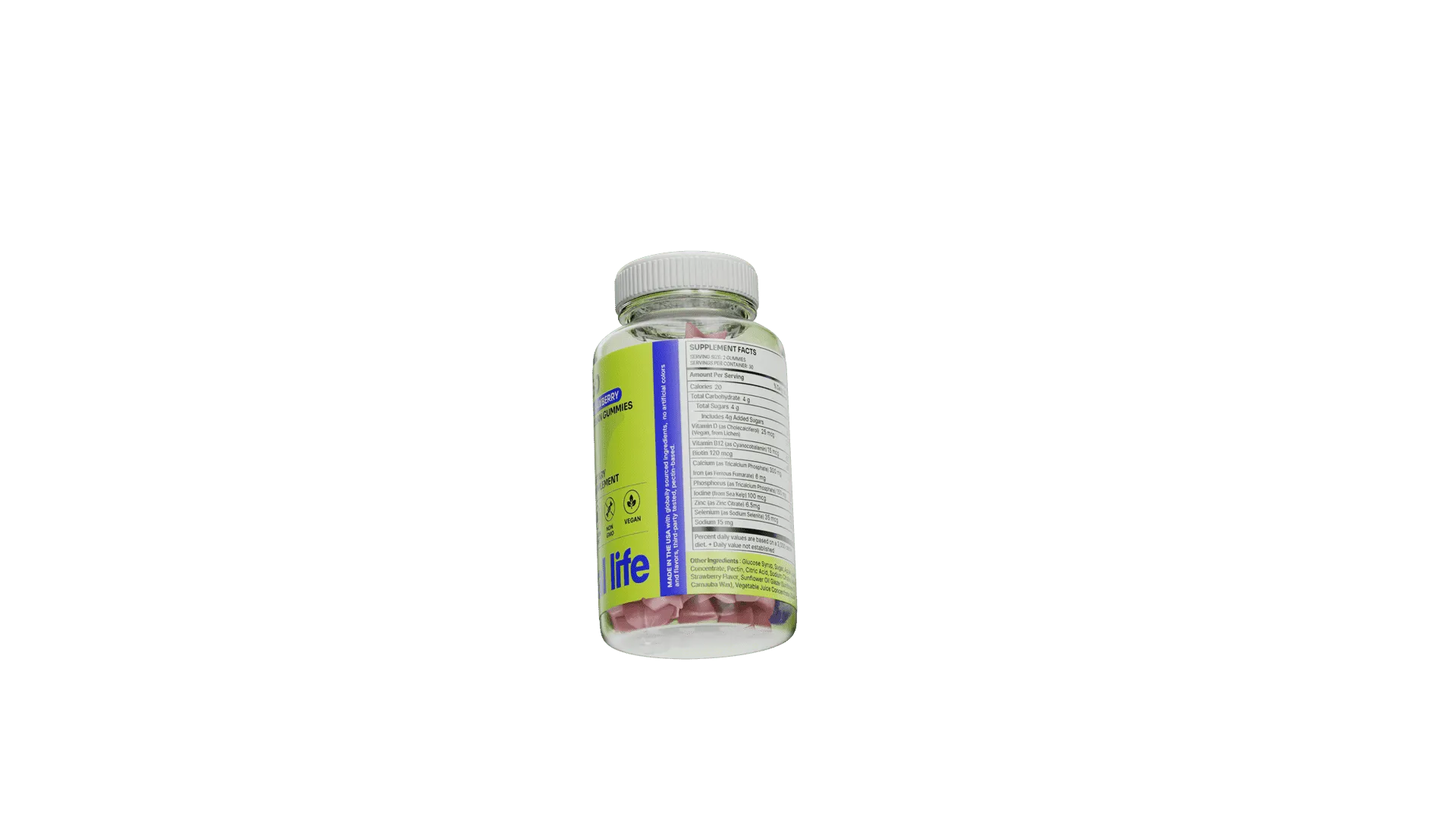
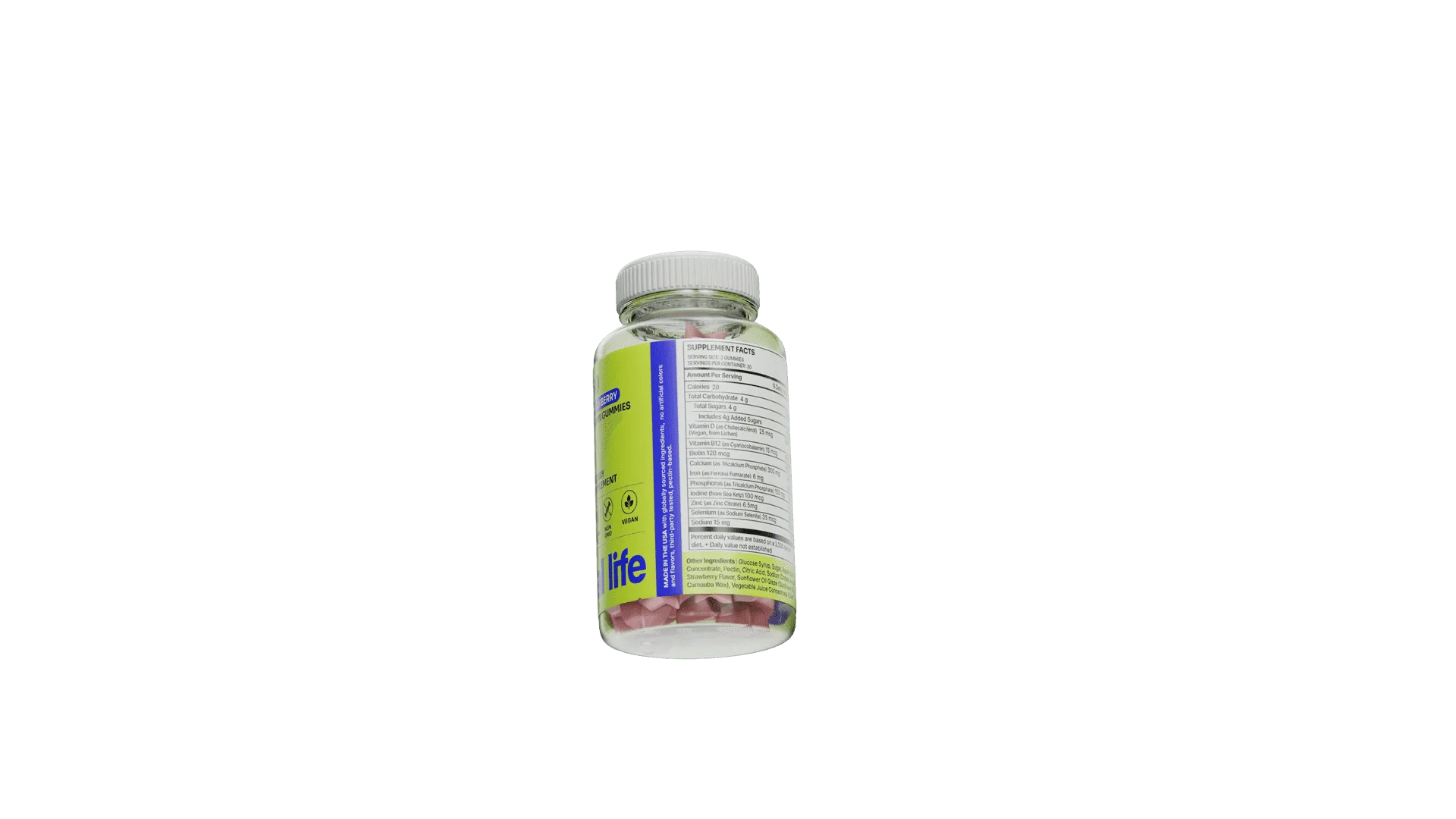
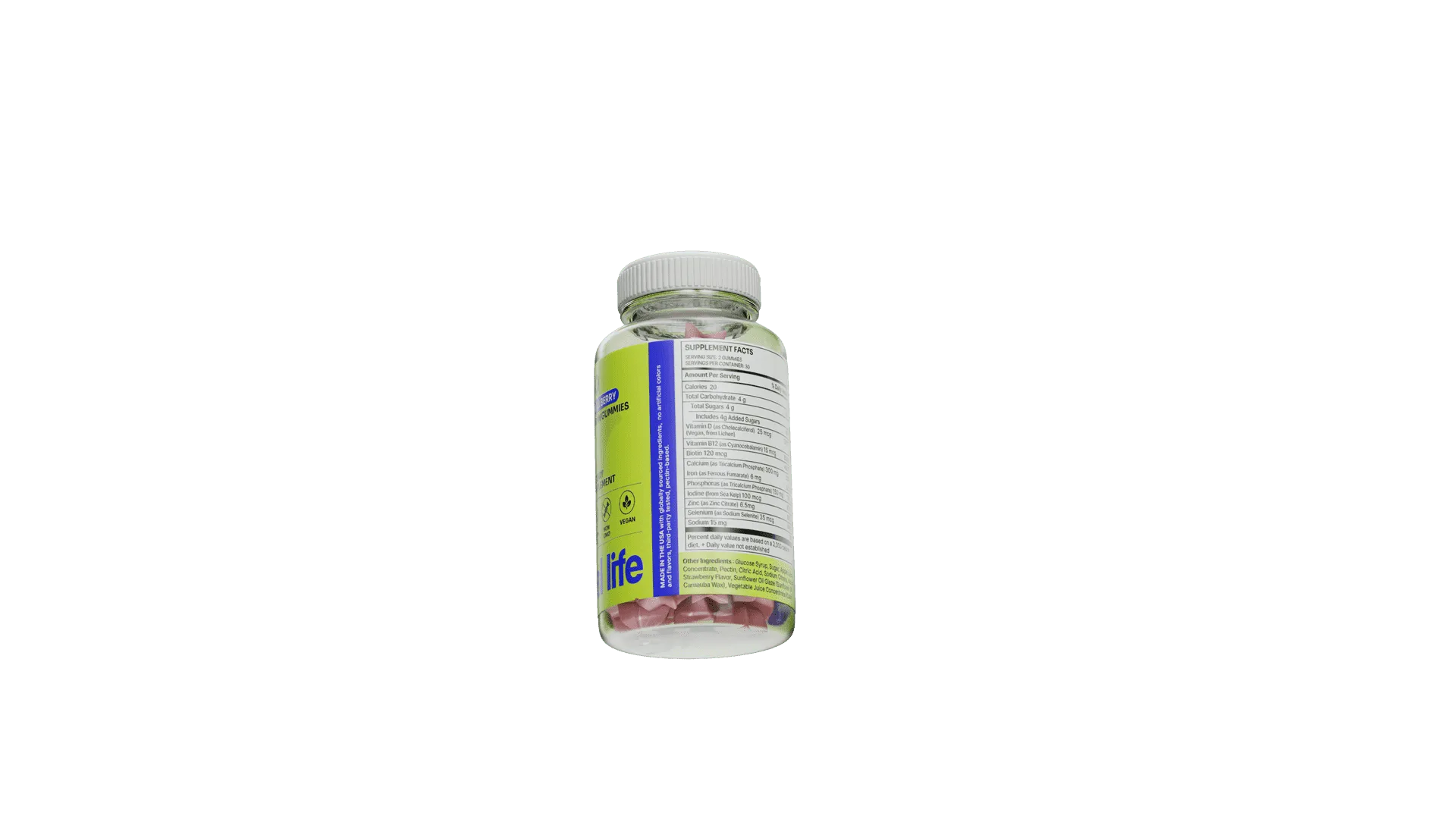
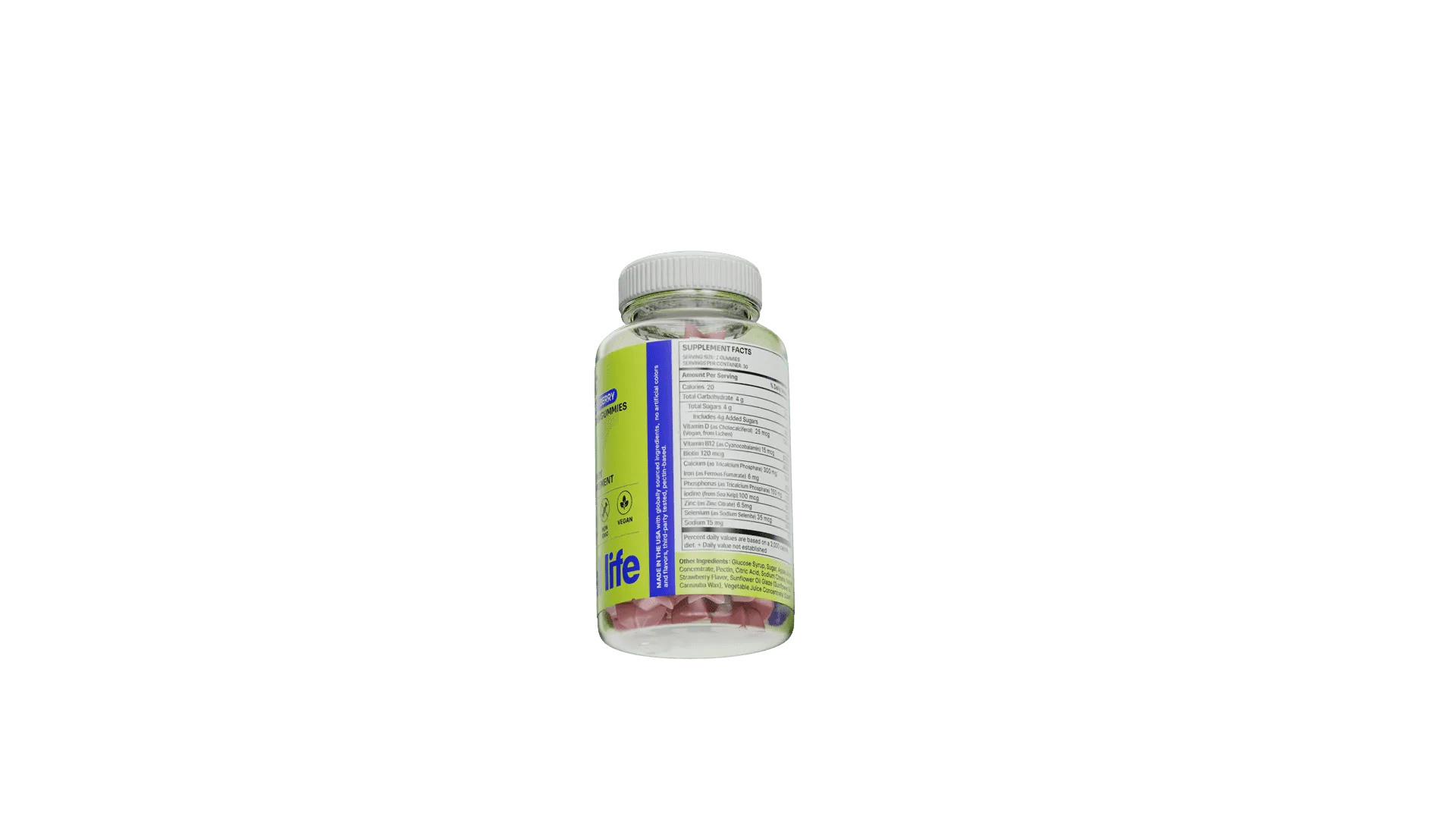
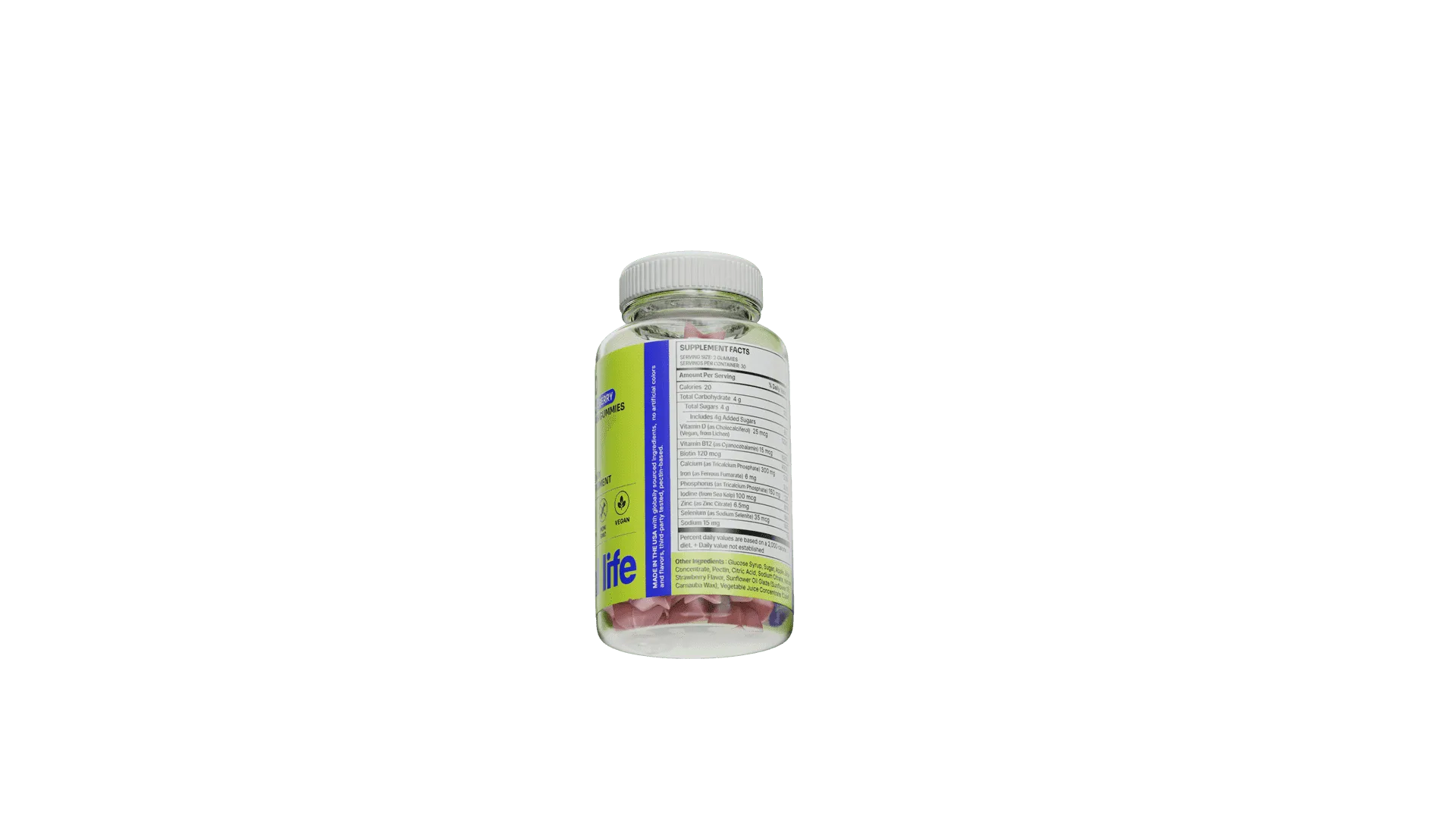
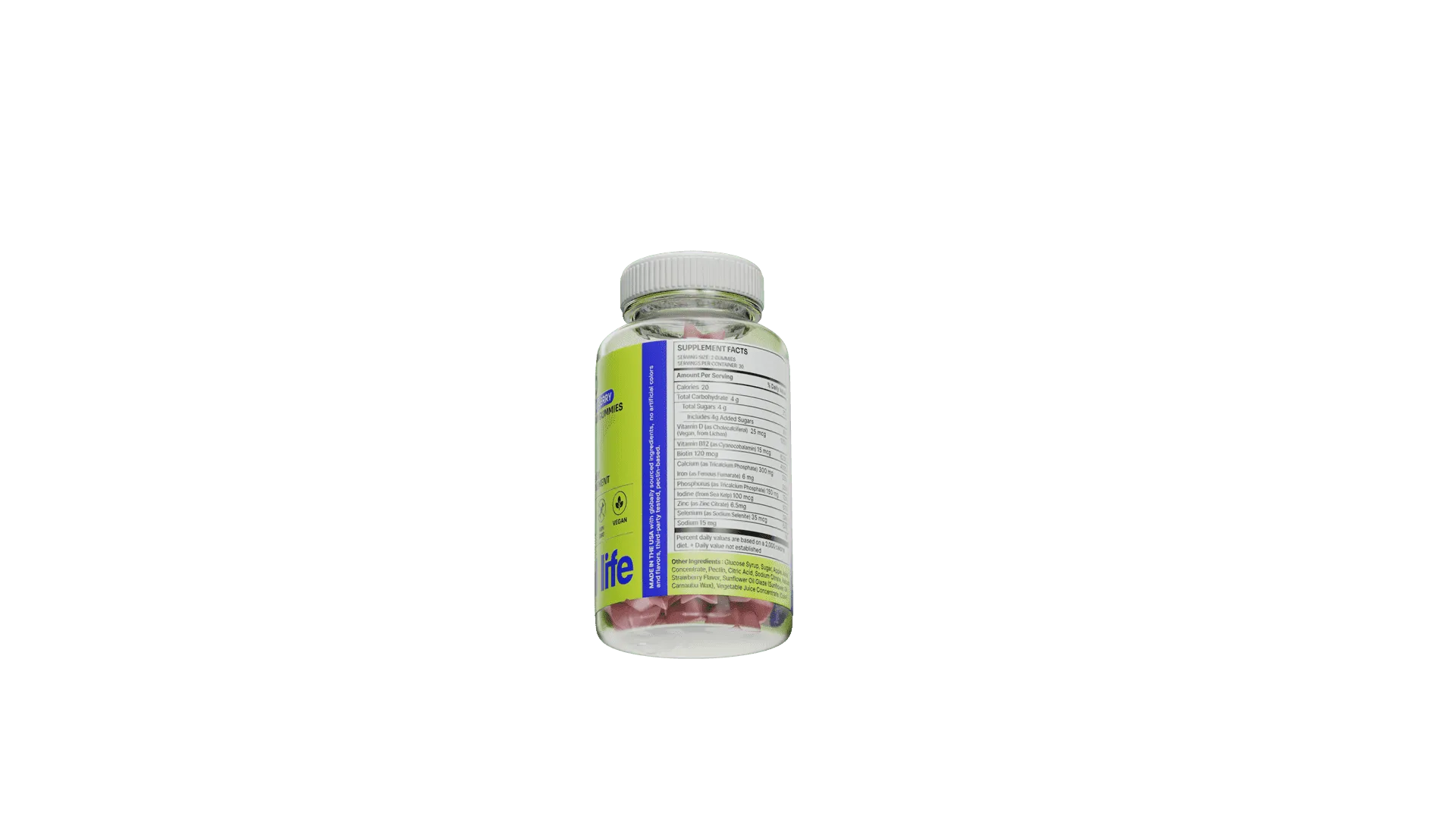
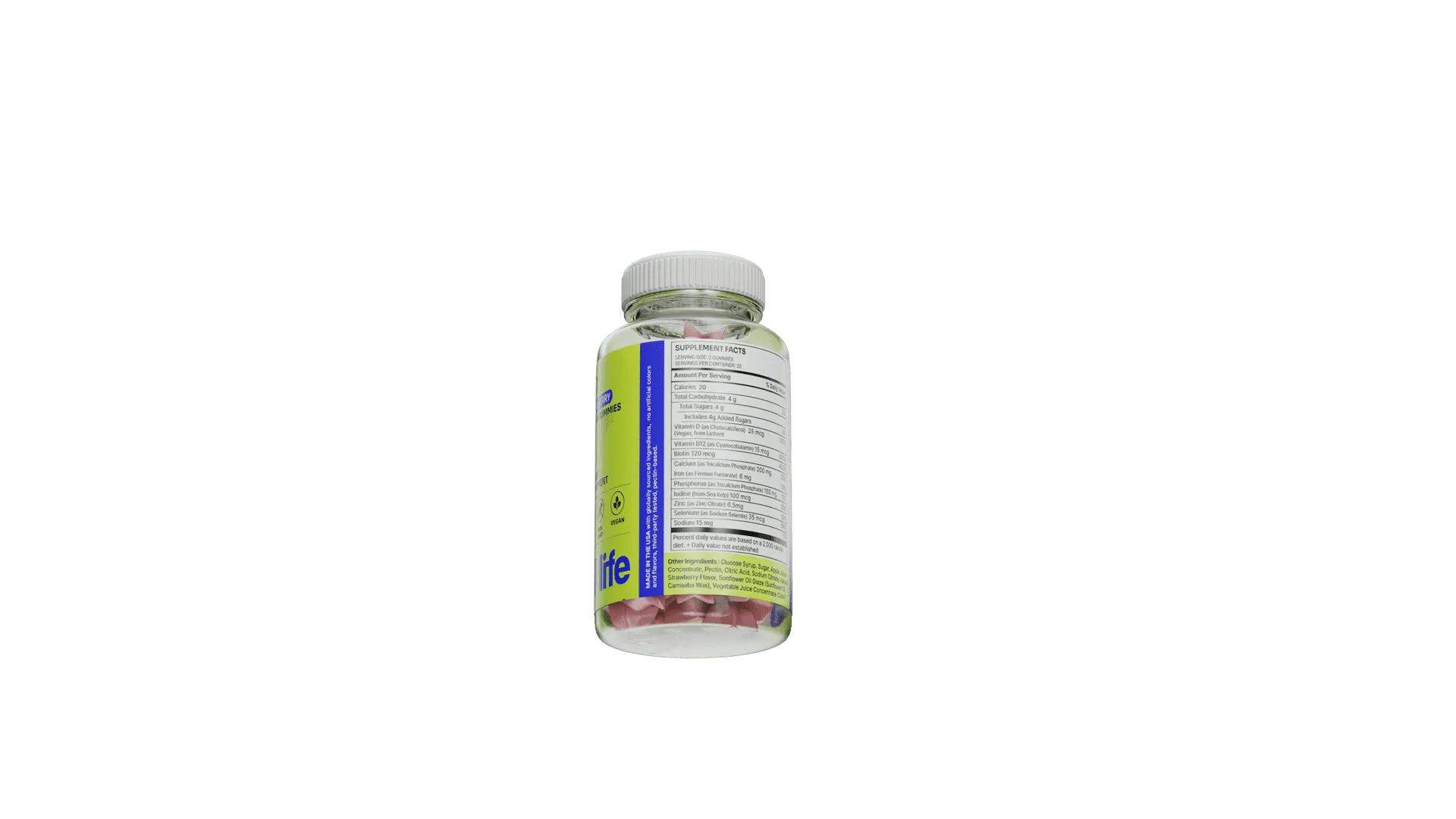
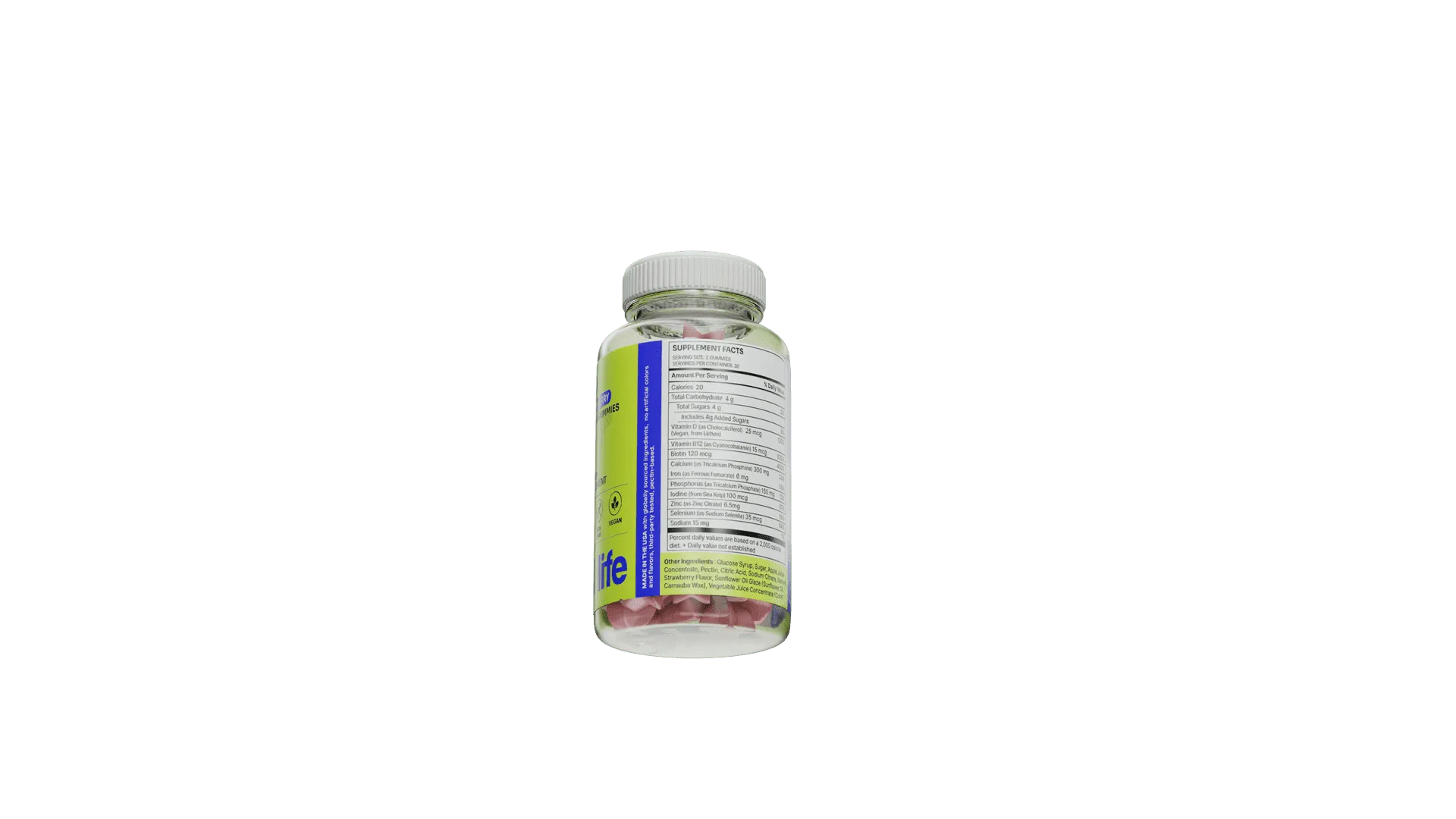
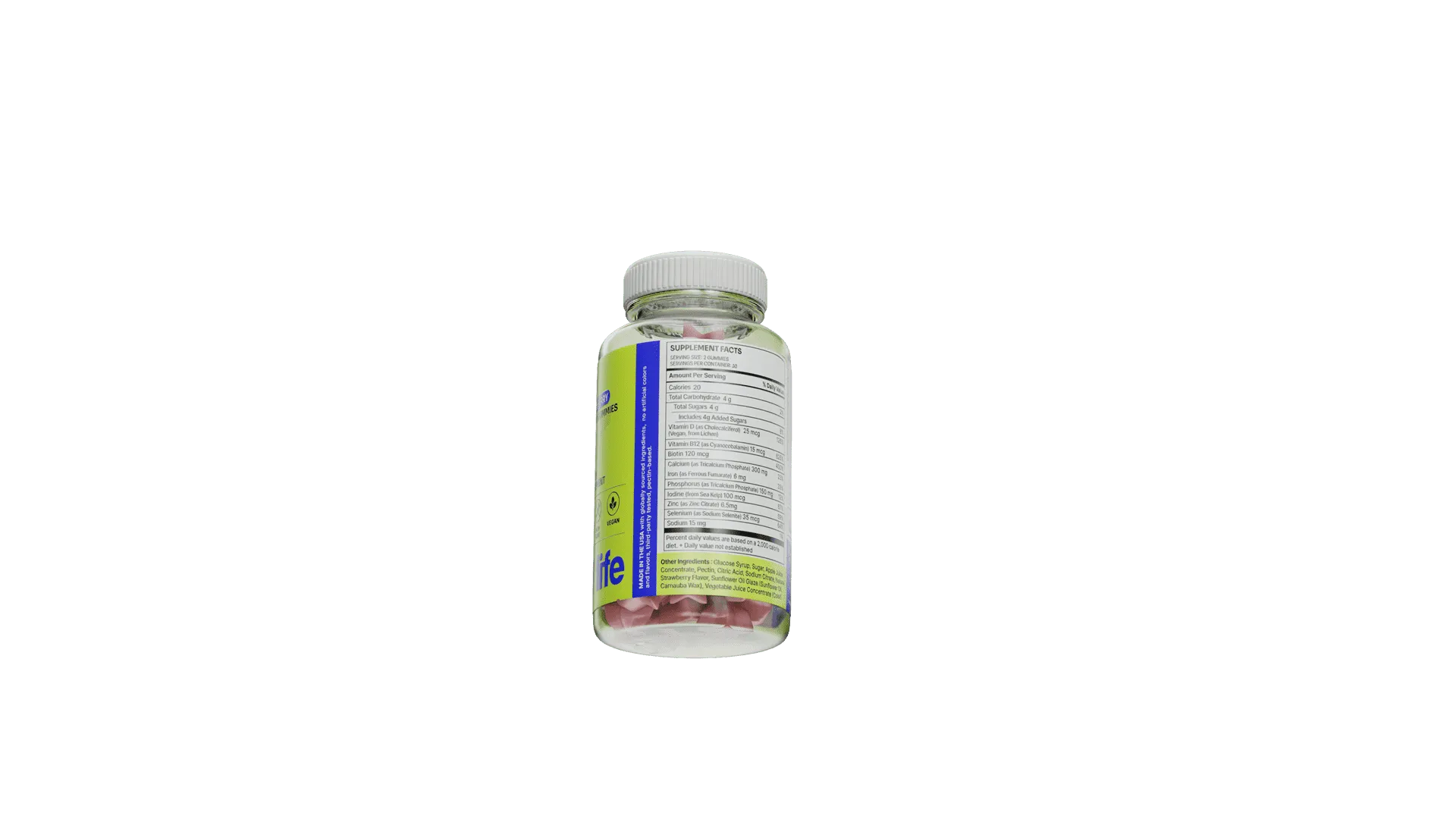
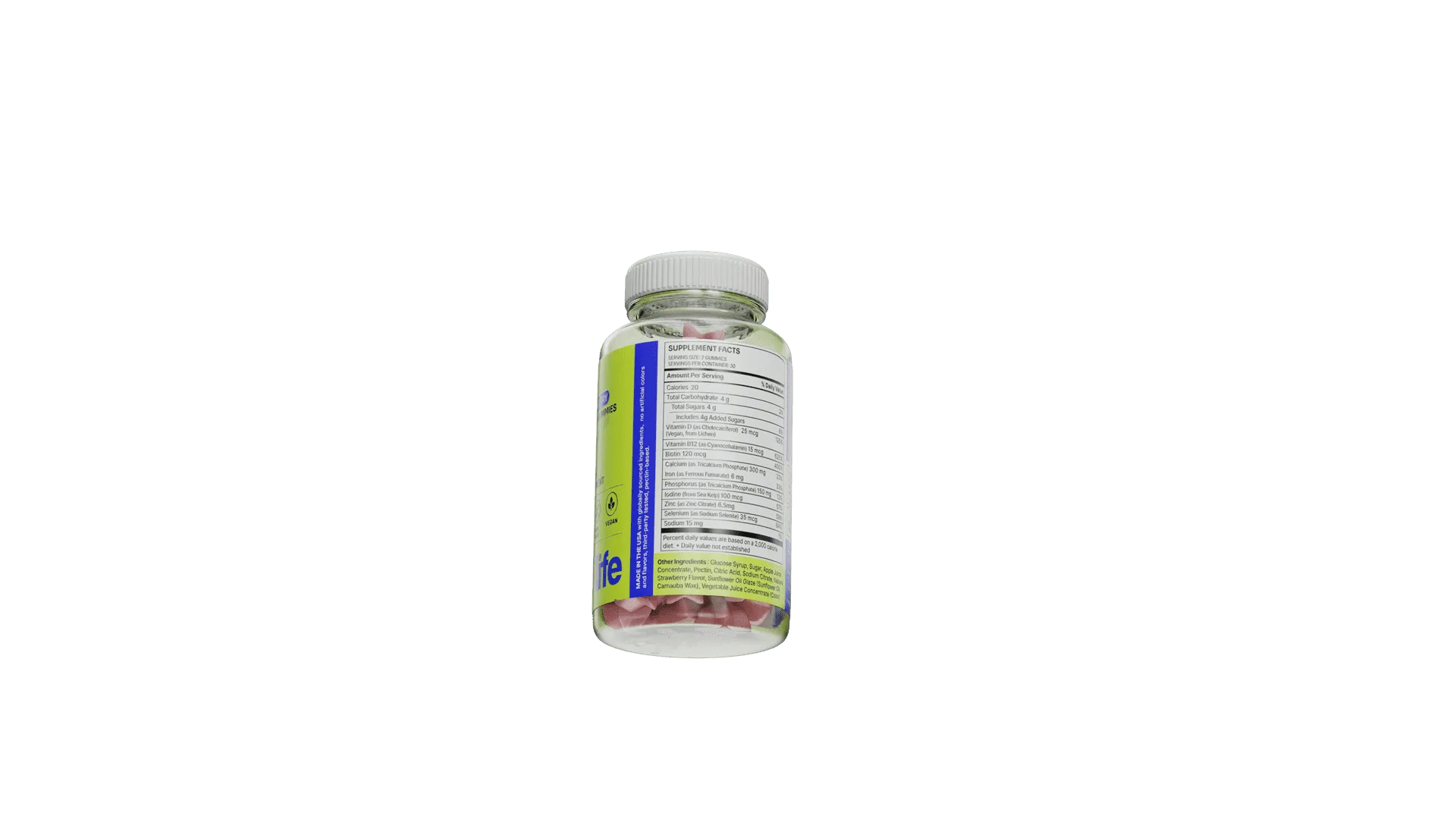
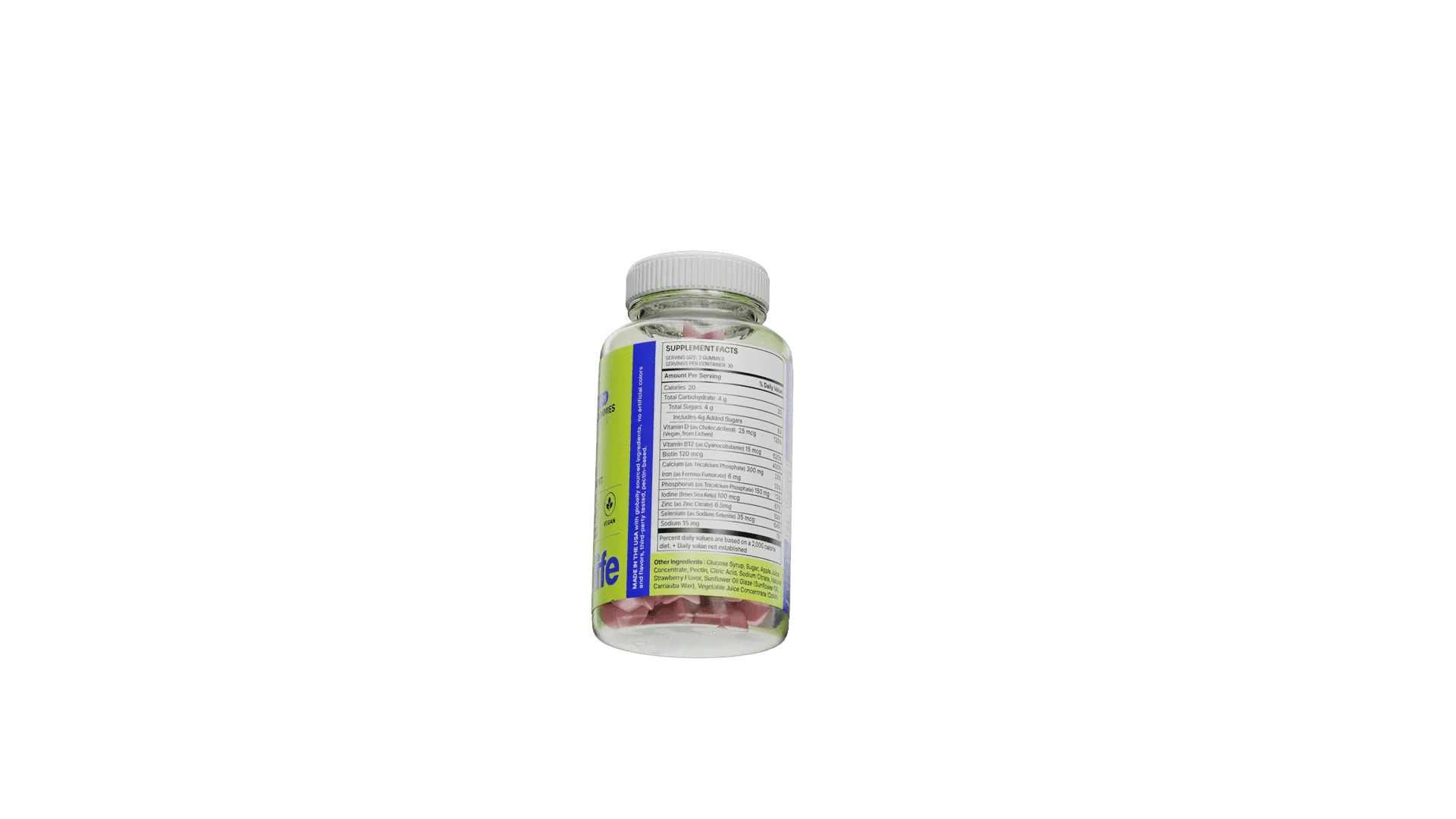
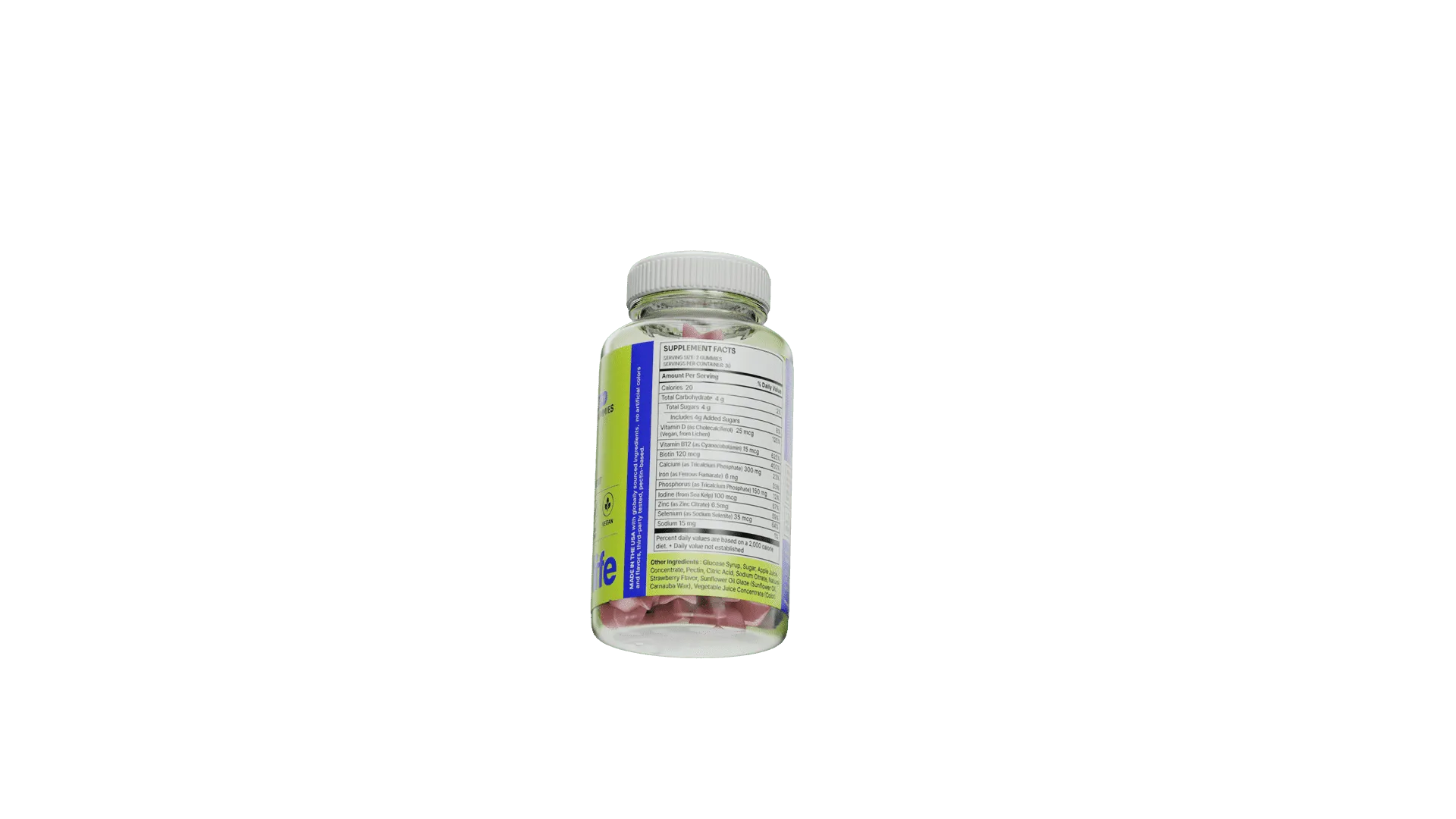
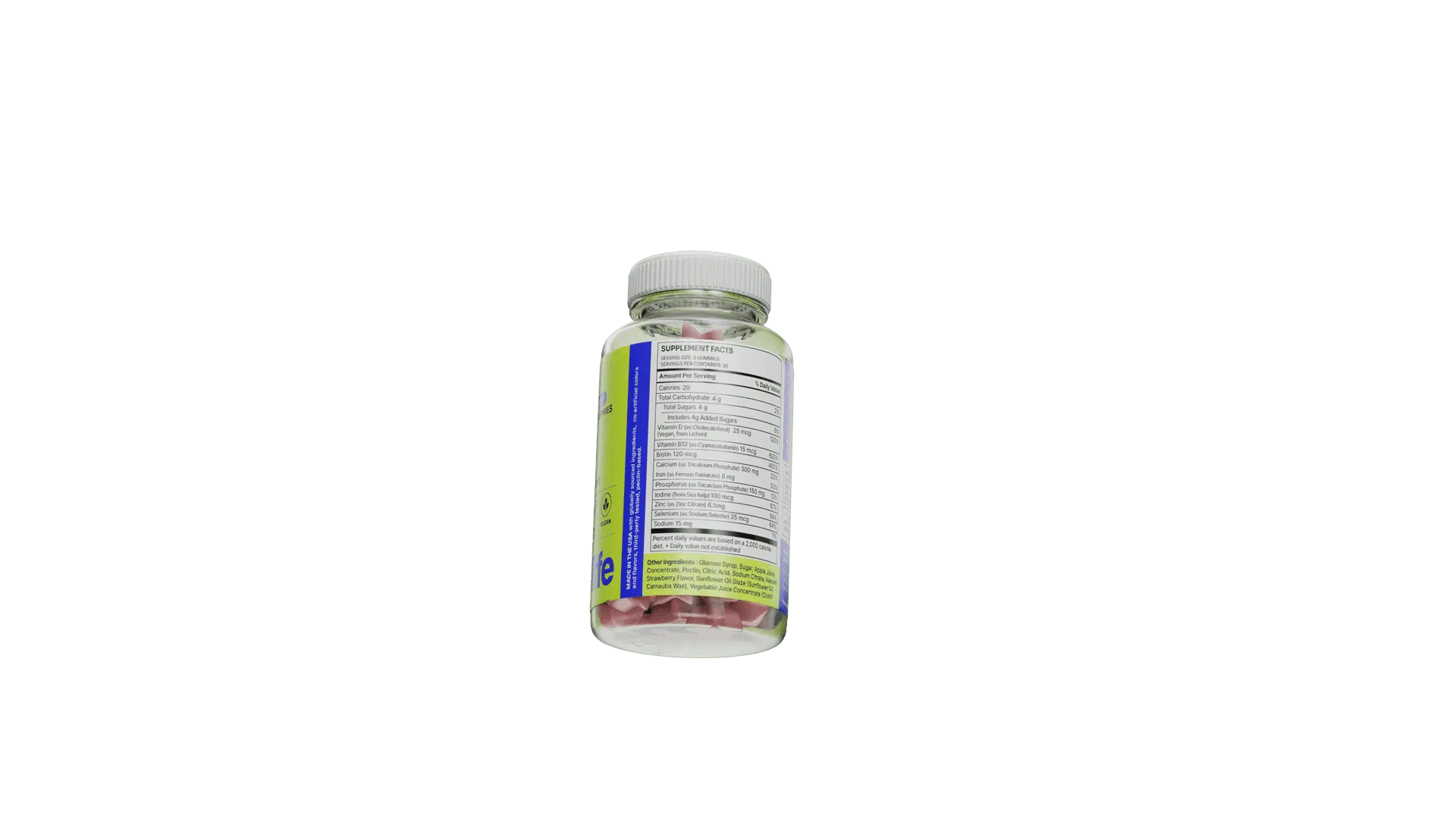
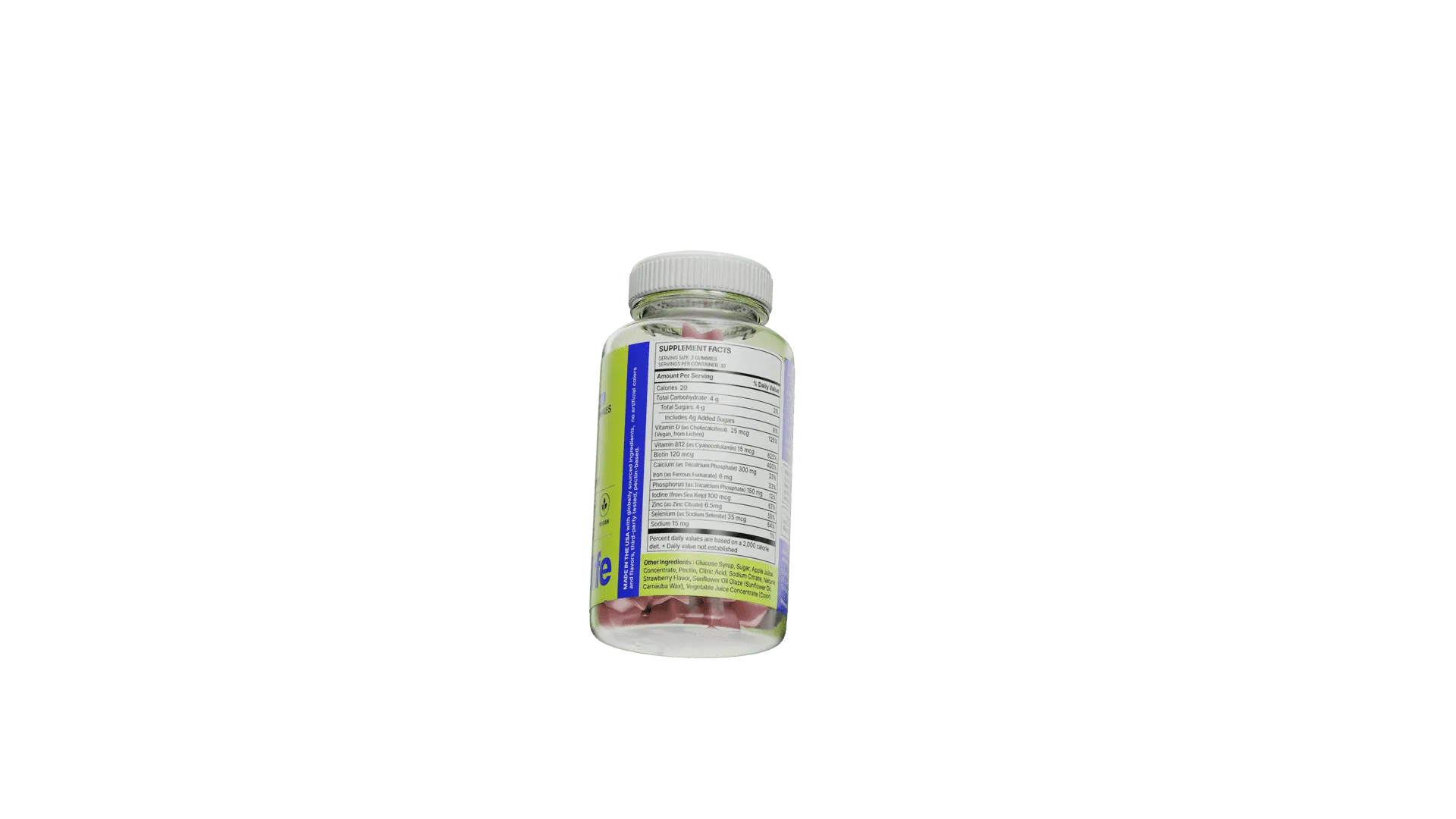
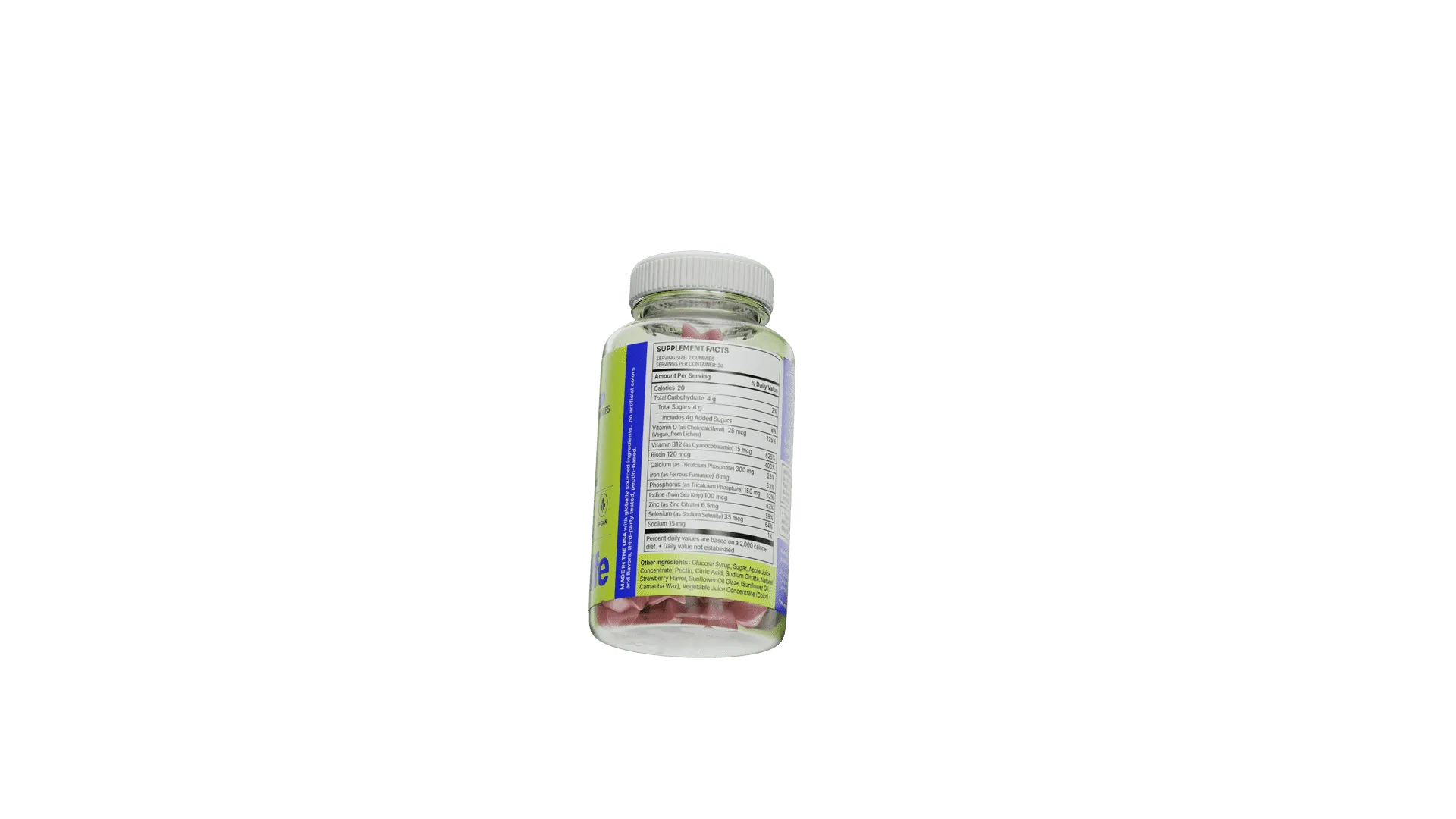
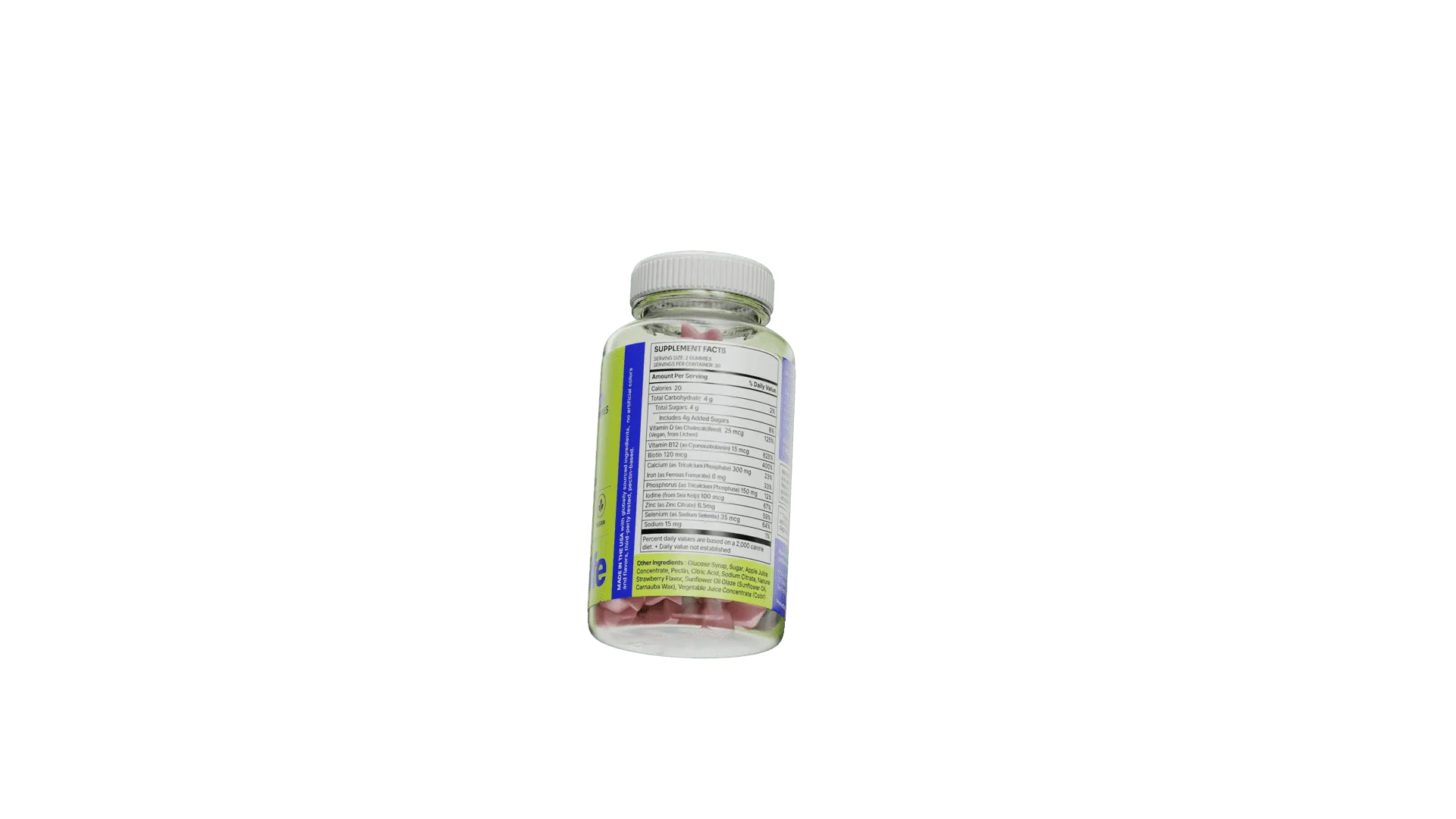
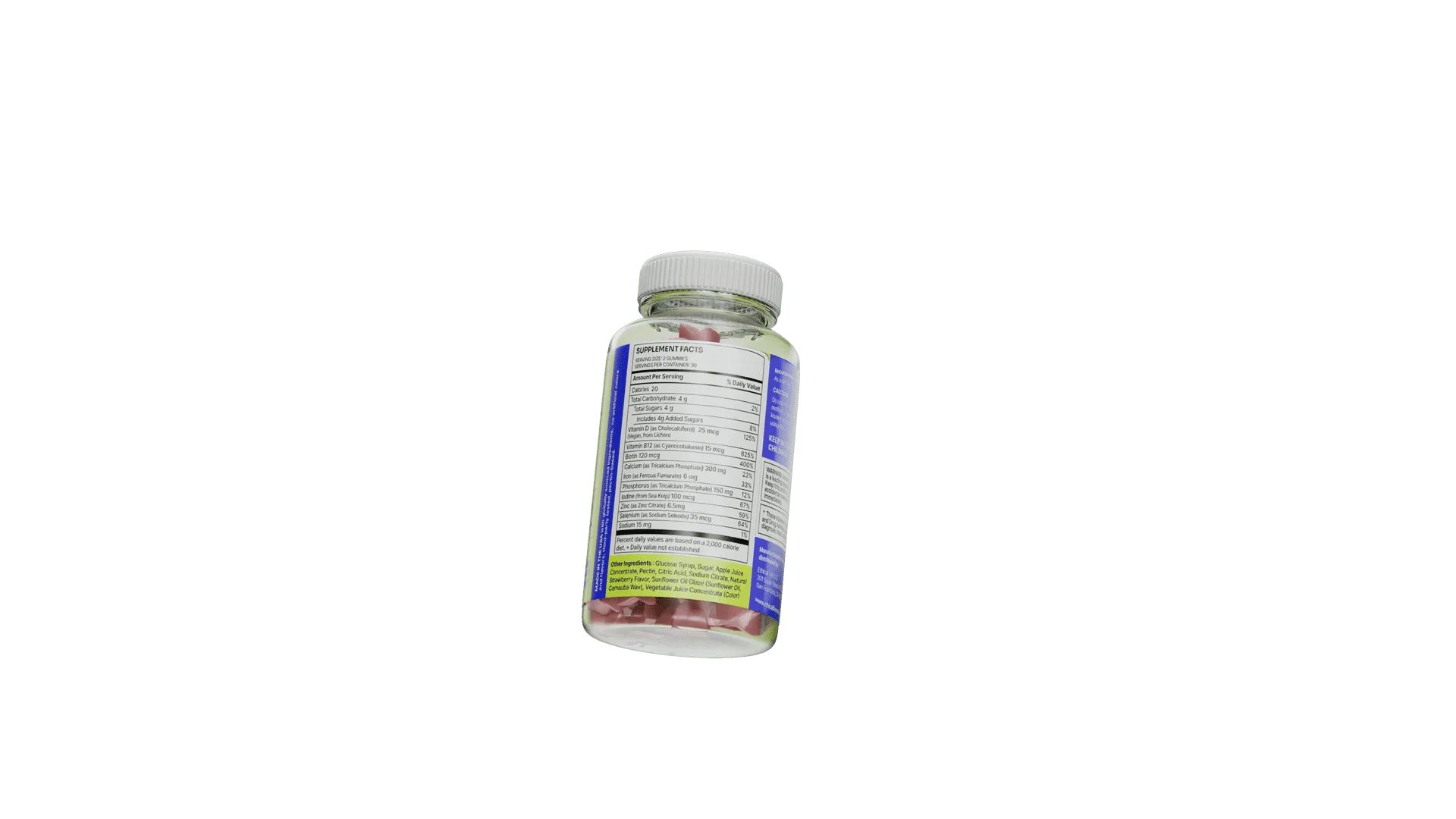
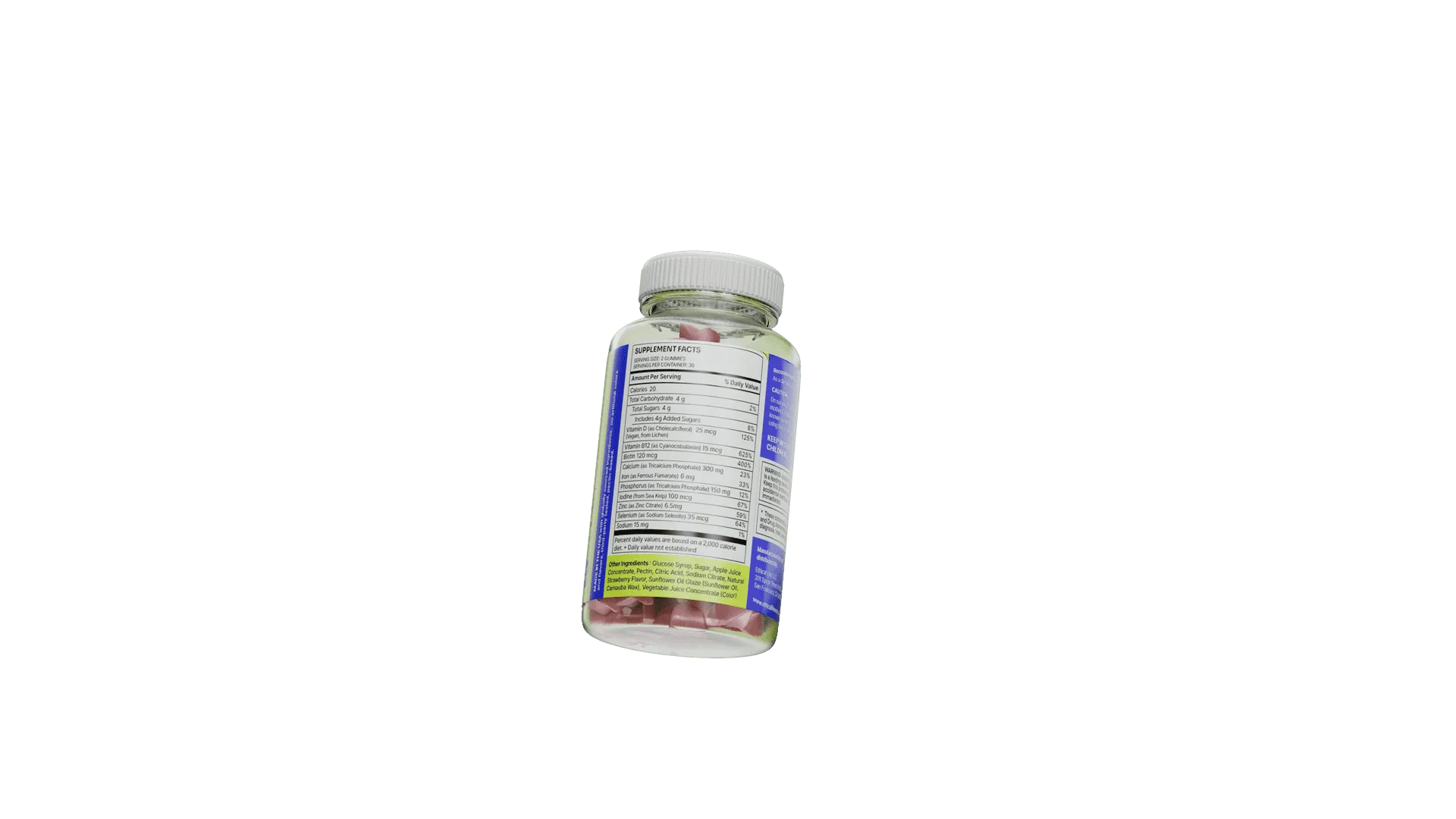
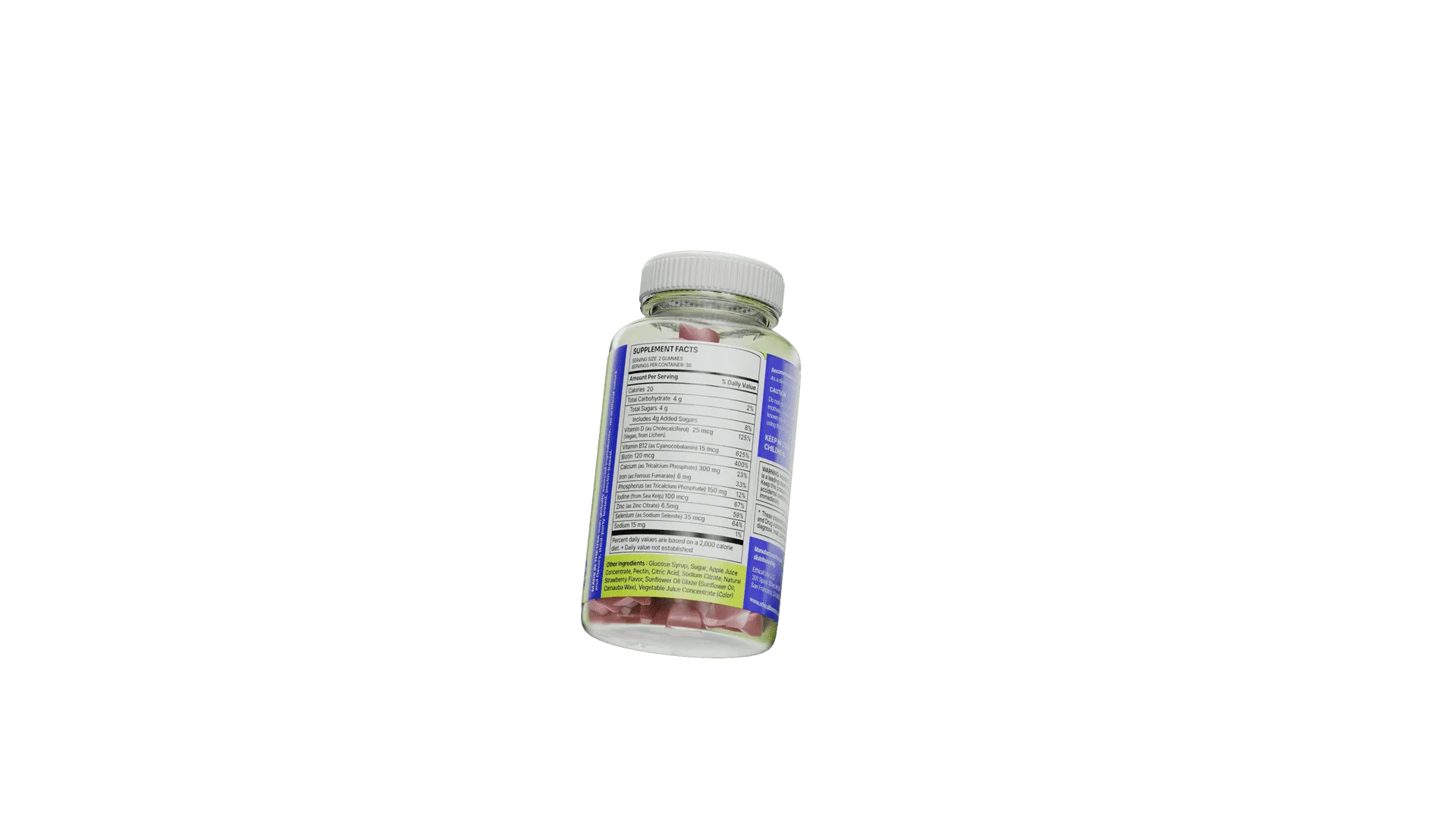
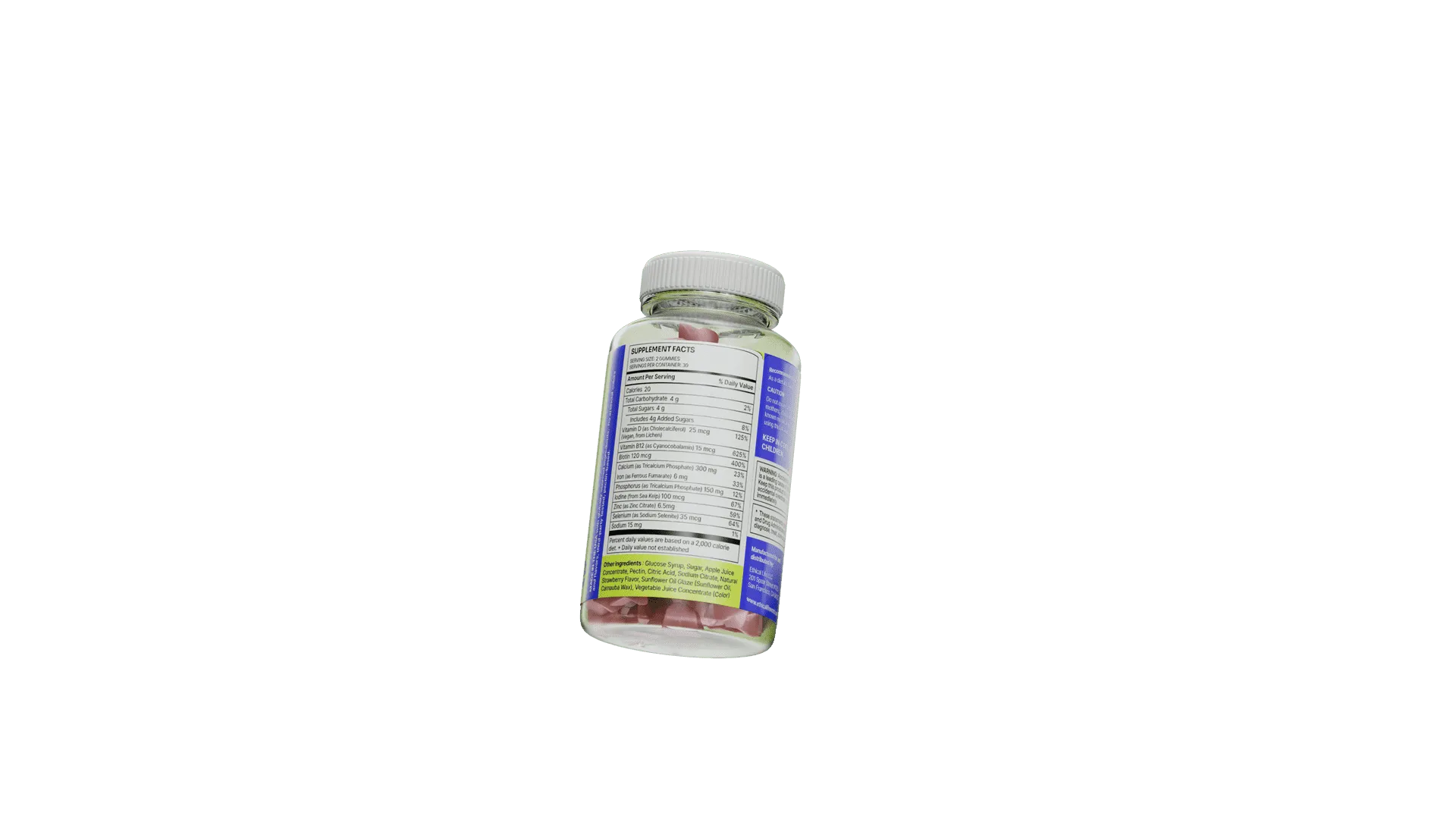
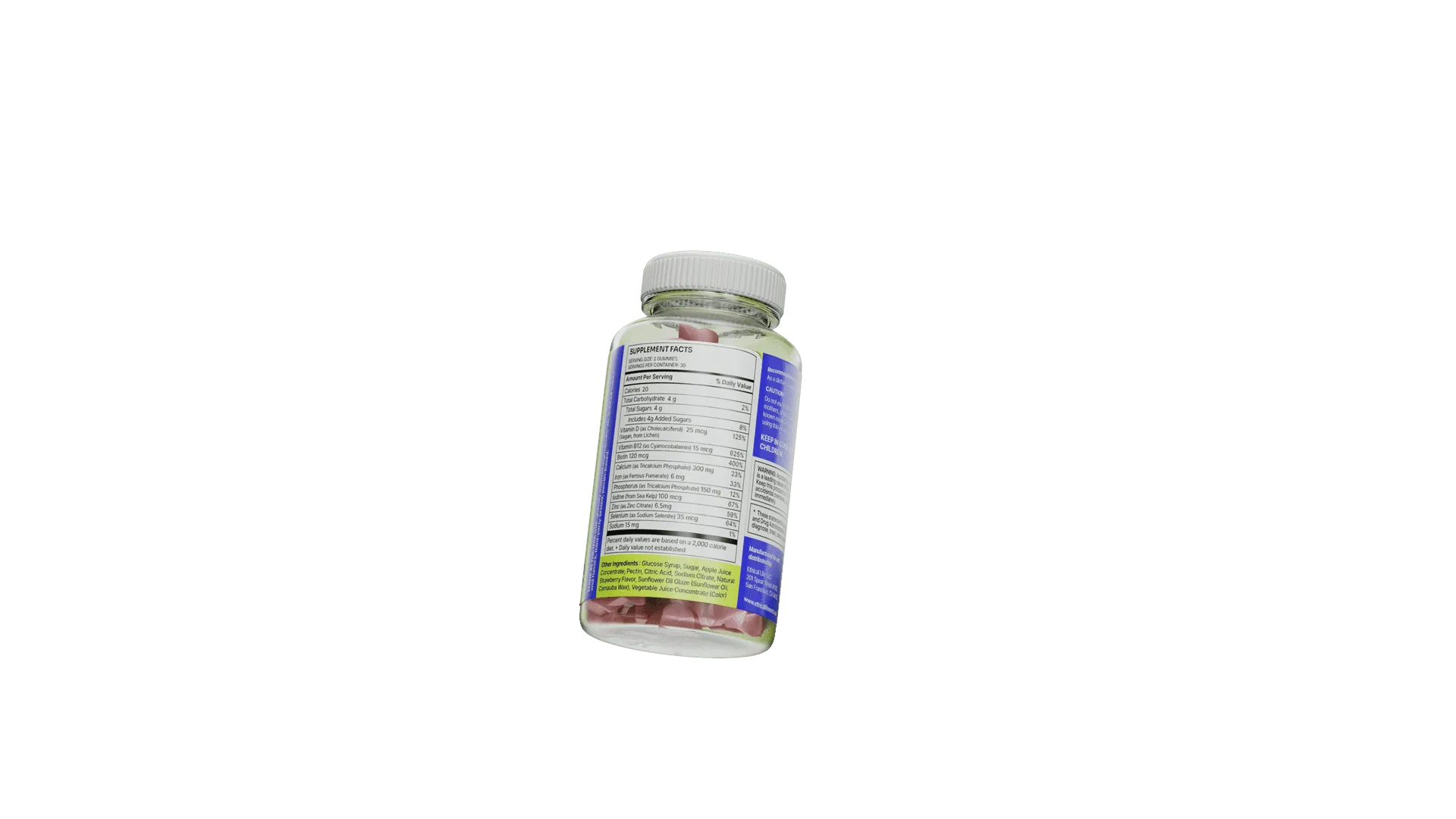
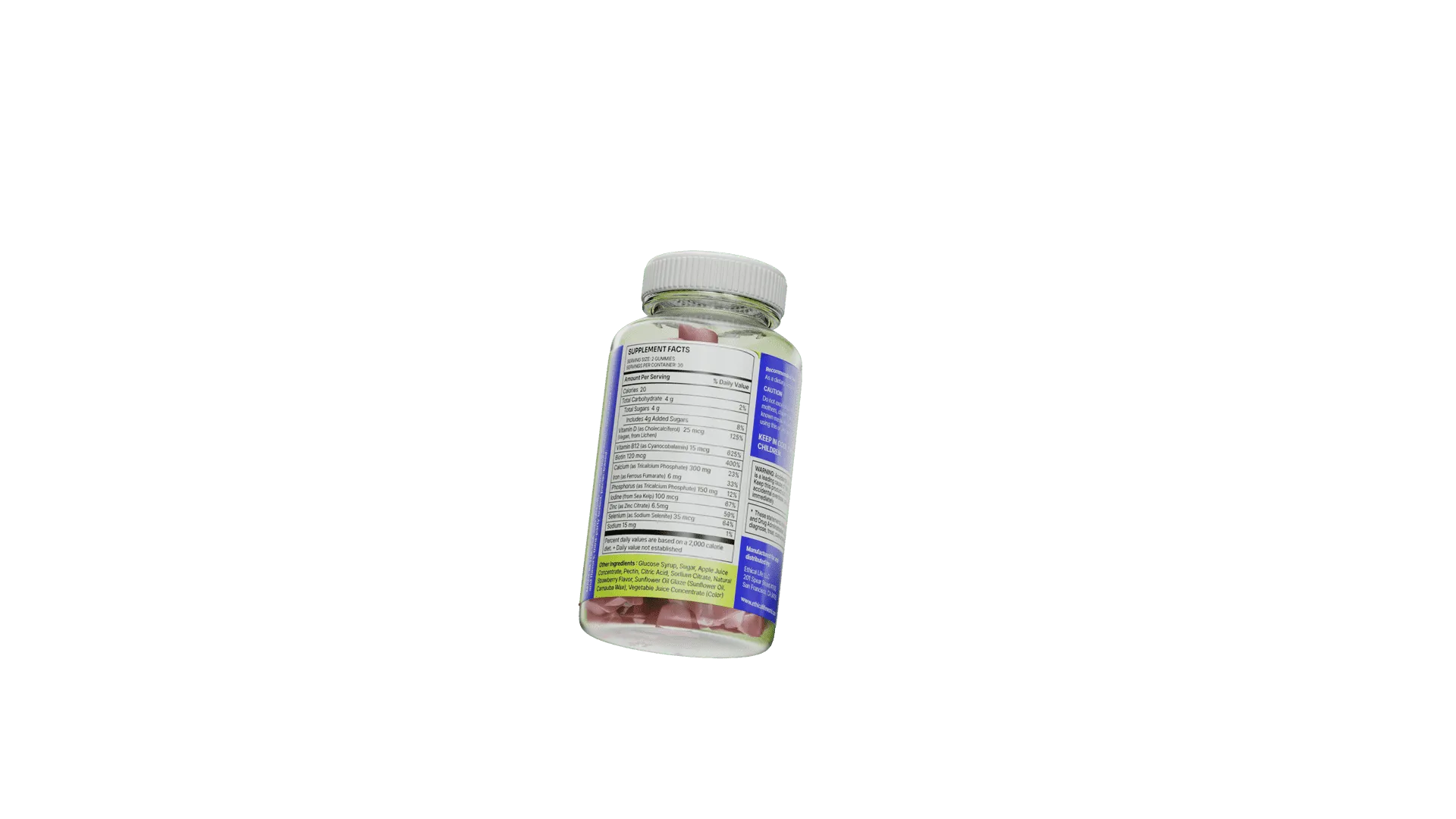
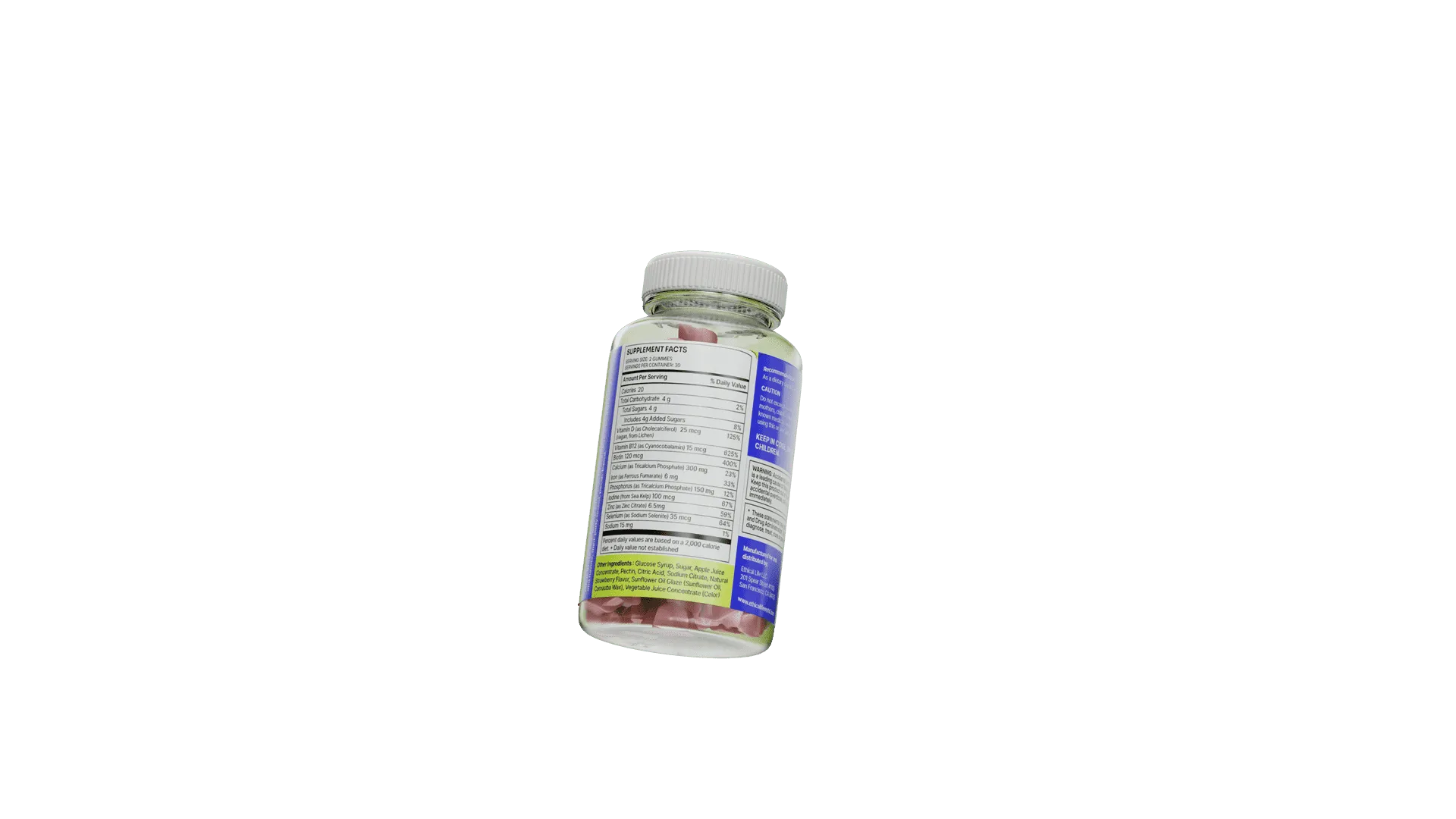
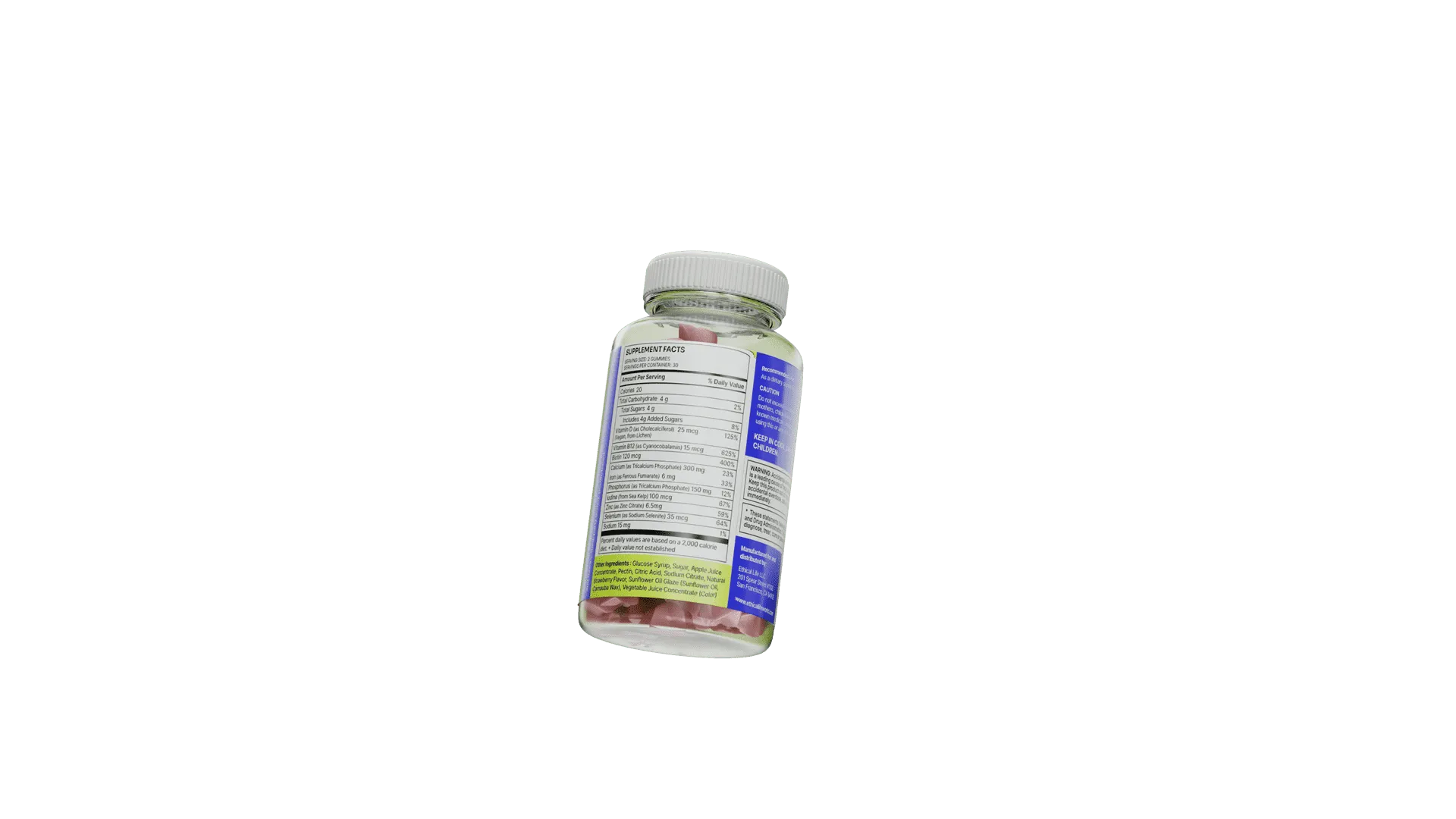
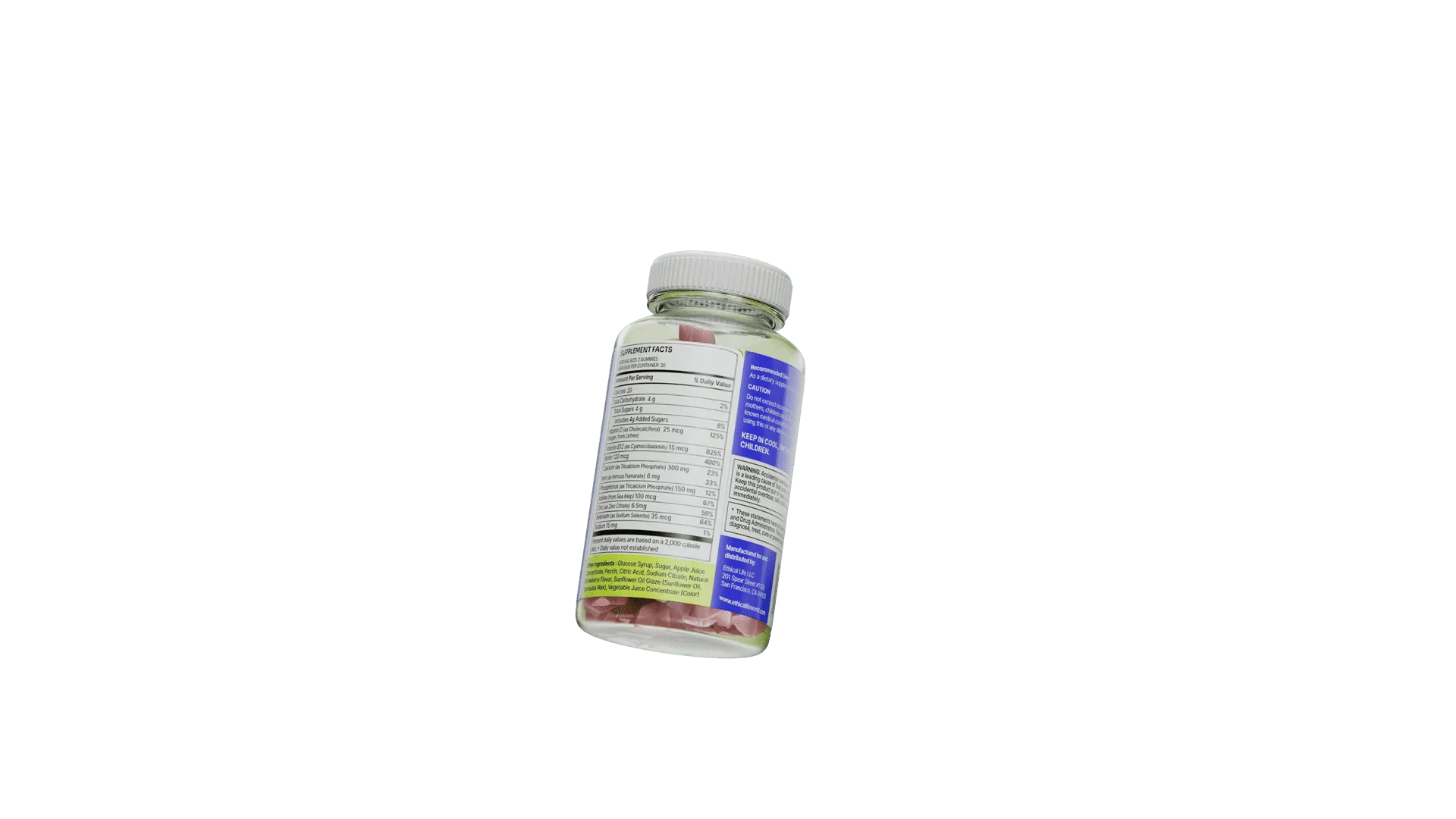
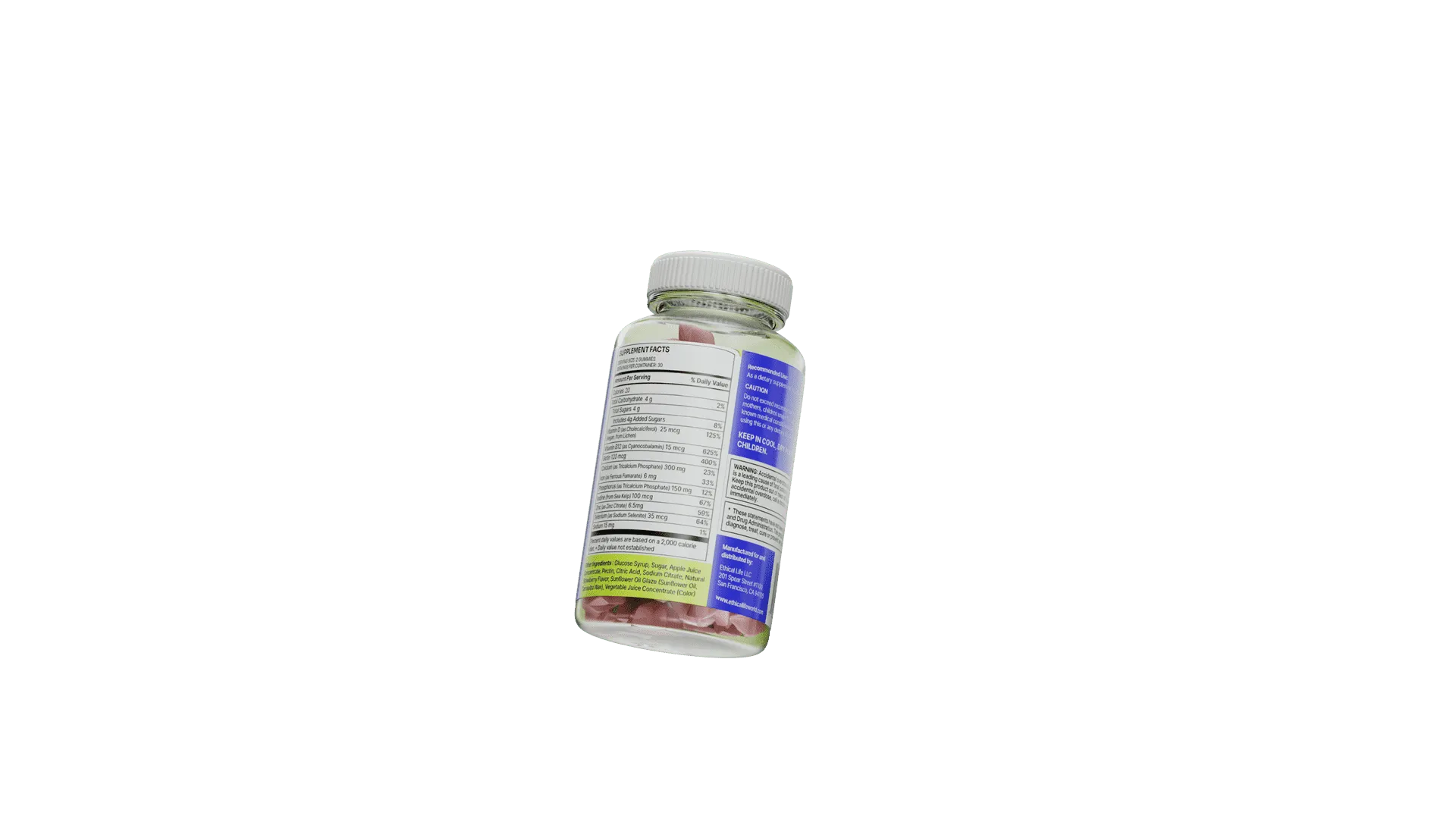
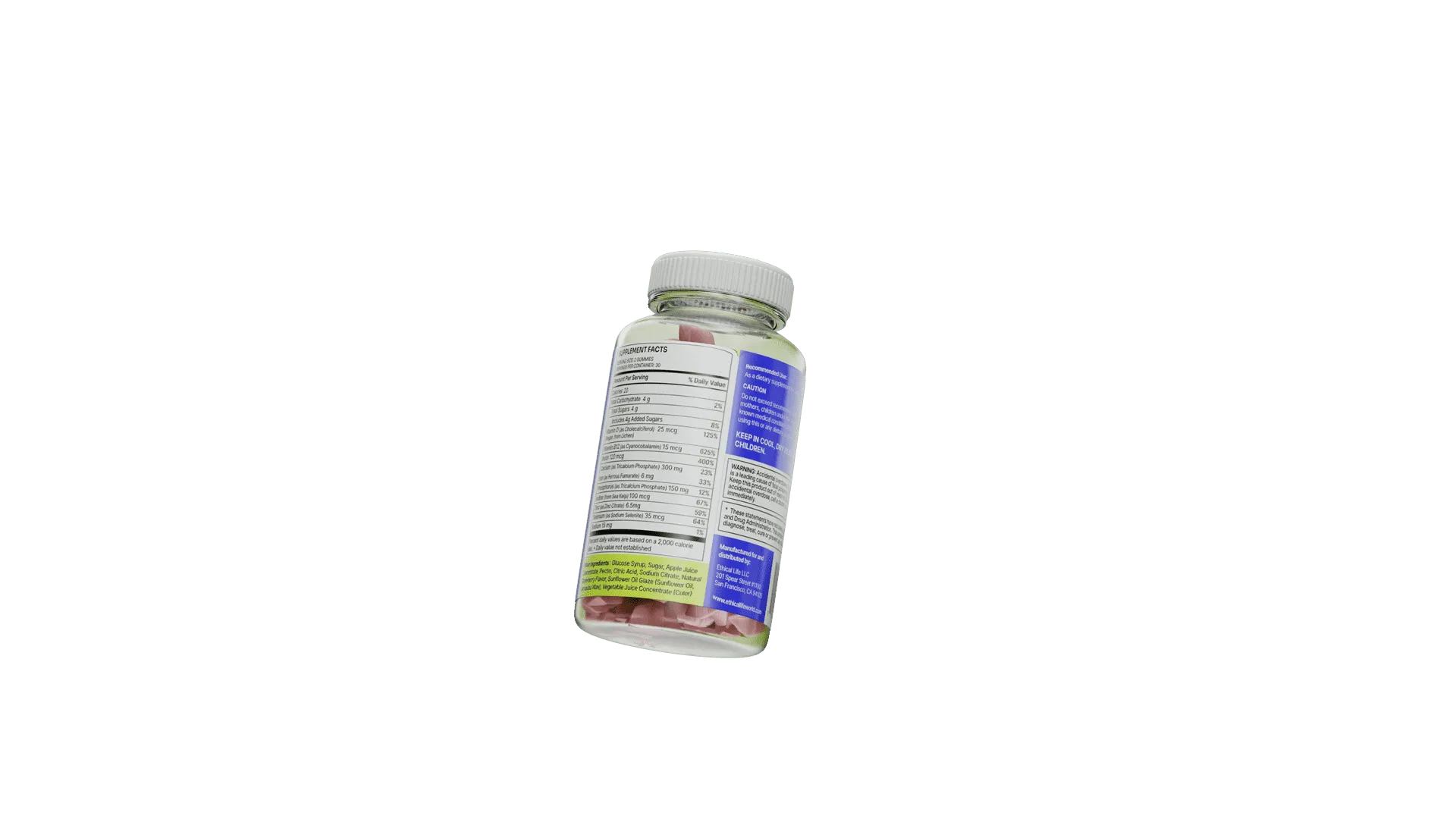
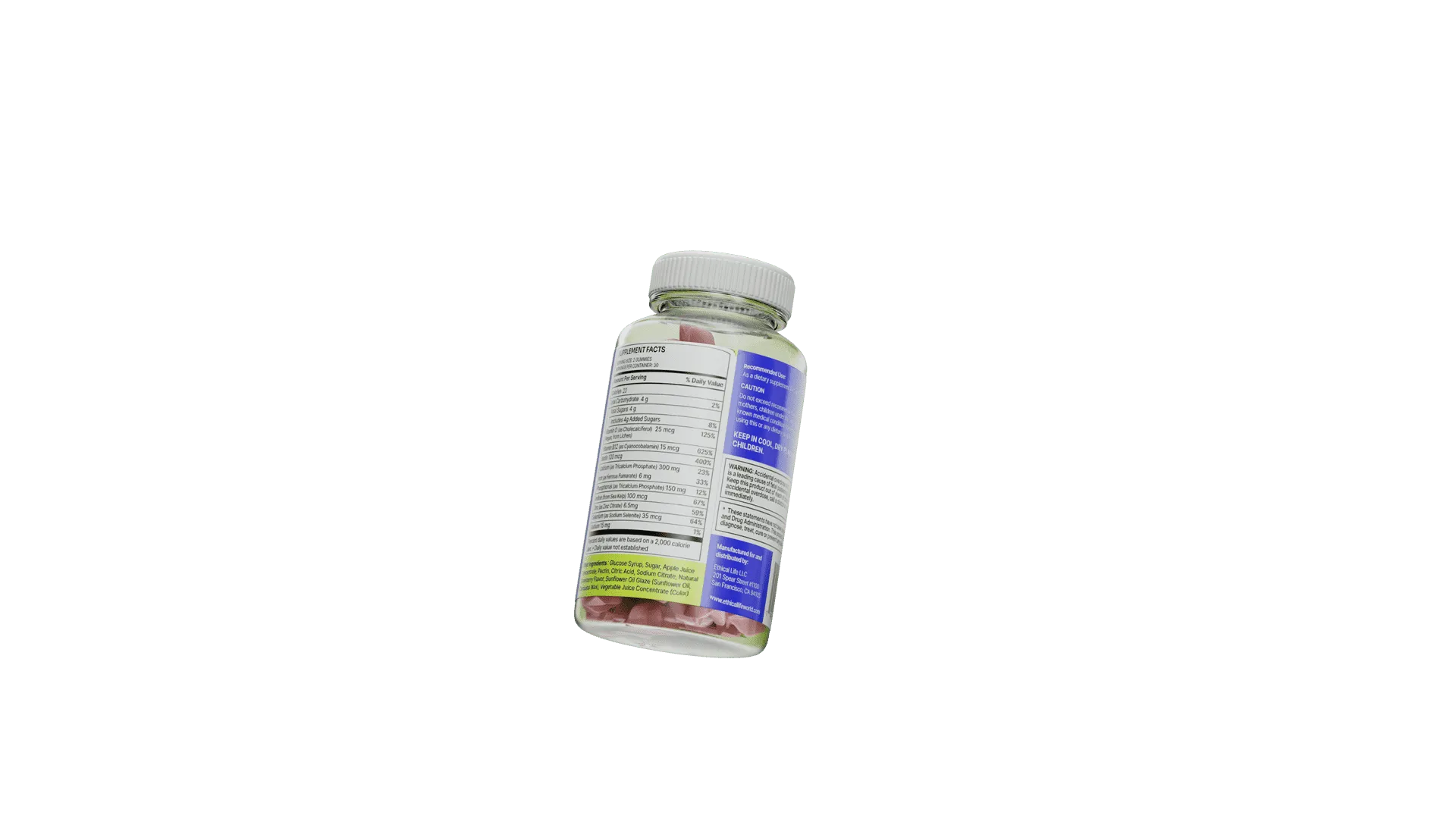
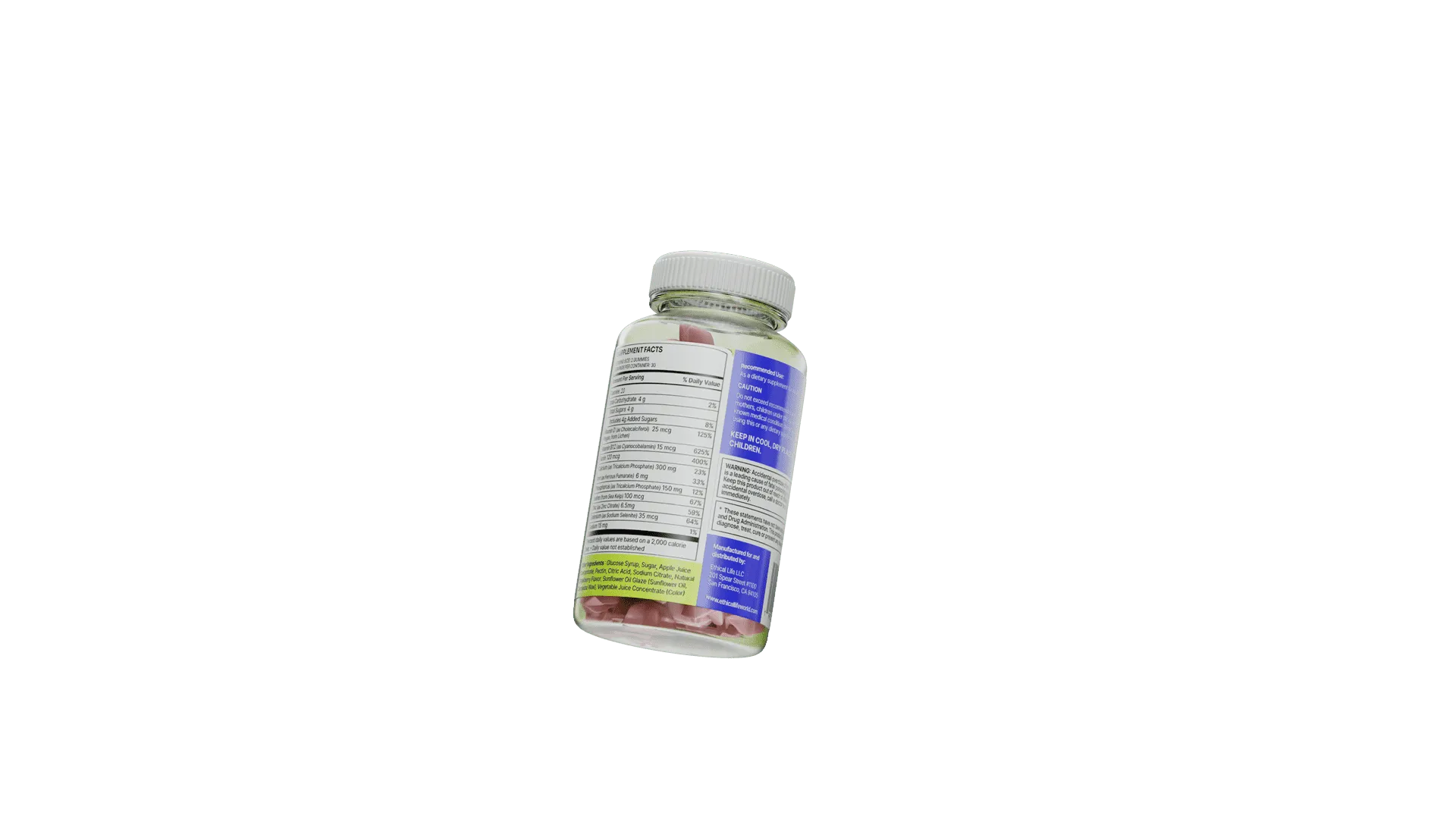
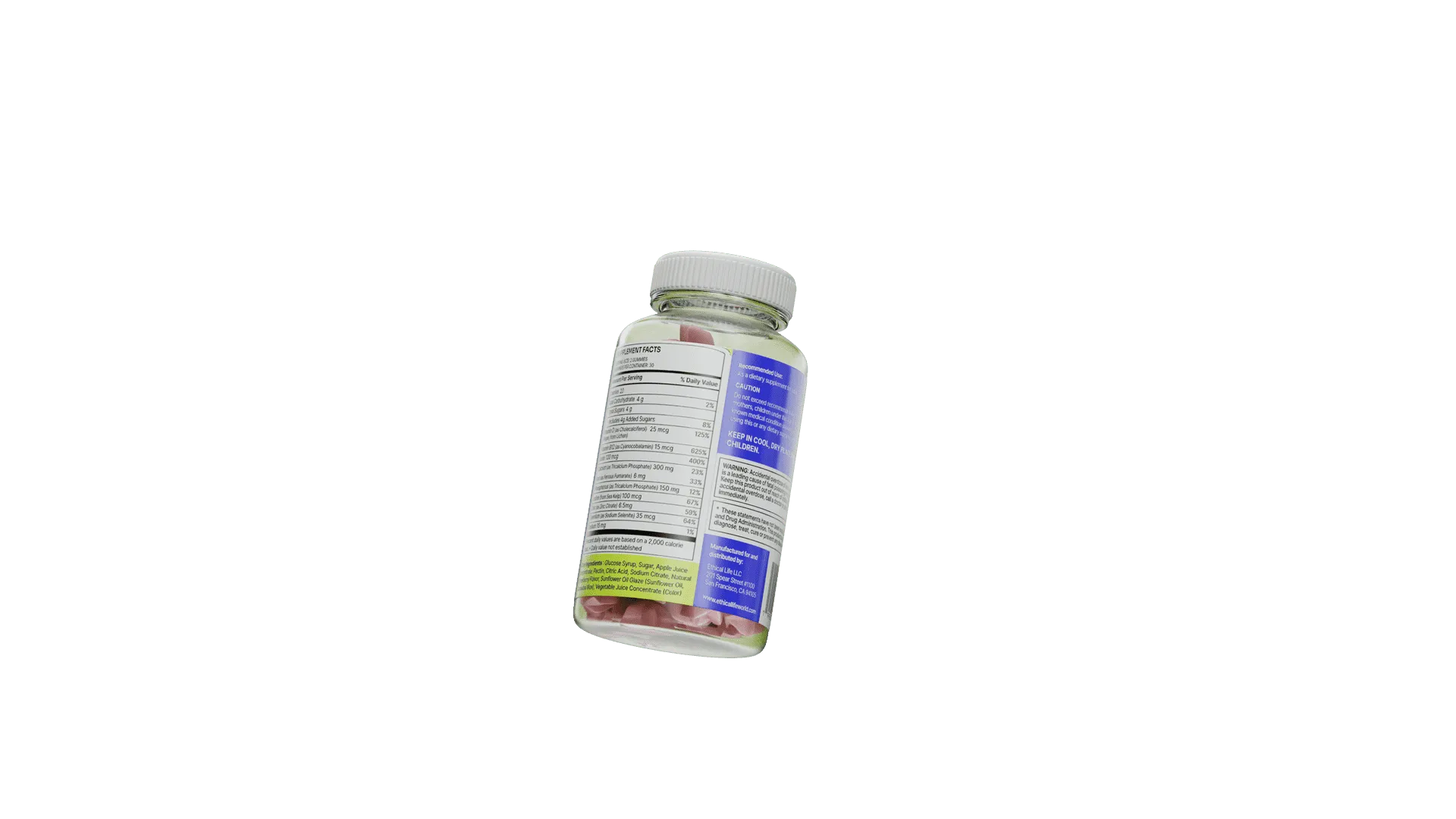
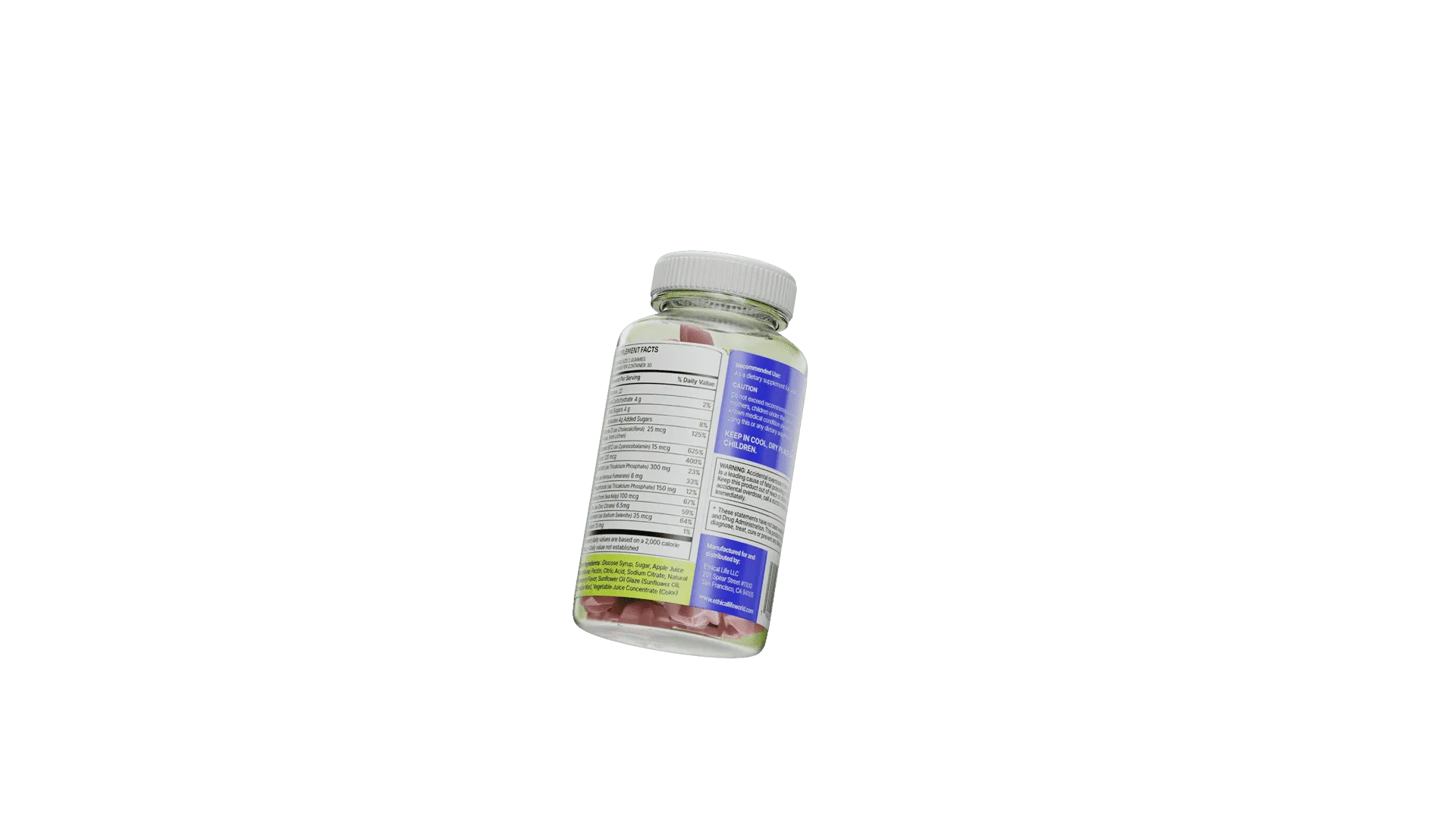
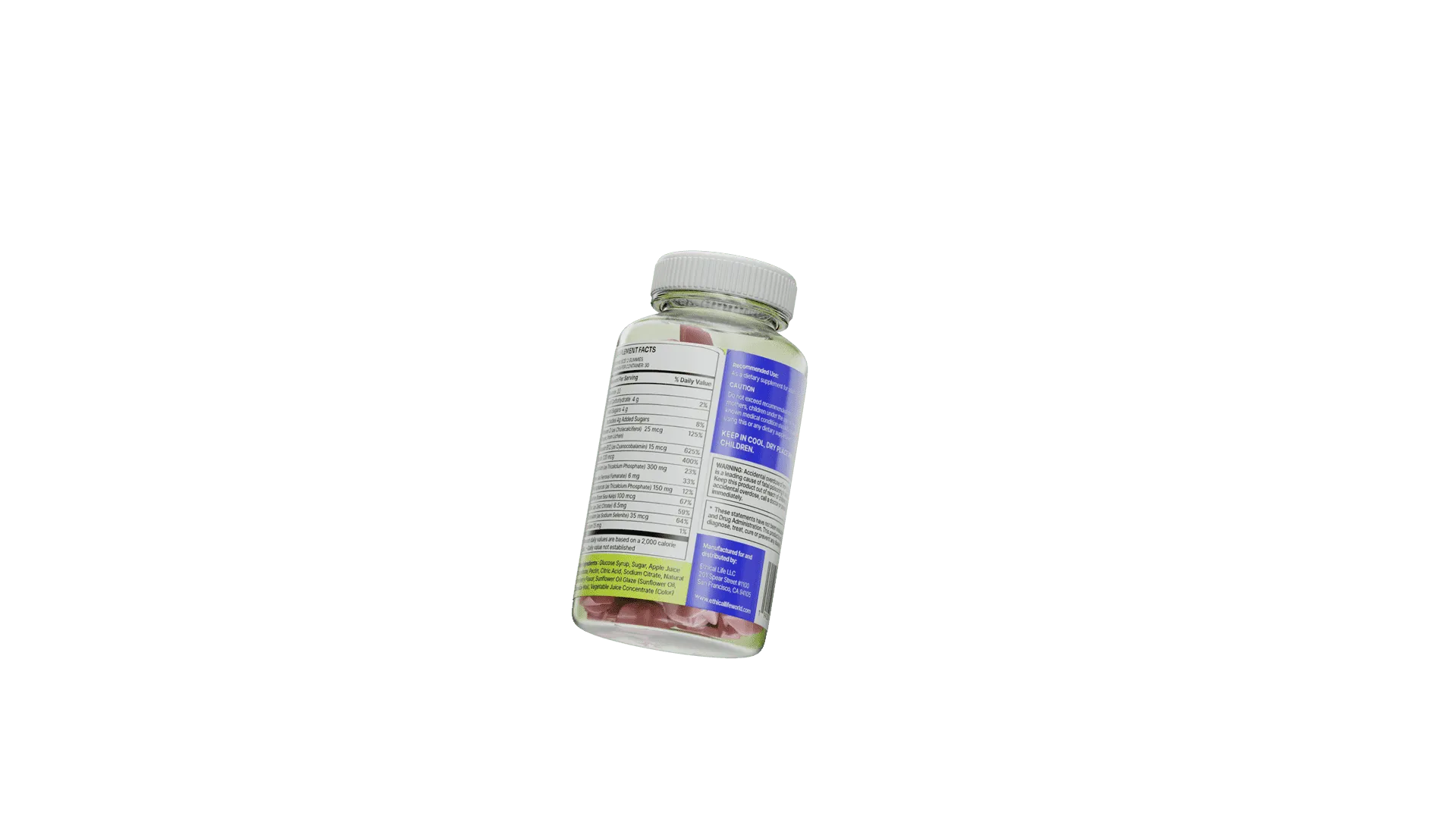
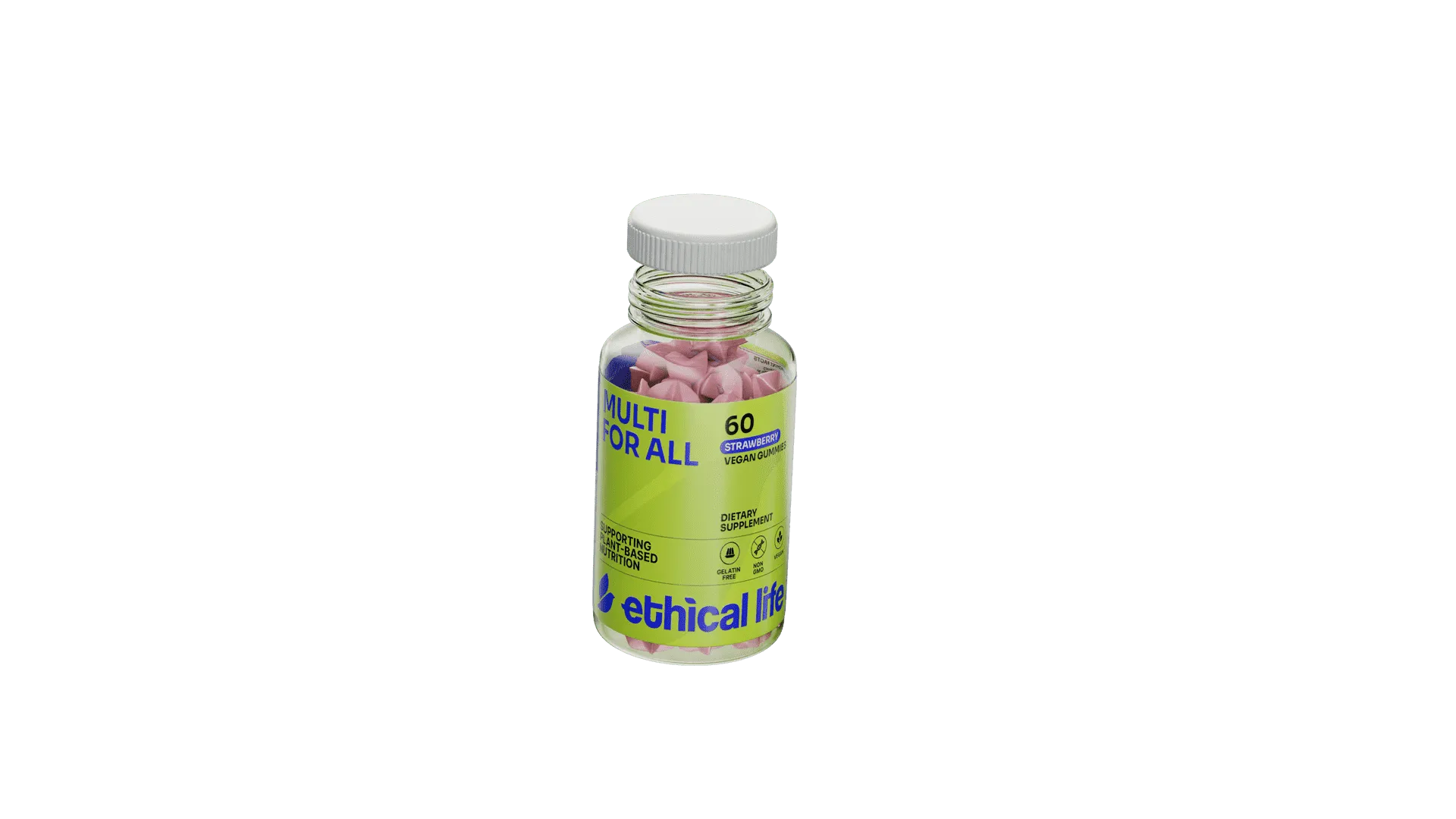
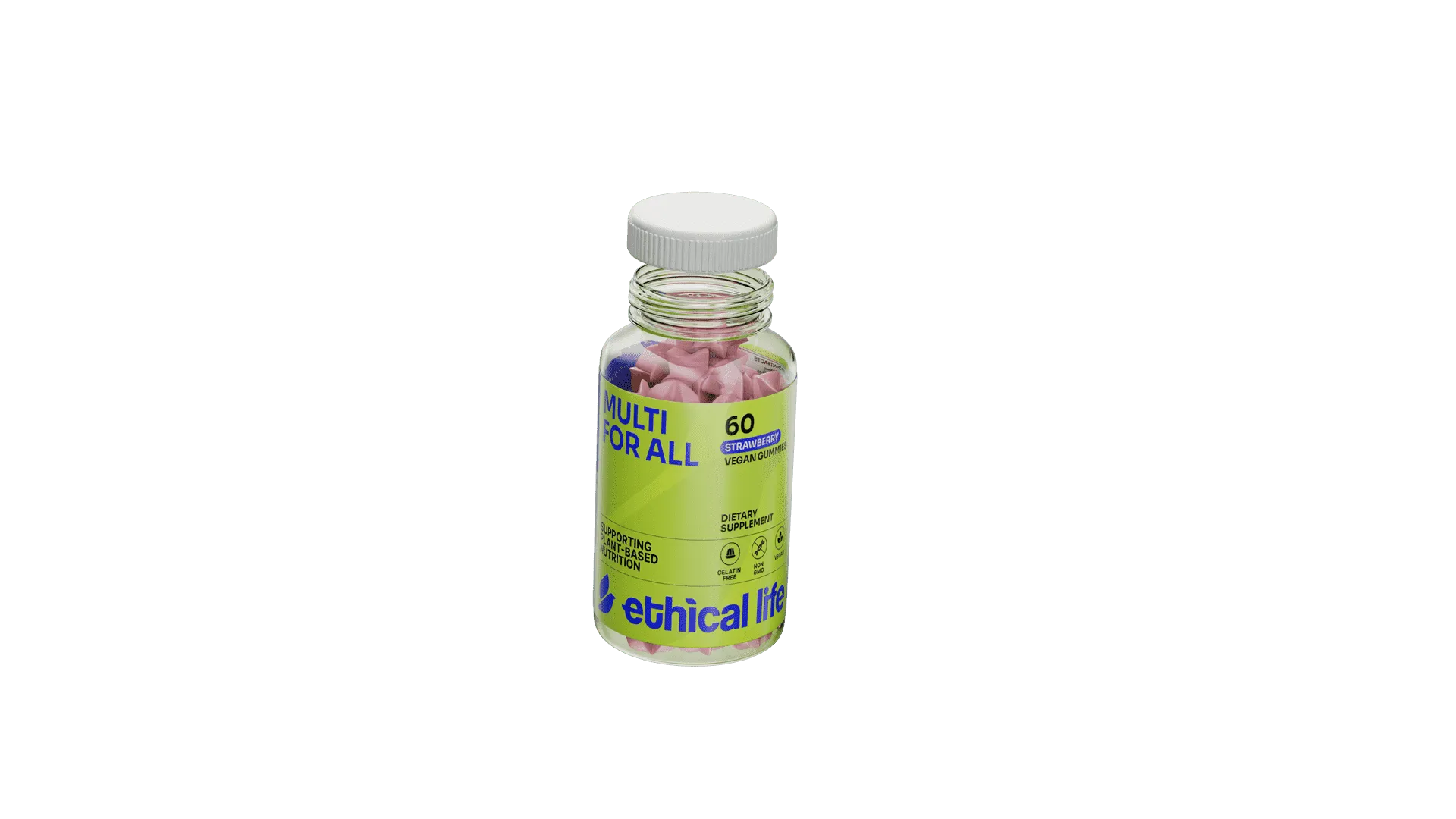
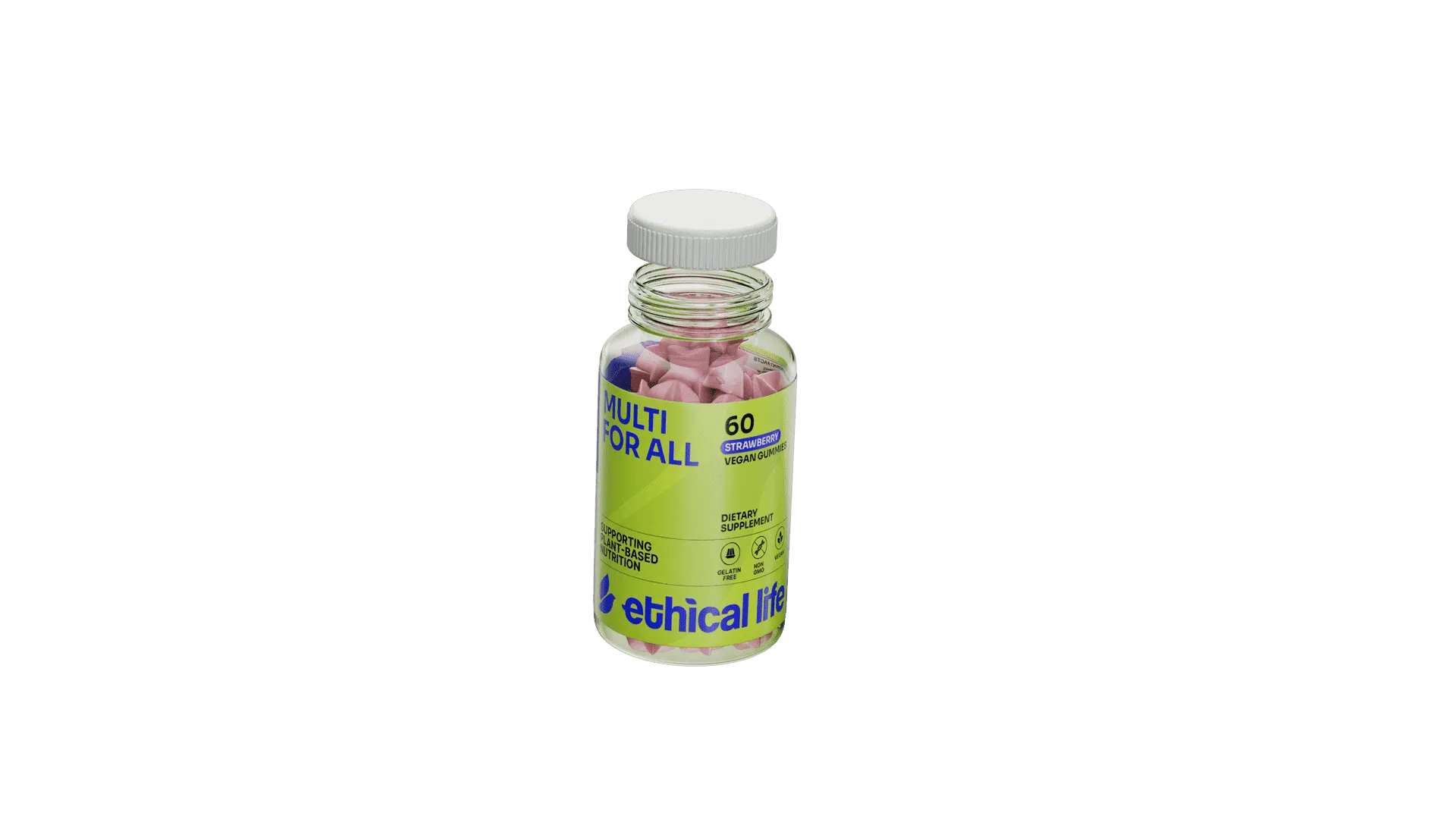
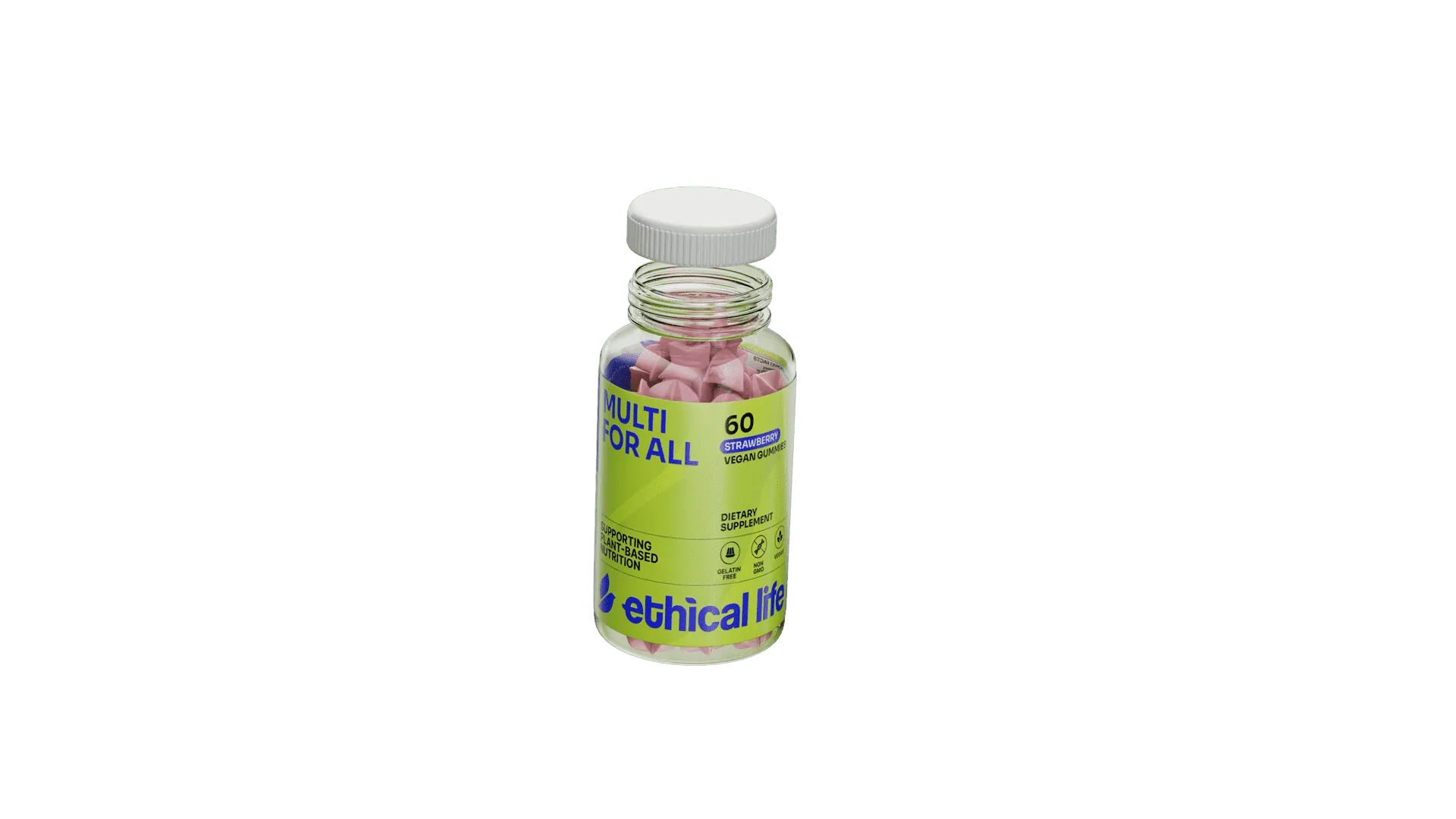
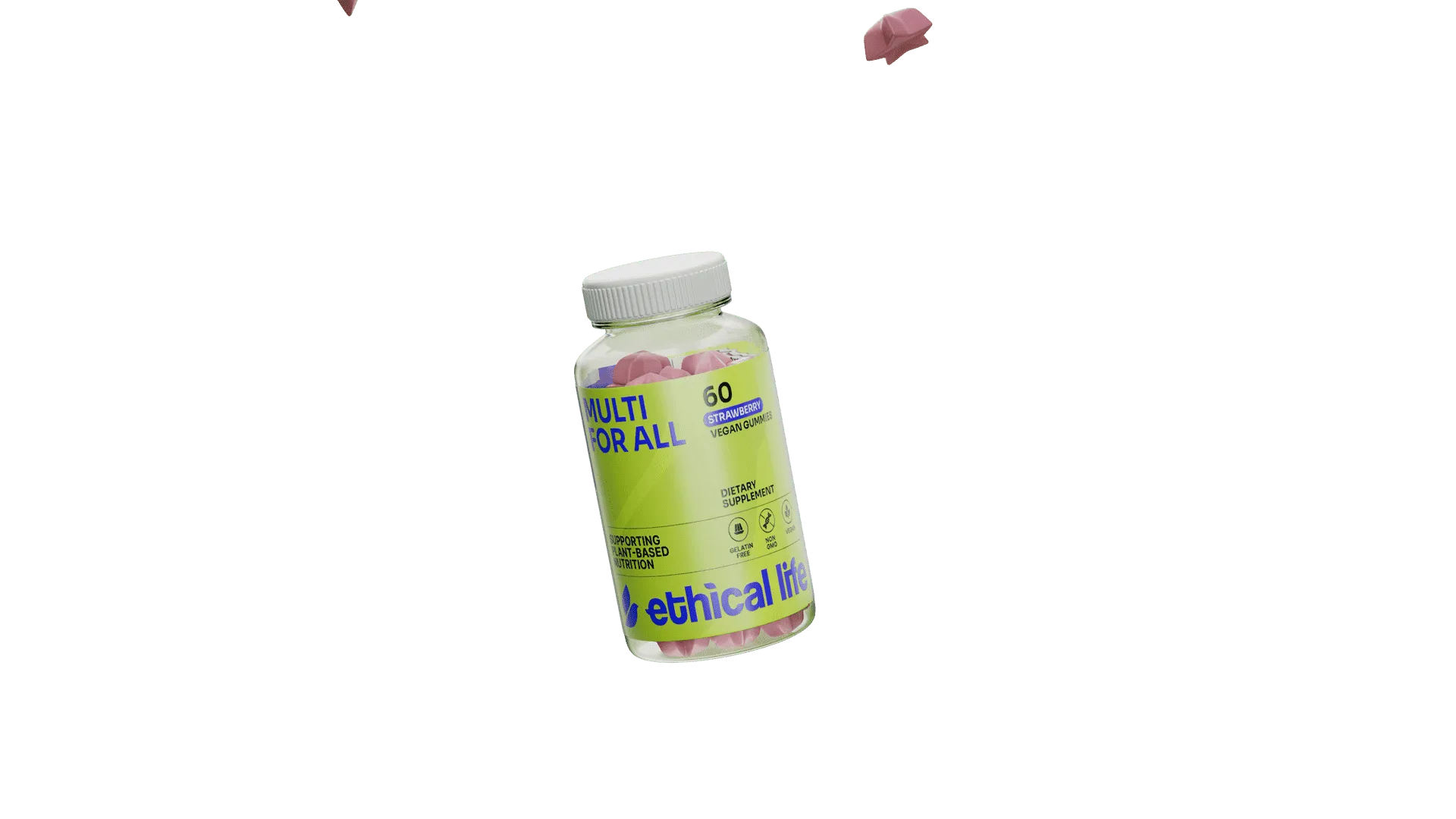
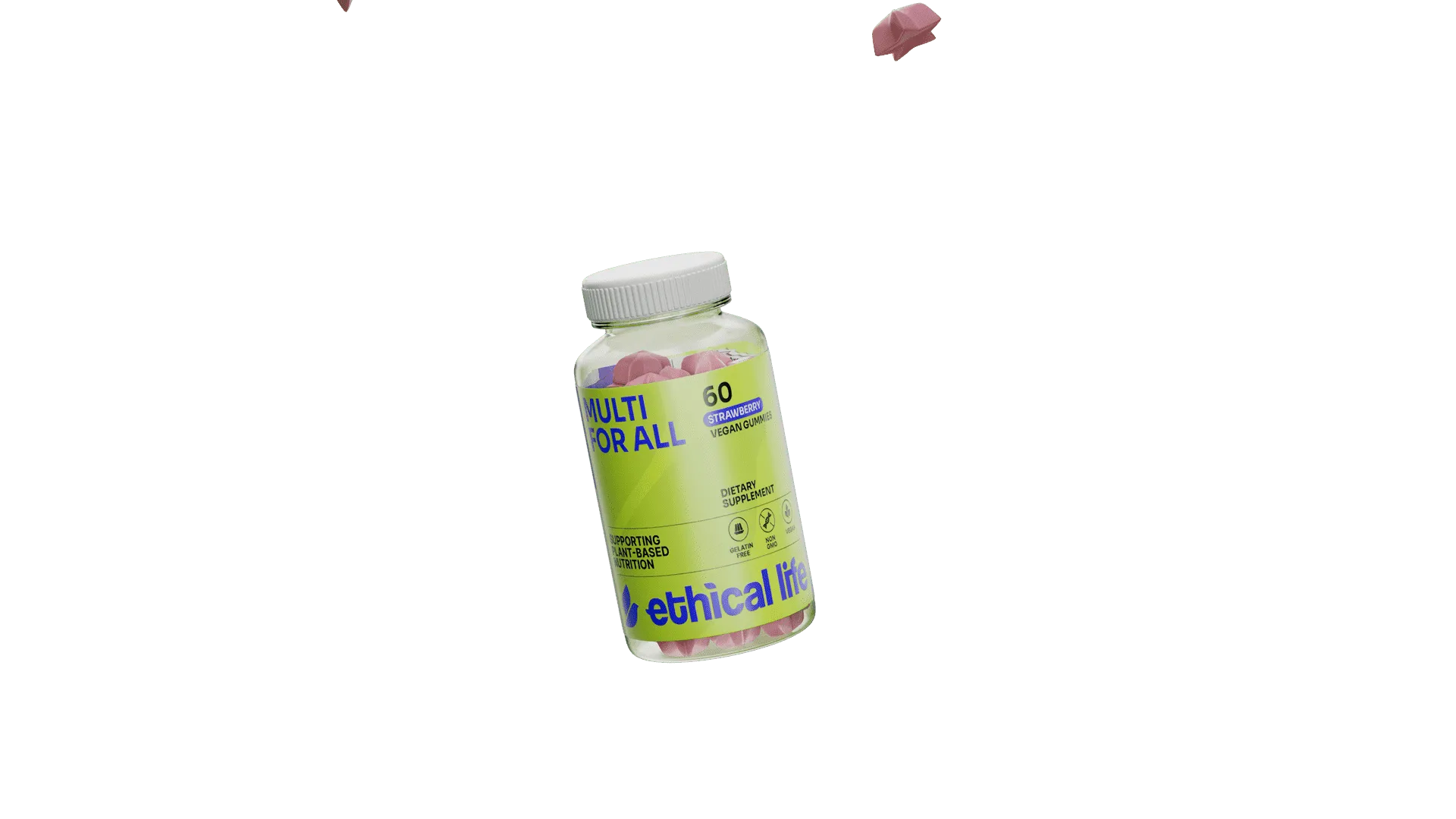
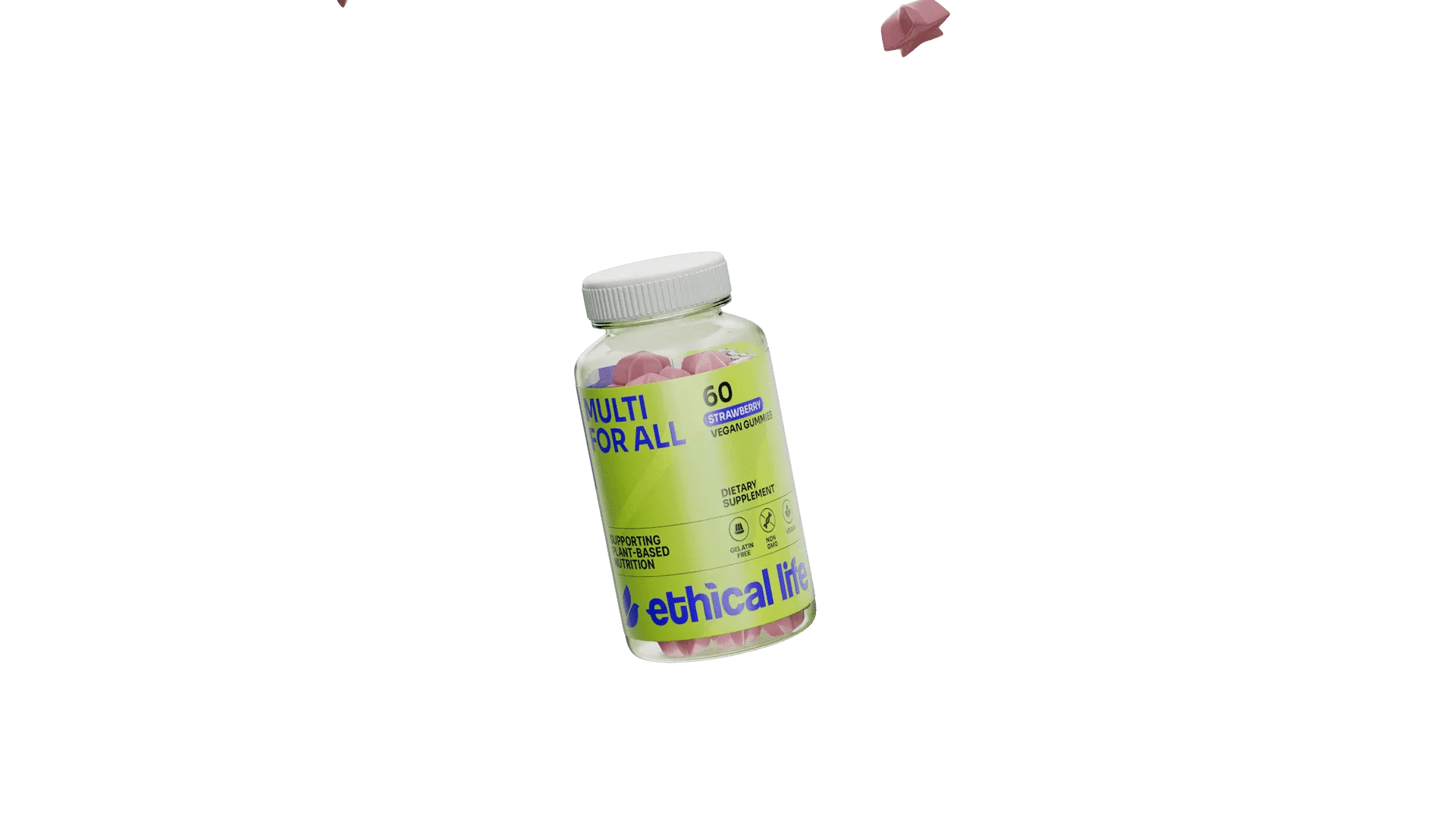
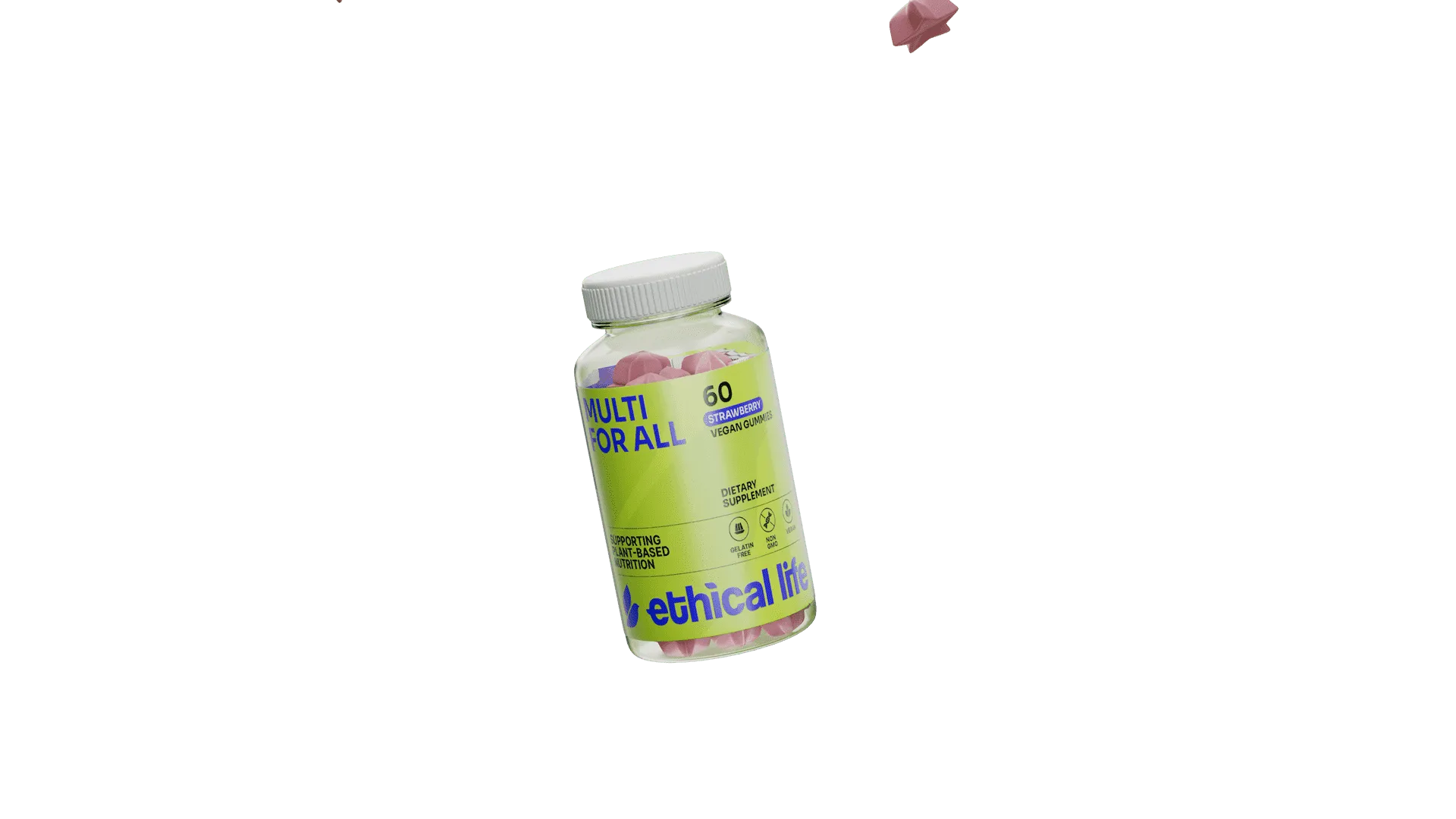
Most of us take a daily vitamin for a simple reason. We want to feel good and do something kind for our bodies. So it always stopped me cold, as a pharmacist, to turn a bottle over and realize how many of those “healthy” products begin with animal suffering. It is exactly why I set out to find vegan alternatives to gelatin that leave animals out entirely. The culprit is usually gelatin. It sits quietly in the ingredient list of countless gummies and softgels, and almost no one knows what it really is. That gap between what people think they are taking and what they are actually taking is why I started Ethical Life. It is also why I believe the supplement industry has a responsibility to change. No animal should suffer for a vitamin.
What gelatin actually is
Gelatin is not a plant, a mineral, or a lab-made fiber. It is collagen pulled from animals. Manufacturers take the skin, bones, cartilage, and connective tissue of cows and pigs, then boil them down until they release a gel. That gel is dried, ground, and added to supplements to create the chewy texture of a gummy or the smooth shell of a softgel. Read that again, because the marketing never says it out loud. The “strawberry” gummy in your hand may have started as boiled animal parts.
Why it ended up in almost every vitamin
Gelatin became the industry default for three unremarkable reasons: it is cheap, it sets easily, and it gives that satisfying chew. For decades, supplement makers optimized for cost and texture, not conscience. The animal origin got buried under fruit flavoring and bright colors, and shoppers were never really invited to ask questions.
Gelatin is not the only hidden animal ingredient
Once you start reading labels closely, gelatin is only the beginning. Other common animal-derived ingredients include:
- Vitamin D3 from lanolin, the grease extracted from sheep’s wool
- Carmine (cochineal), a red coloring made from crushed insects
- Shellac, a shine coating made from insect resin
- Fish oil for omega-3s
- Some forms of magnesium stearate and glycerin, which can be animal or plant derived with no way to tell from the label
The deeper problem is transparency. Most people have no idea any of this is in a product they take to be healthier.
The case for vegan alternatives to gelatin
This matters on two levels. First, the ethical one. A vitamin is a wellness choice. It should not require an animal to be raised and killed so a gummy holds its shape. When a kinder option exists, using the harmful one is a decision, not a necessity. Second, inclusion. Animal ingredients quietly shut out a huge number of people: vegans and vegetarians, and many who follow religious diets where pork or beef gelatin is a serious concern. A daily vitamin should be something everyone can take with a clear conscience.
Vegan alternatives to gelatin that already work
Here is the hopeful part. Vegan alternatives to gelatin already exist, so the industry does not need to invent anything to fix this. The replacements are already on the shelf, and many are cleaner than what they replace.
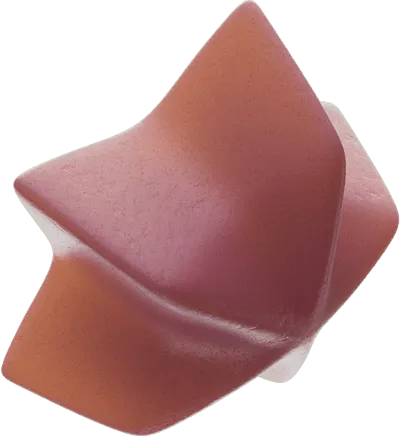
- Pectin instead of gelatin. Pectin comes from fruit, usually apples and citrus peels, and creates the same chewy gummy texture without a trace of animal product. This is what we use in every Ethical Life gummy.
- Agar-agar and carrageenan from seaweed, for gelling and setting.
- Plant cellulose (HPMC) and pullulan (from tapioca) for capsule shells, in place of gelatin capsules.
- Lichen-derived vitamin D3, or D2 from yeast and mushrooms, instead of sheep-wool D3.
- Algae oil for omega-3s, including DHA and EPA, instead of fish oil. It is where the fish get it in the first place.
- Beet, spirulina, and turmeric for color, instead of insect-based carmine.
None of these are compromises. They deliver the same texture, the same nutrients, and the same shelf life, without the harm.
How we make our vegan gummy vitamins
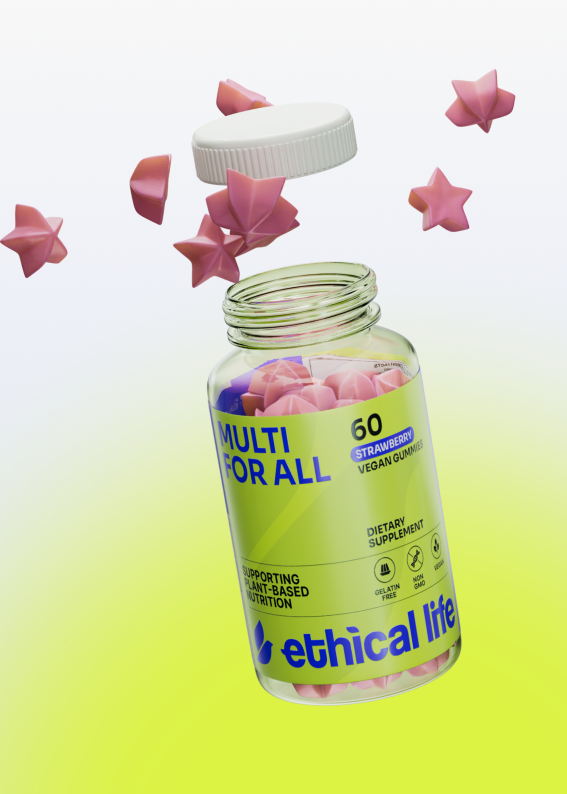
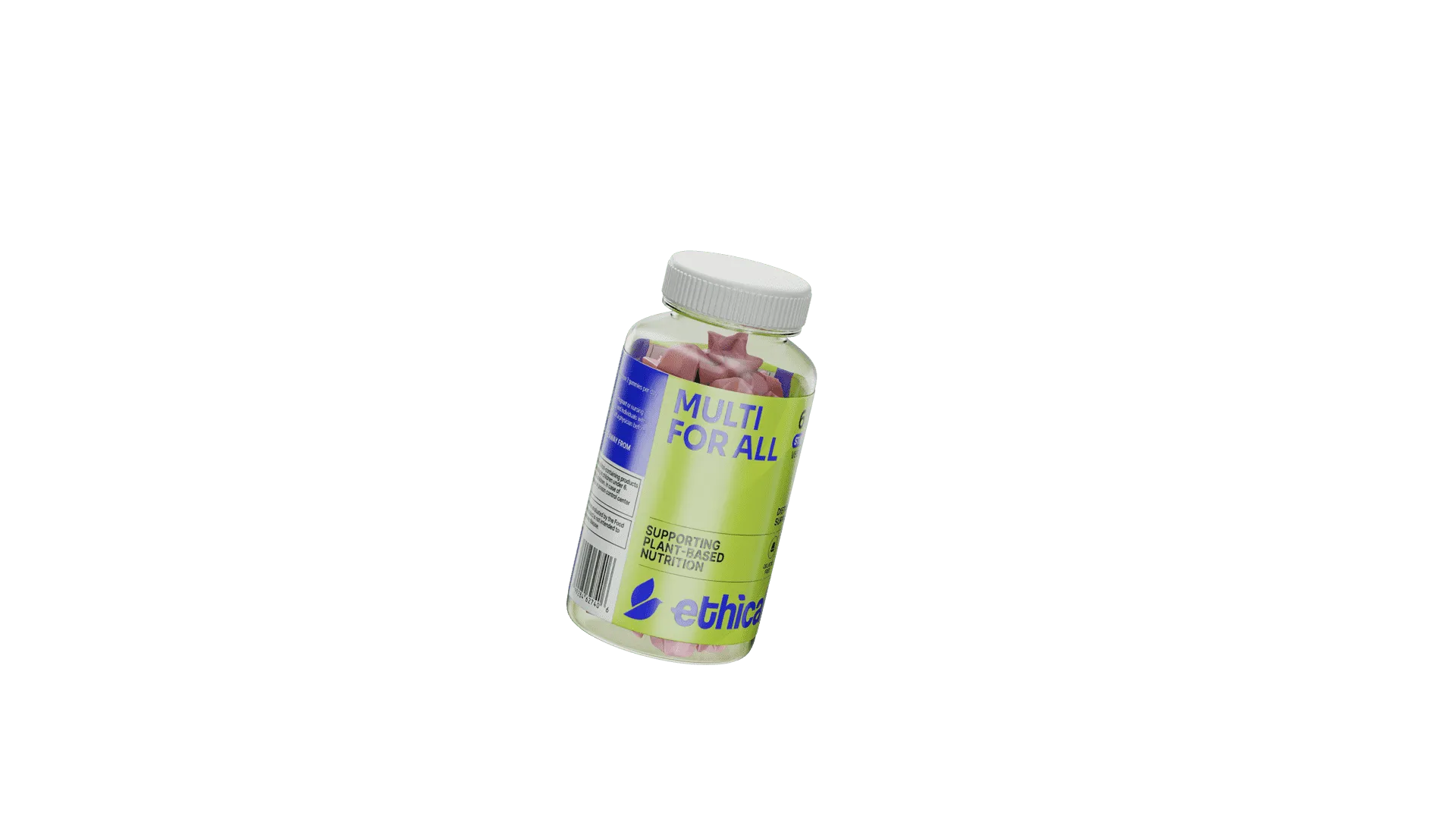
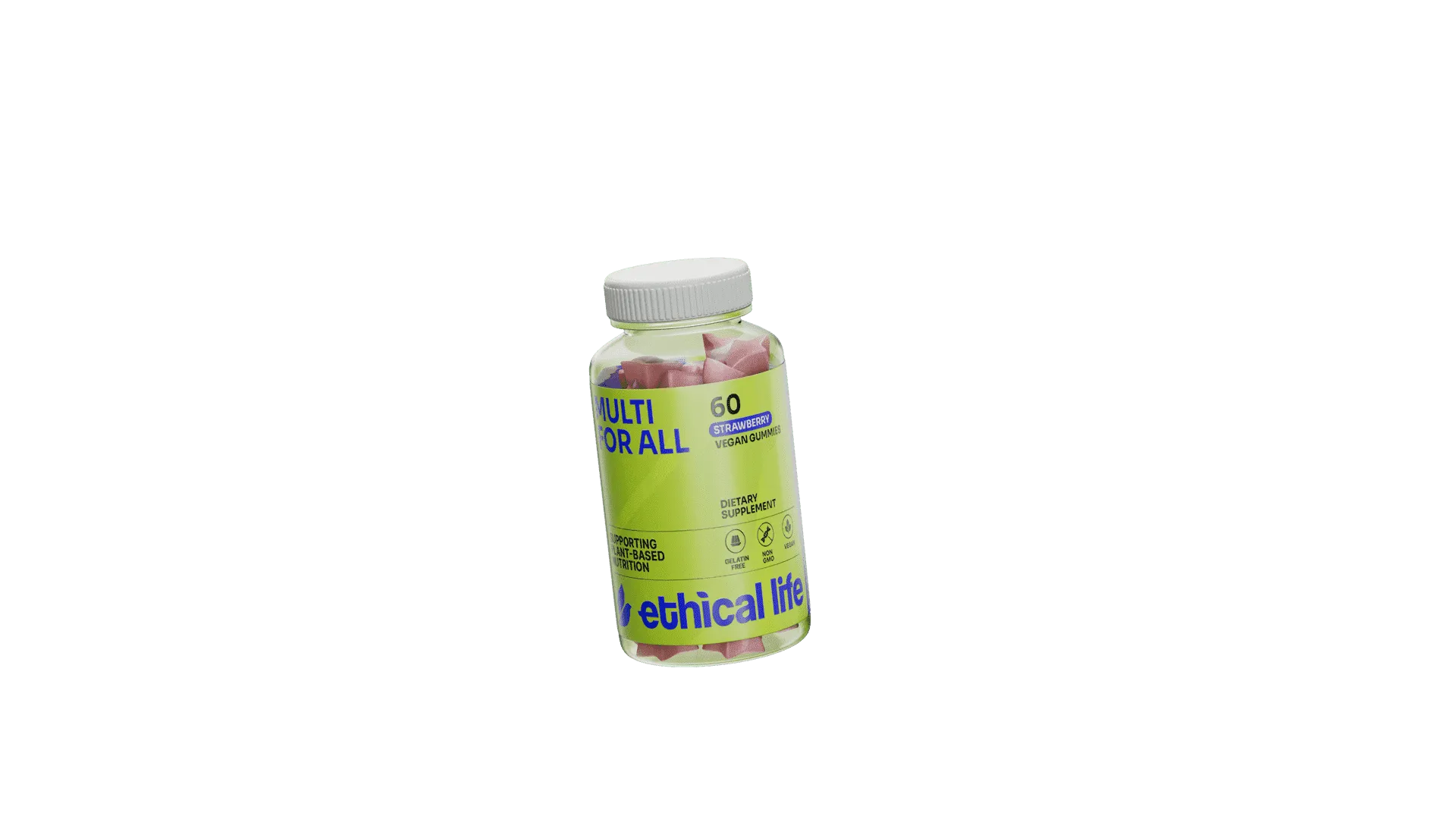
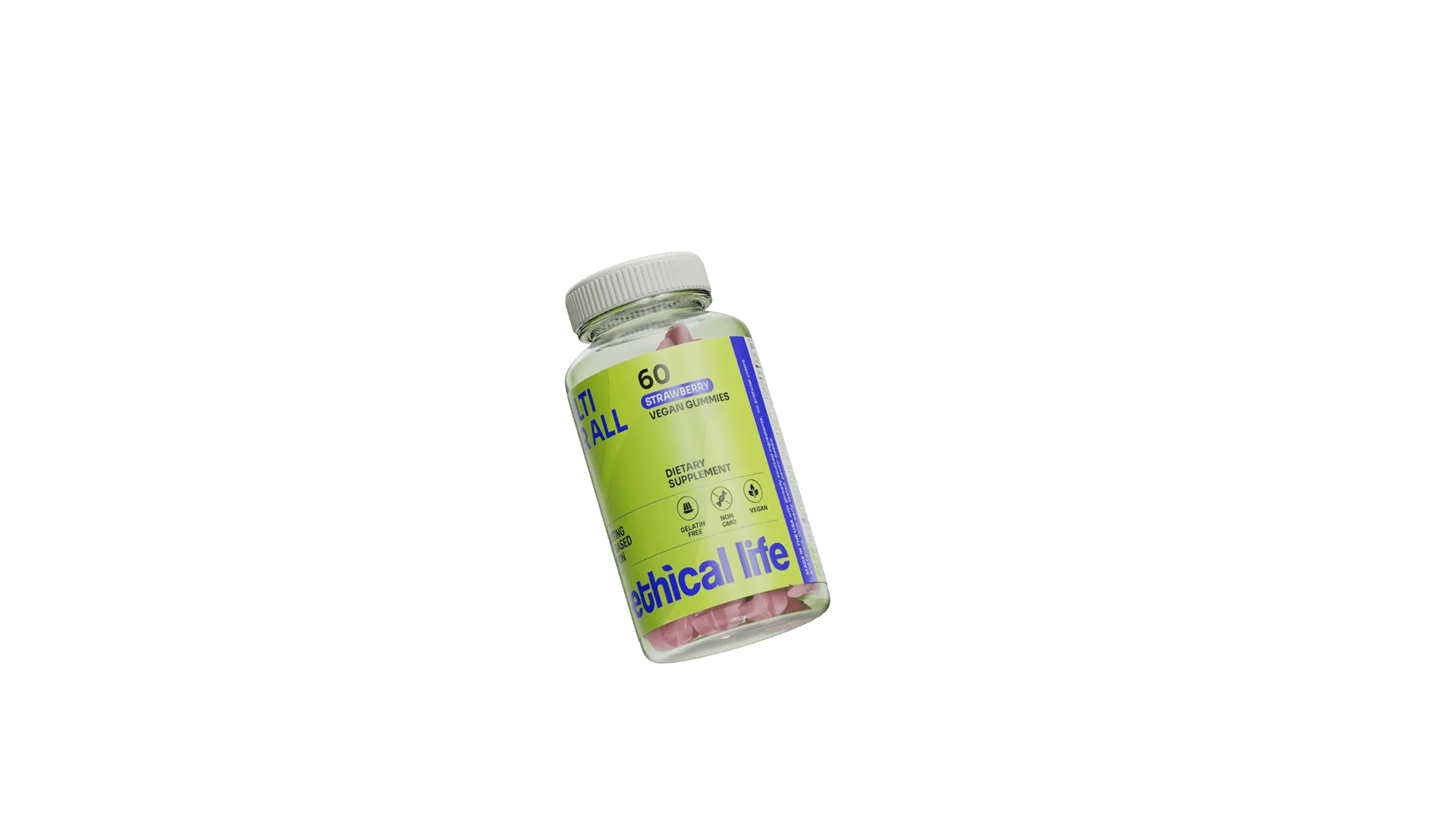
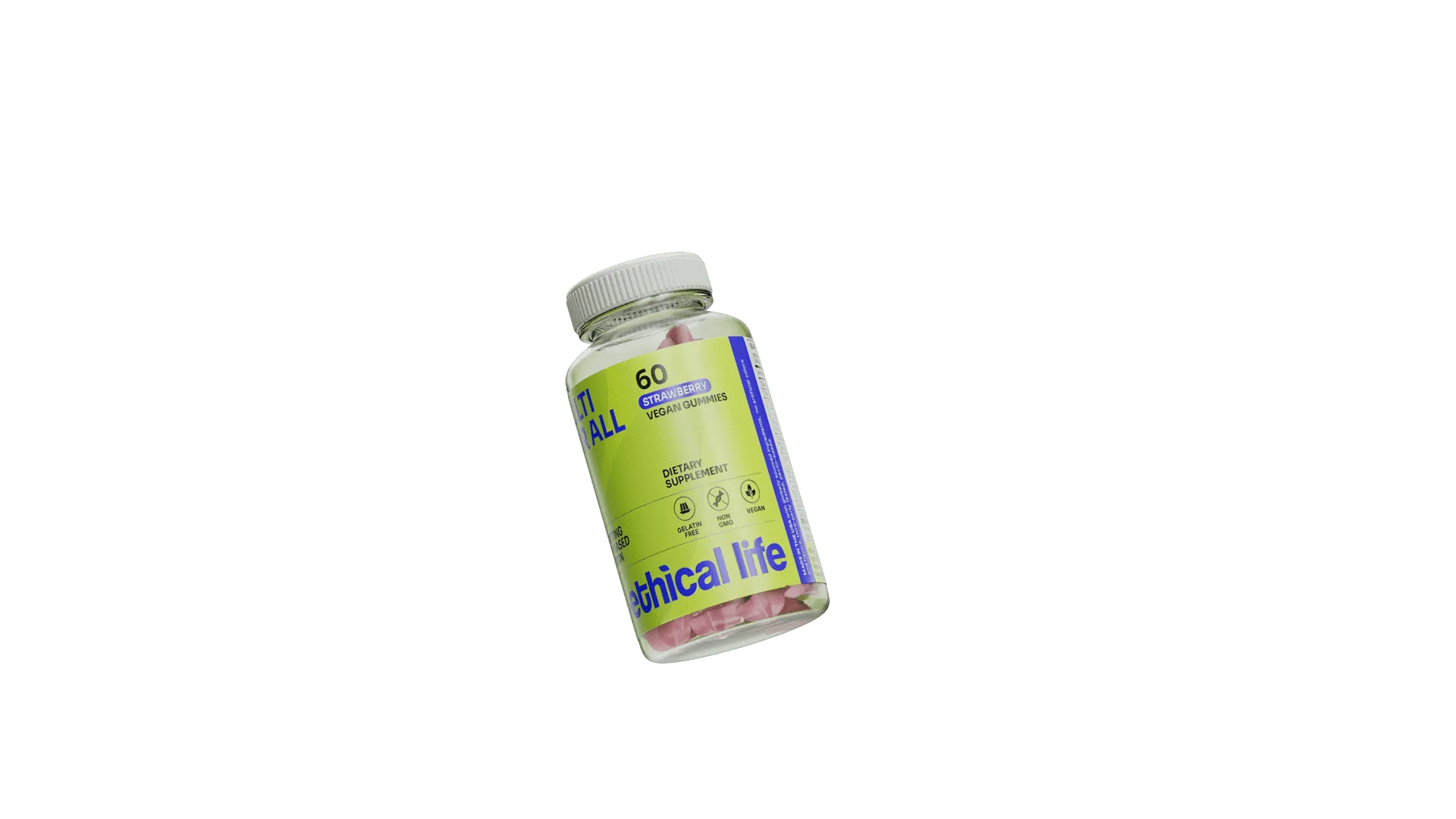
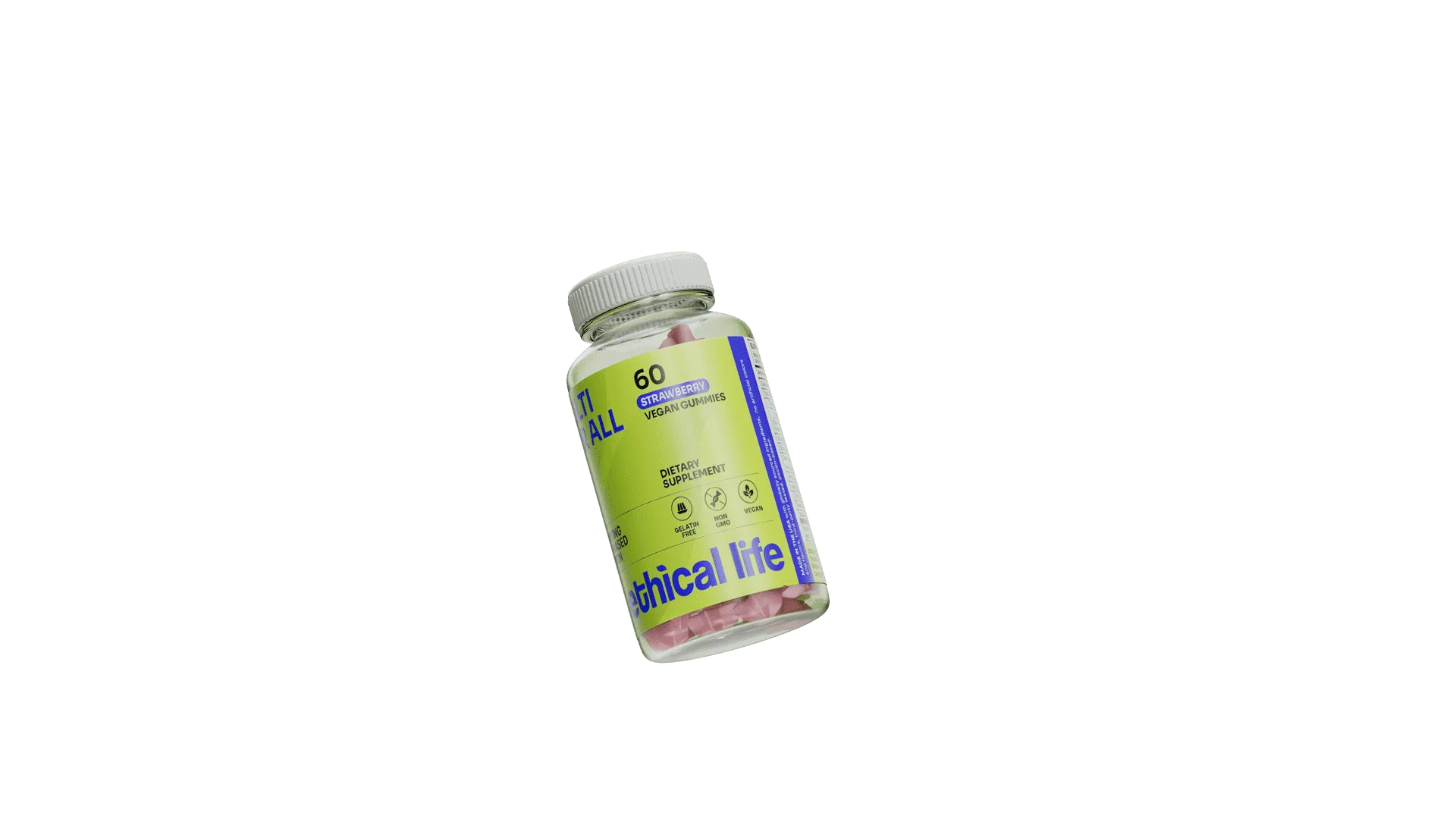
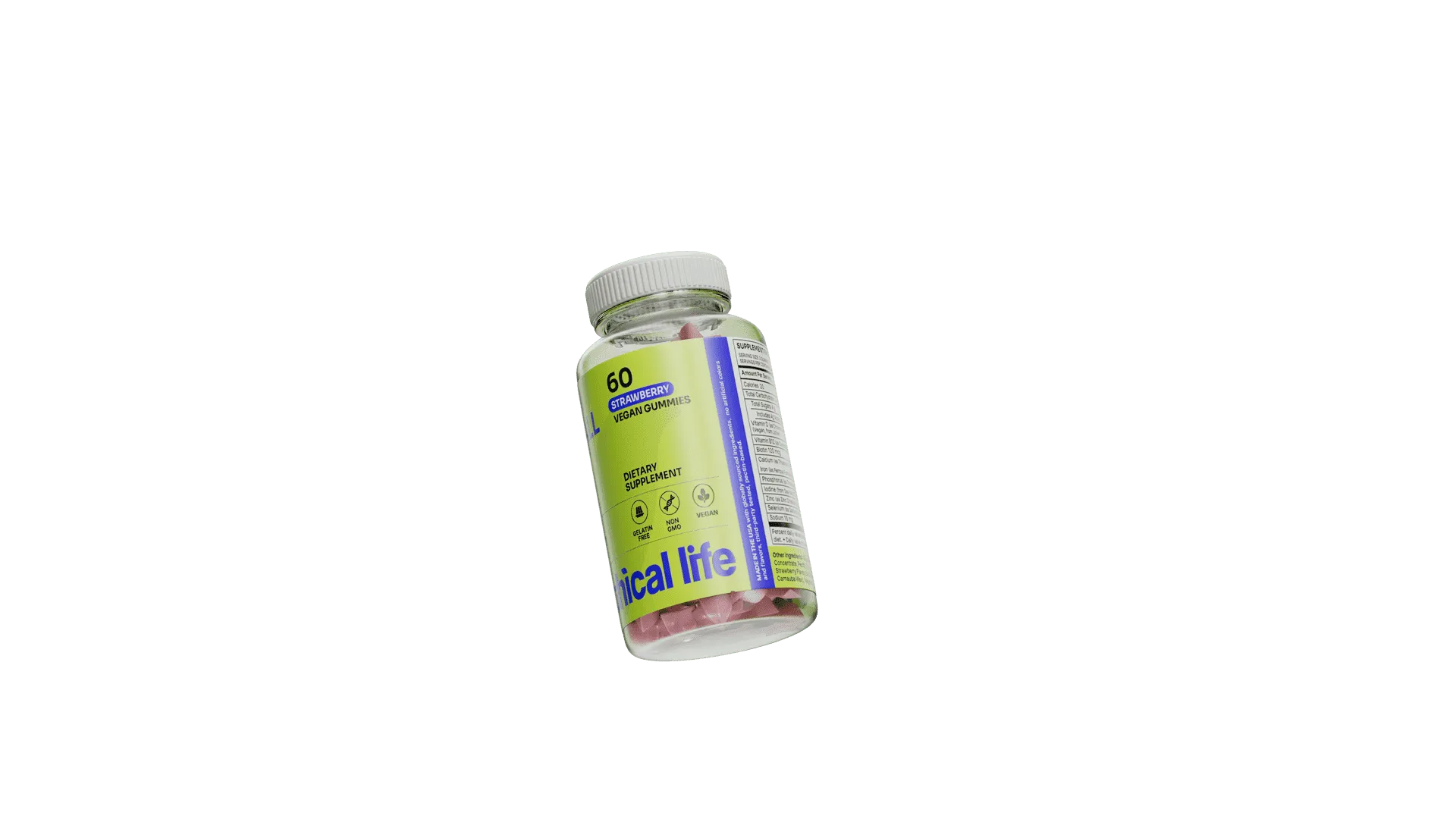
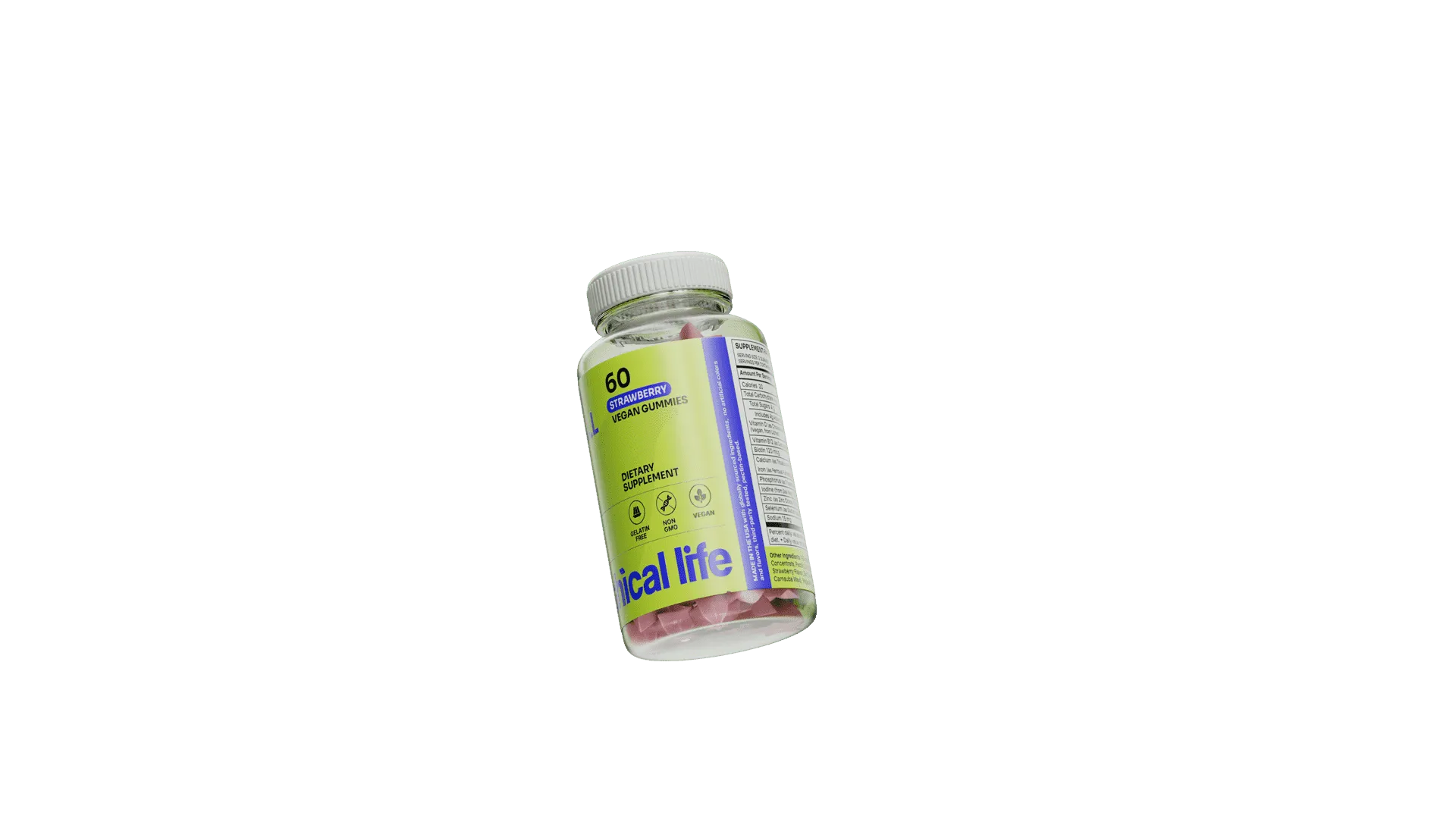
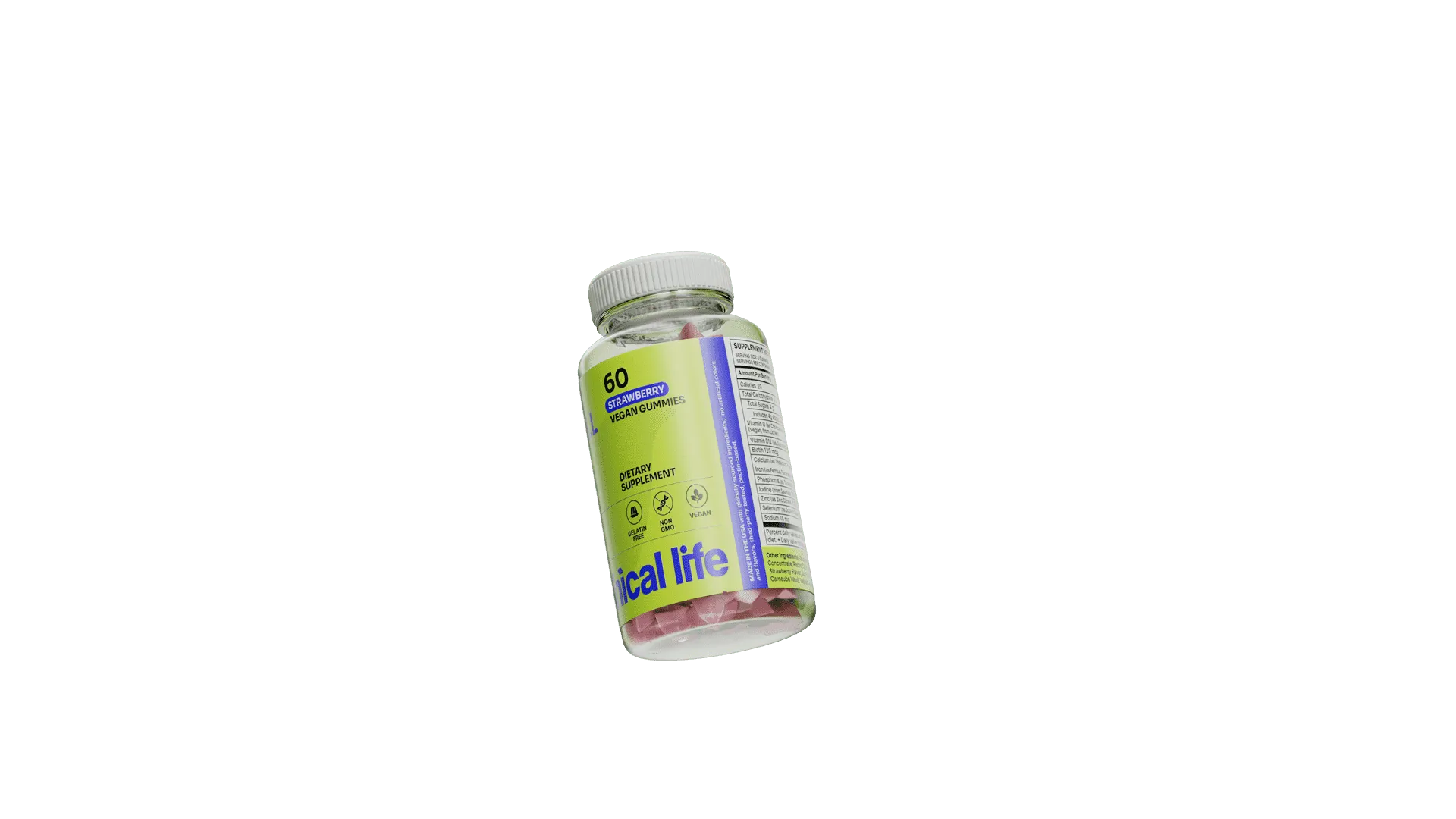
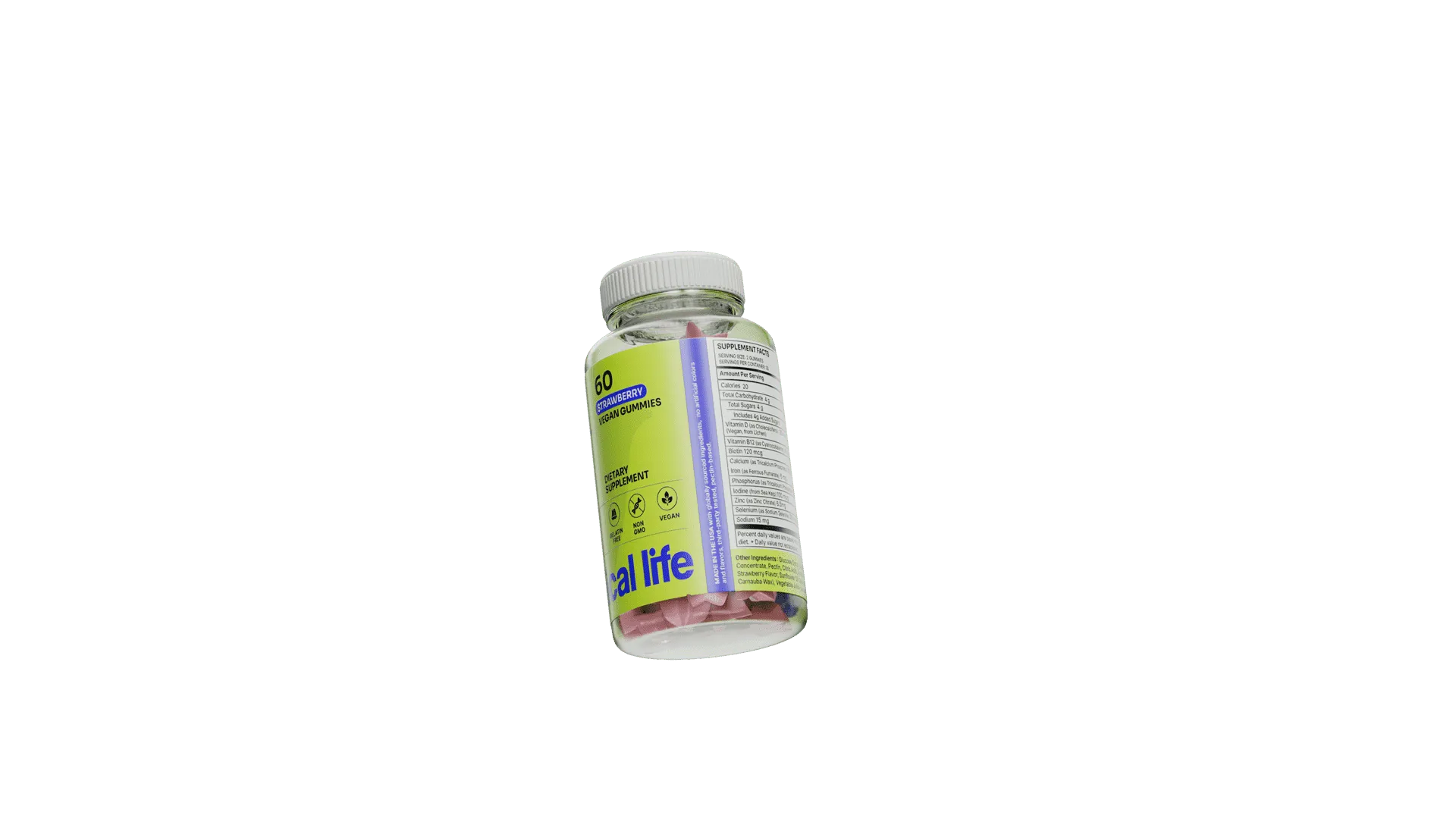
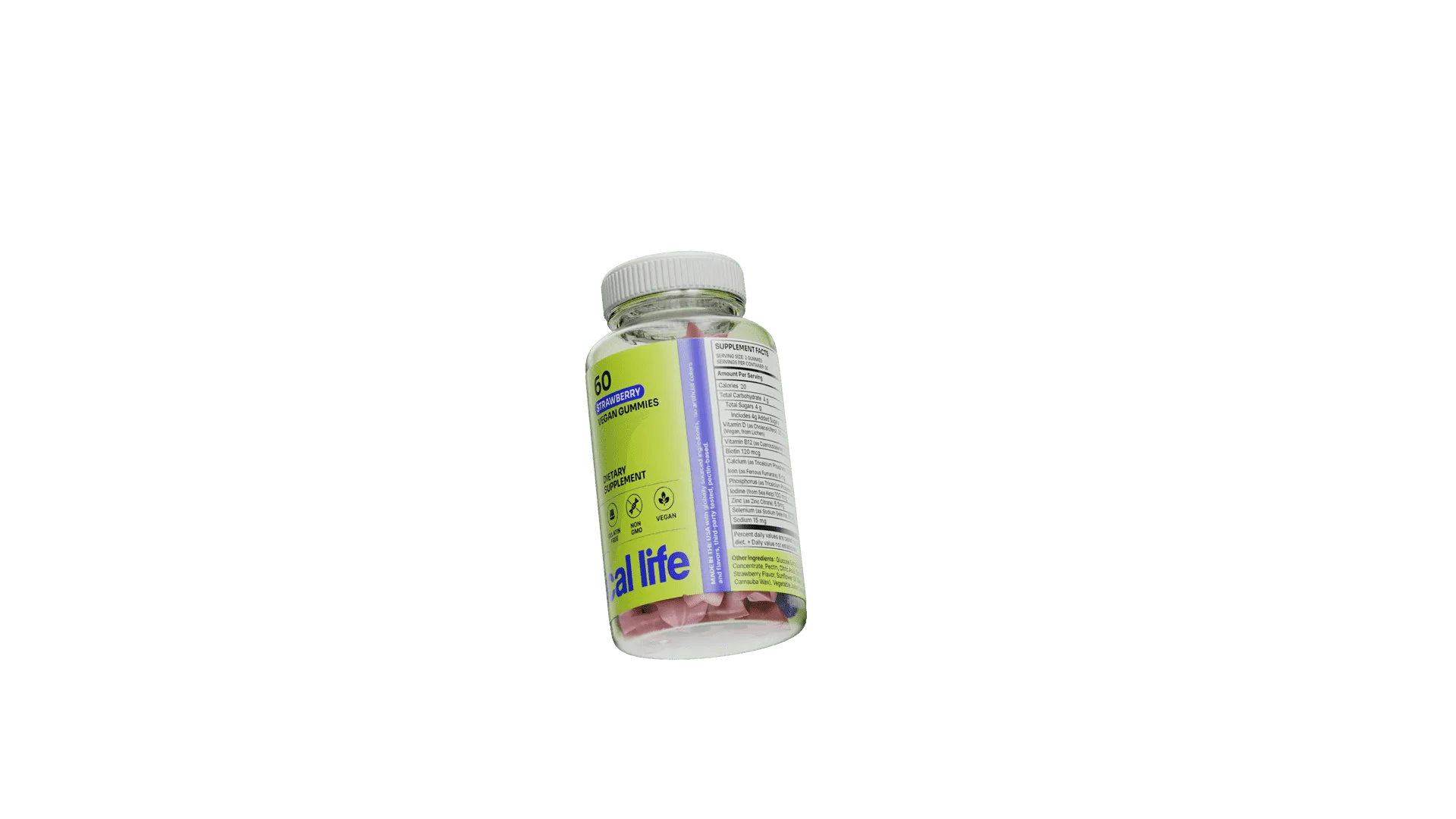
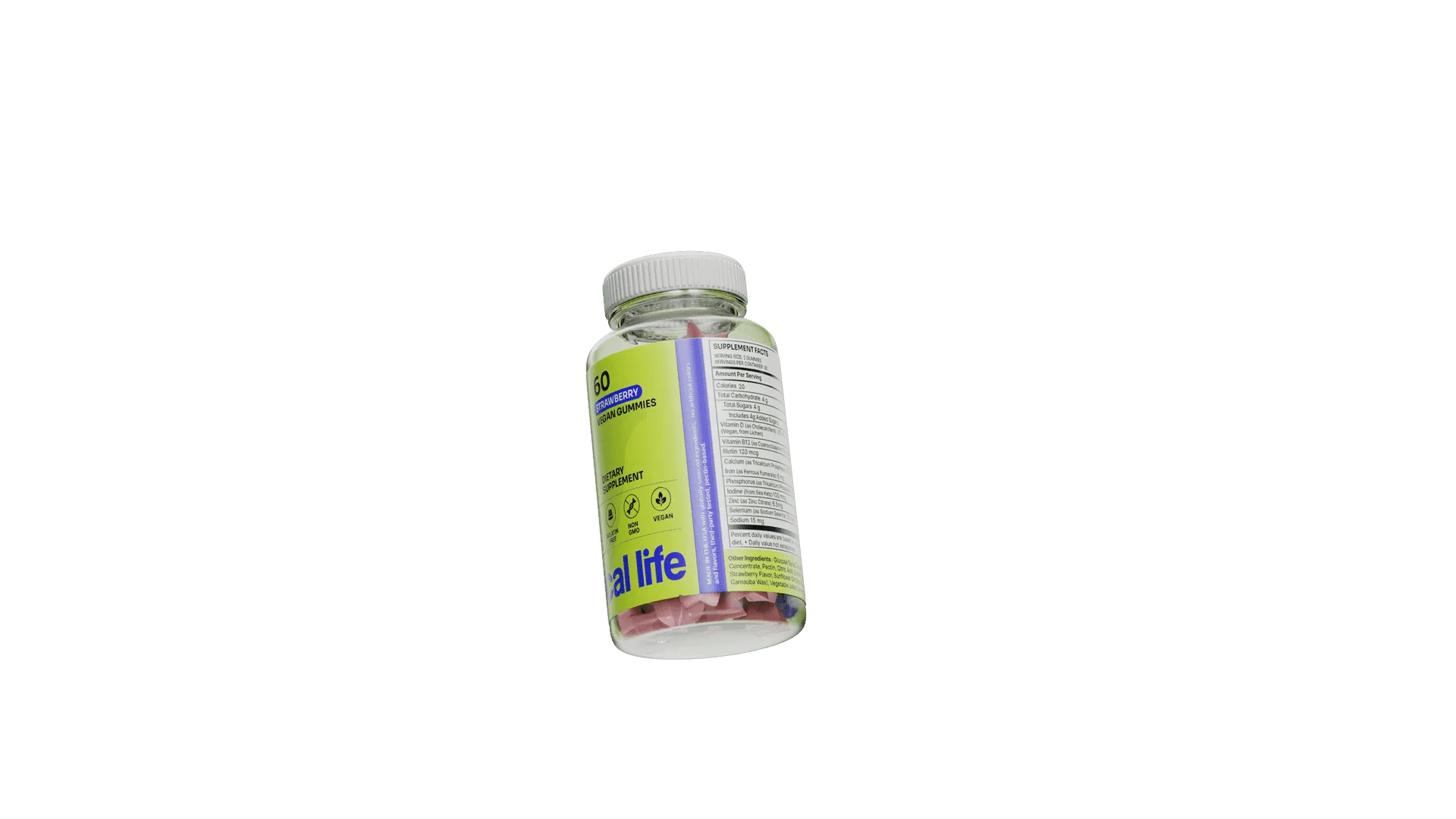
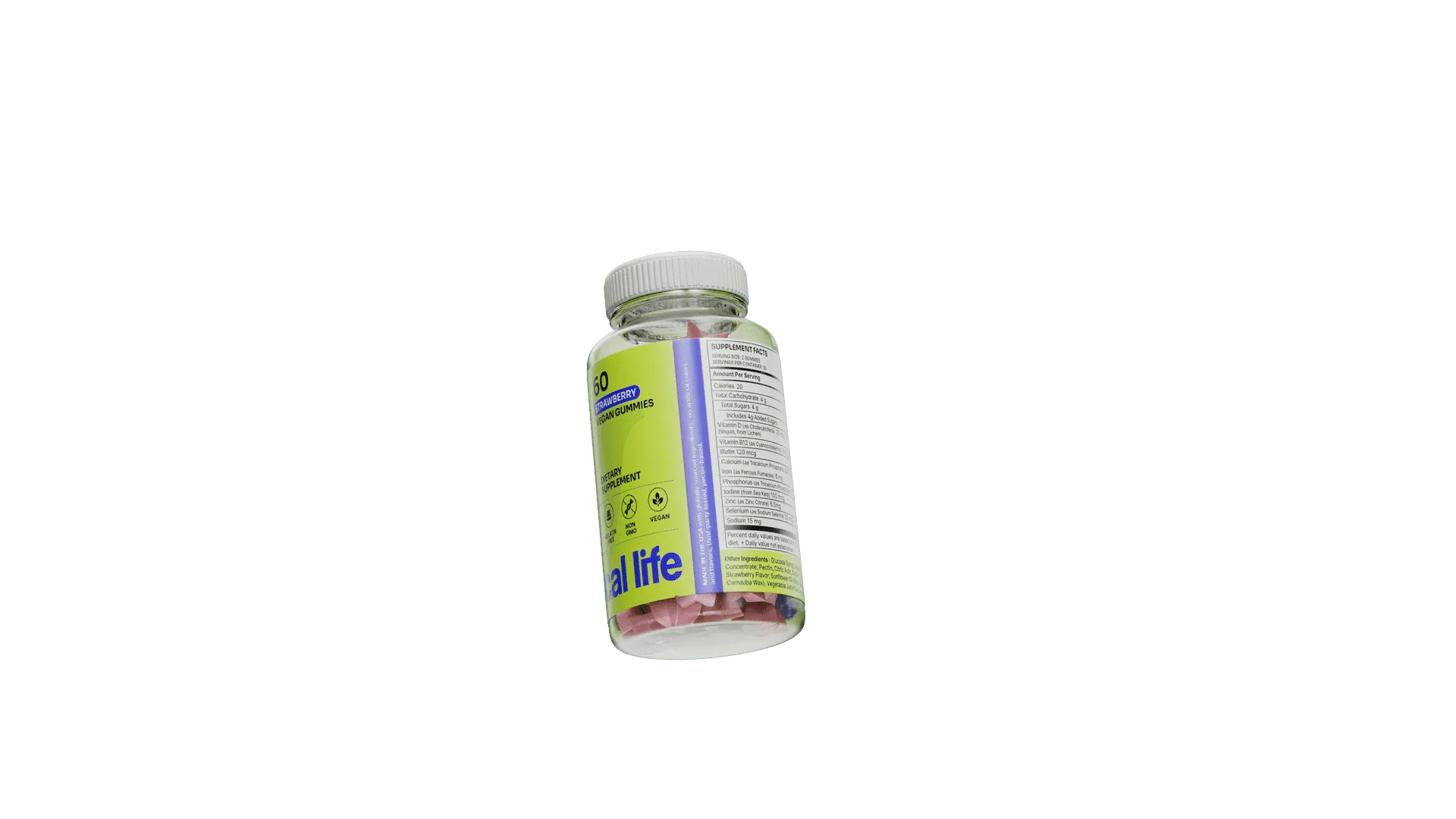
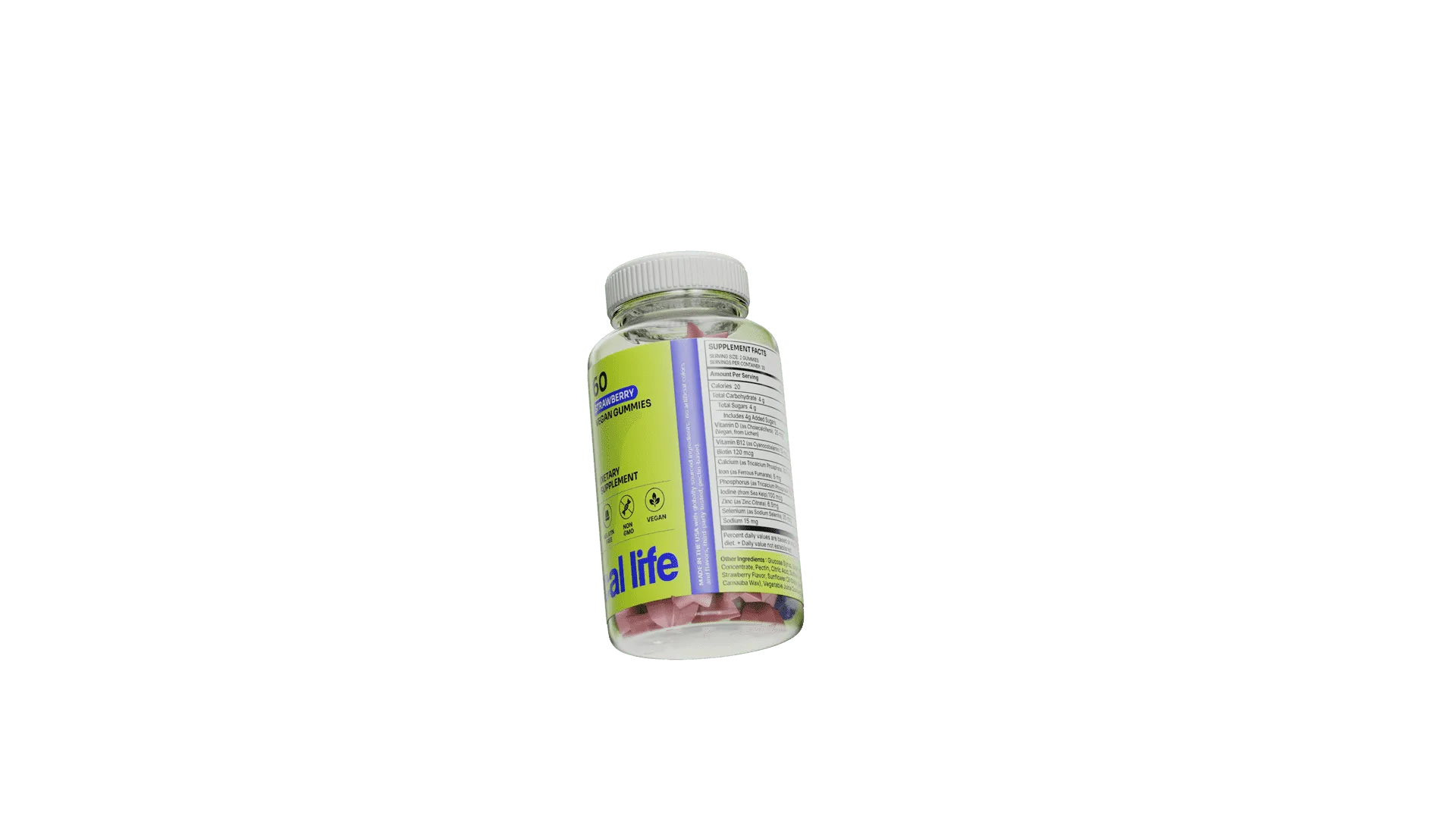
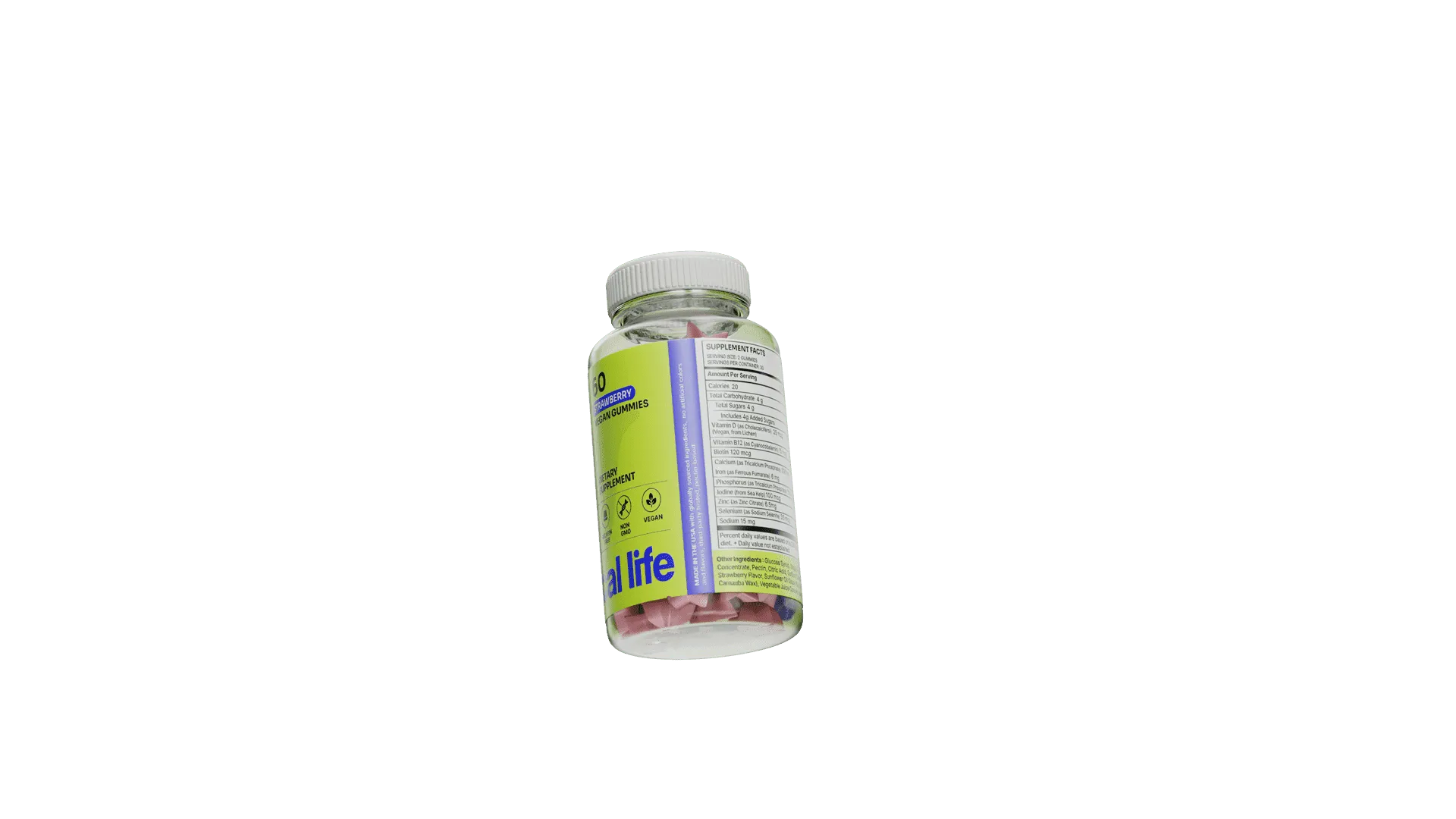
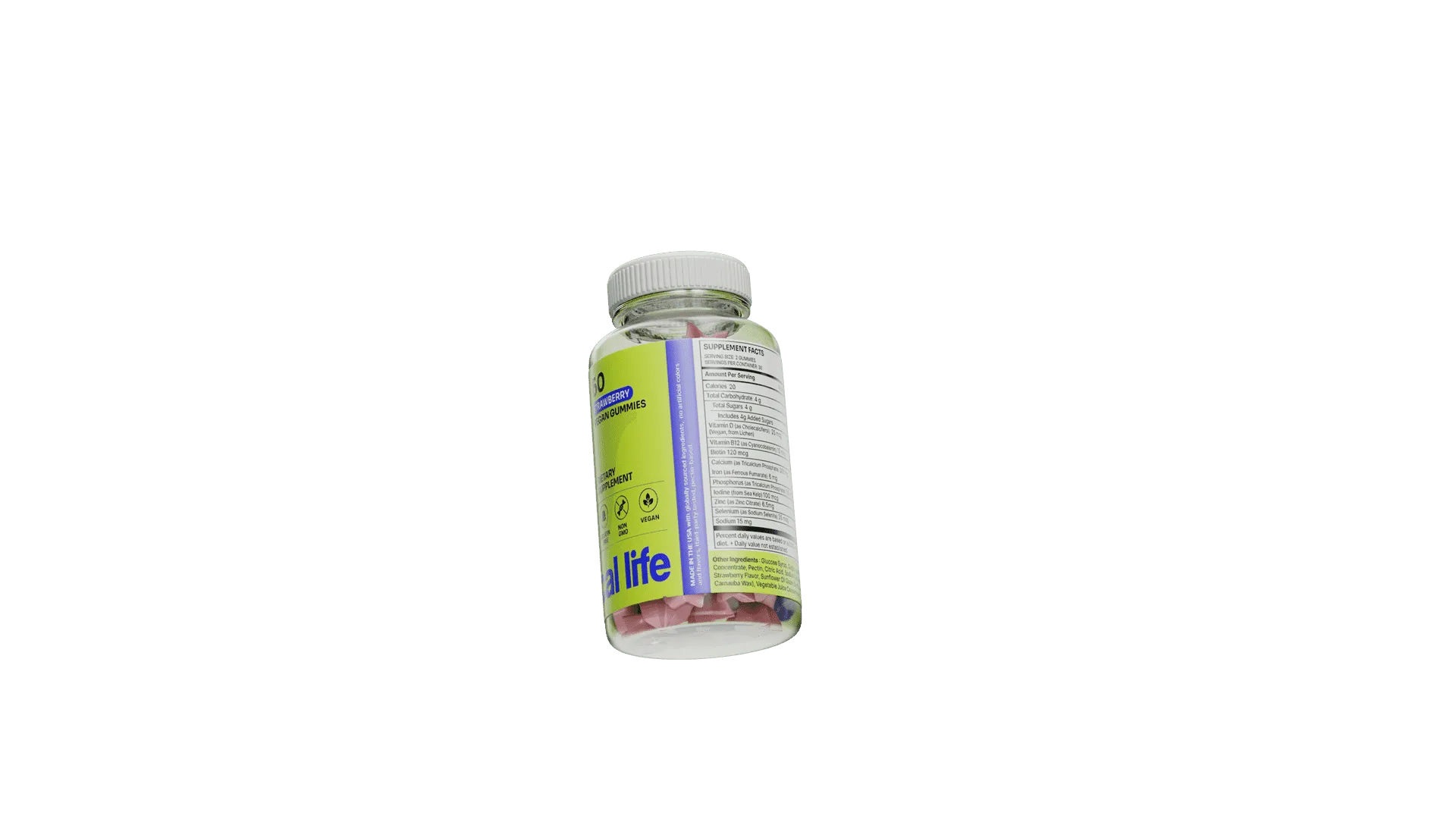
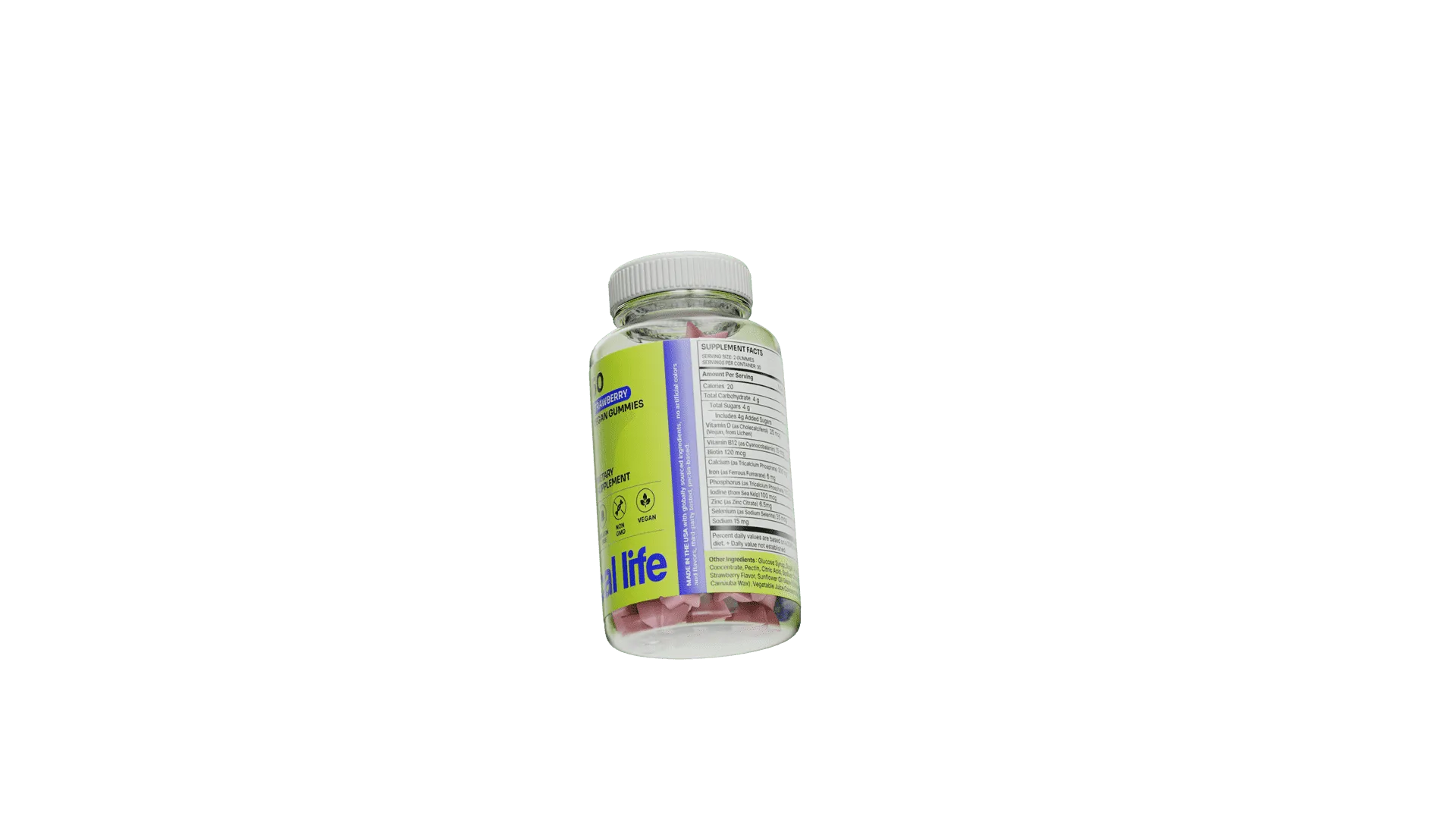
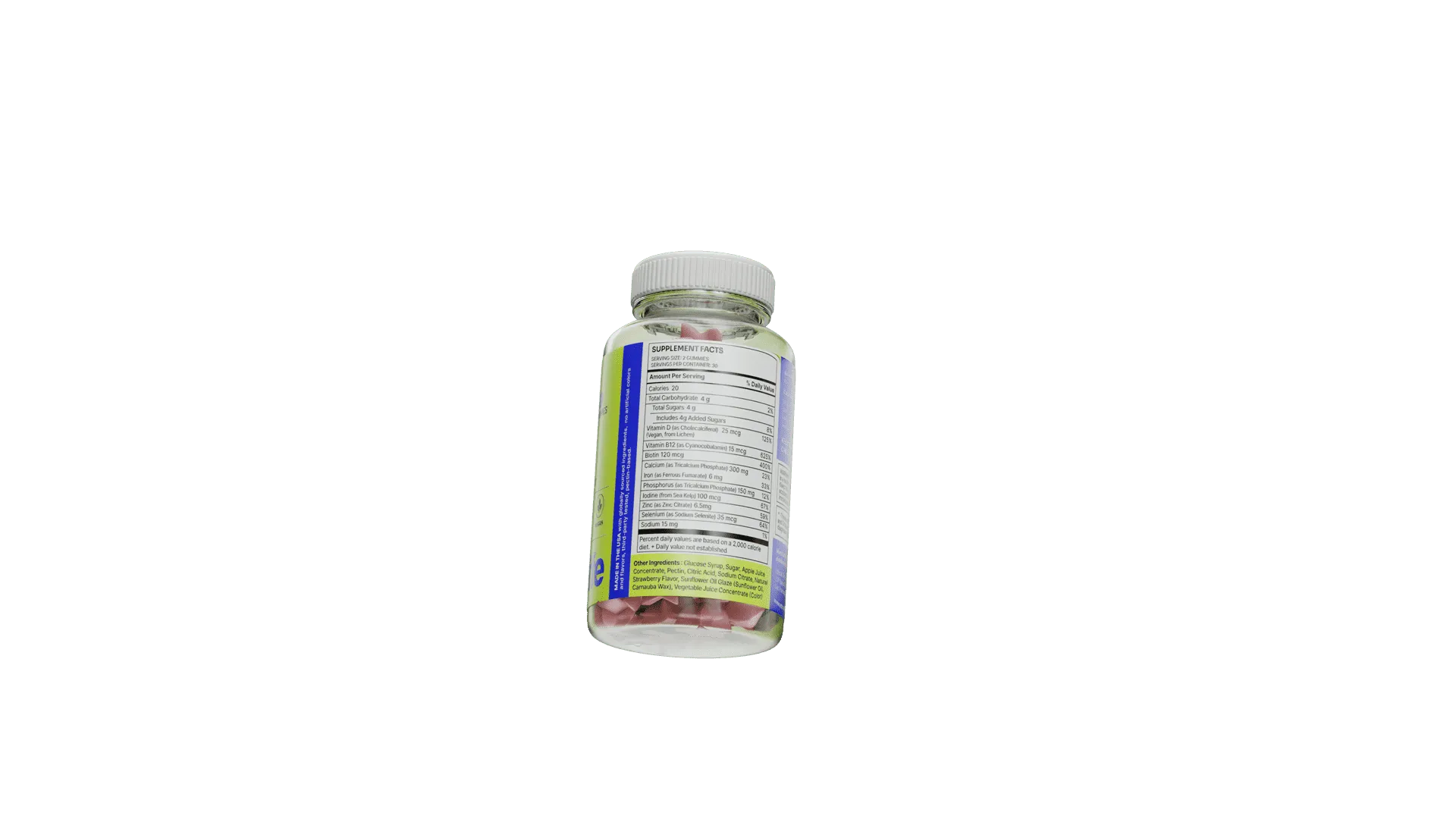
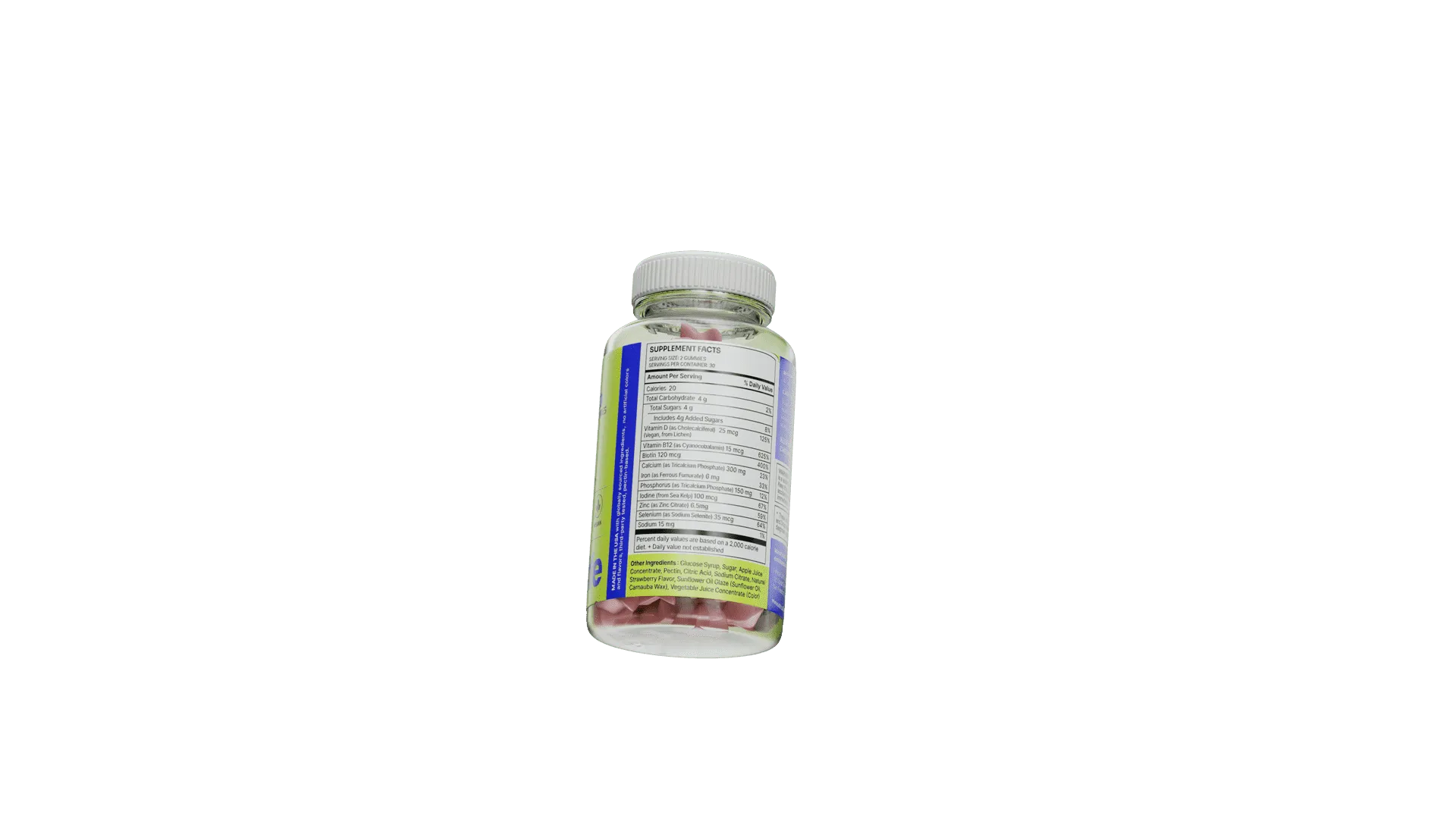
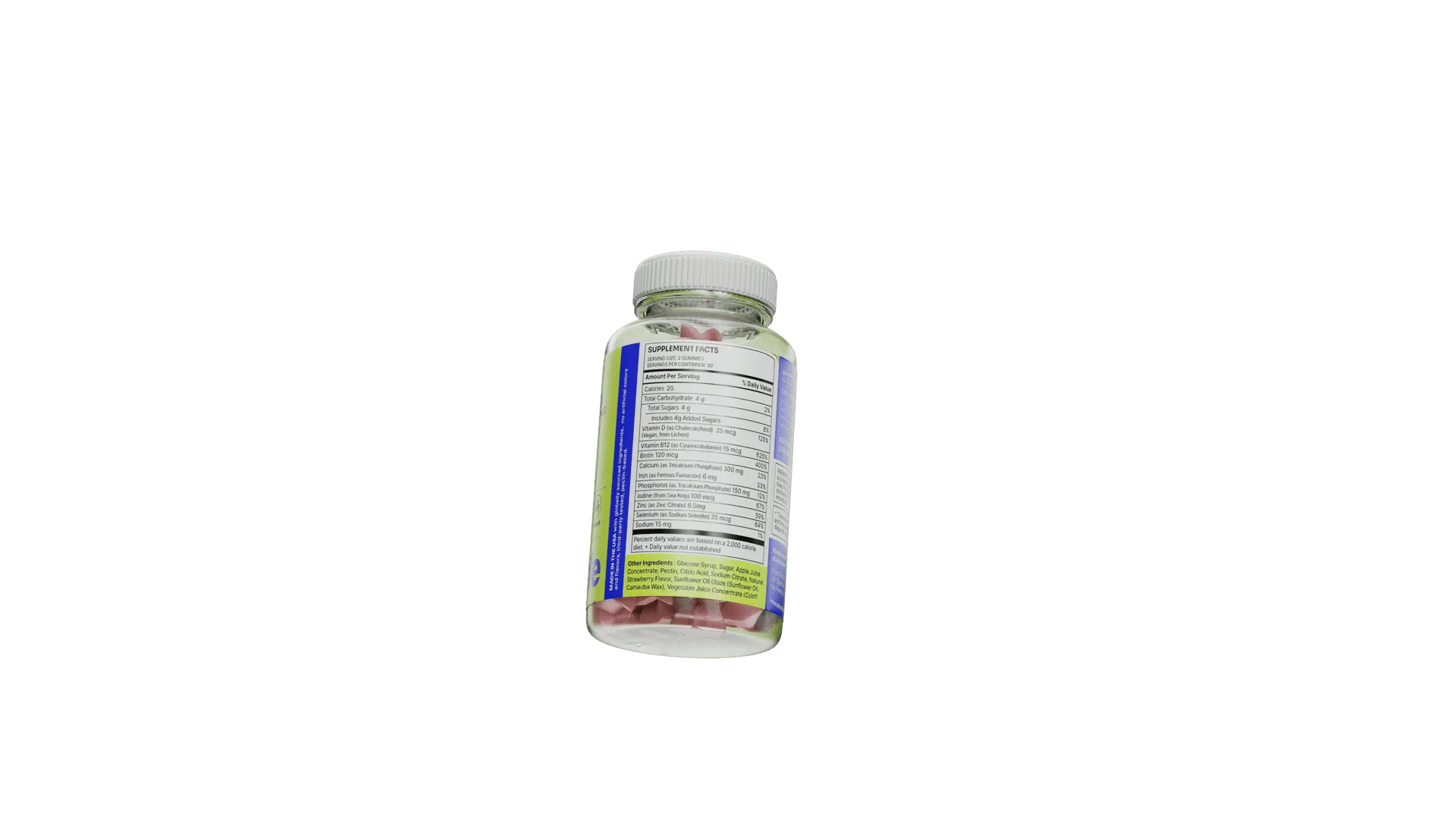
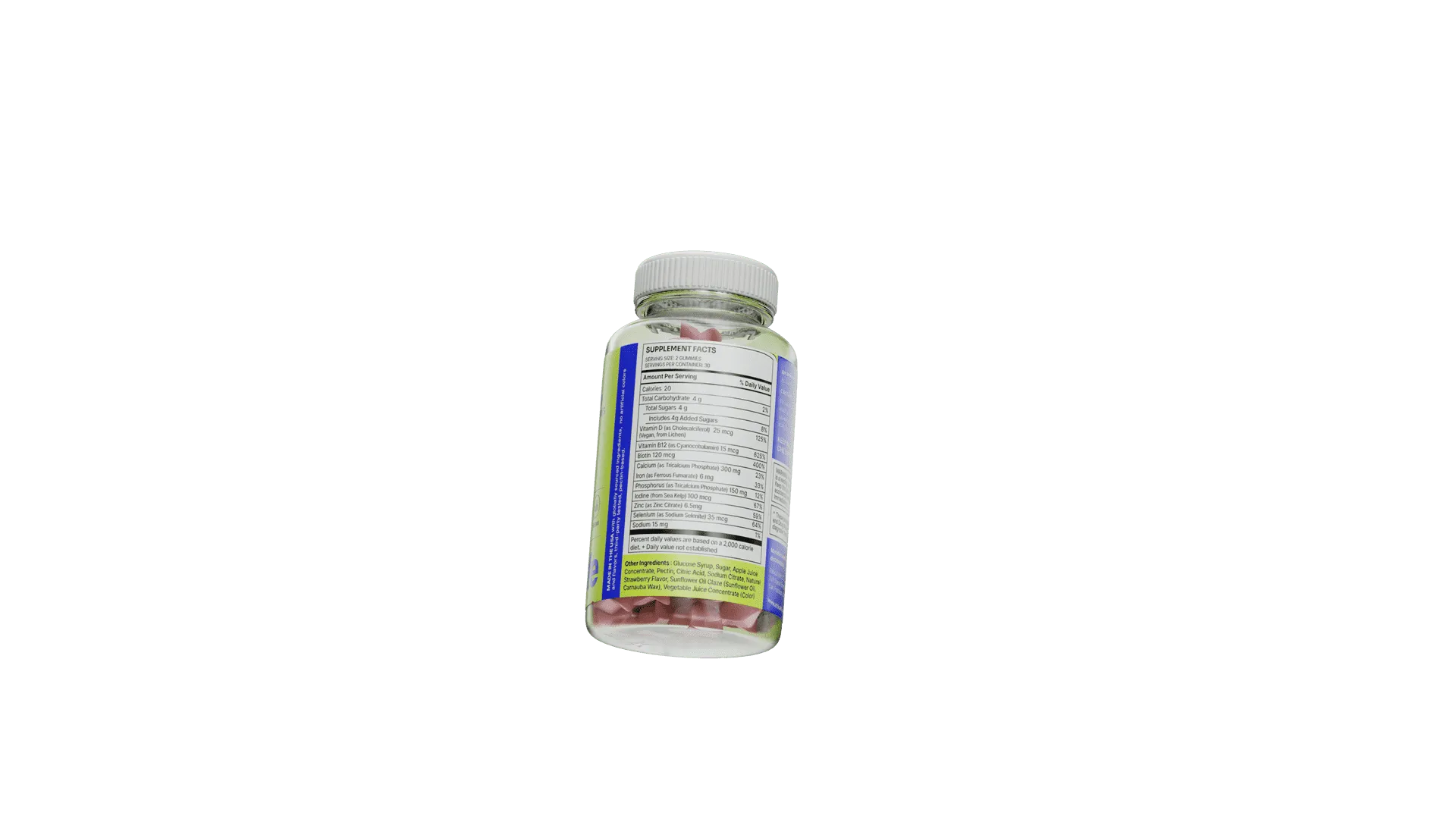
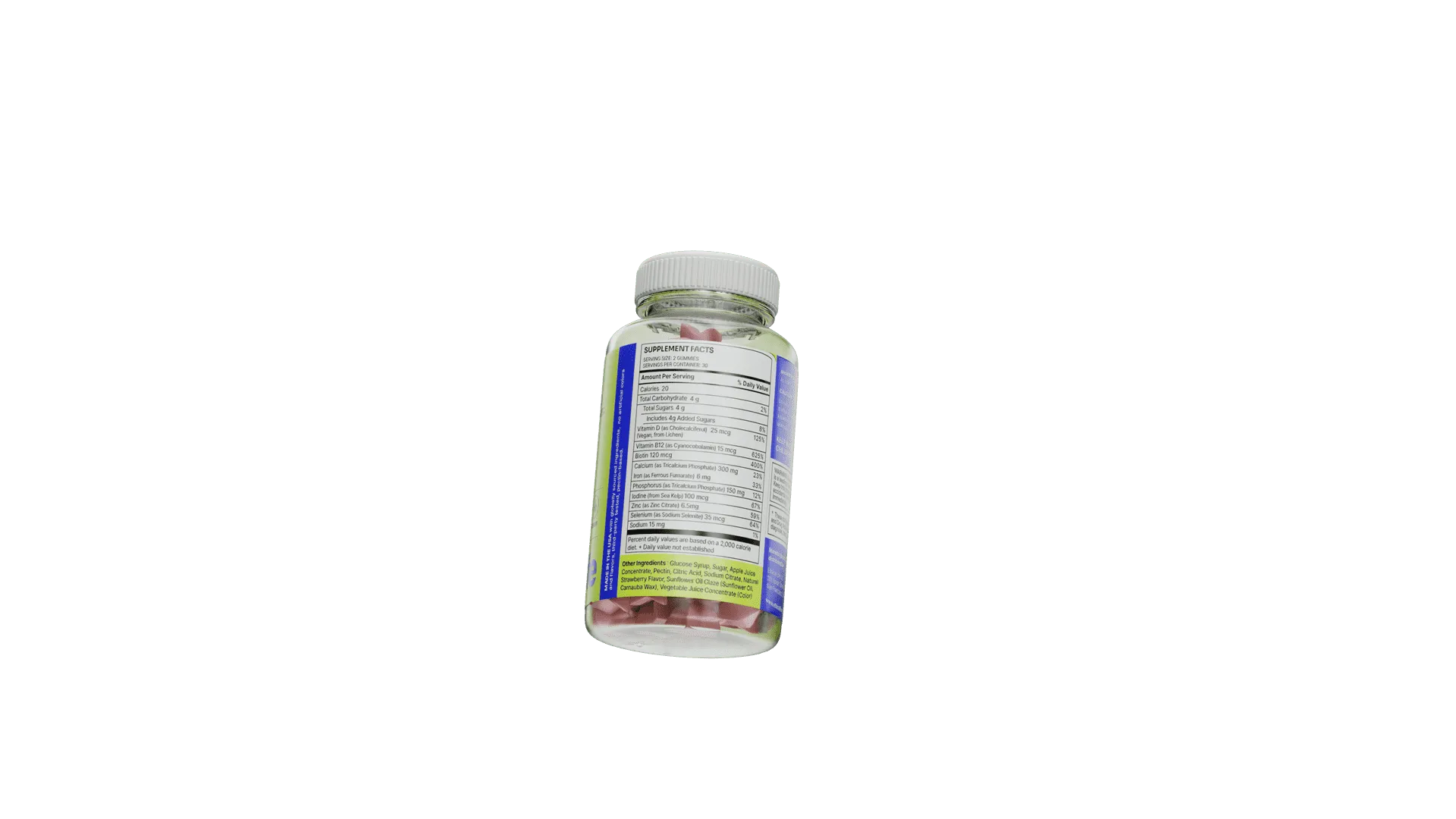
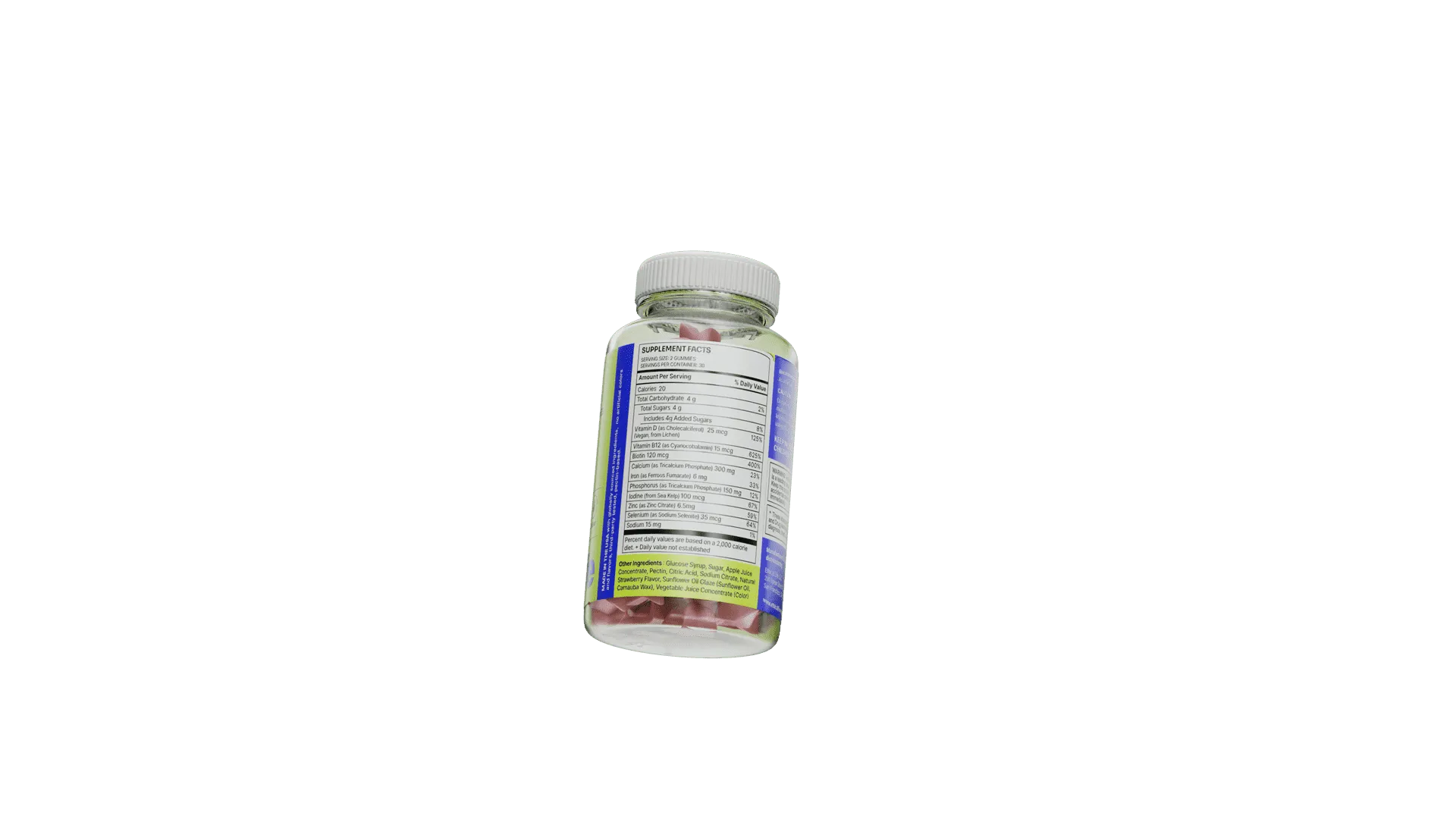
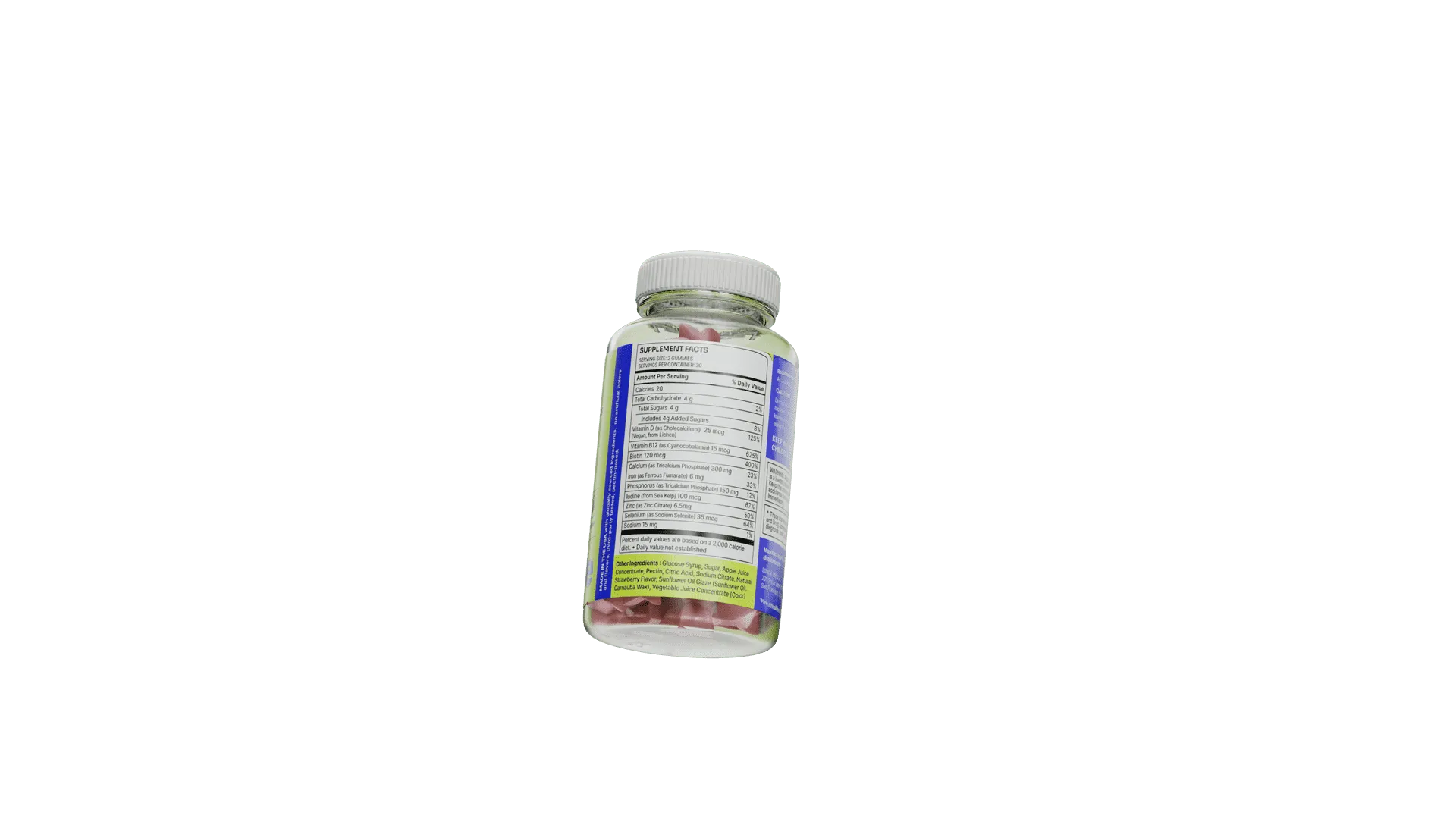
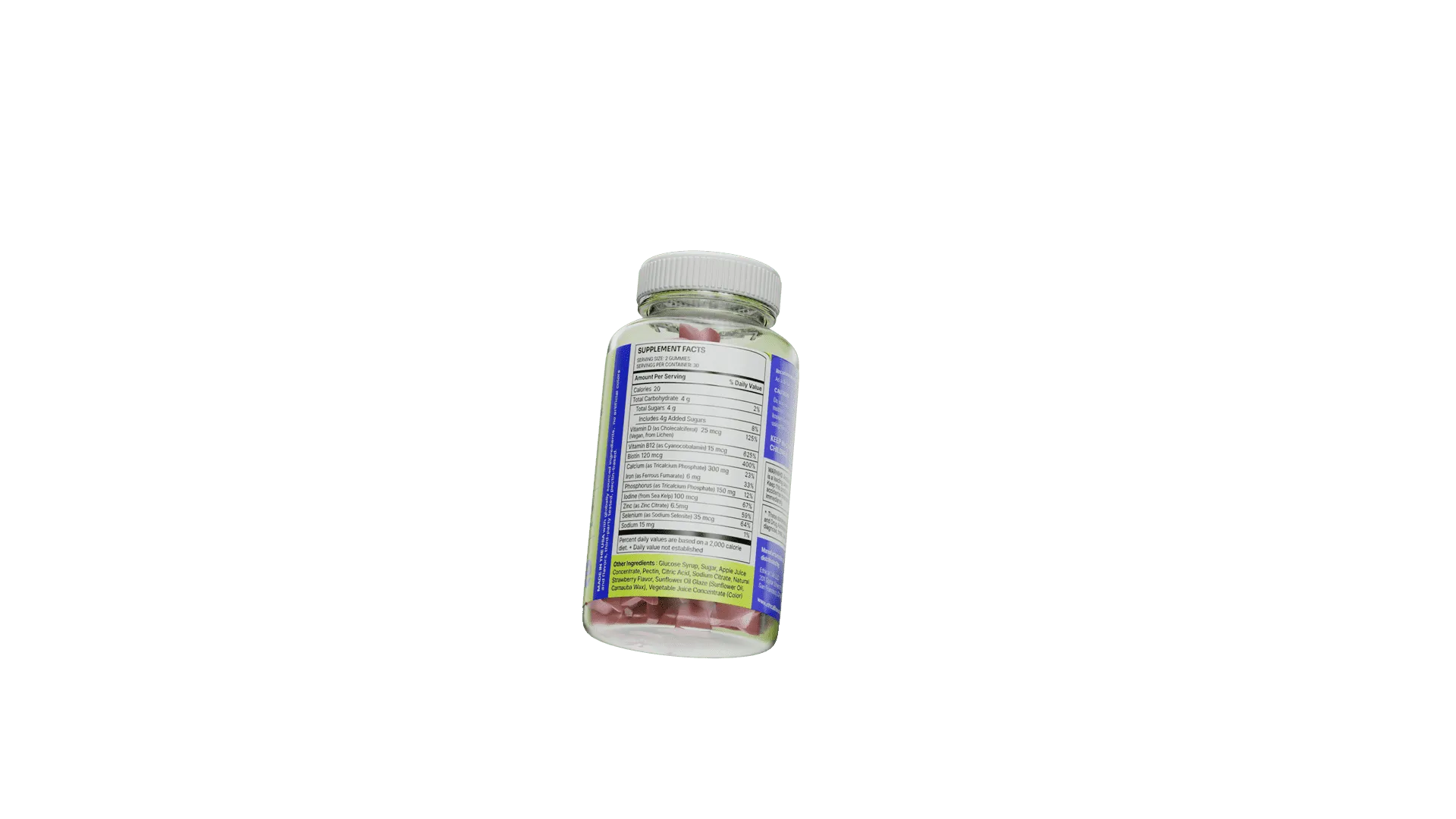
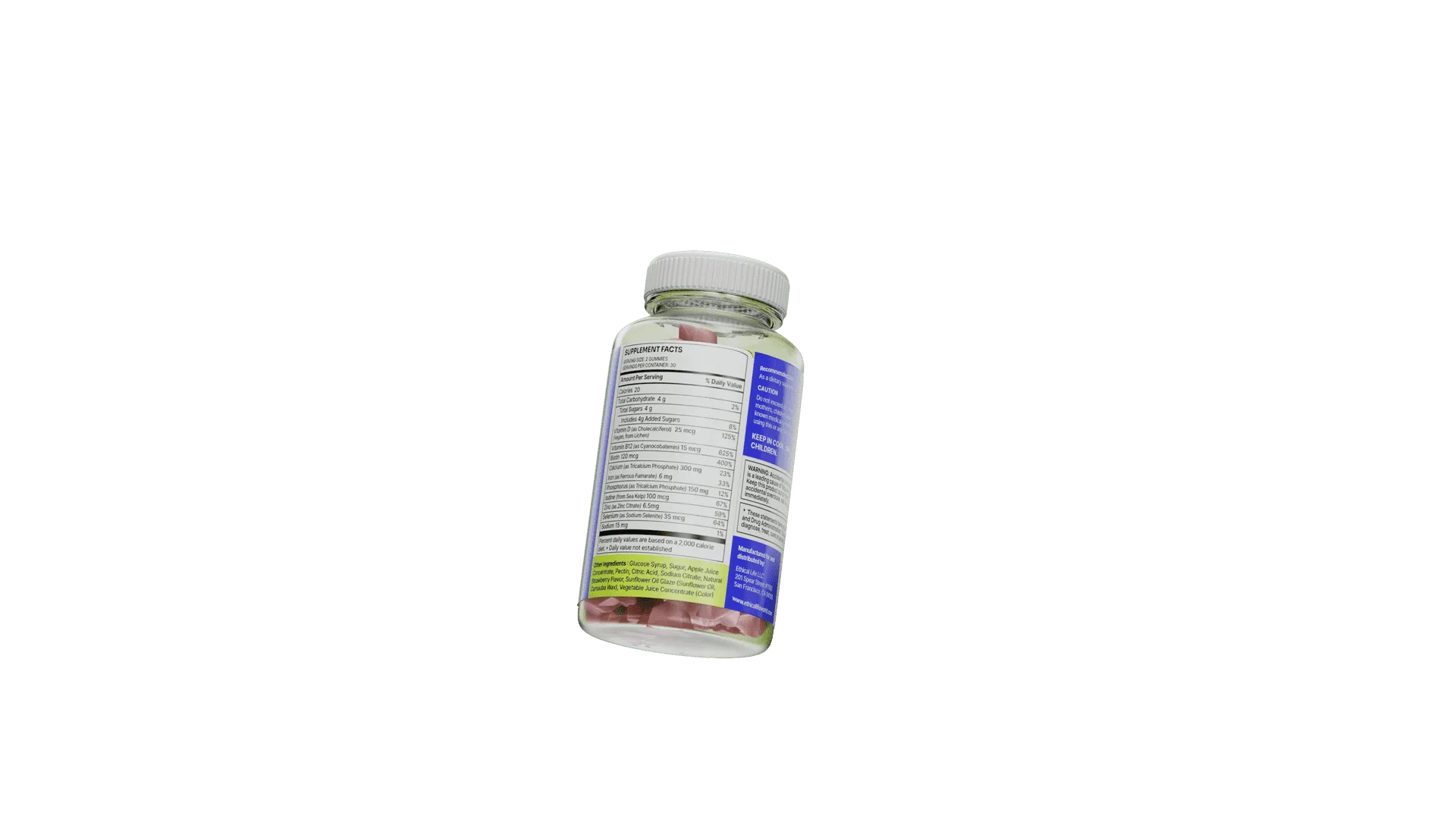
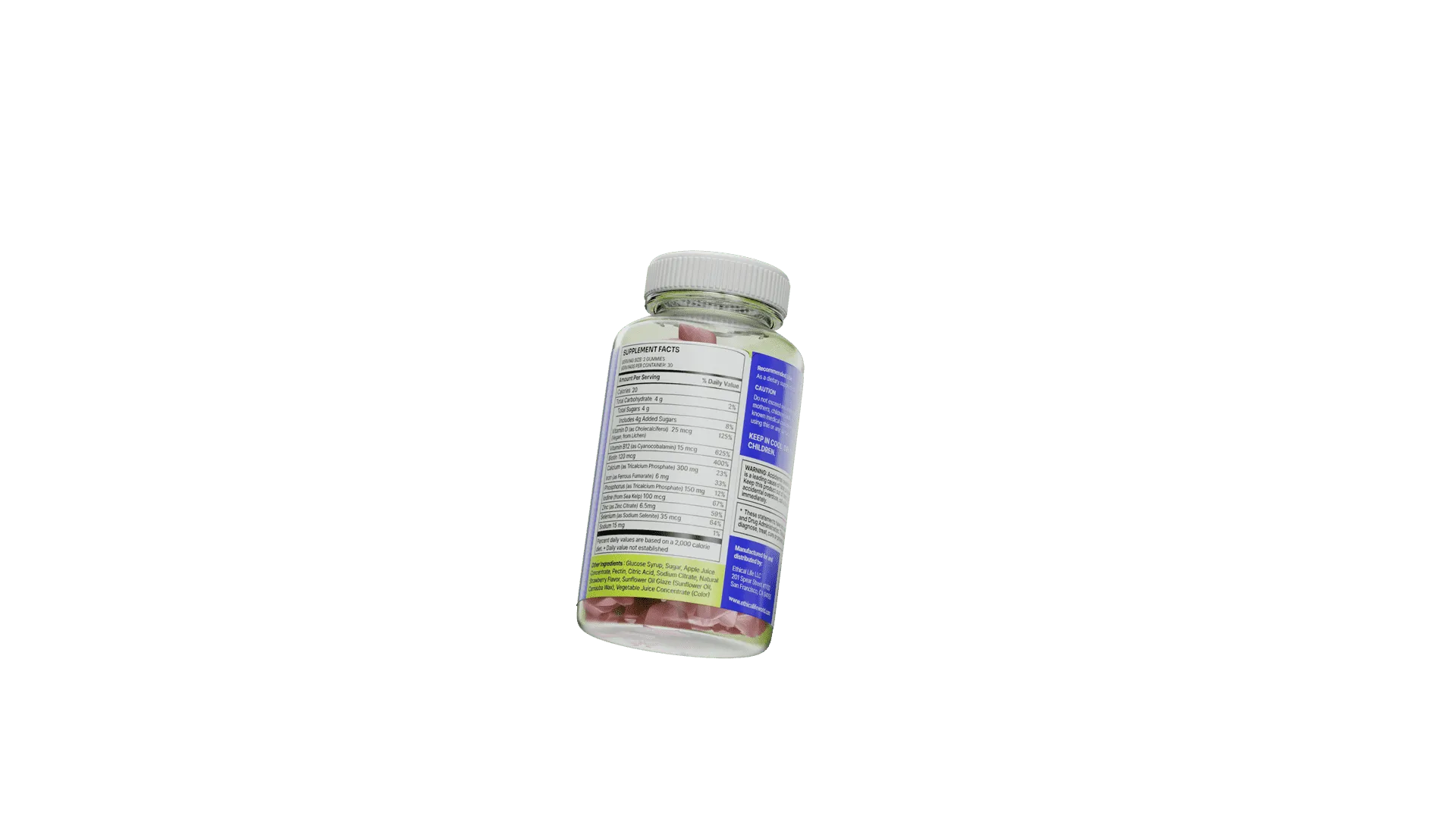
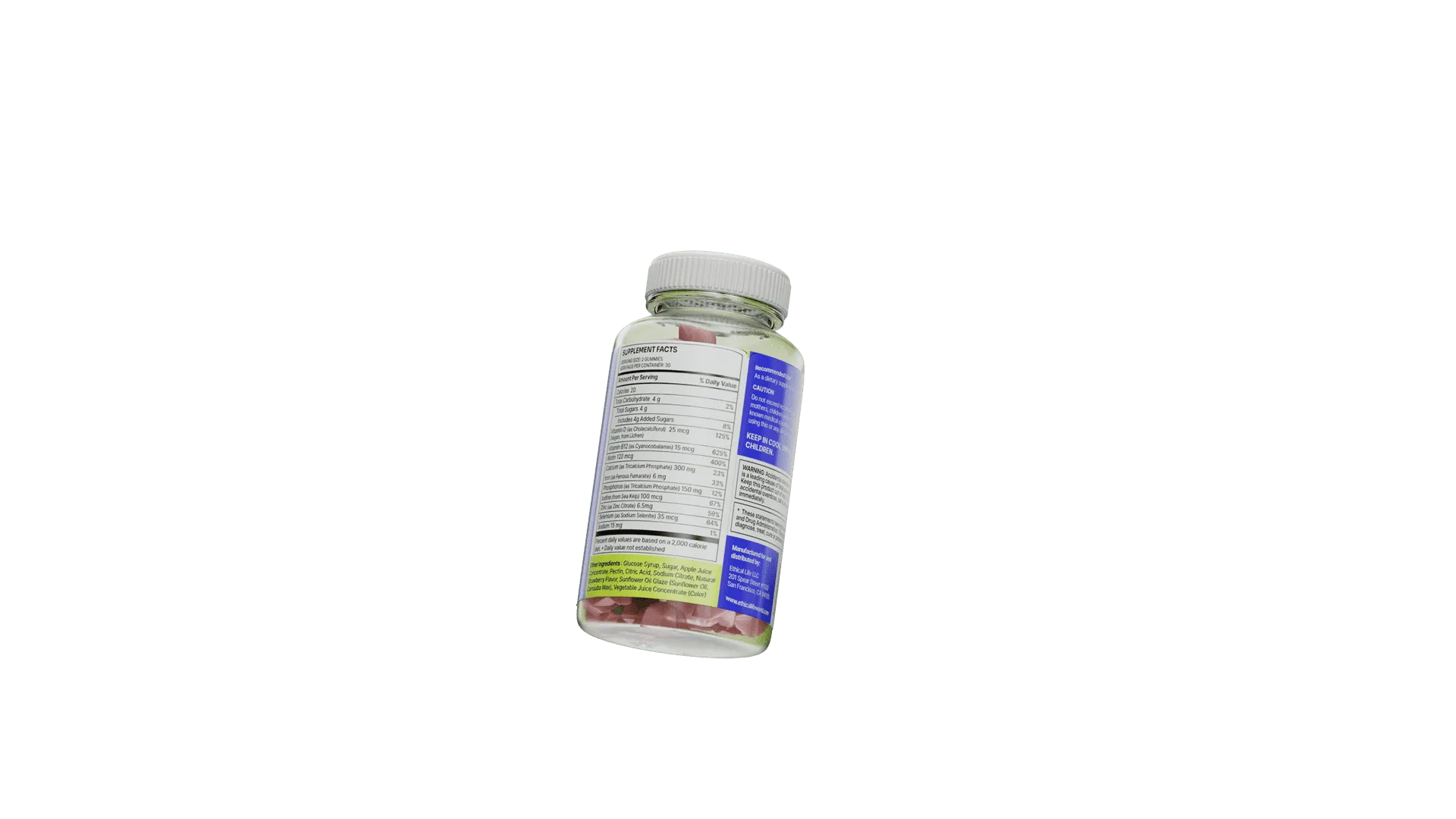
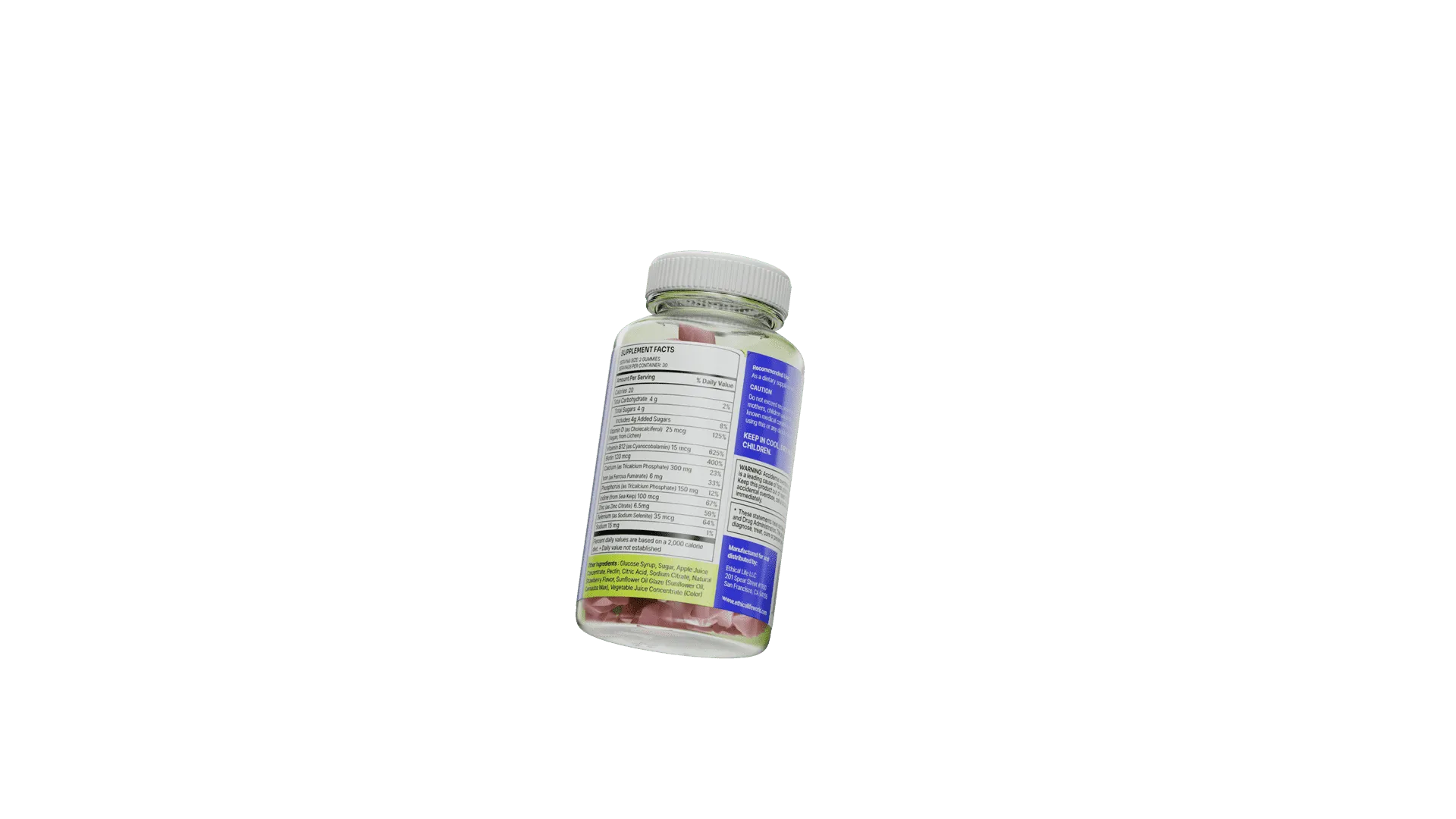
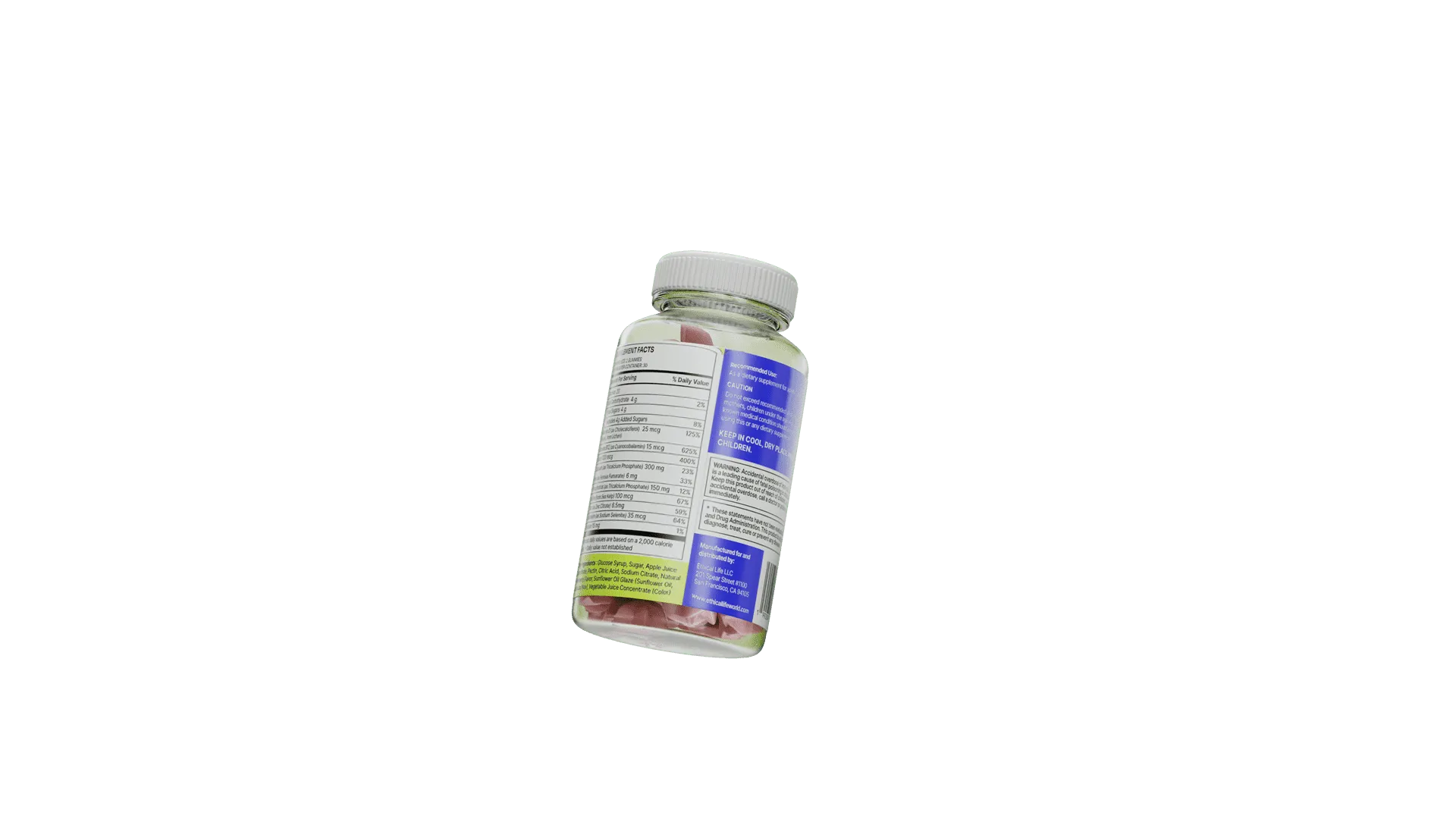
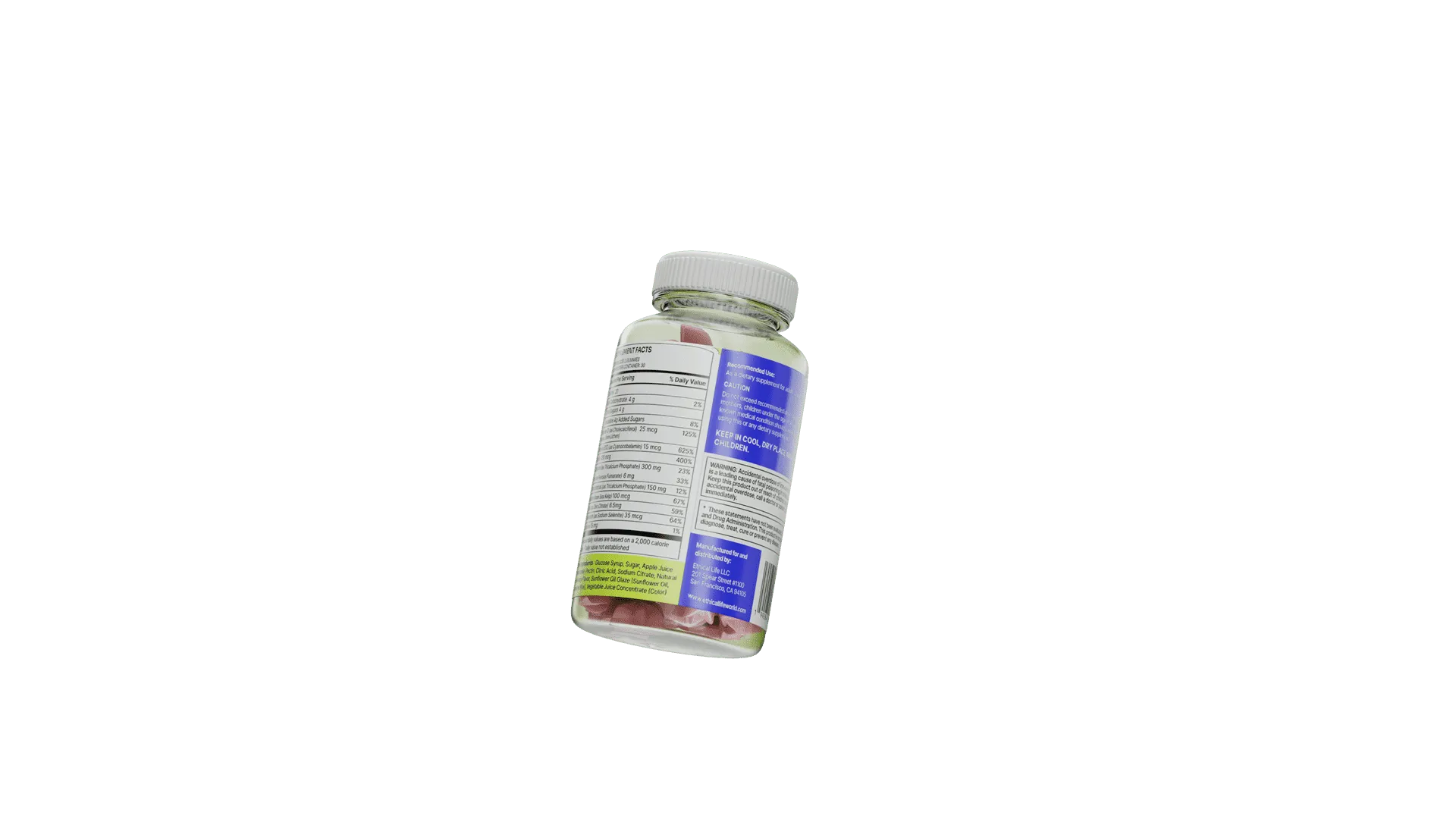
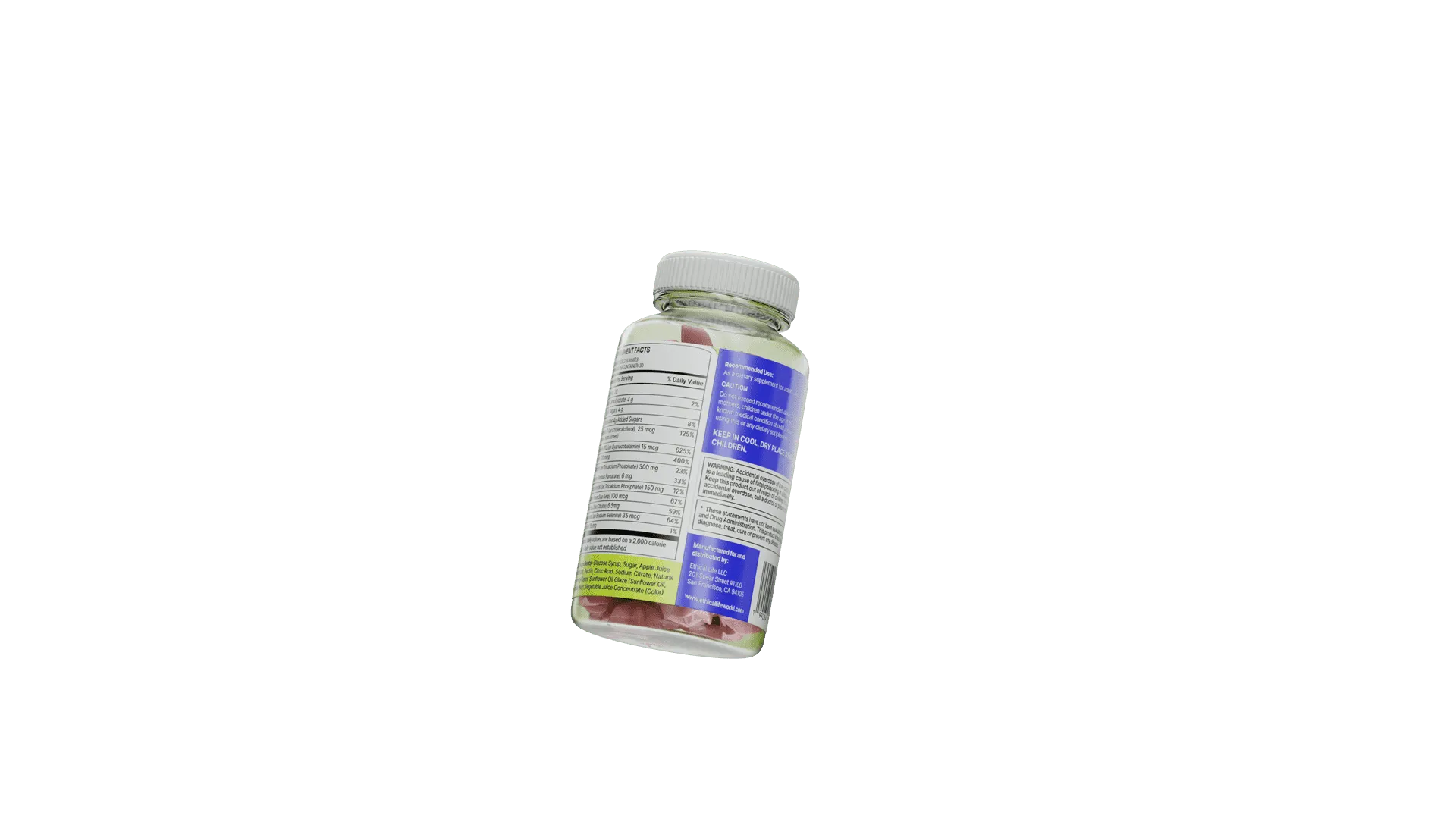
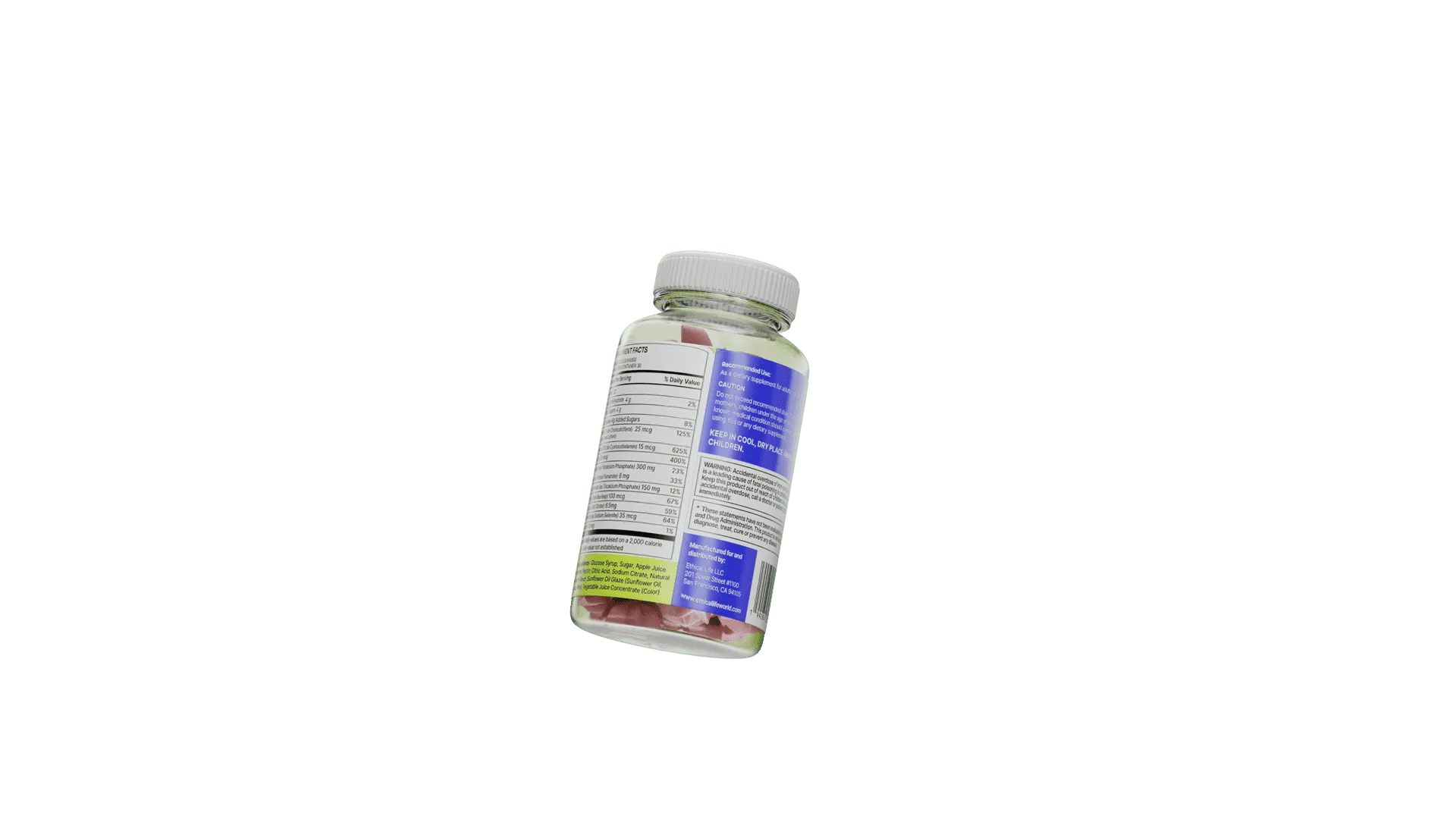
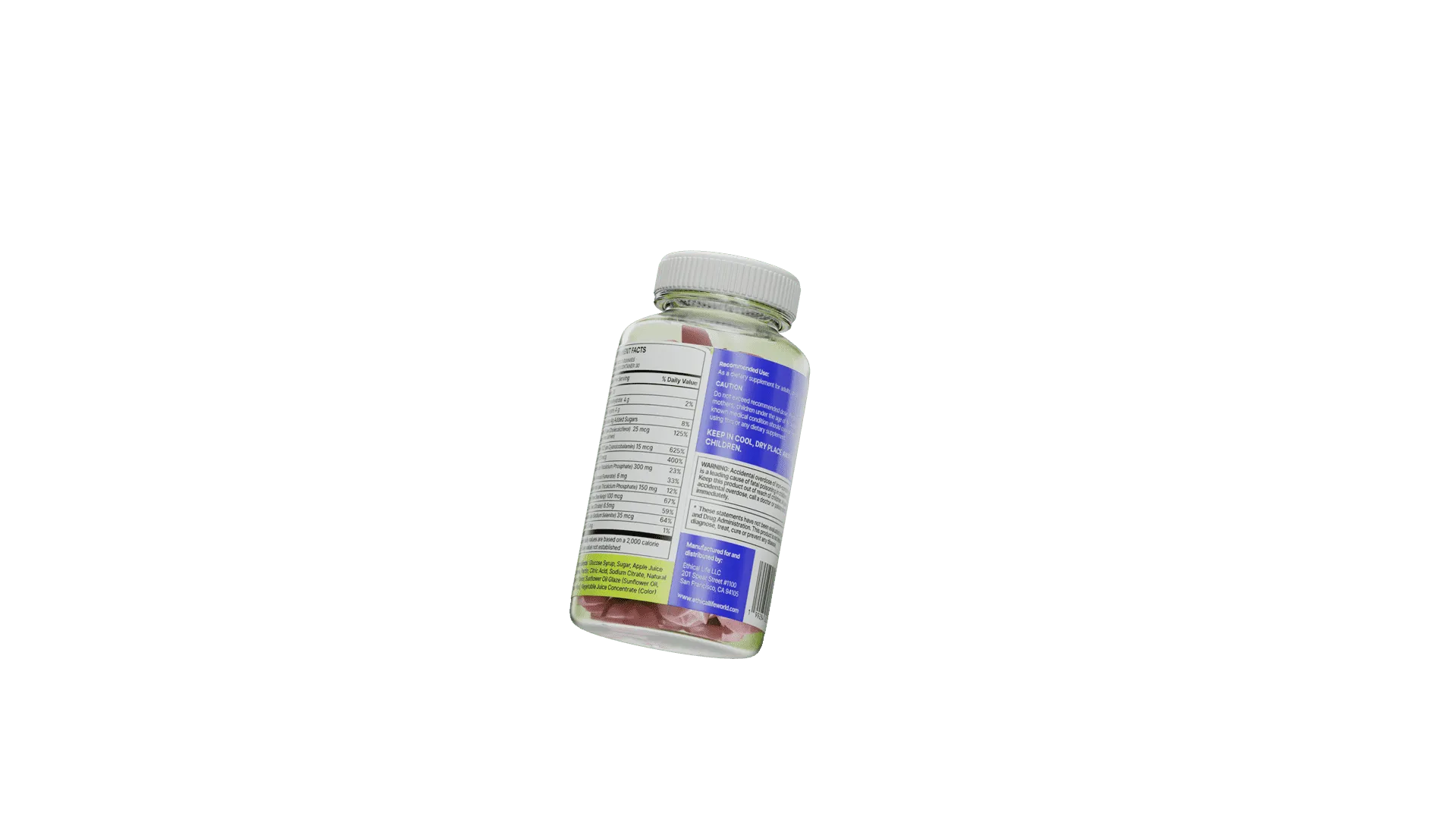
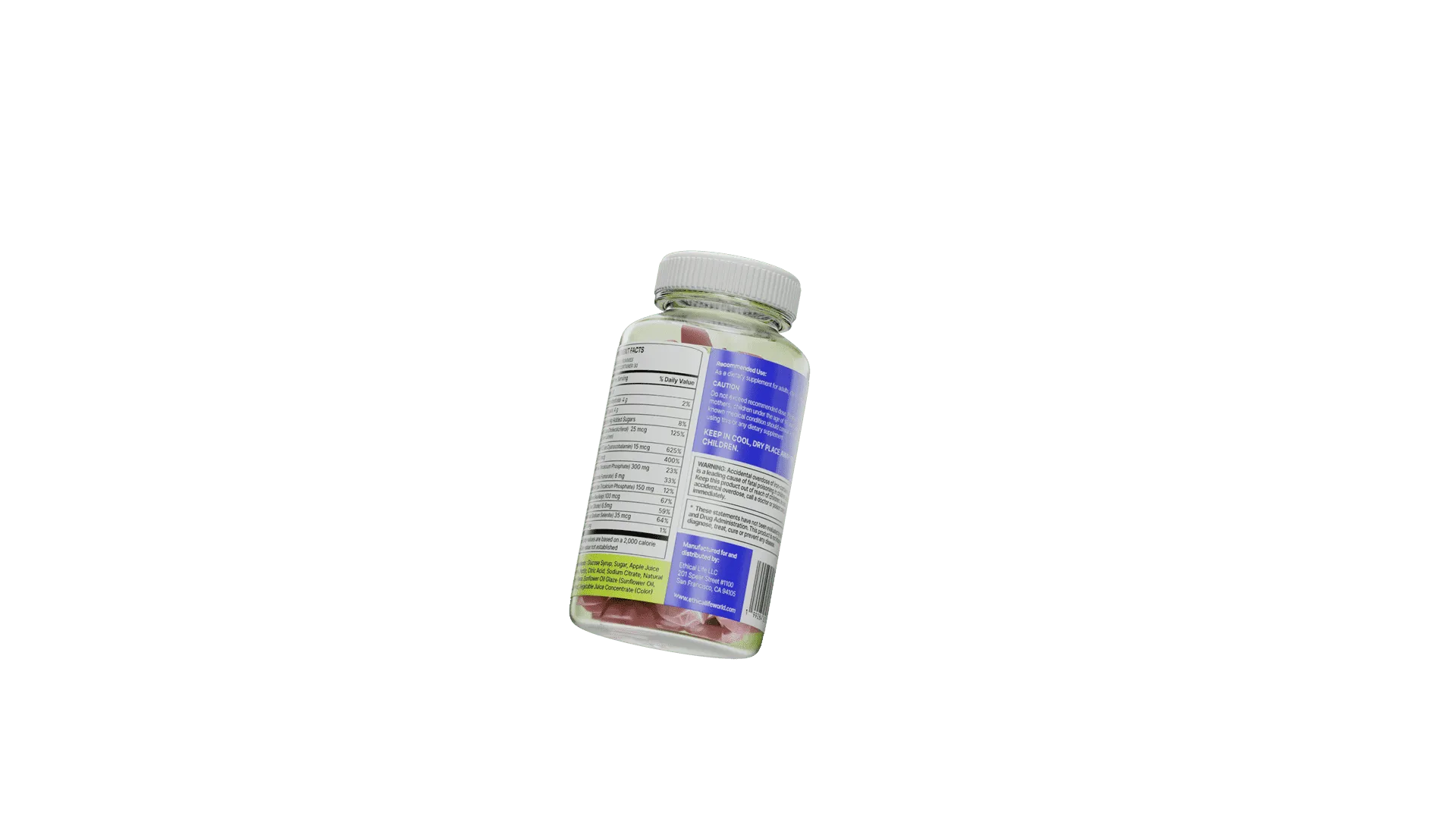
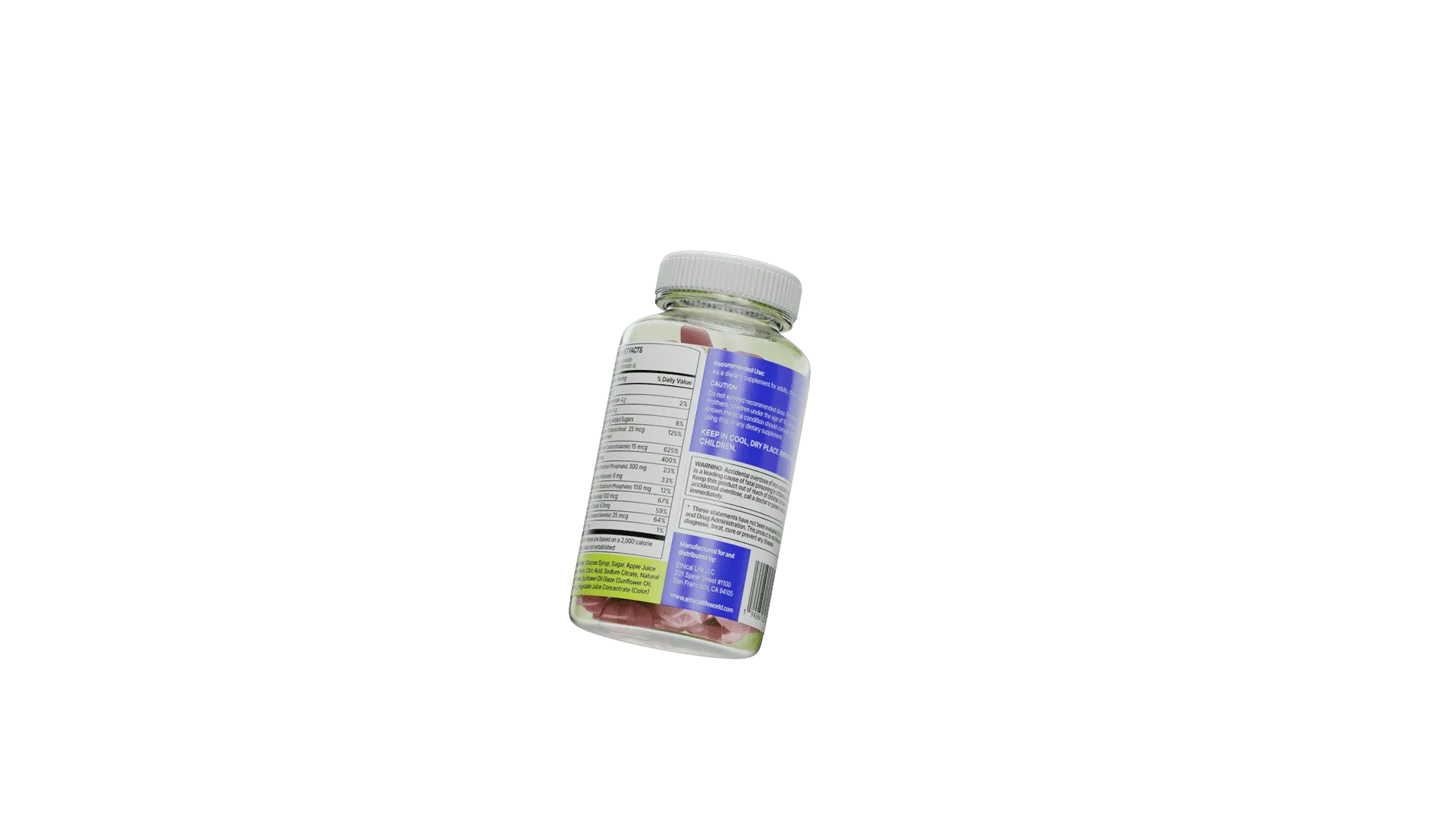
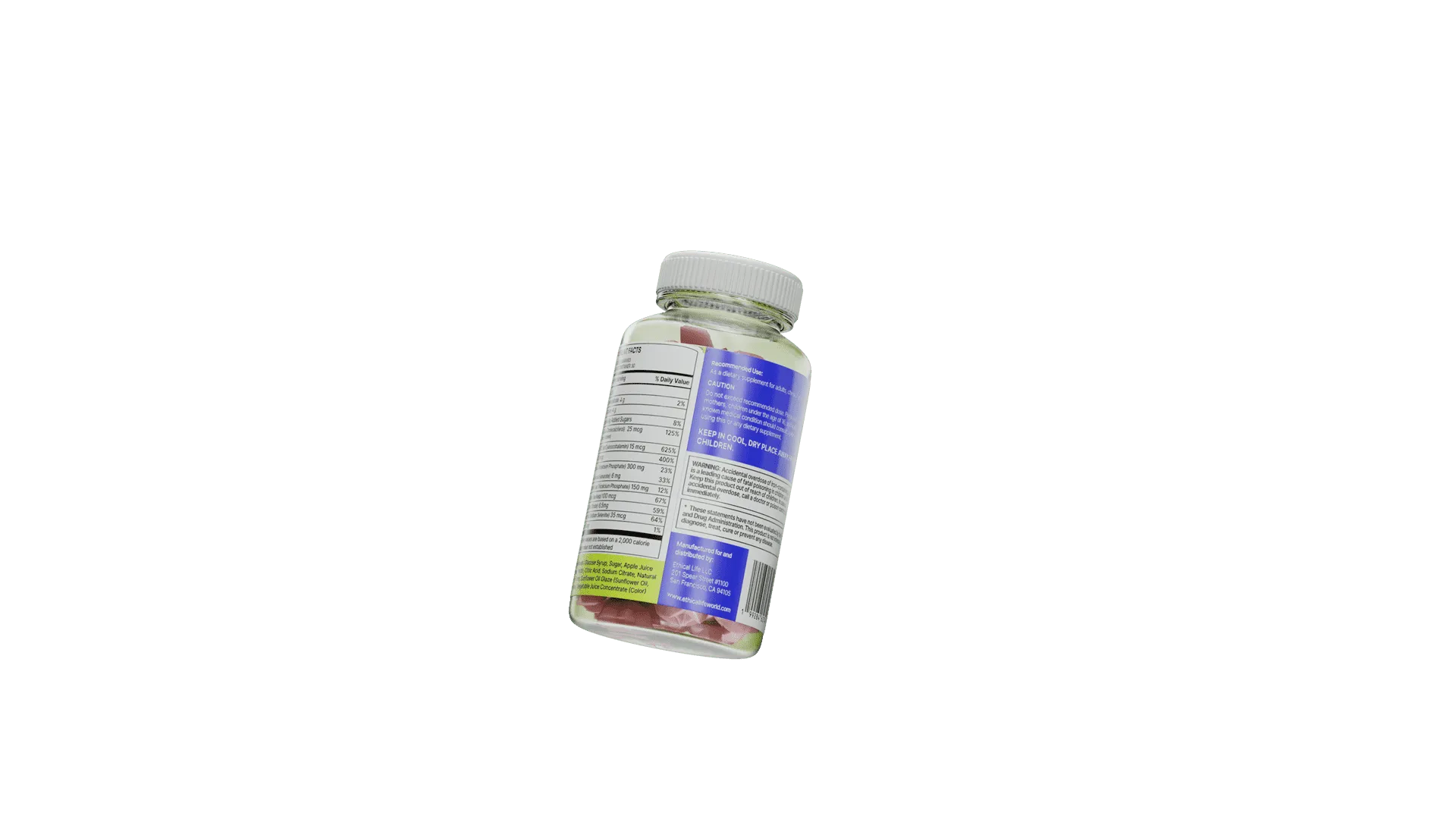
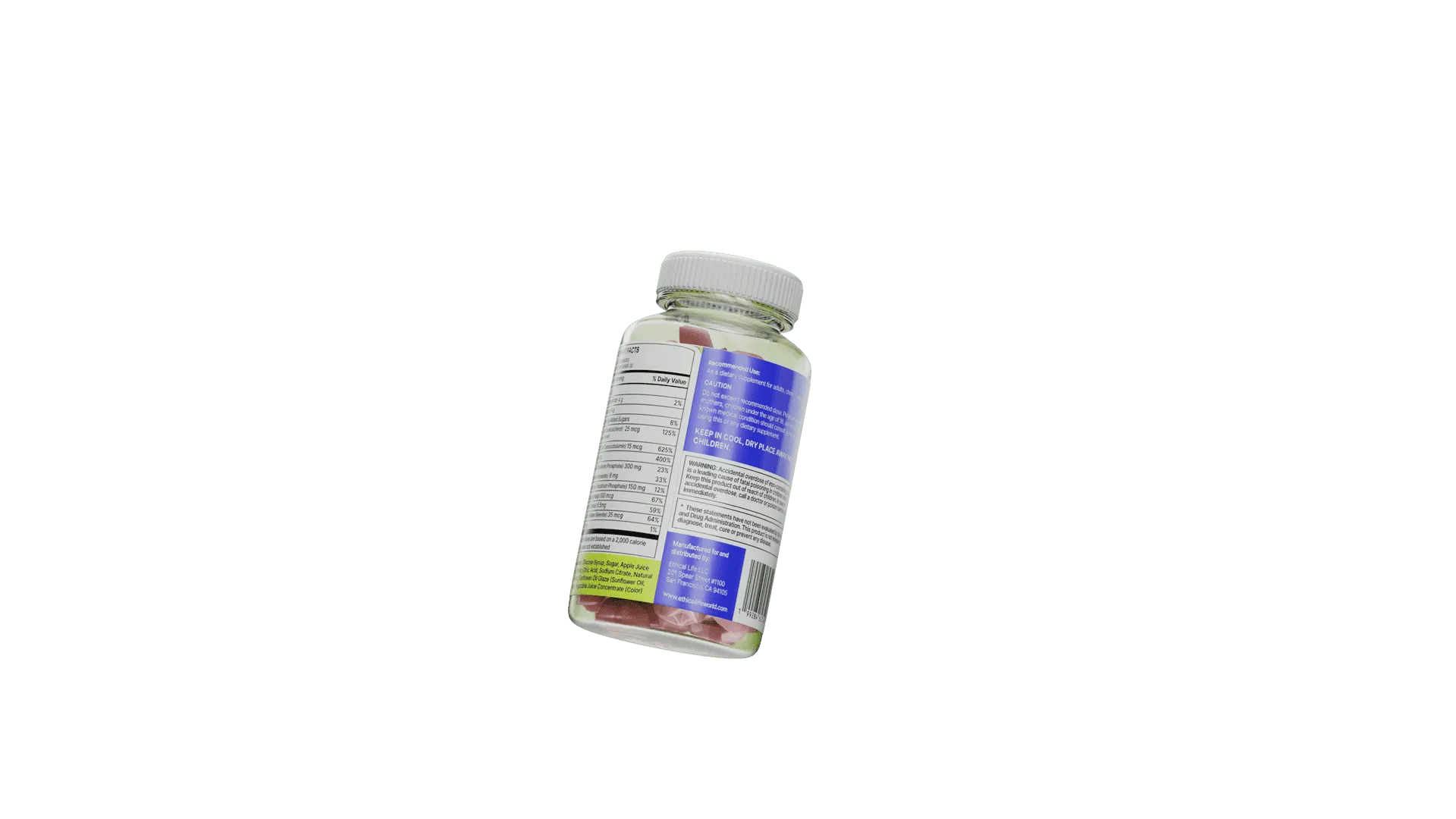
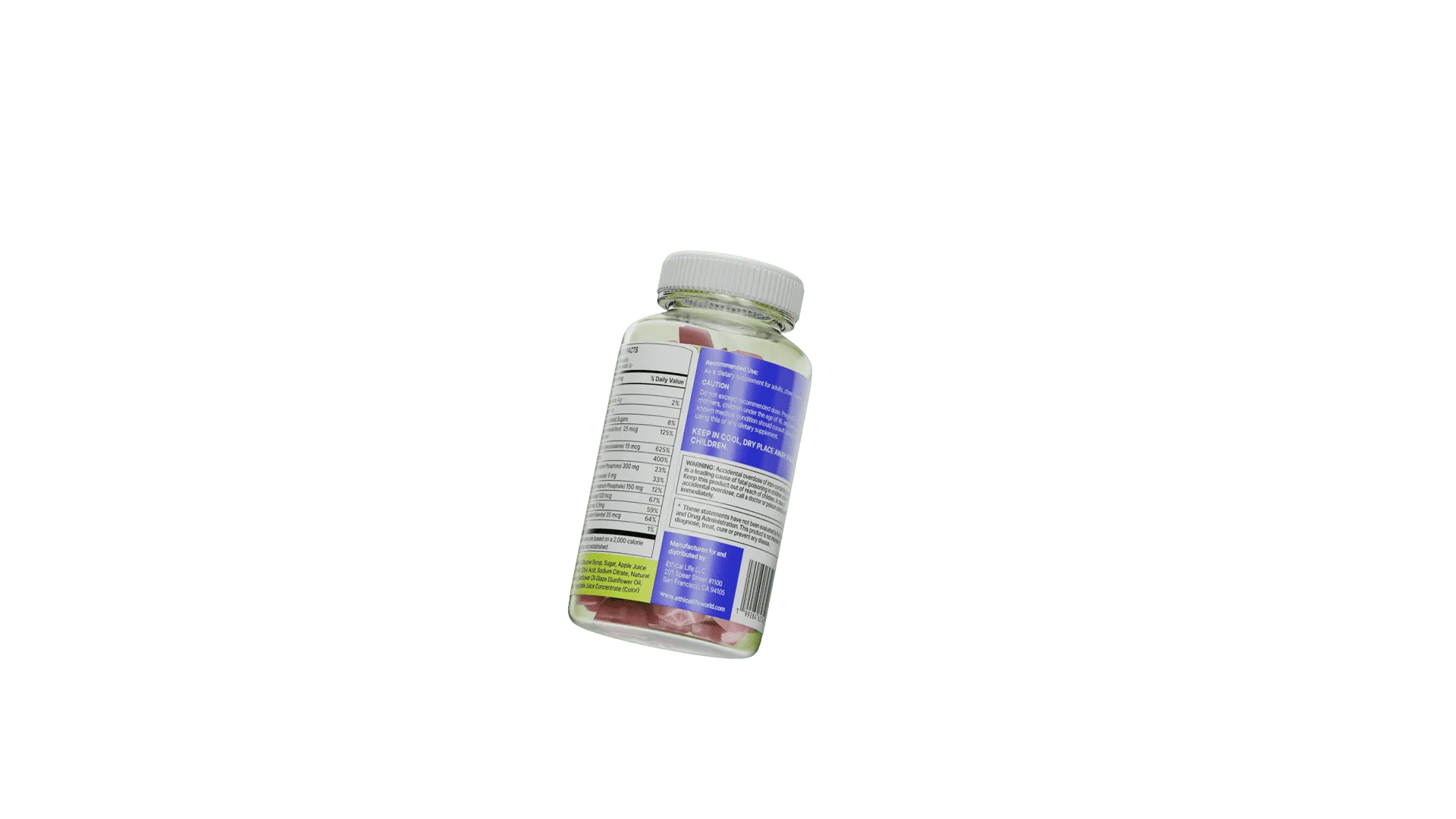
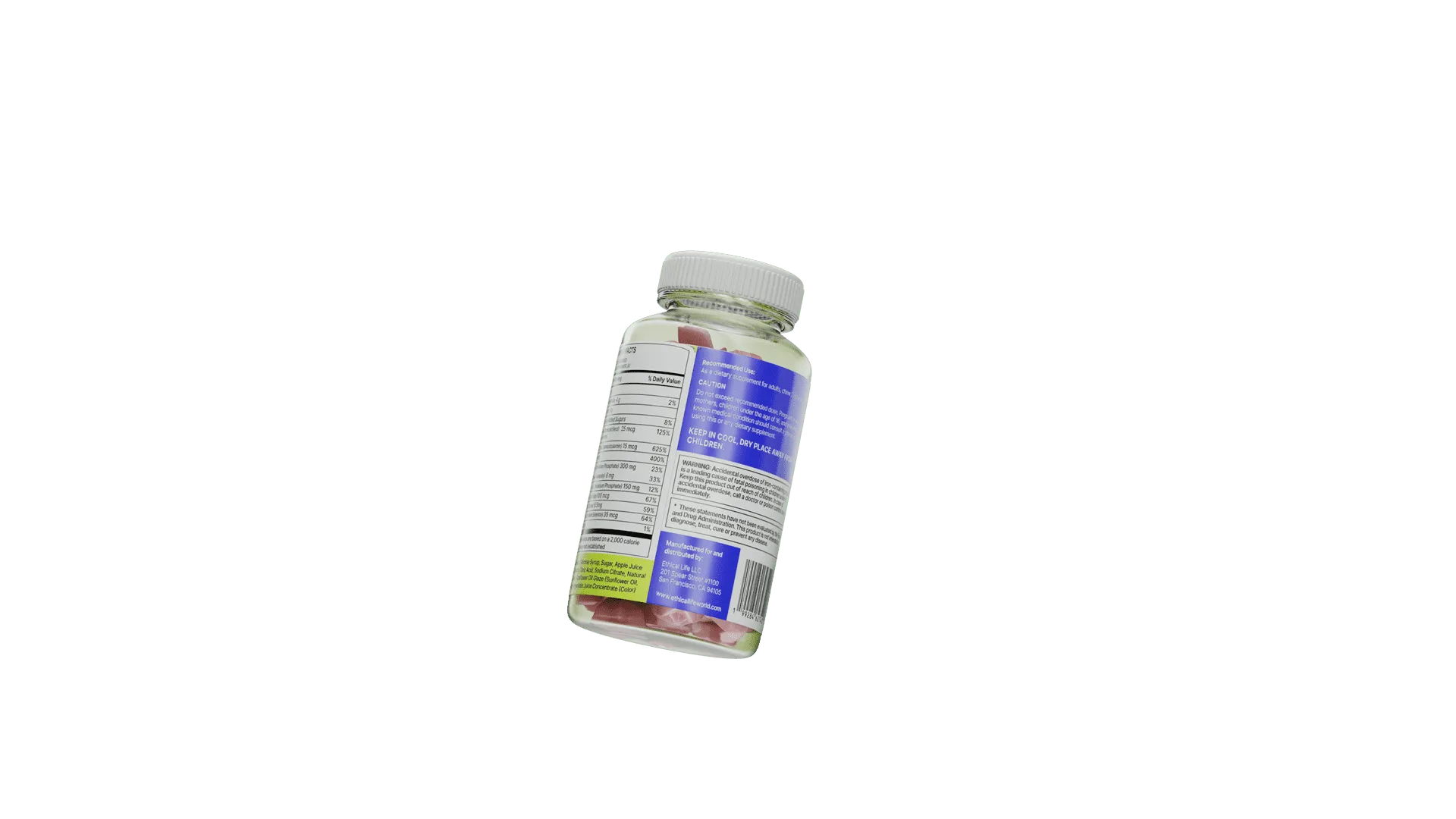
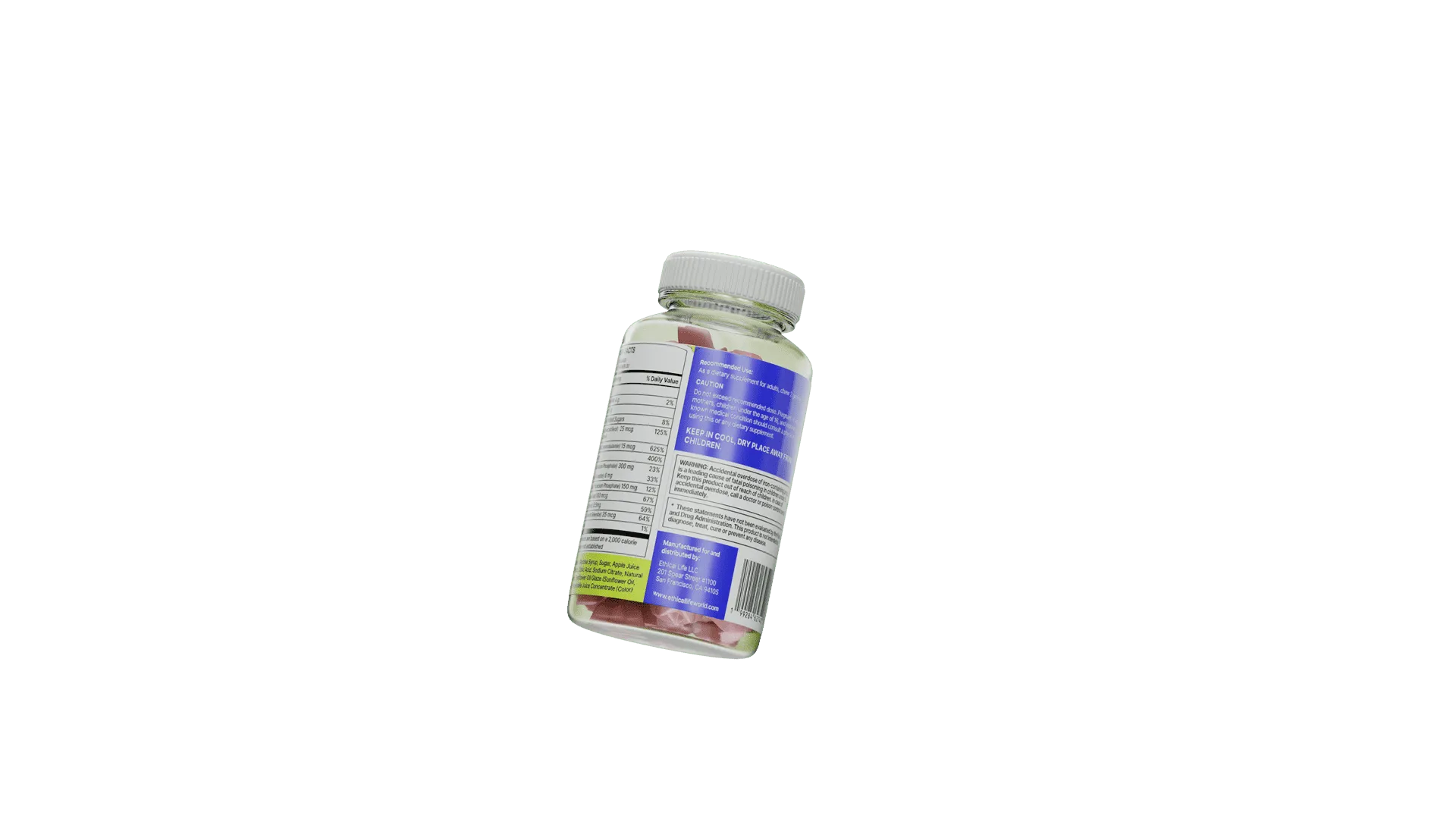
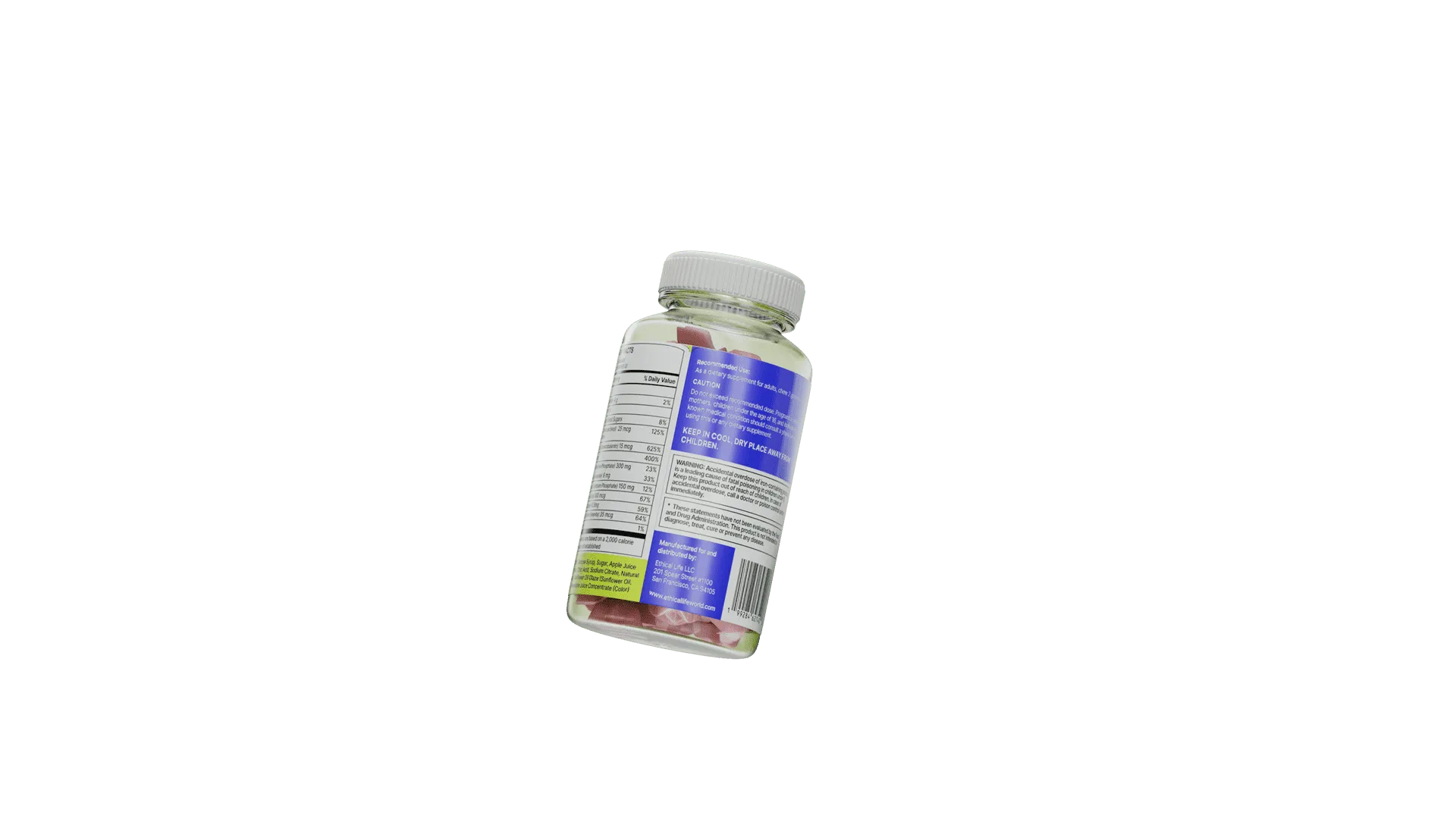
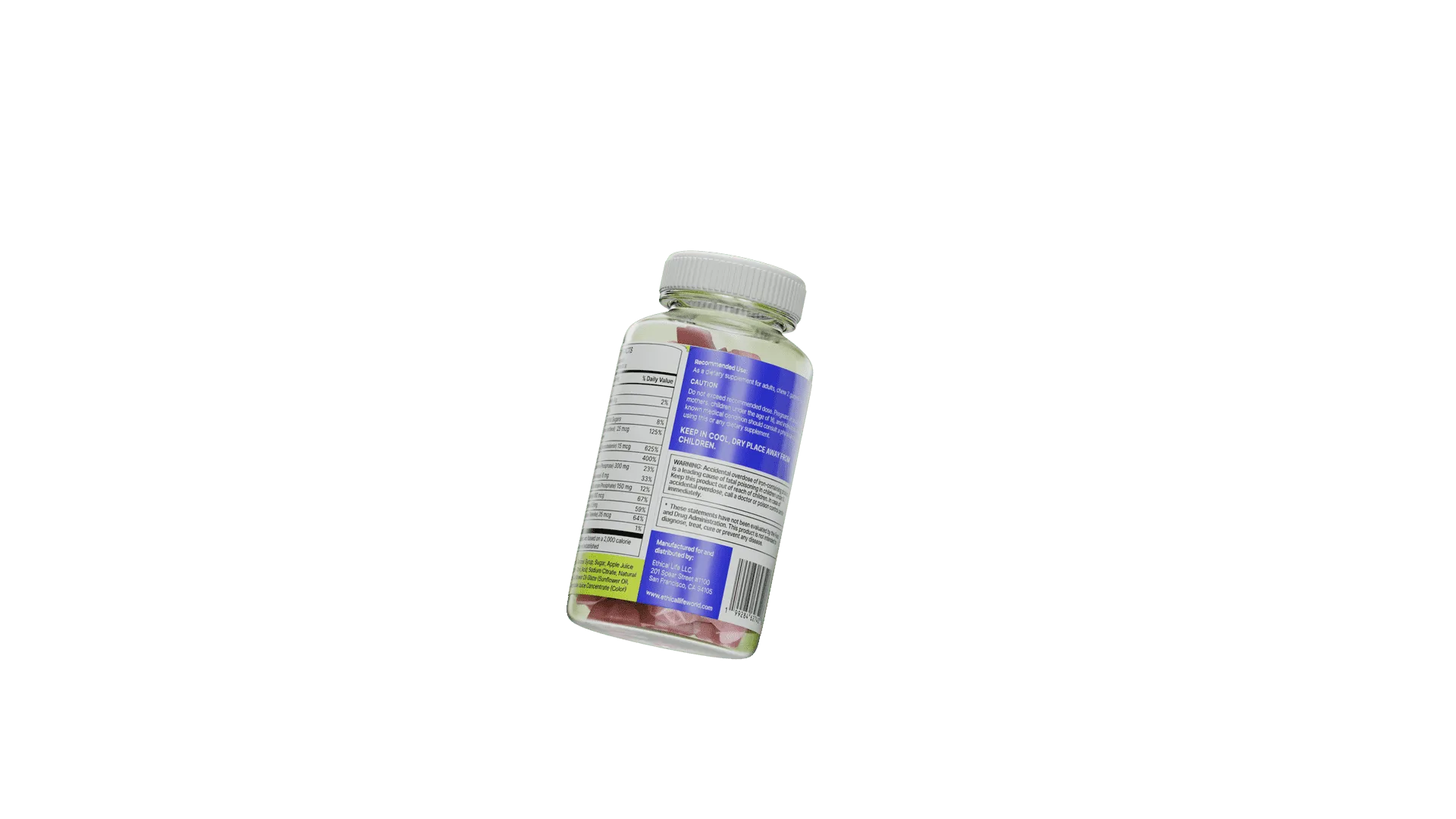
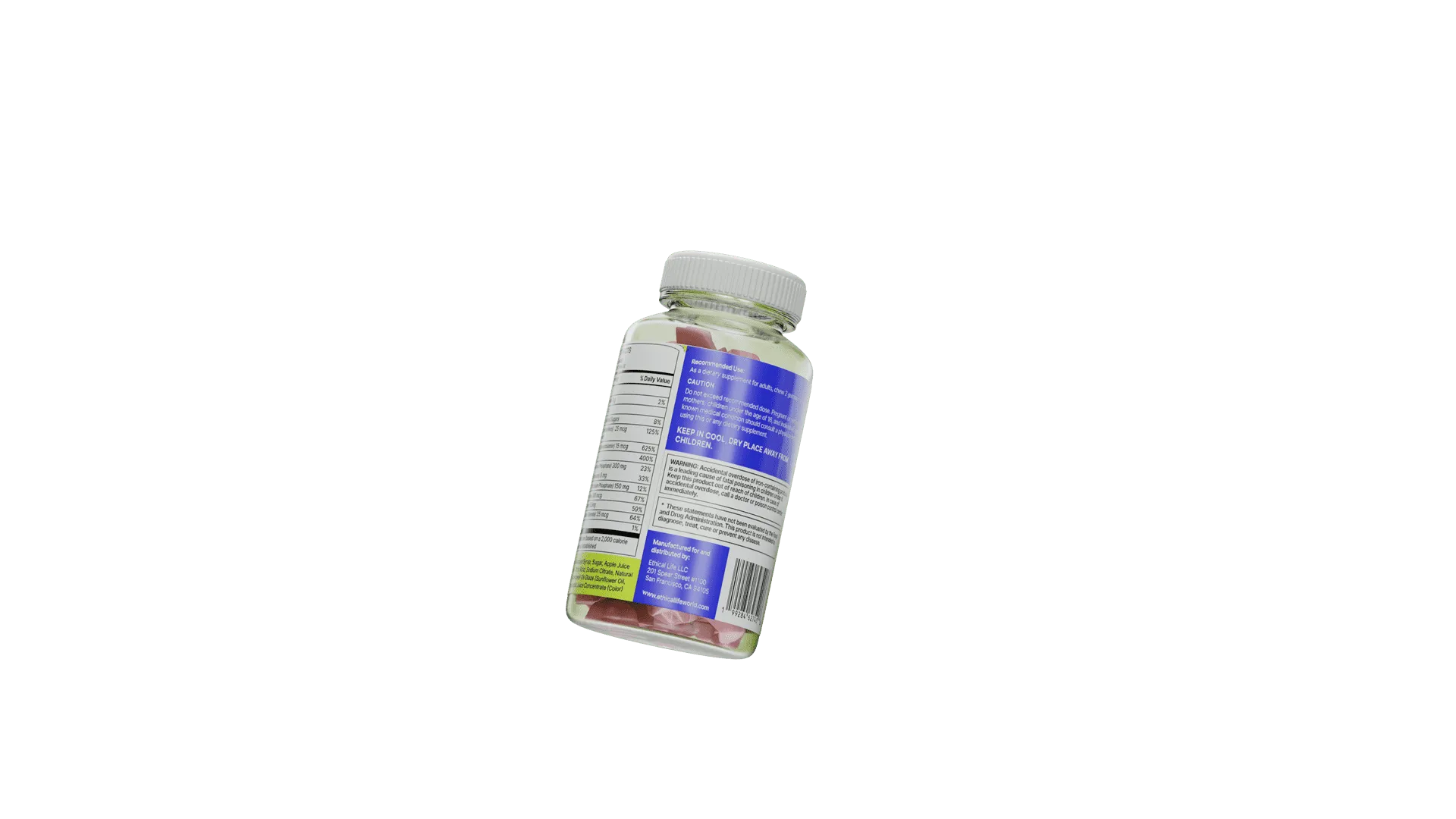
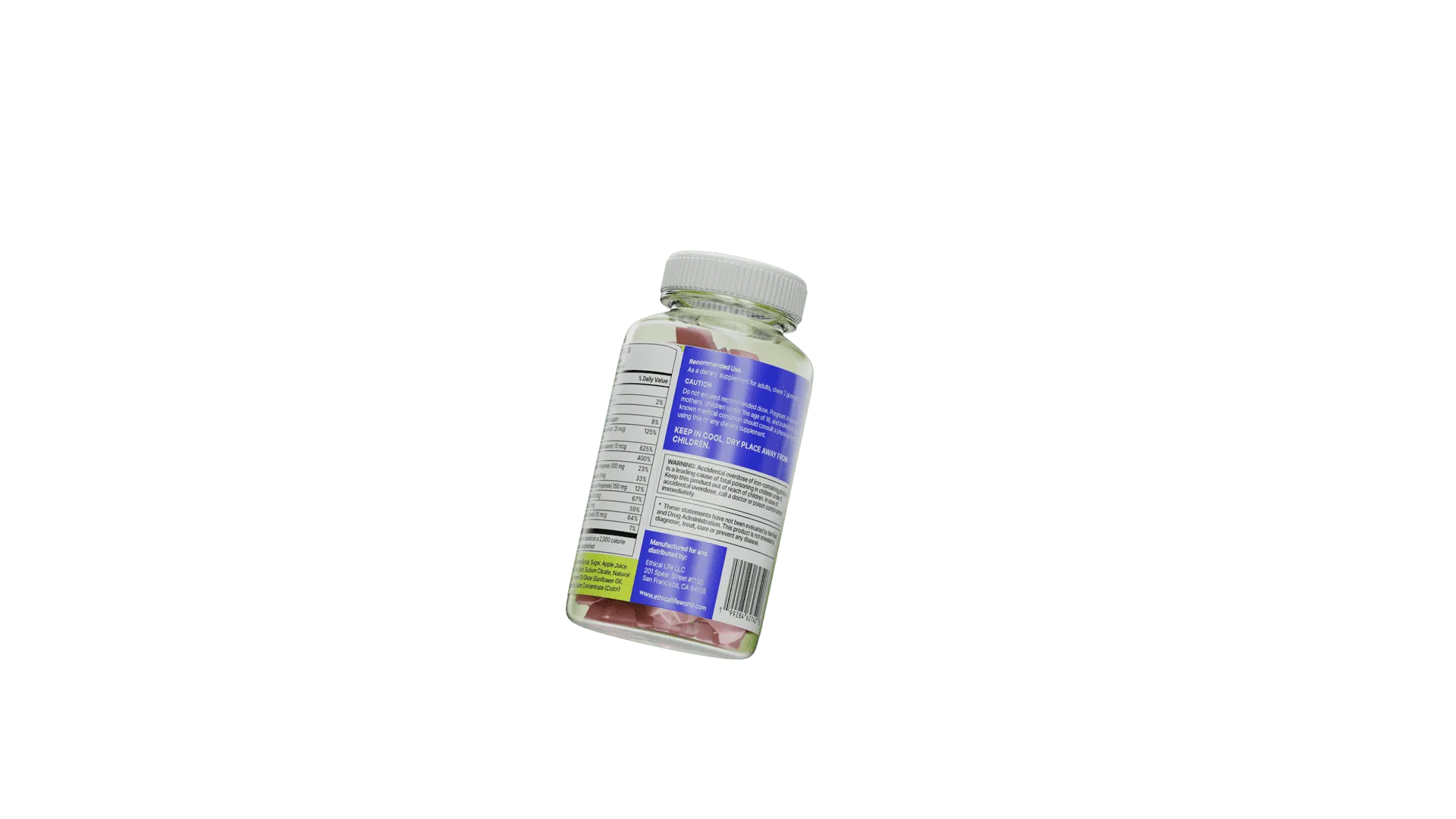
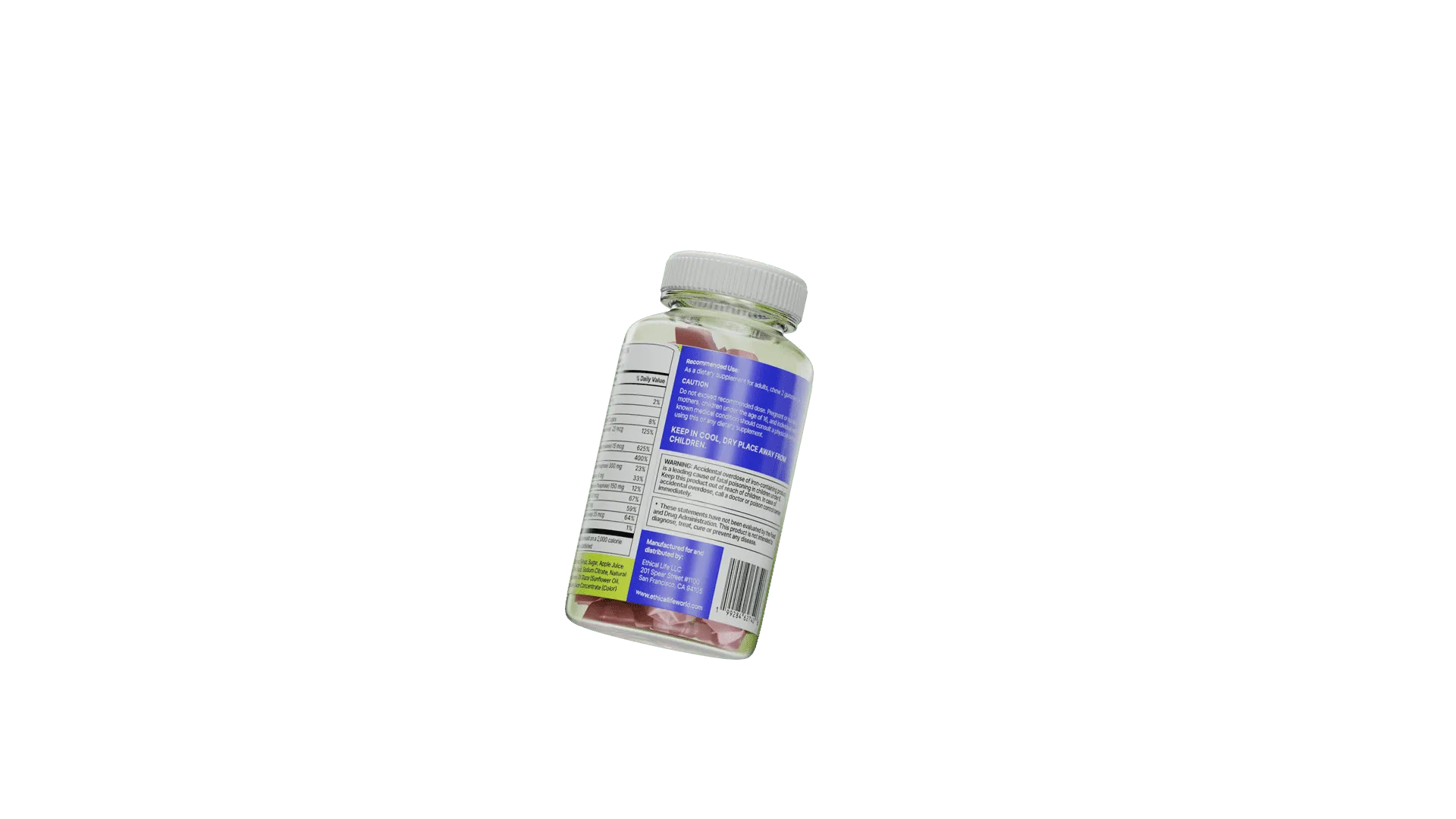
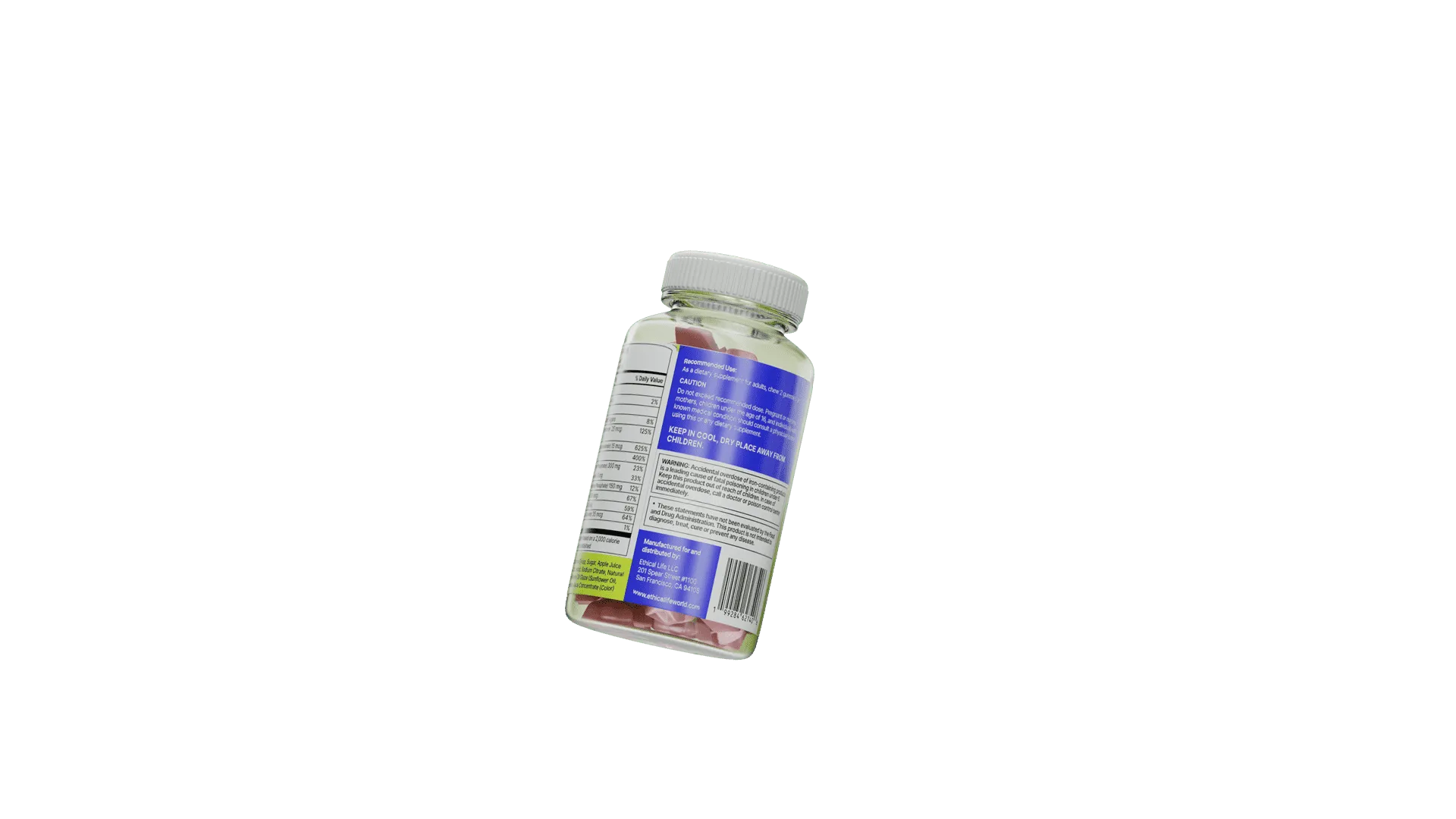
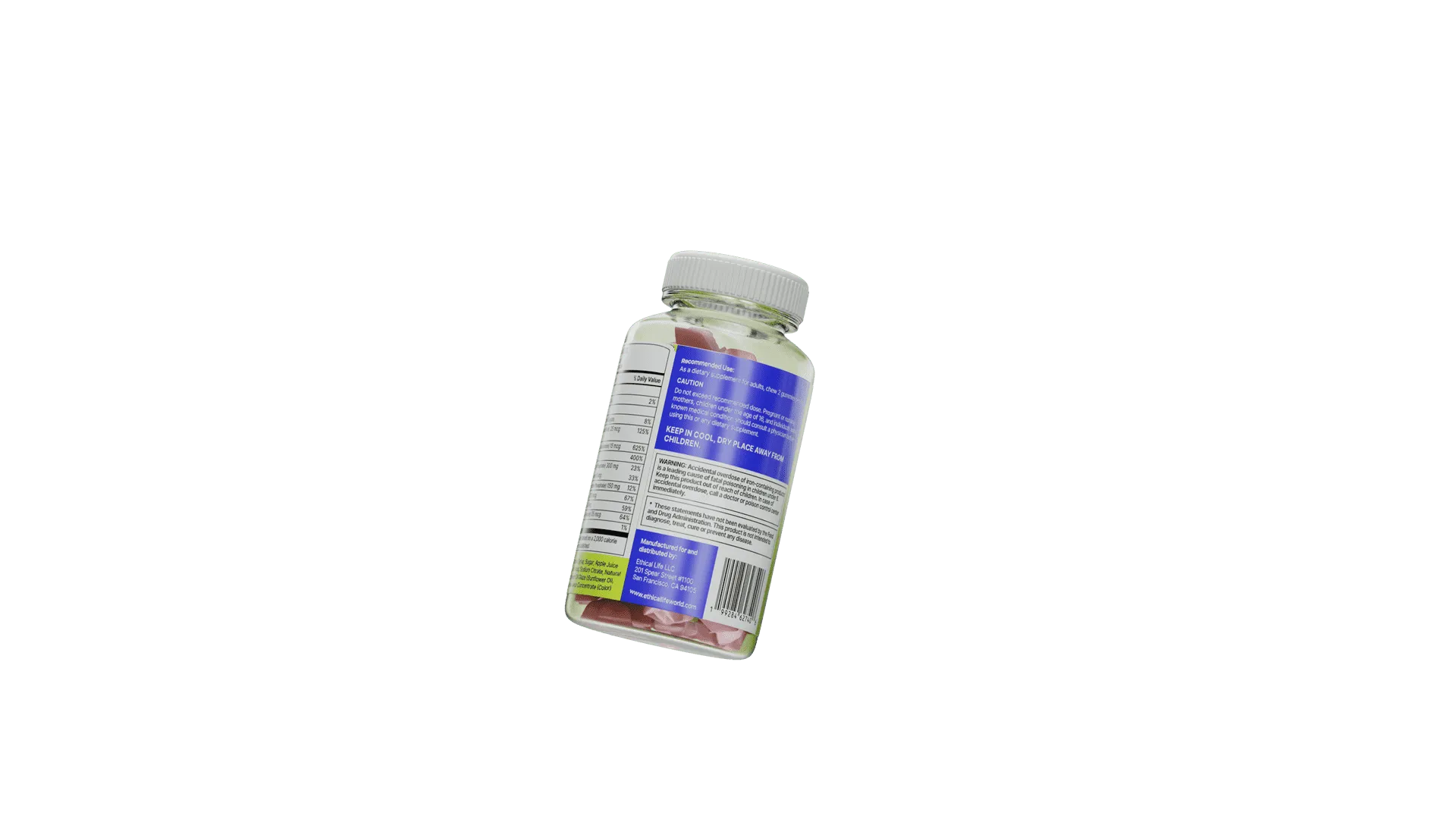
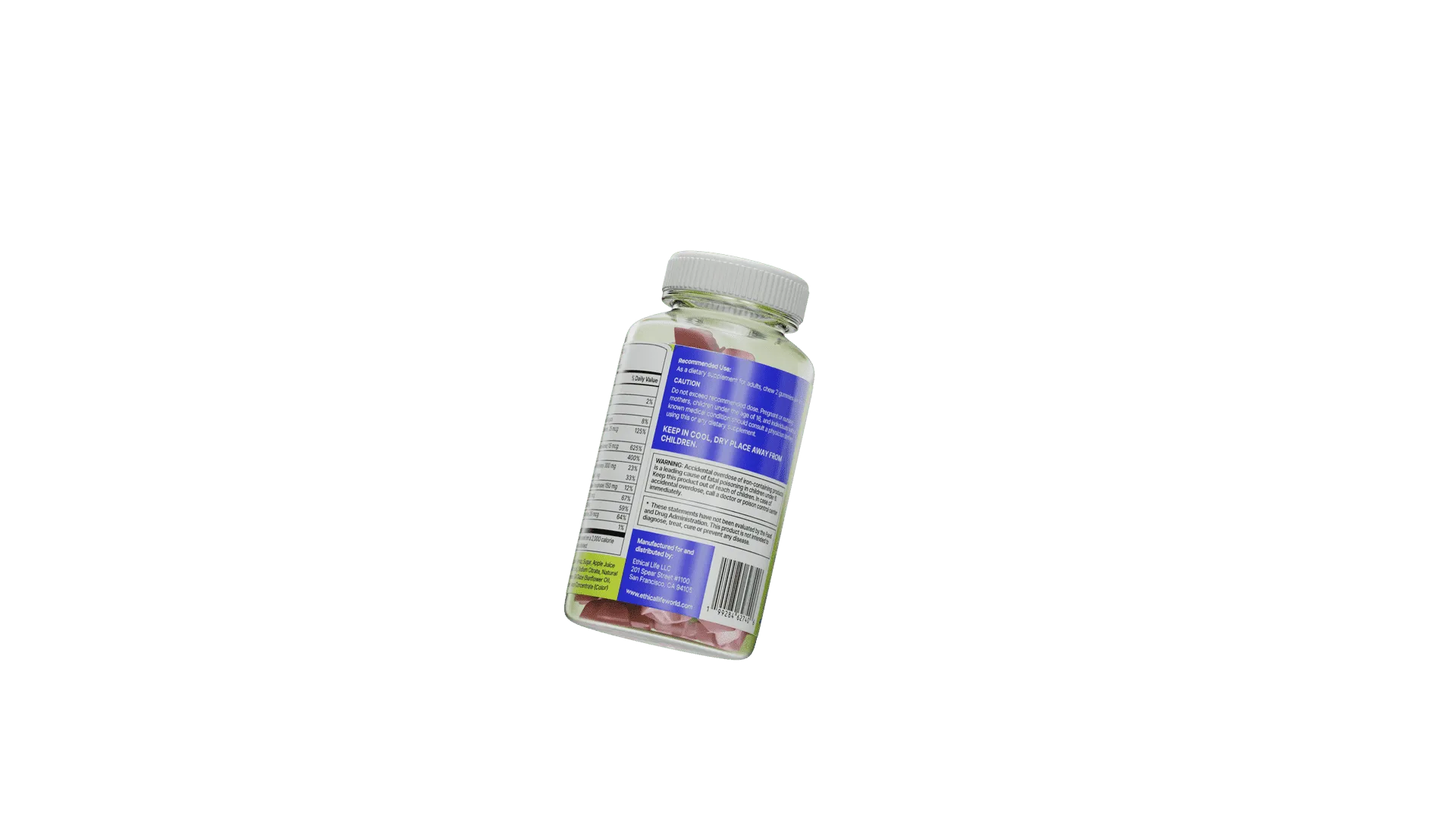
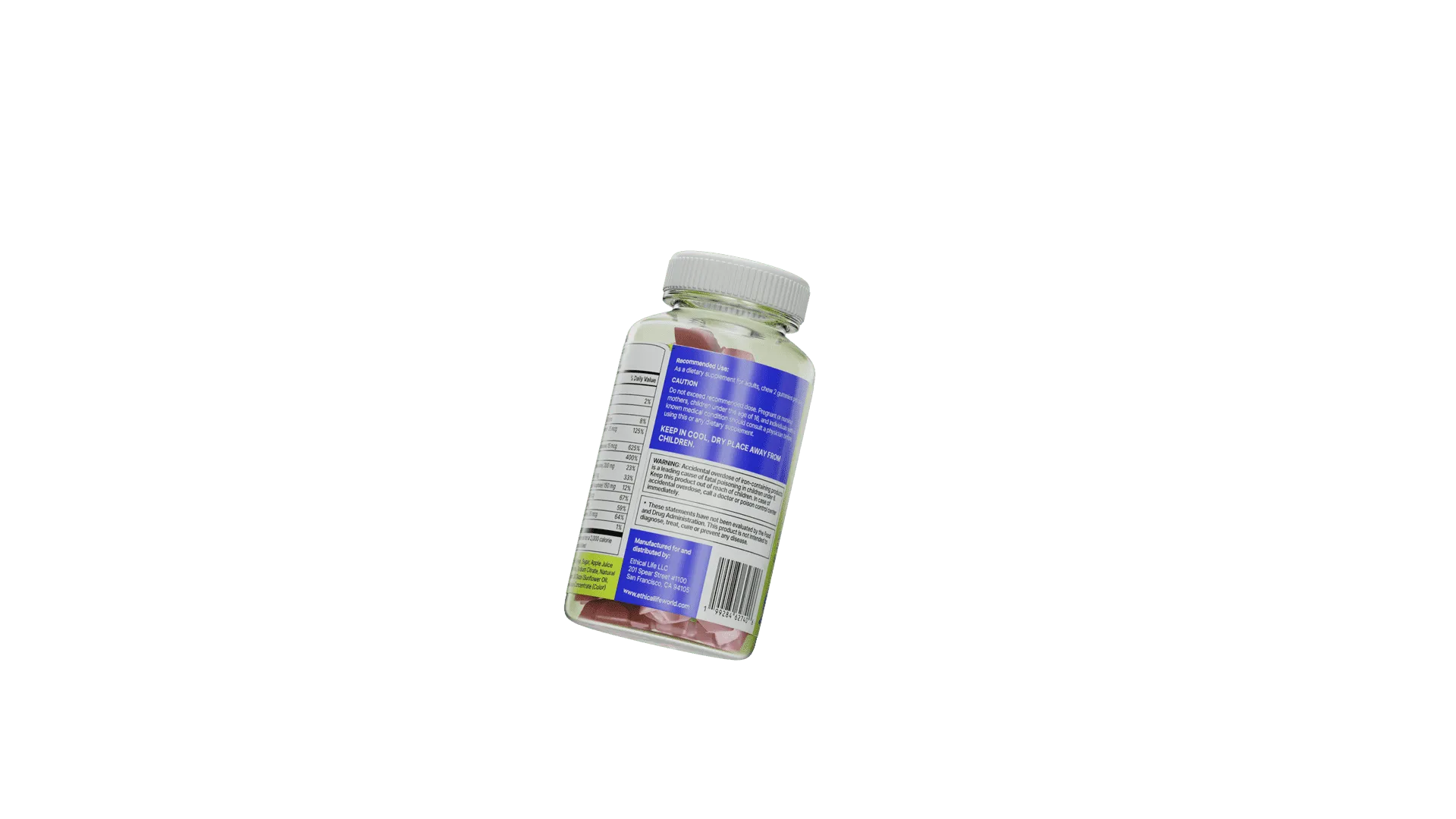
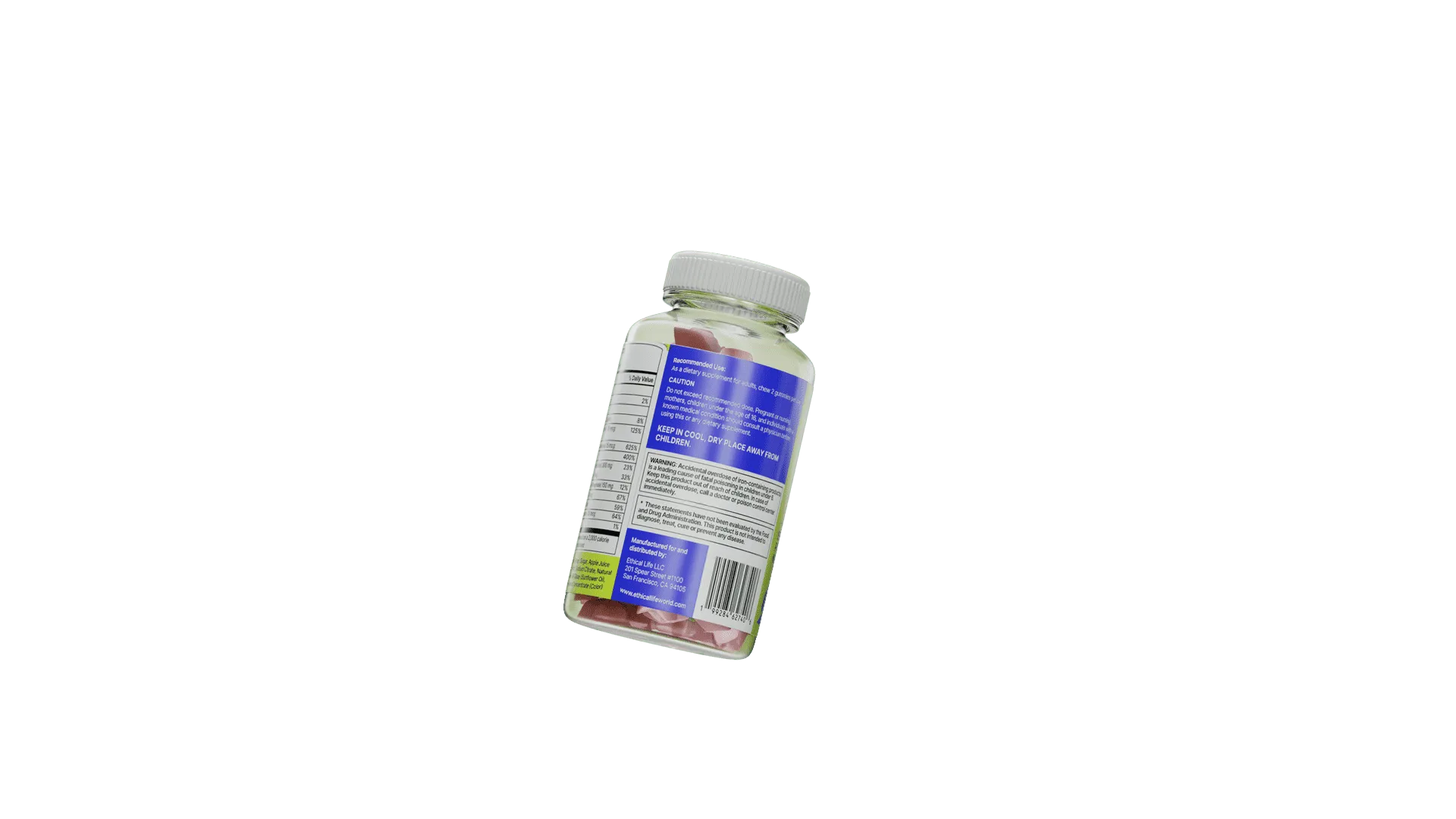
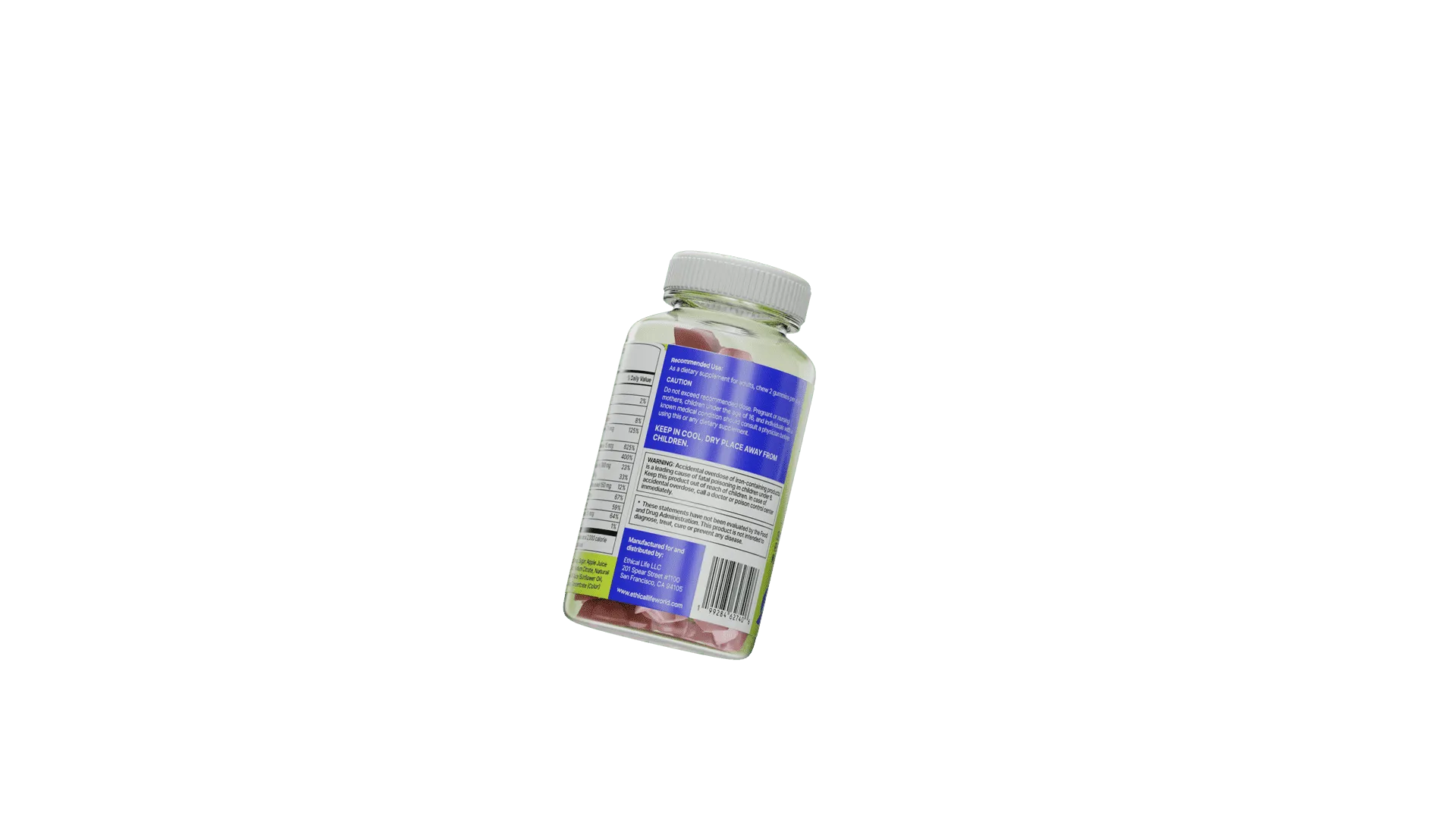
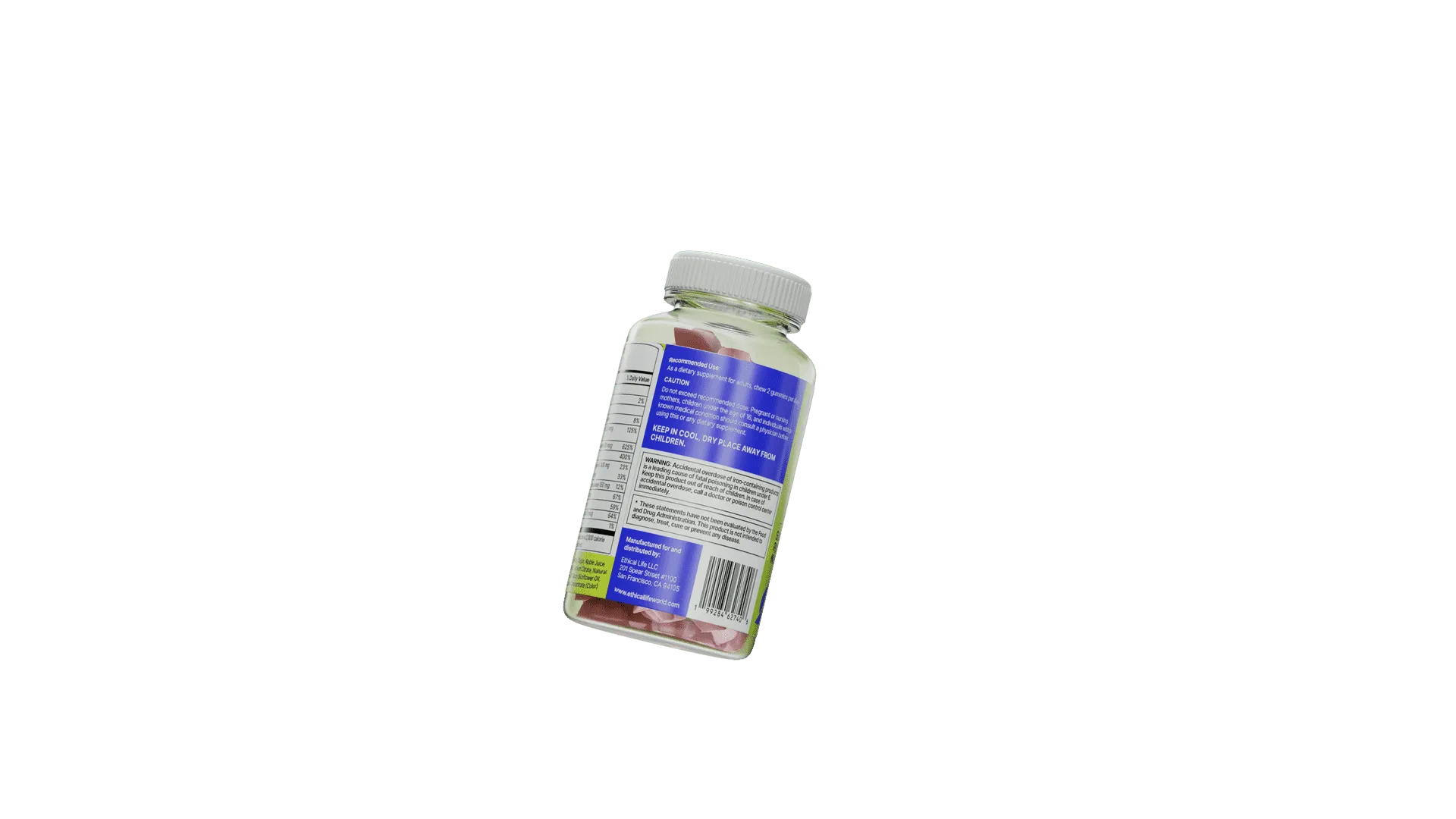
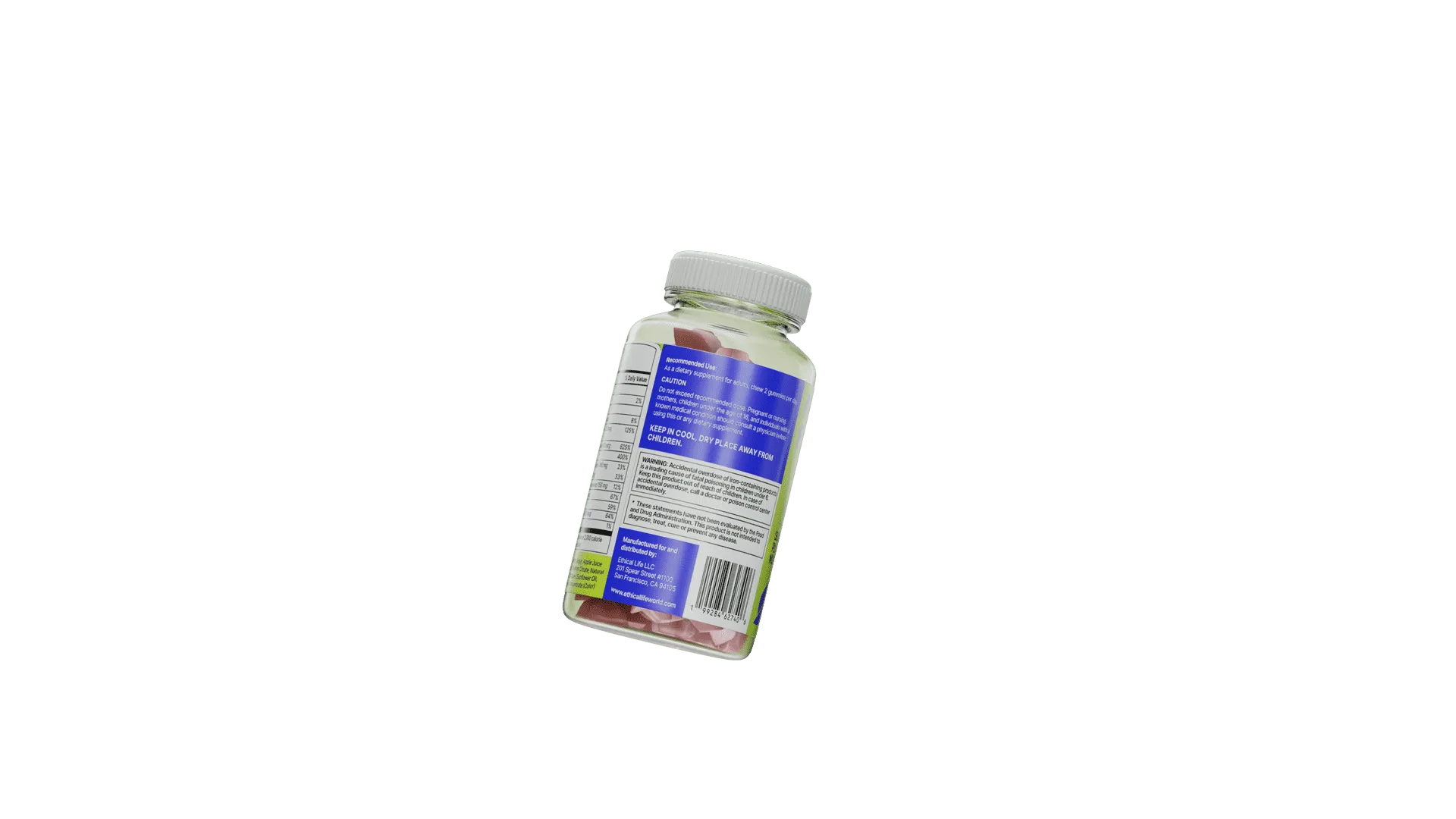
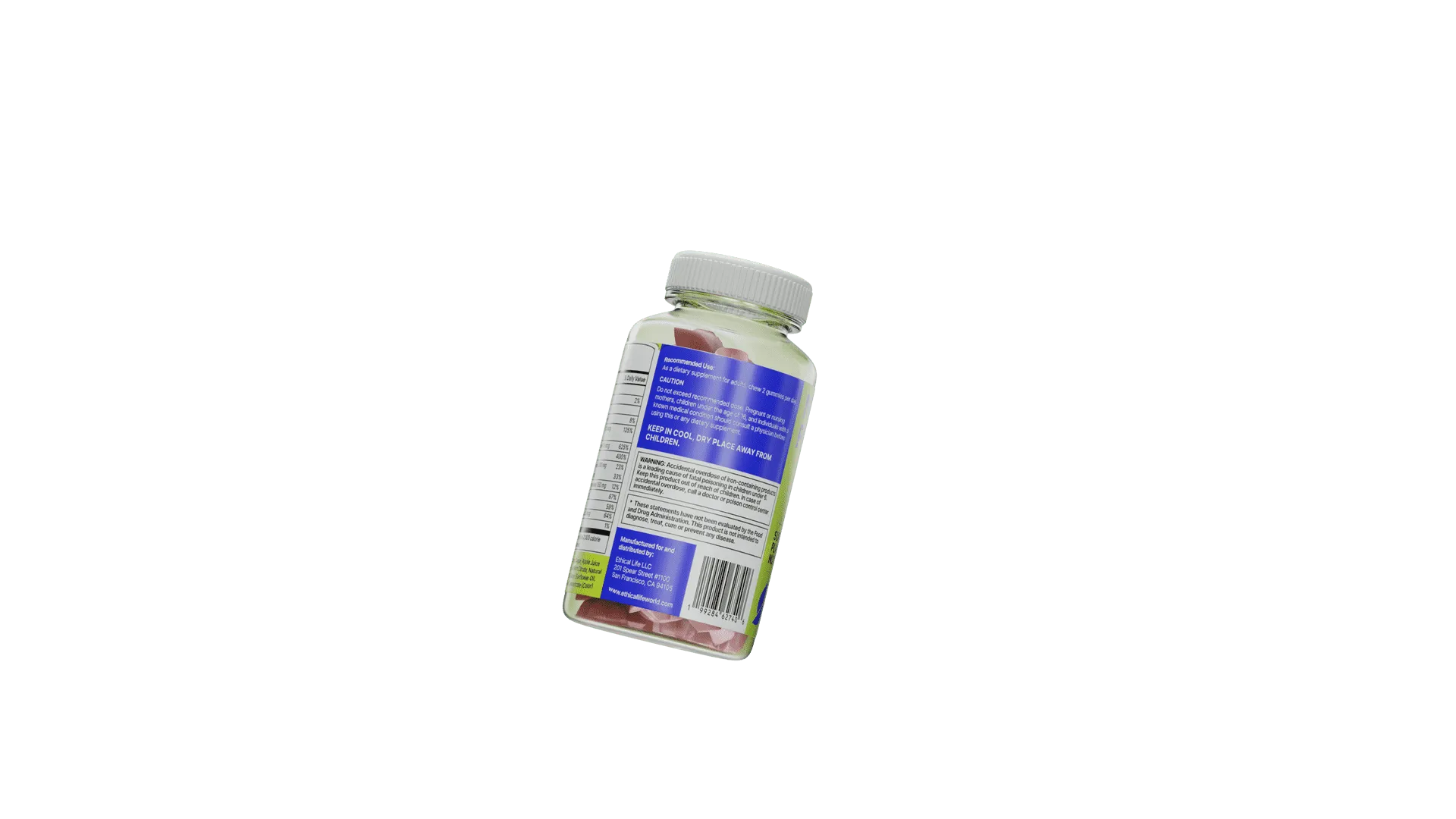
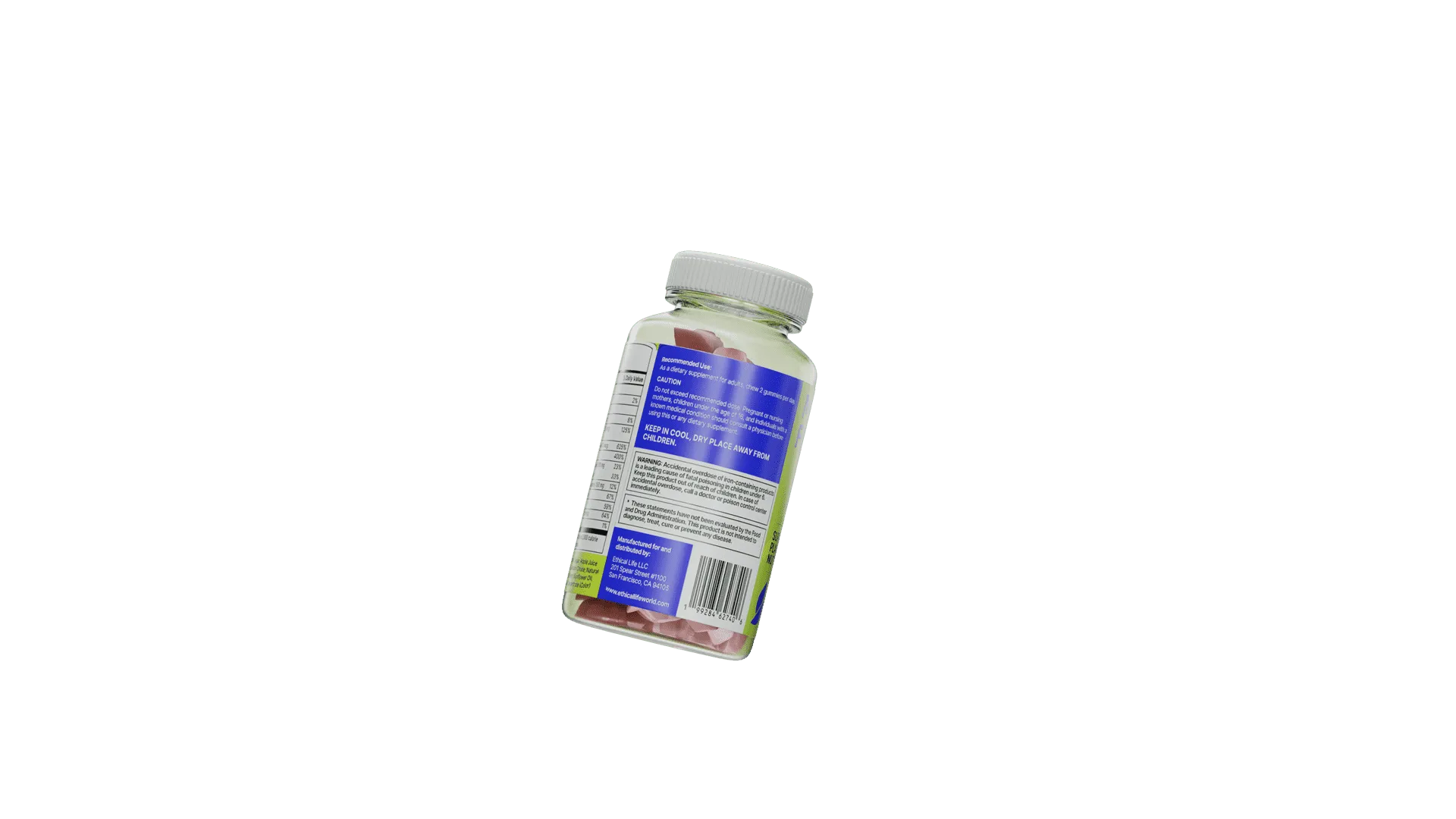
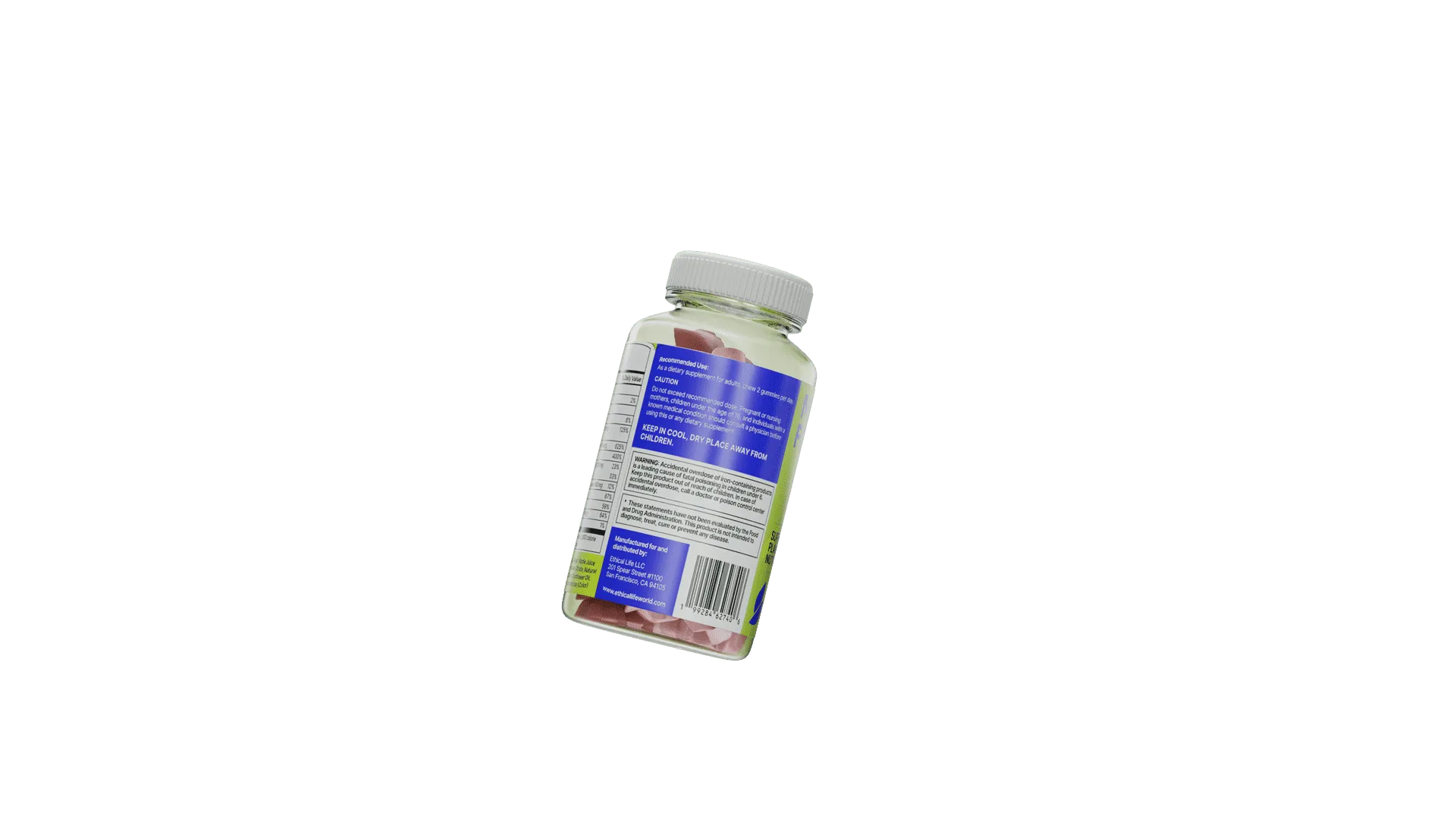
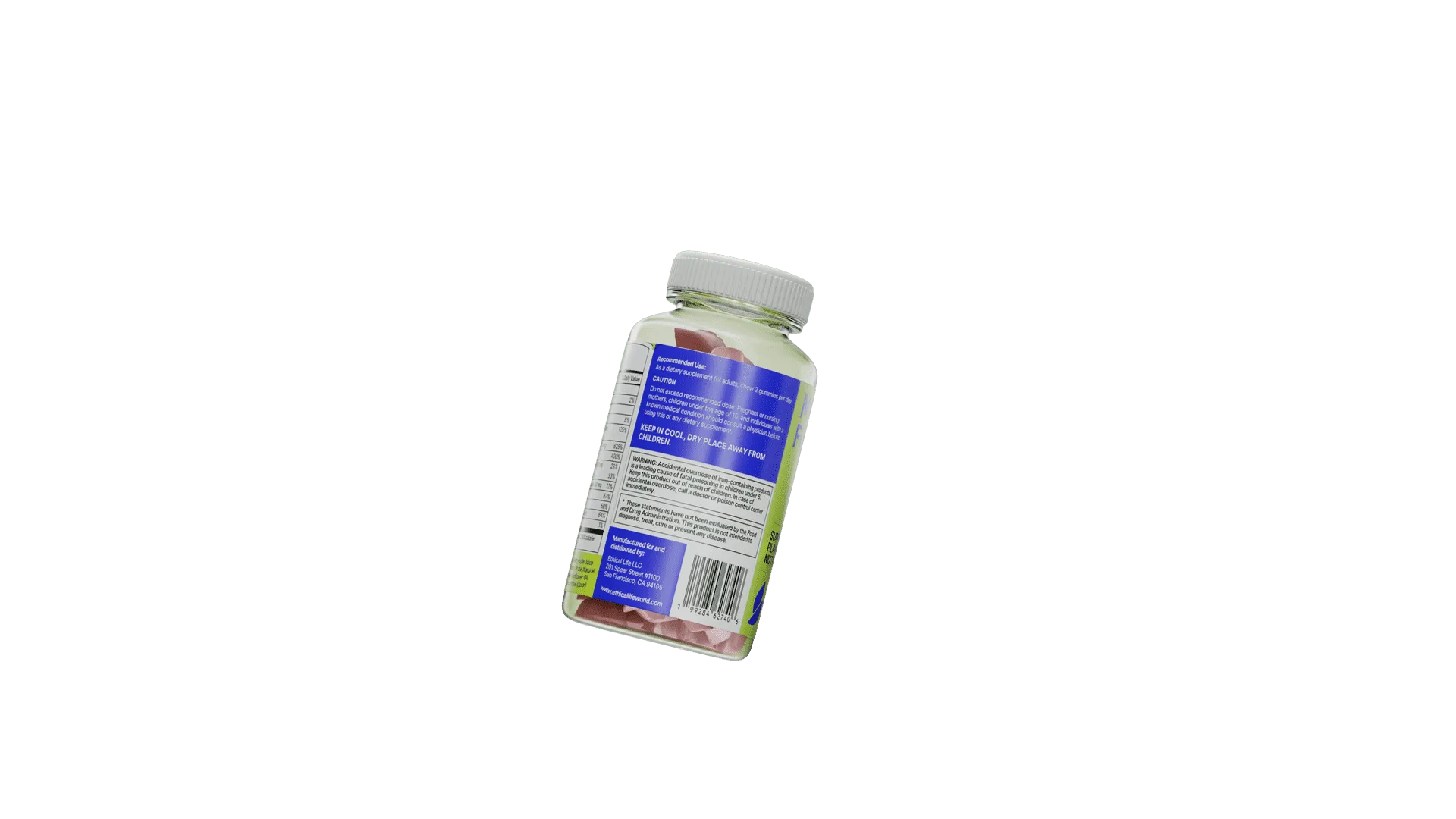
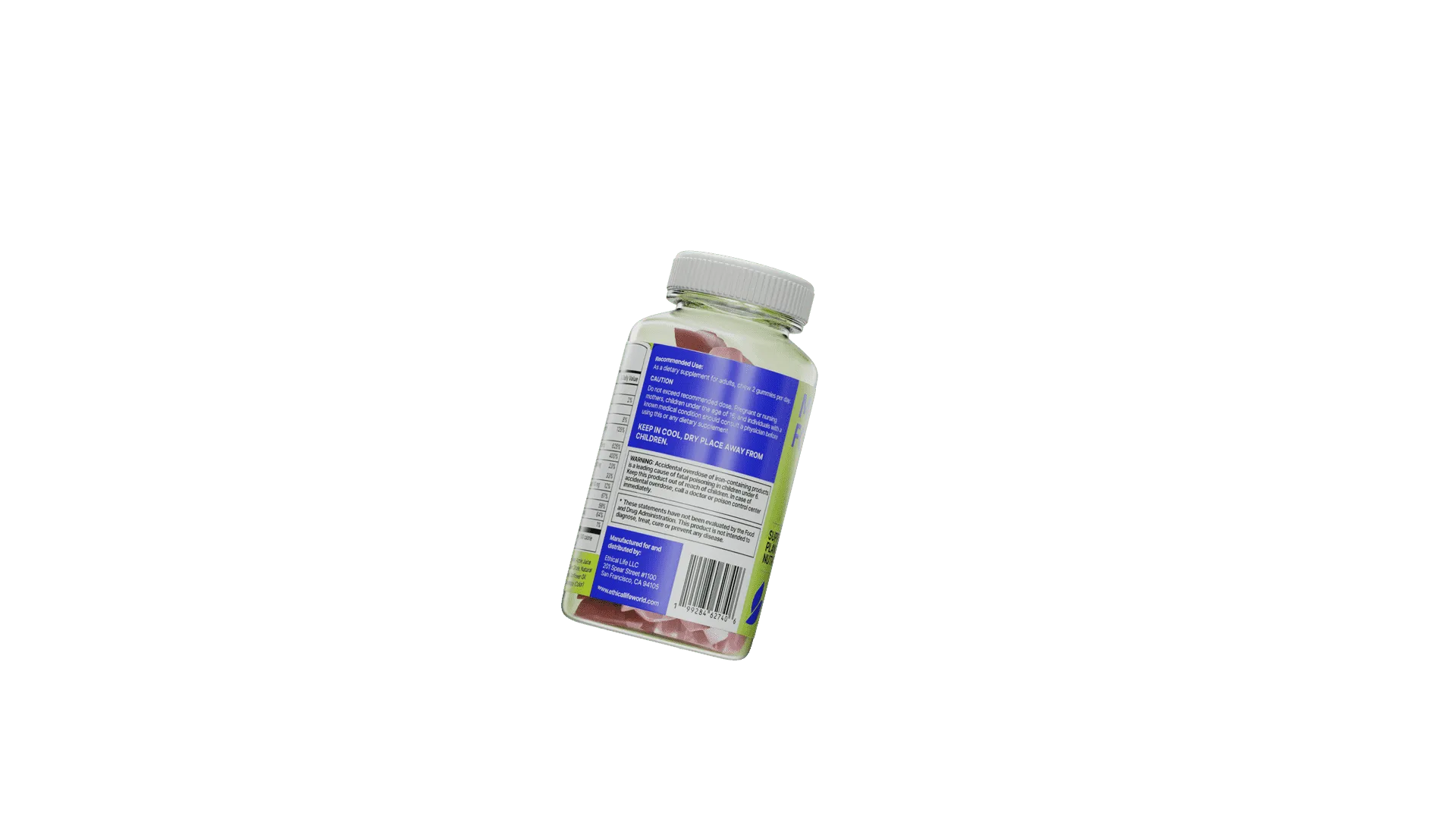
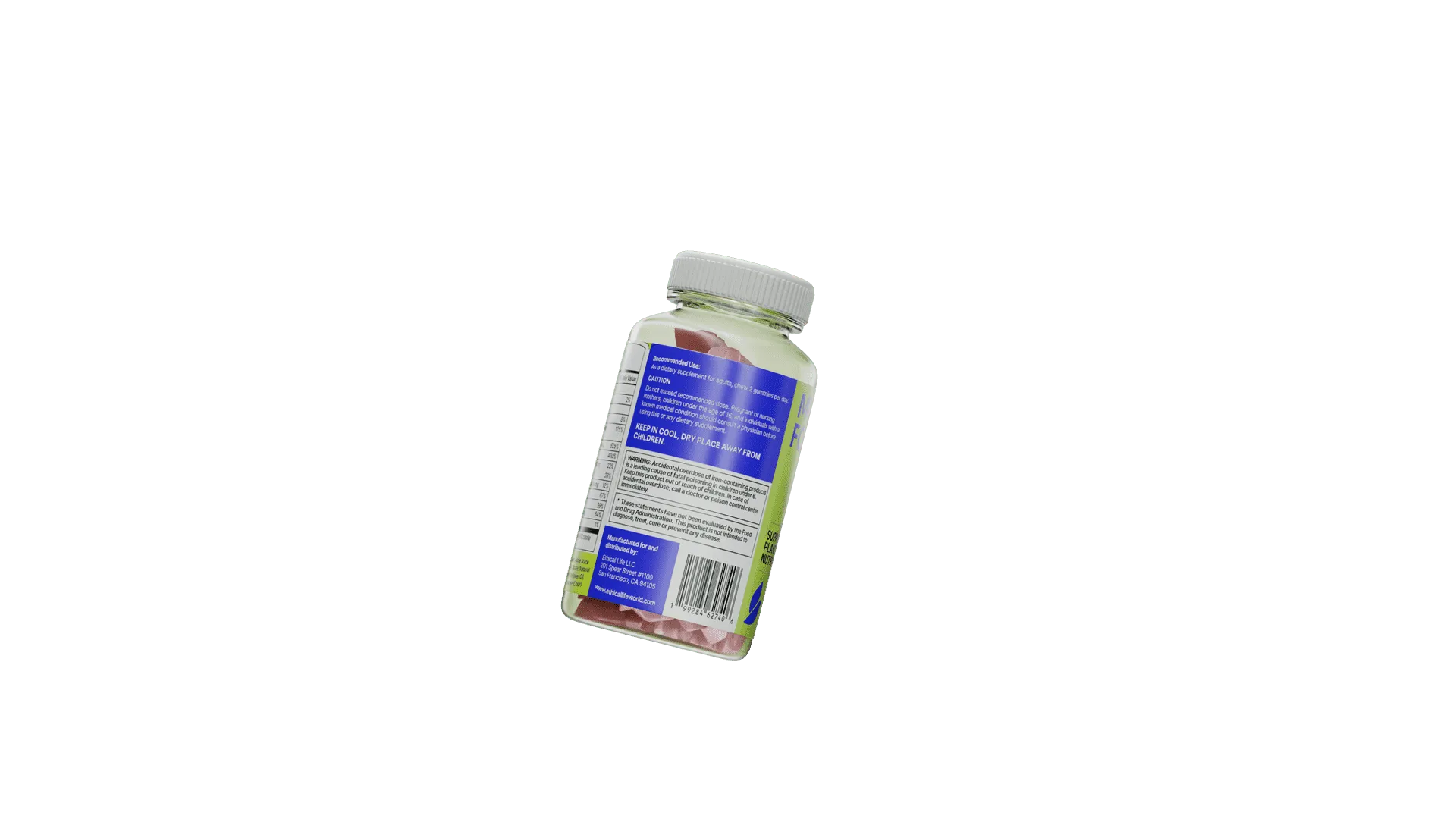
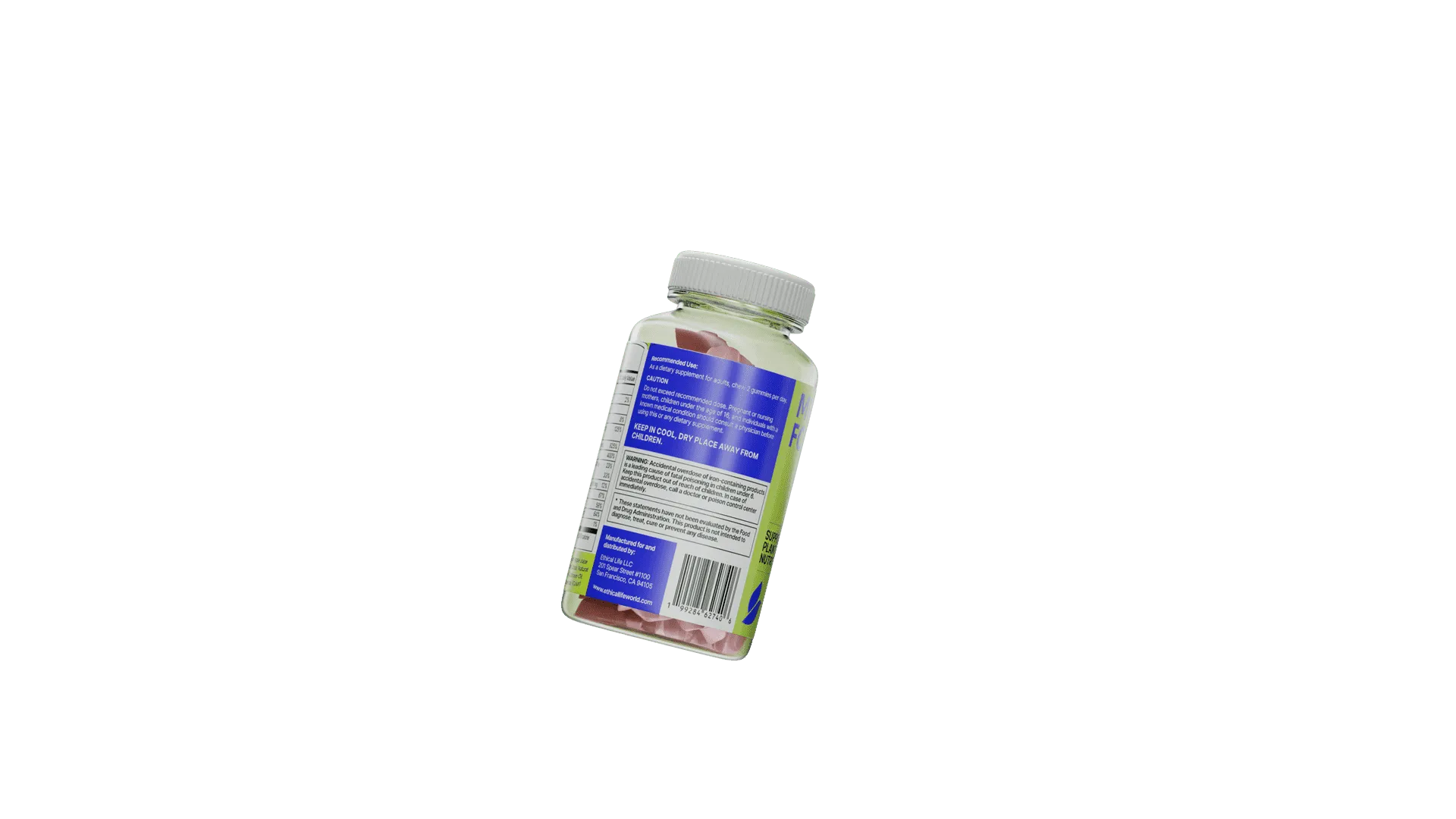
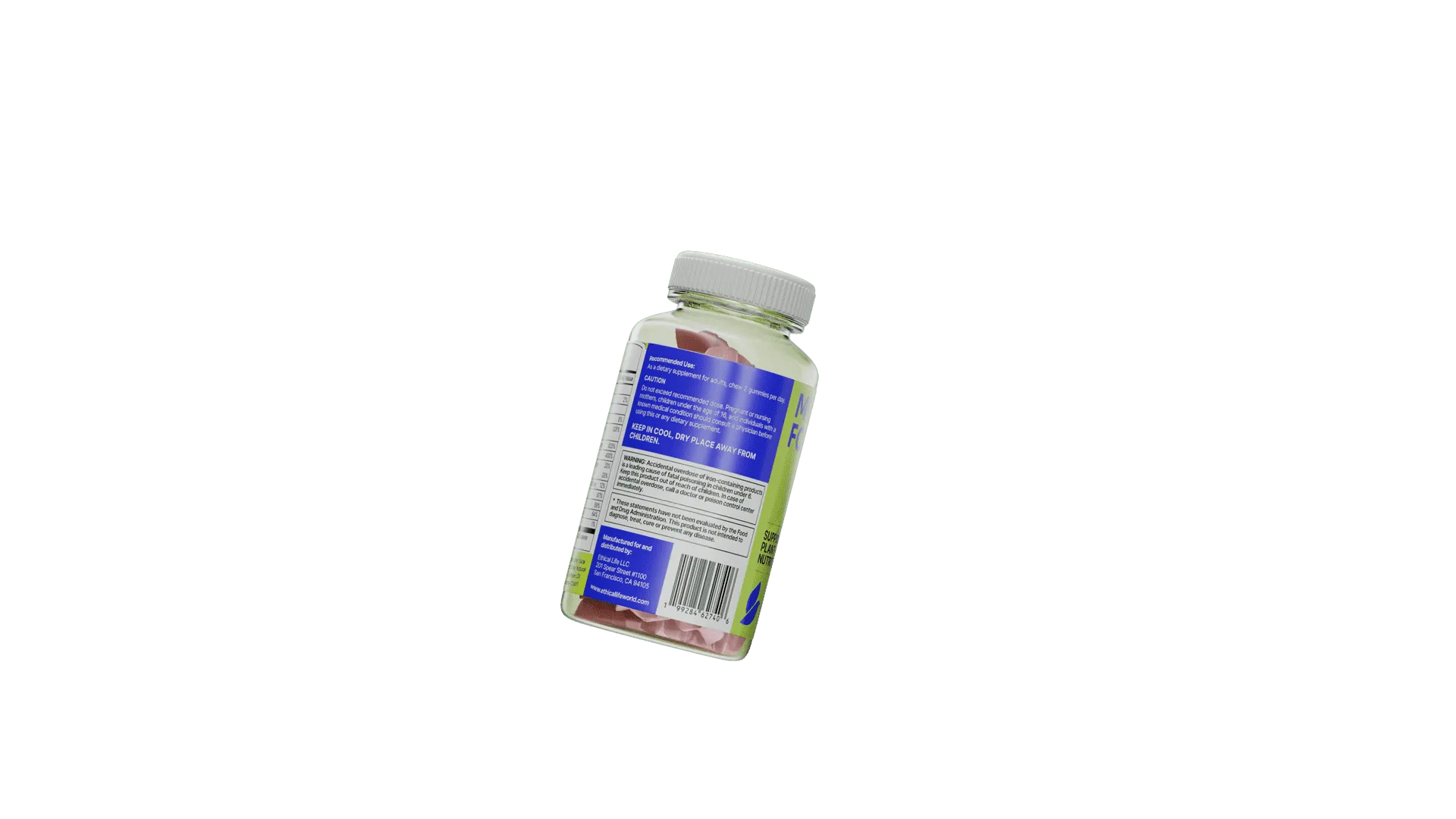
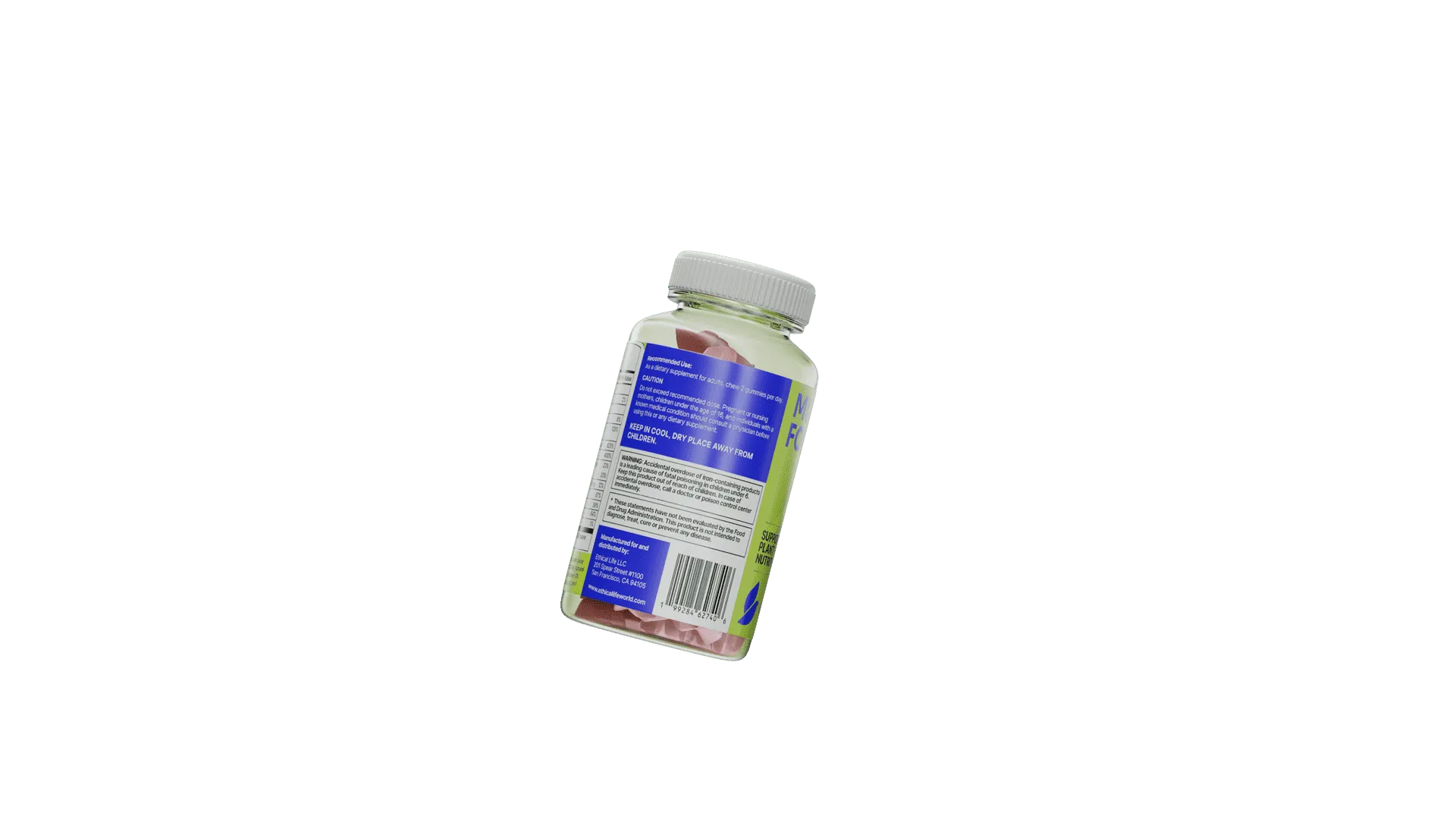
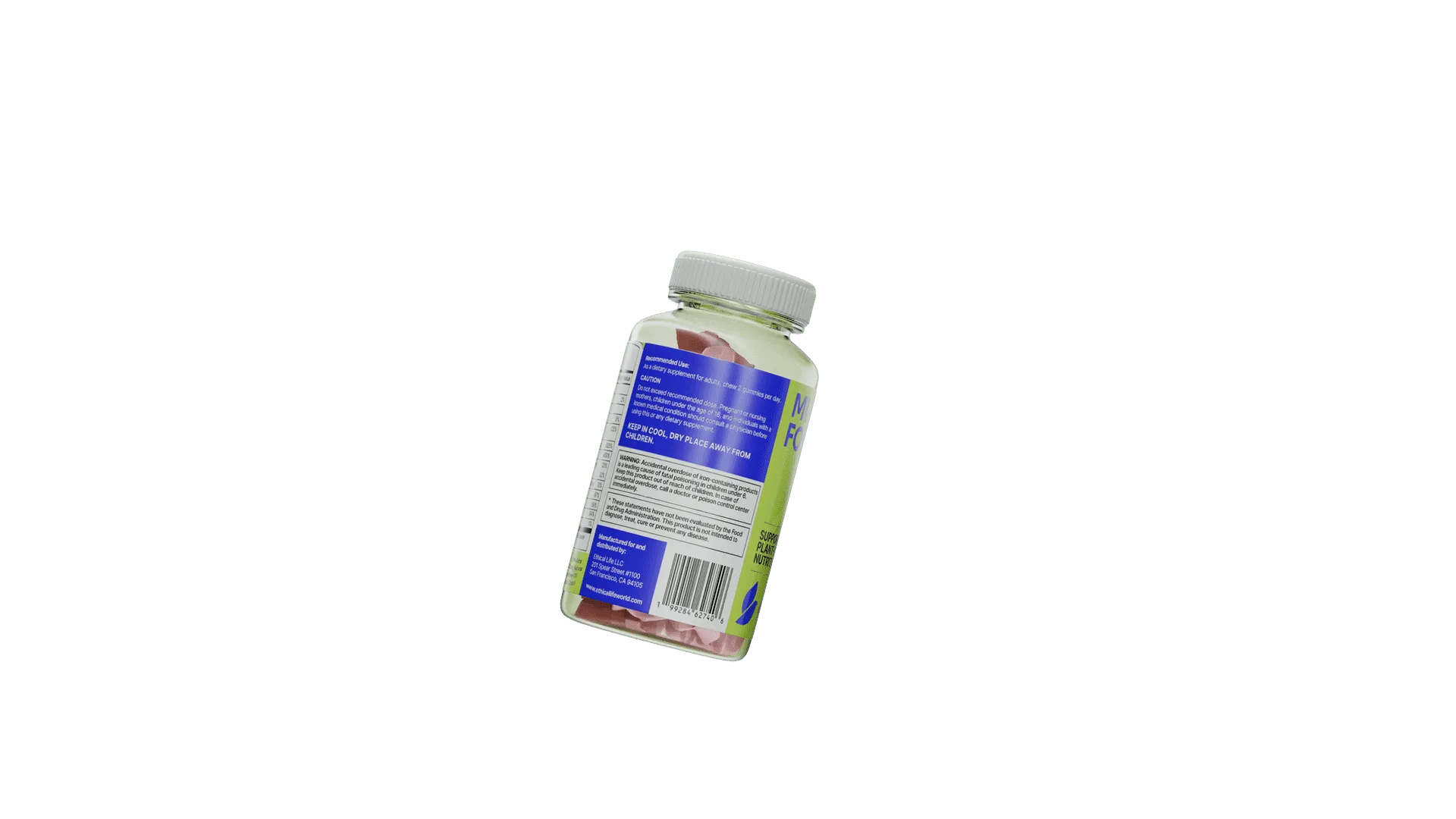
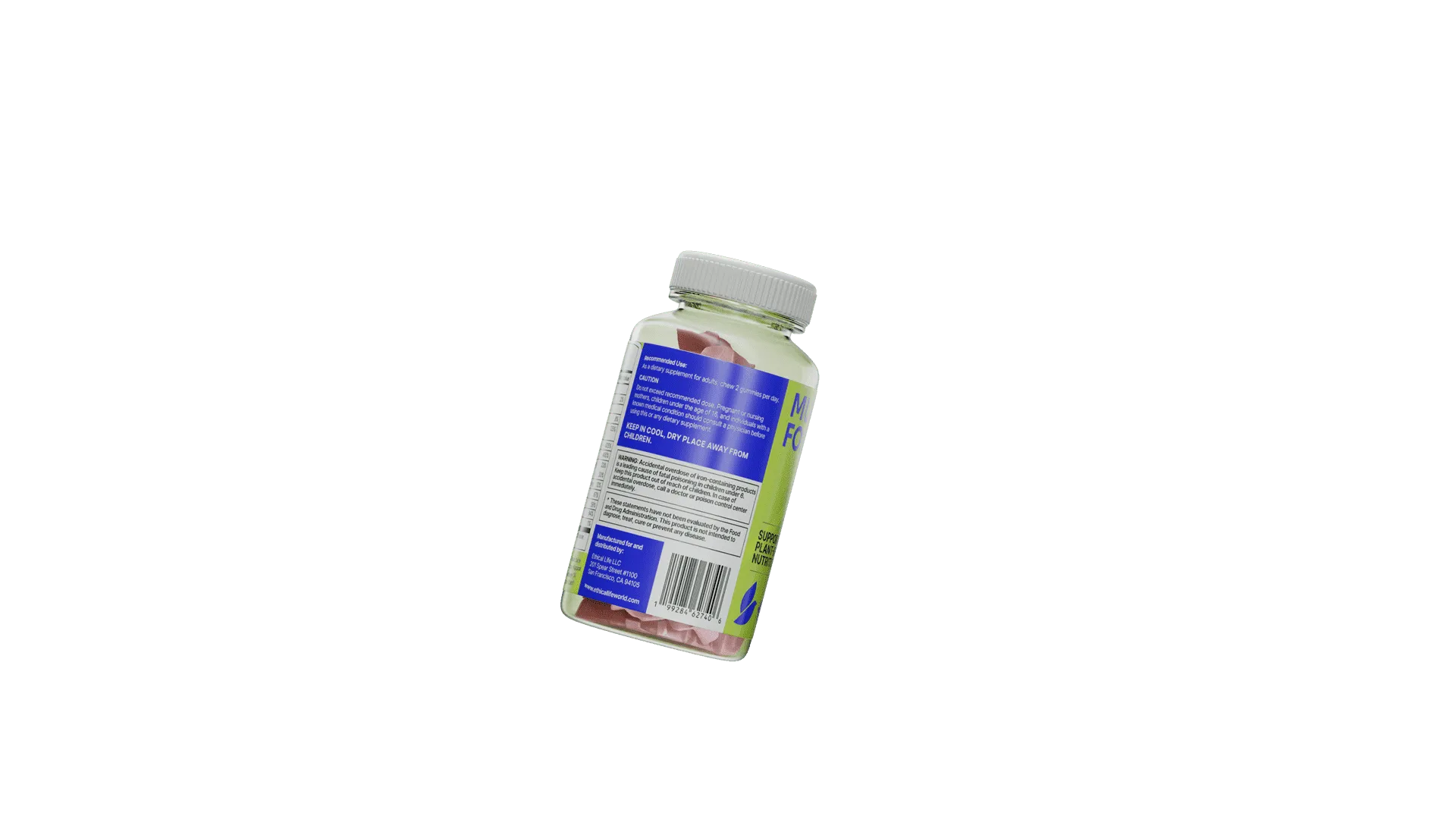
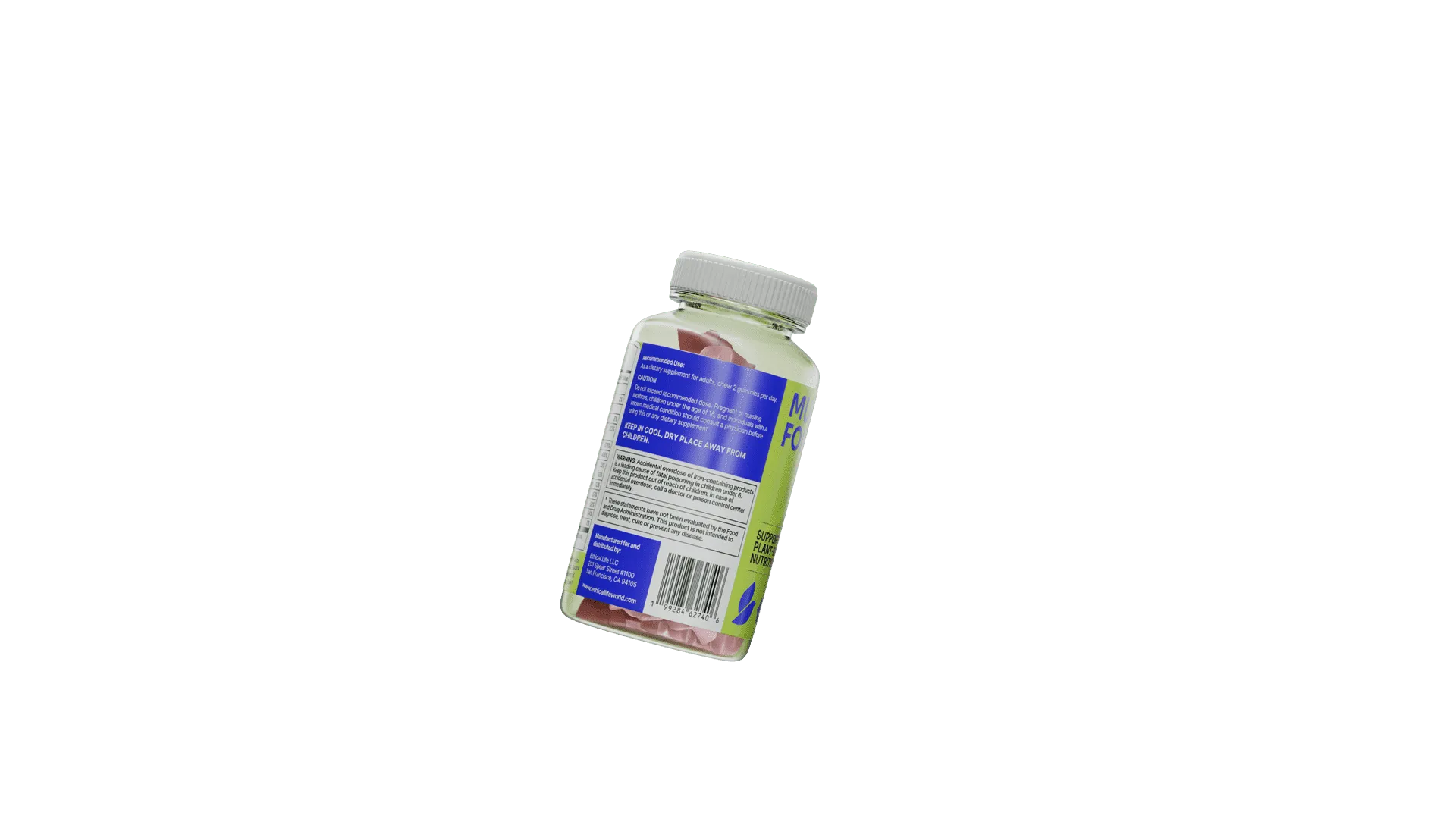
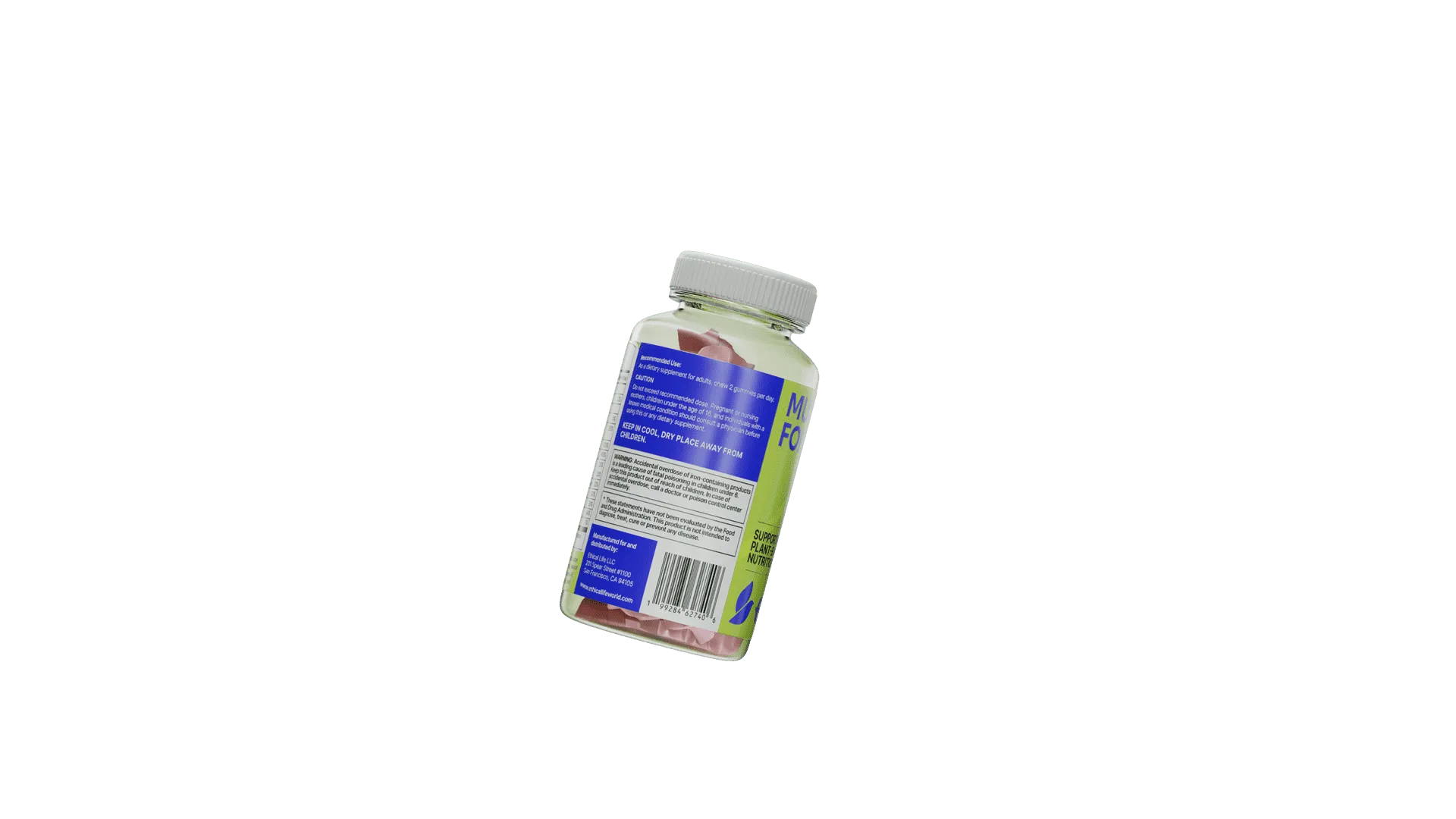
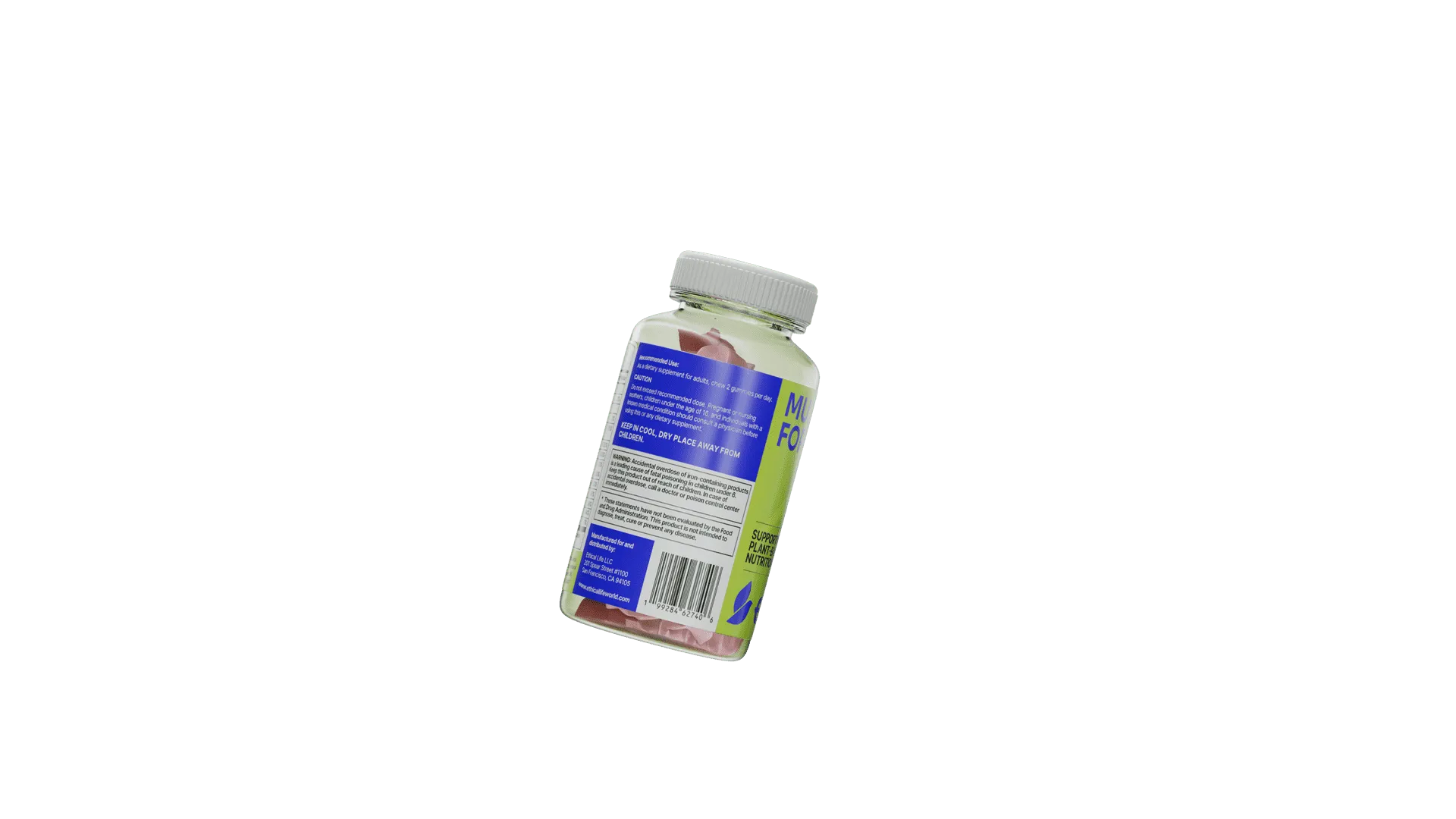
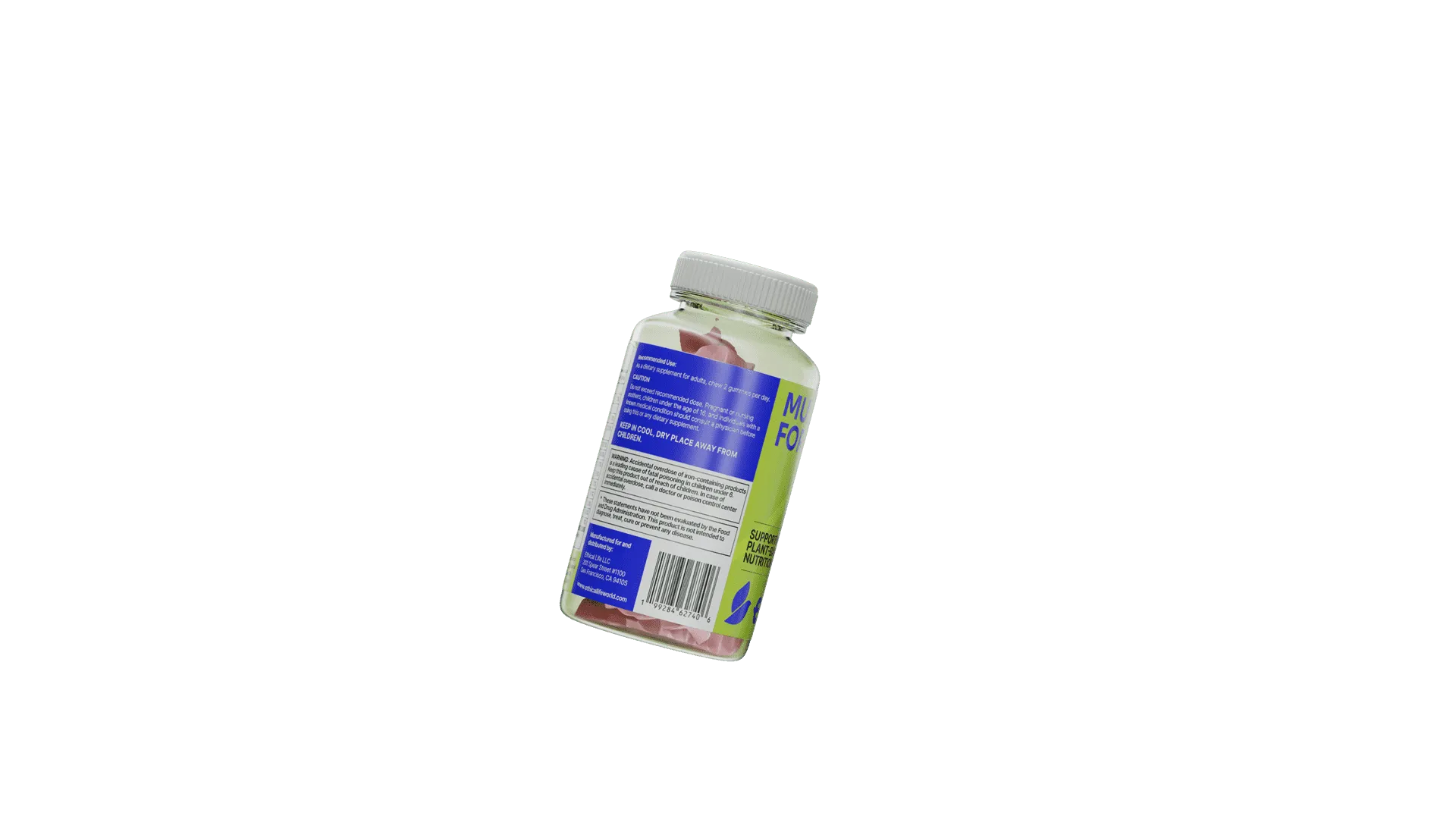
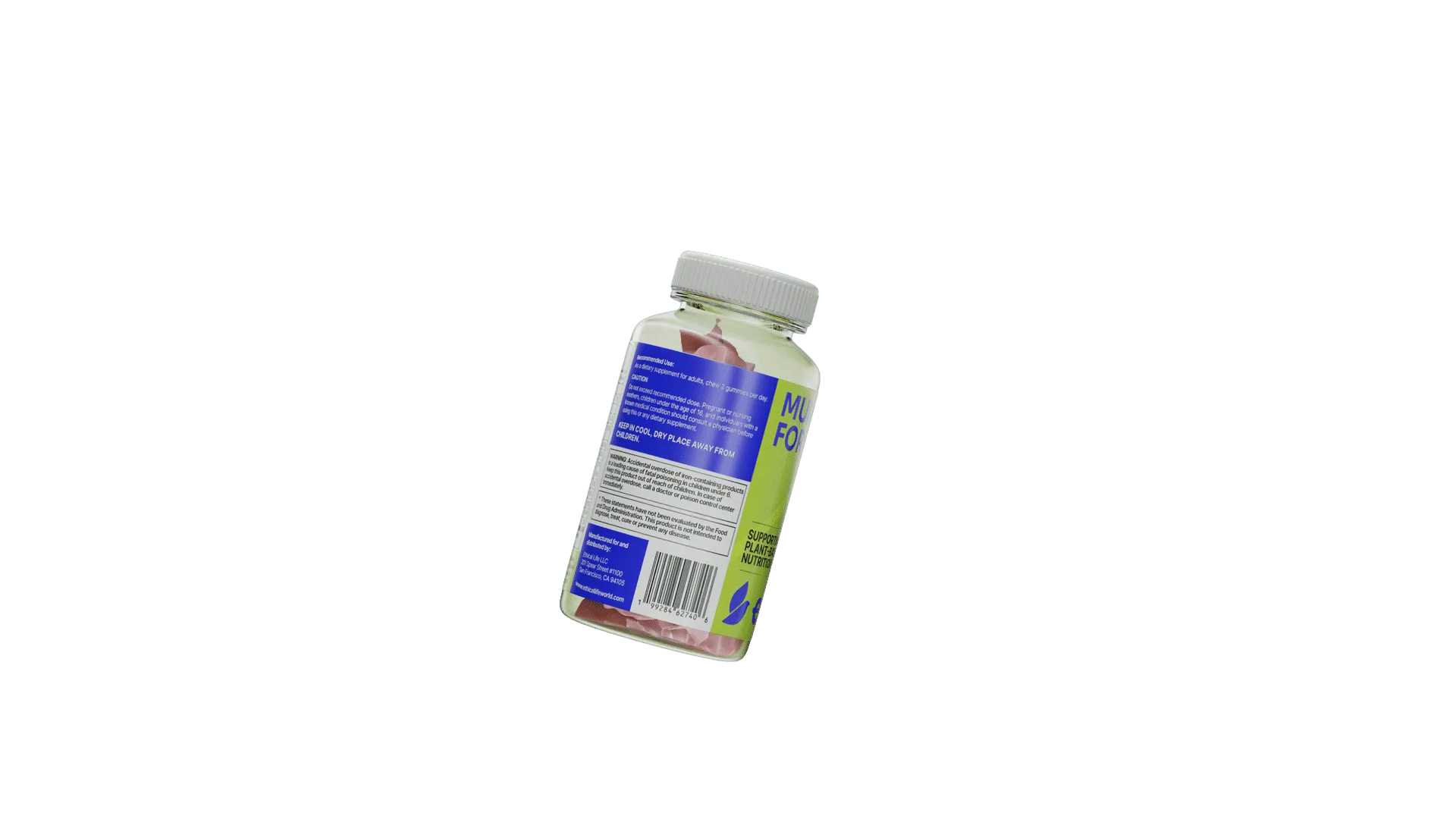
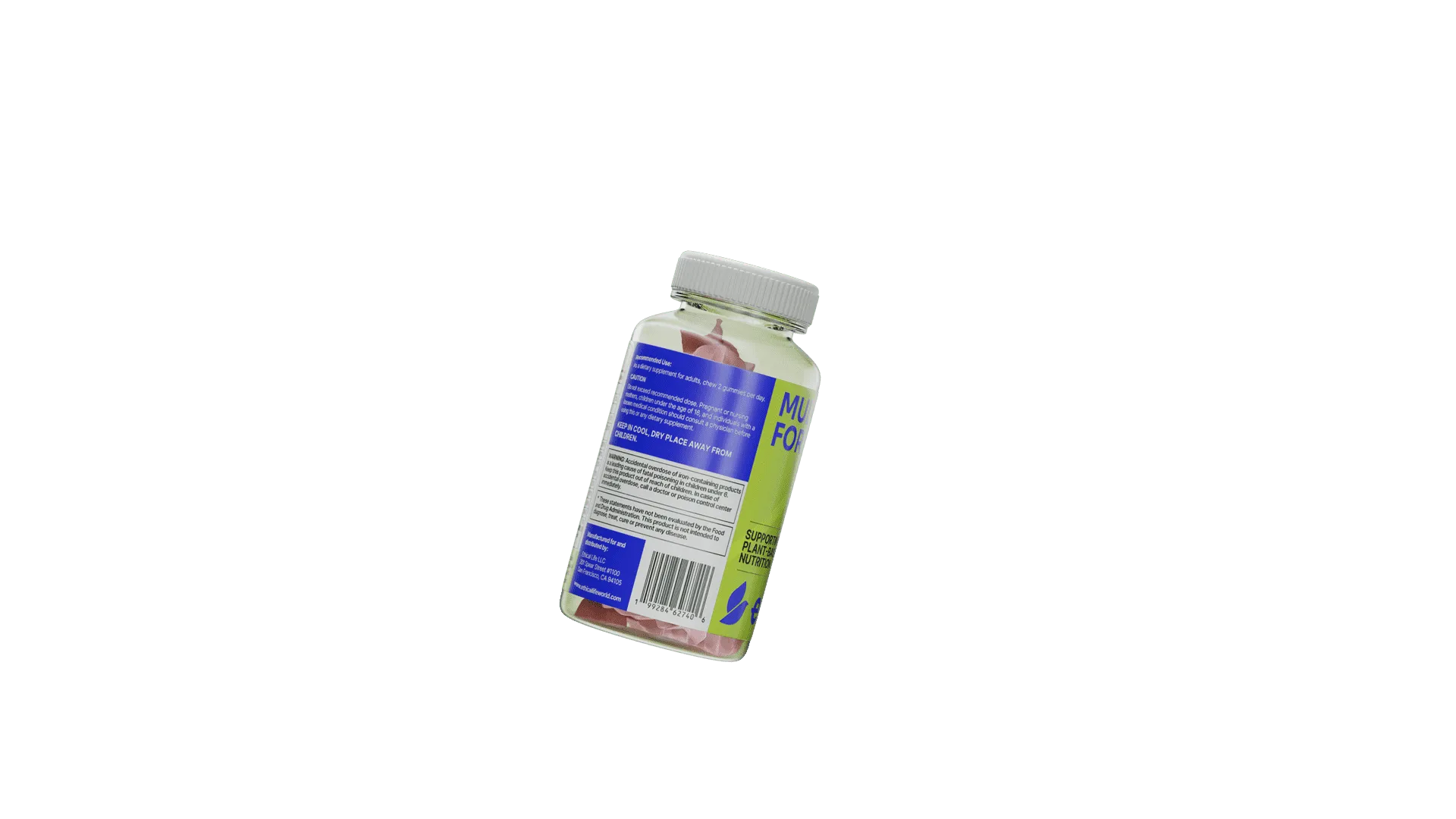
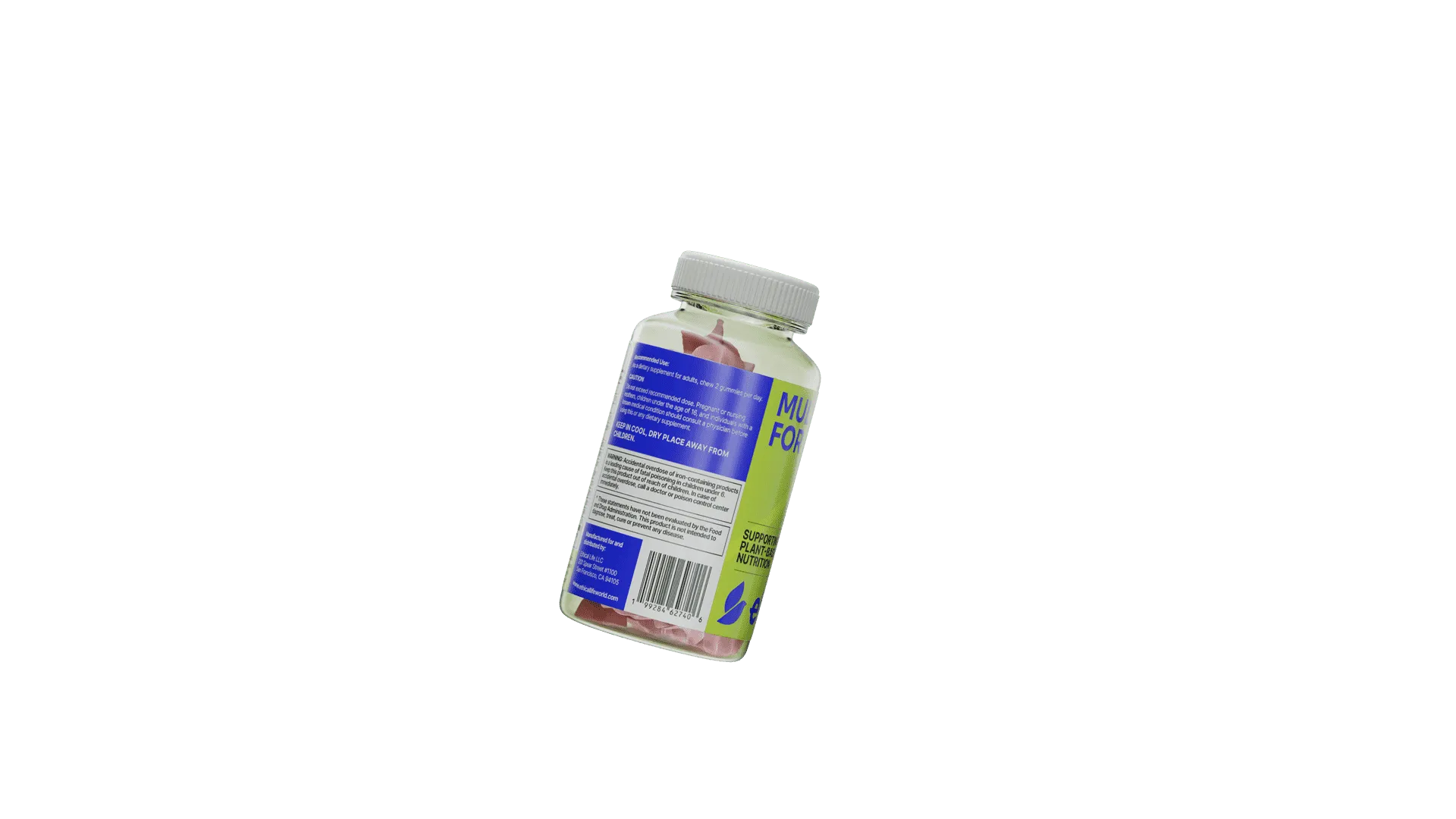
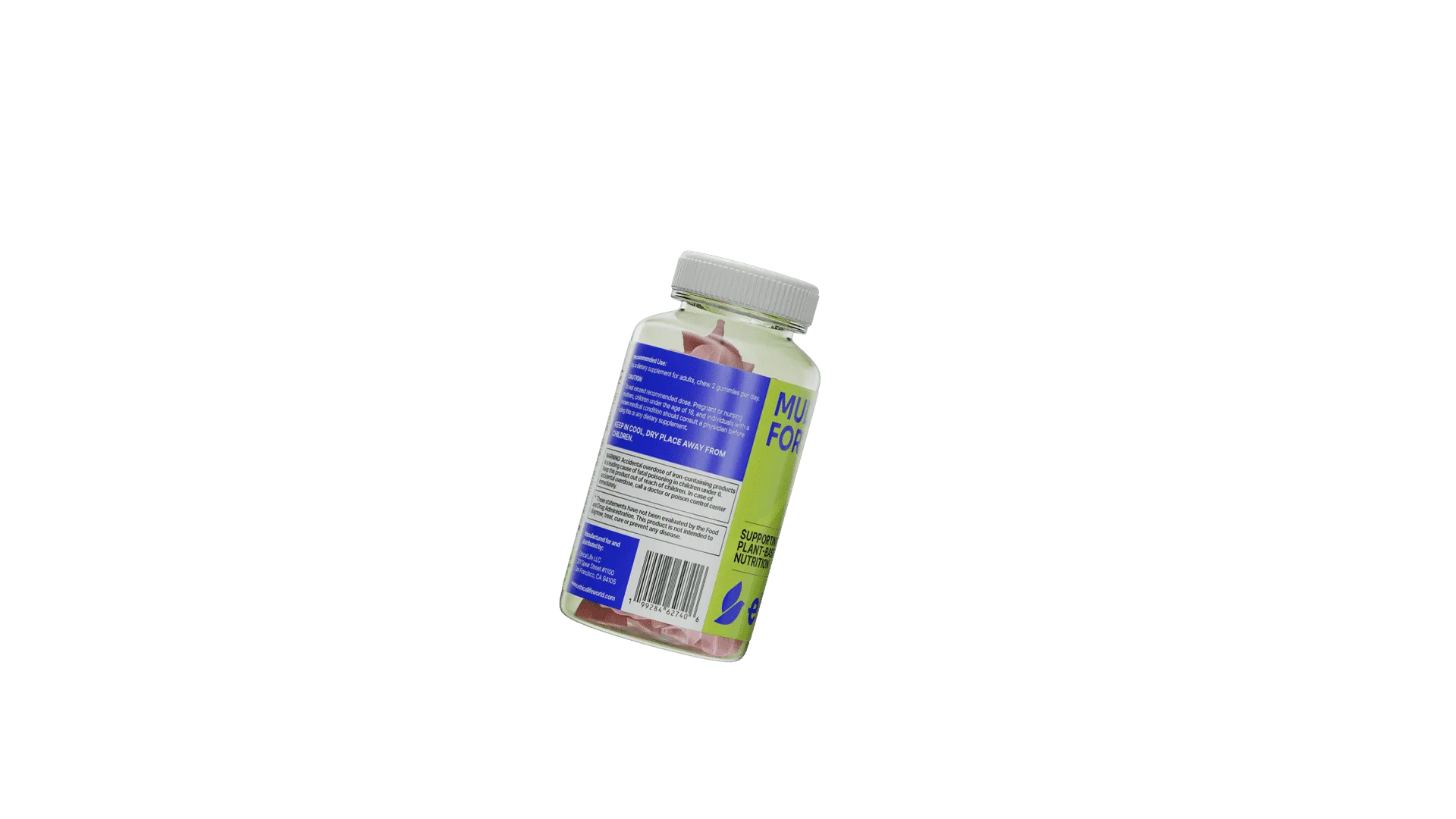
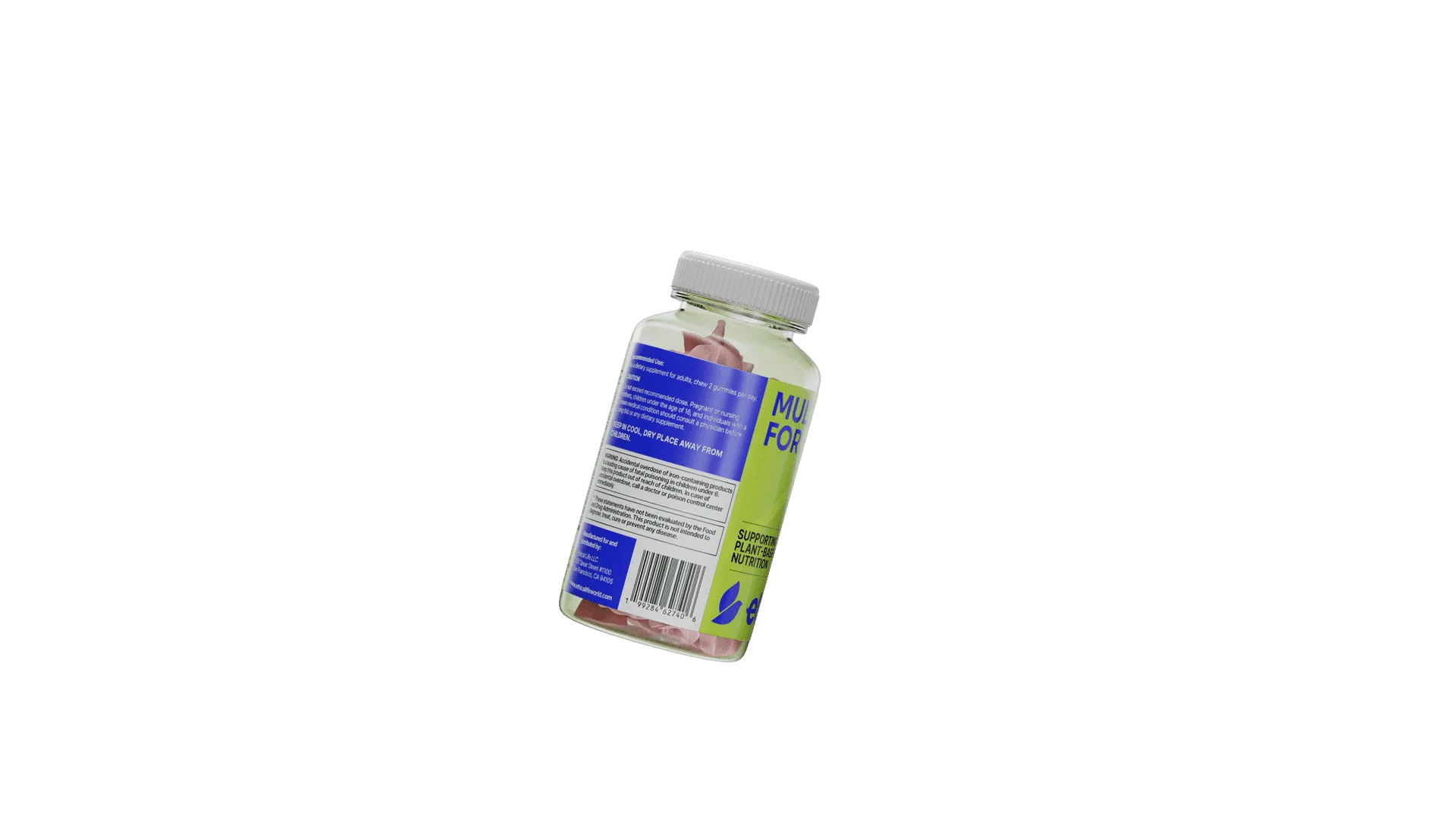
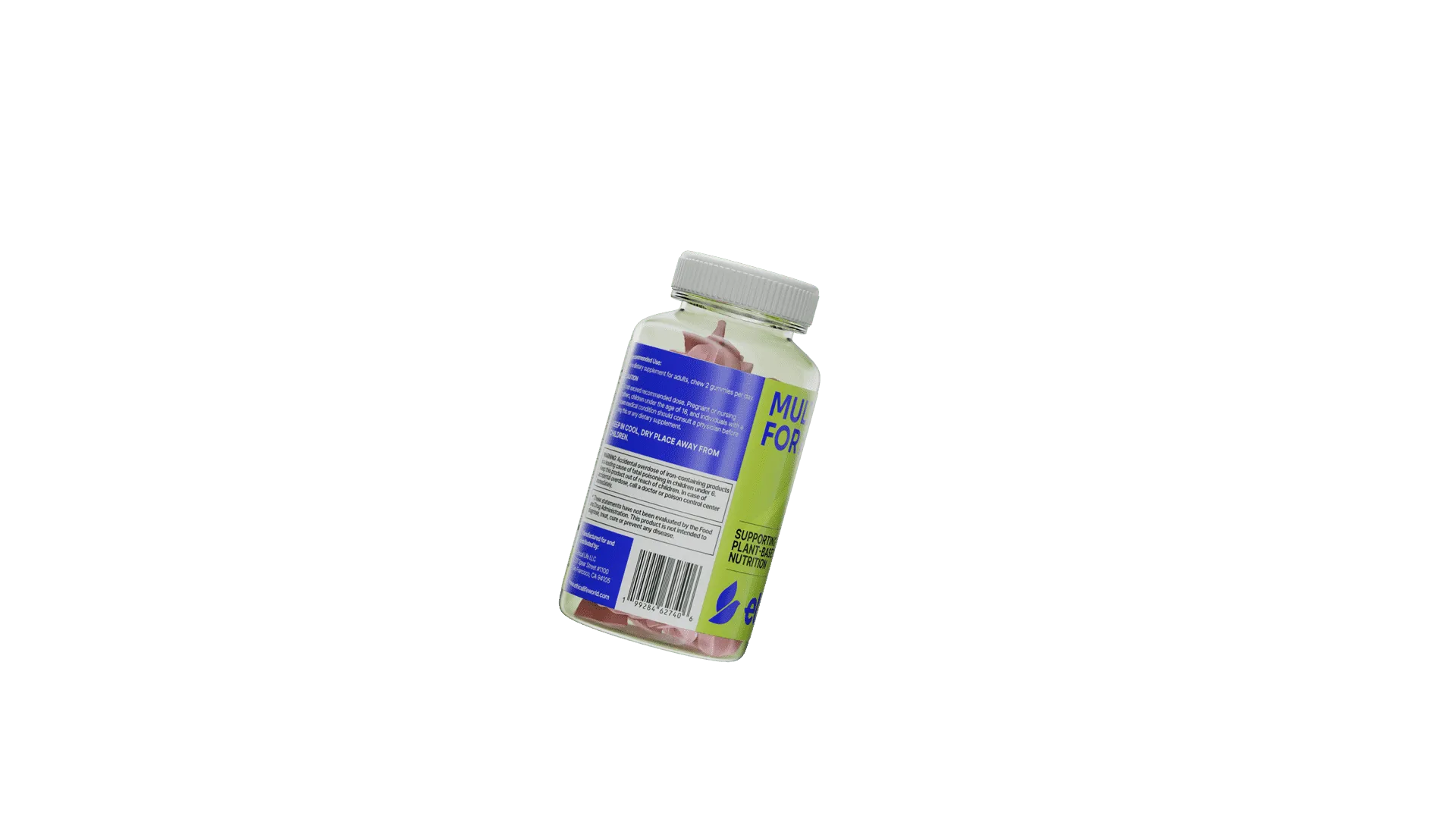
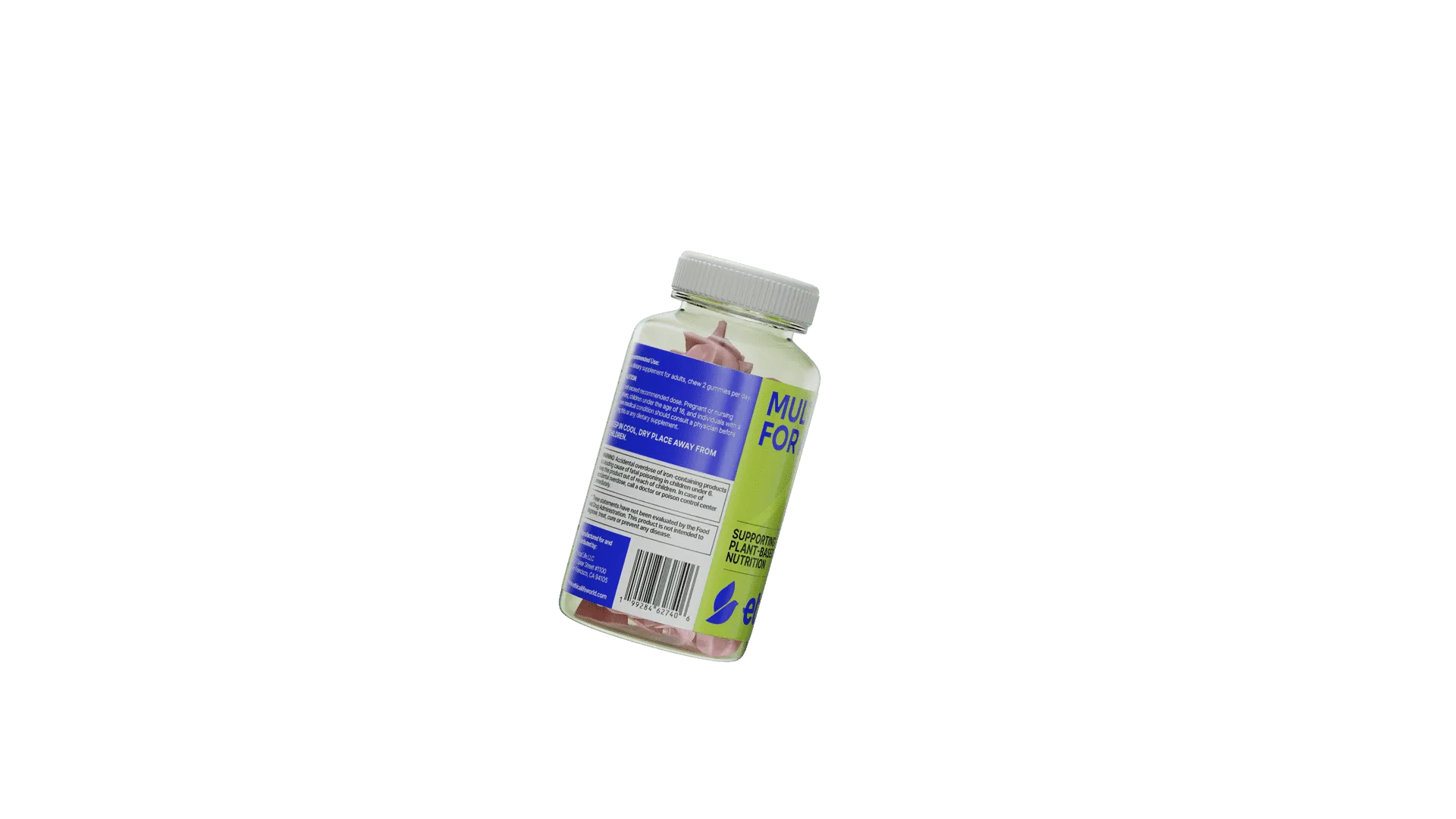
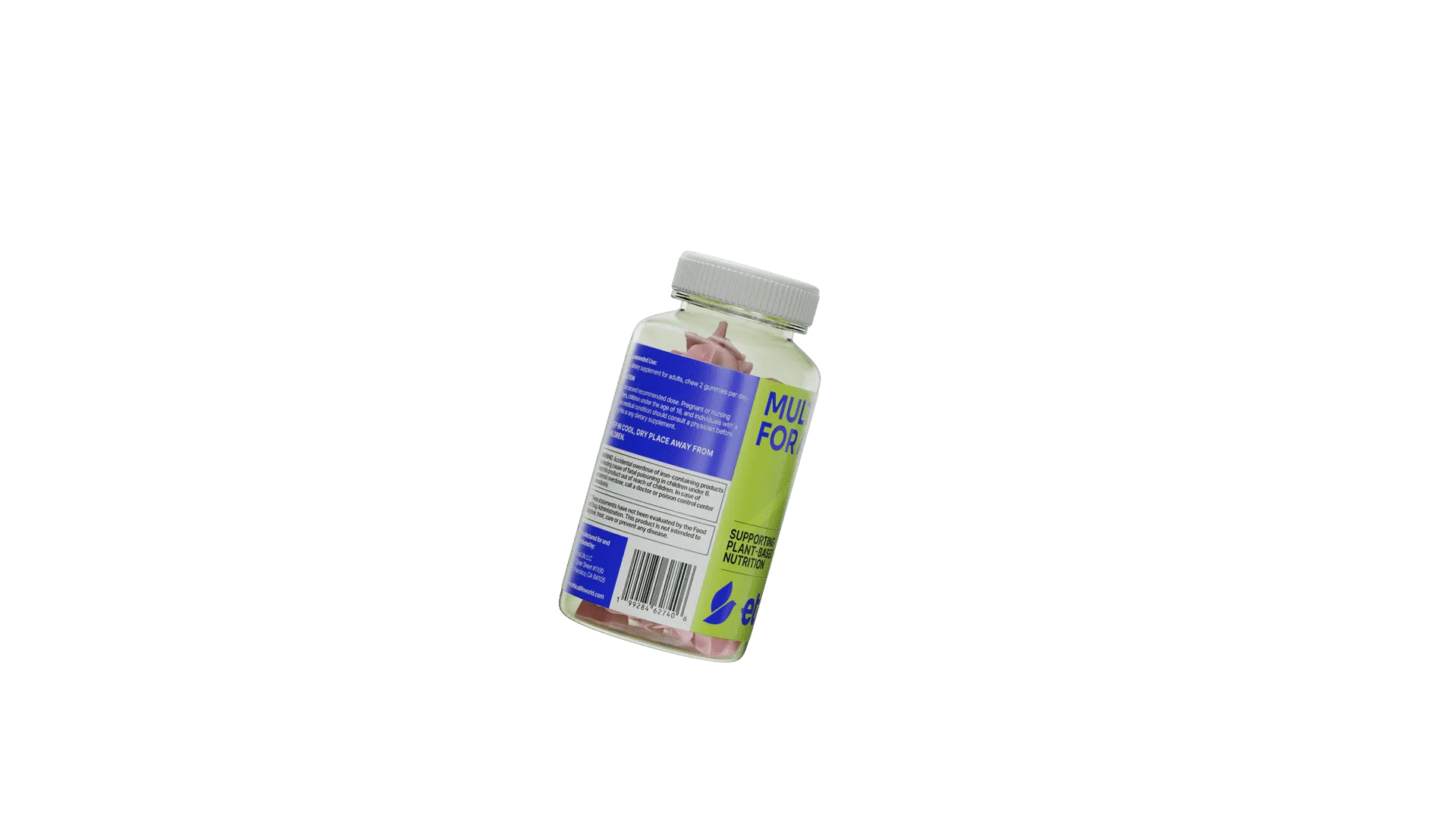
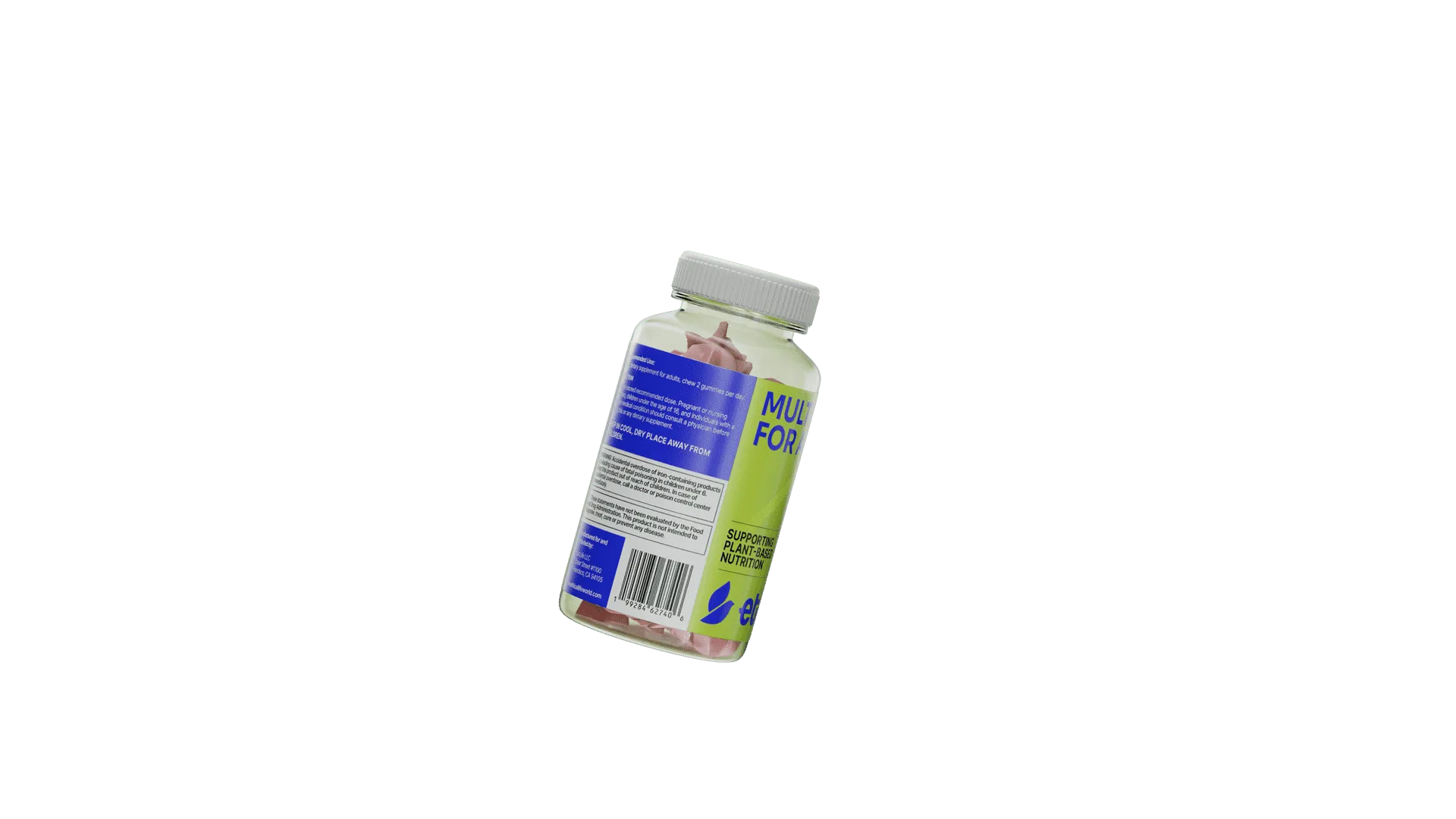
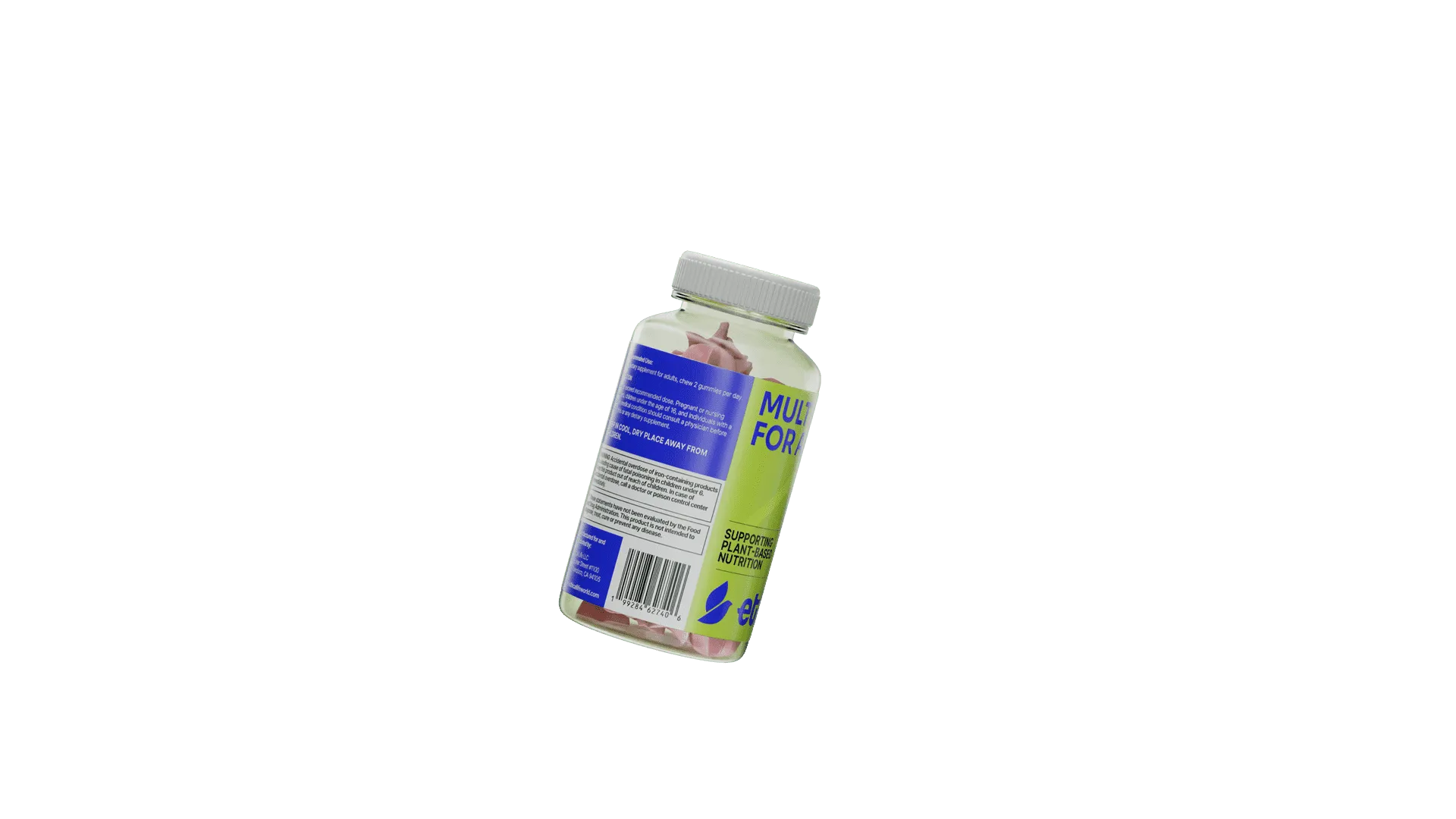
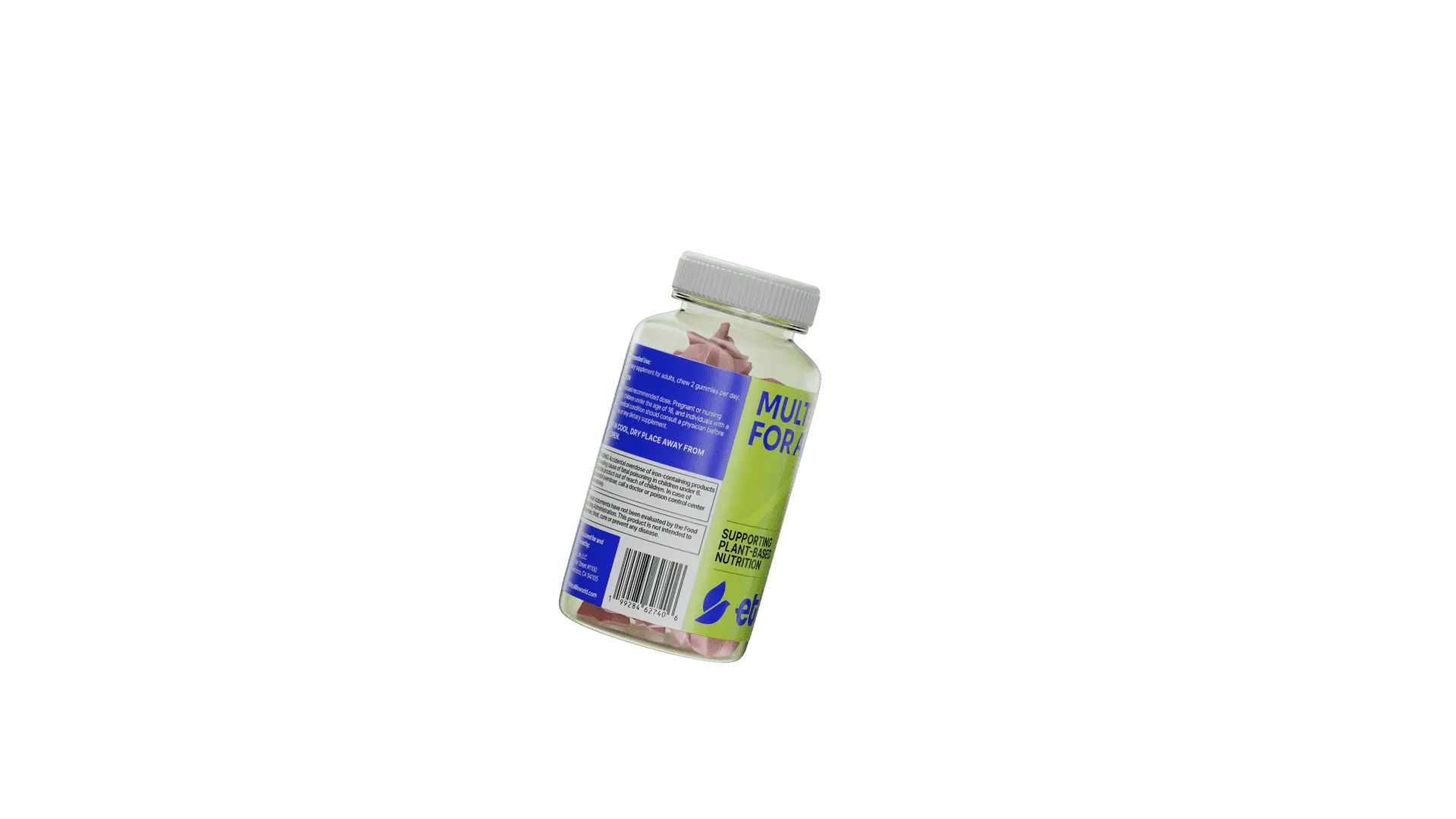
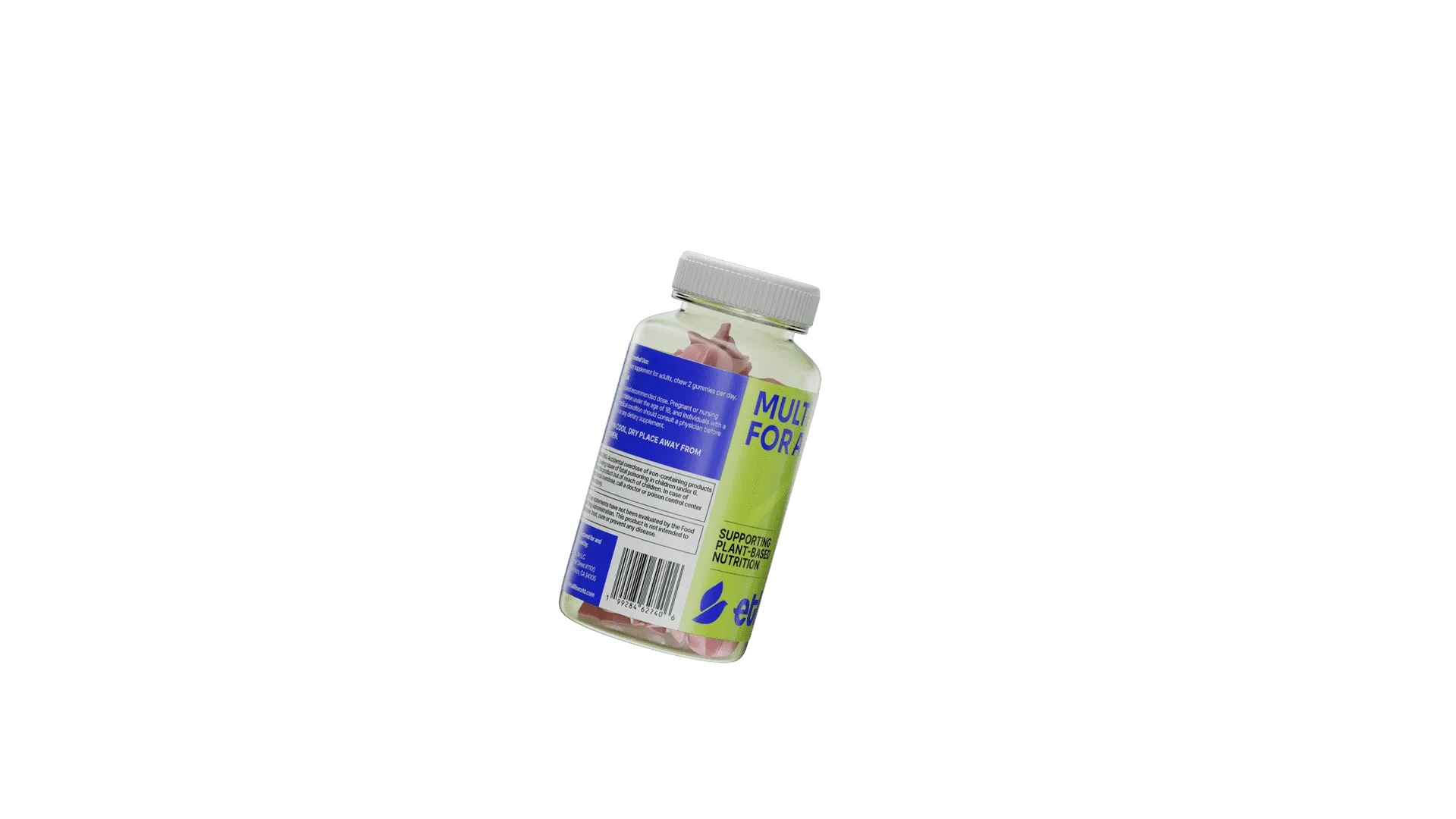
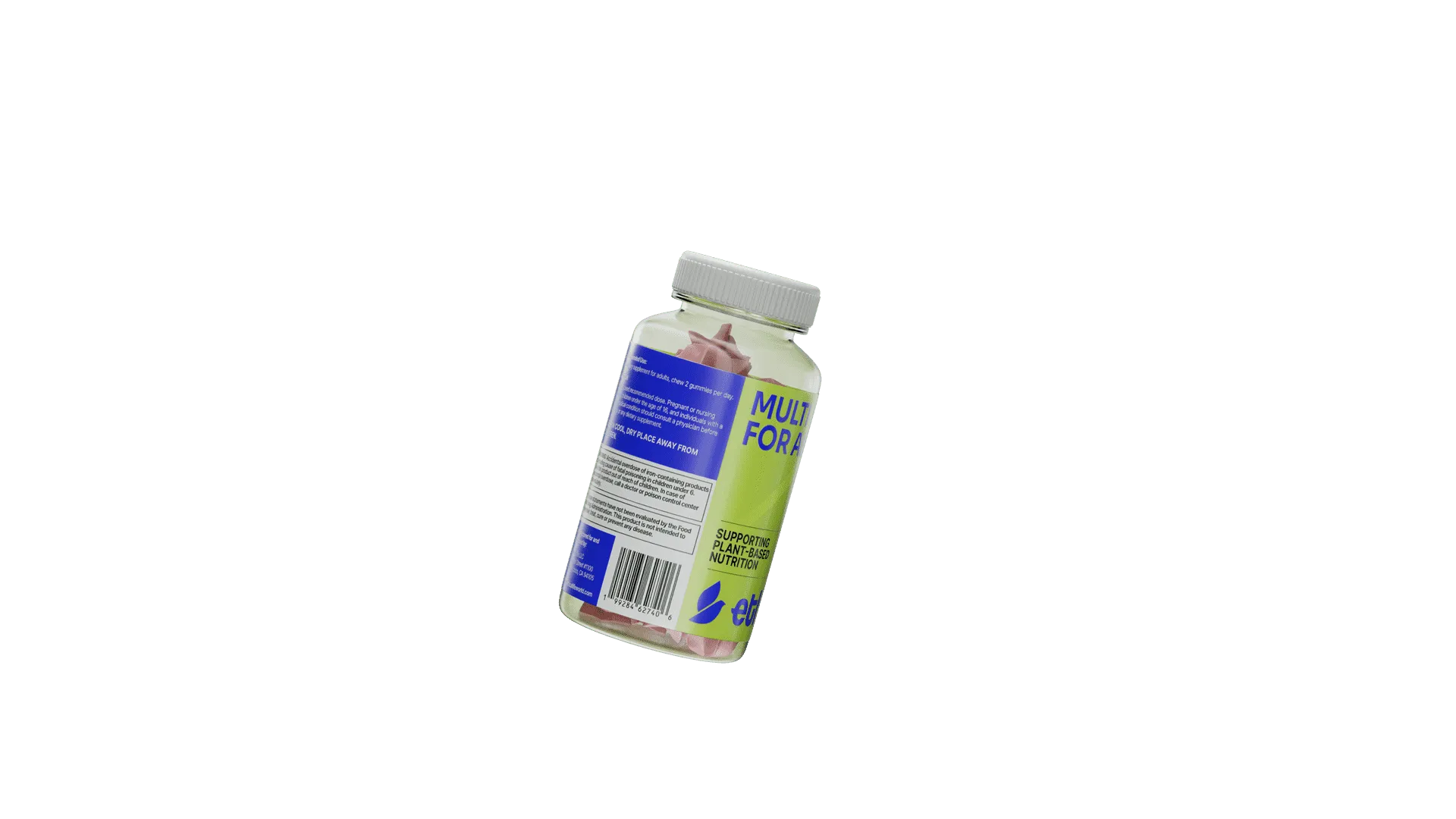
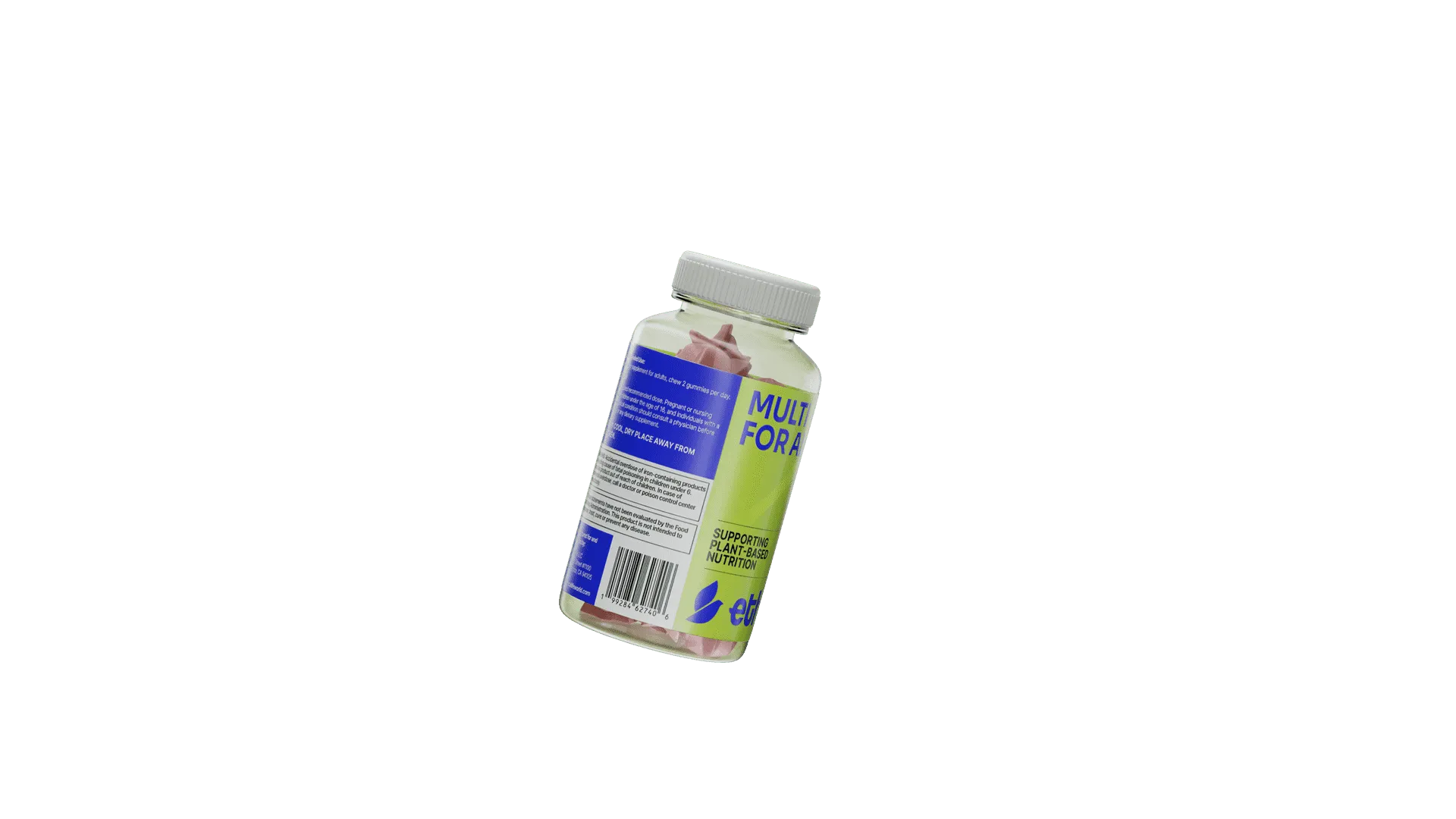
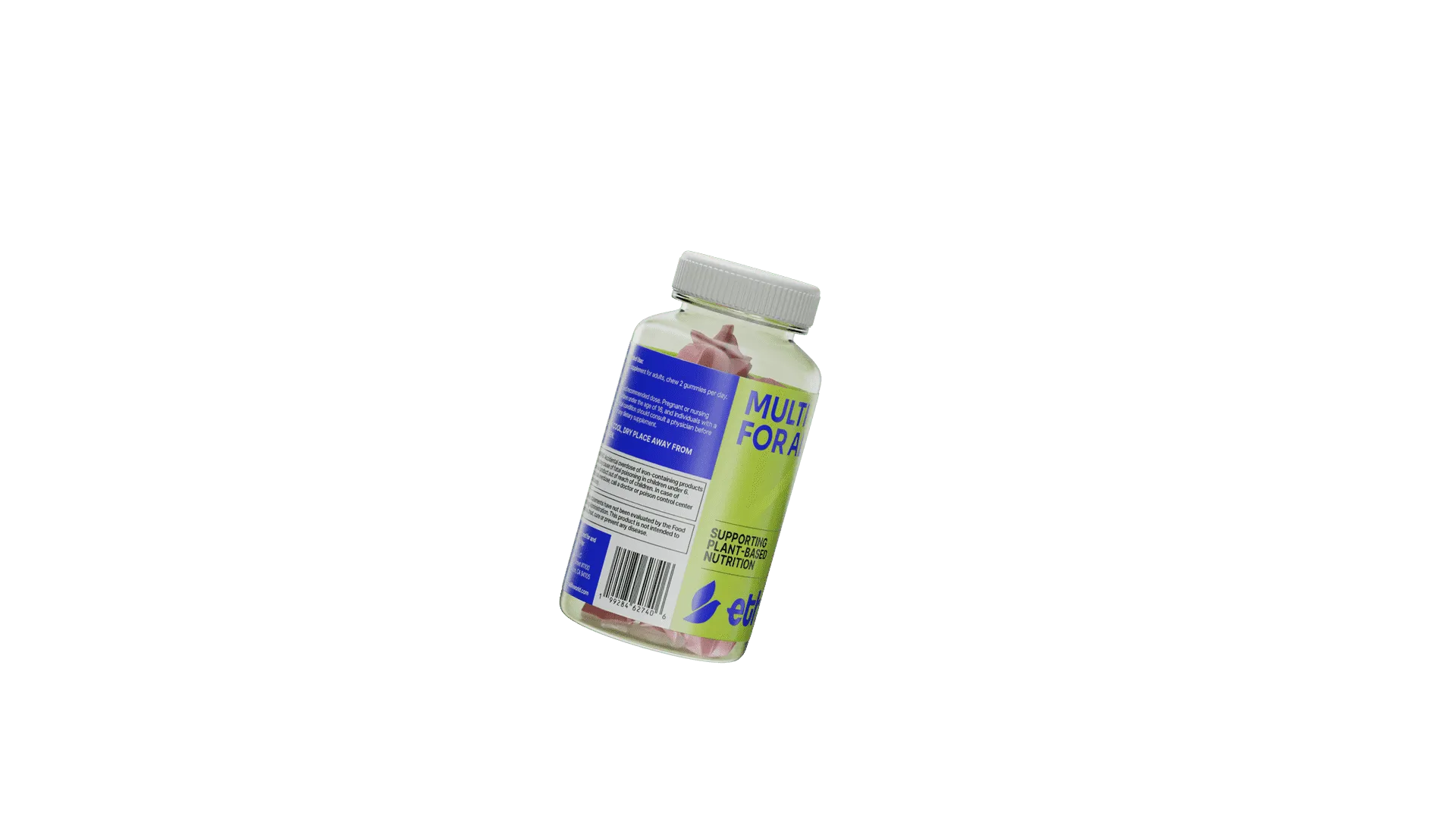
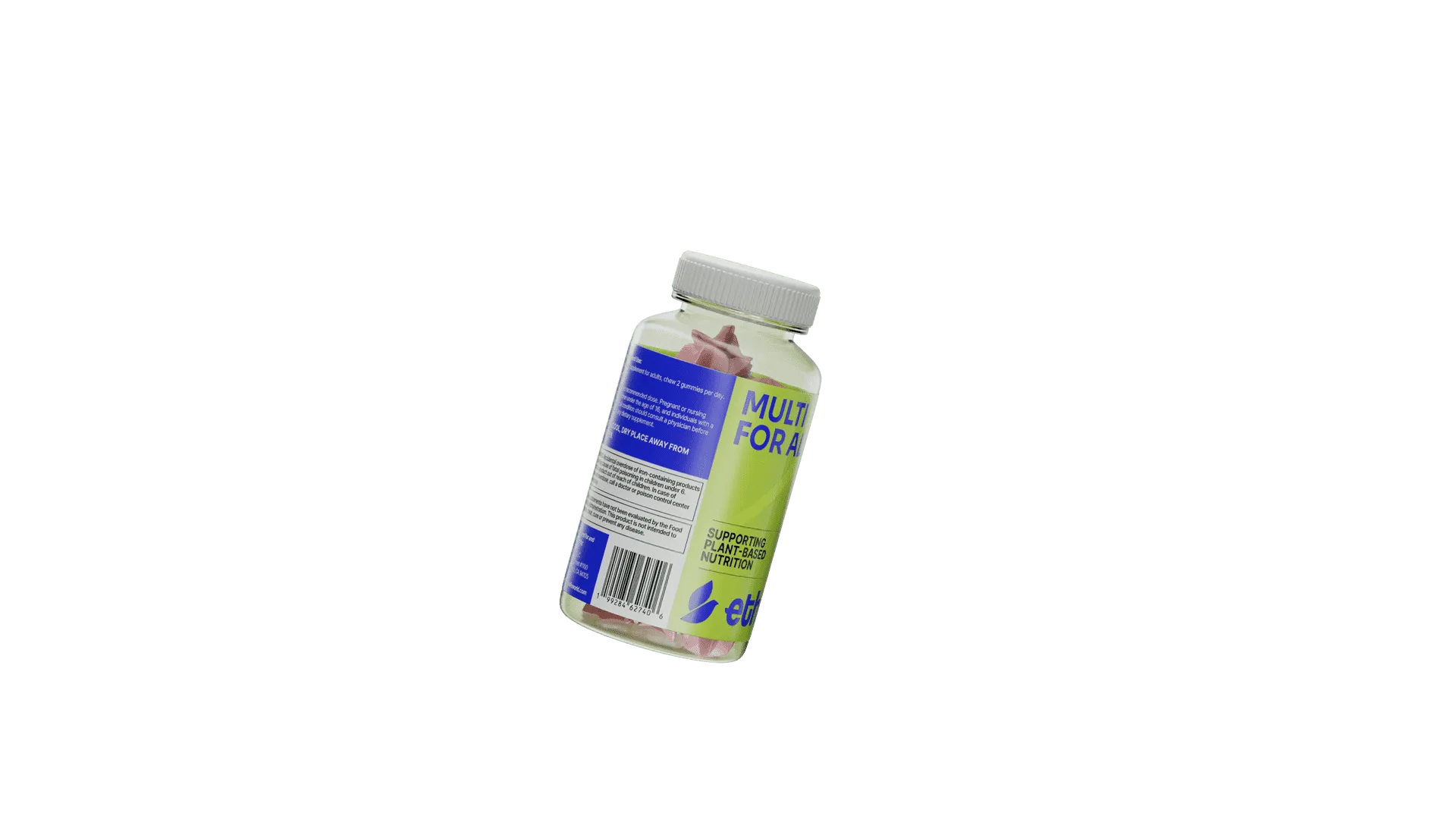
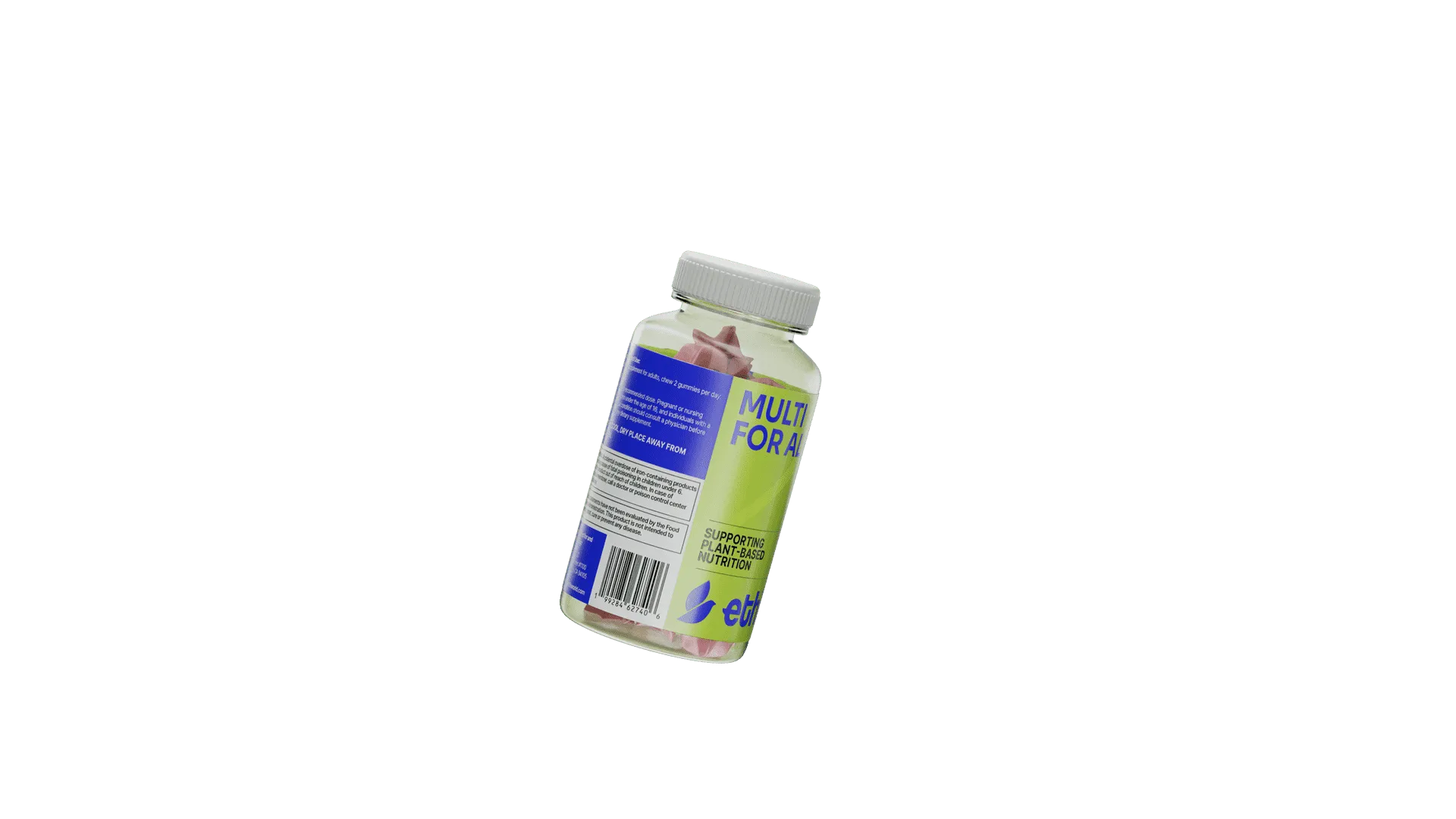
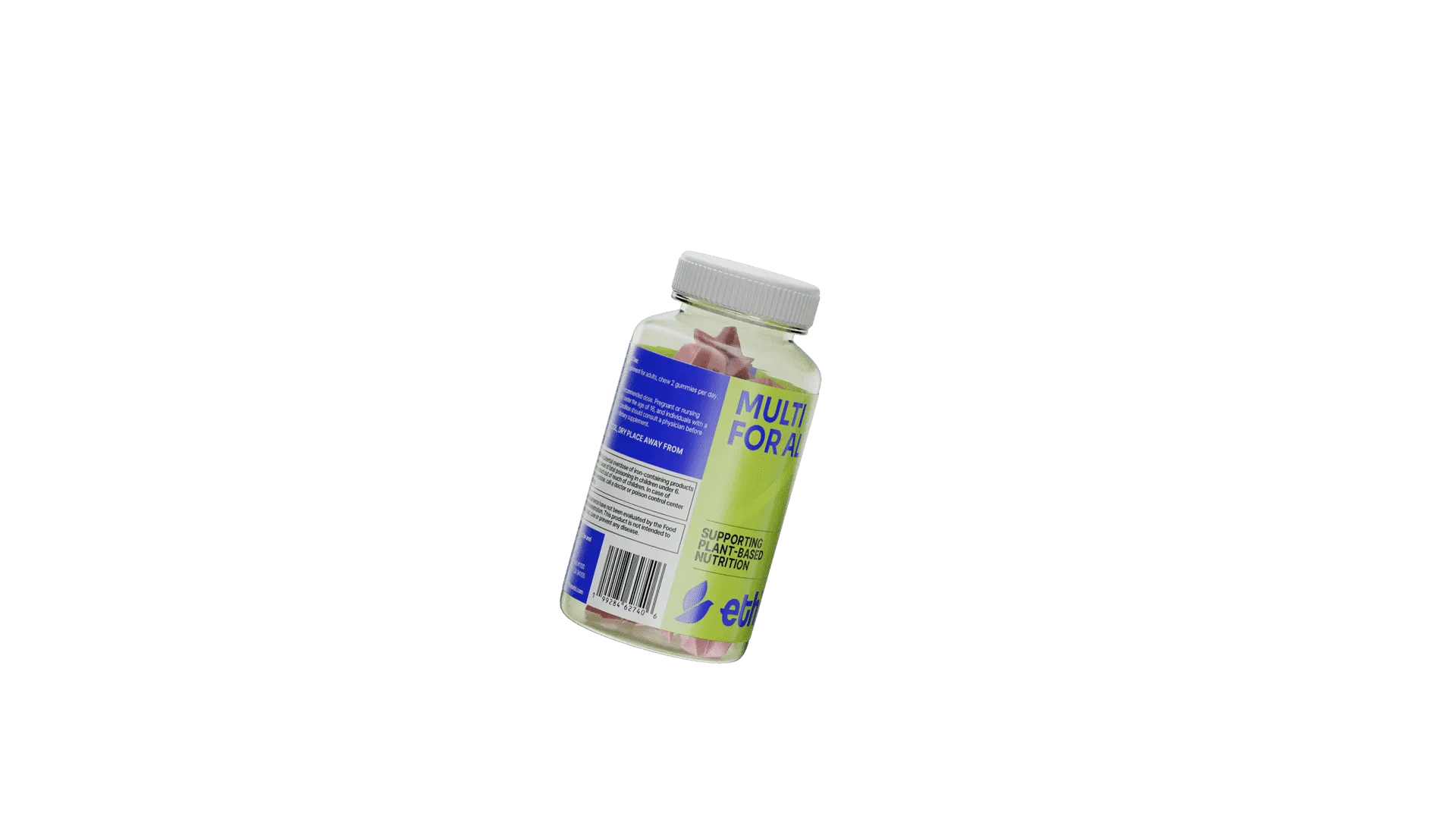
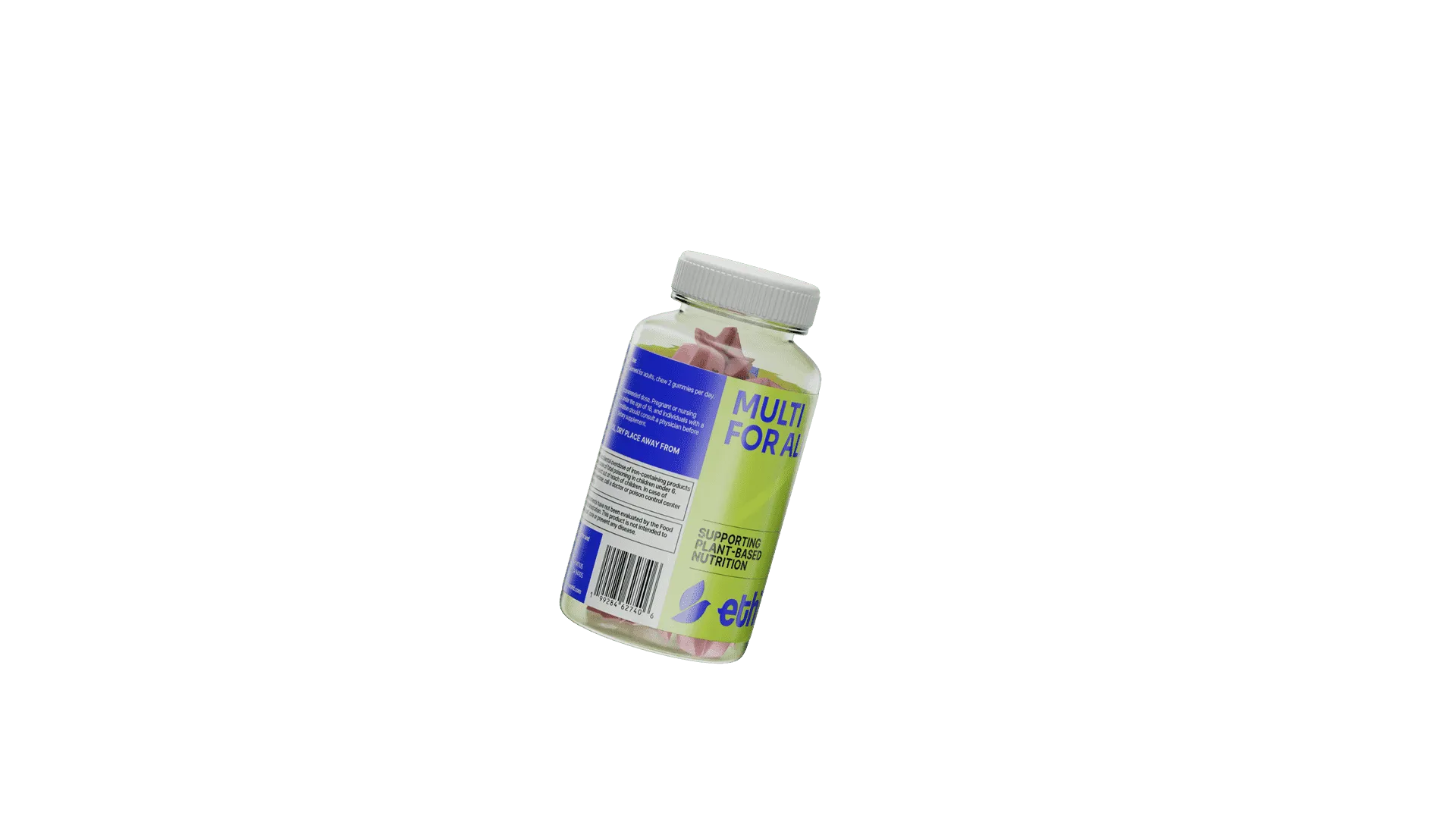
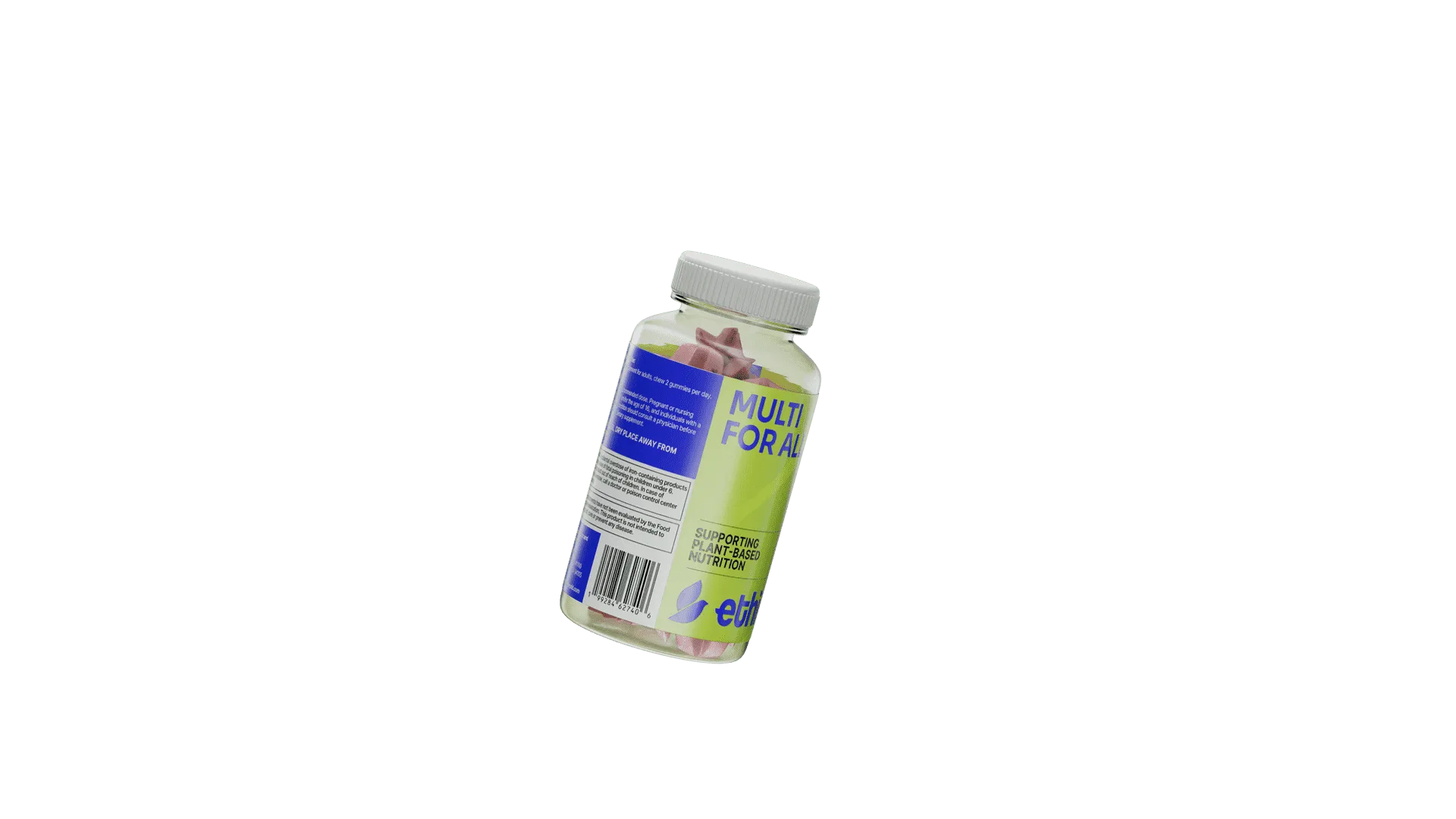
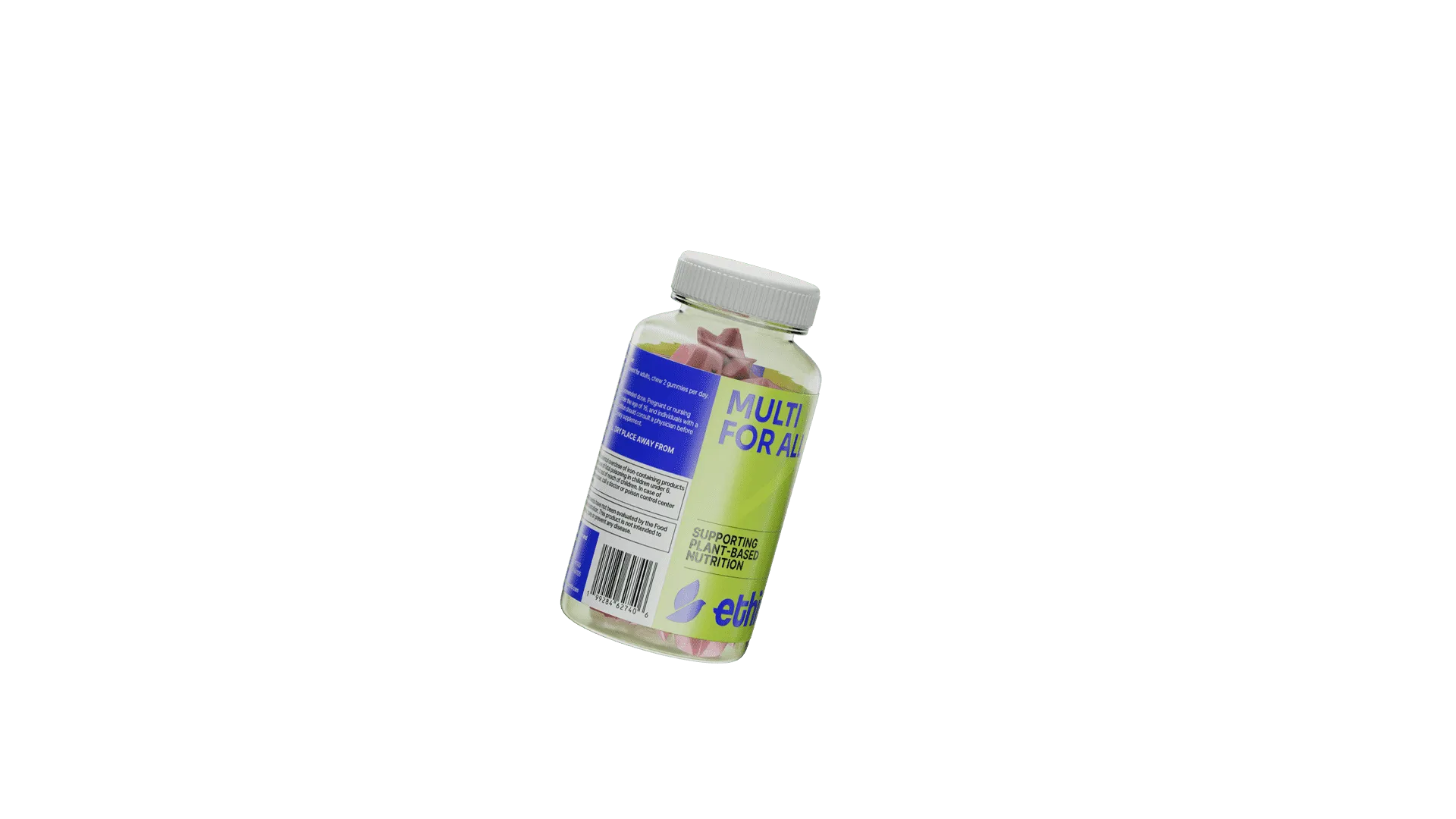
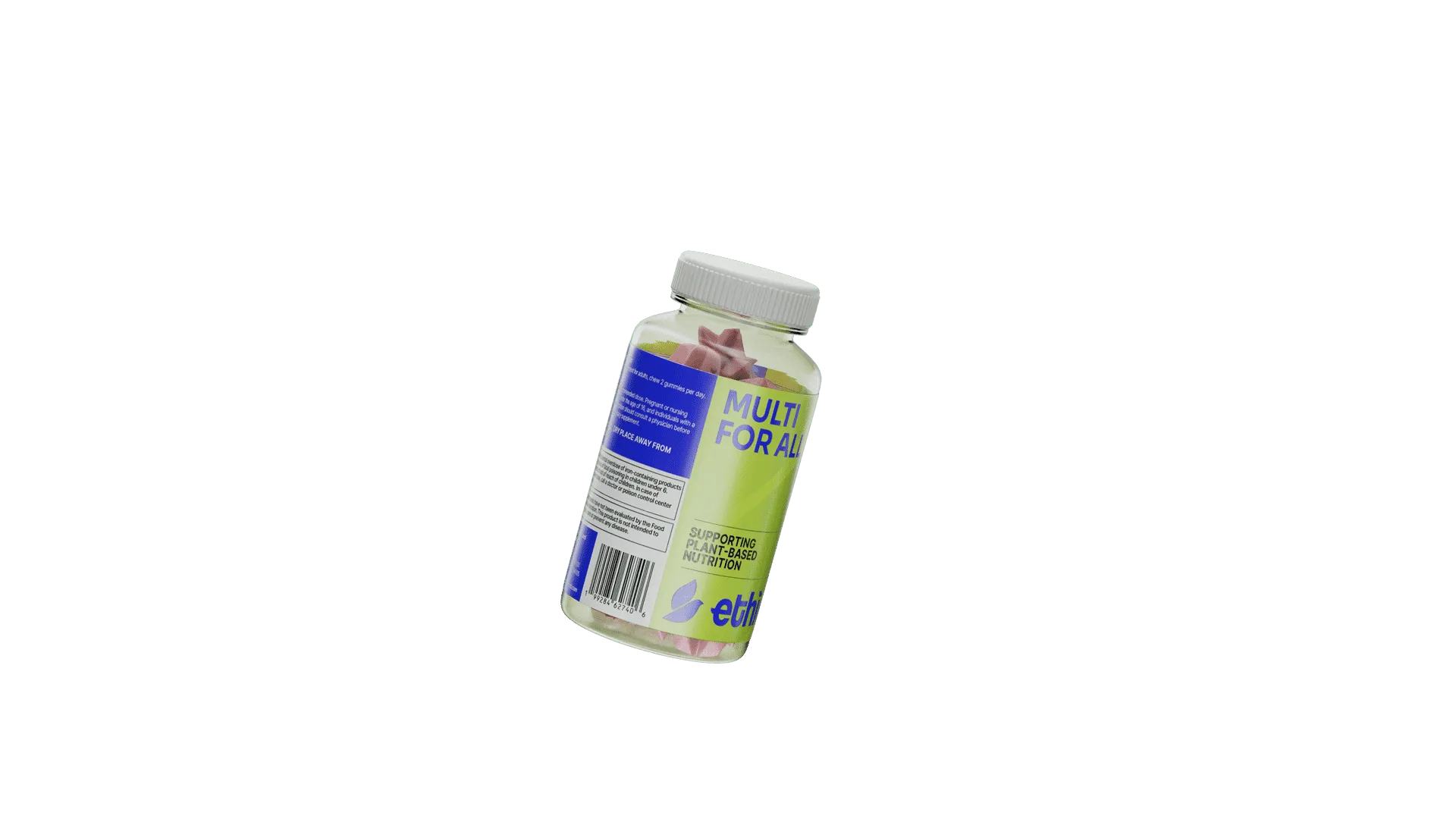
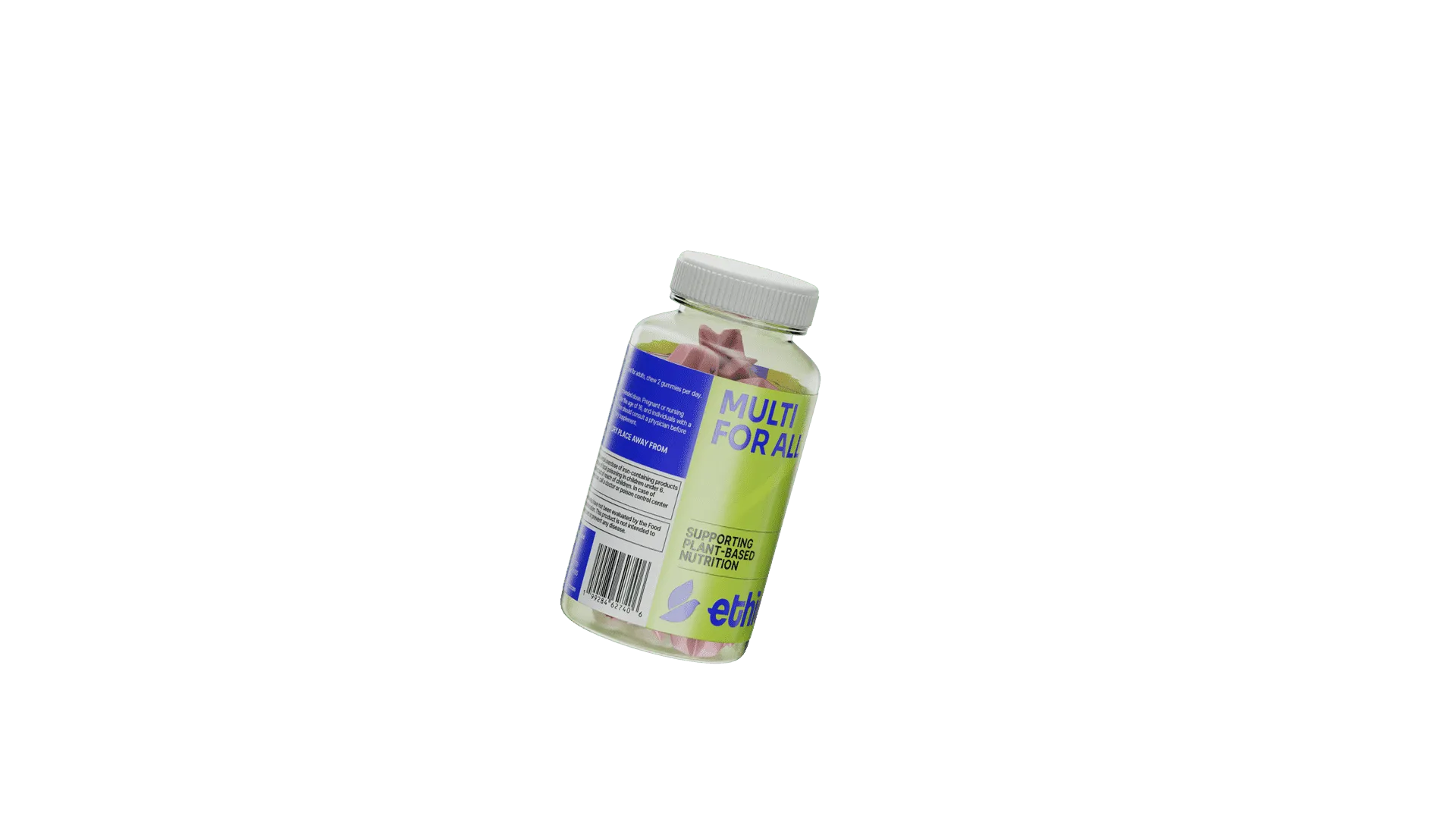
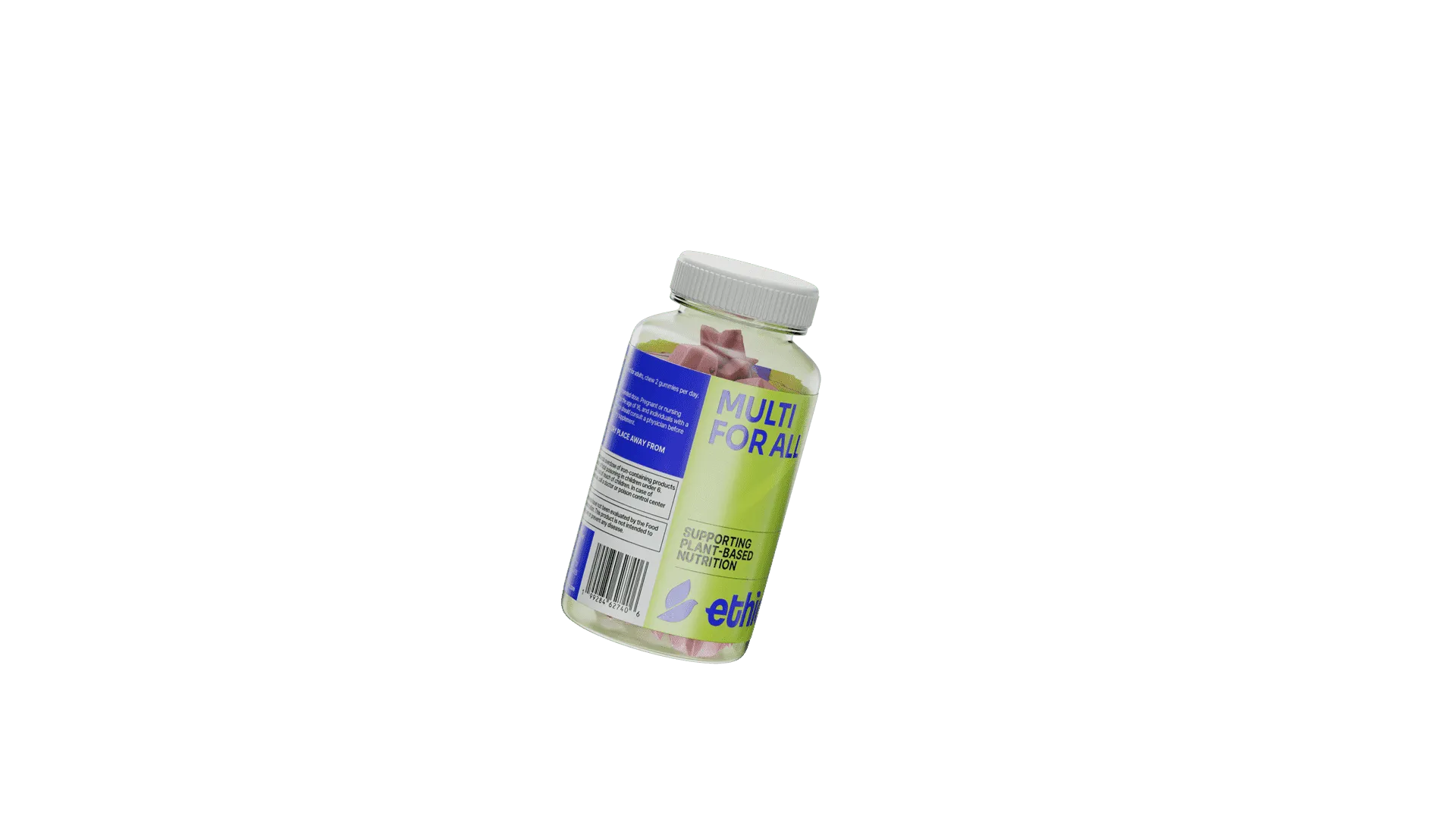
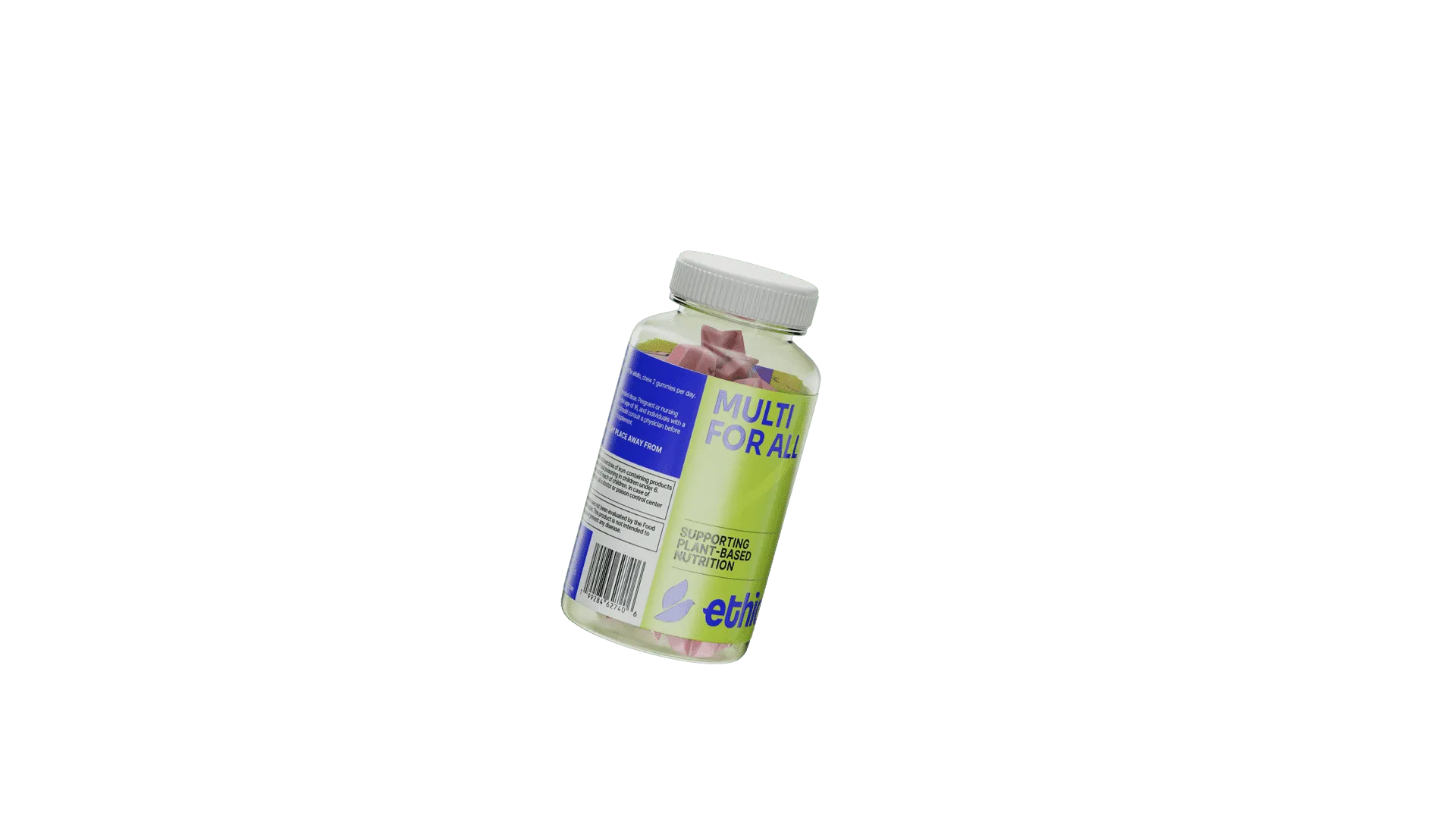
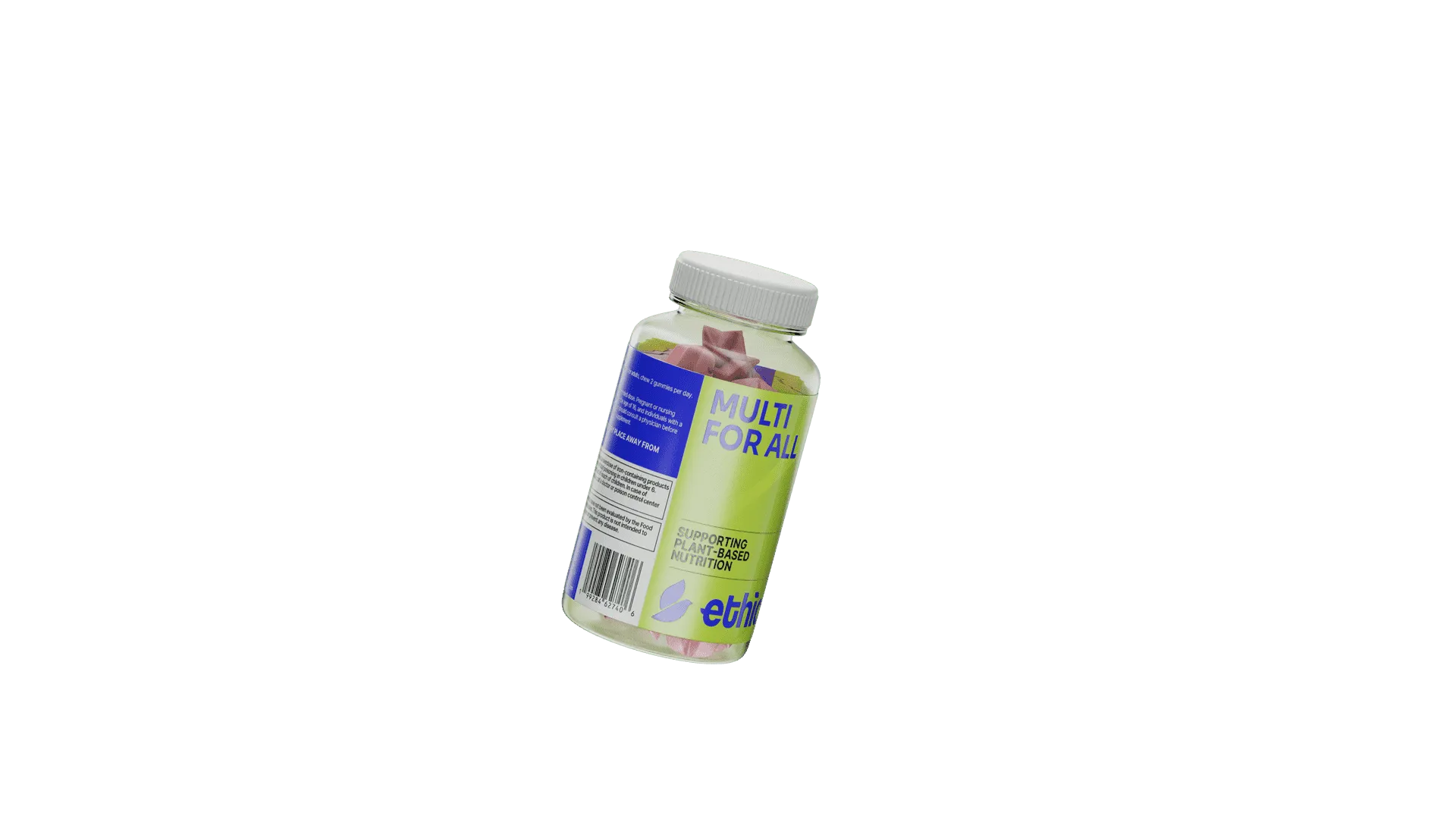
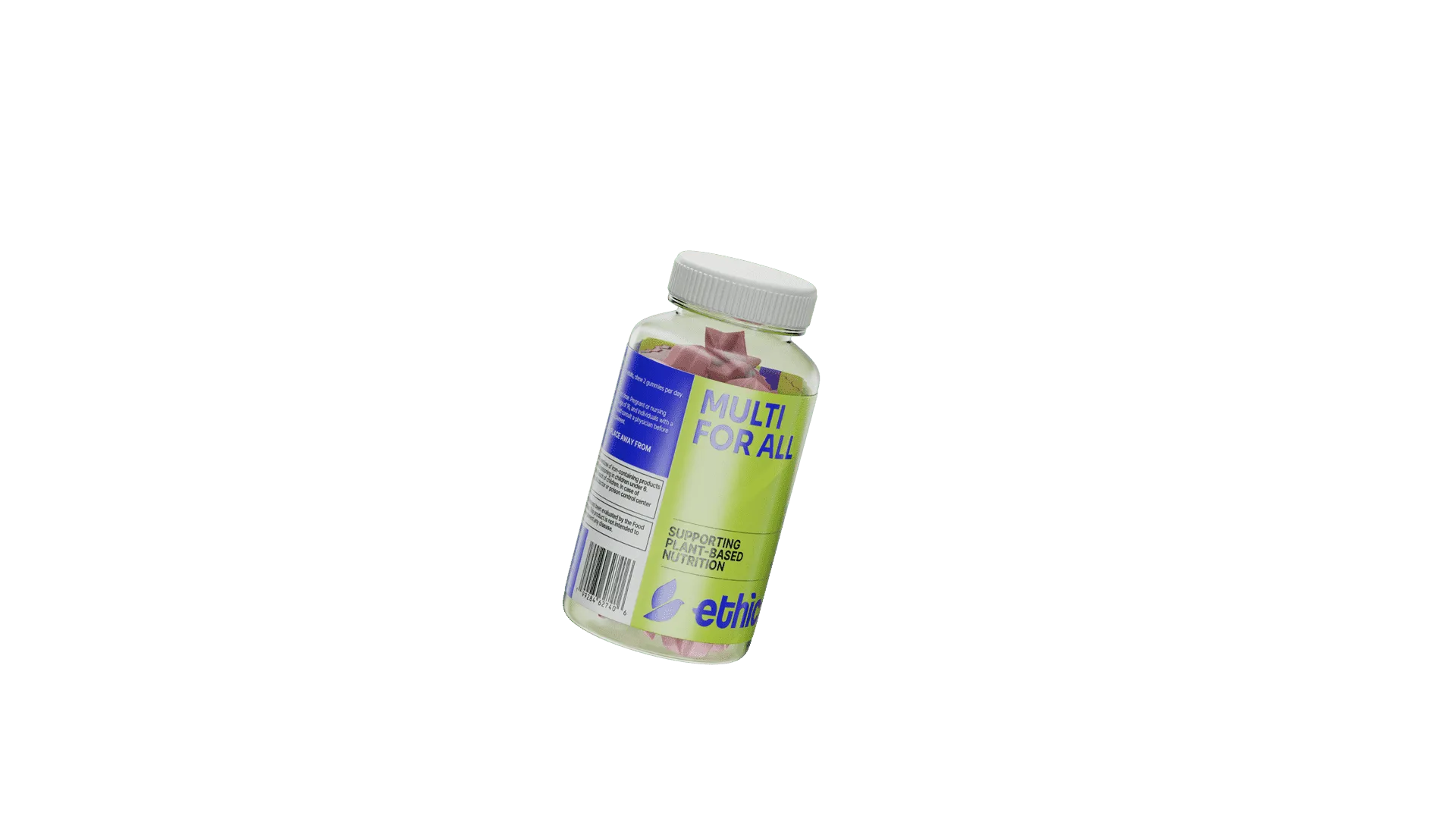
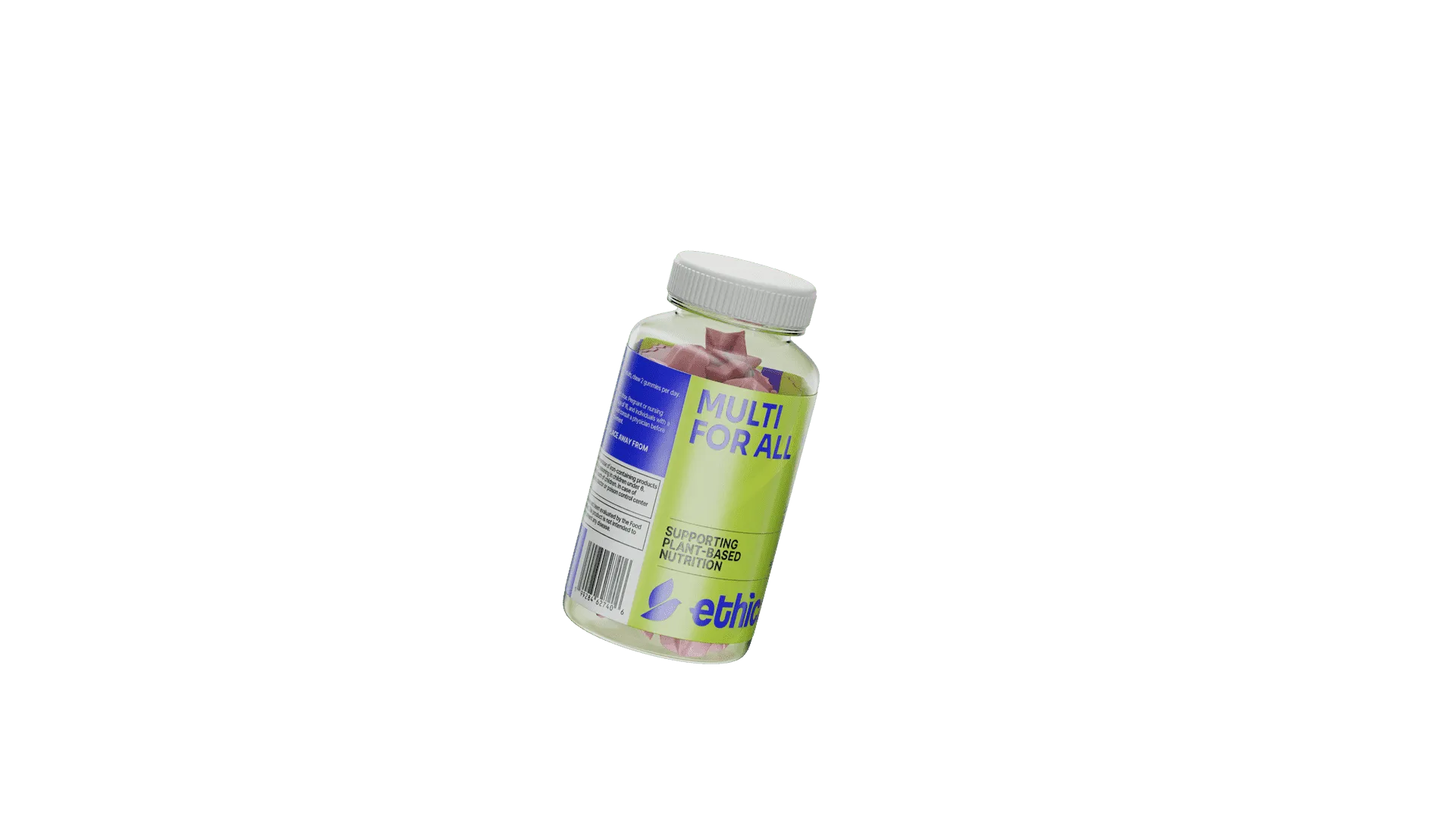
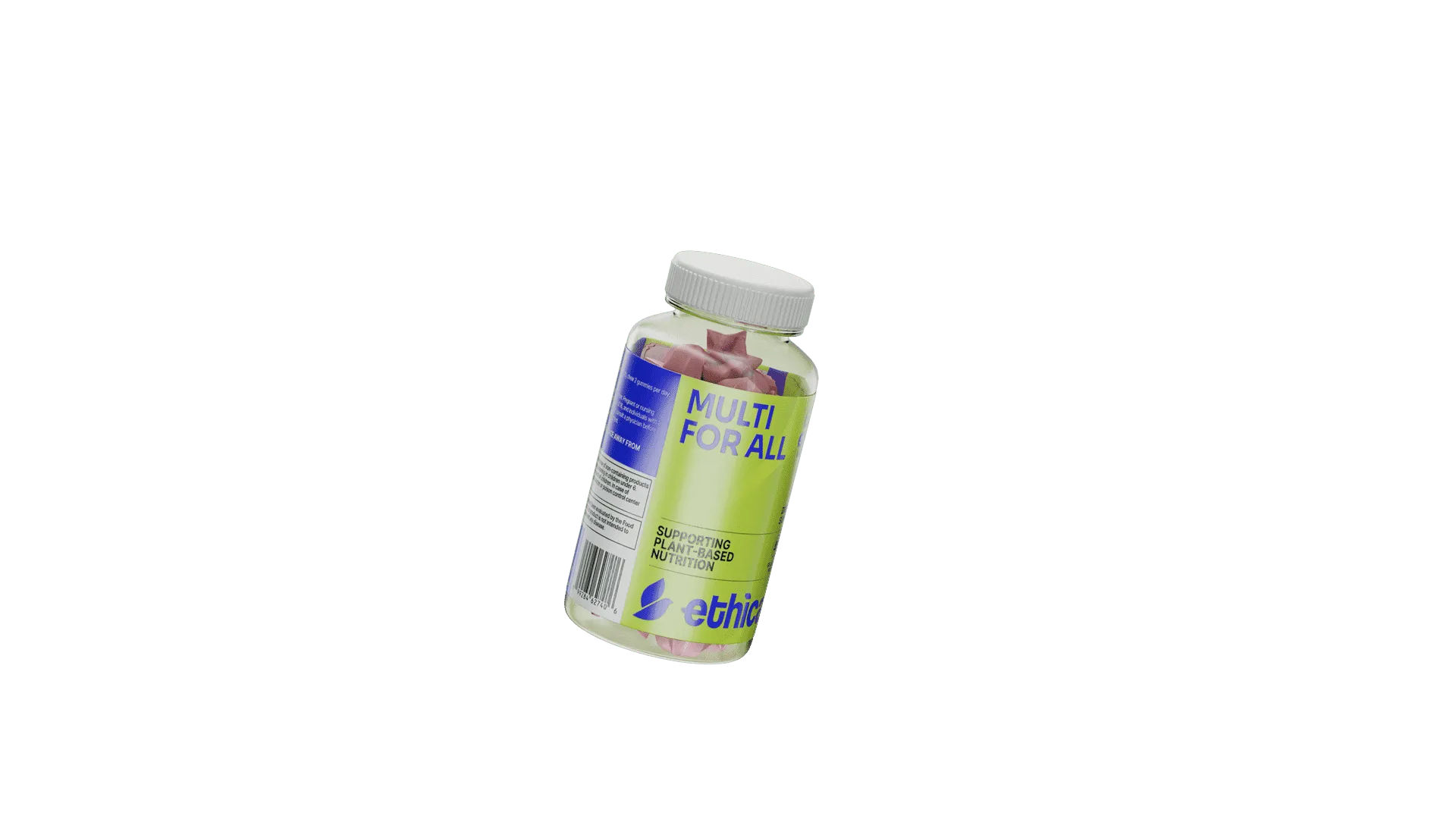
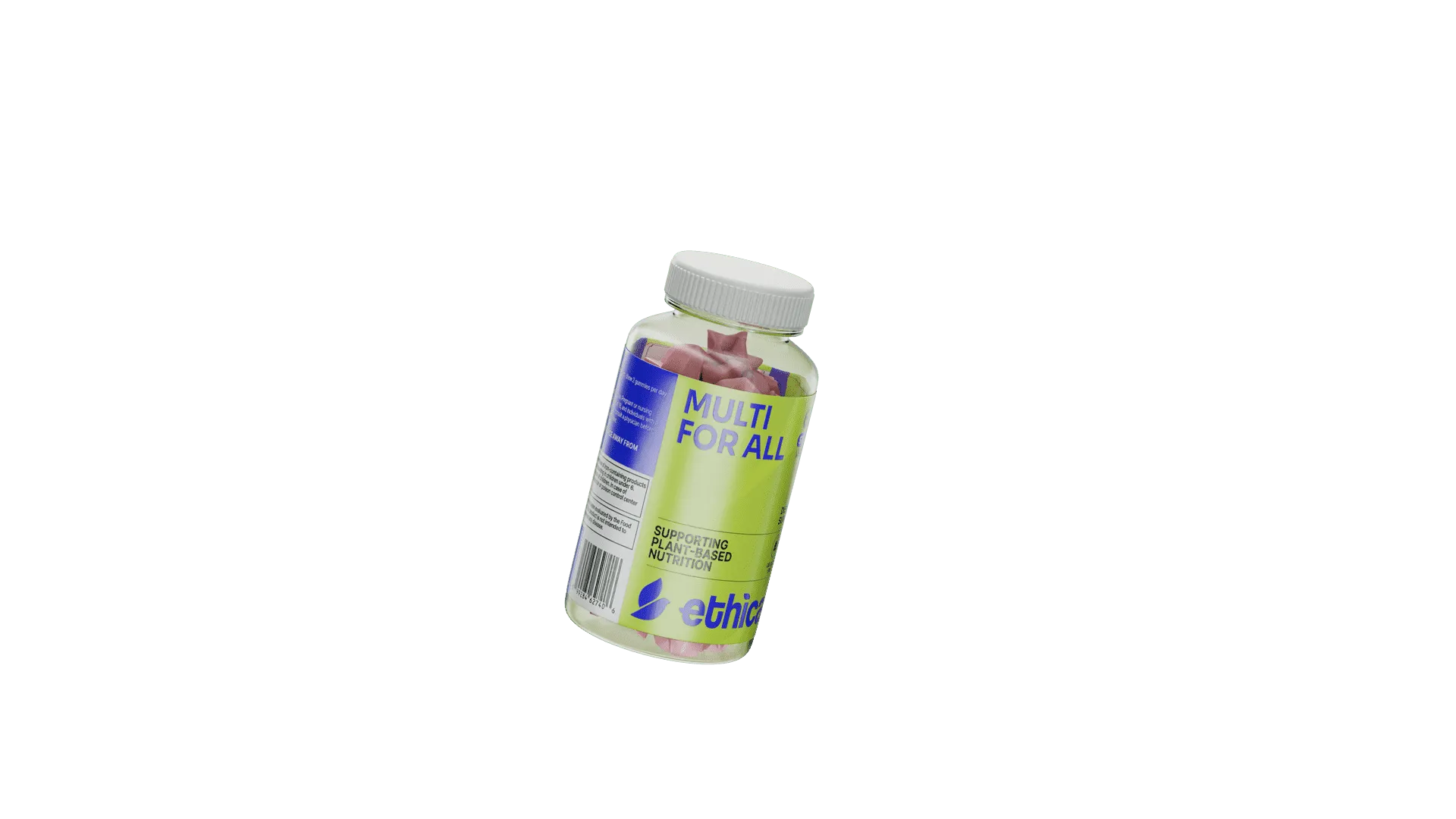
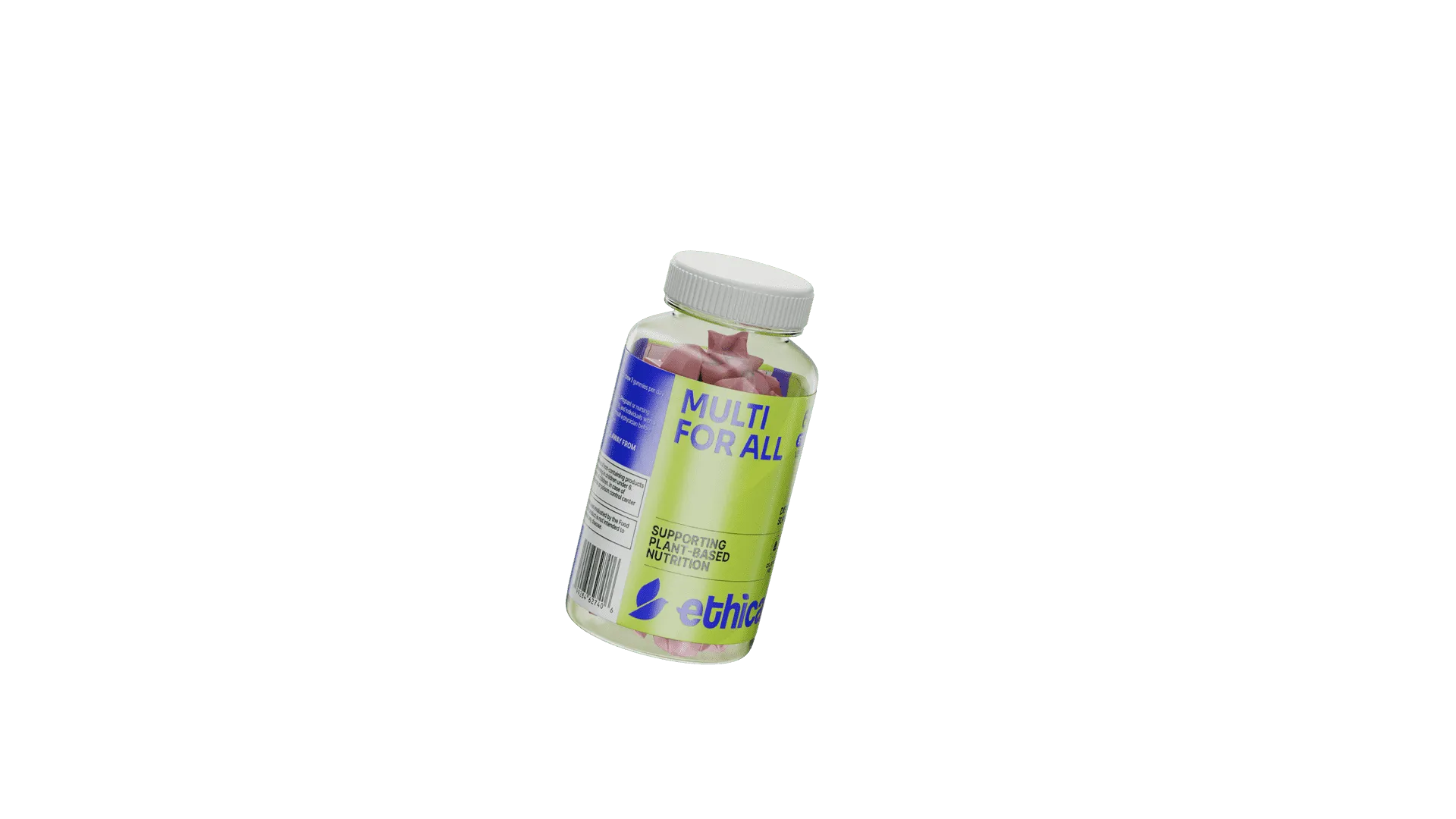
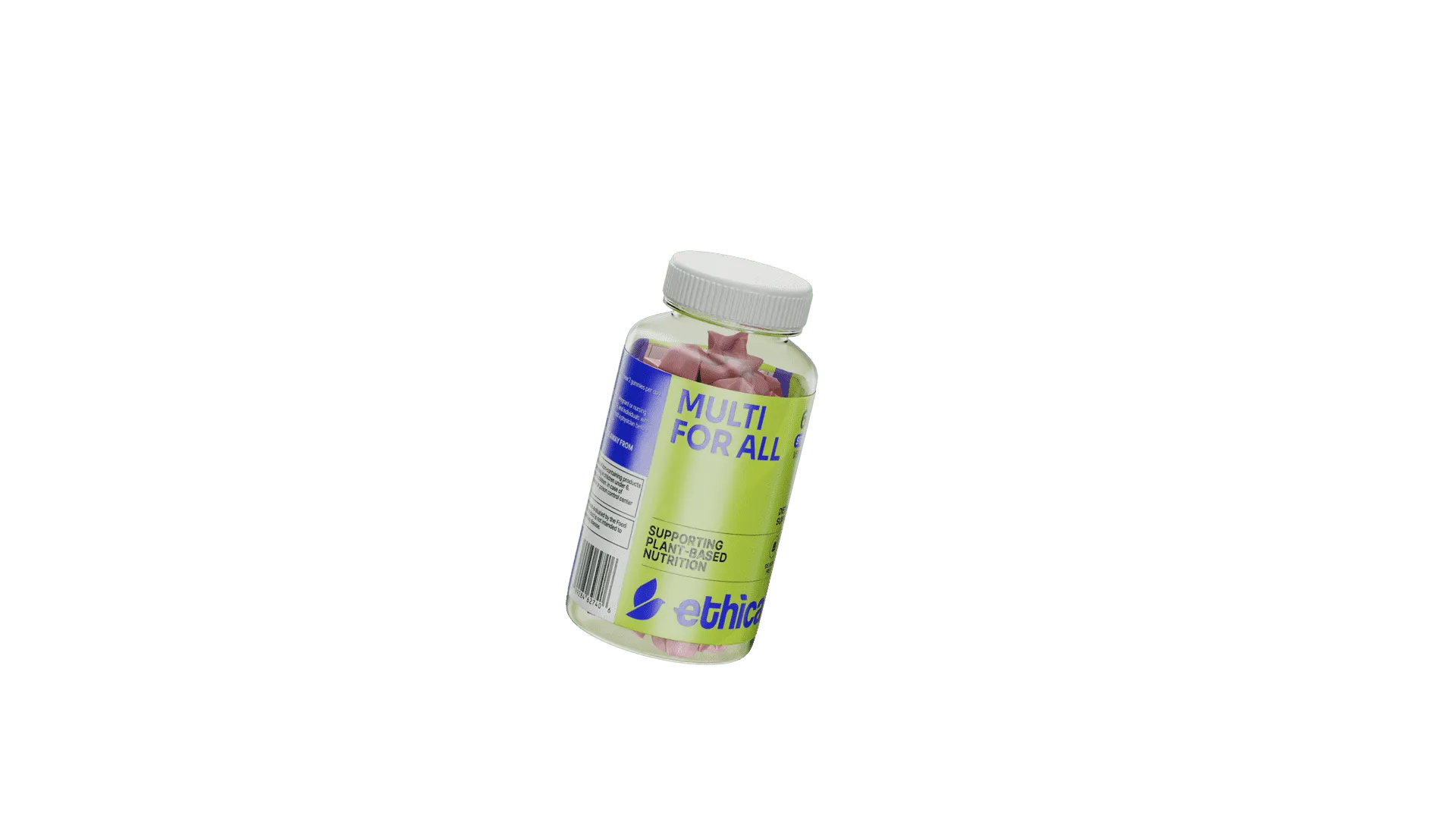
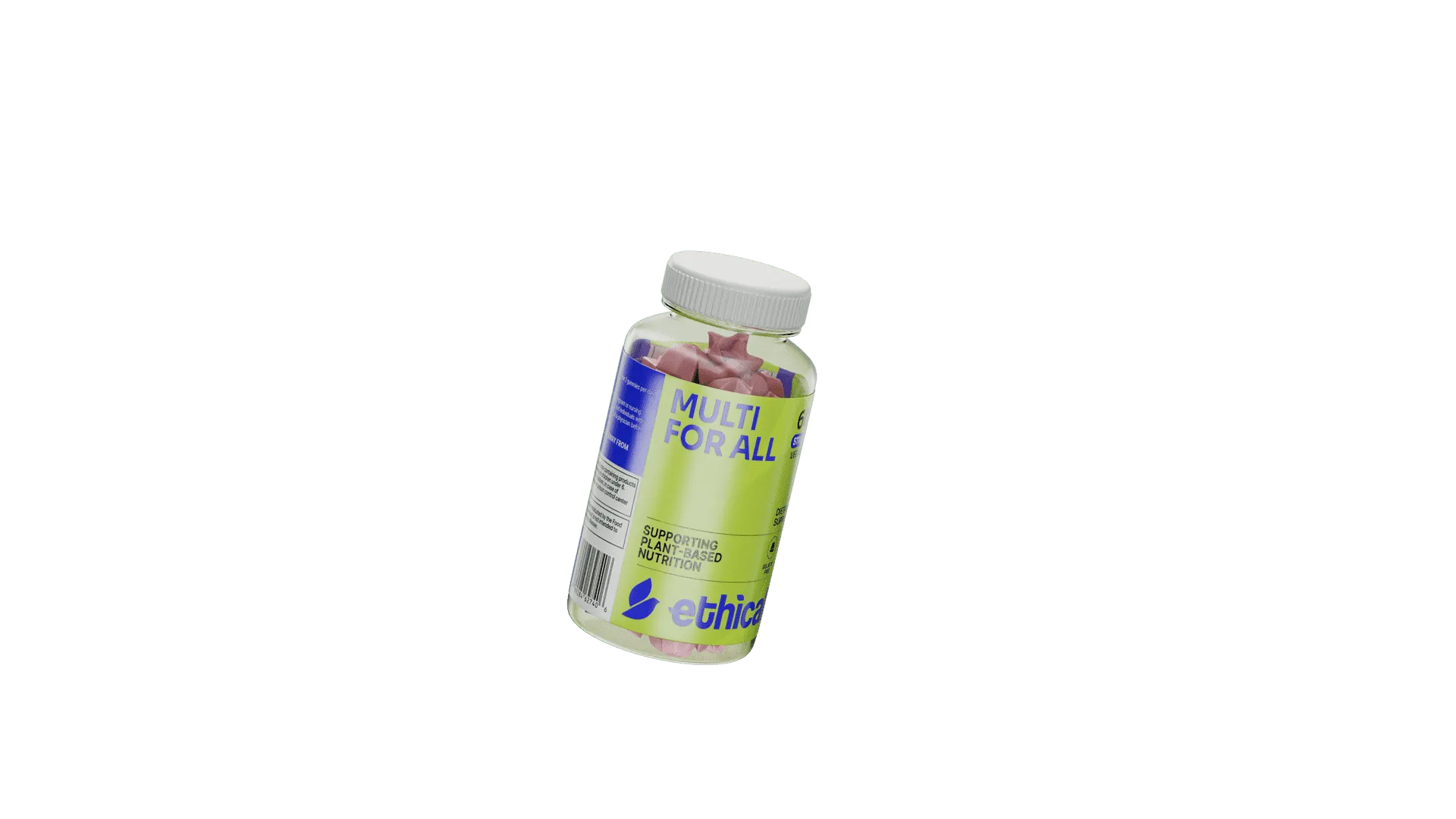
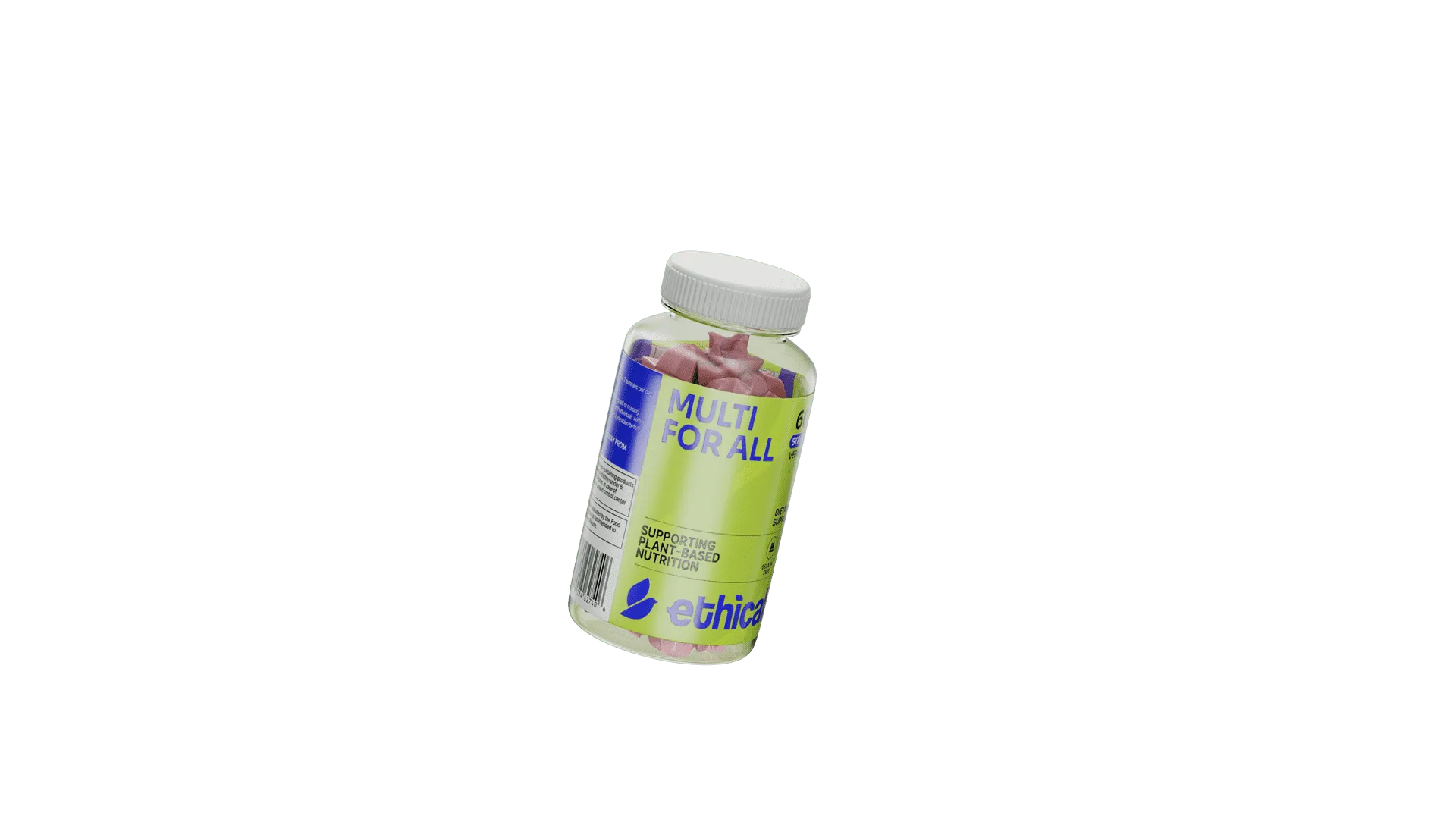
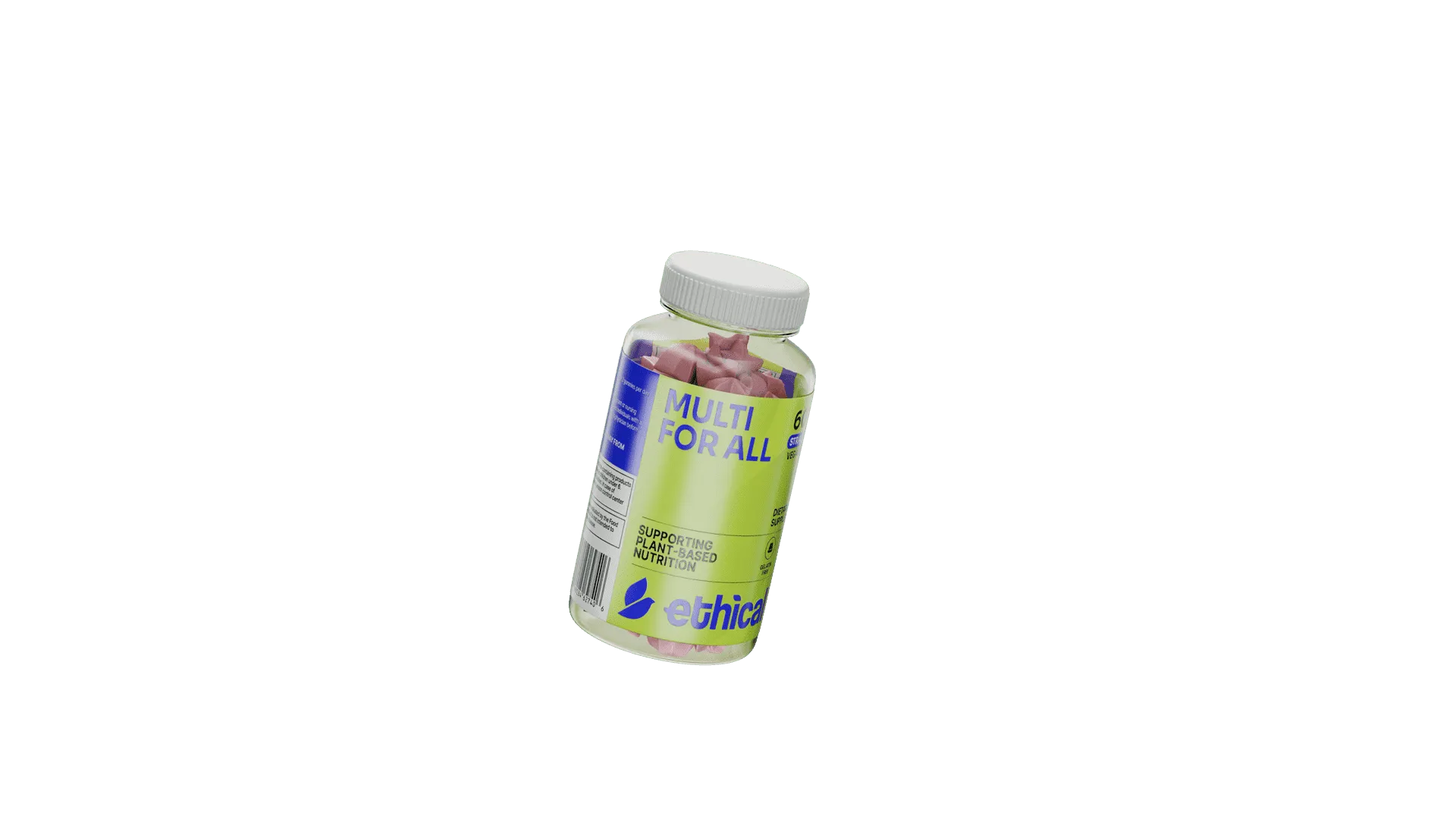
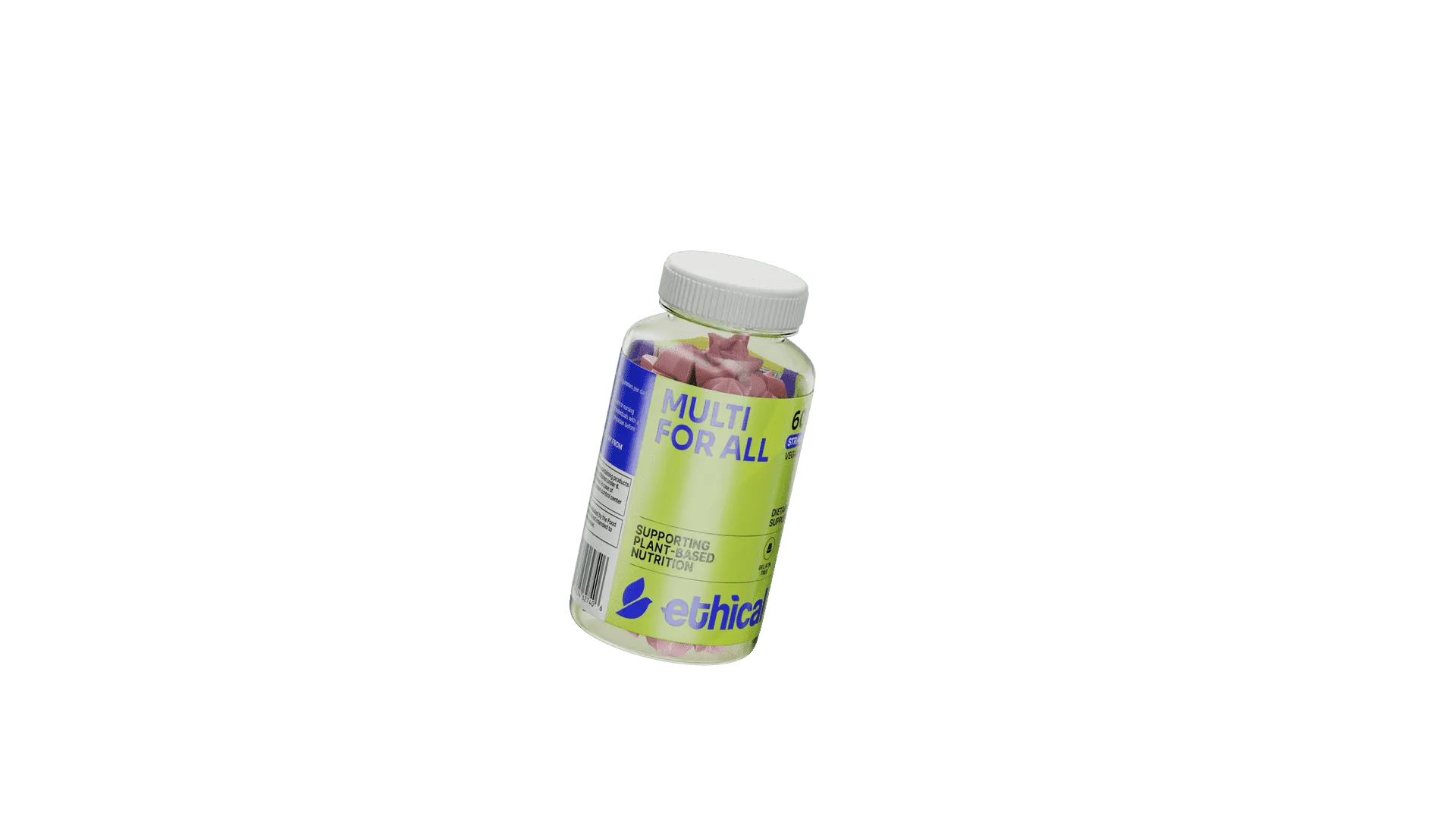
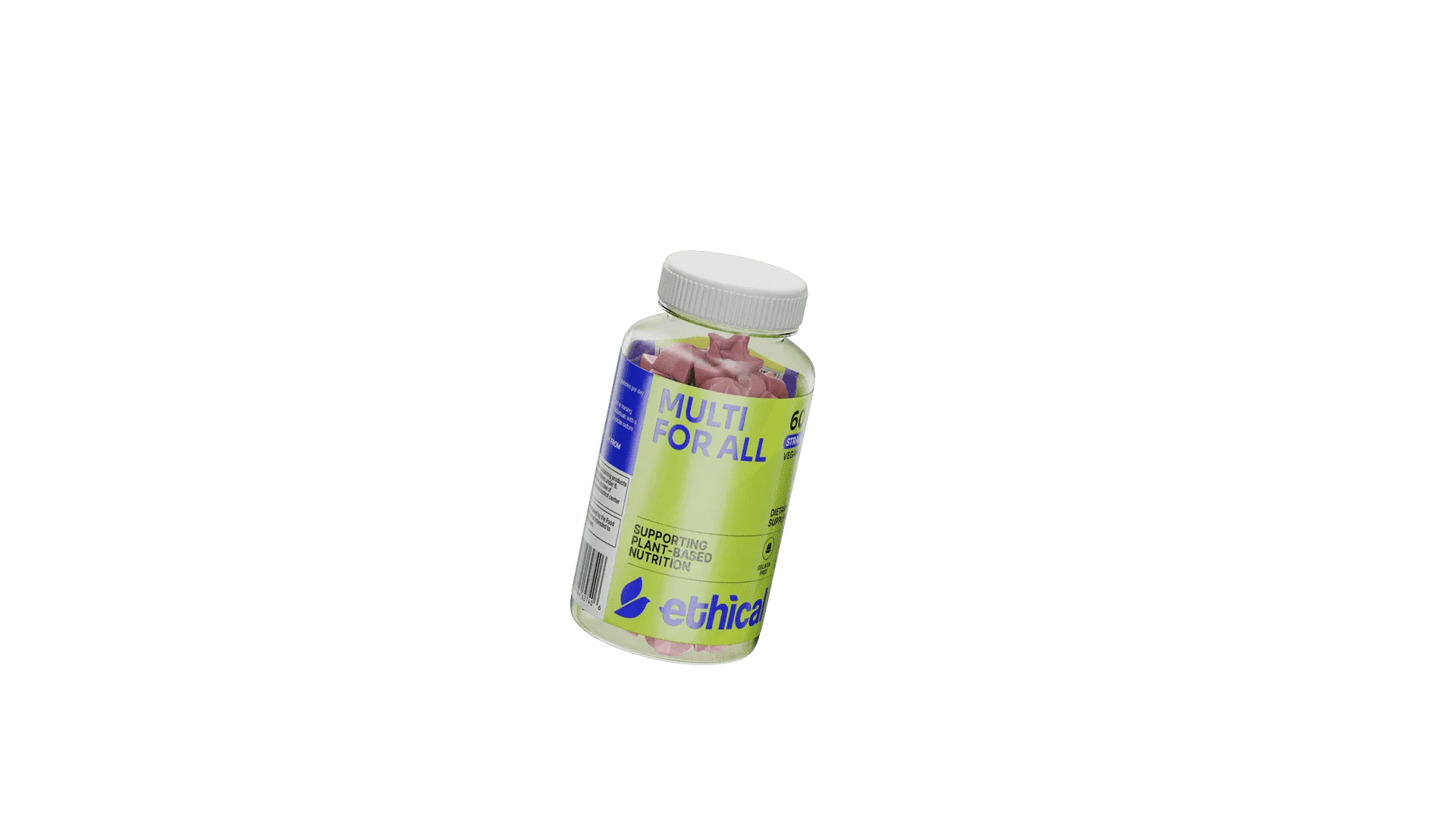
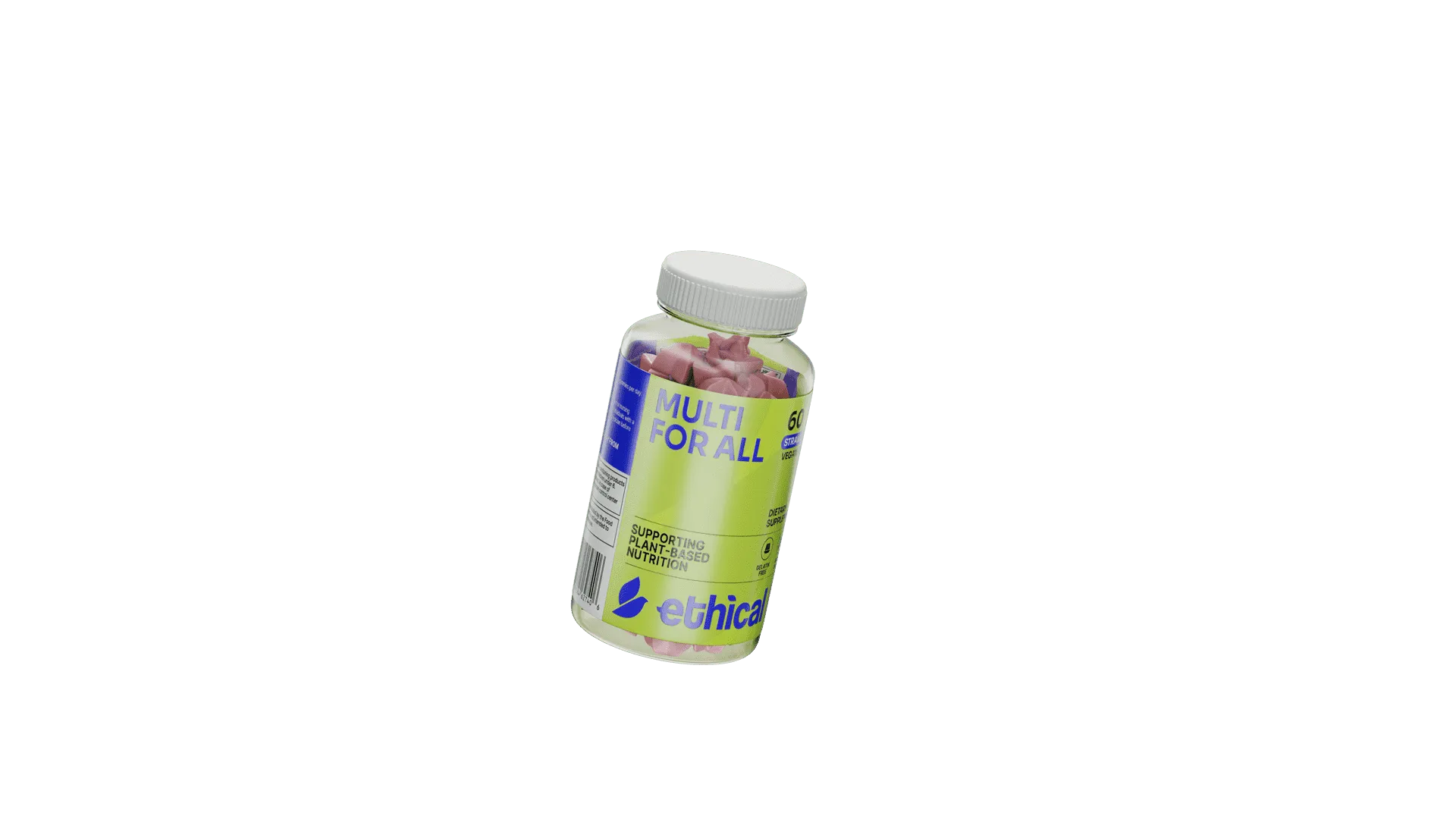
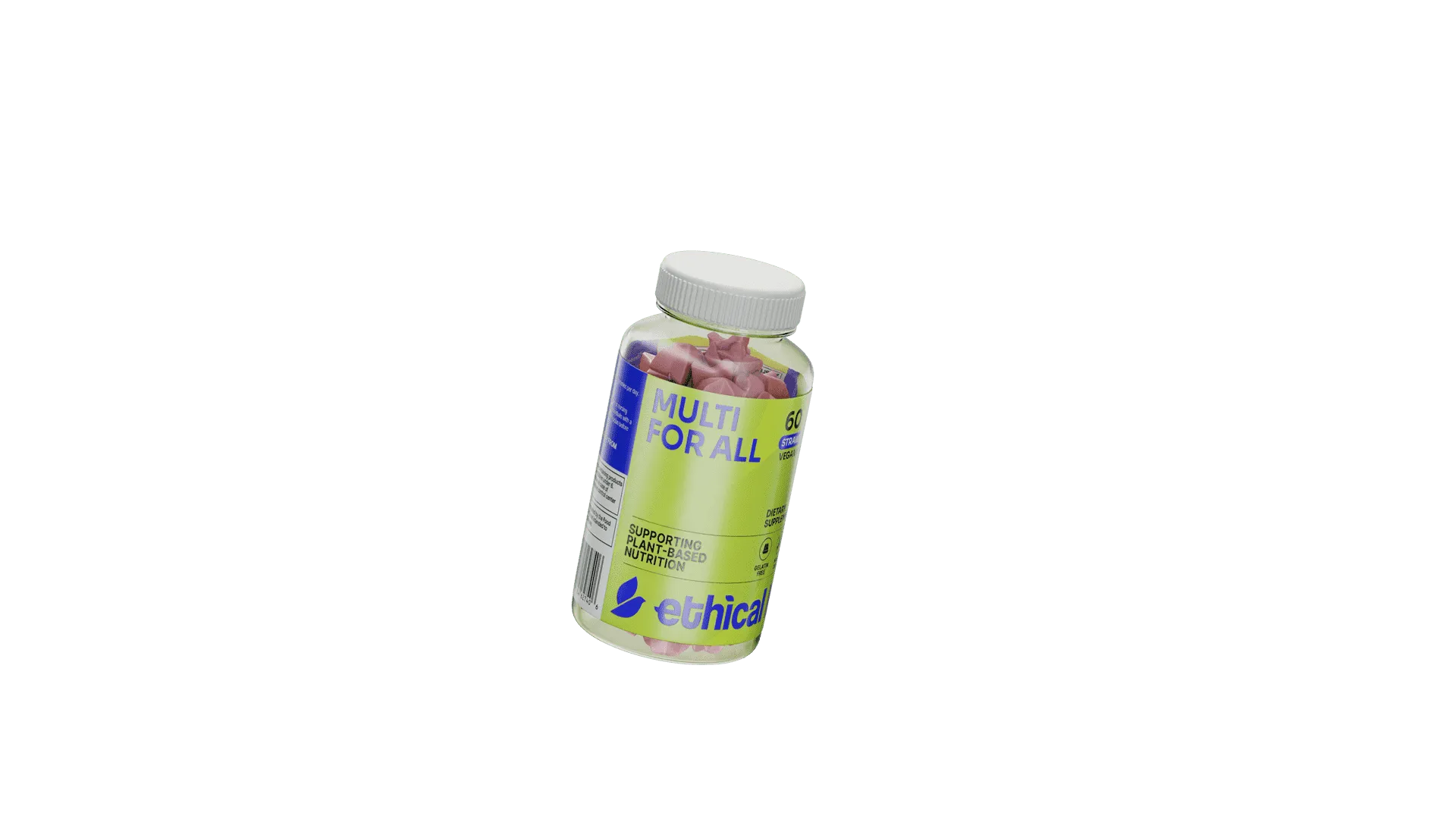
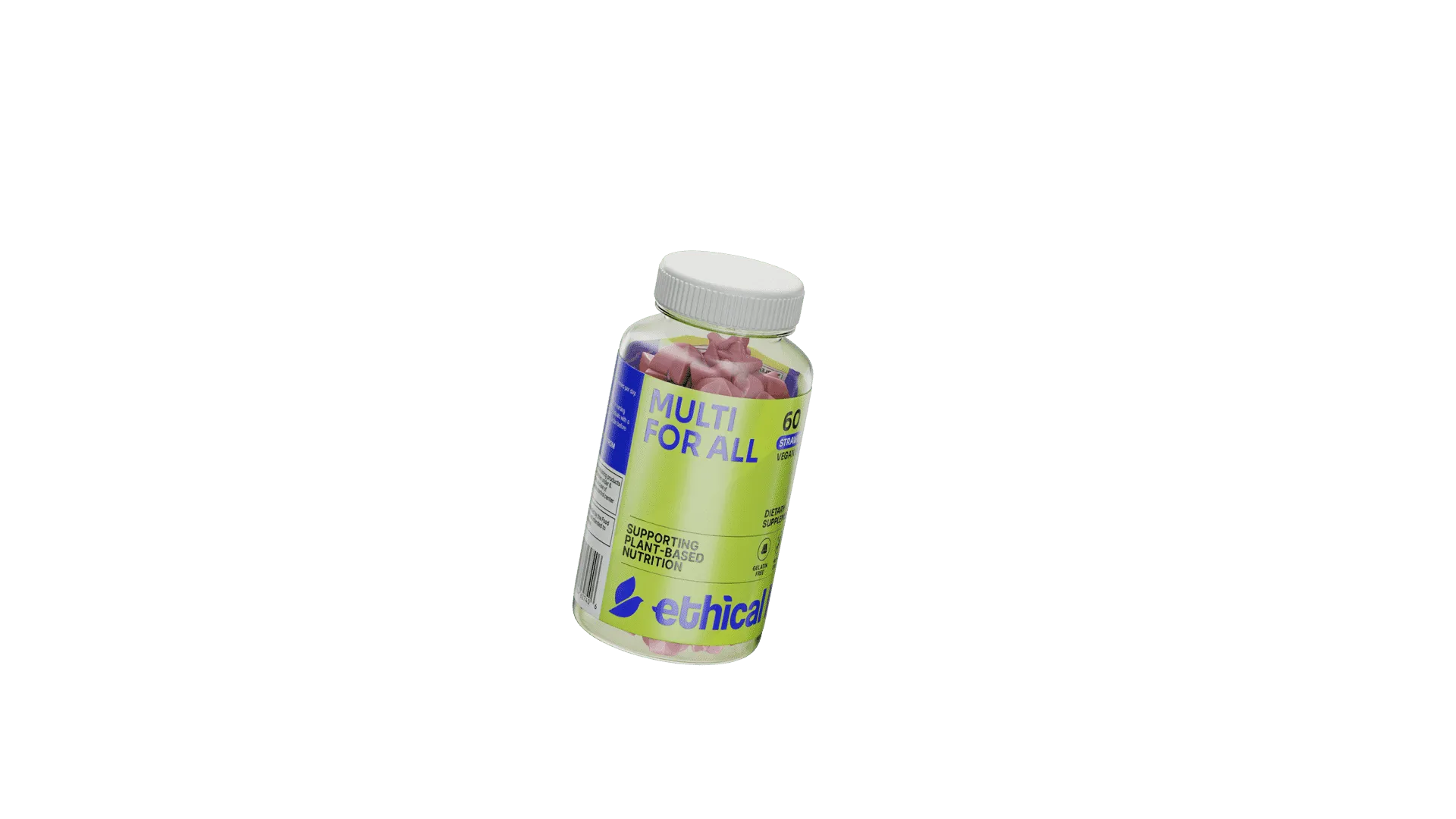
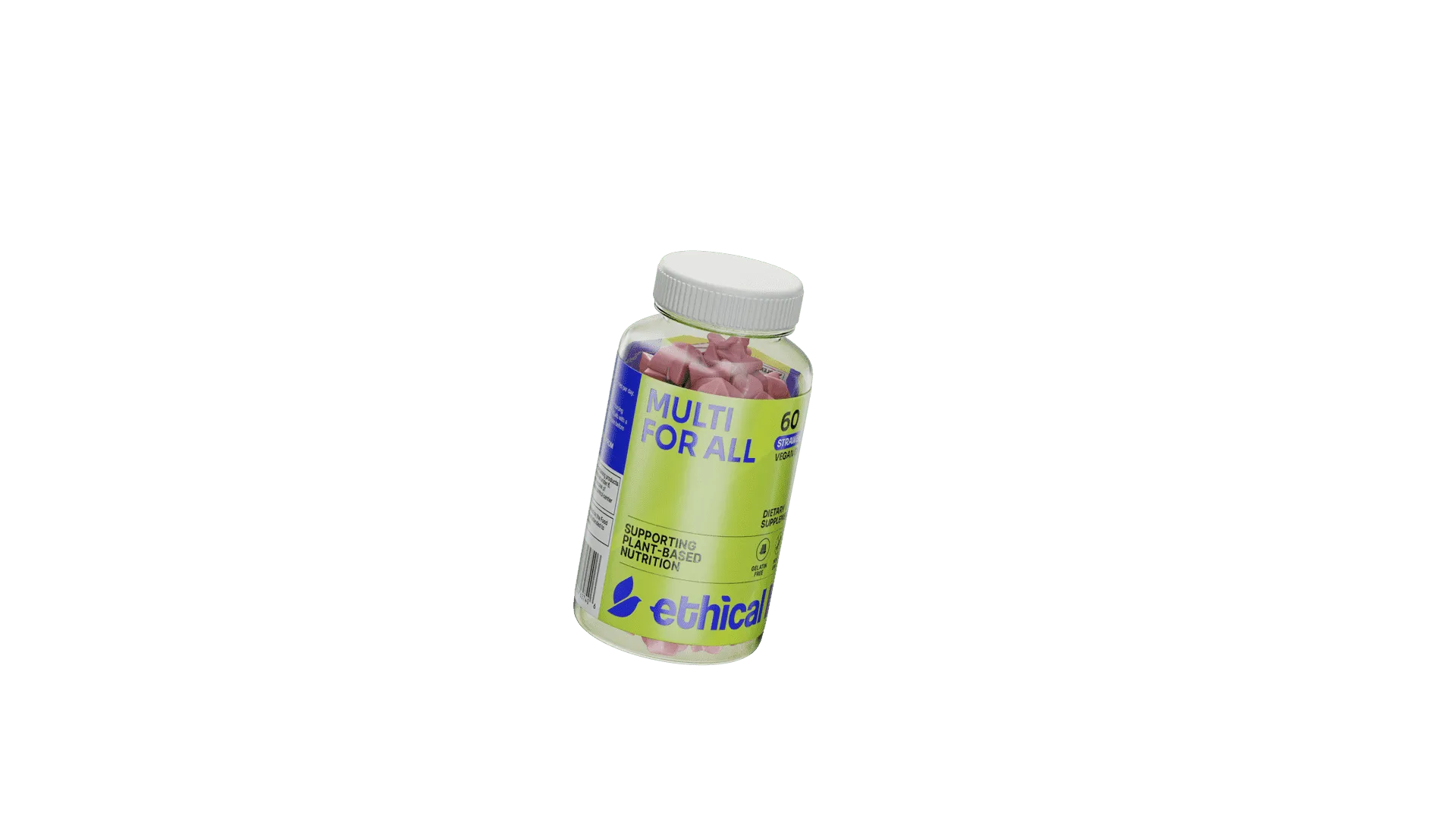
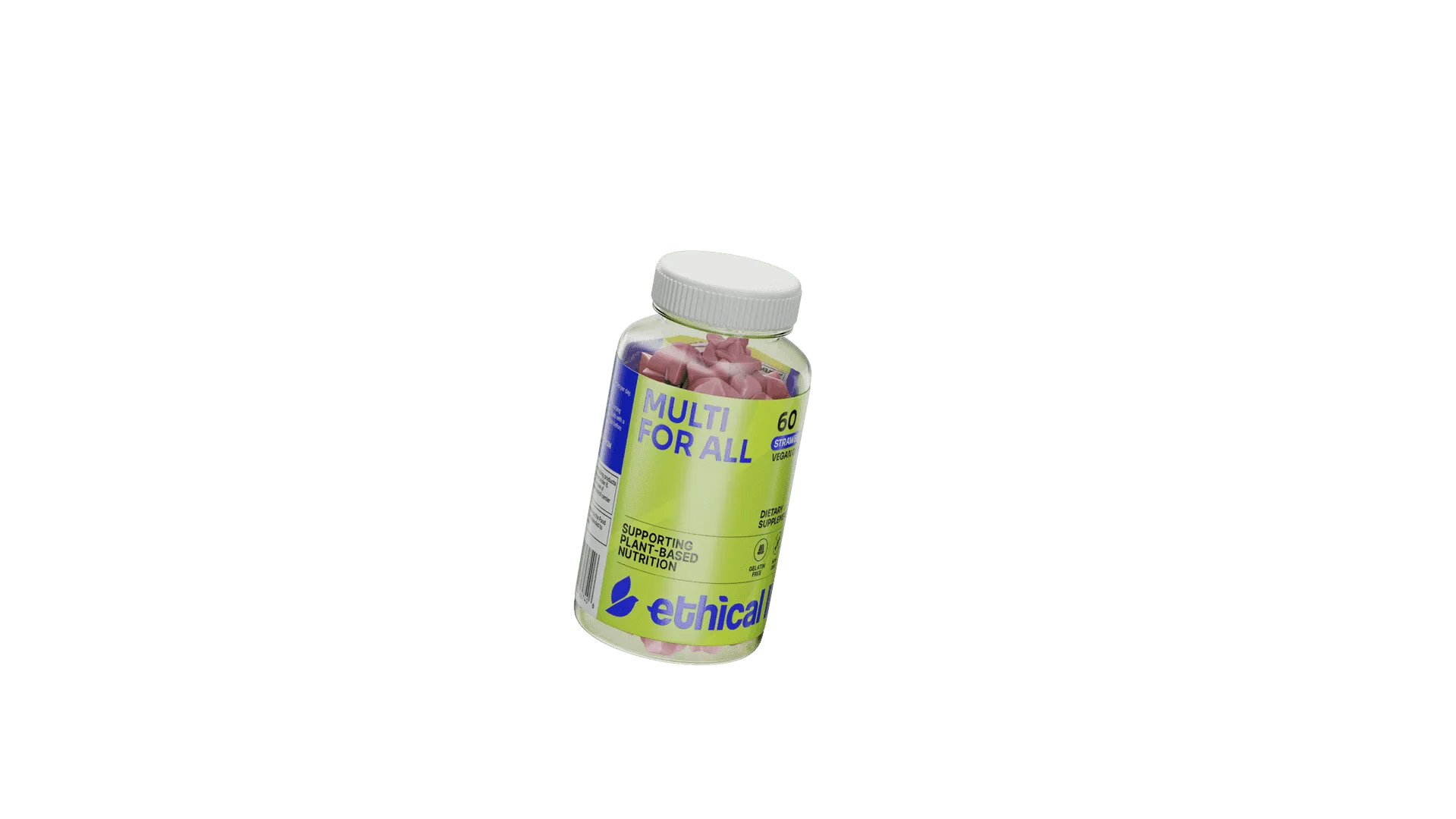
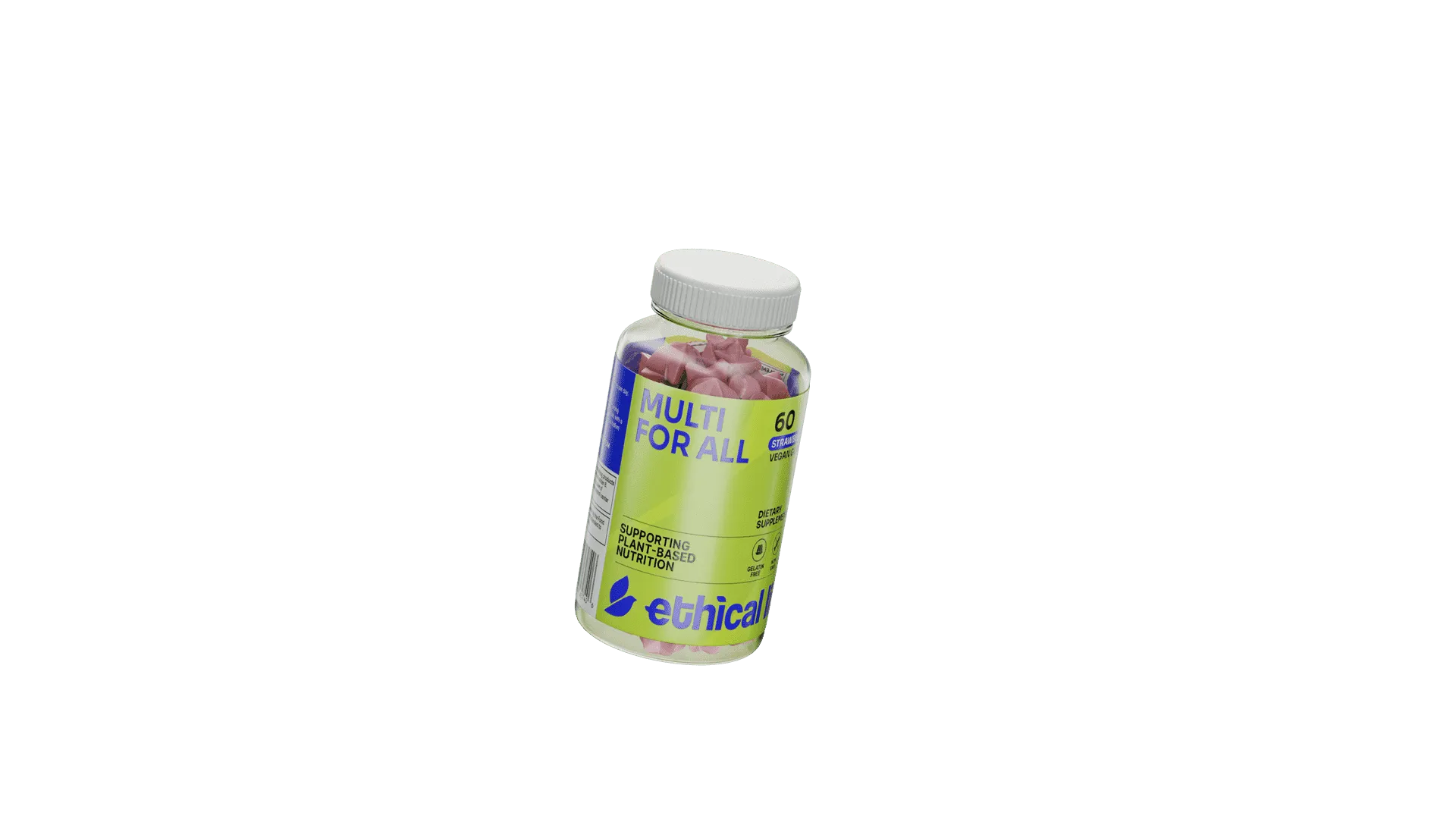
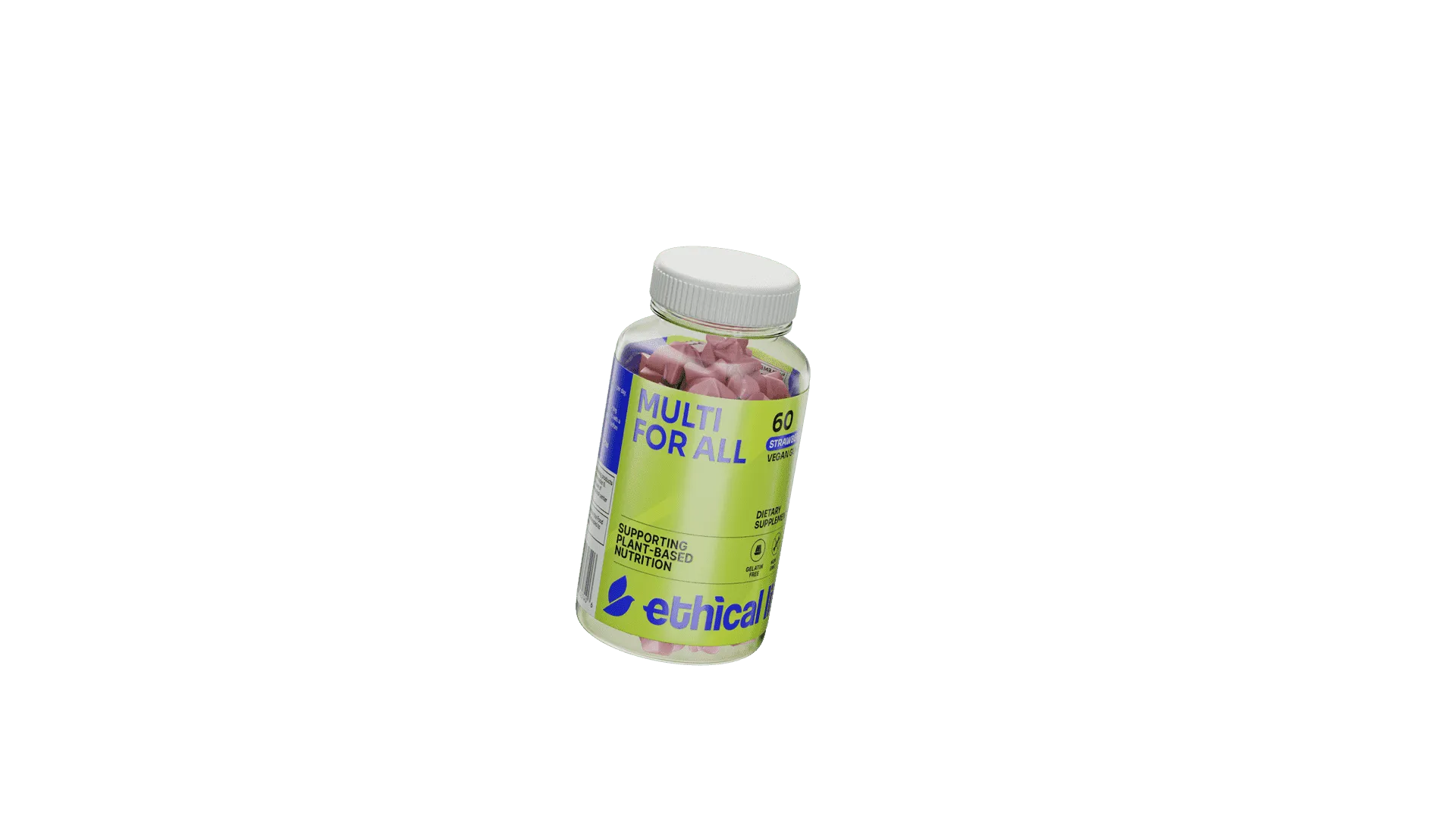
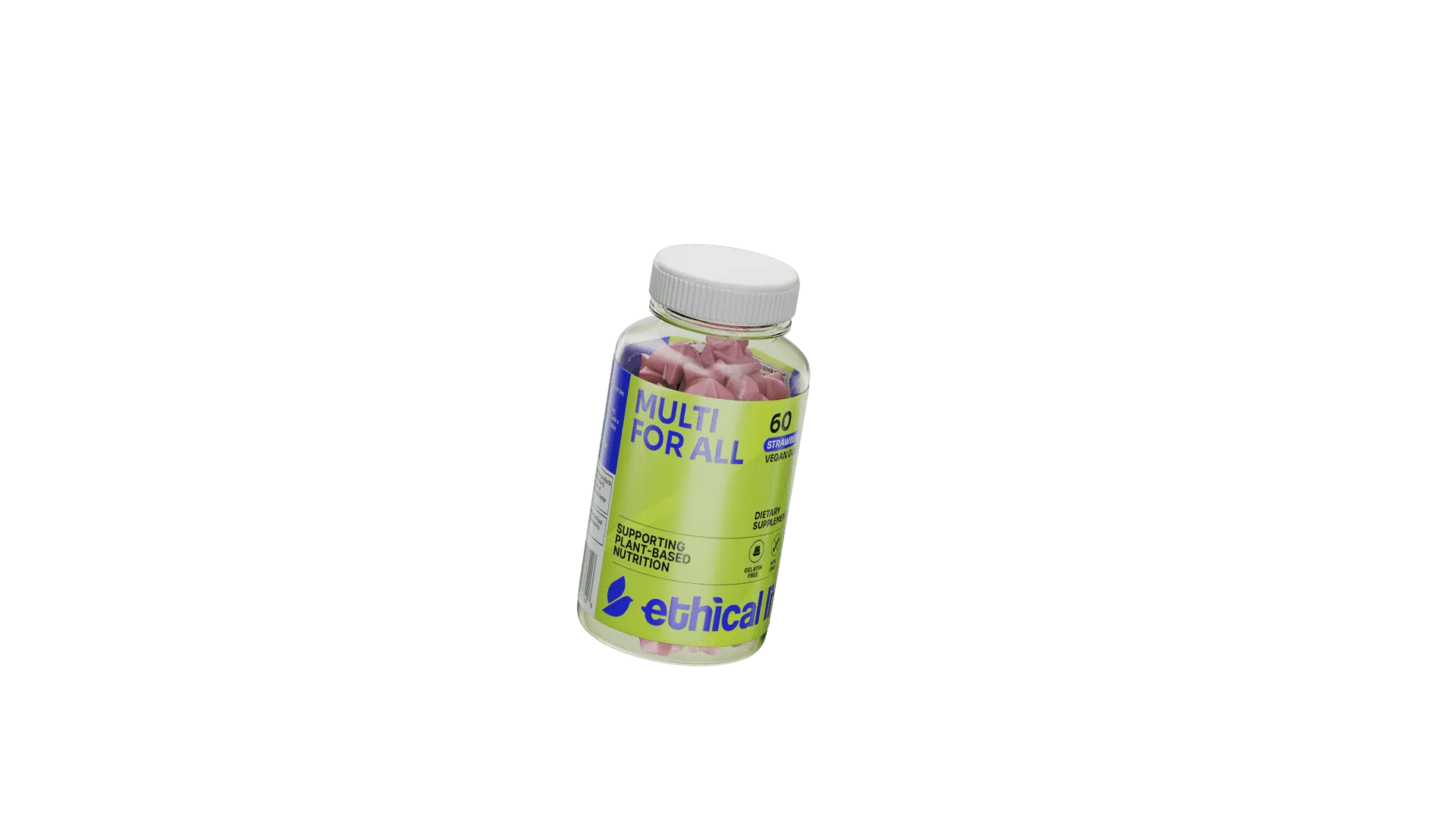
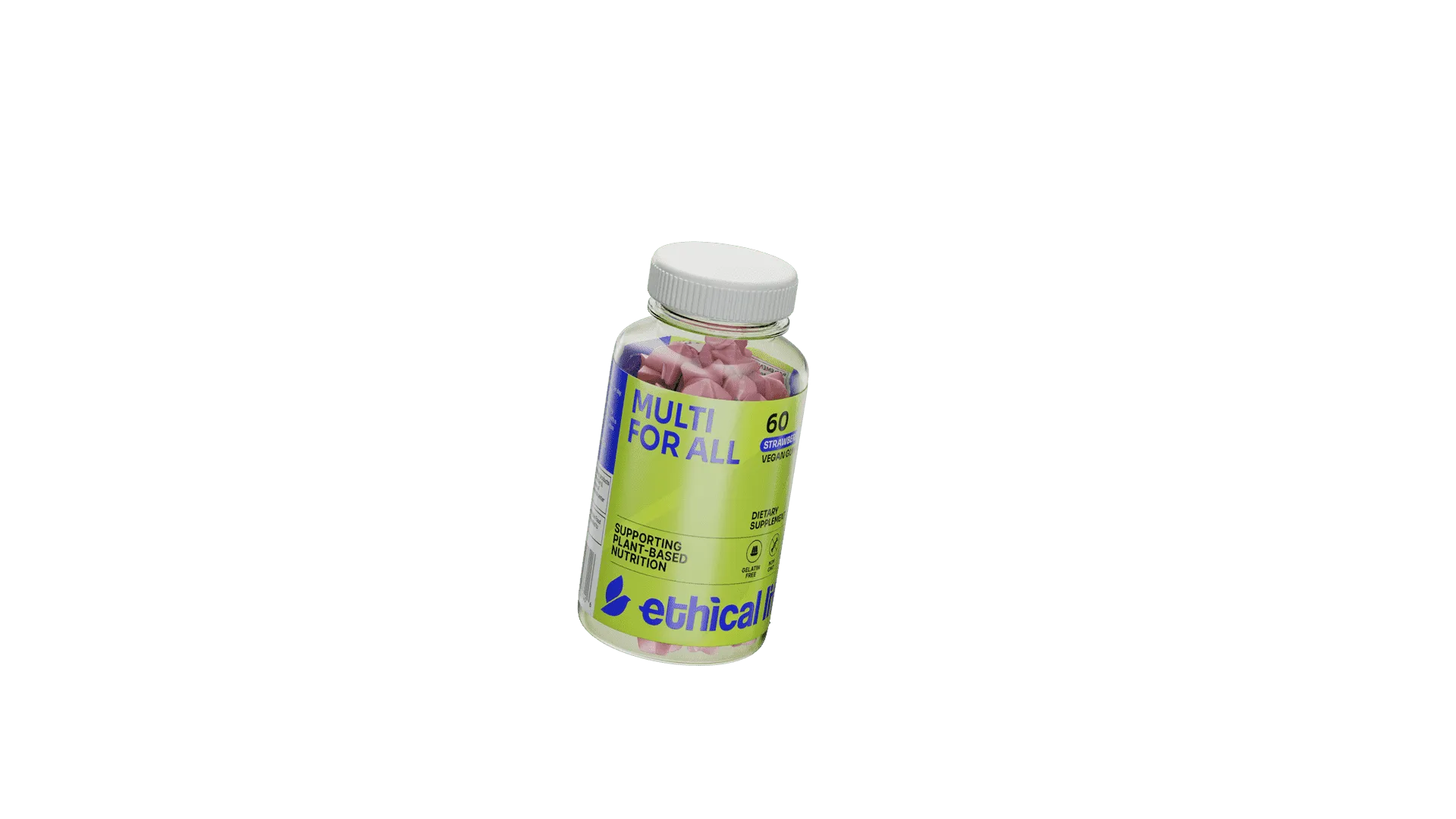
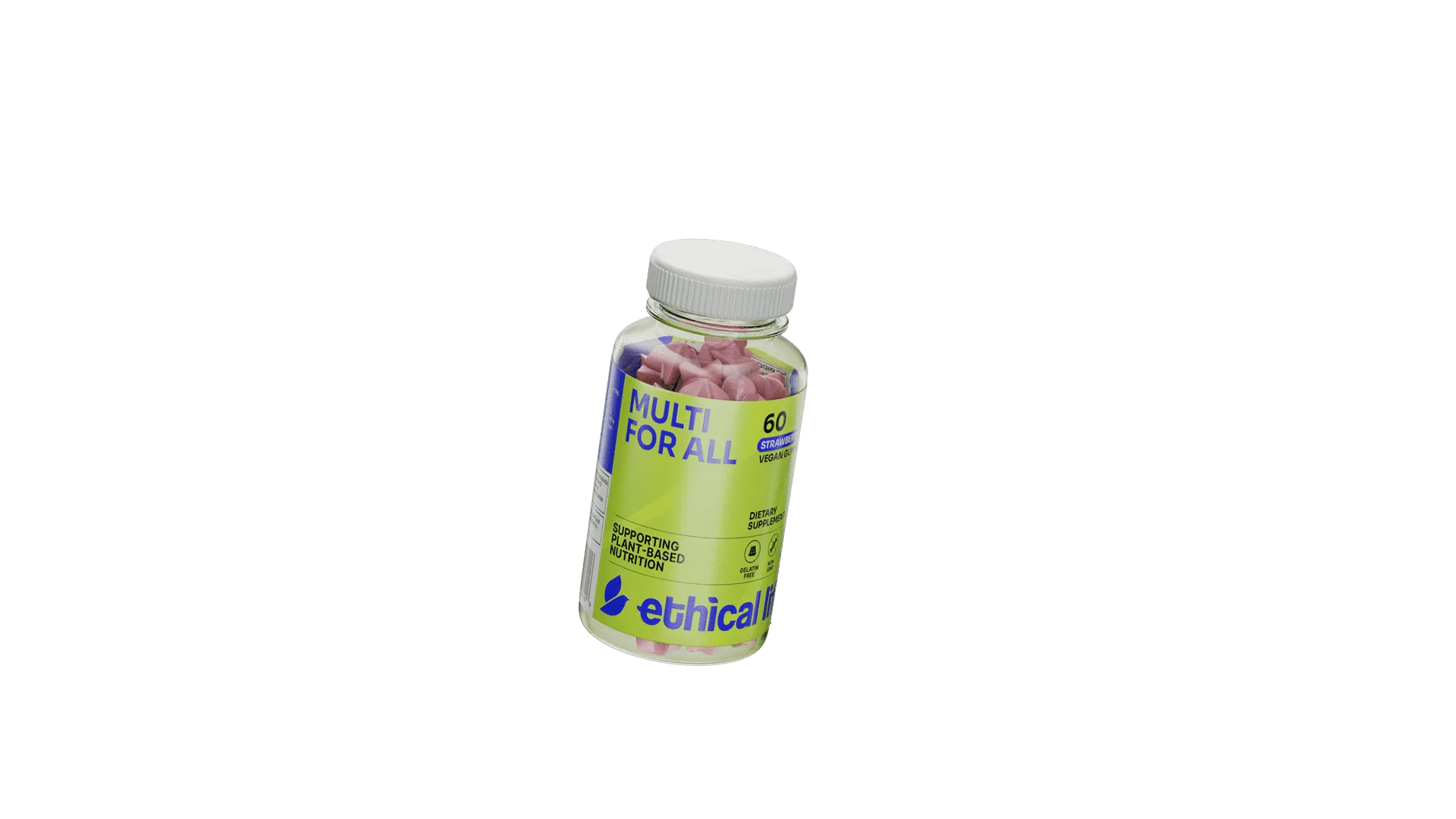
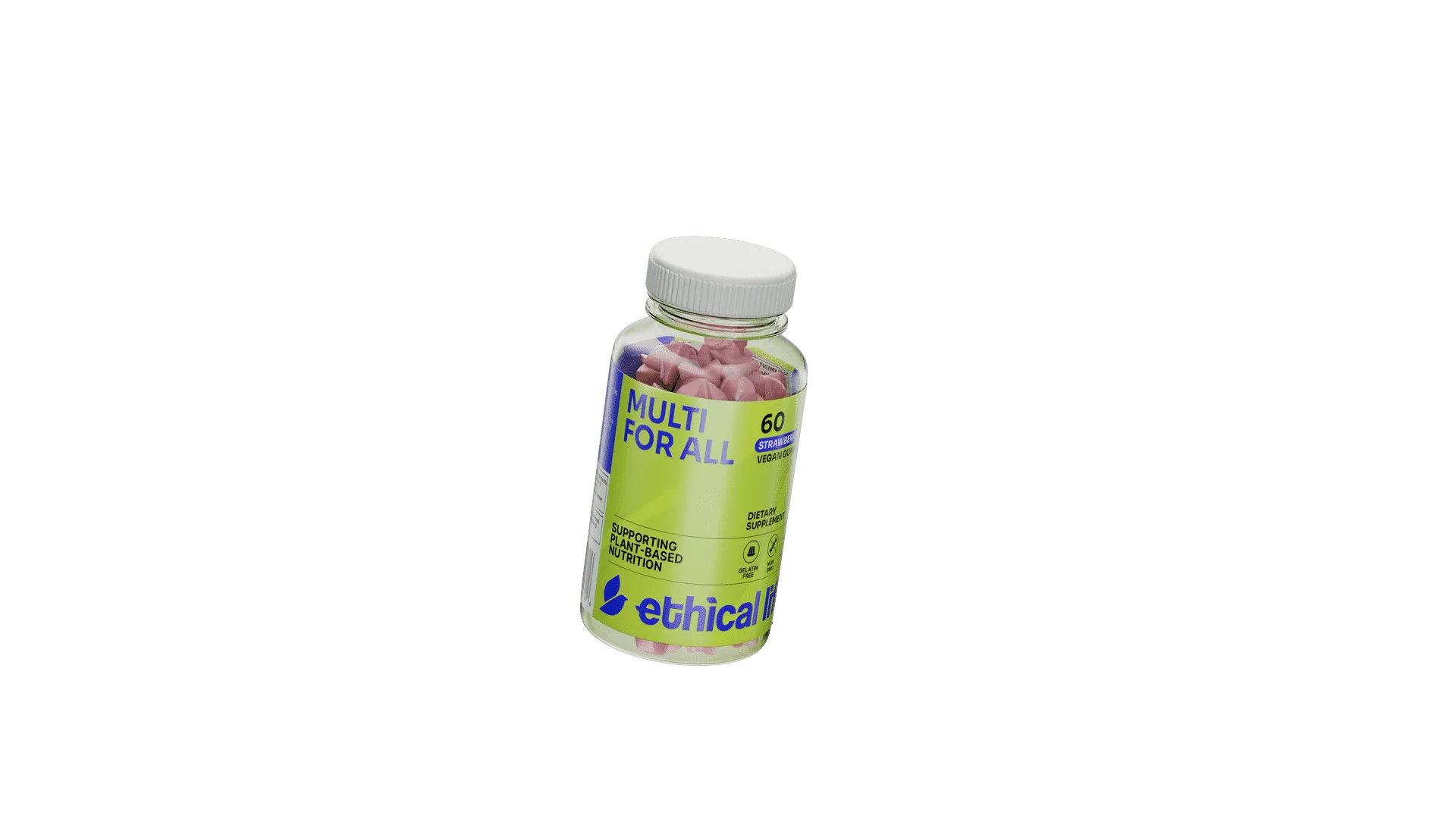
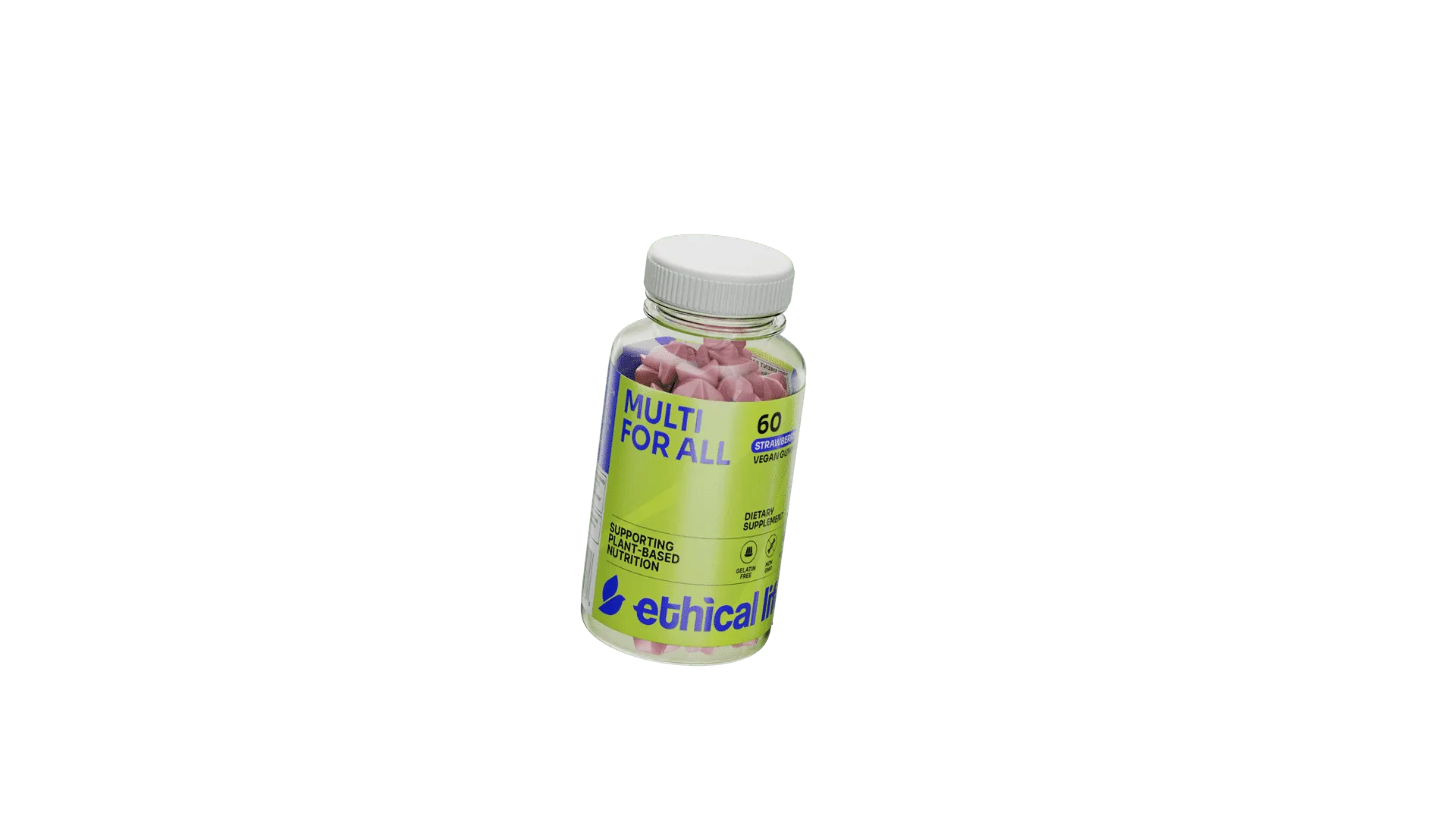
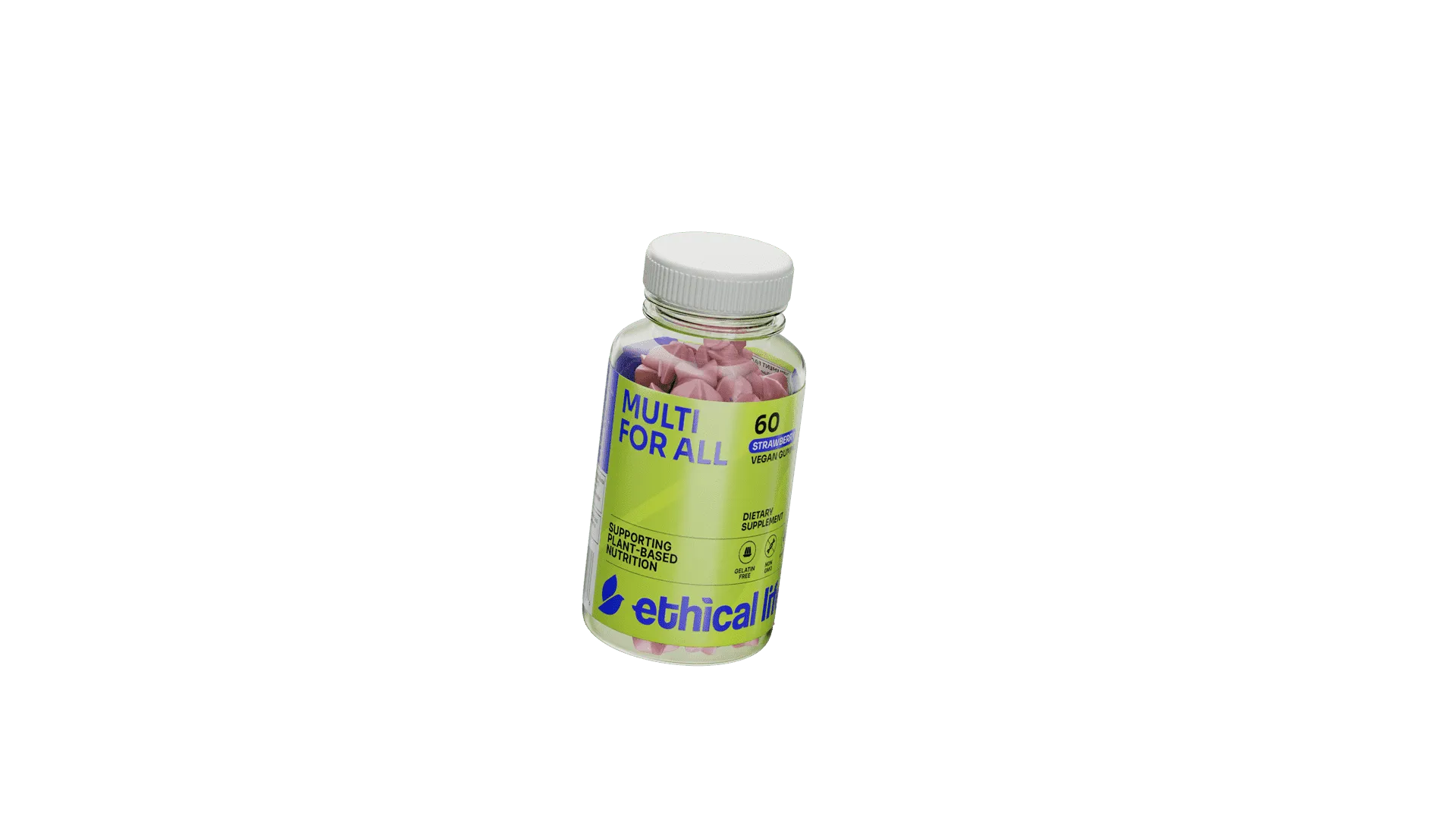
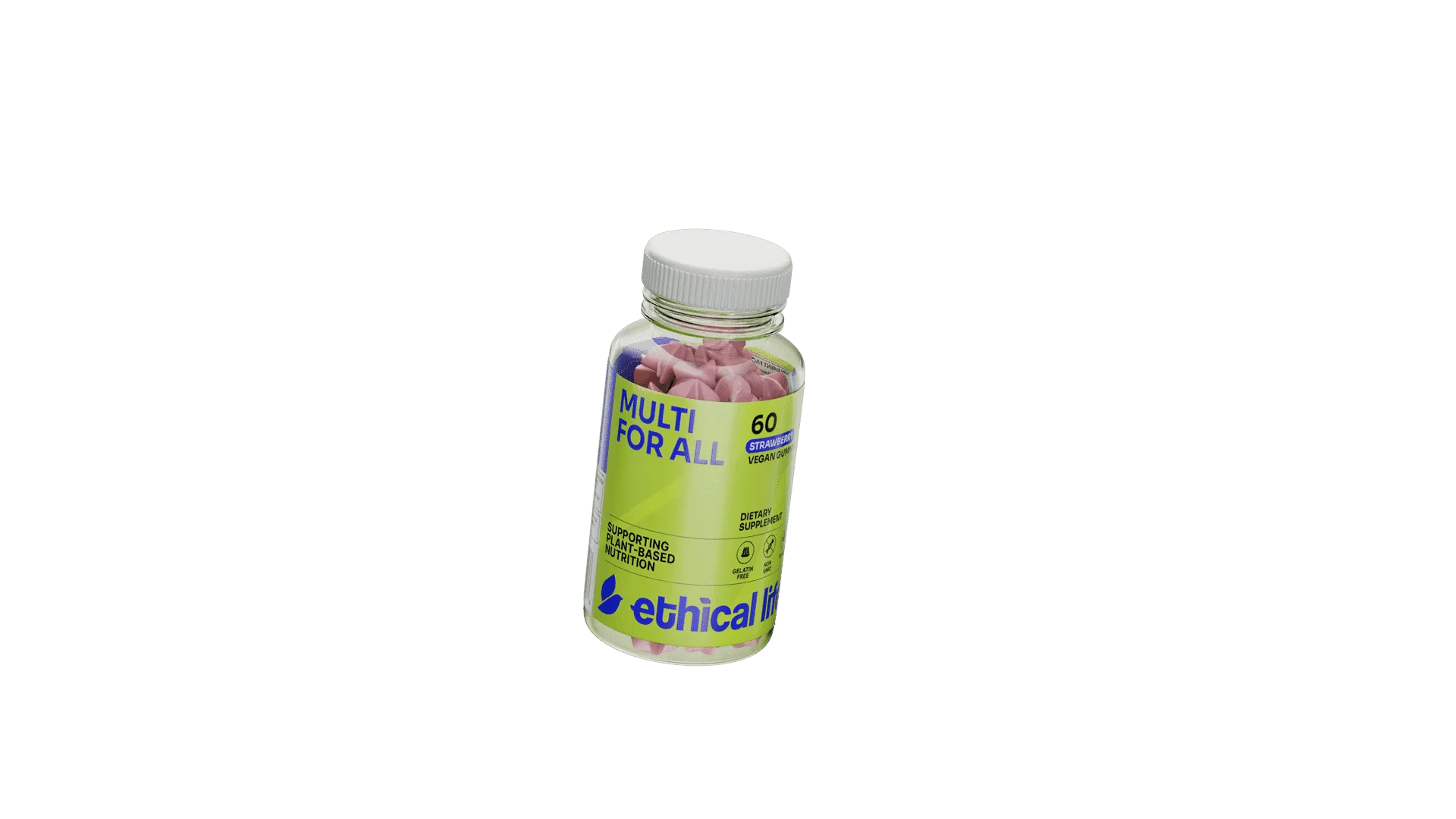
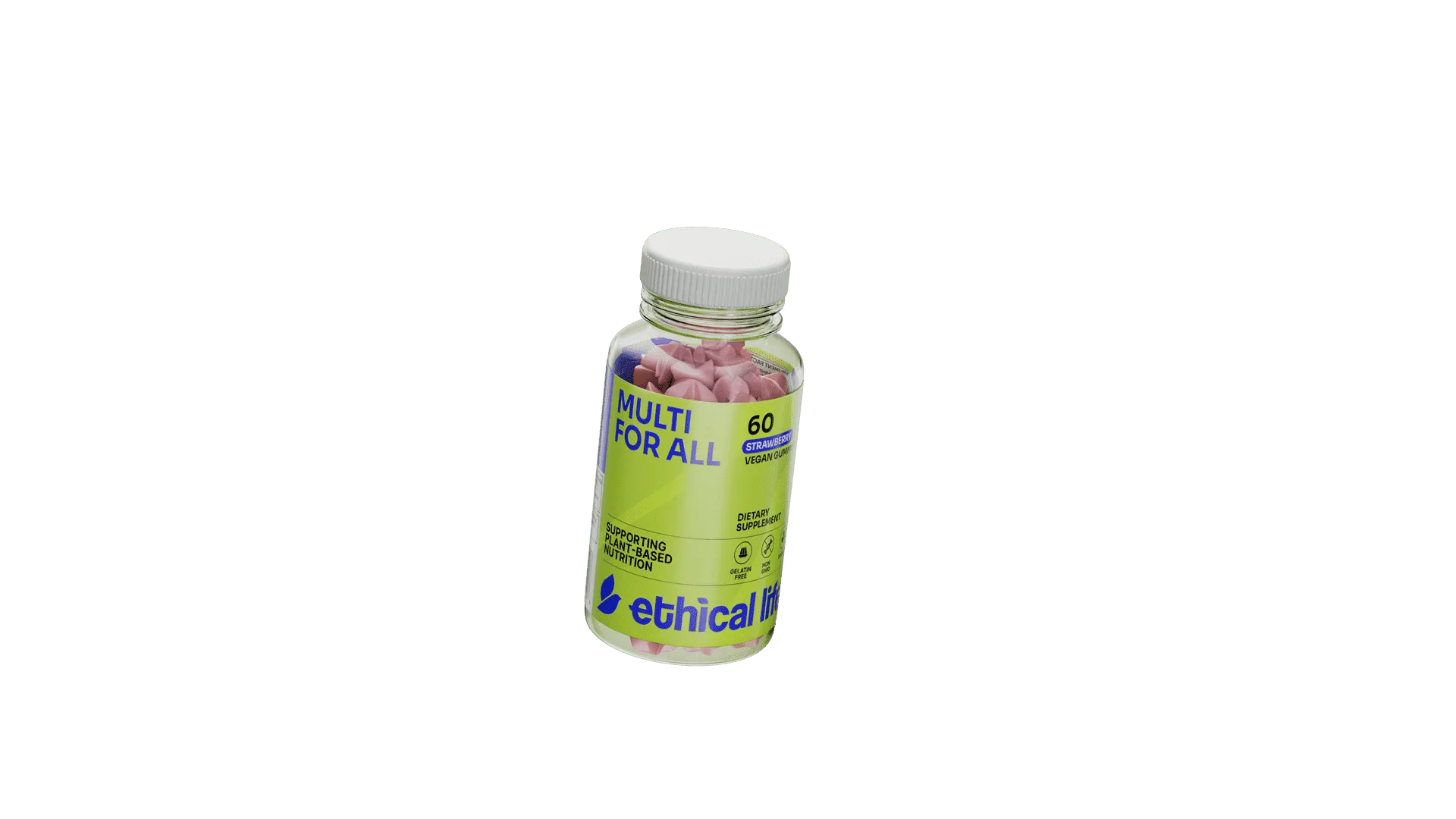
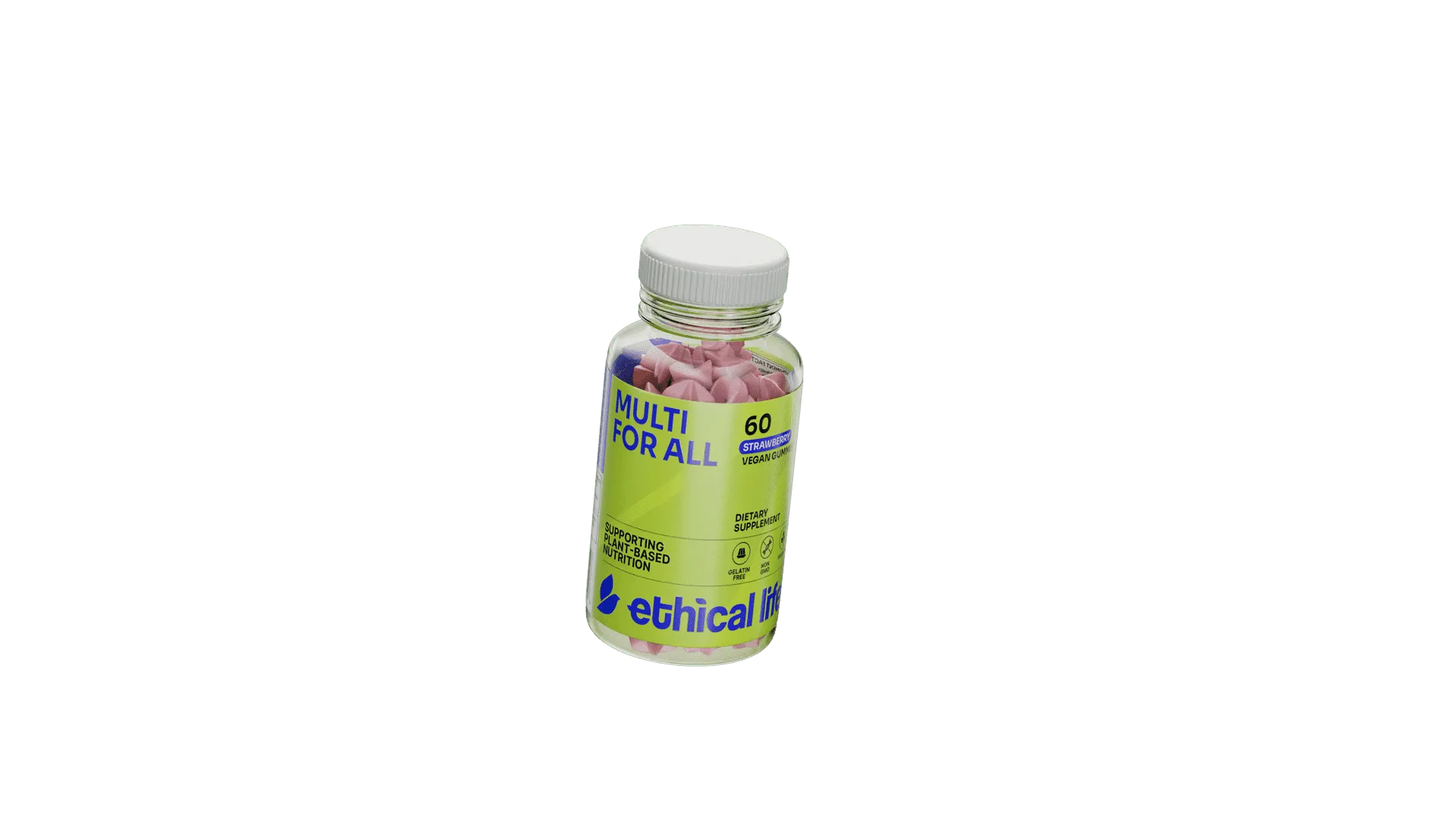
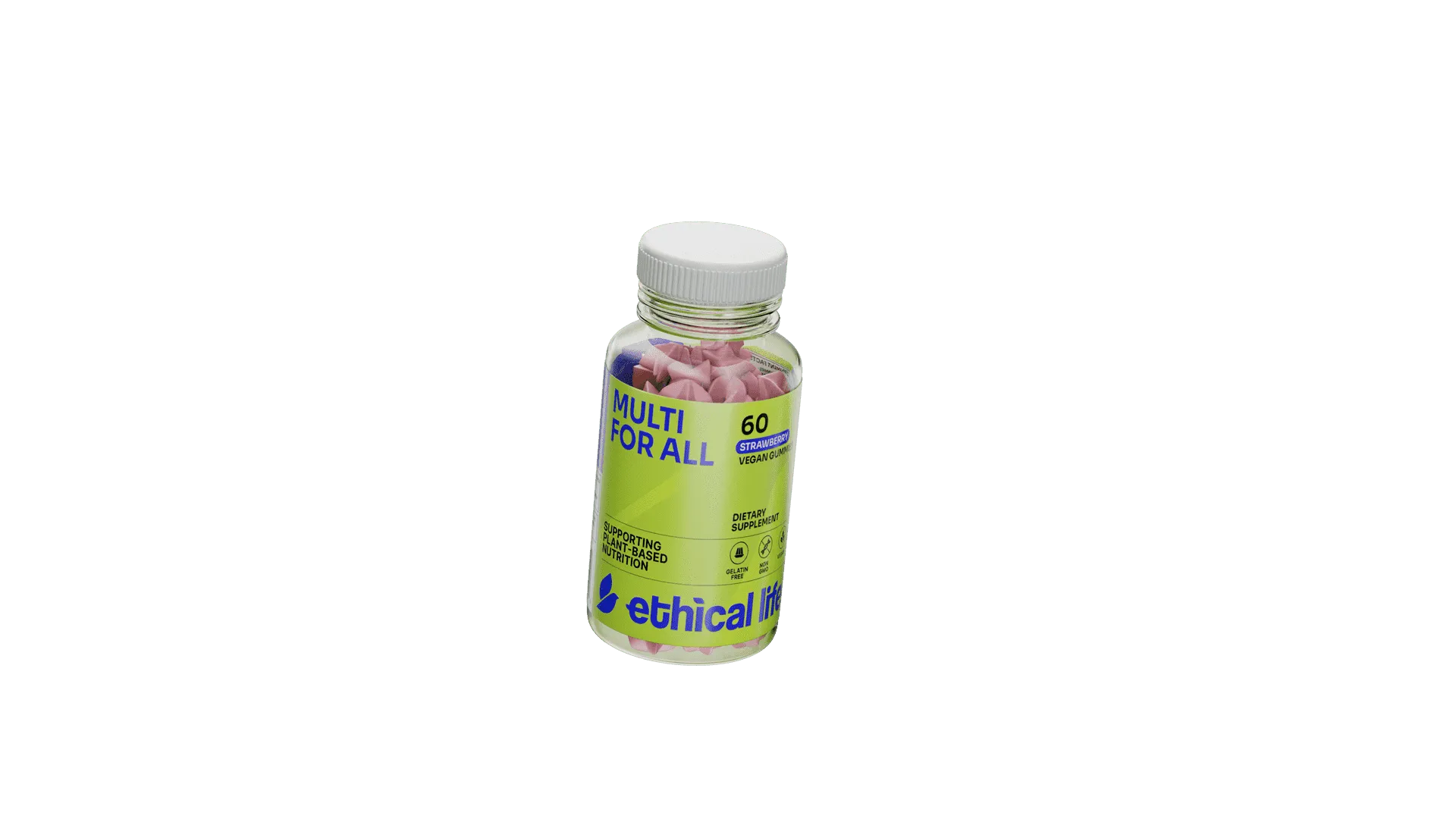
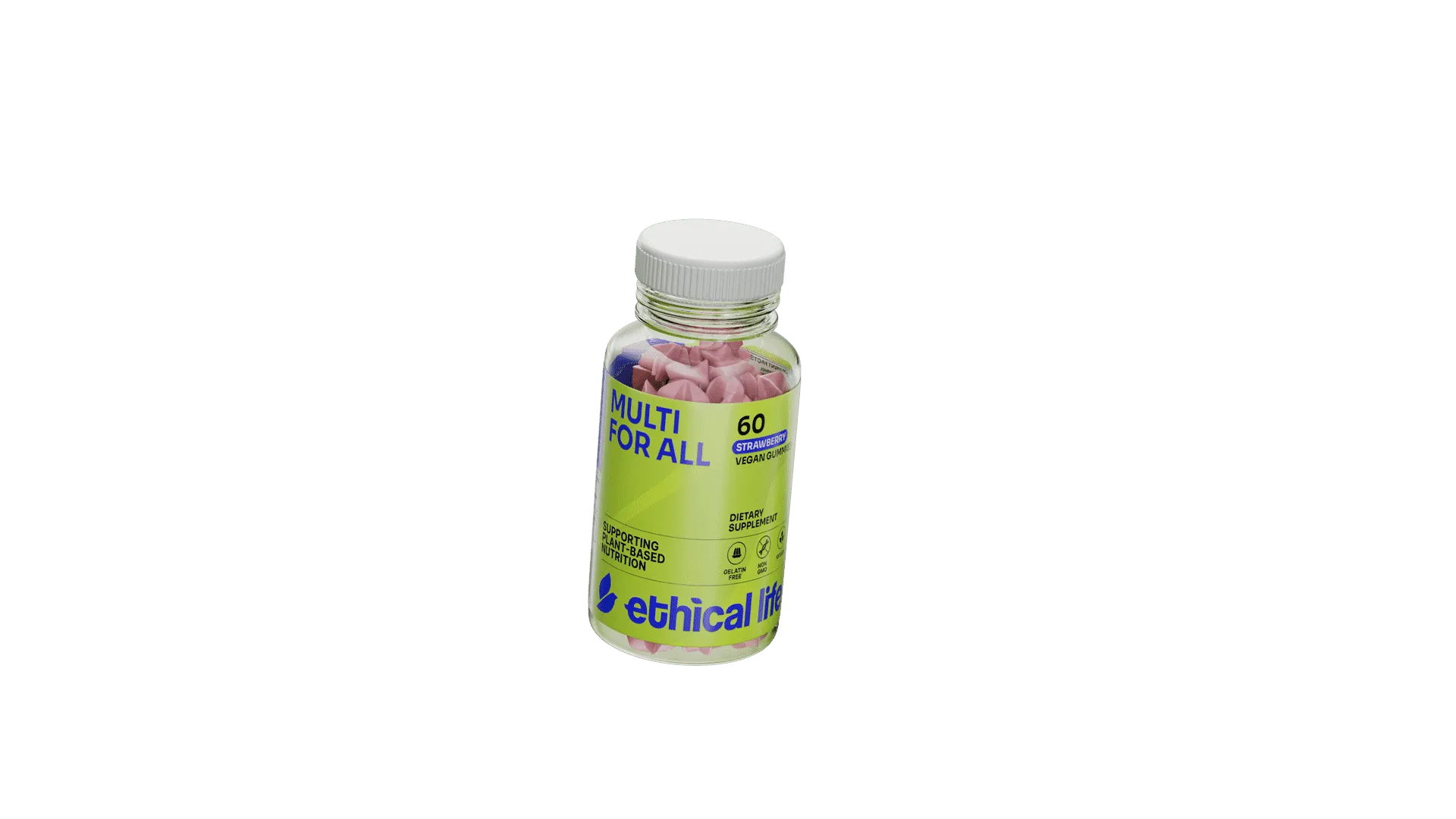
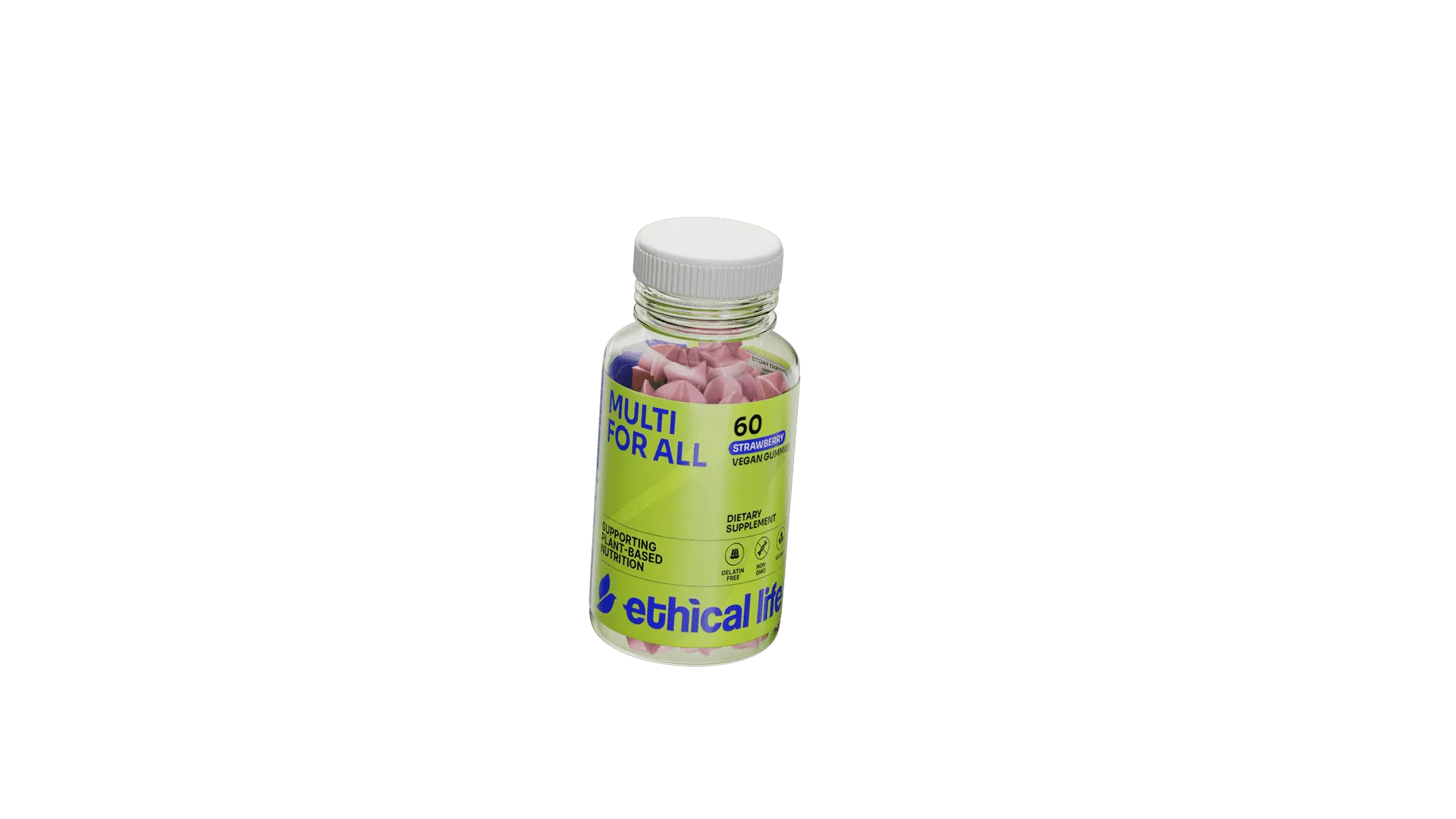
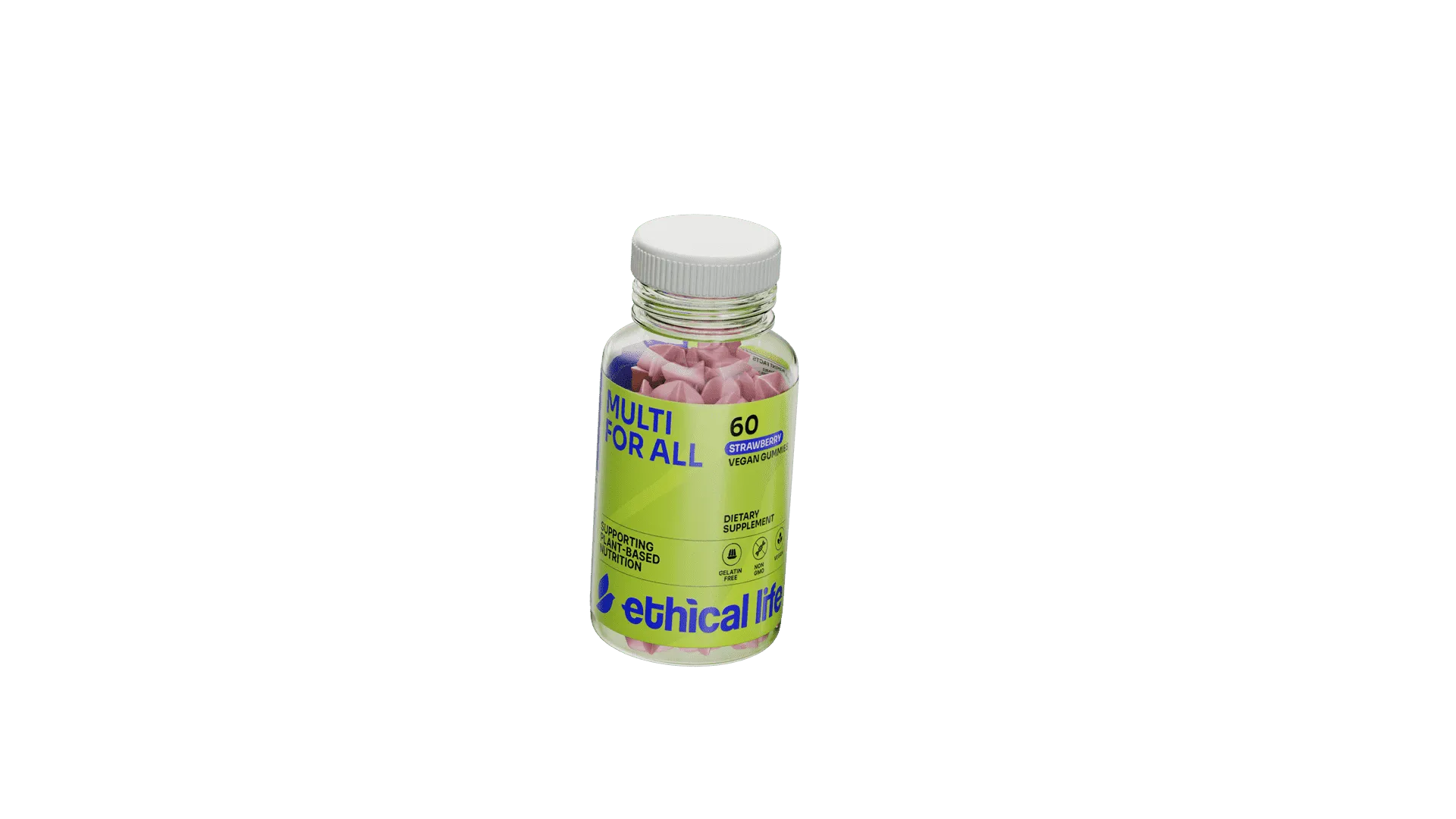
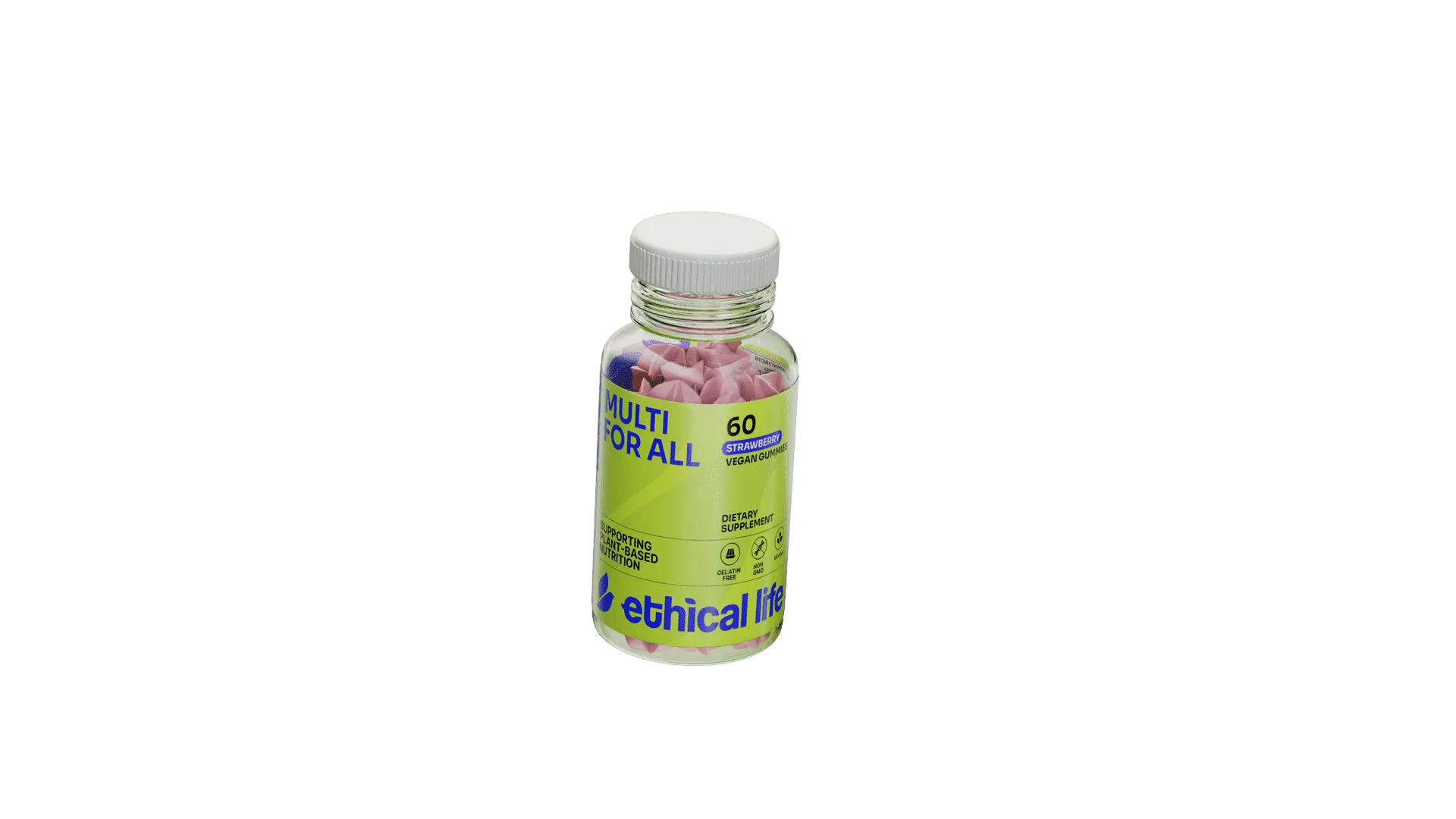
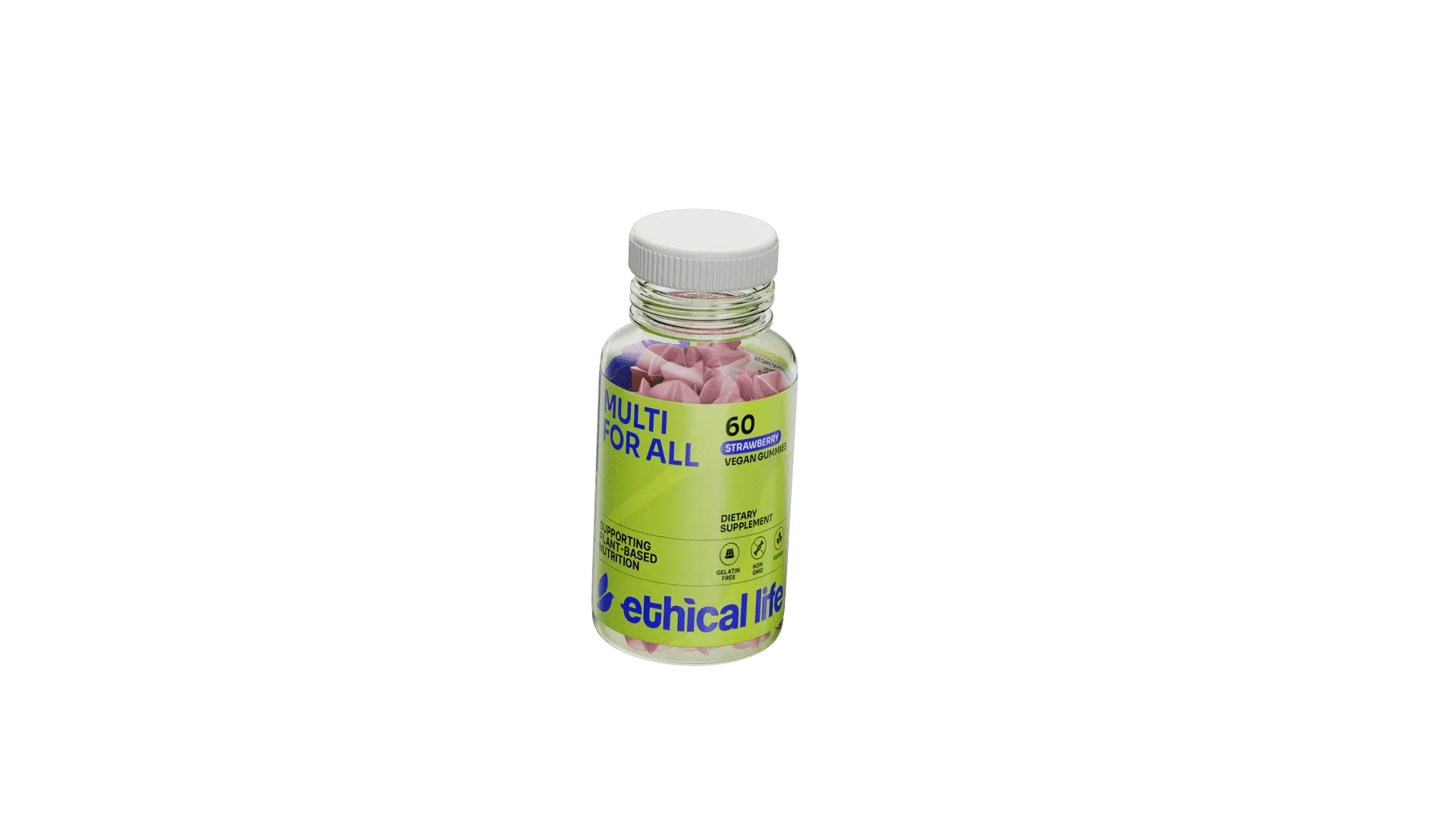
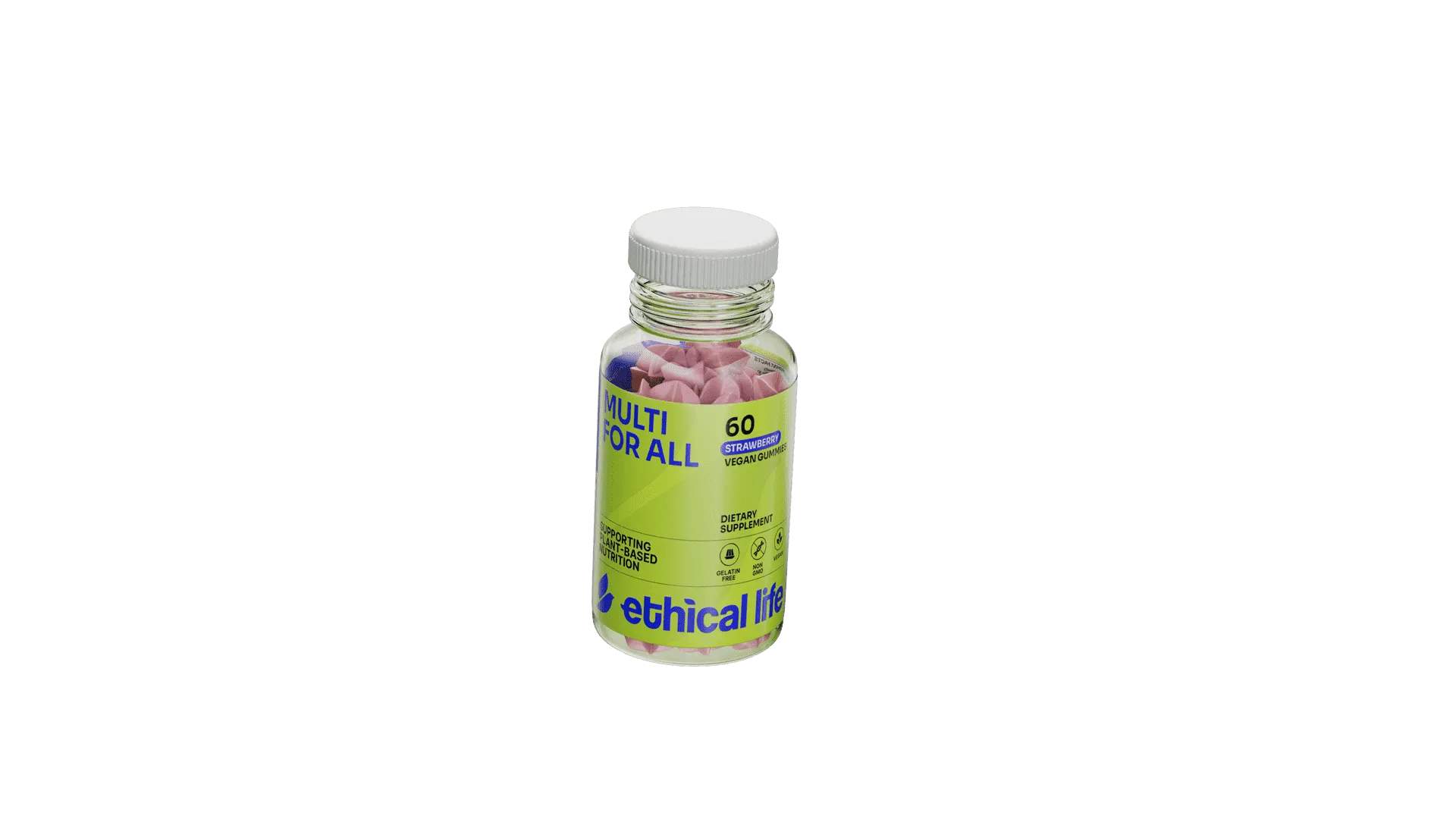
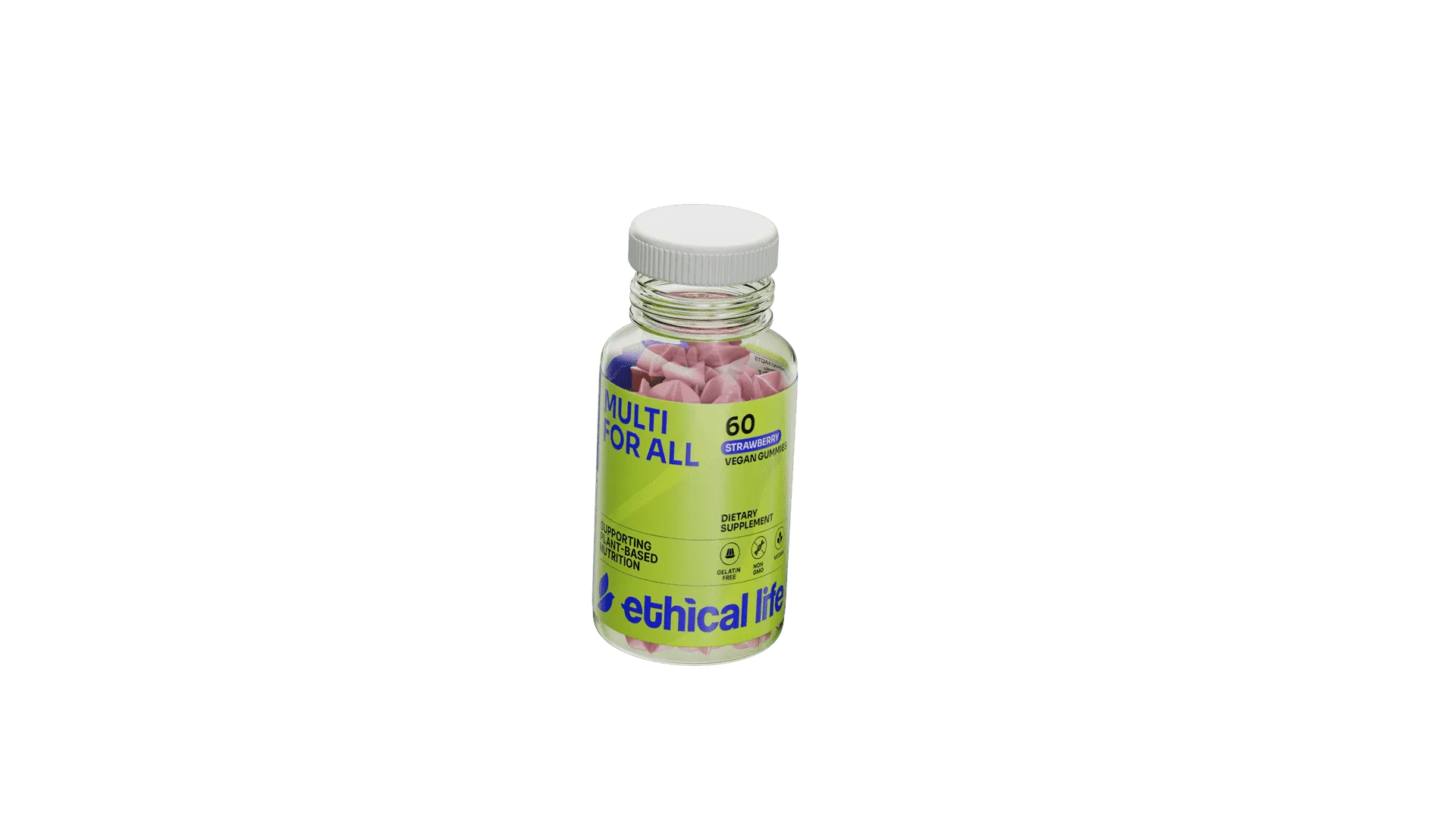
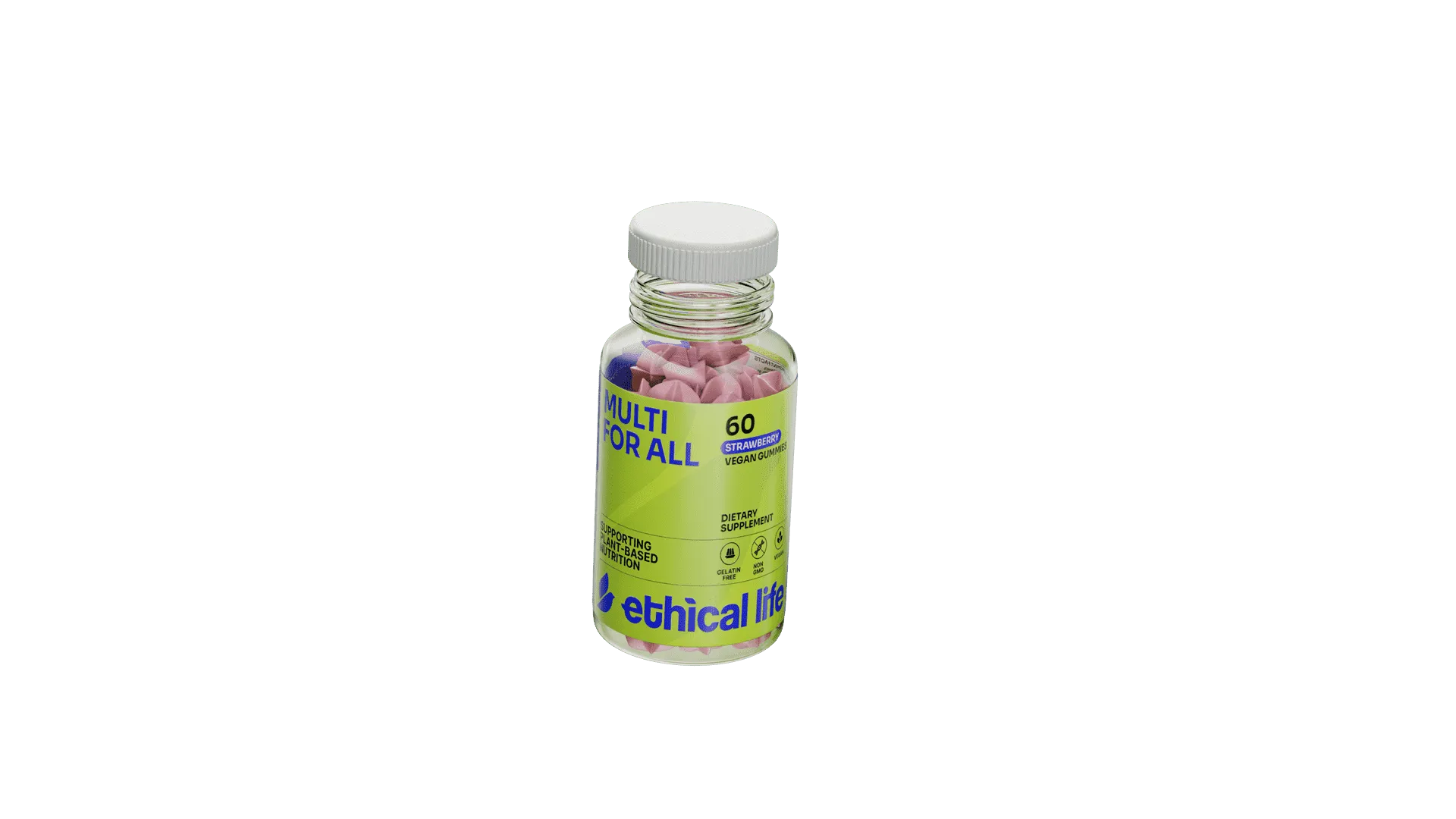
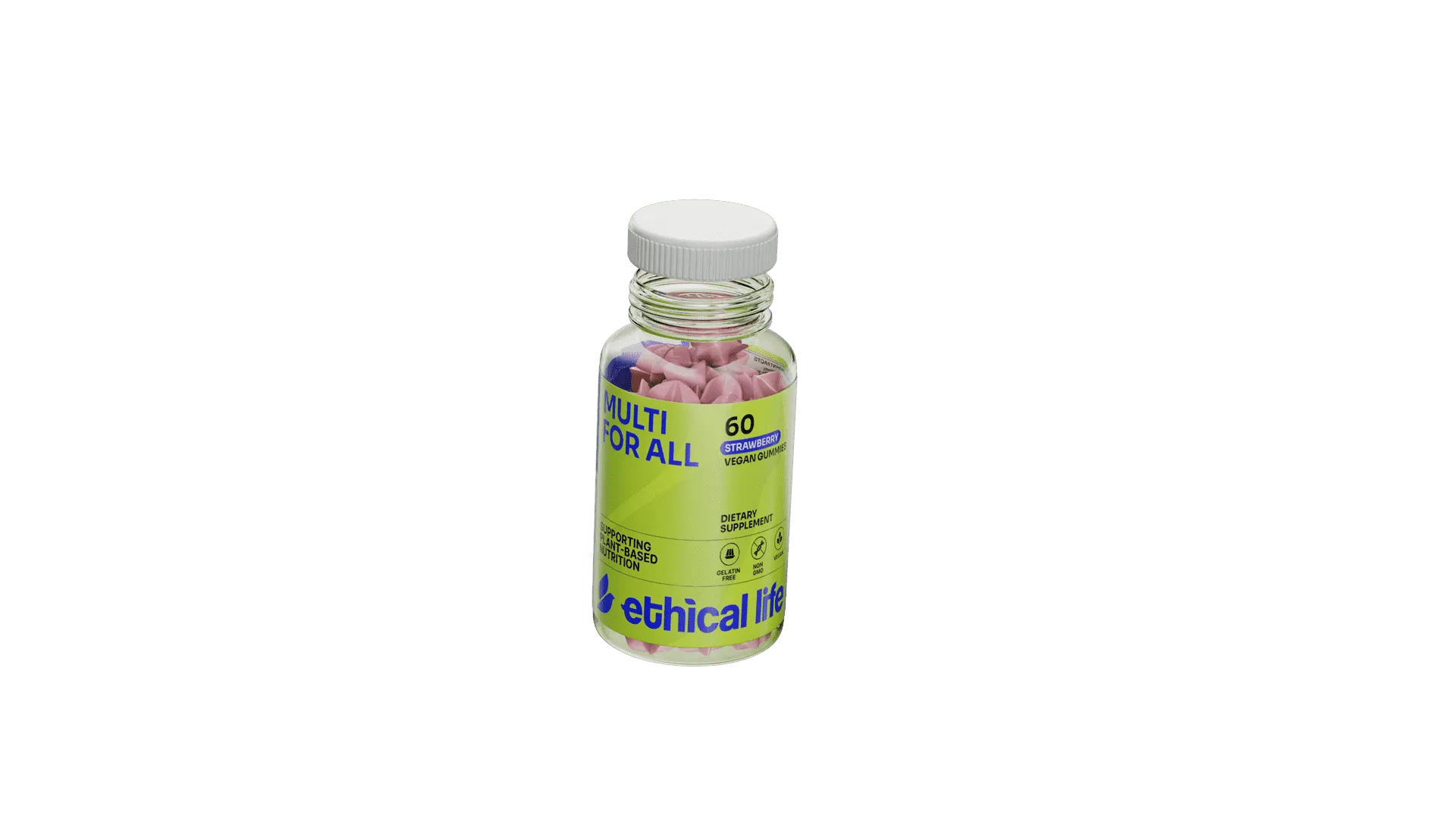
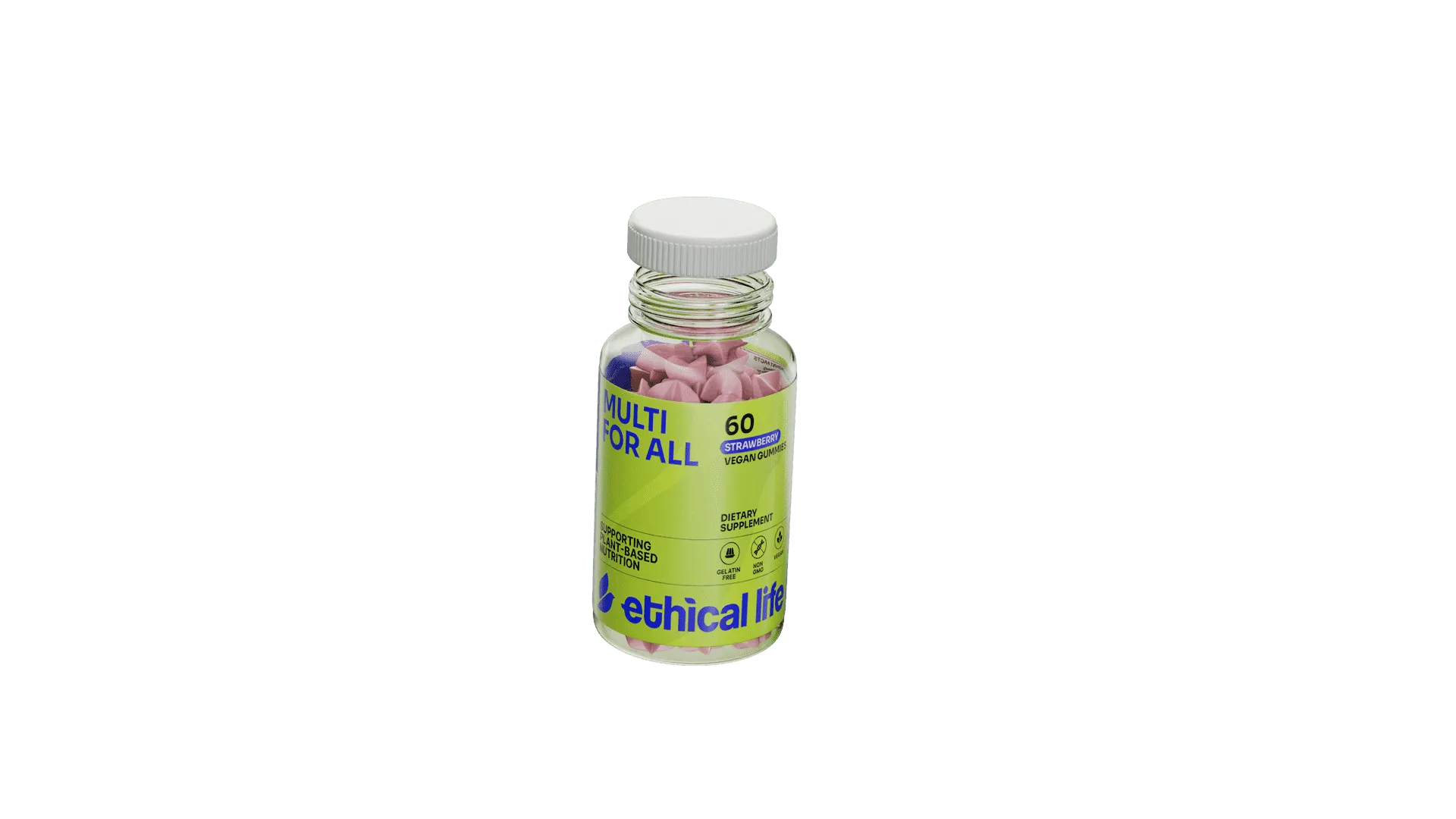
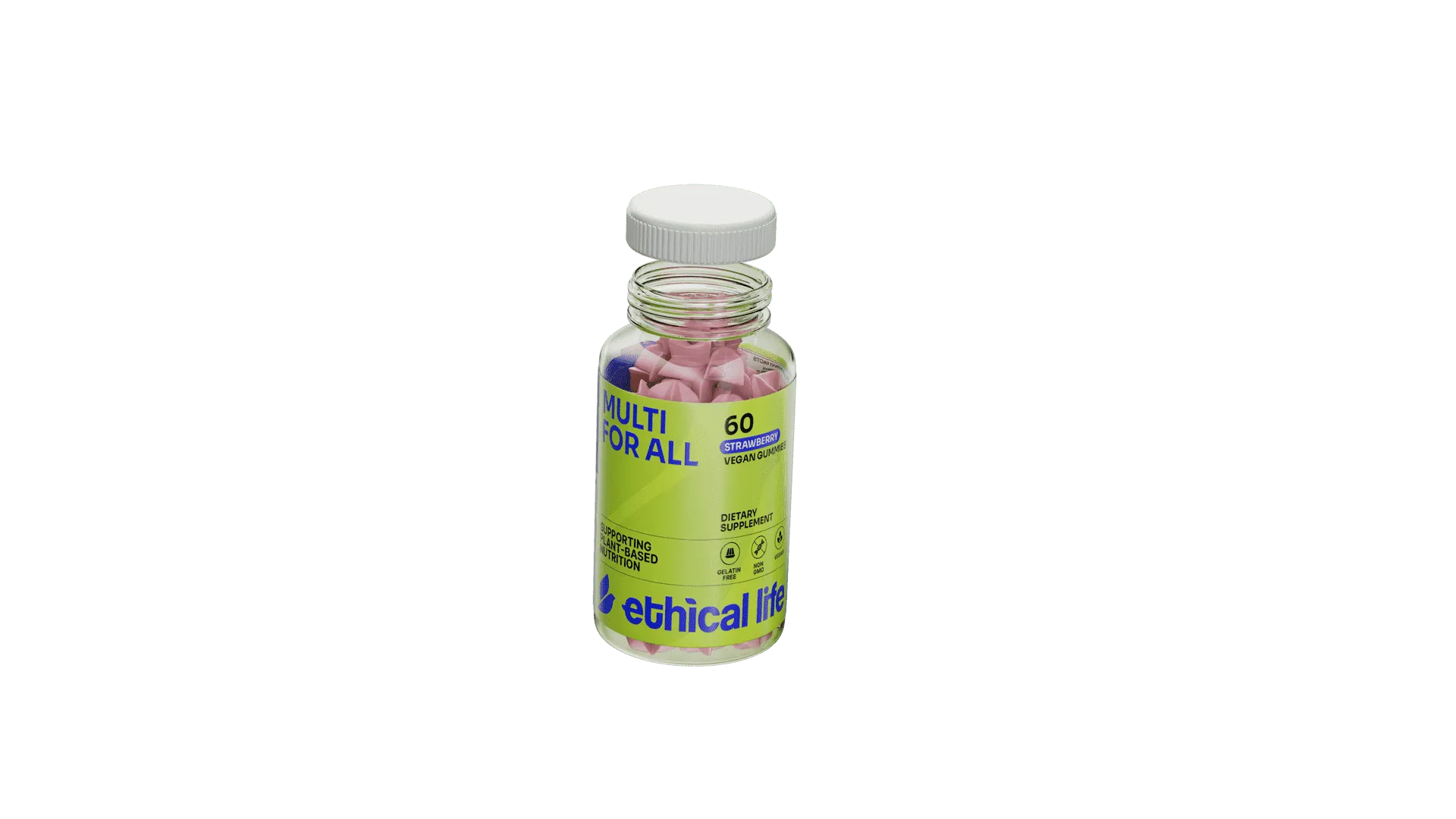
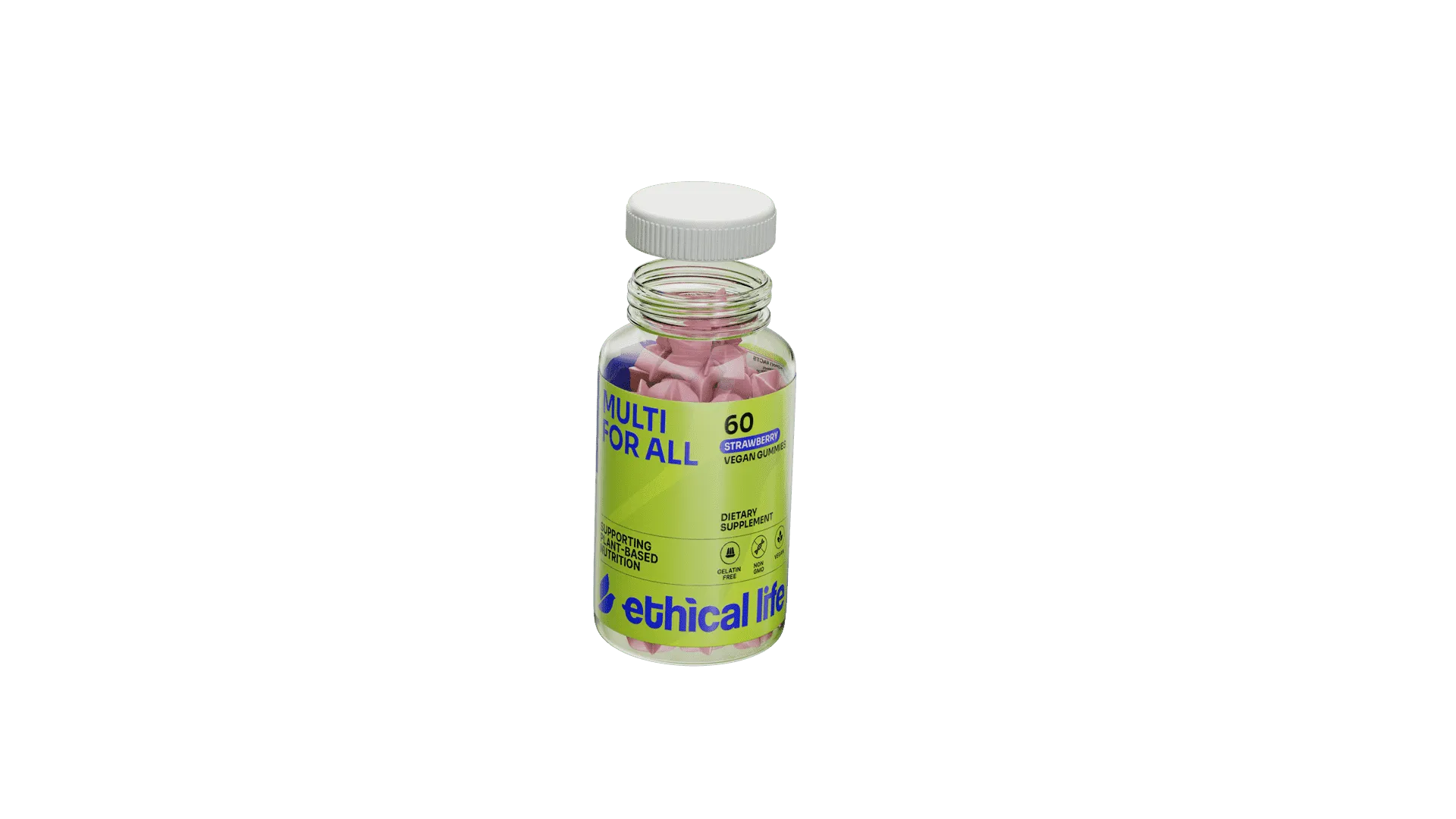
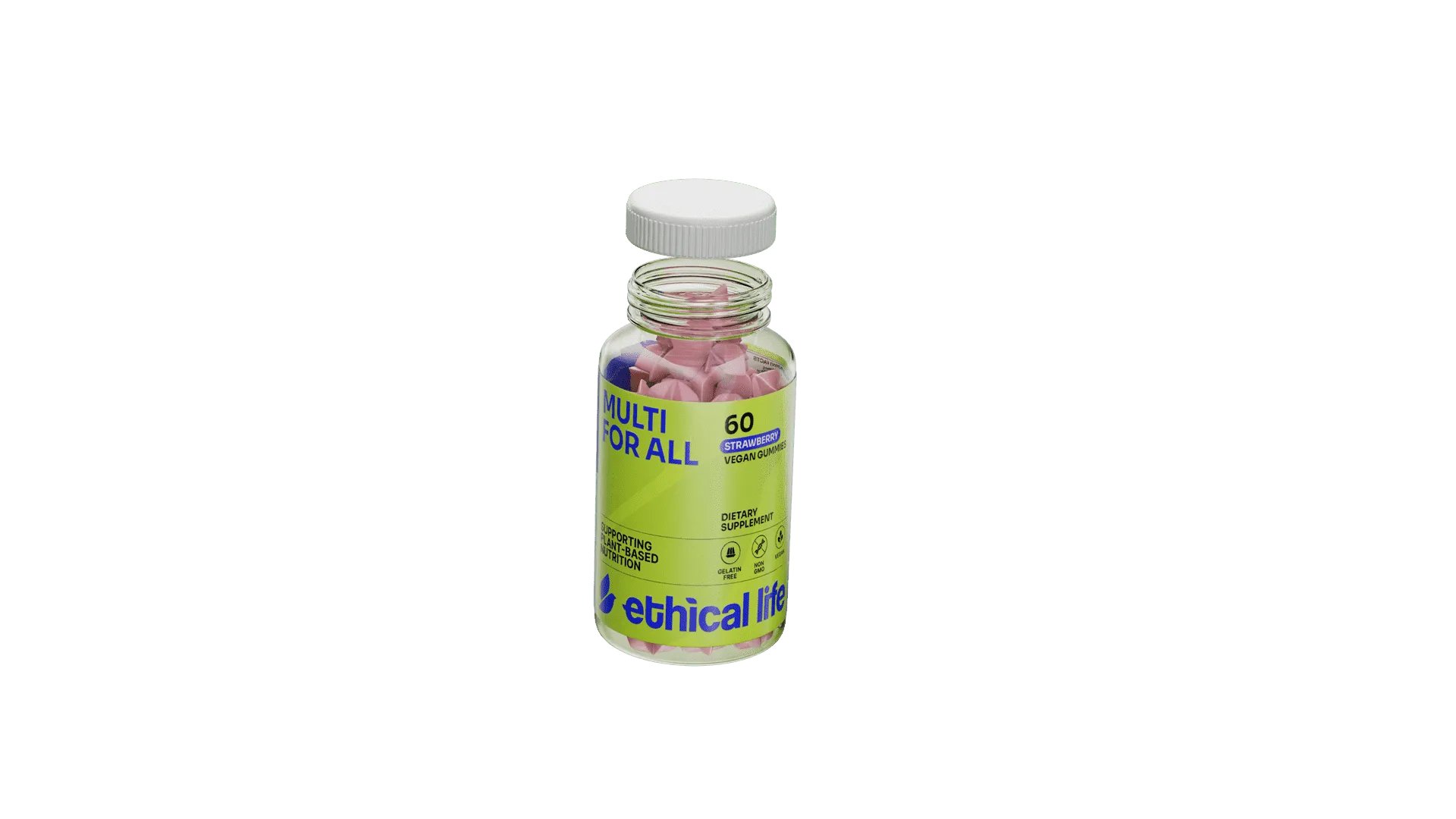
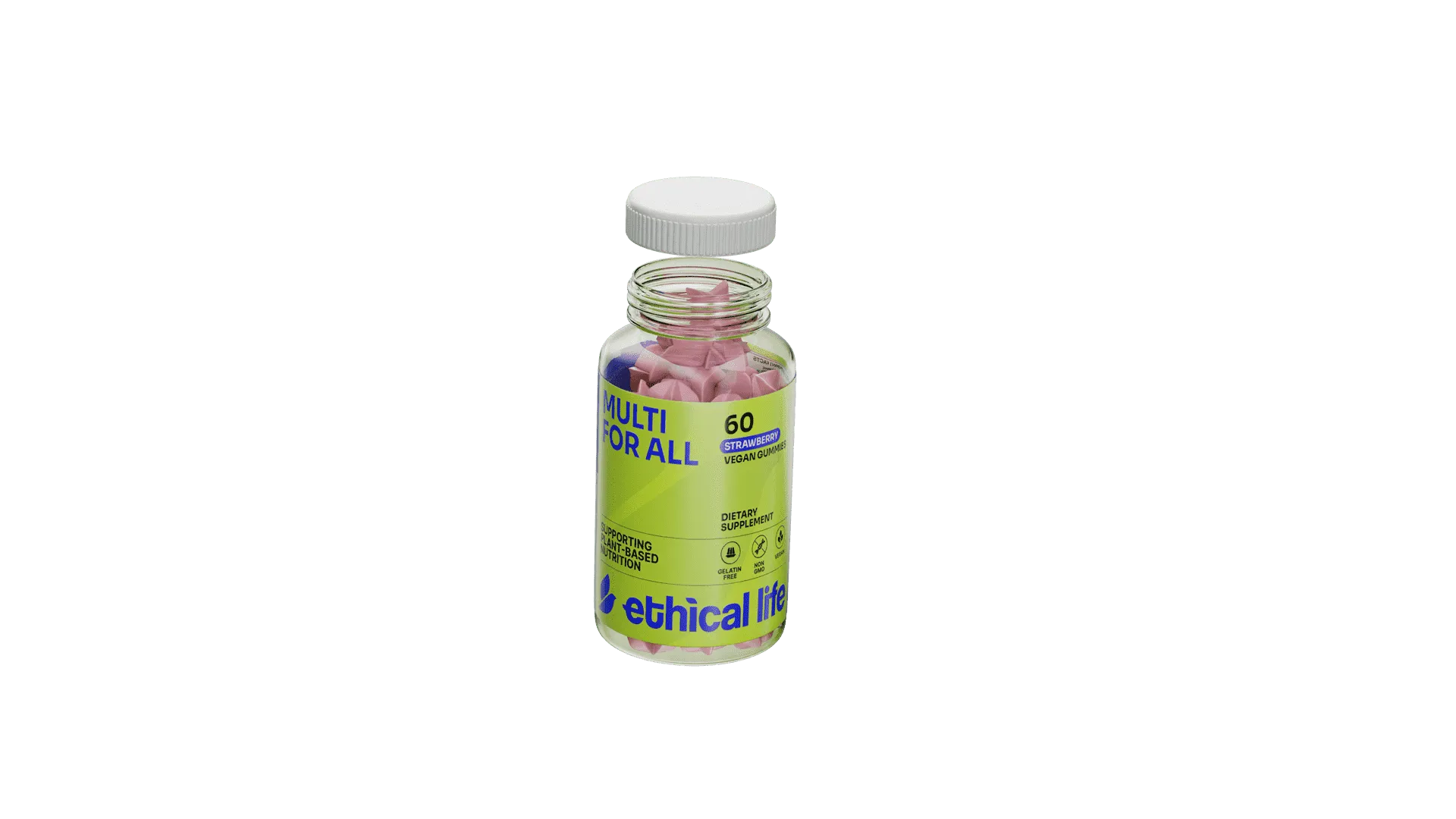
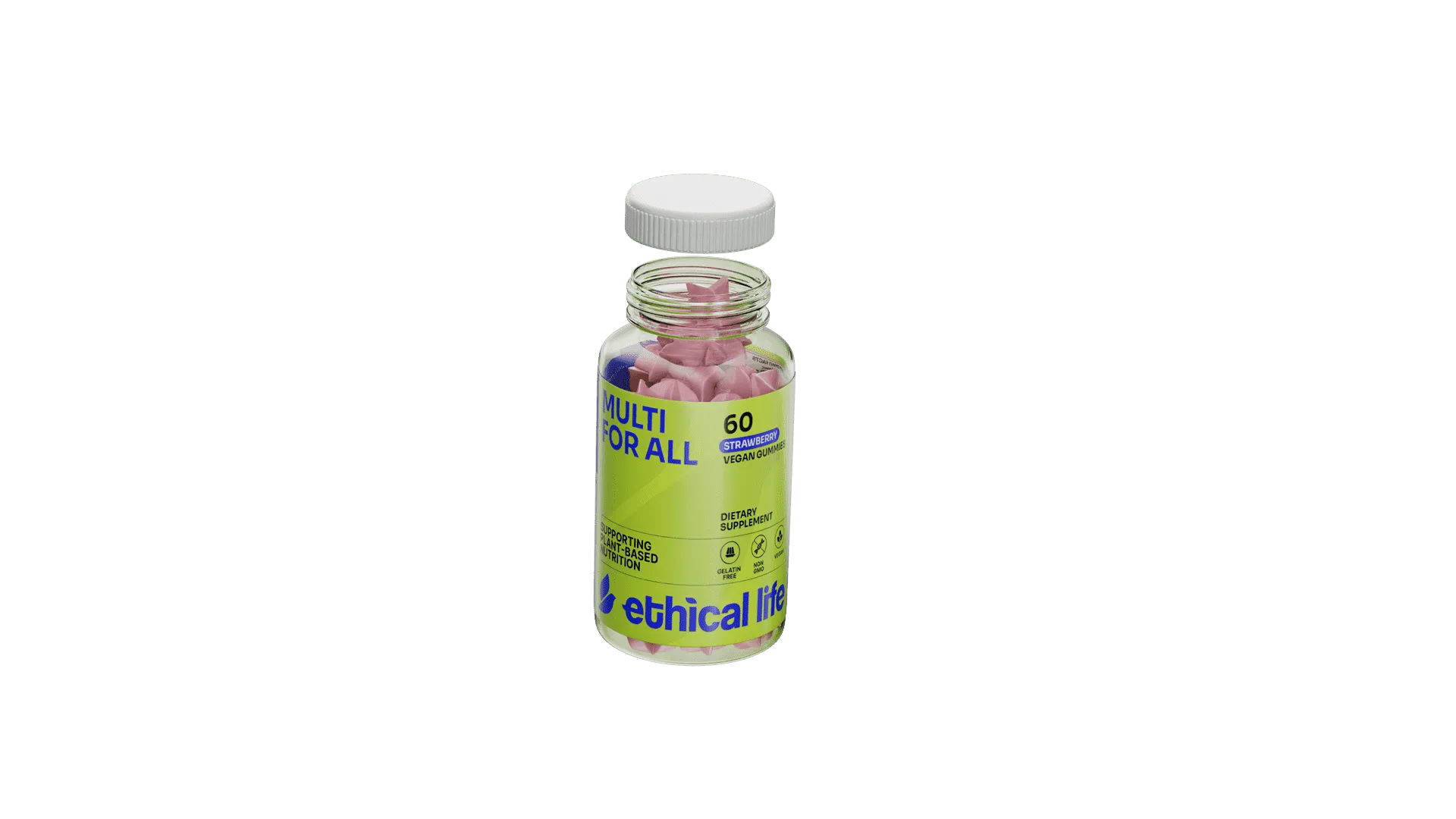
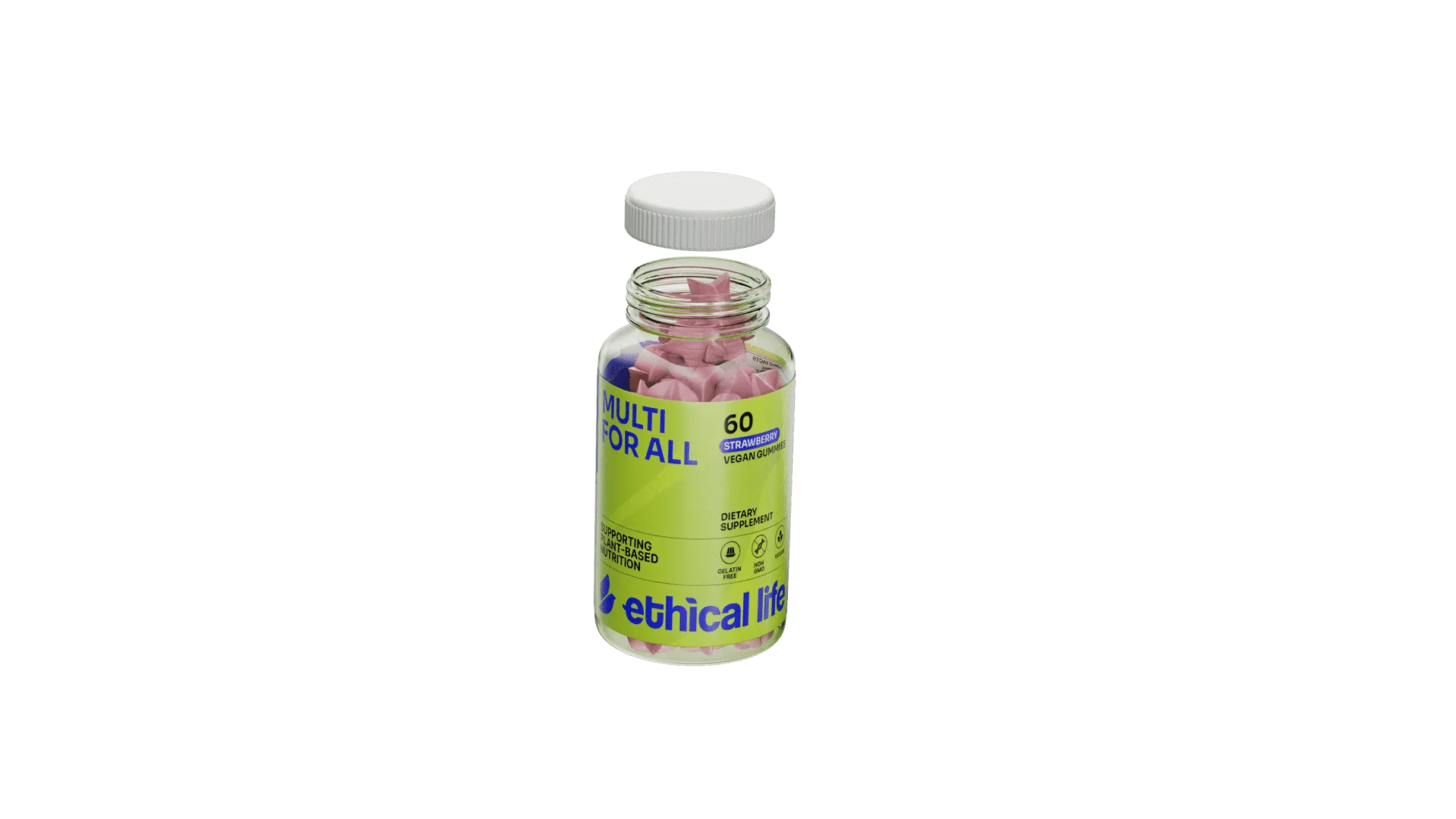
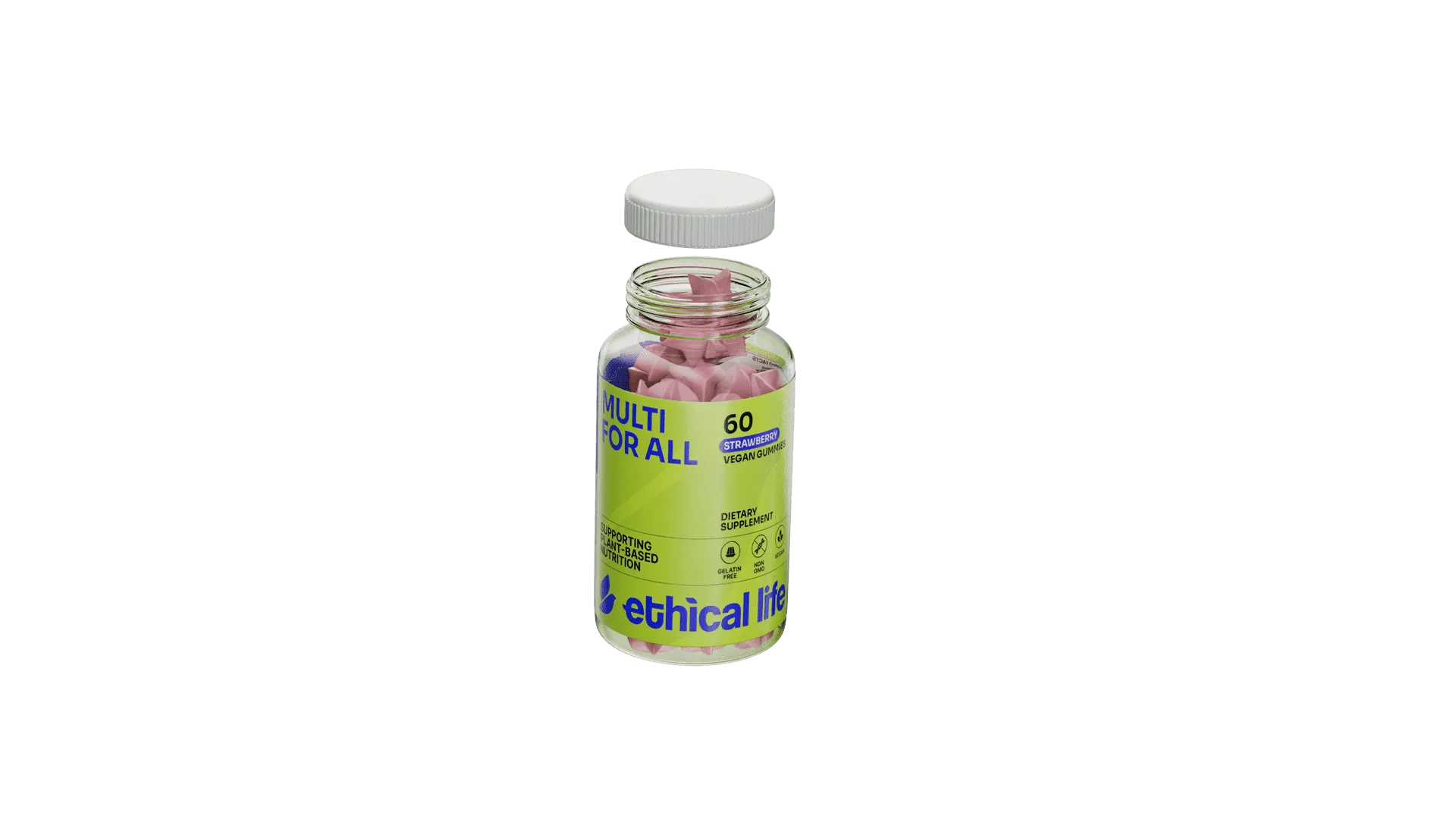
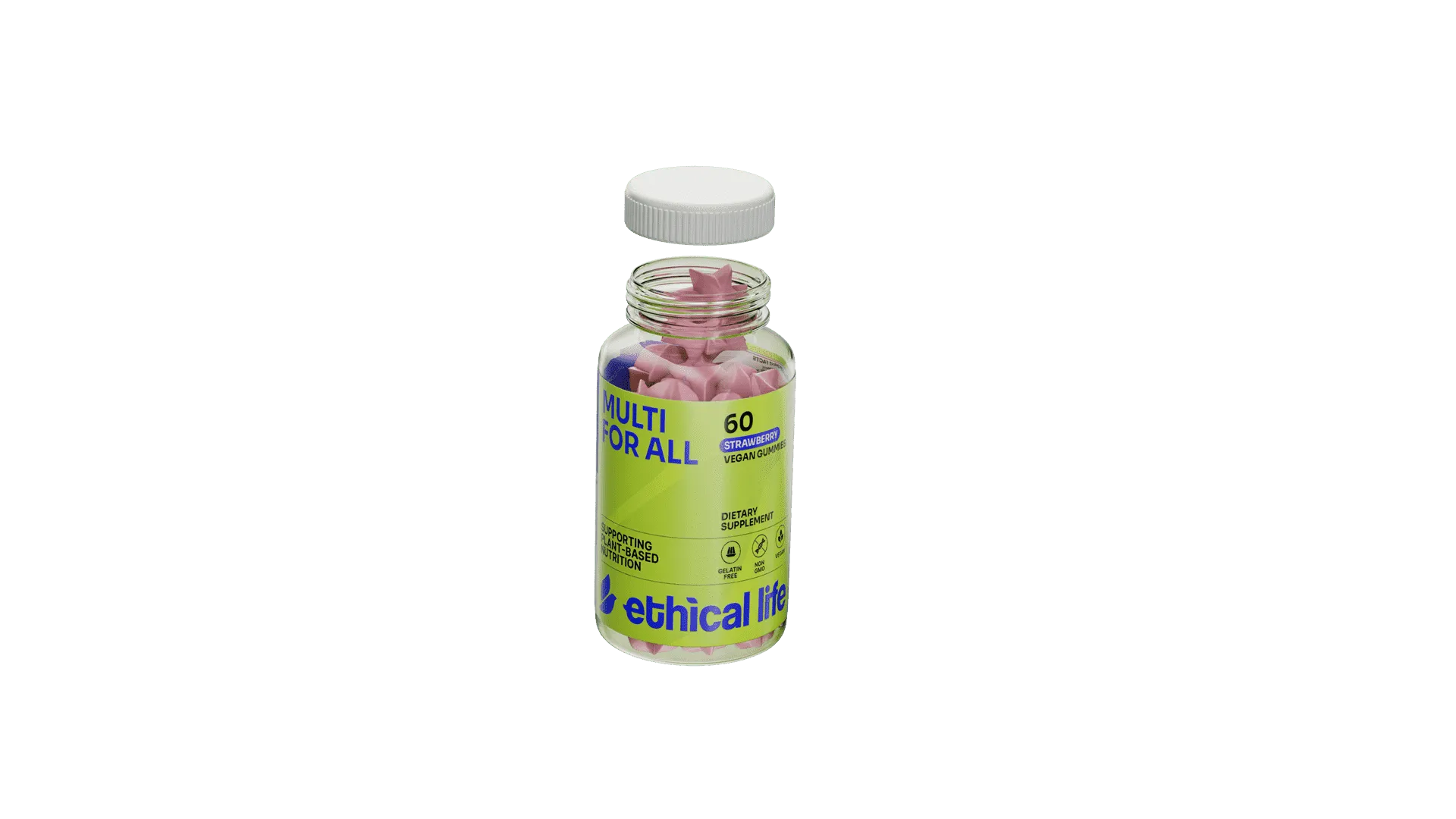
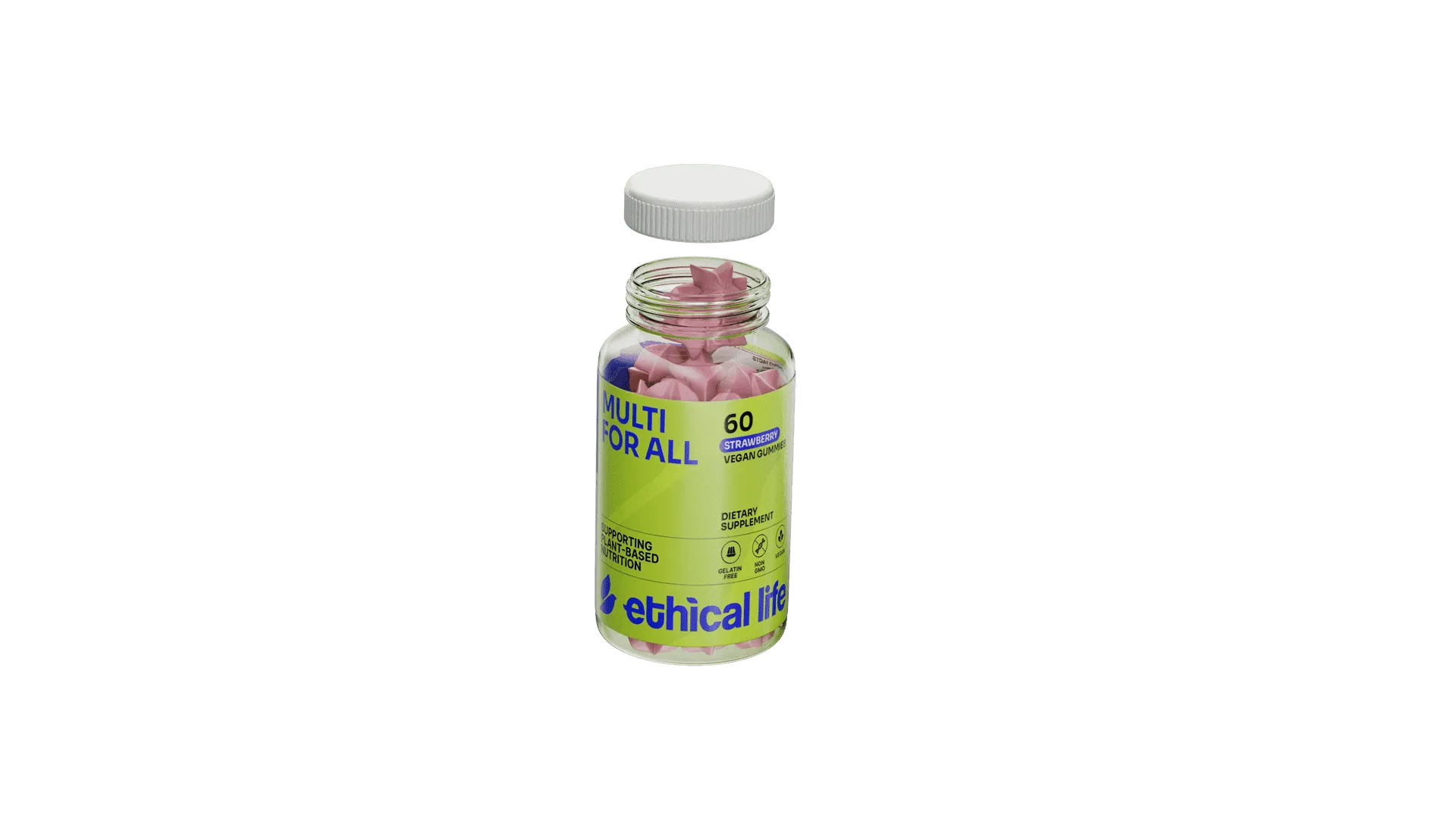
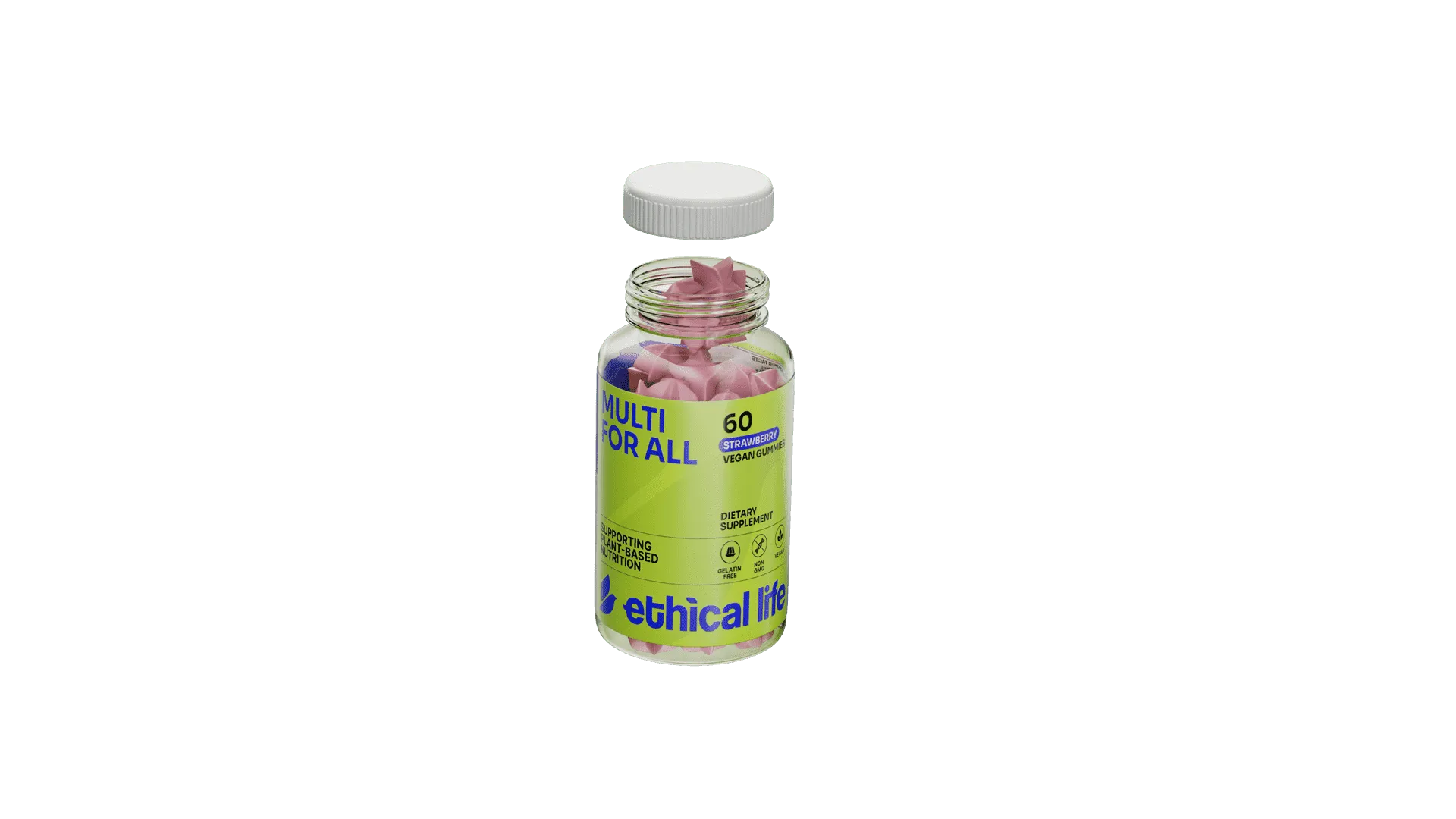
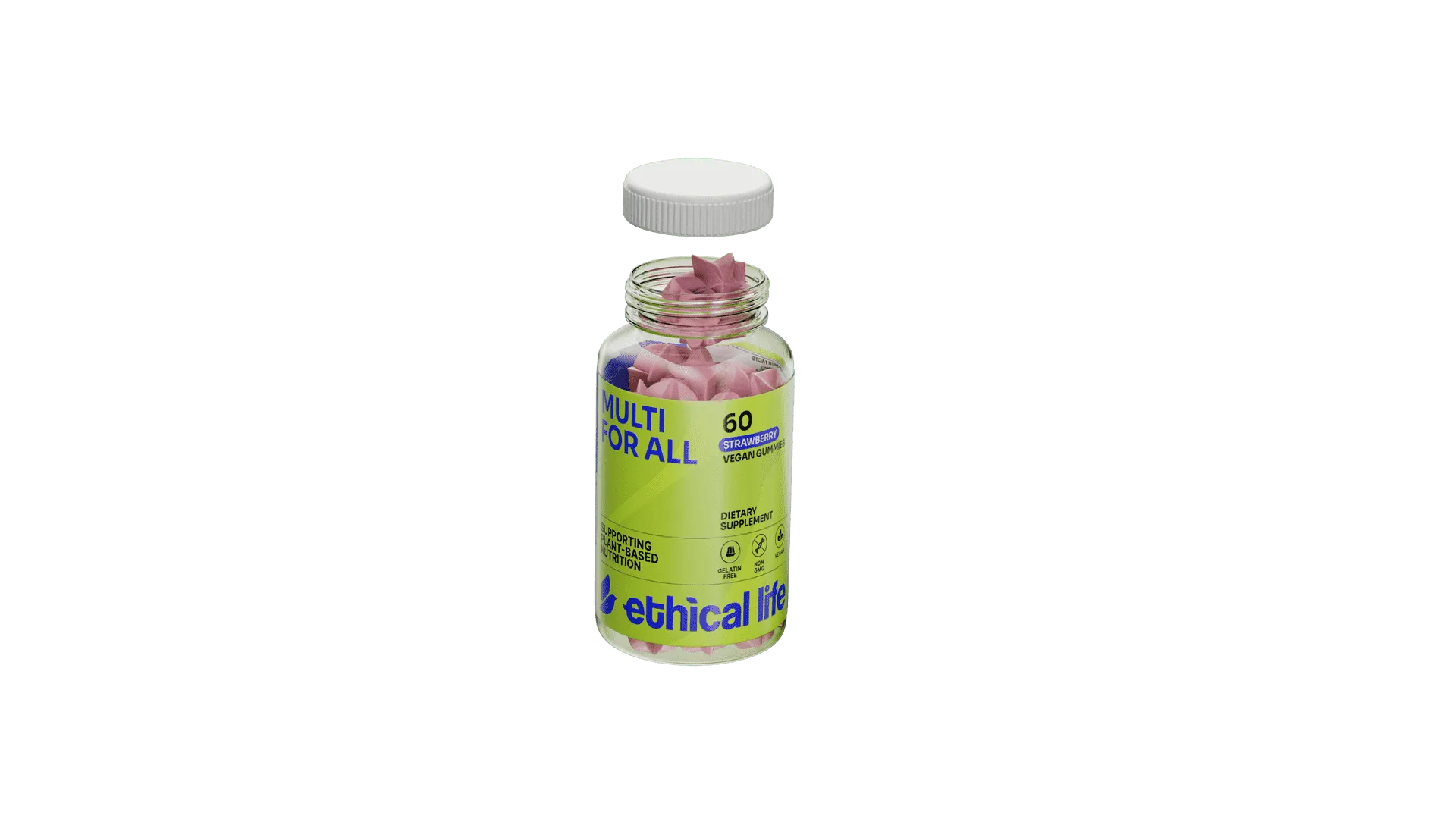
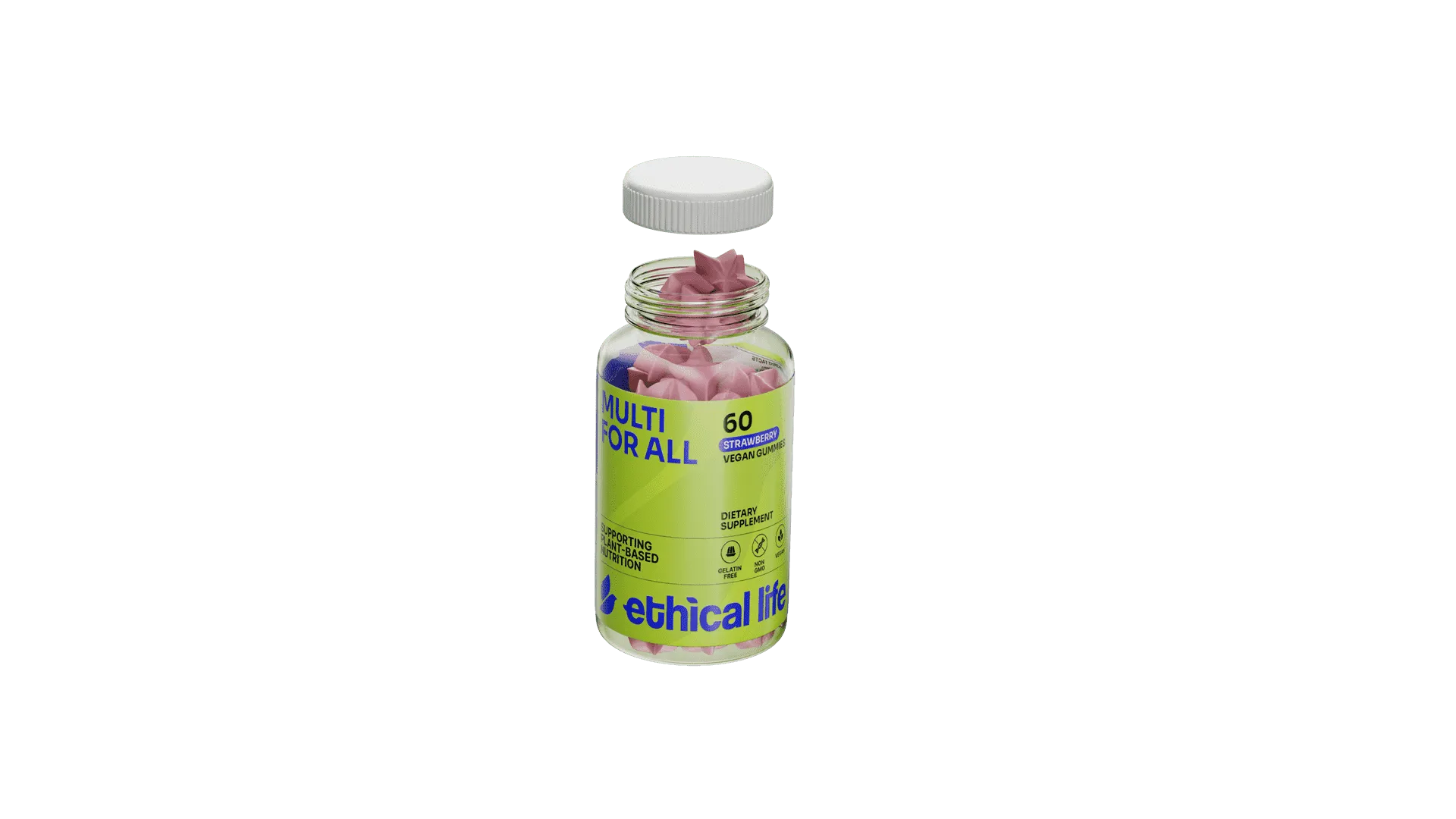
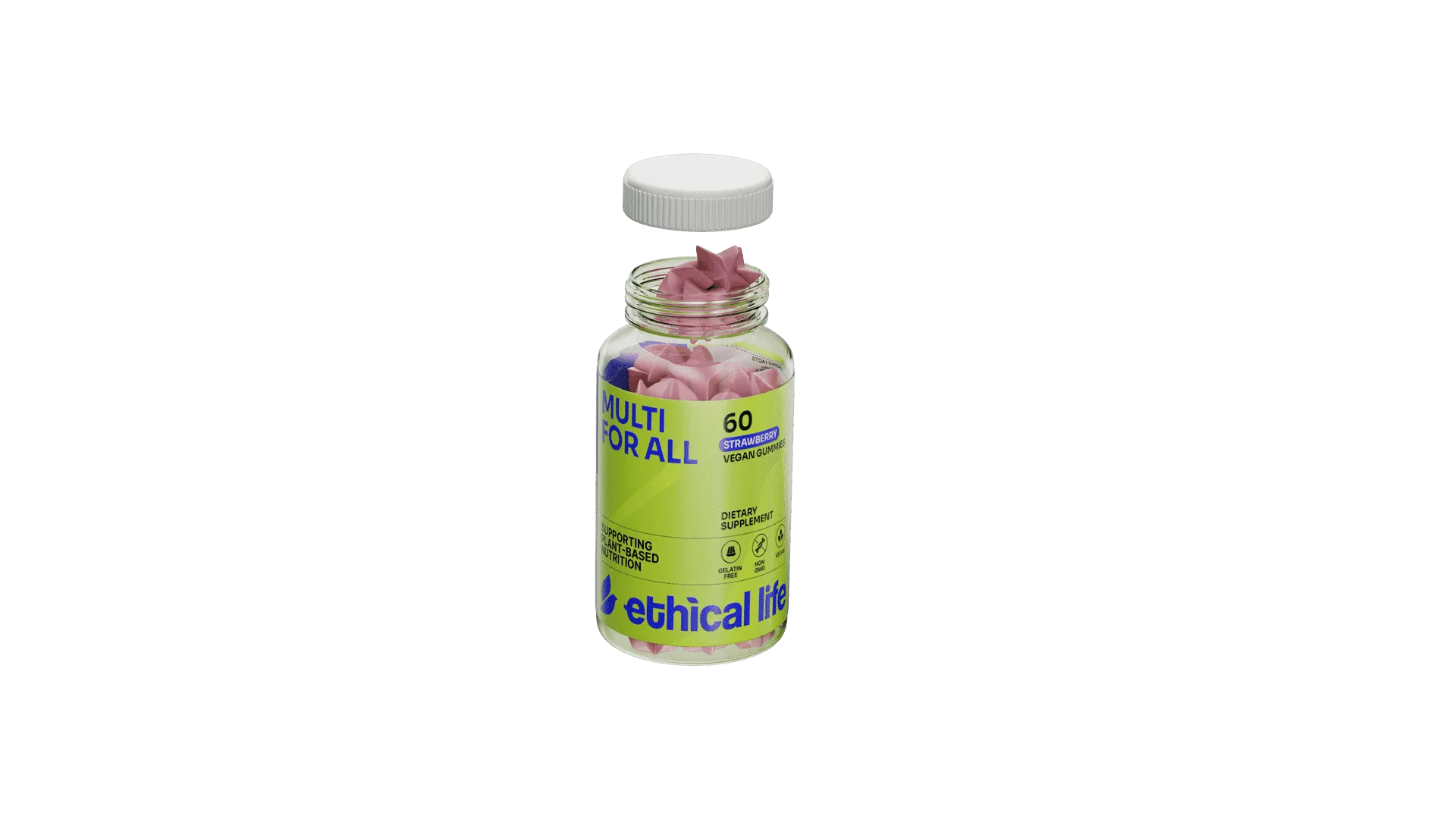
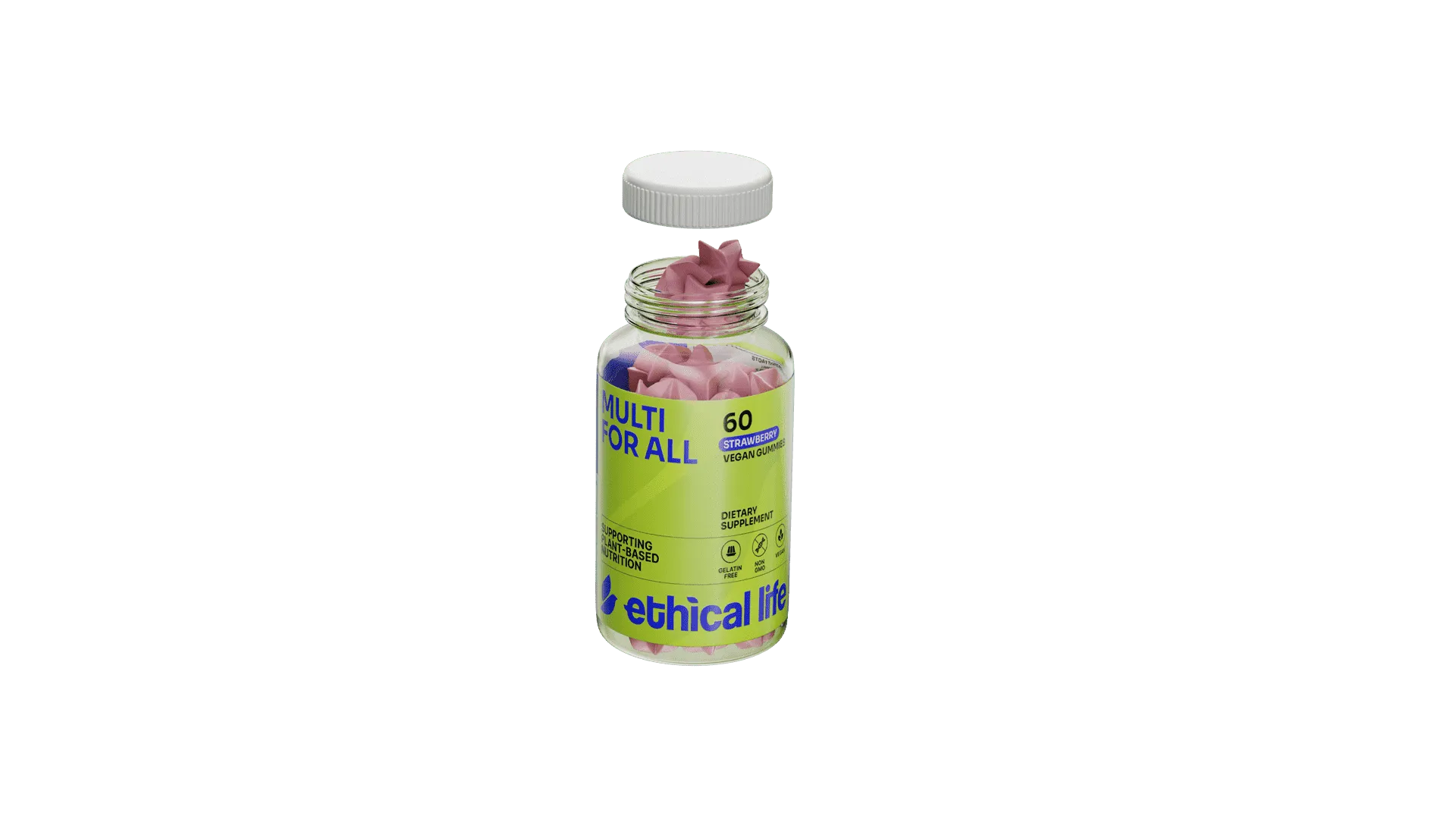
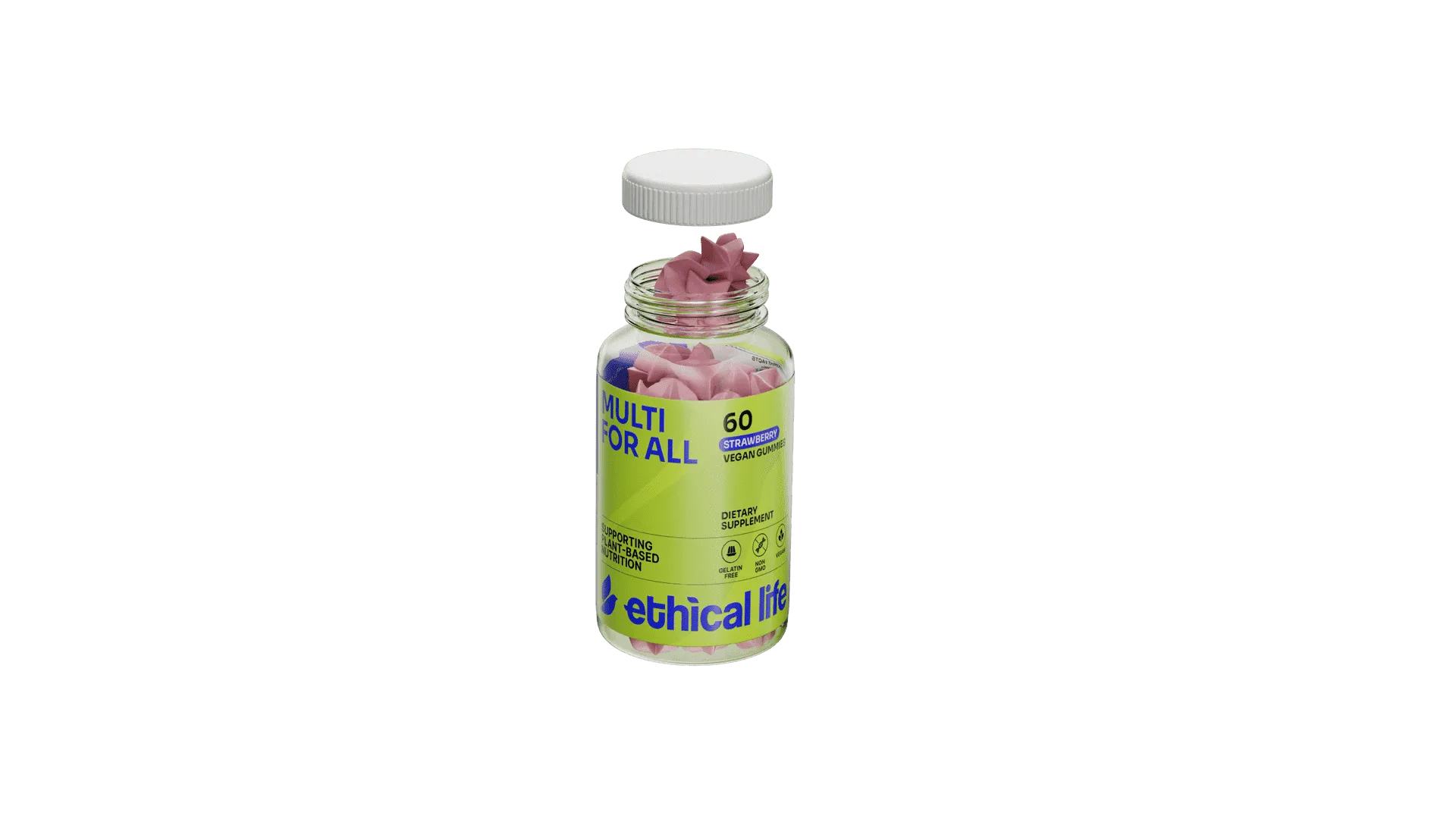
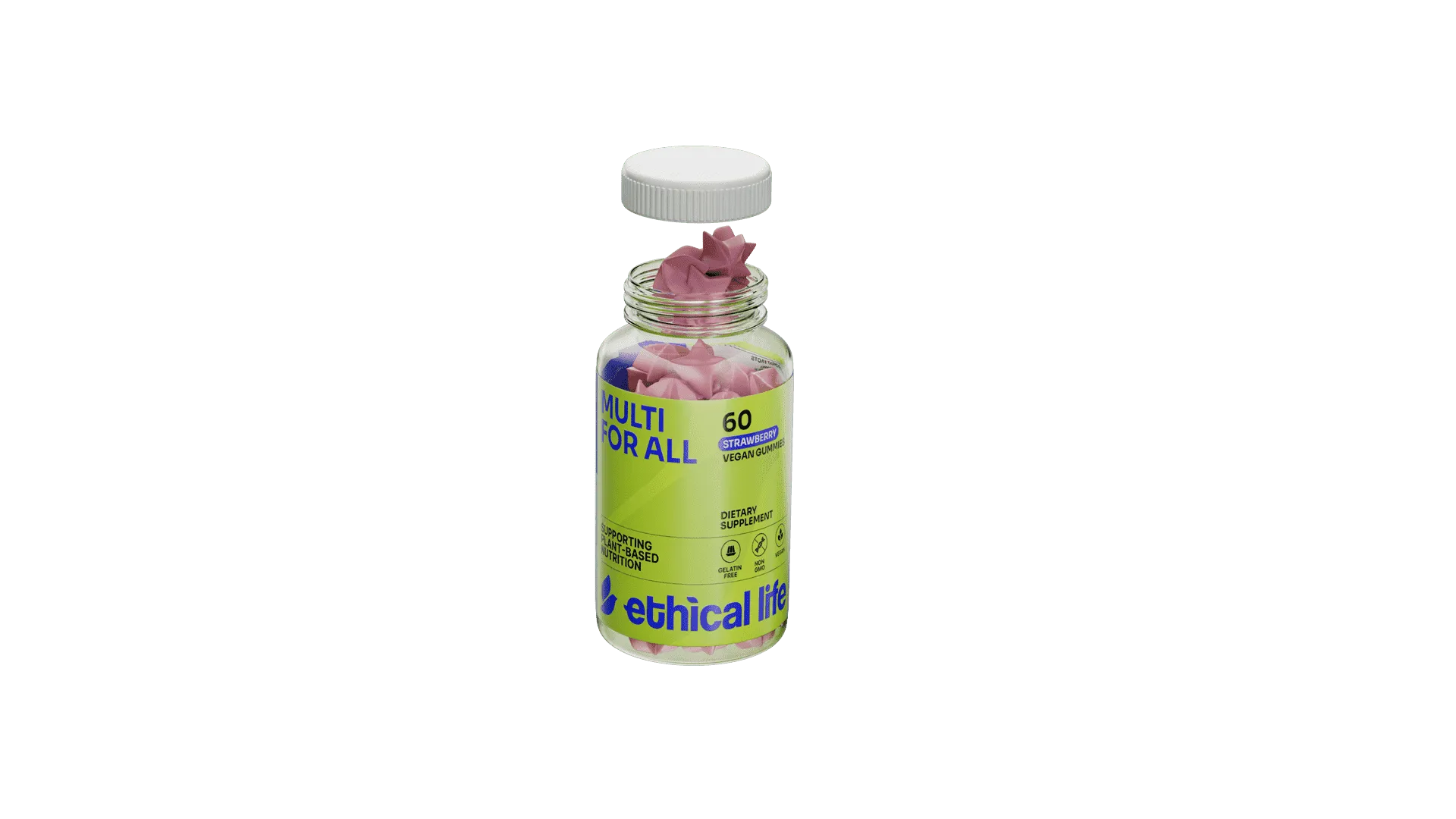
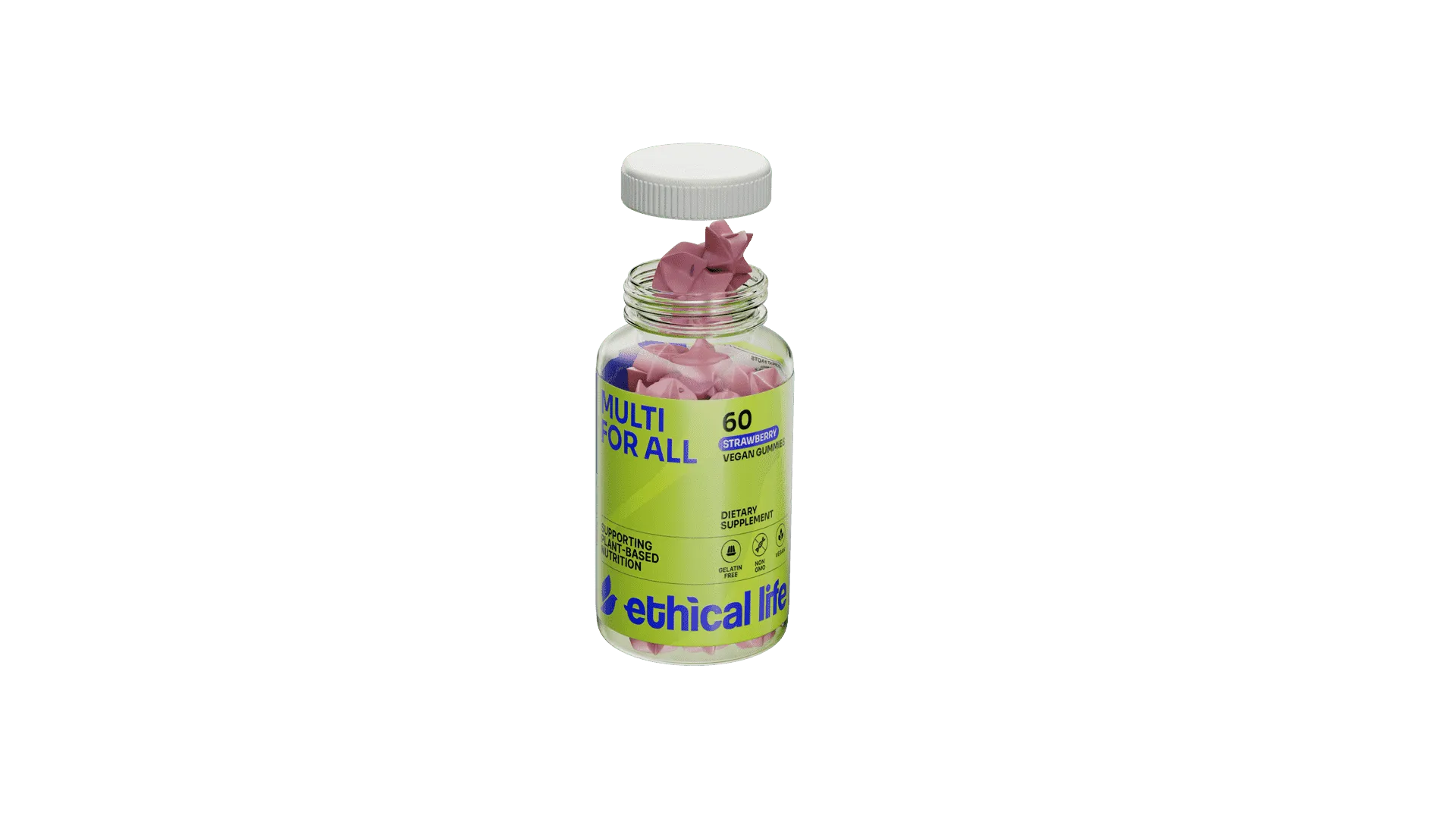
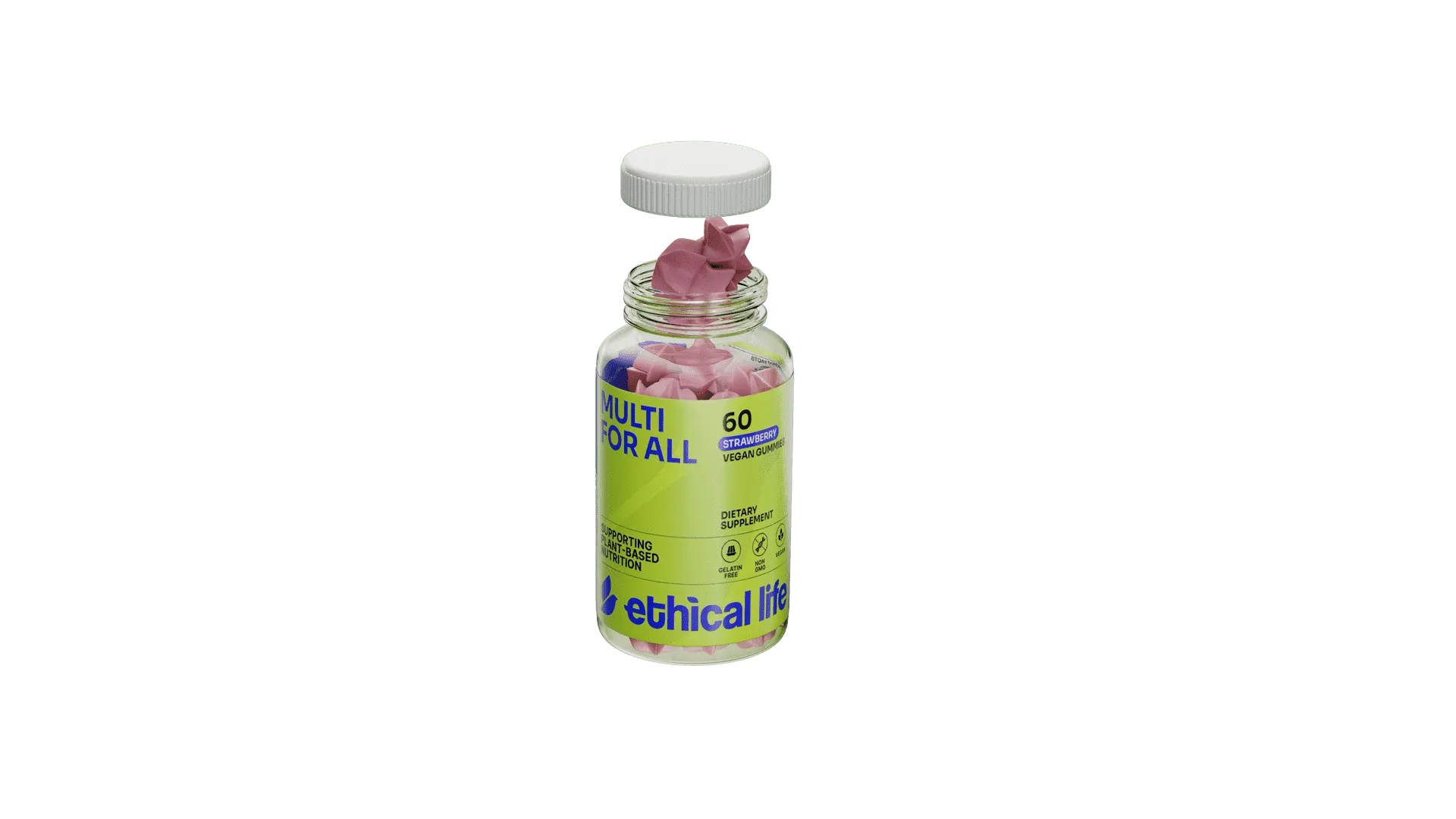
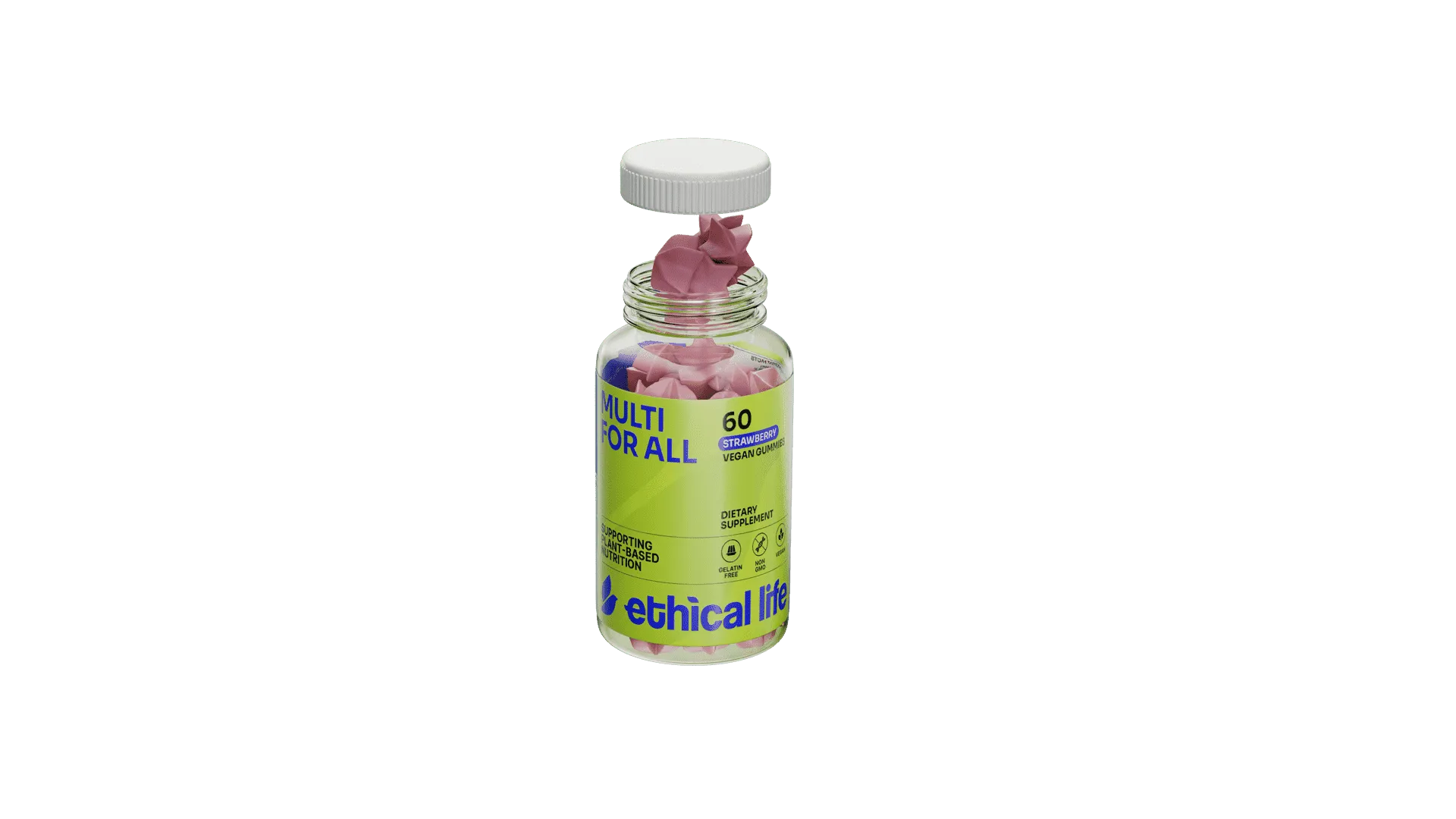
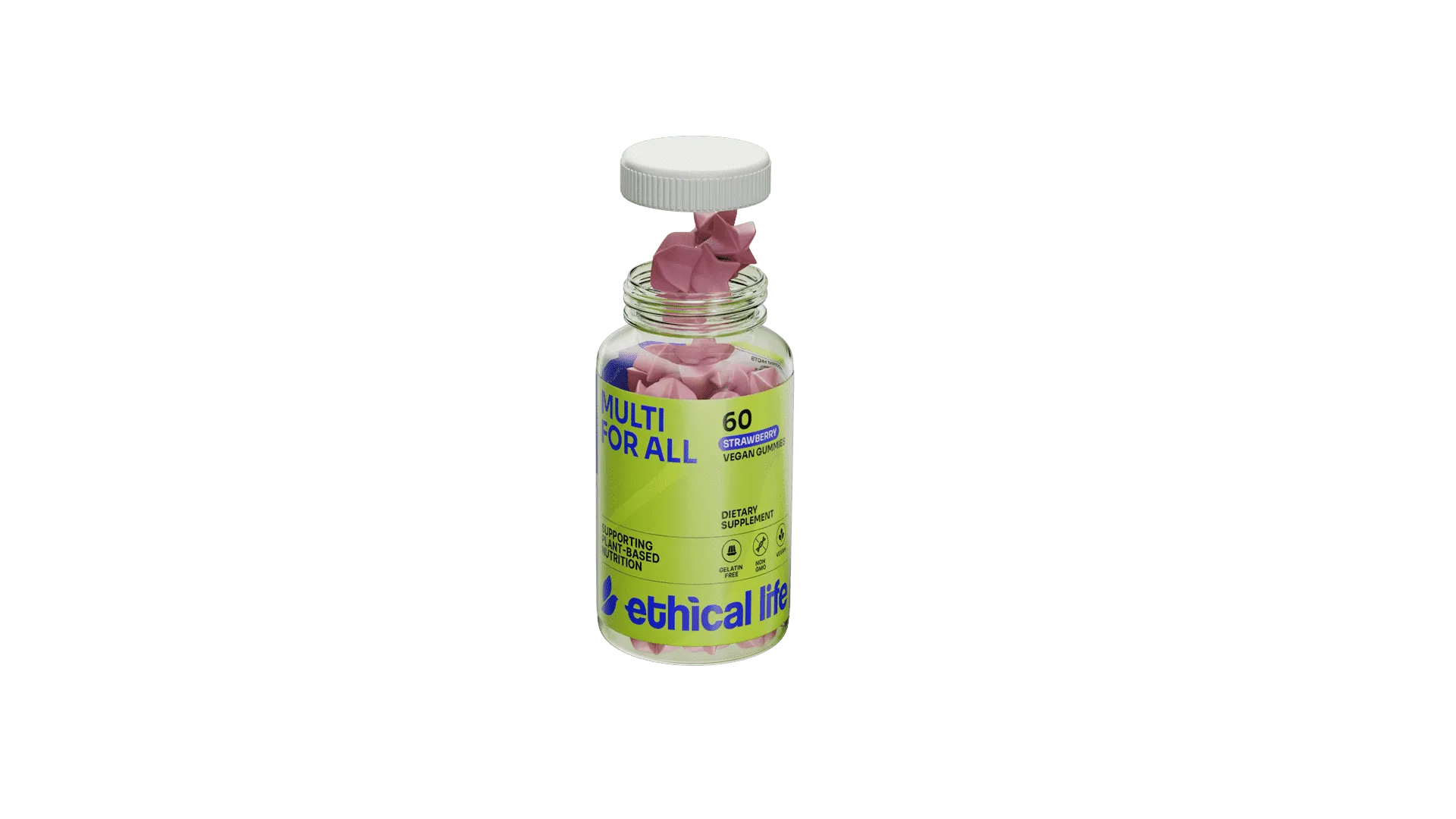
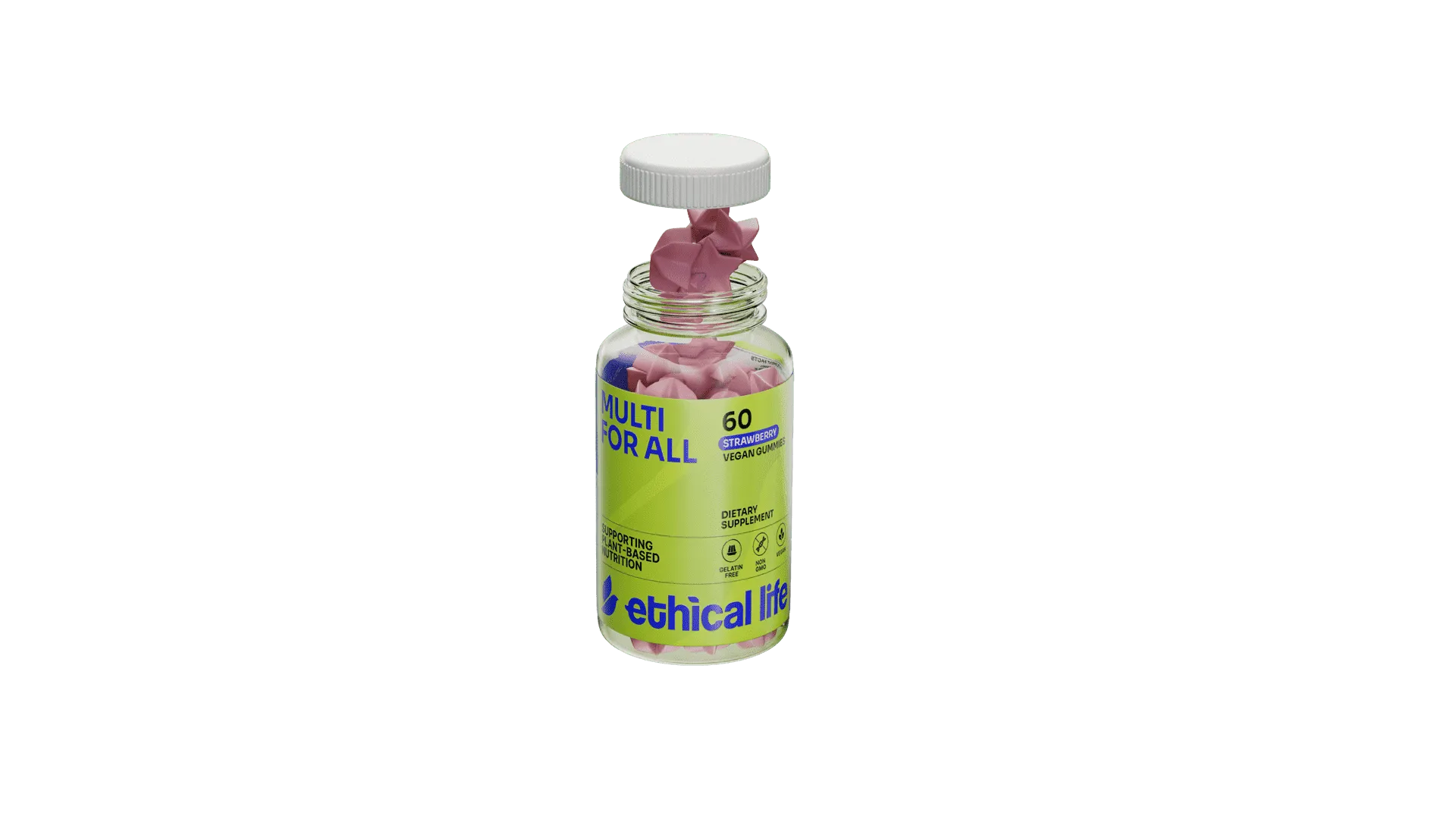
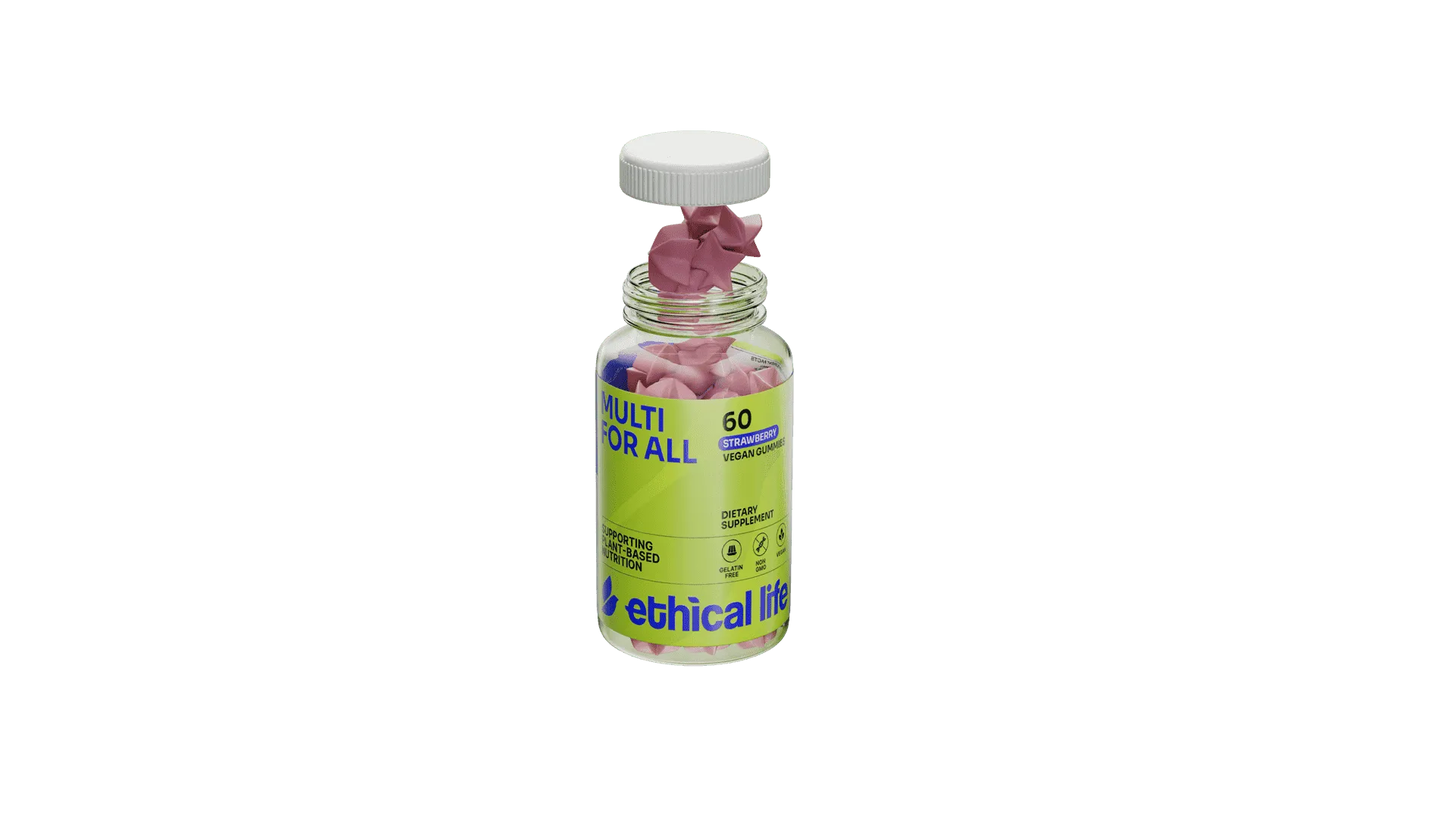
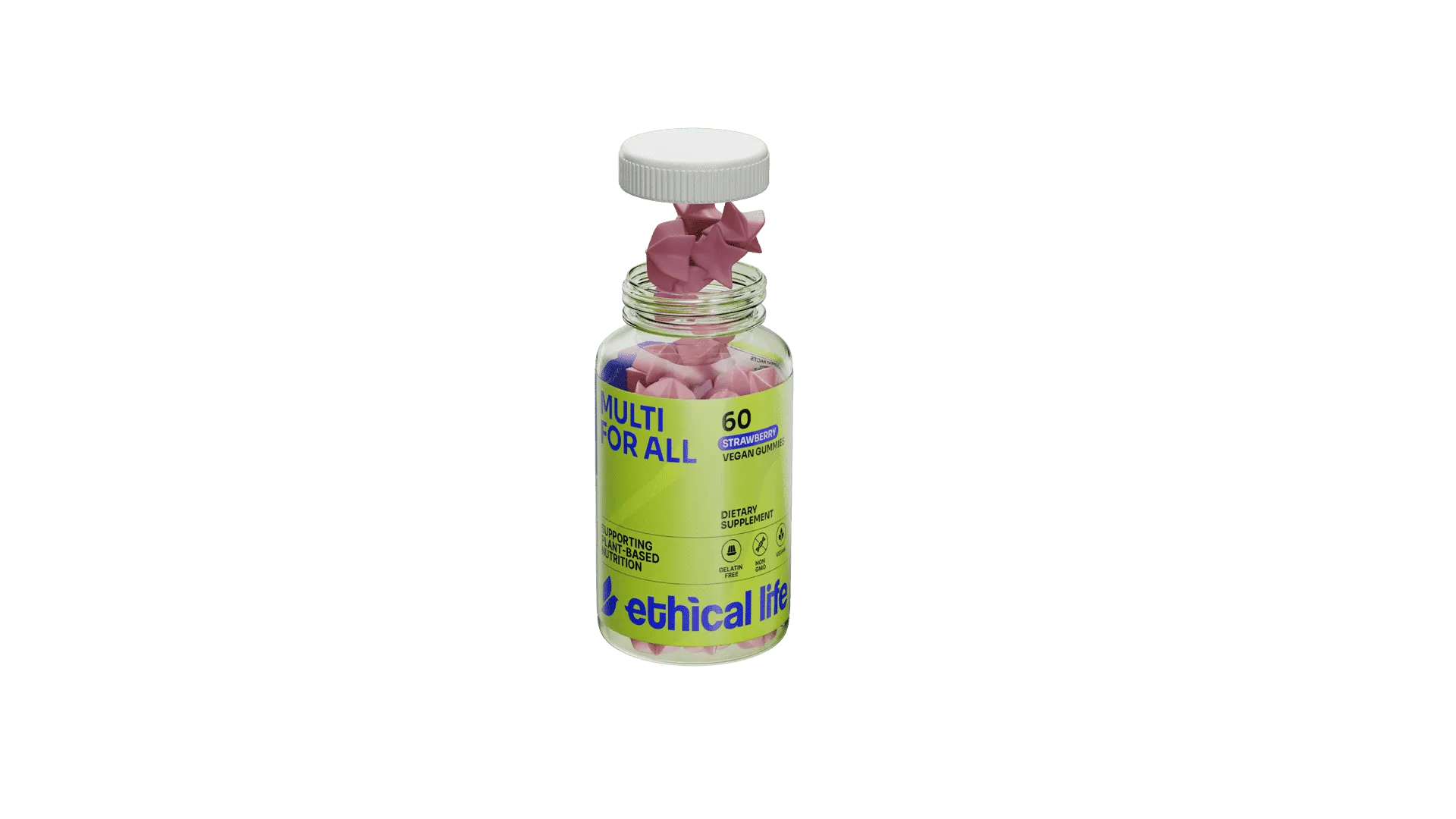
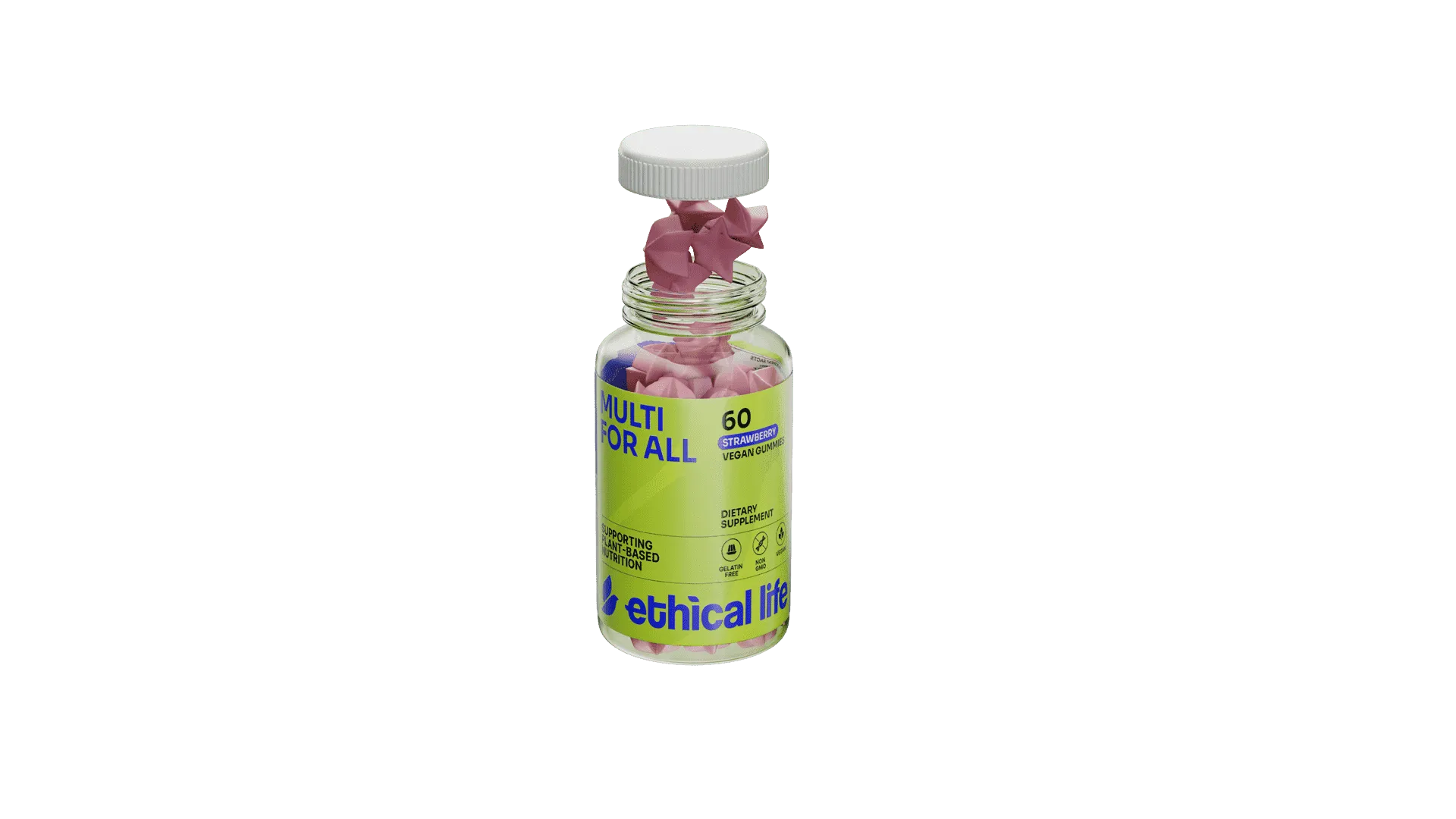
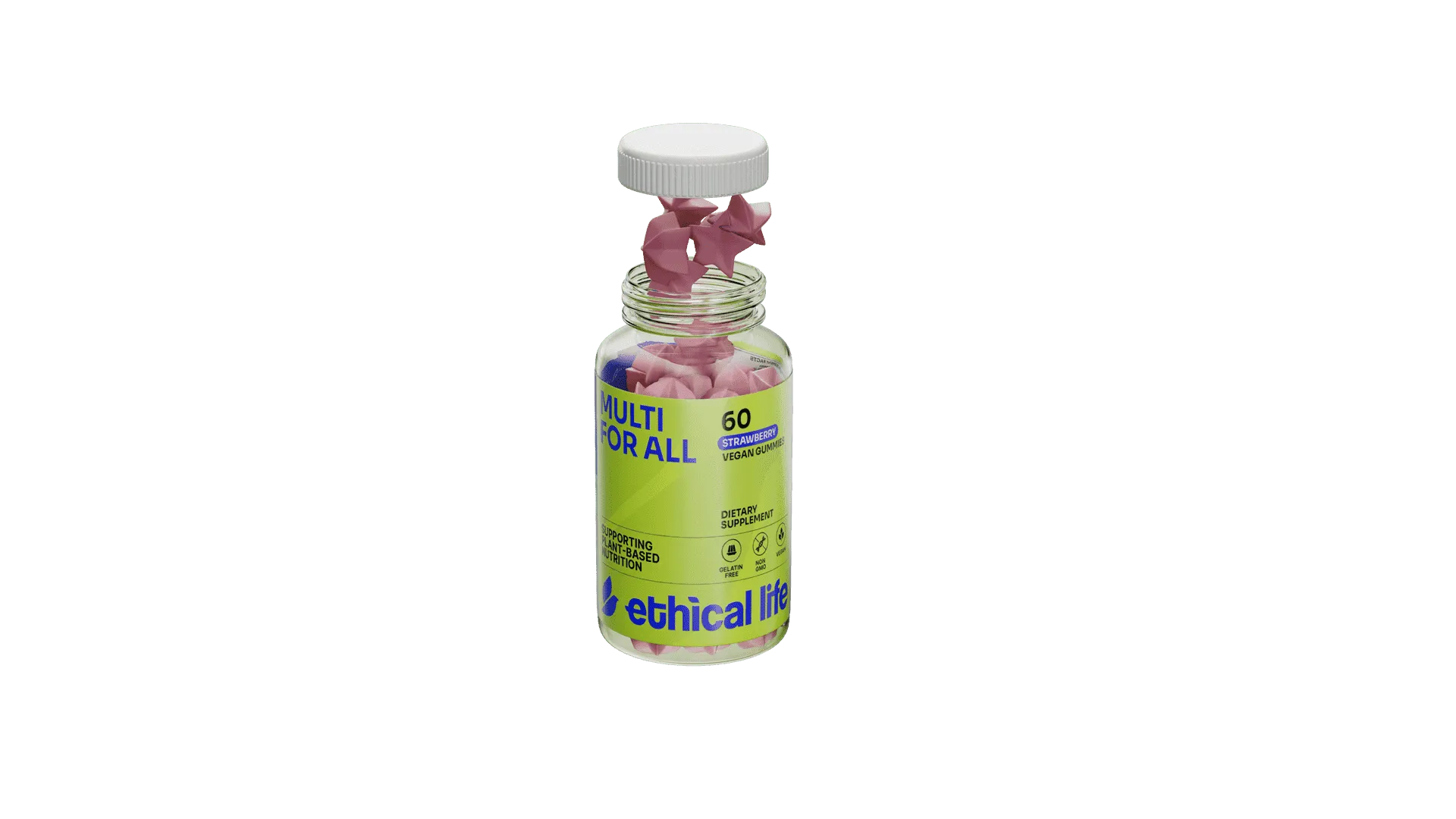
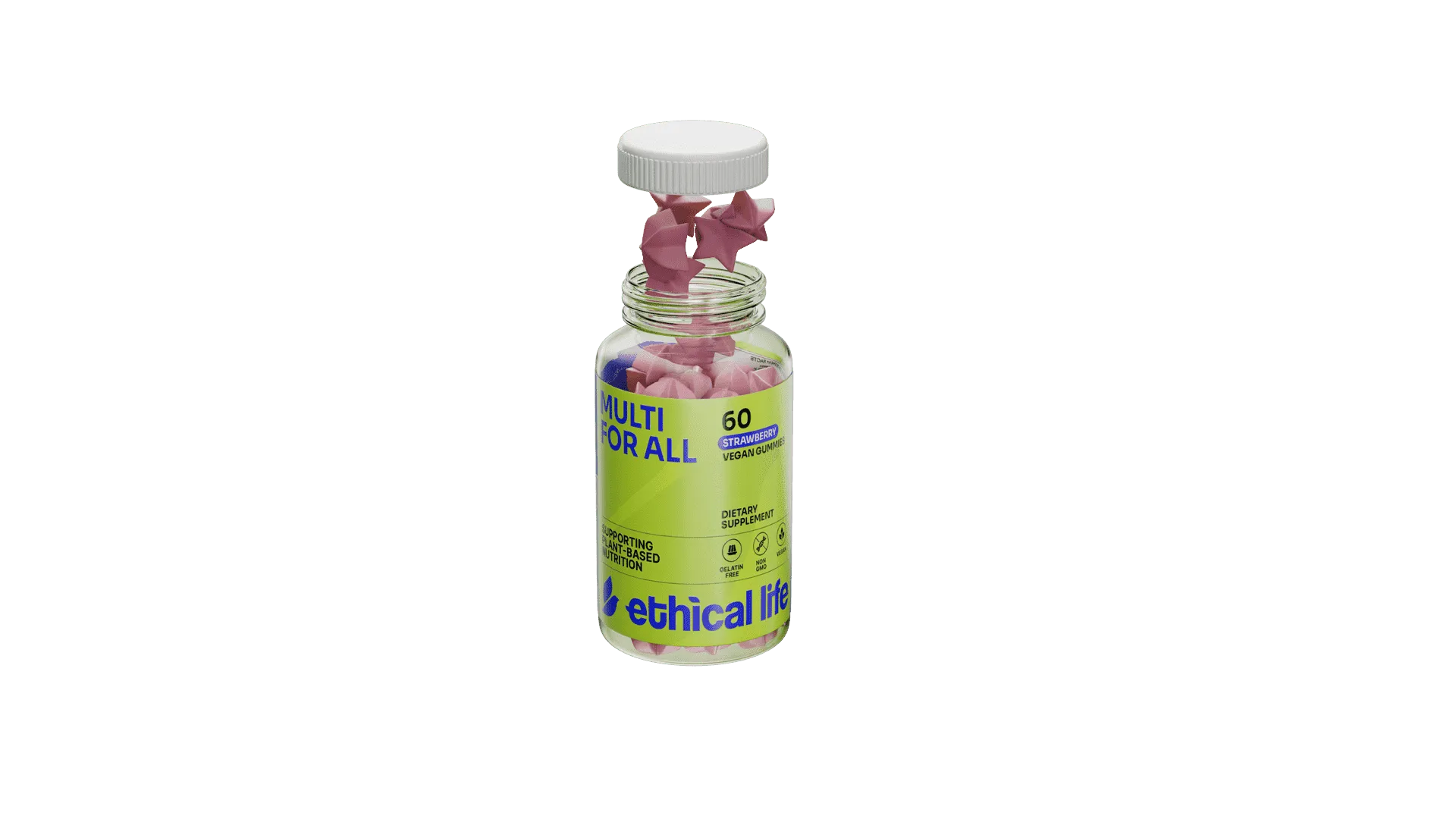
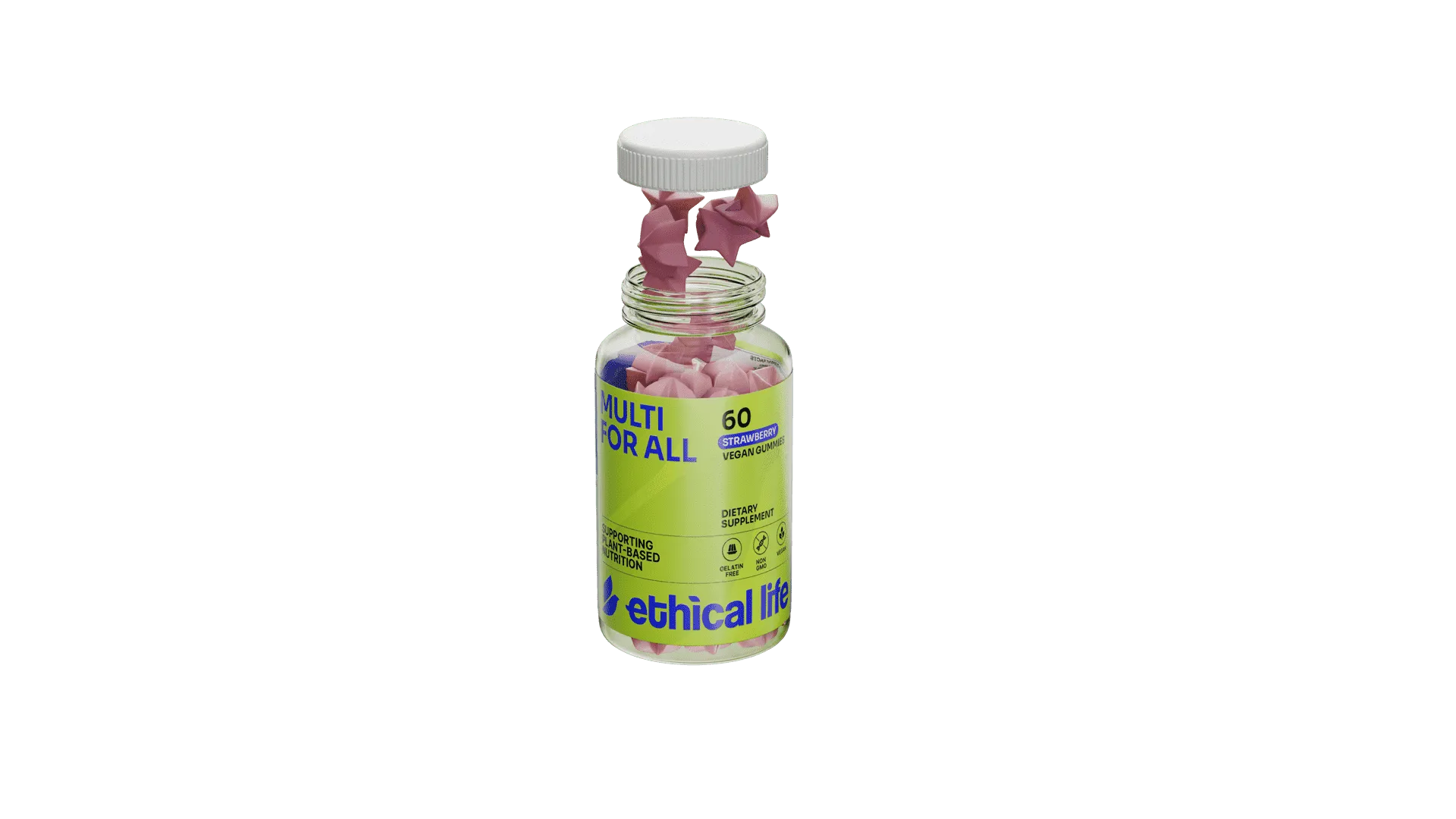
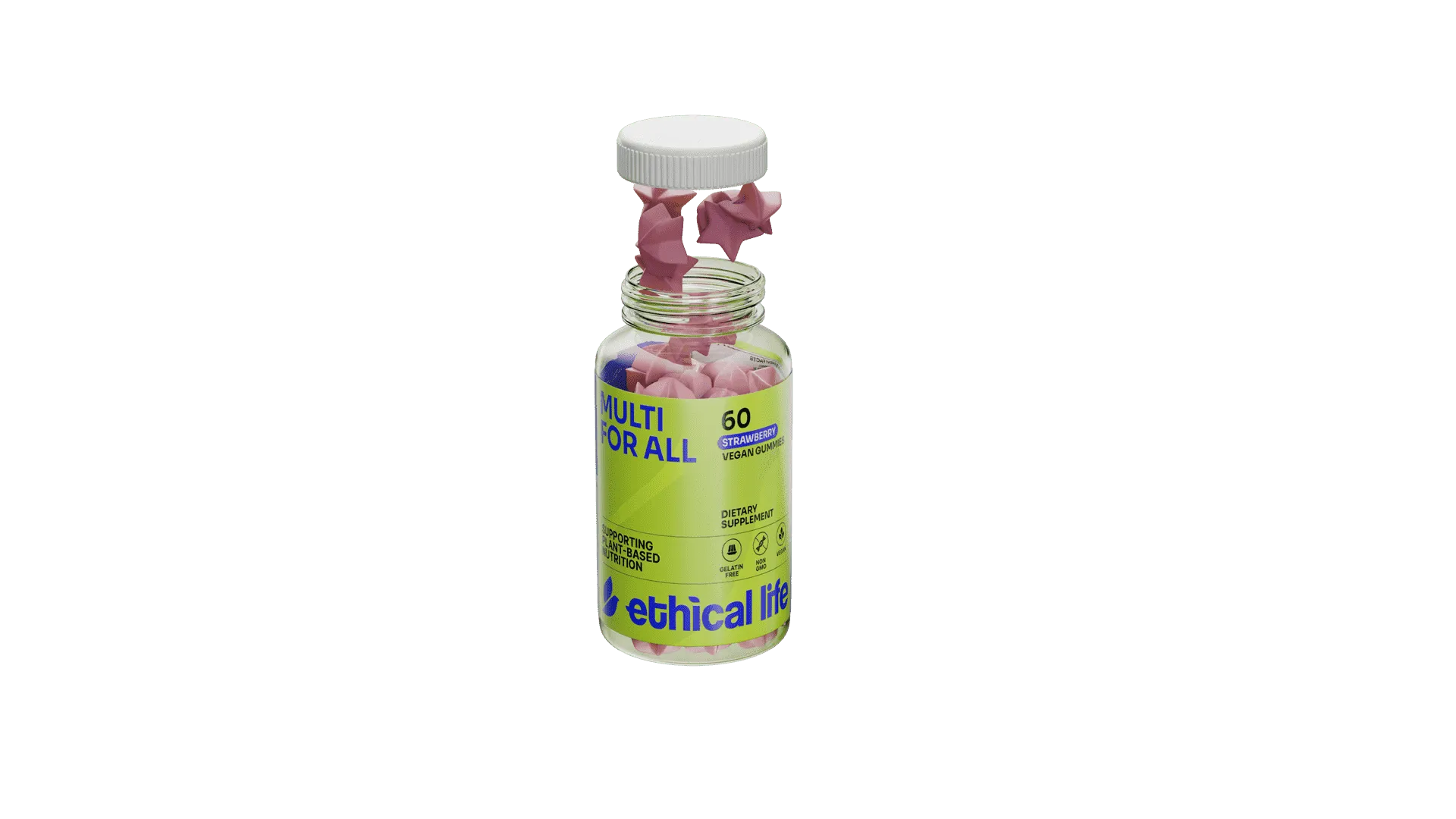
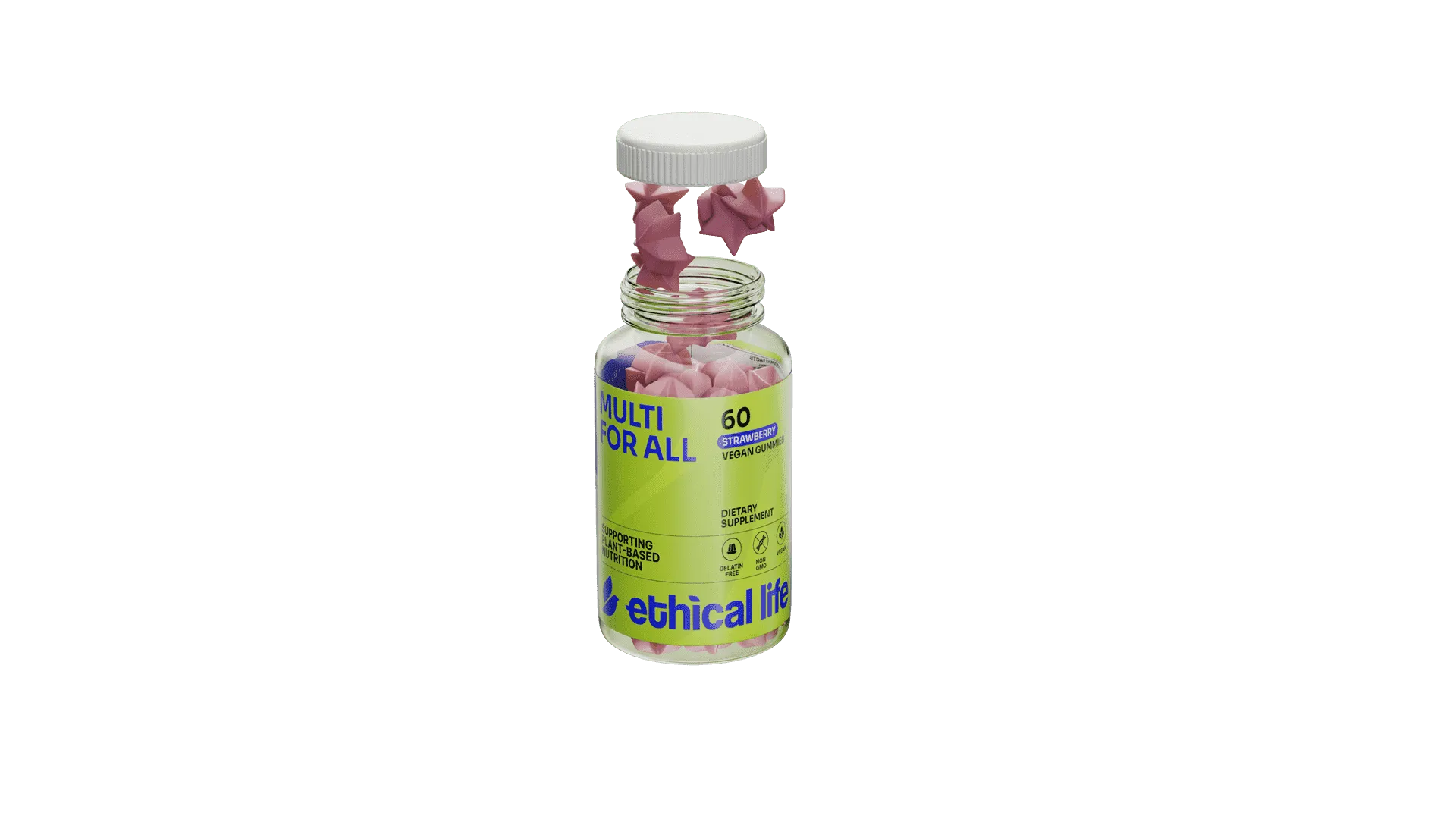
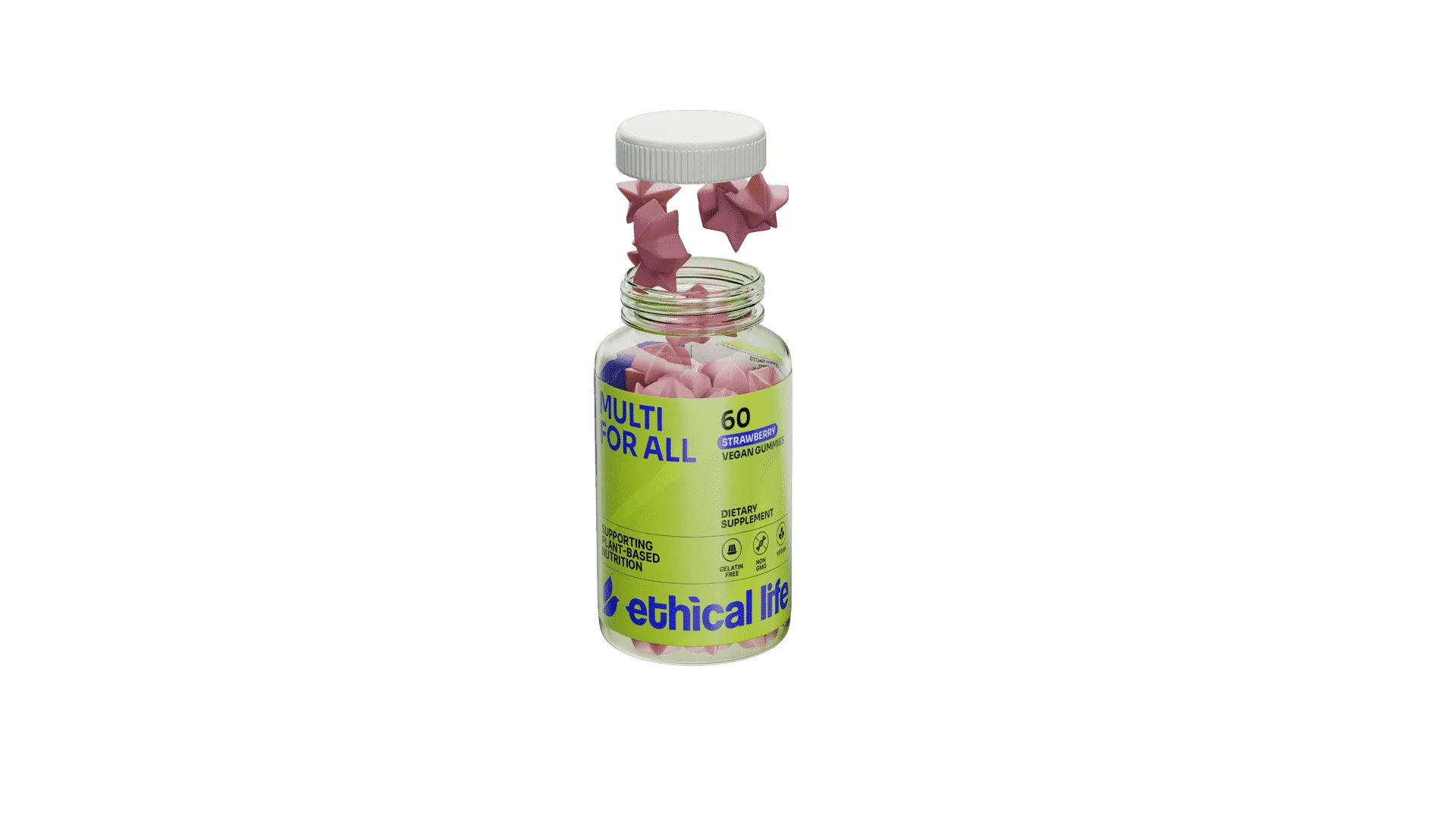
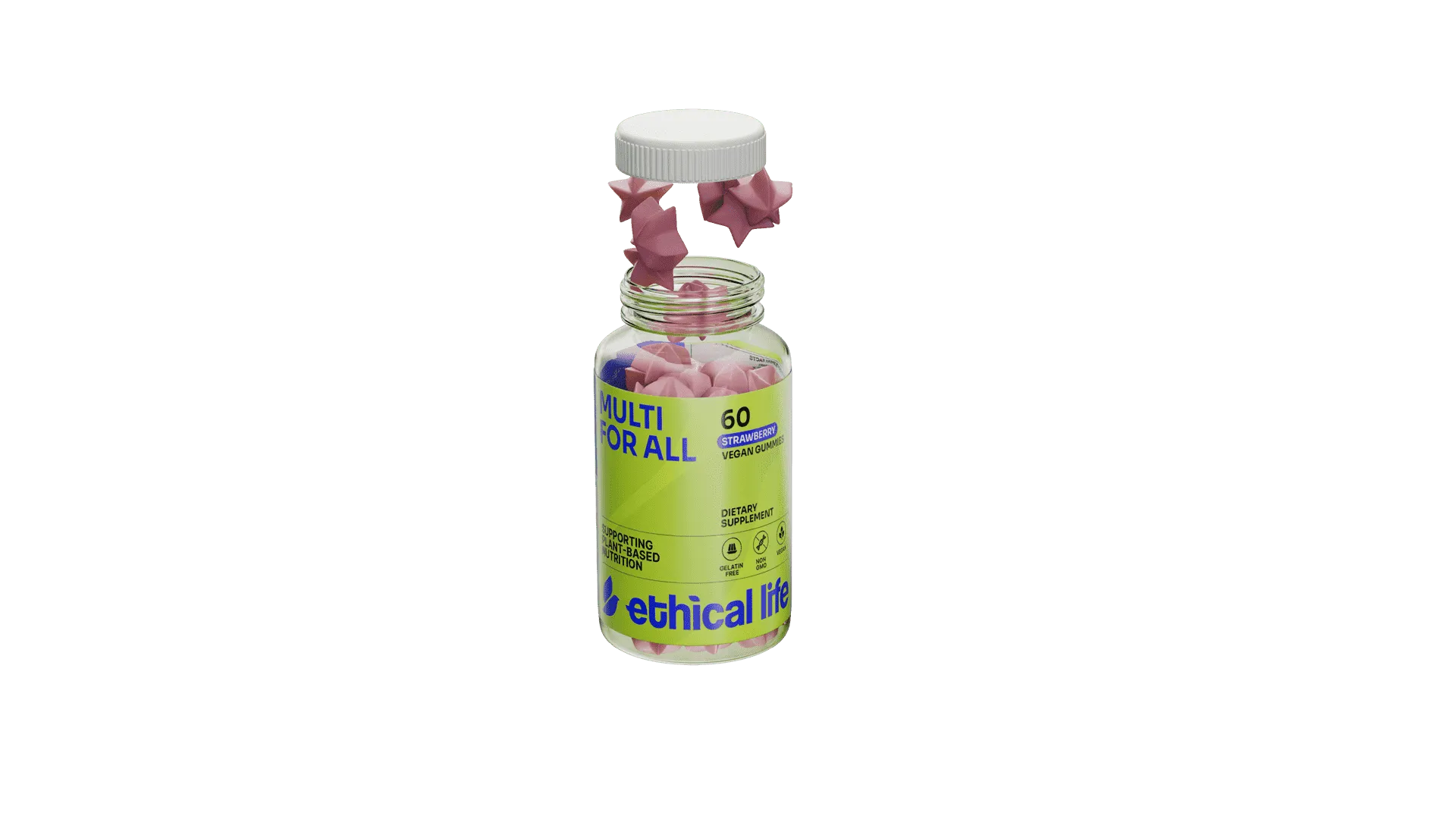
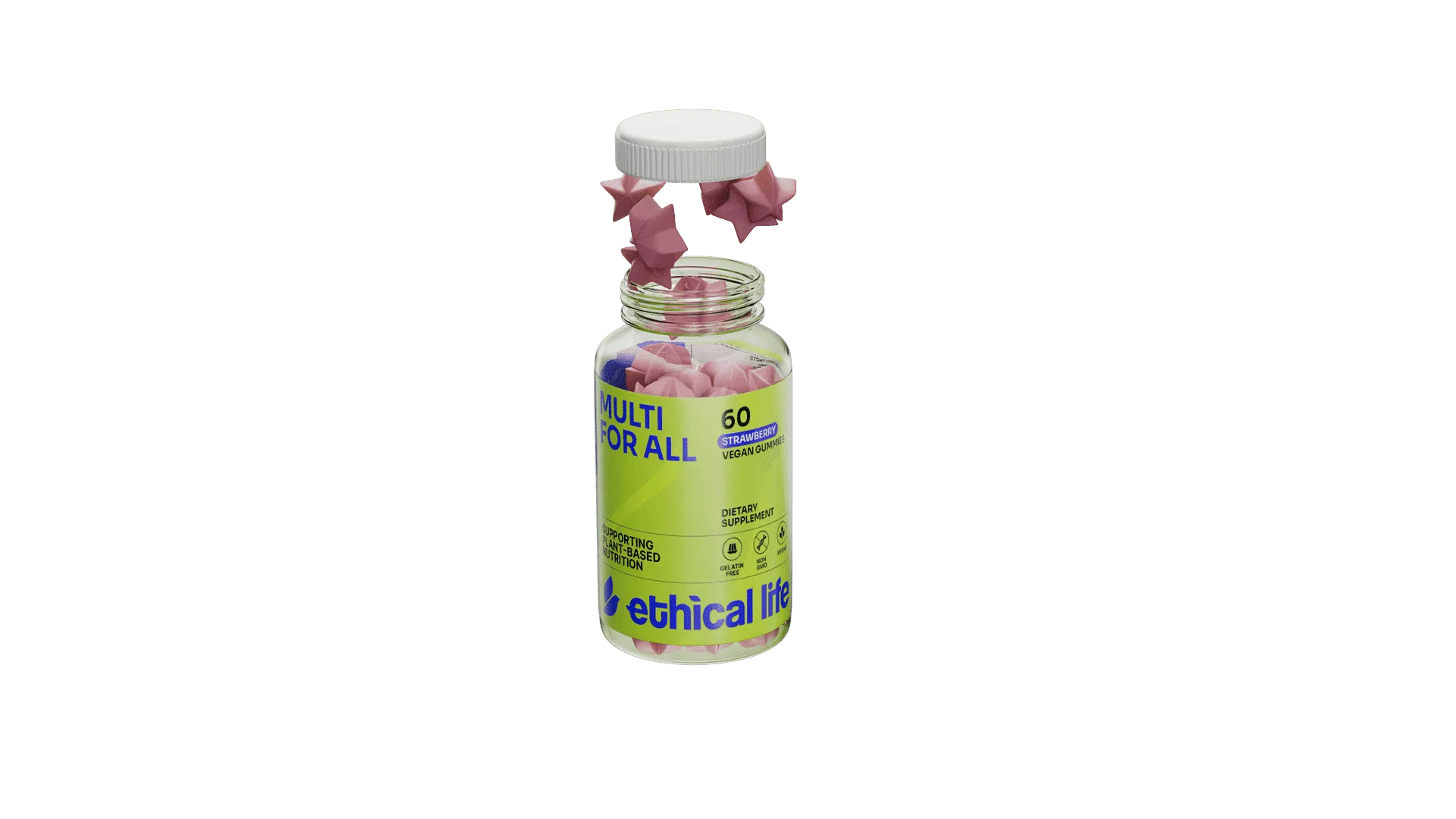
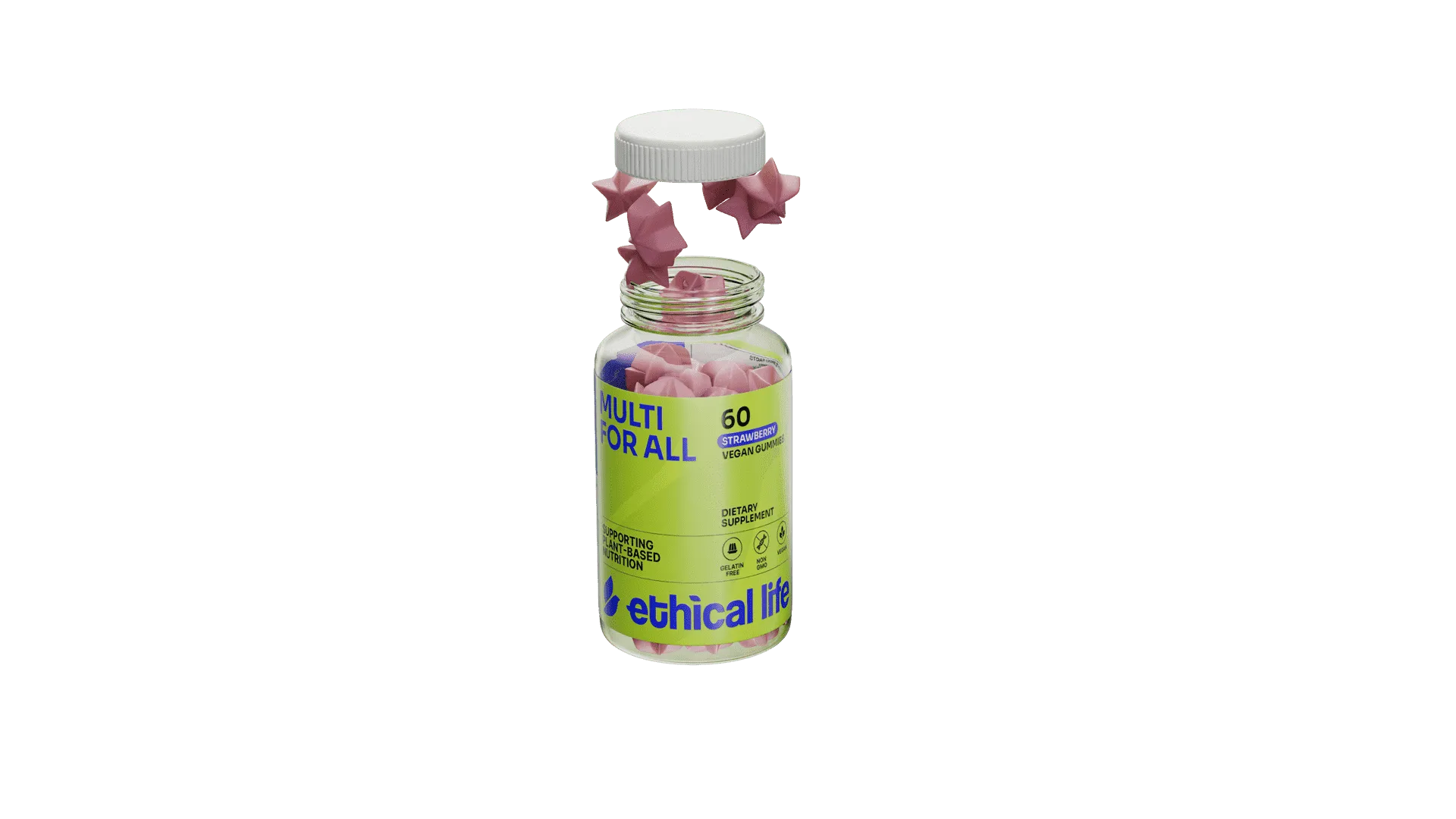
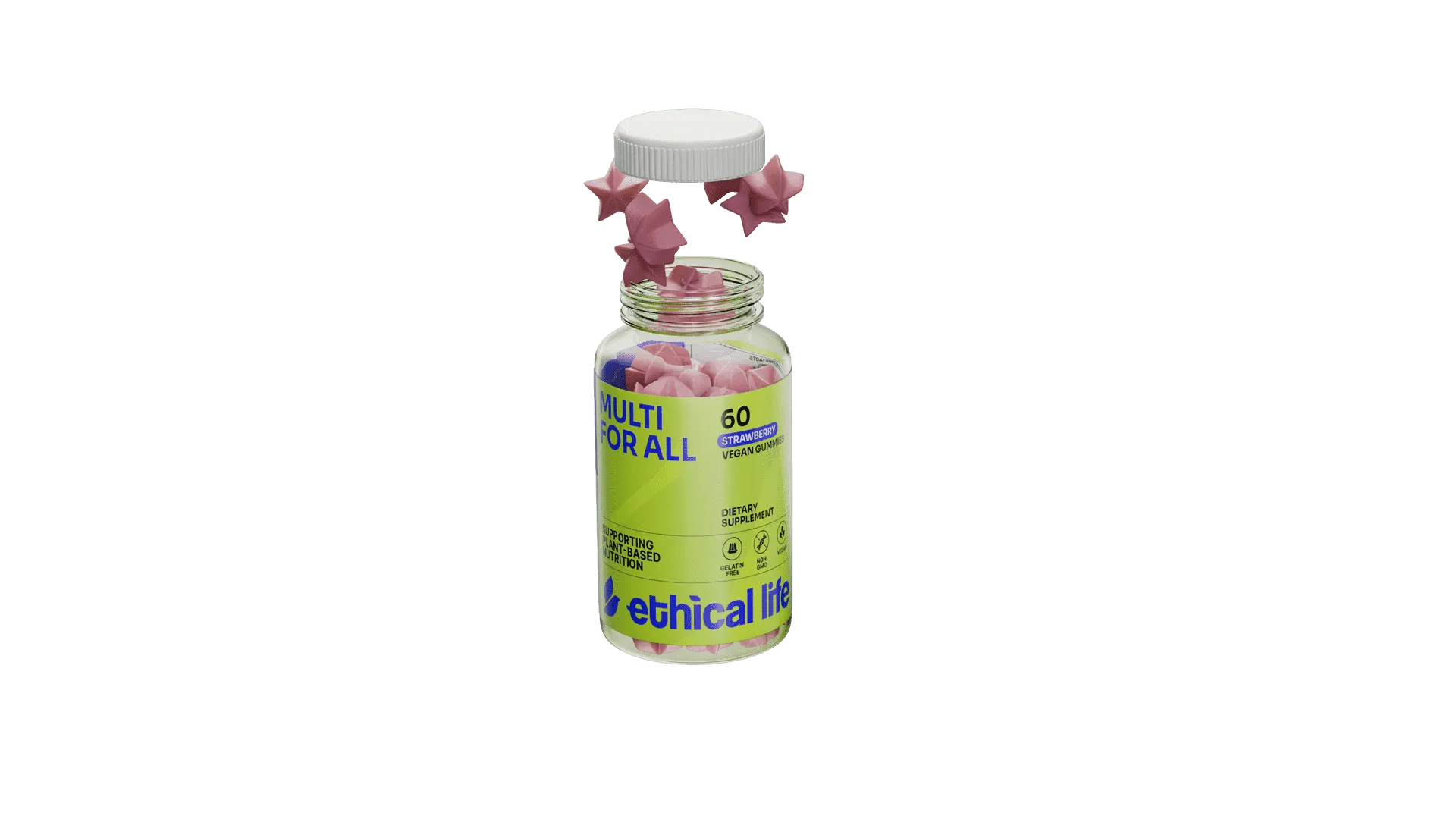
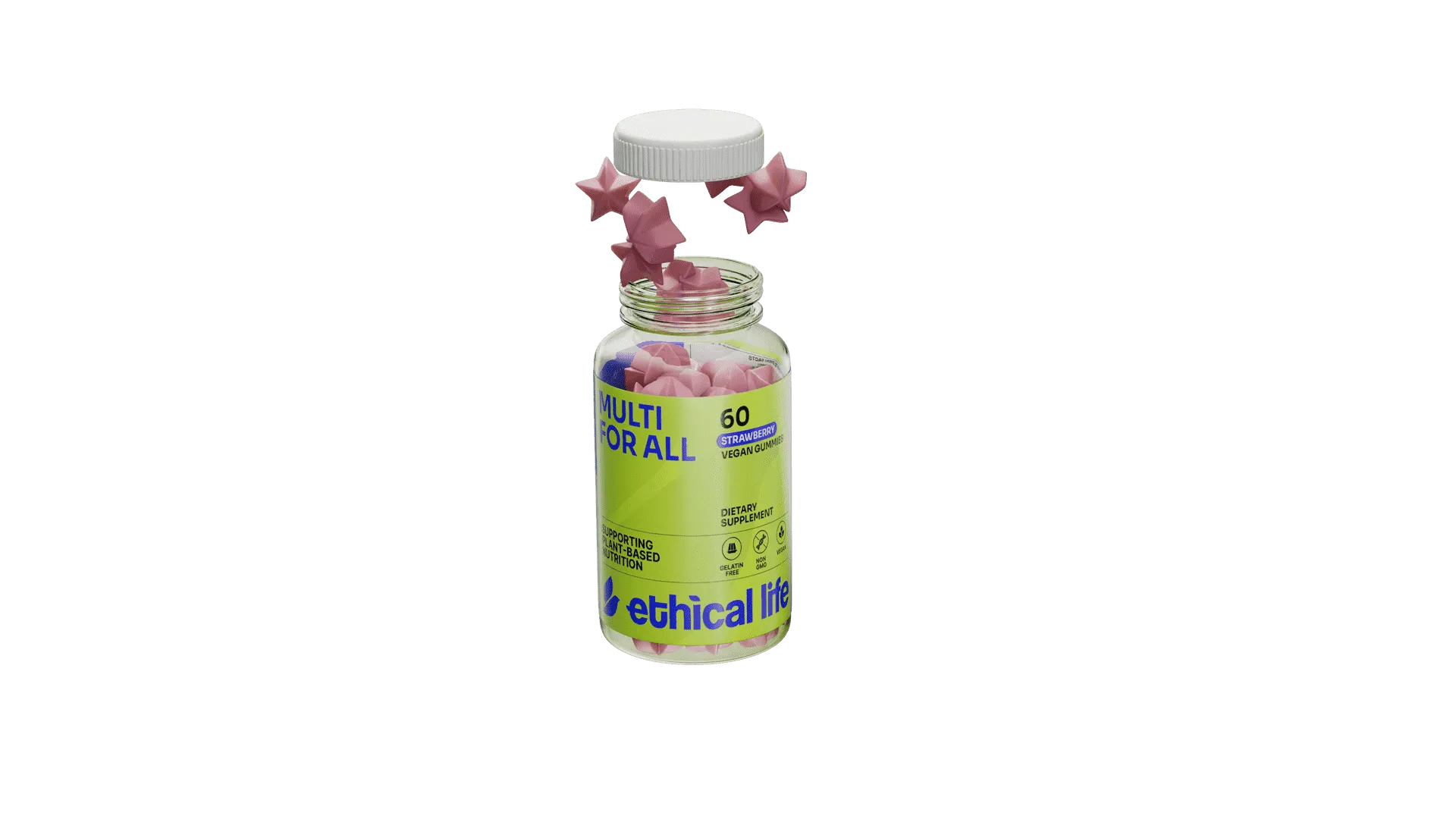
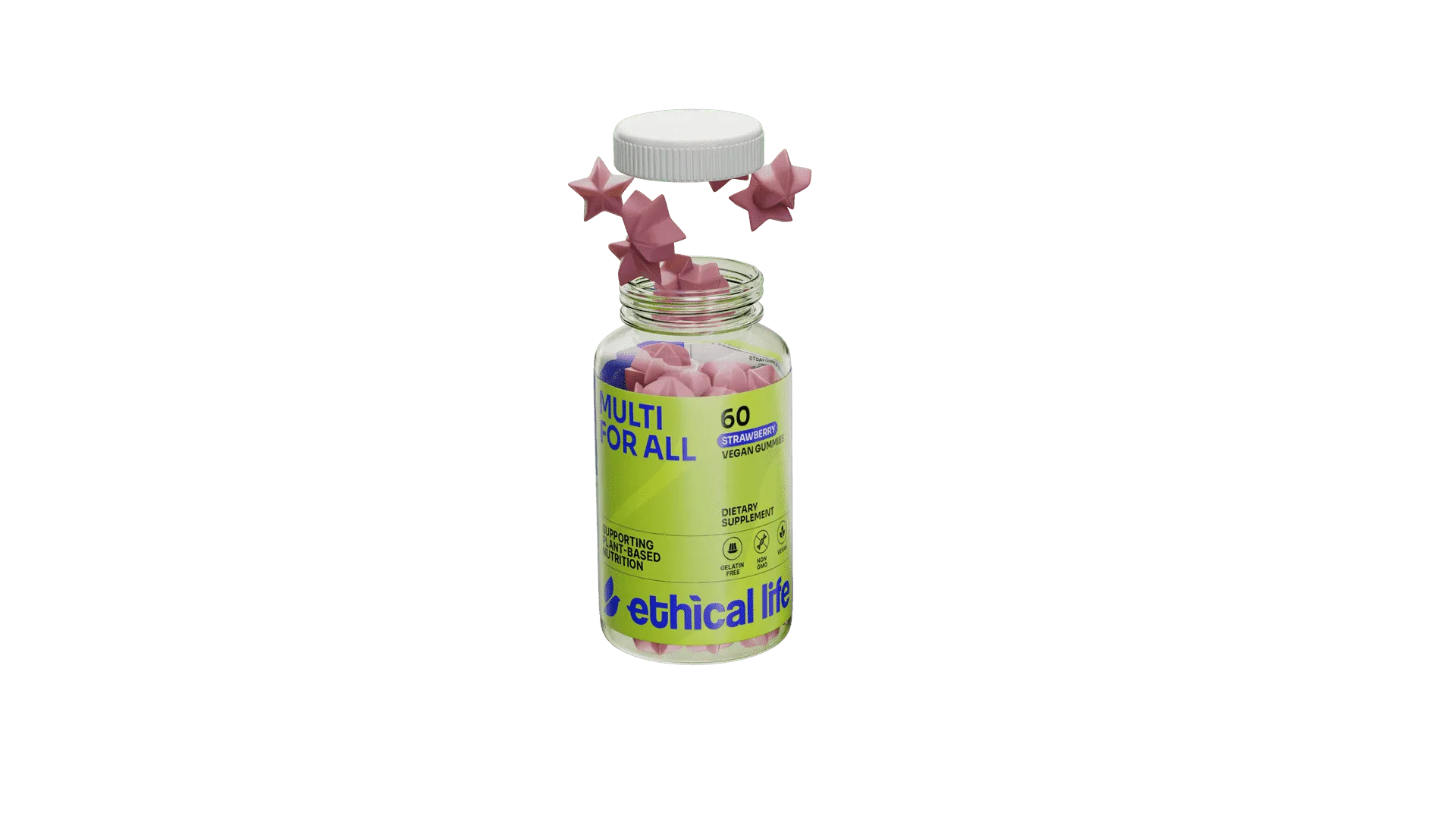
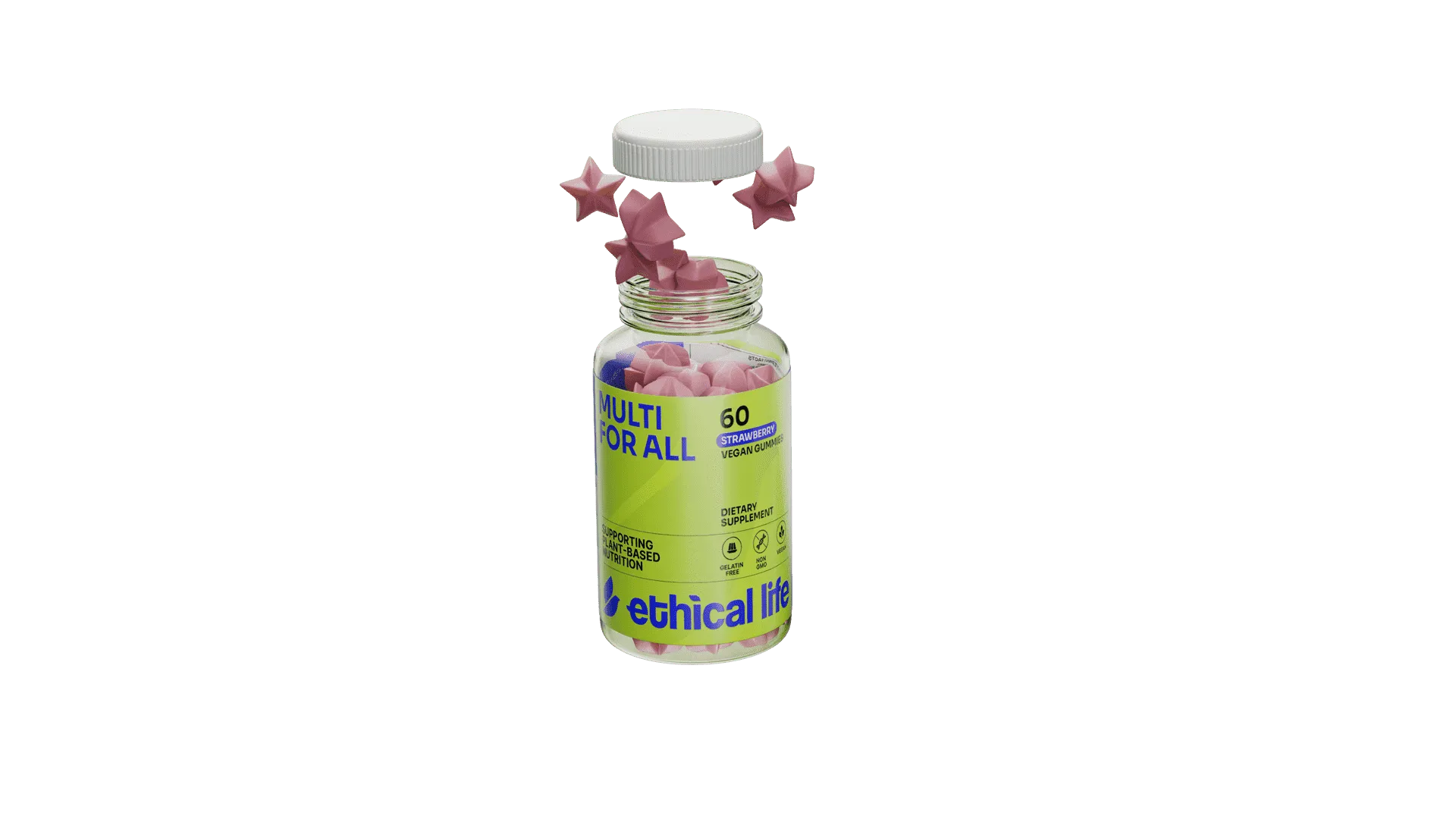
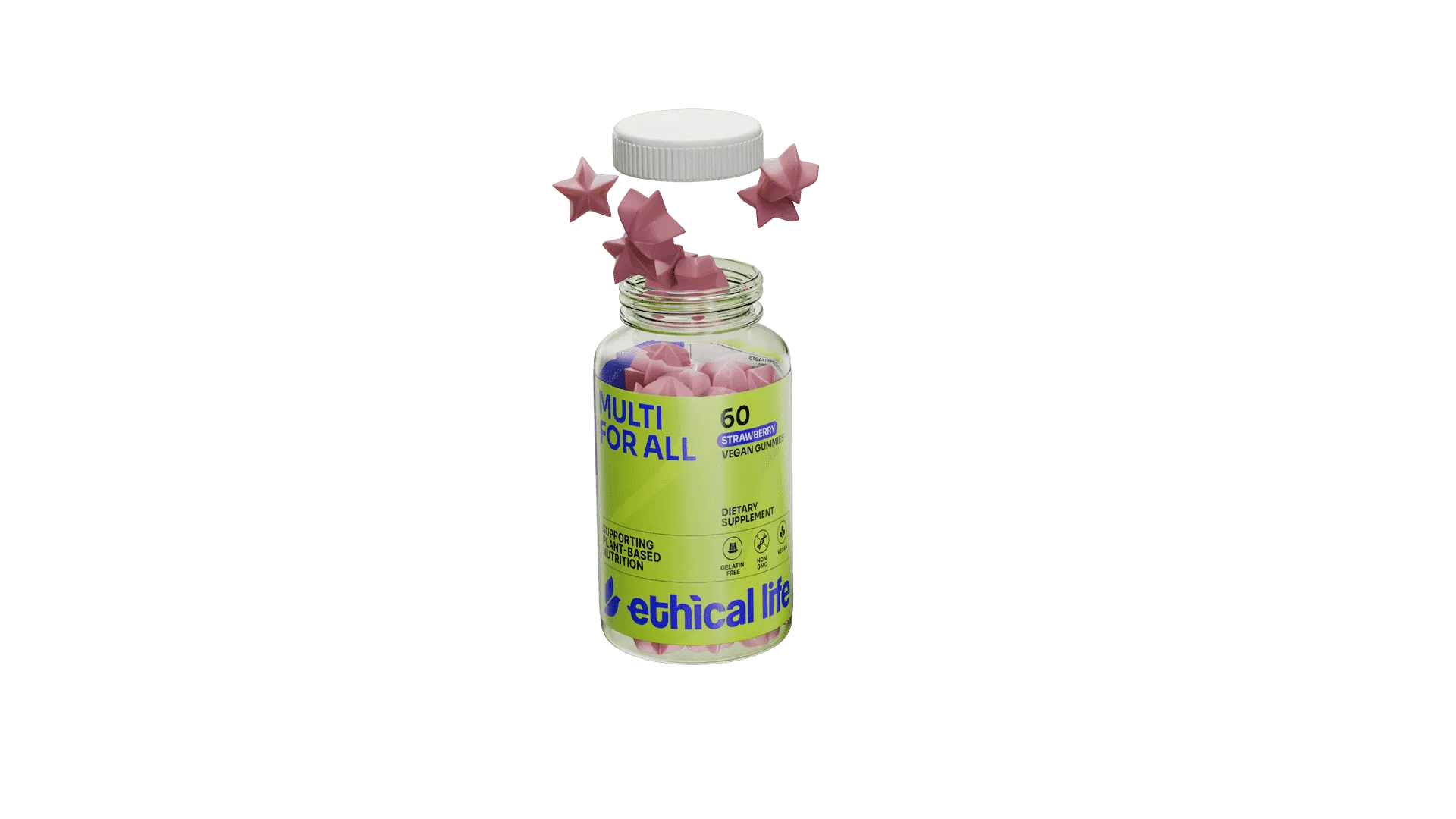
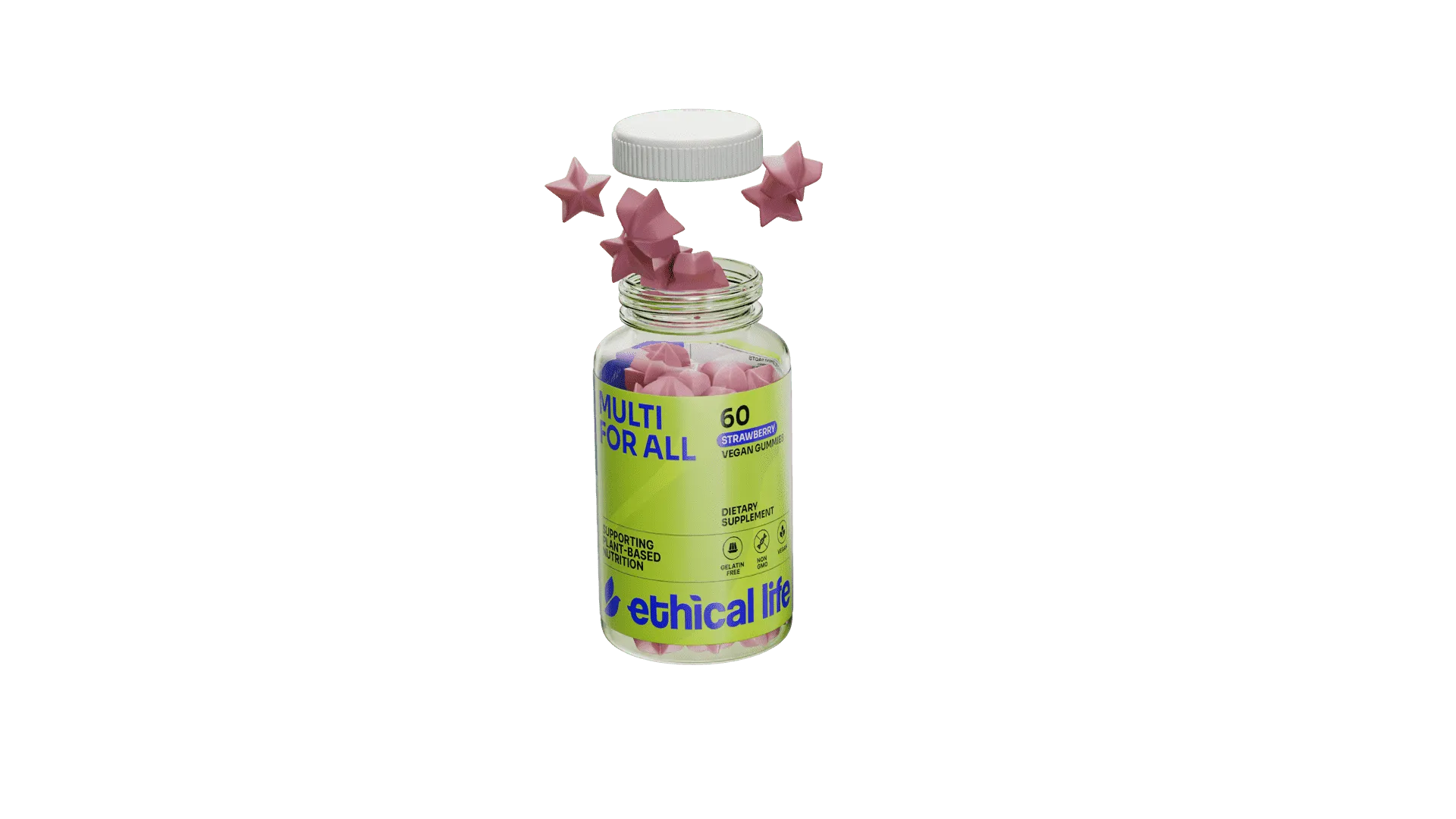
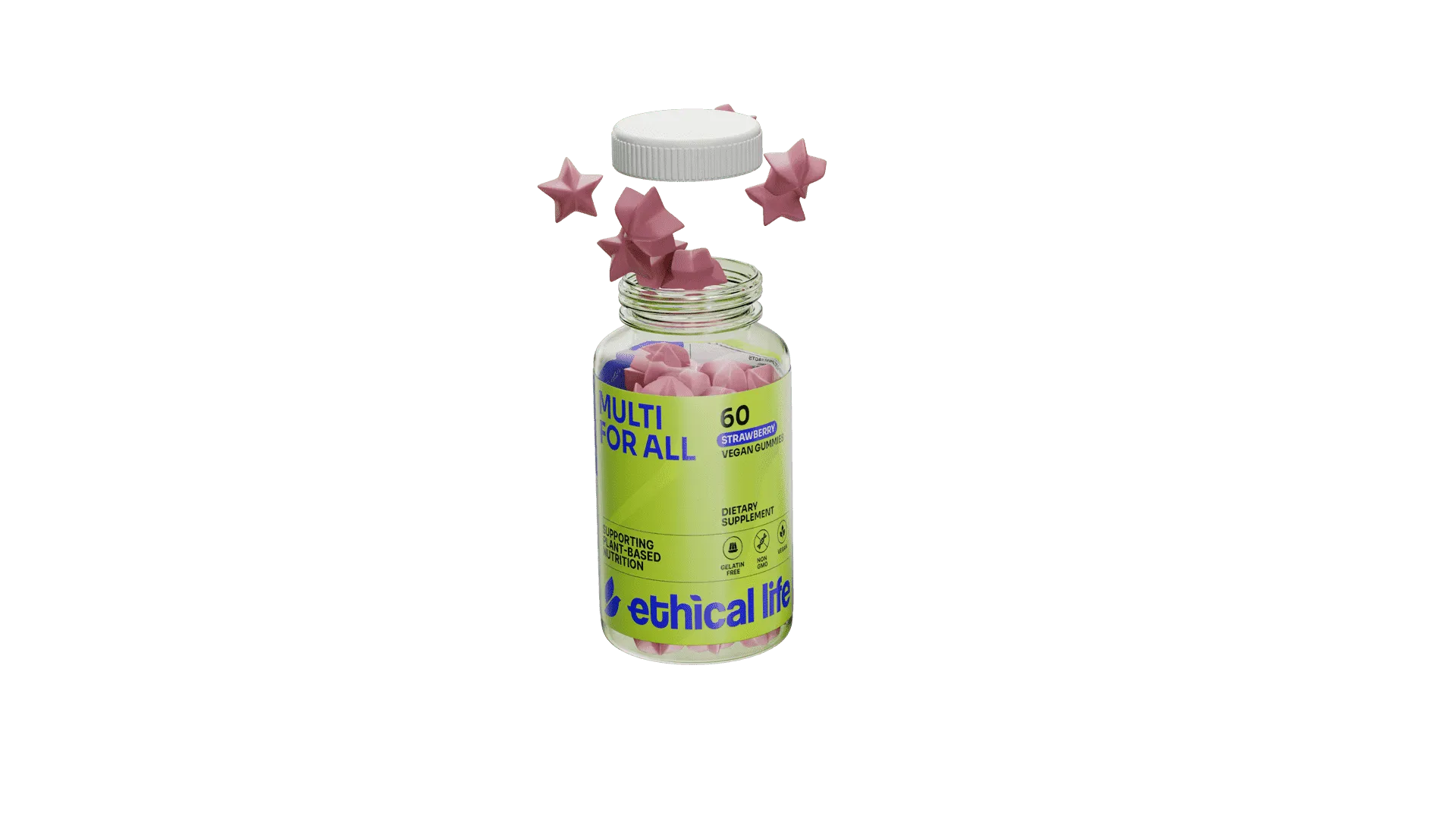
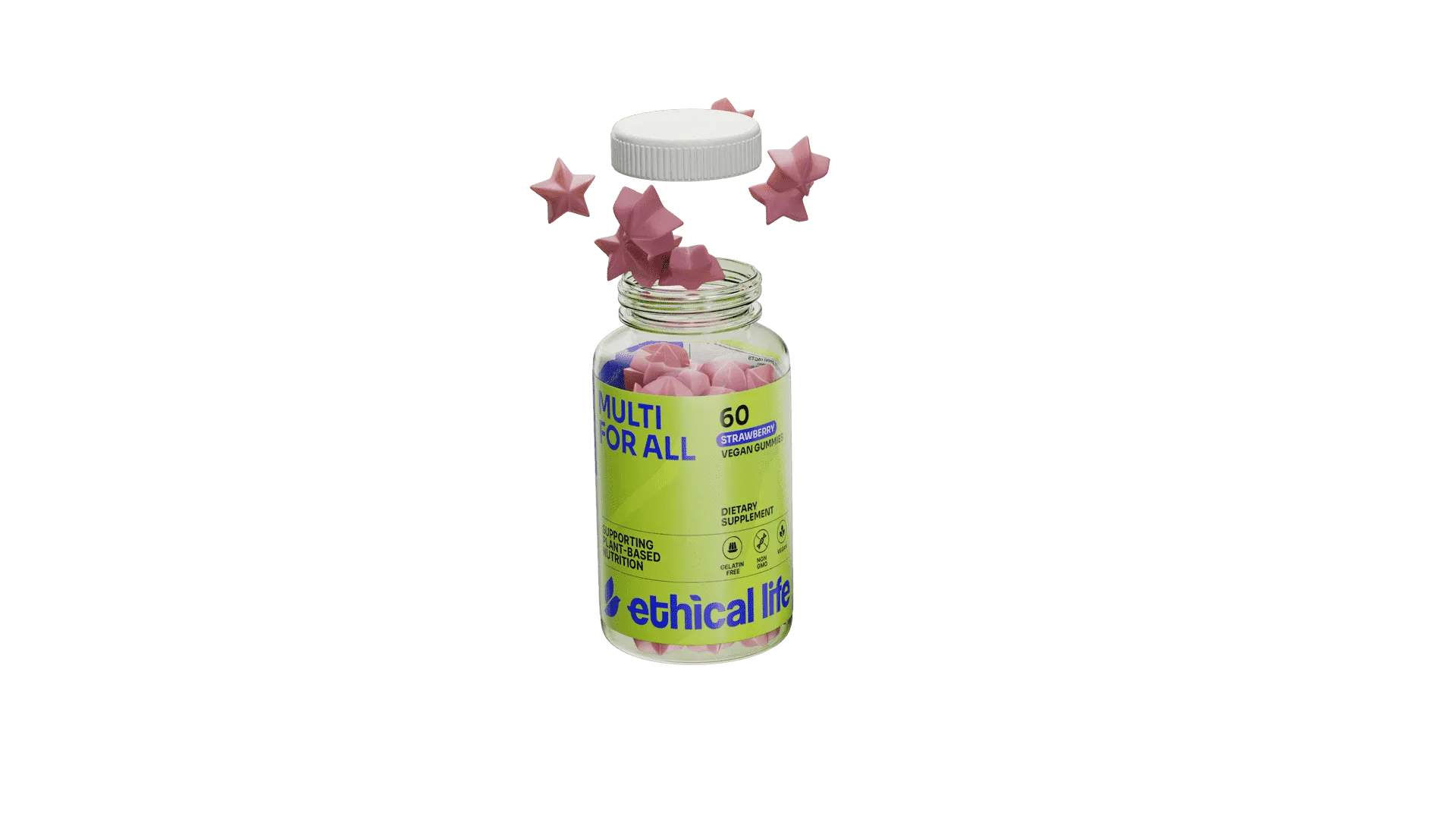
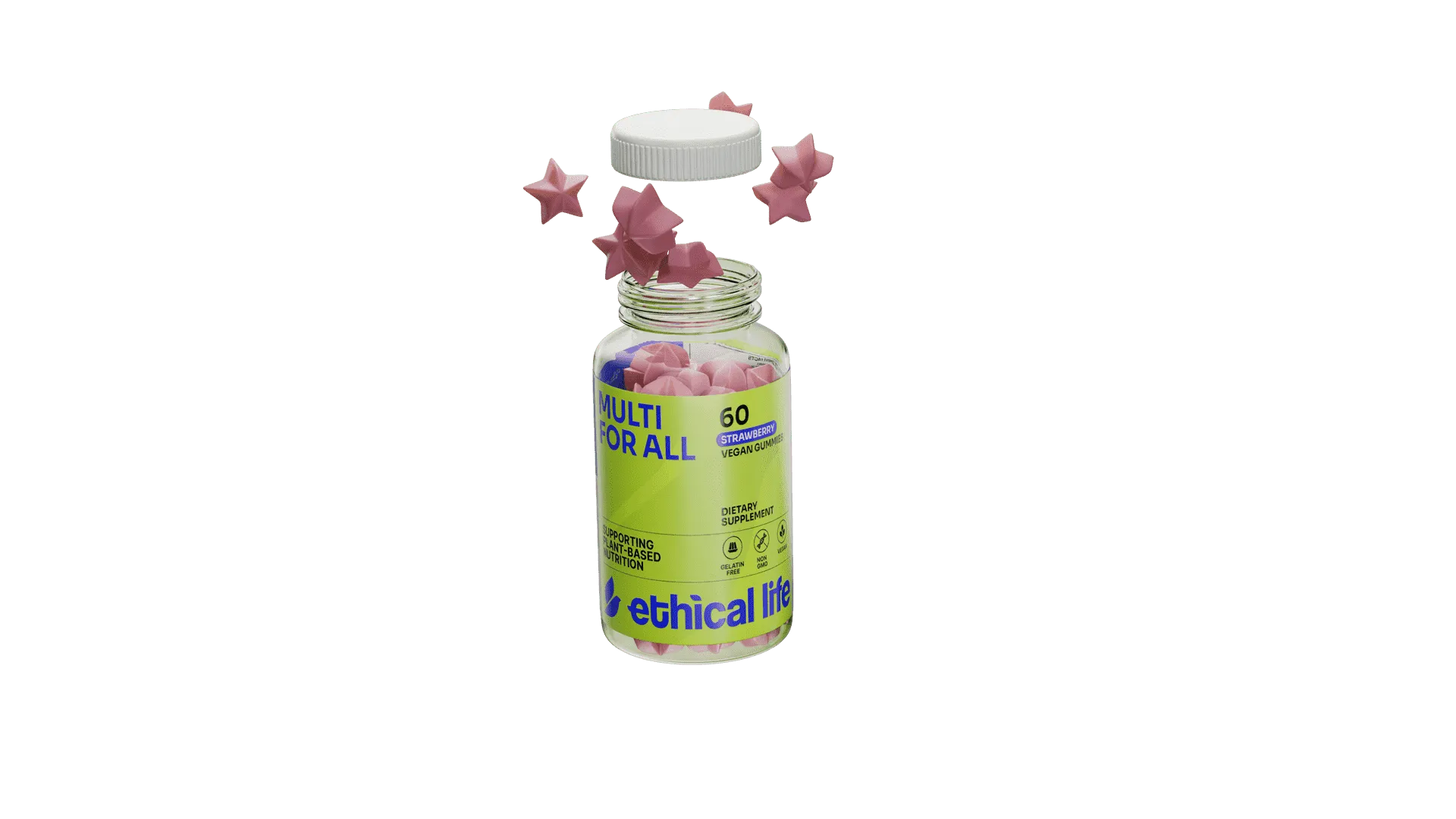
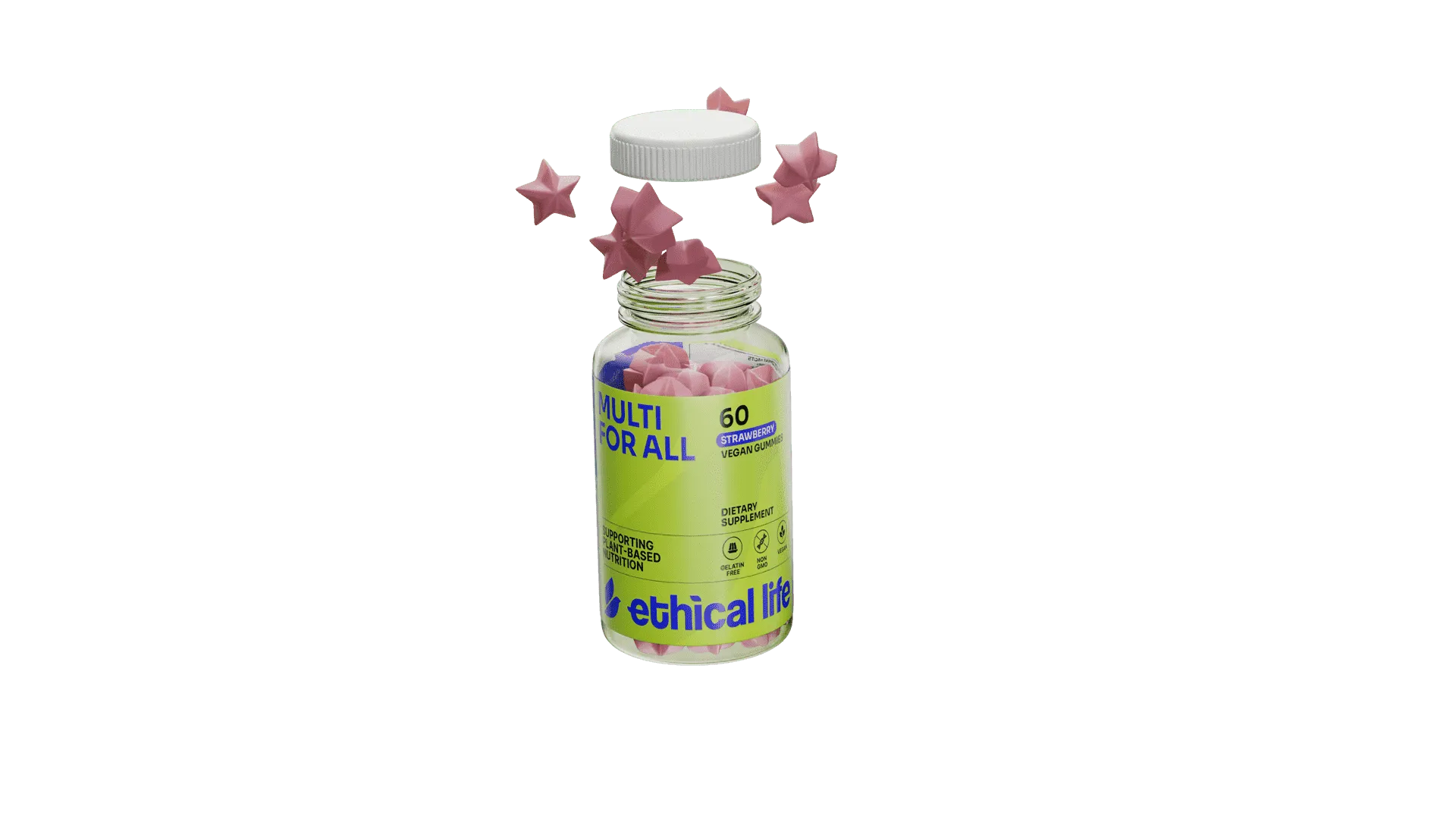
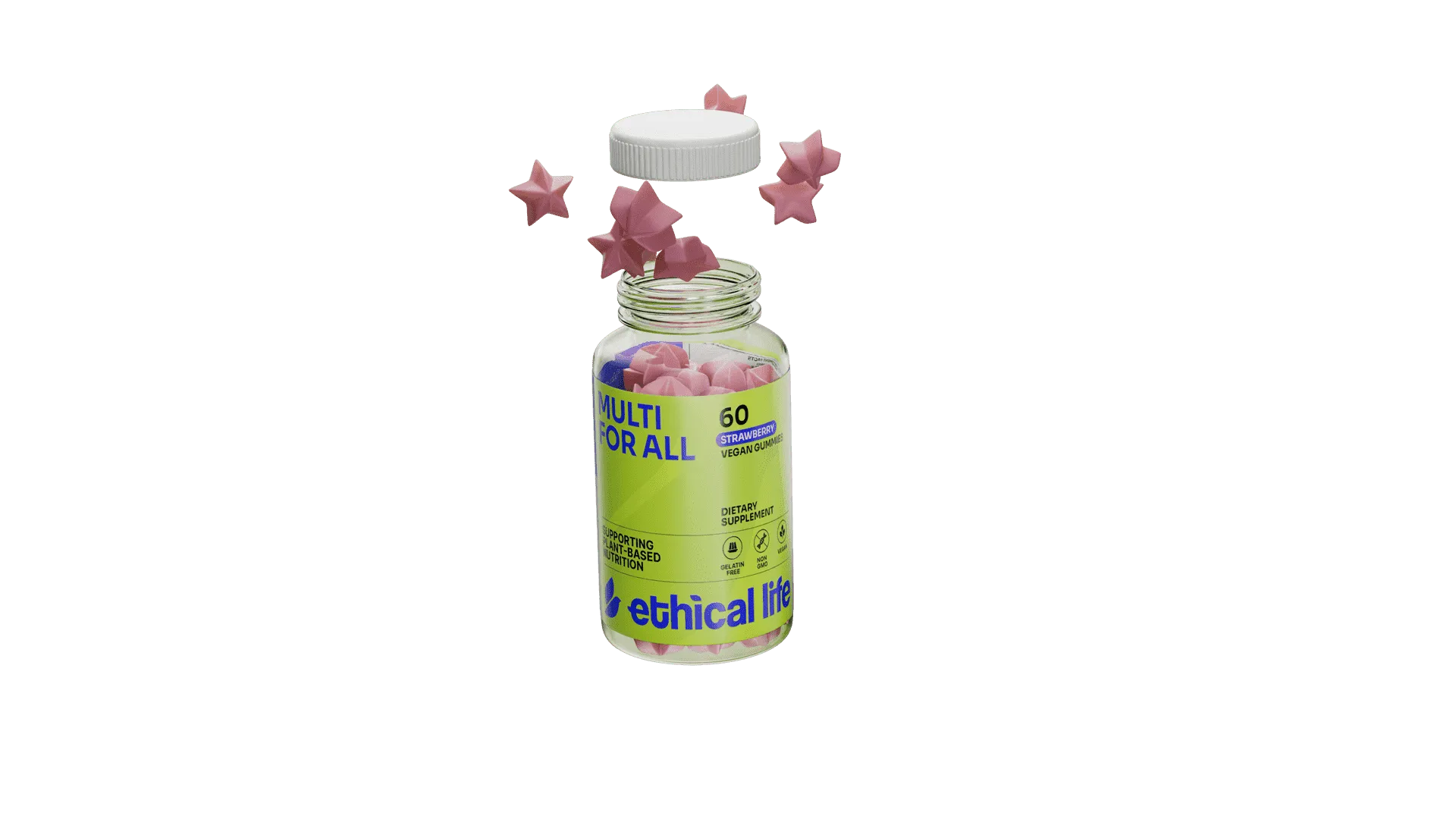
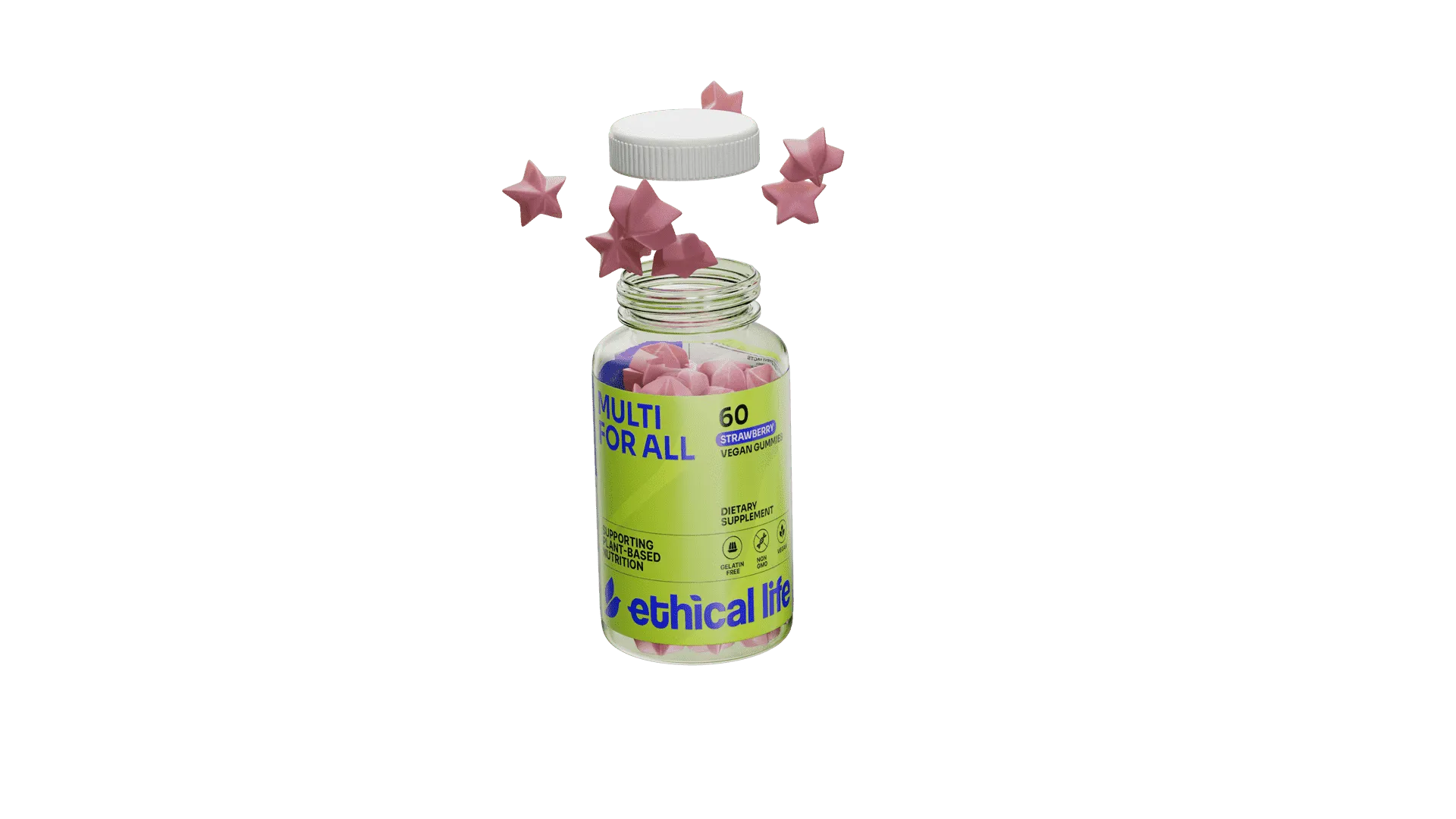
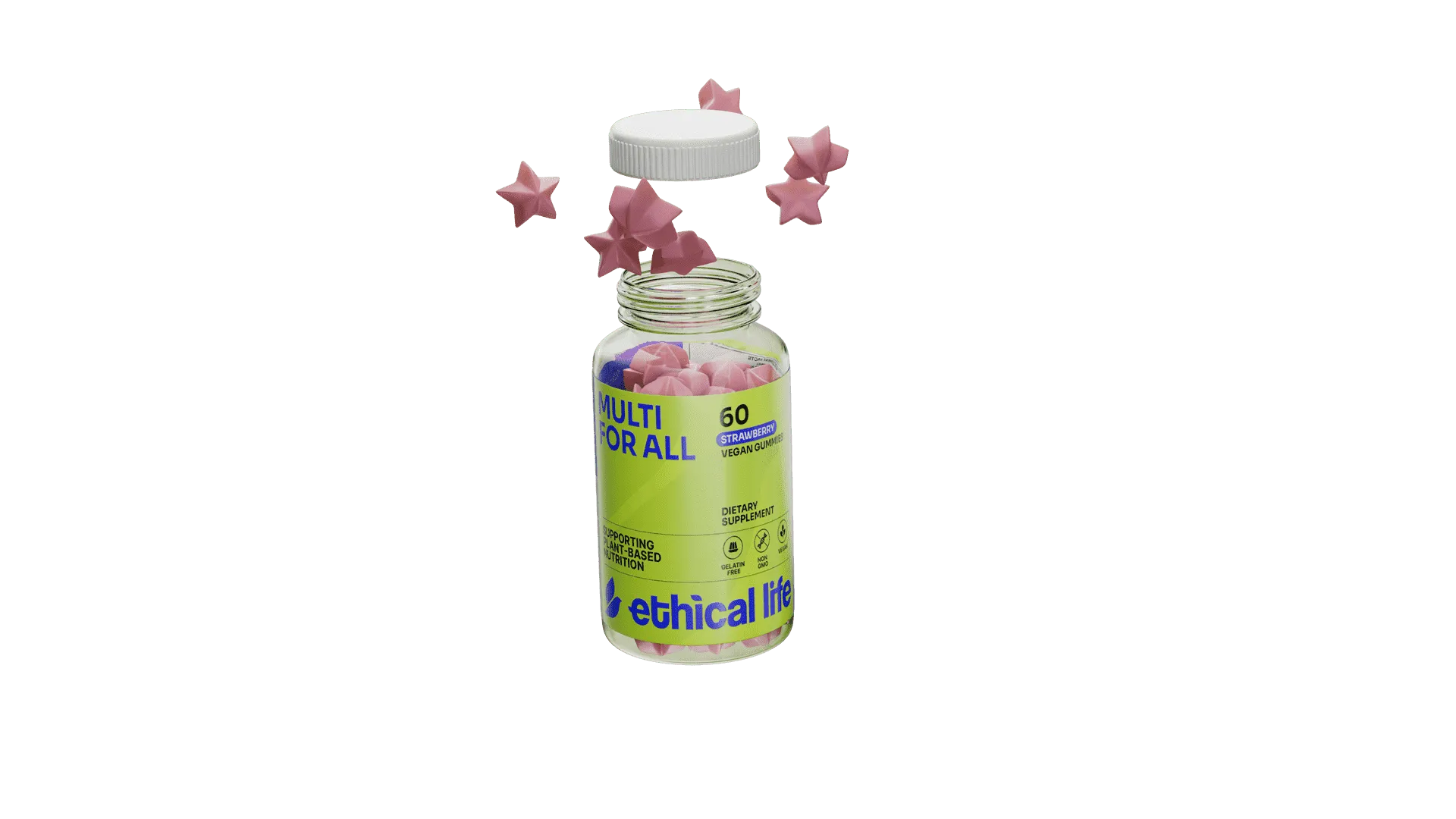
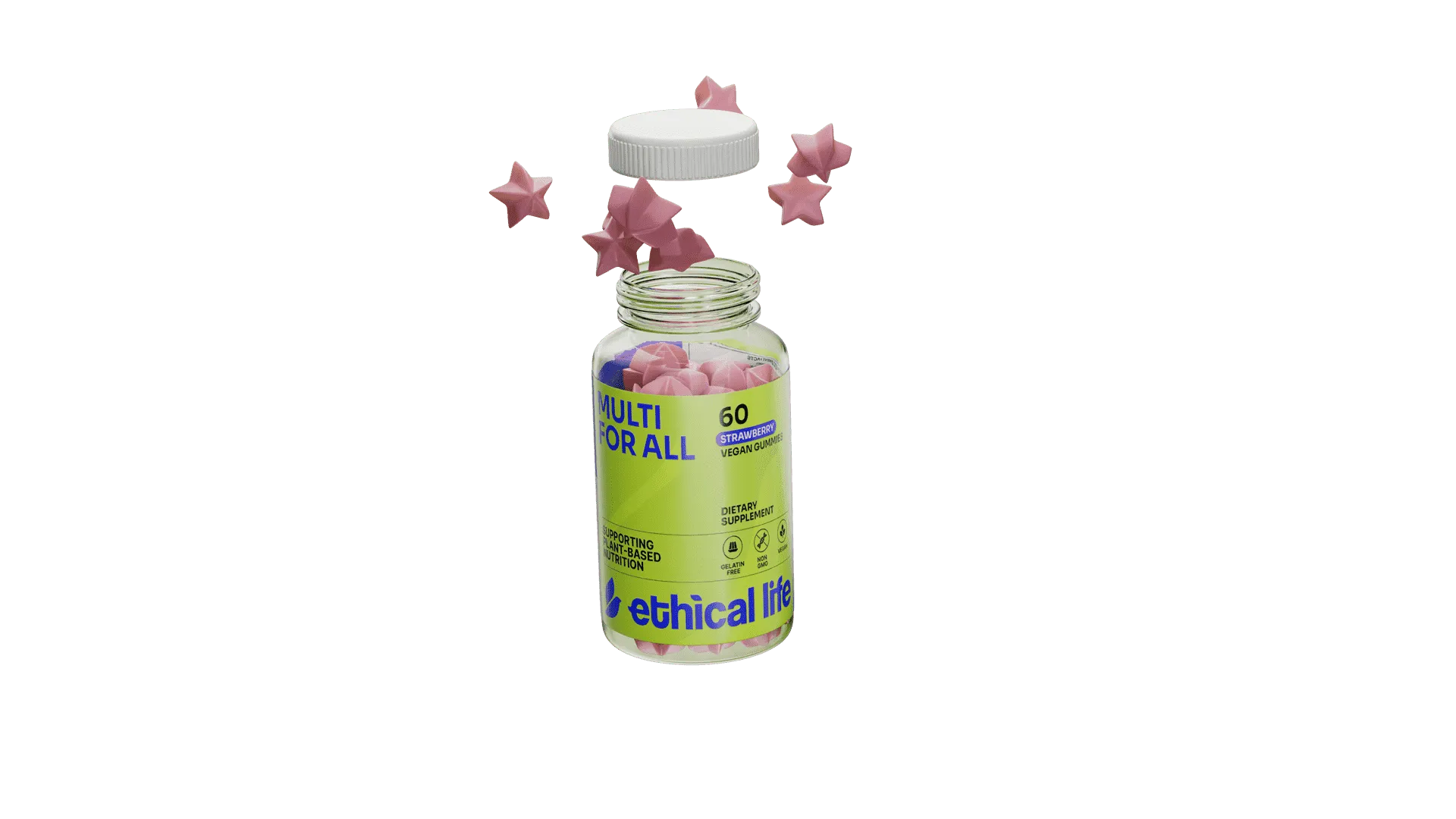
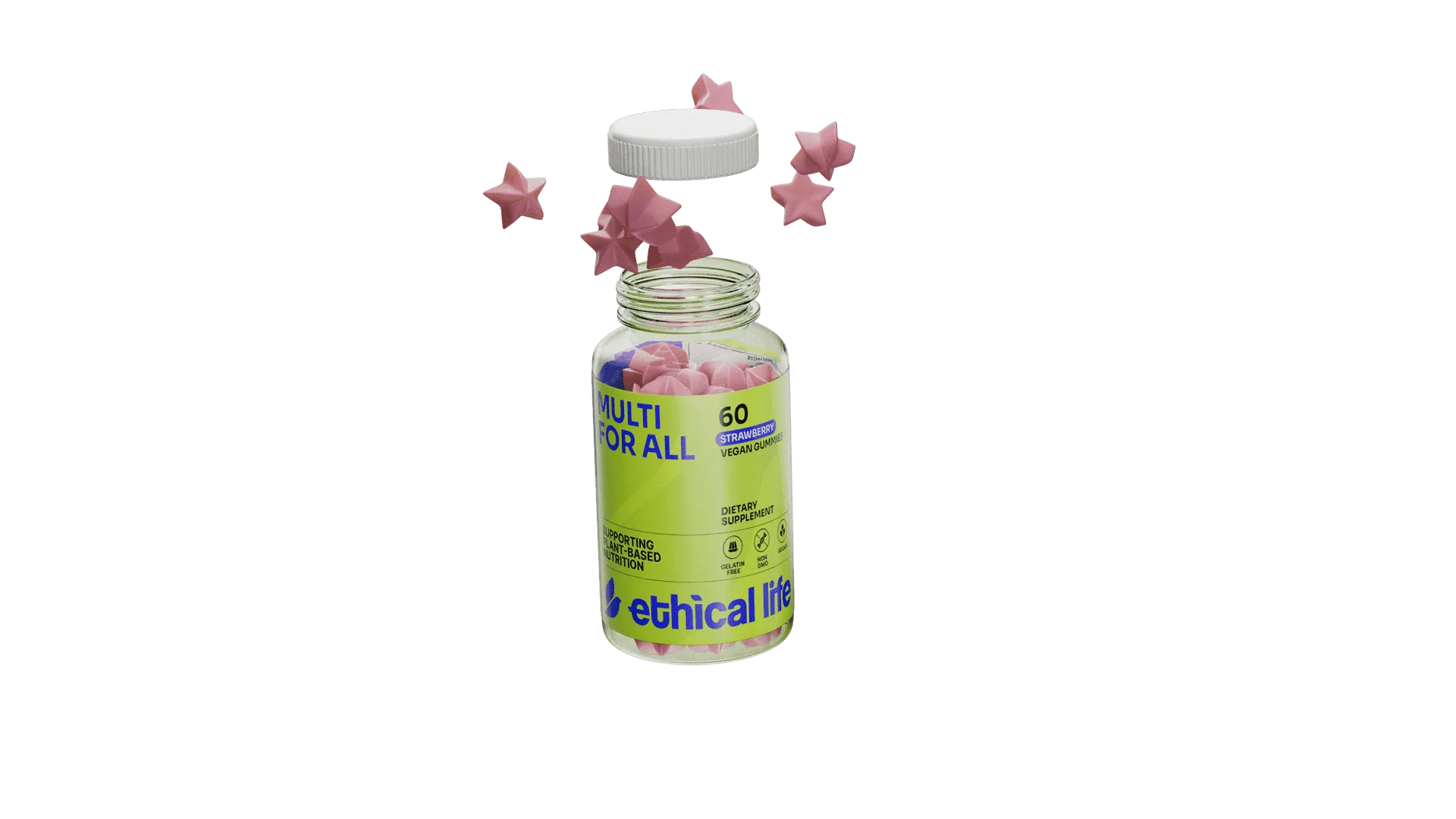
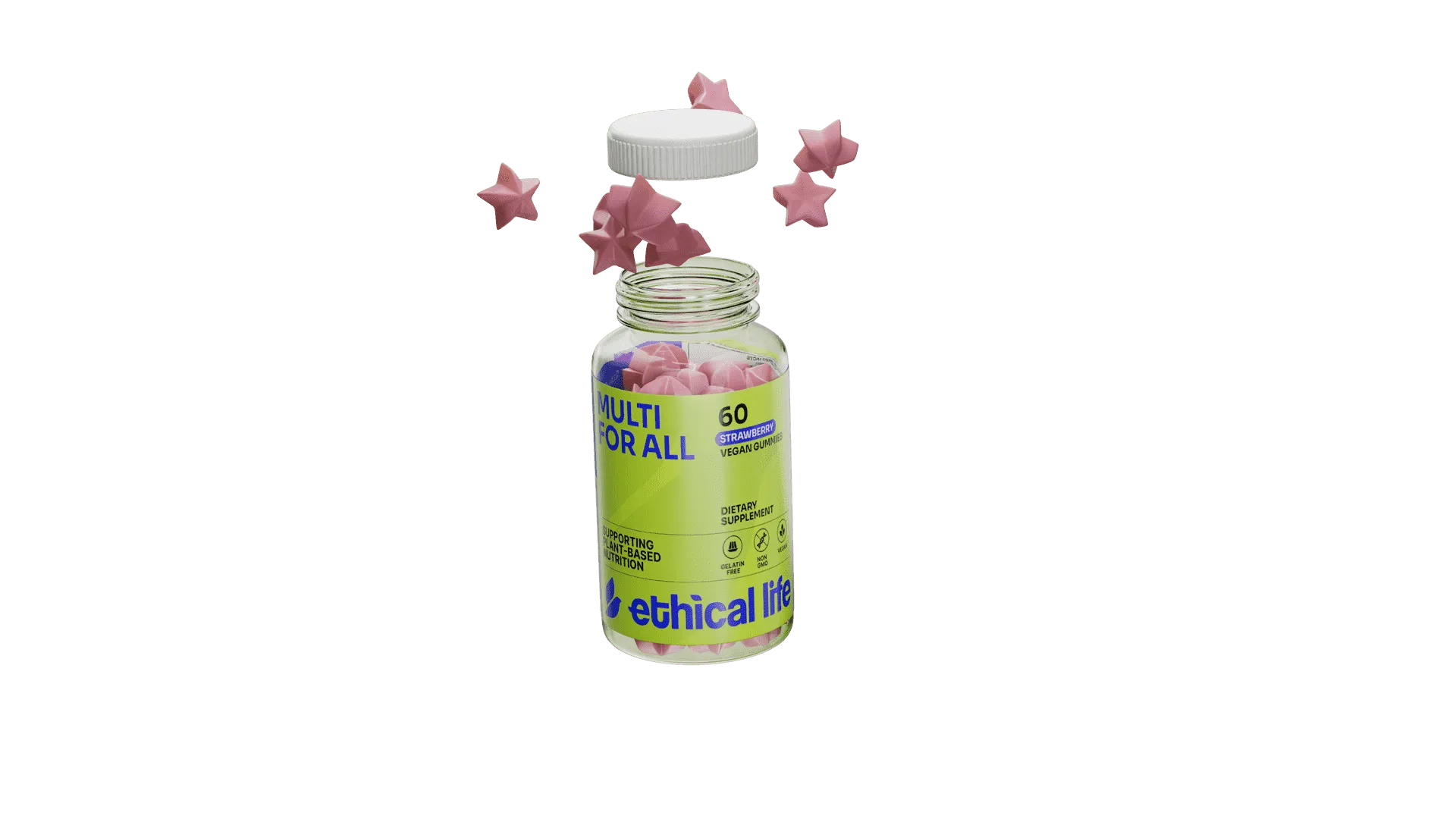
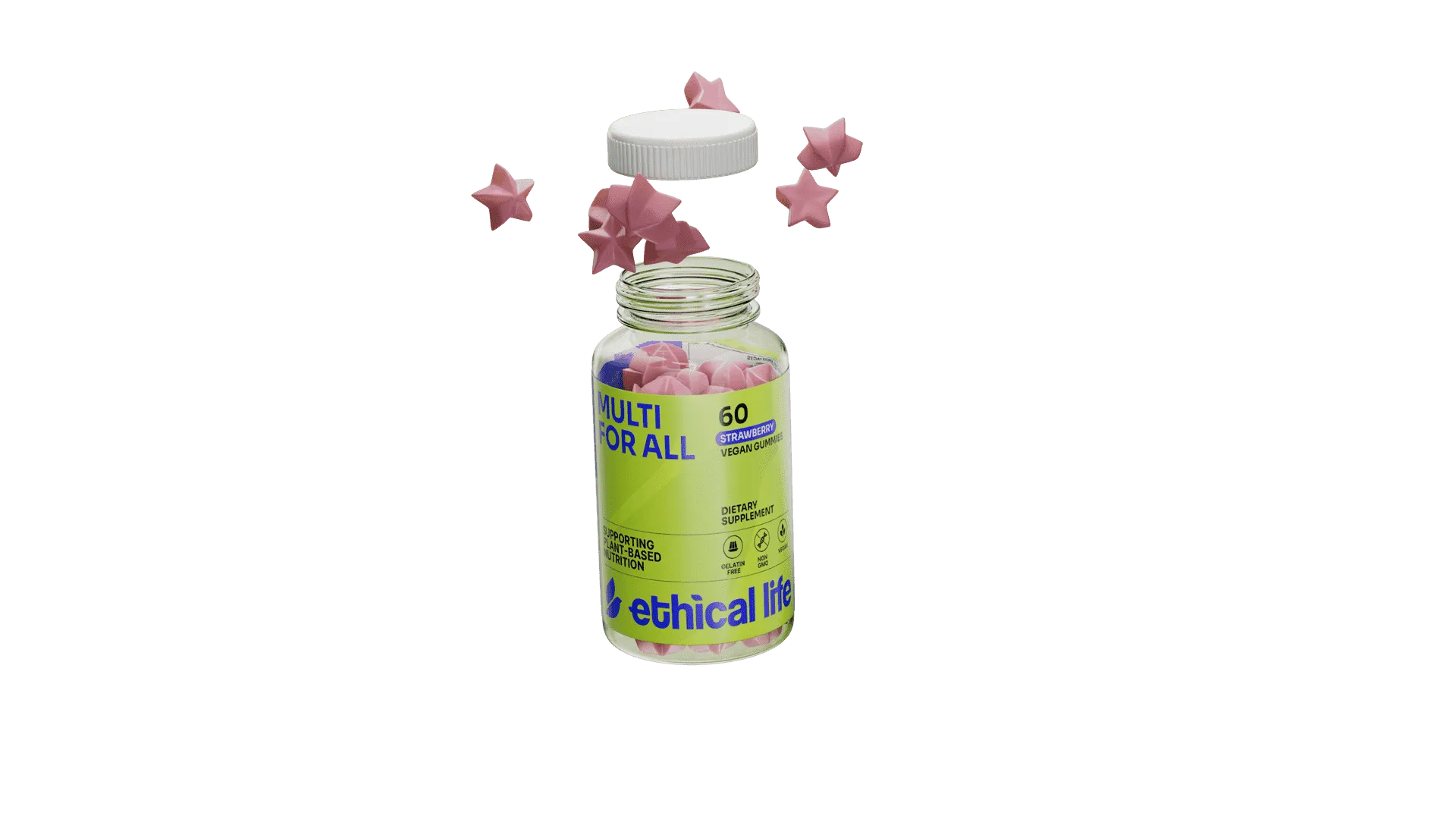
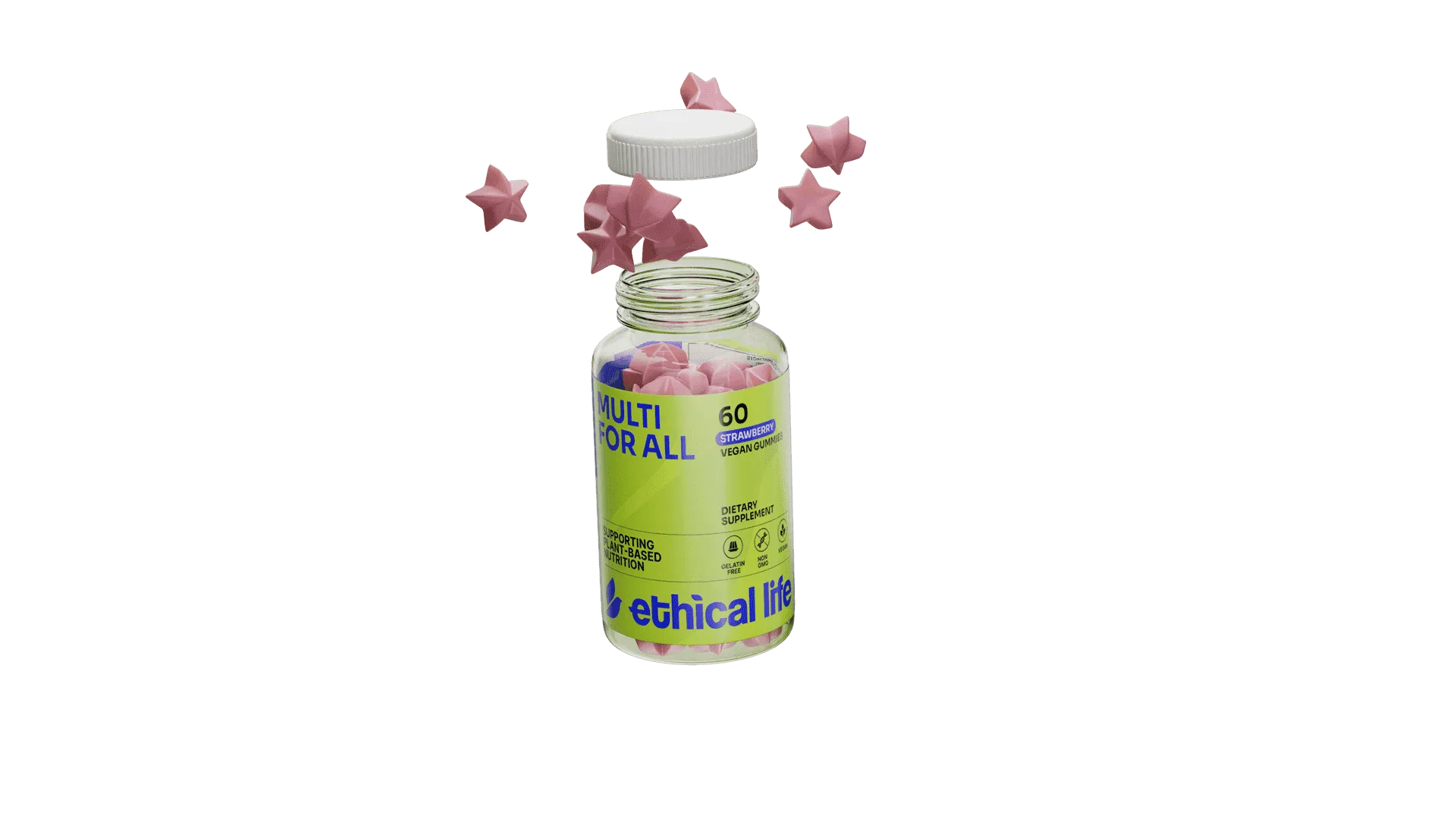
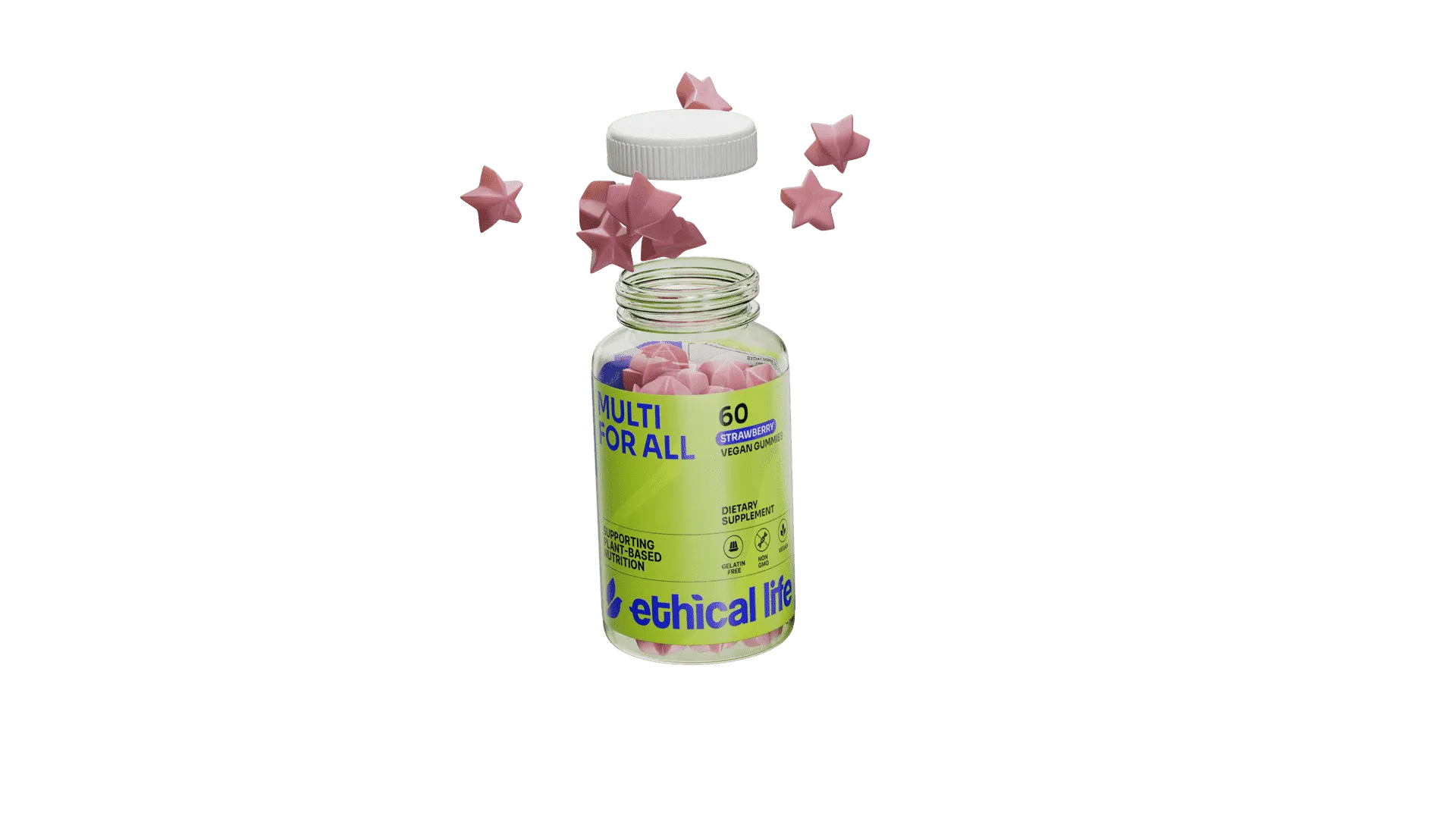
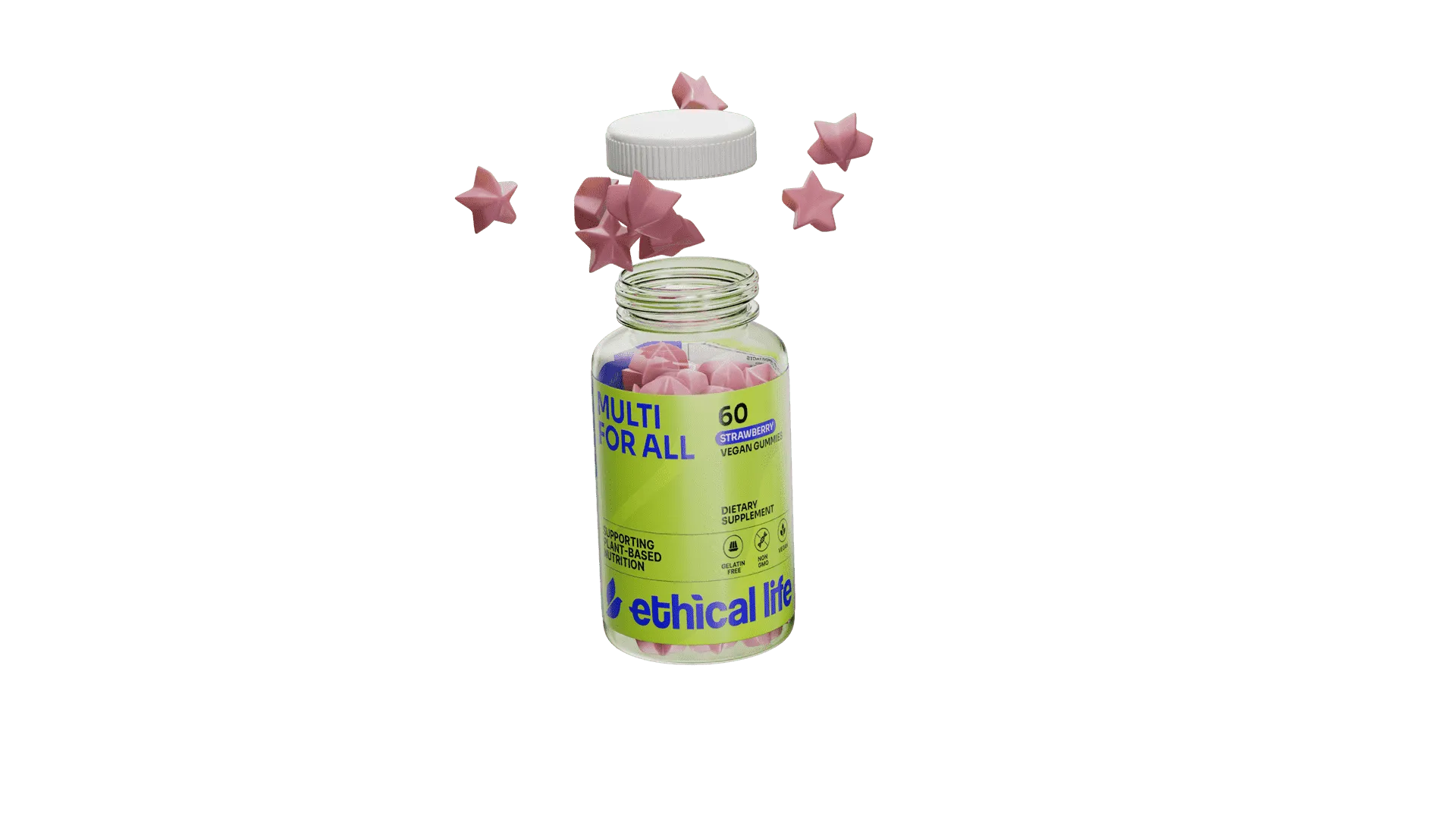
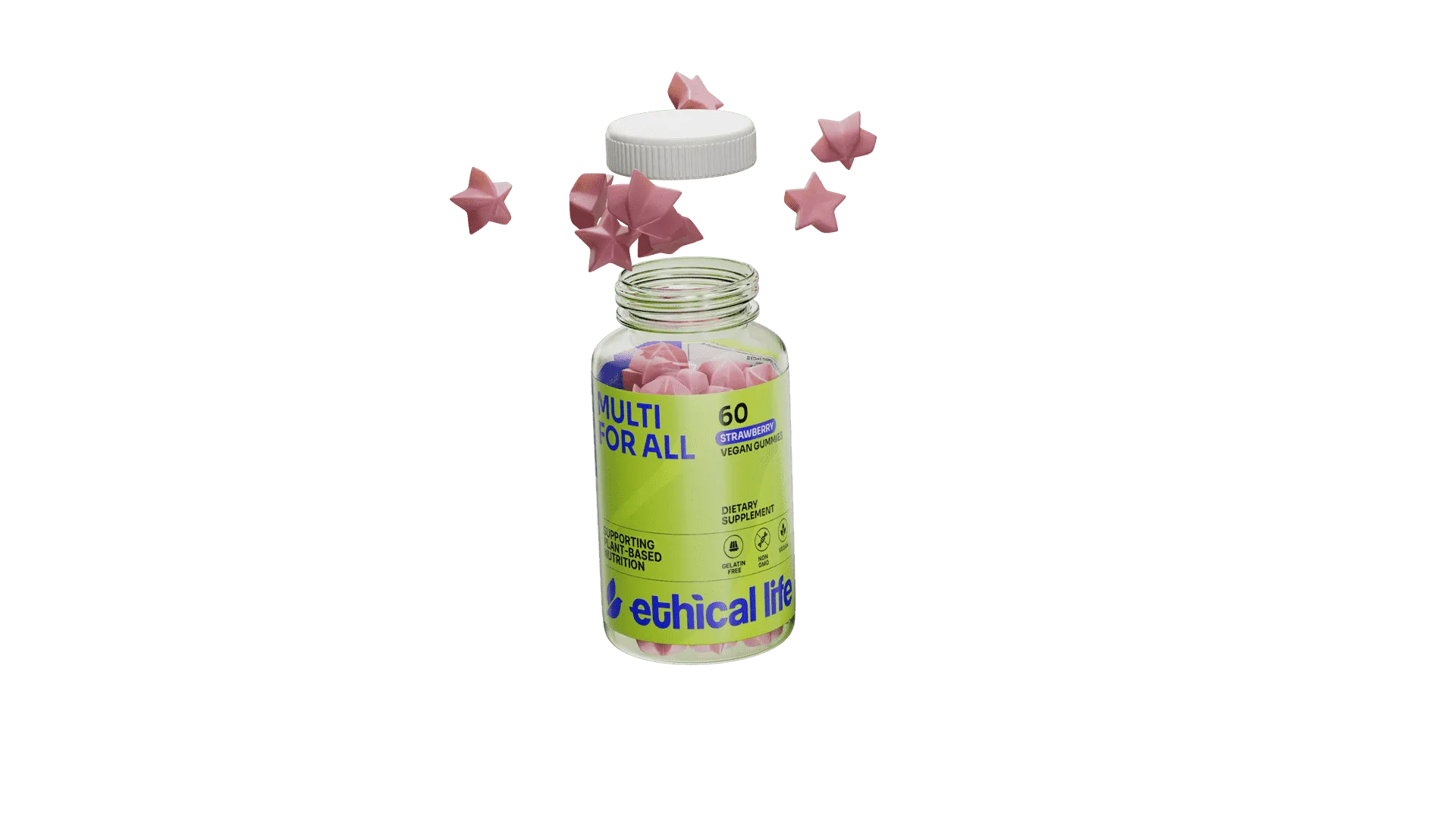
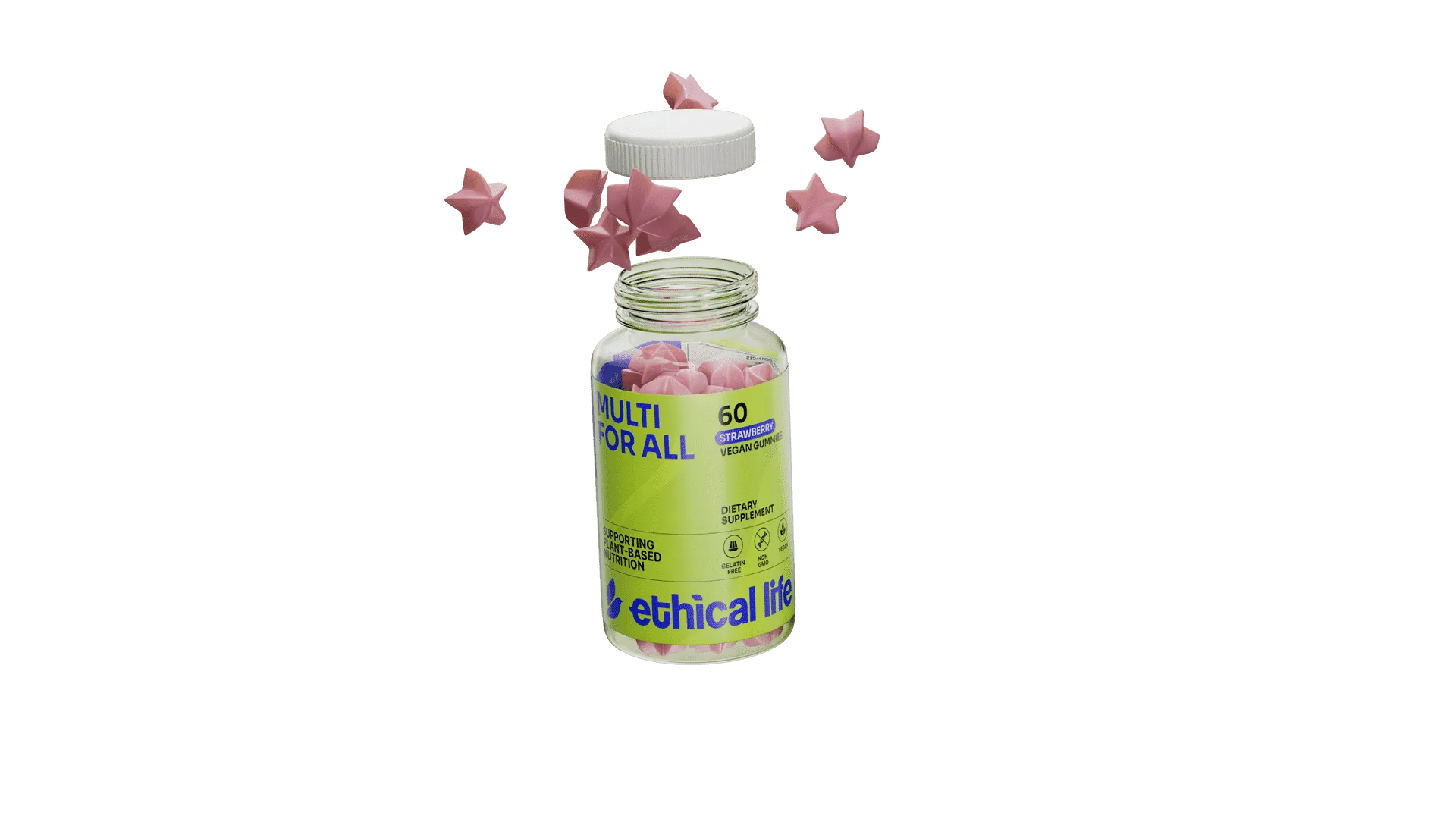
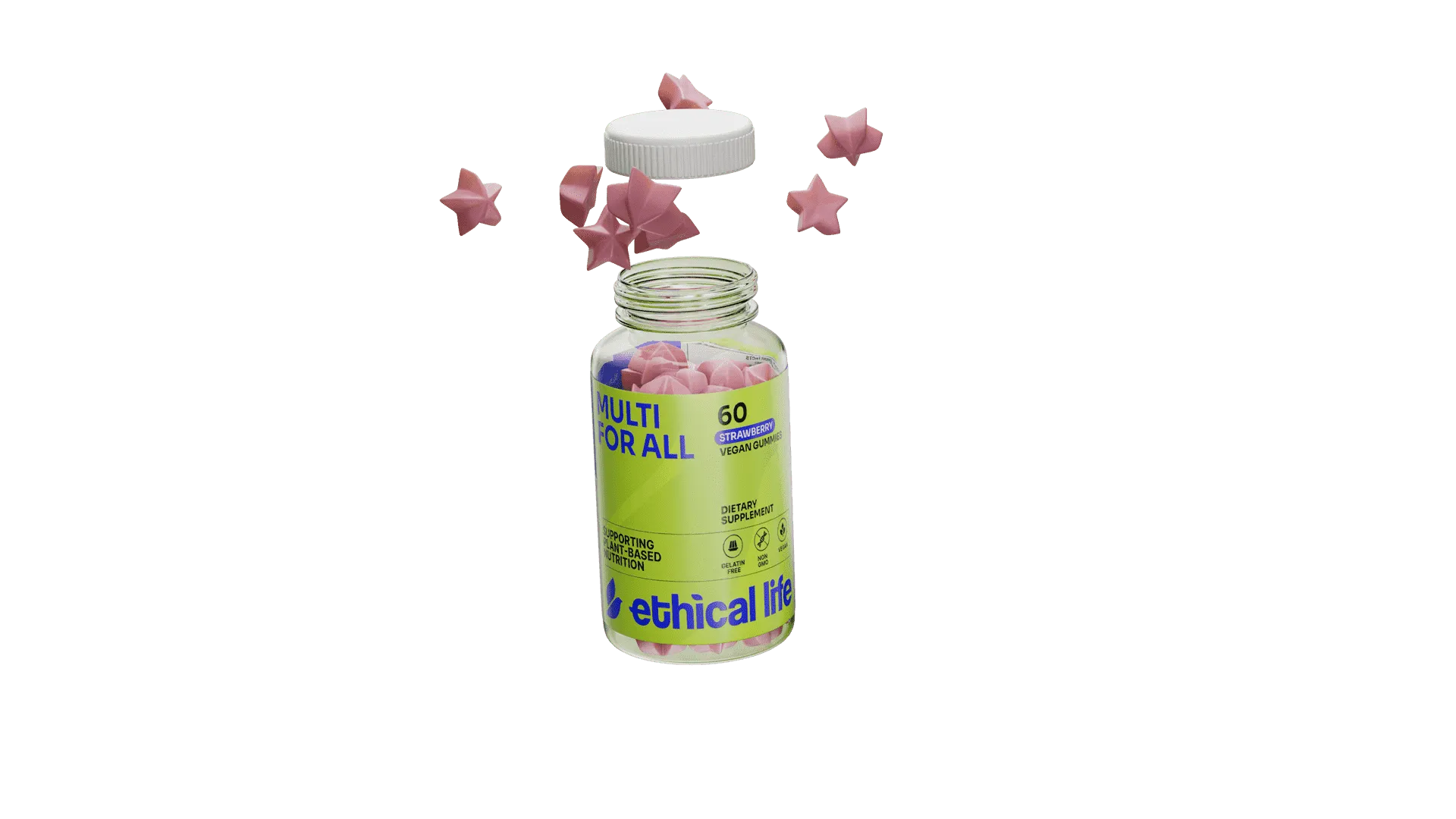
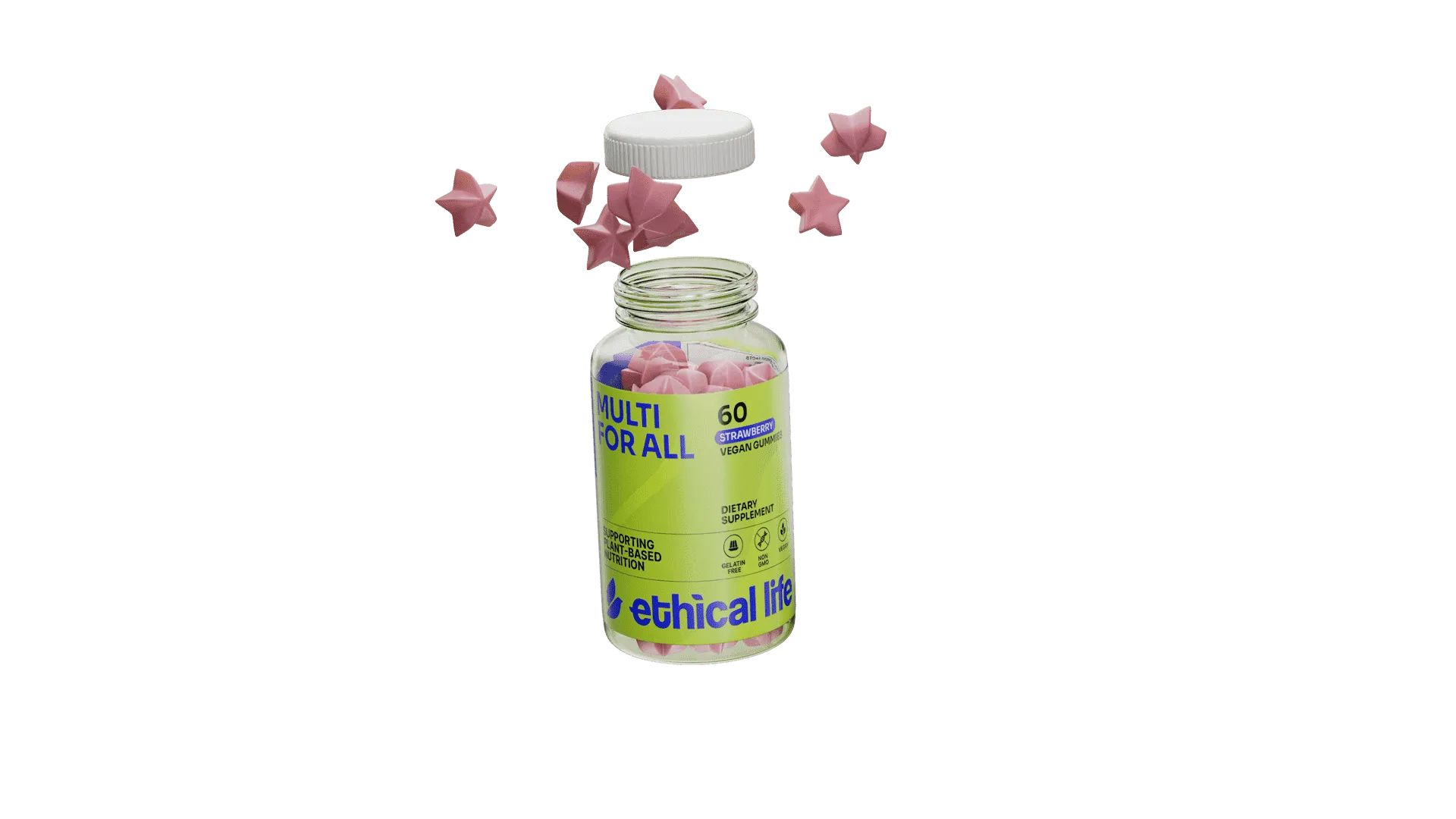
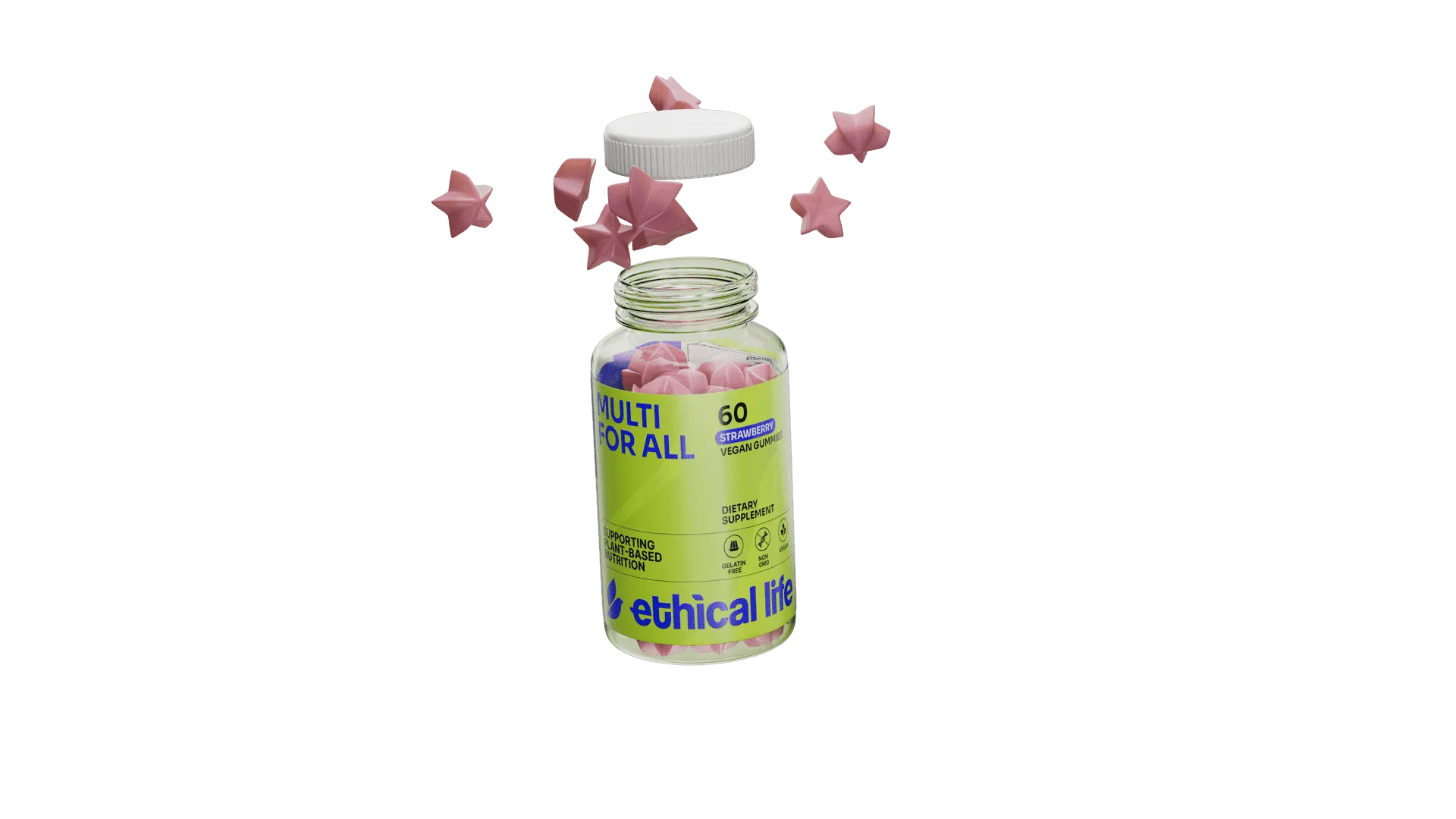
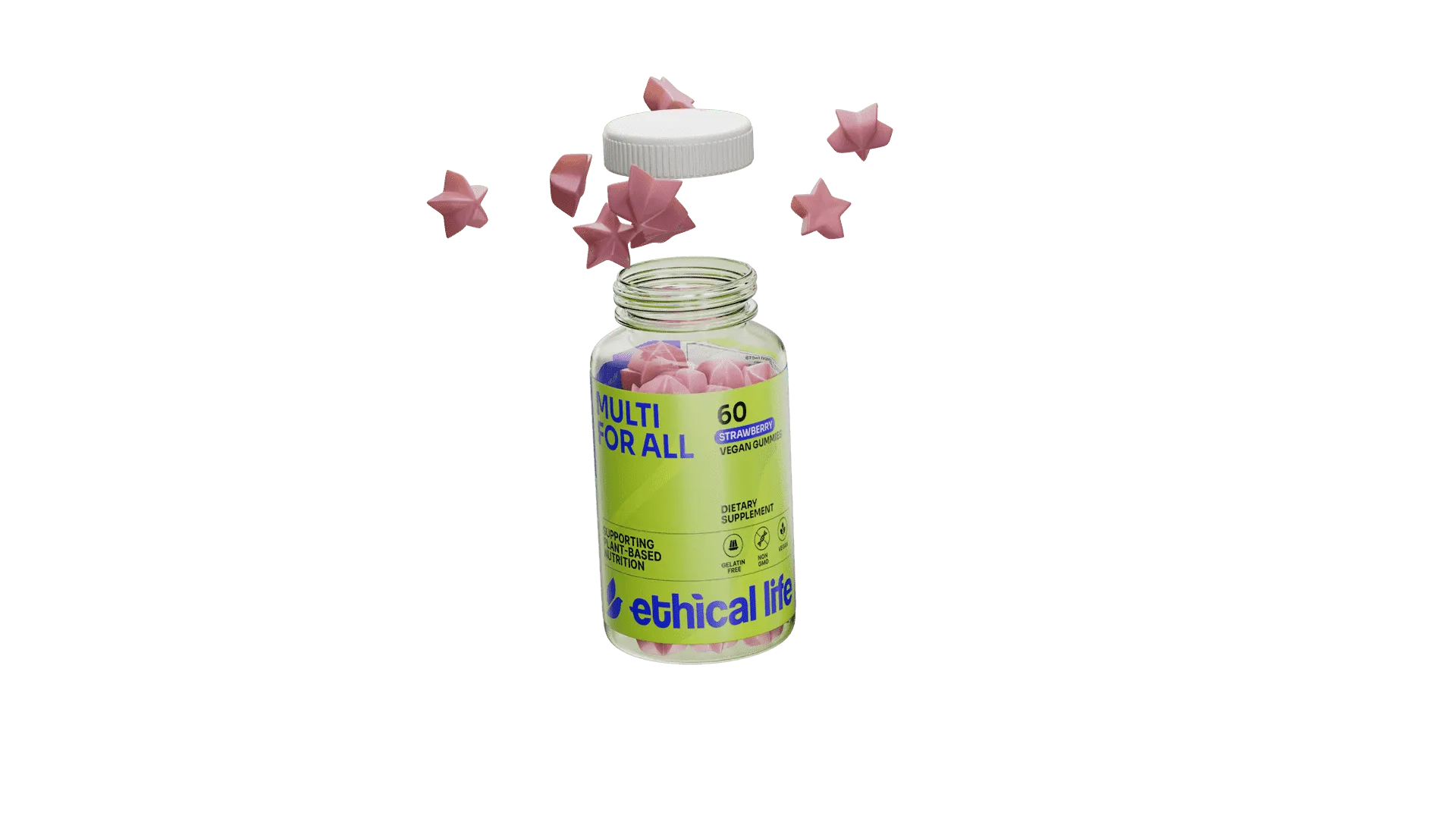
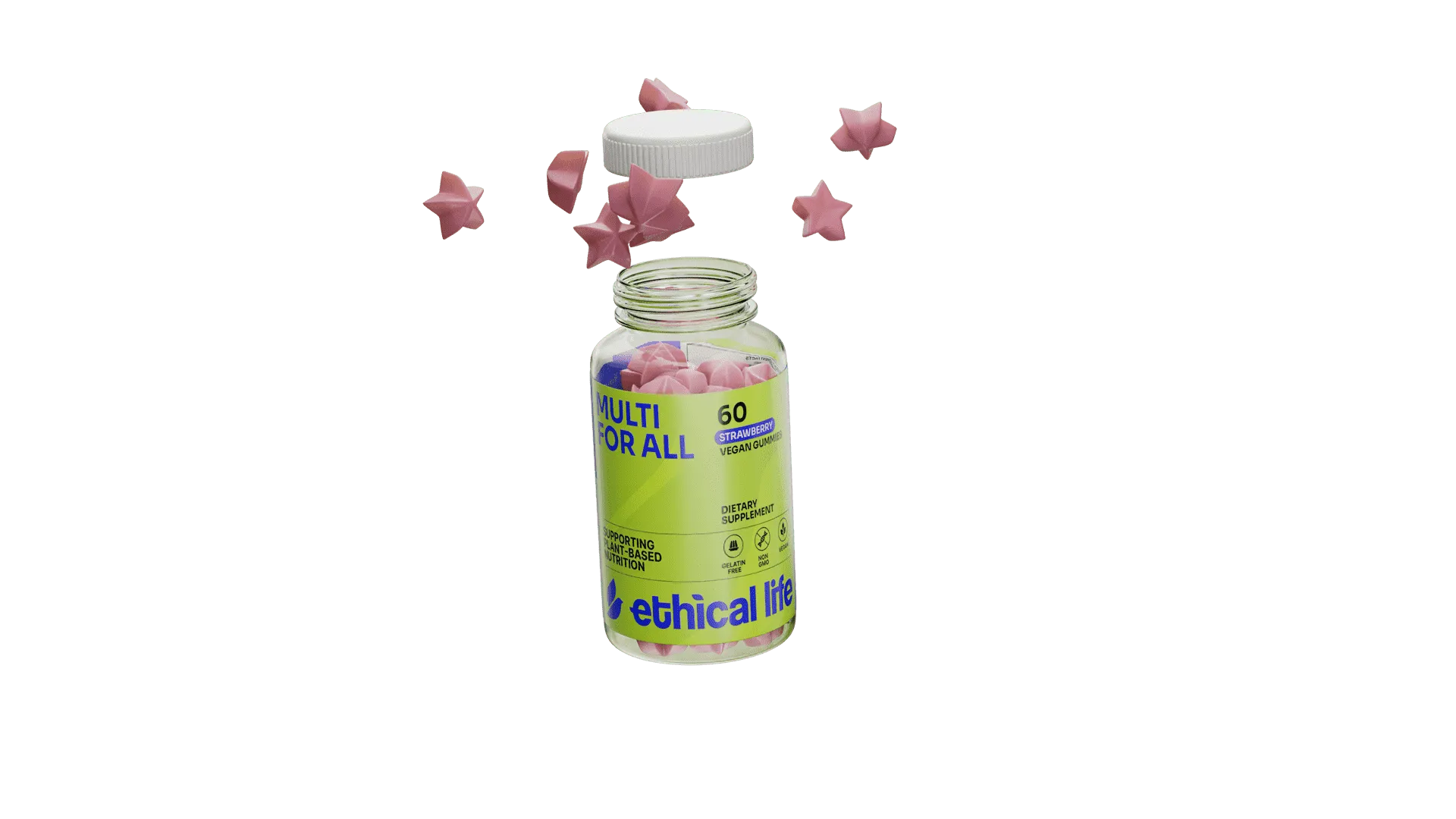
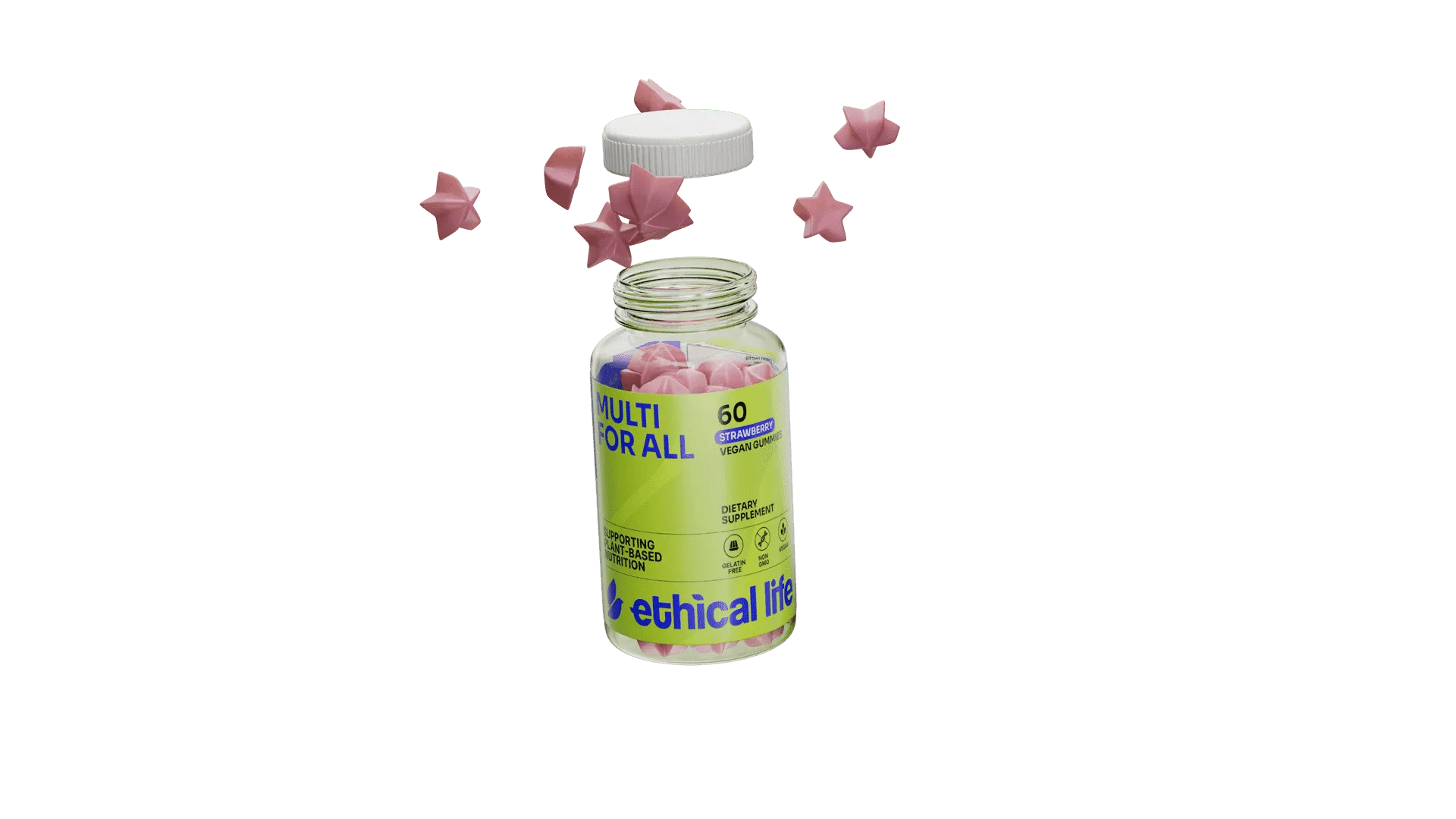
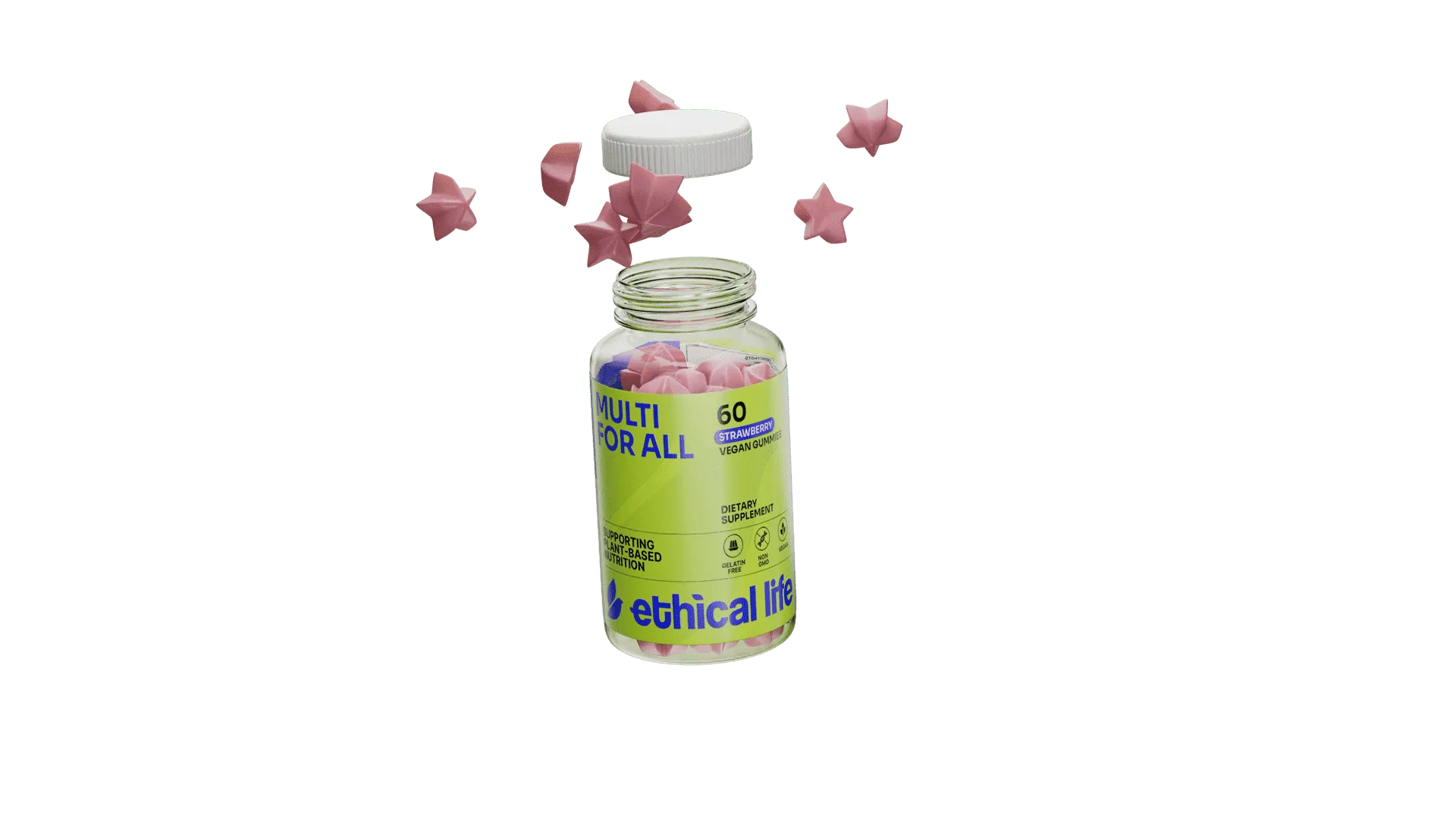
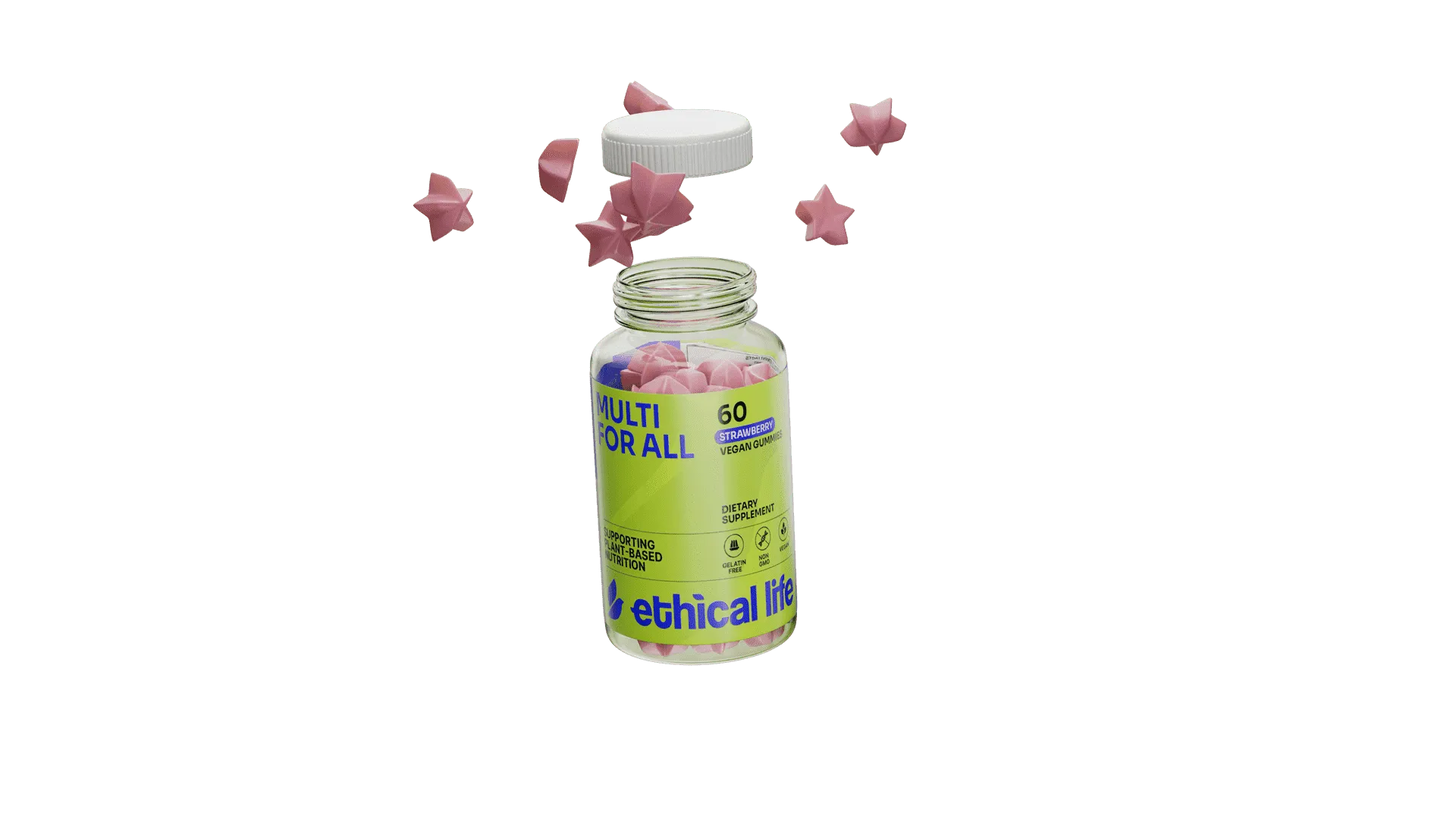
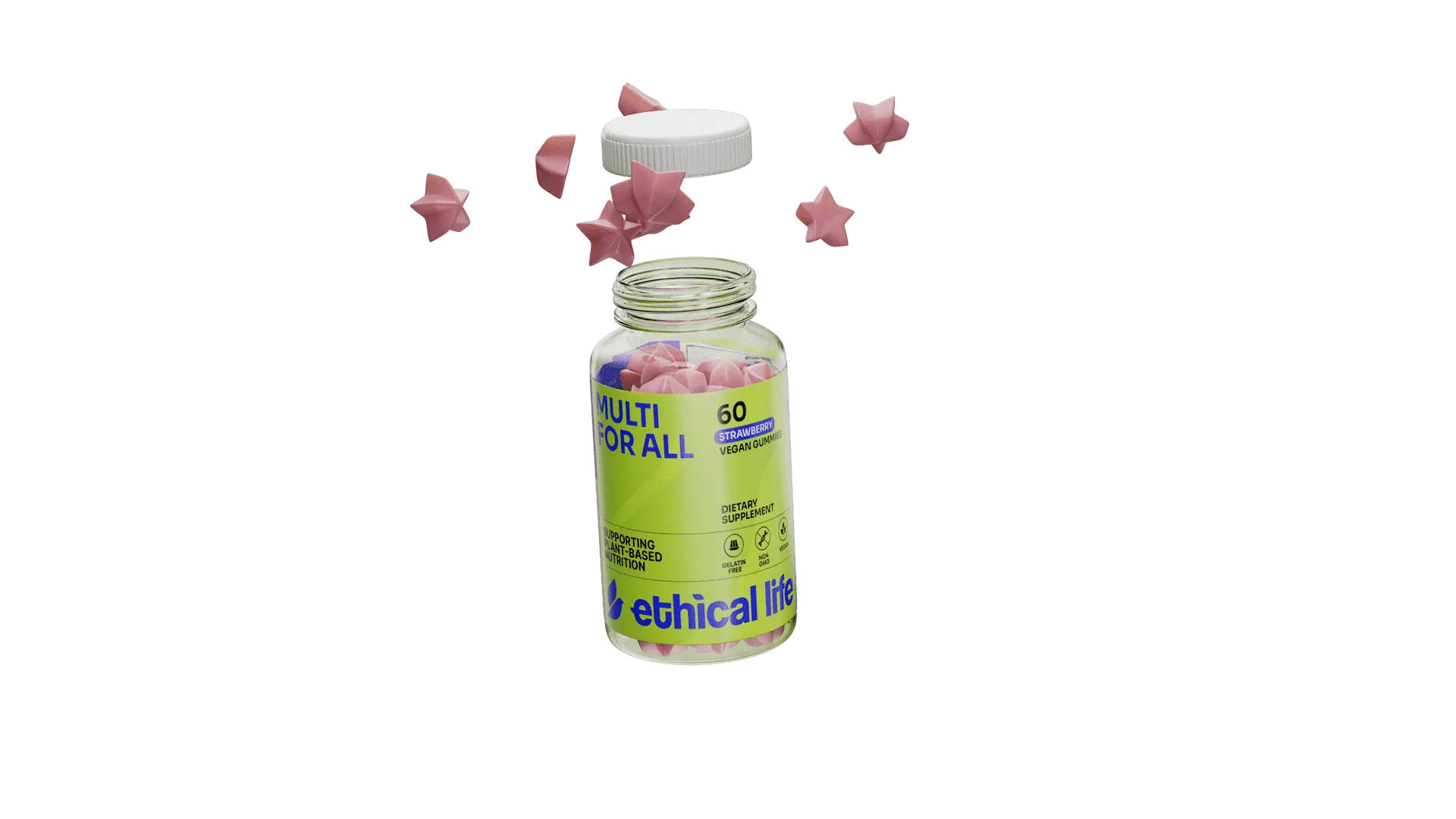
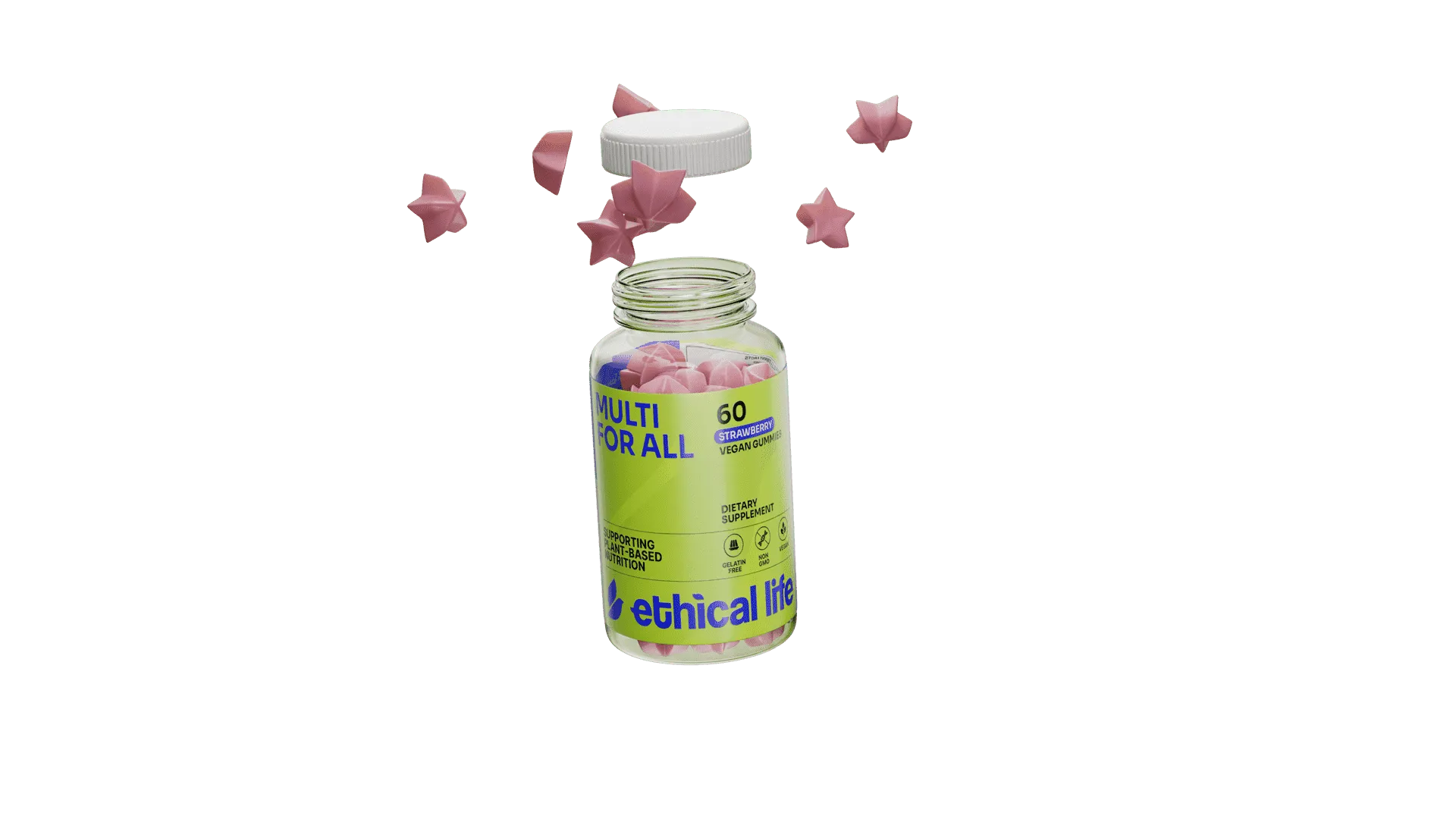
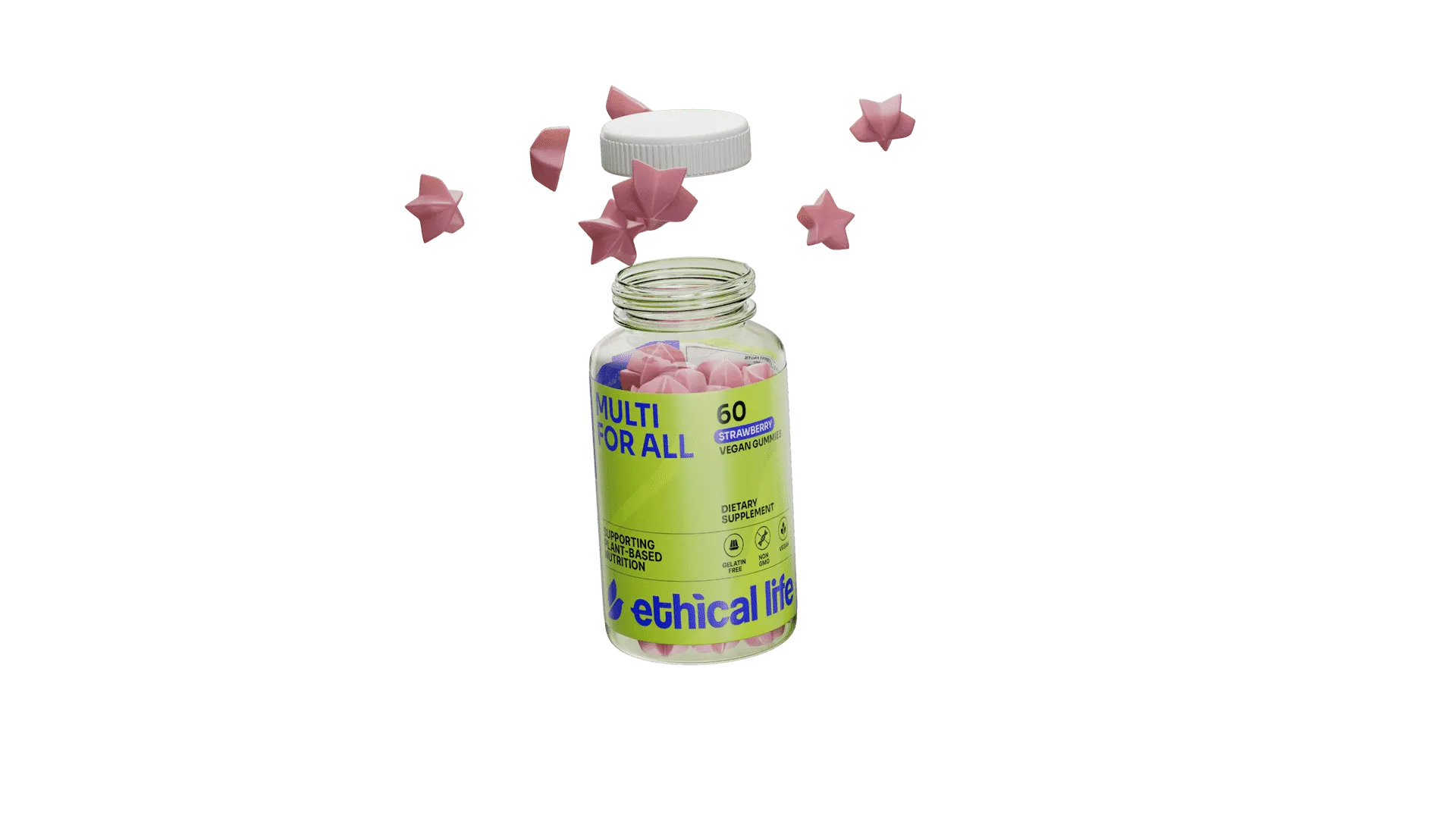
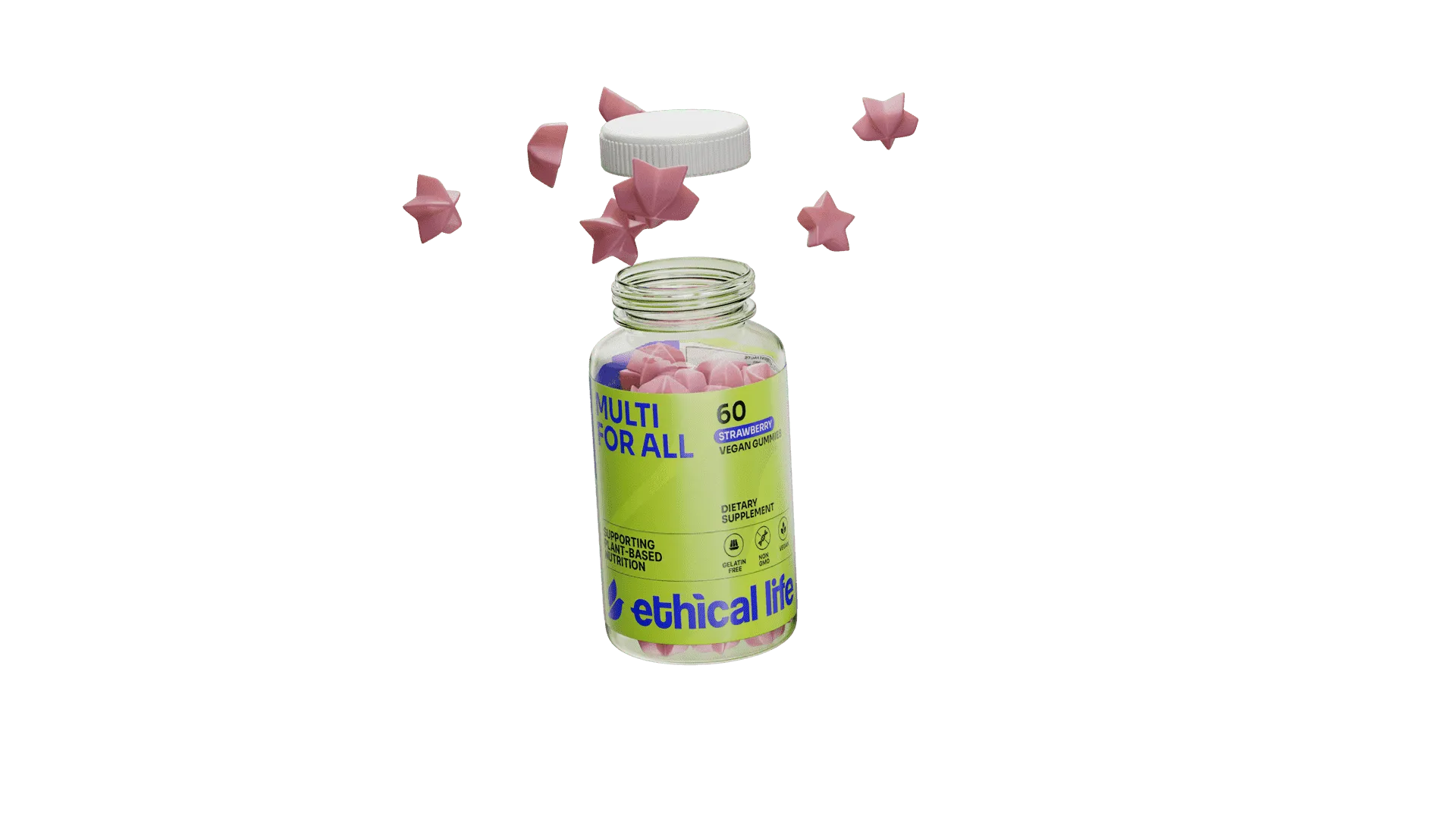
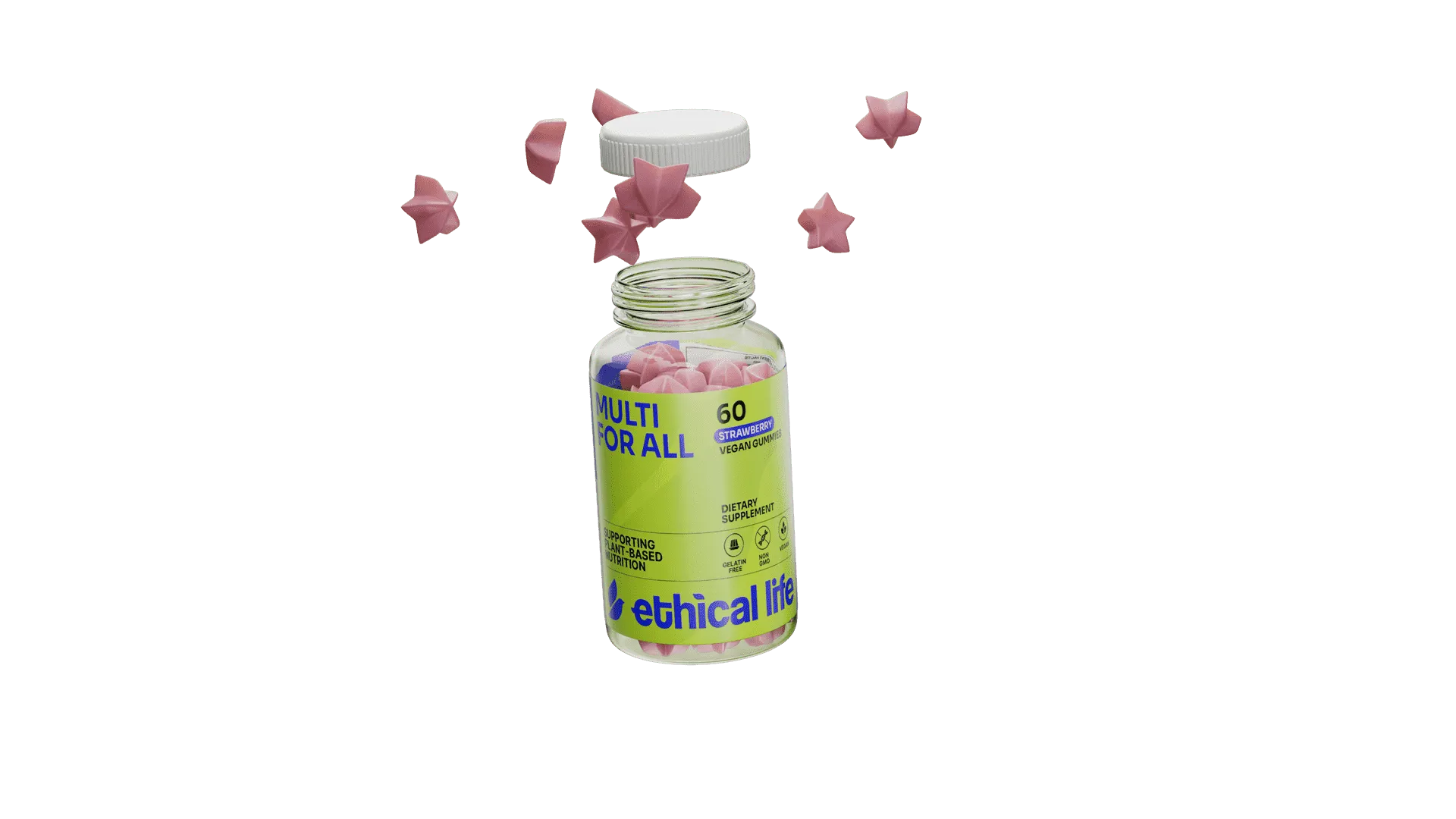
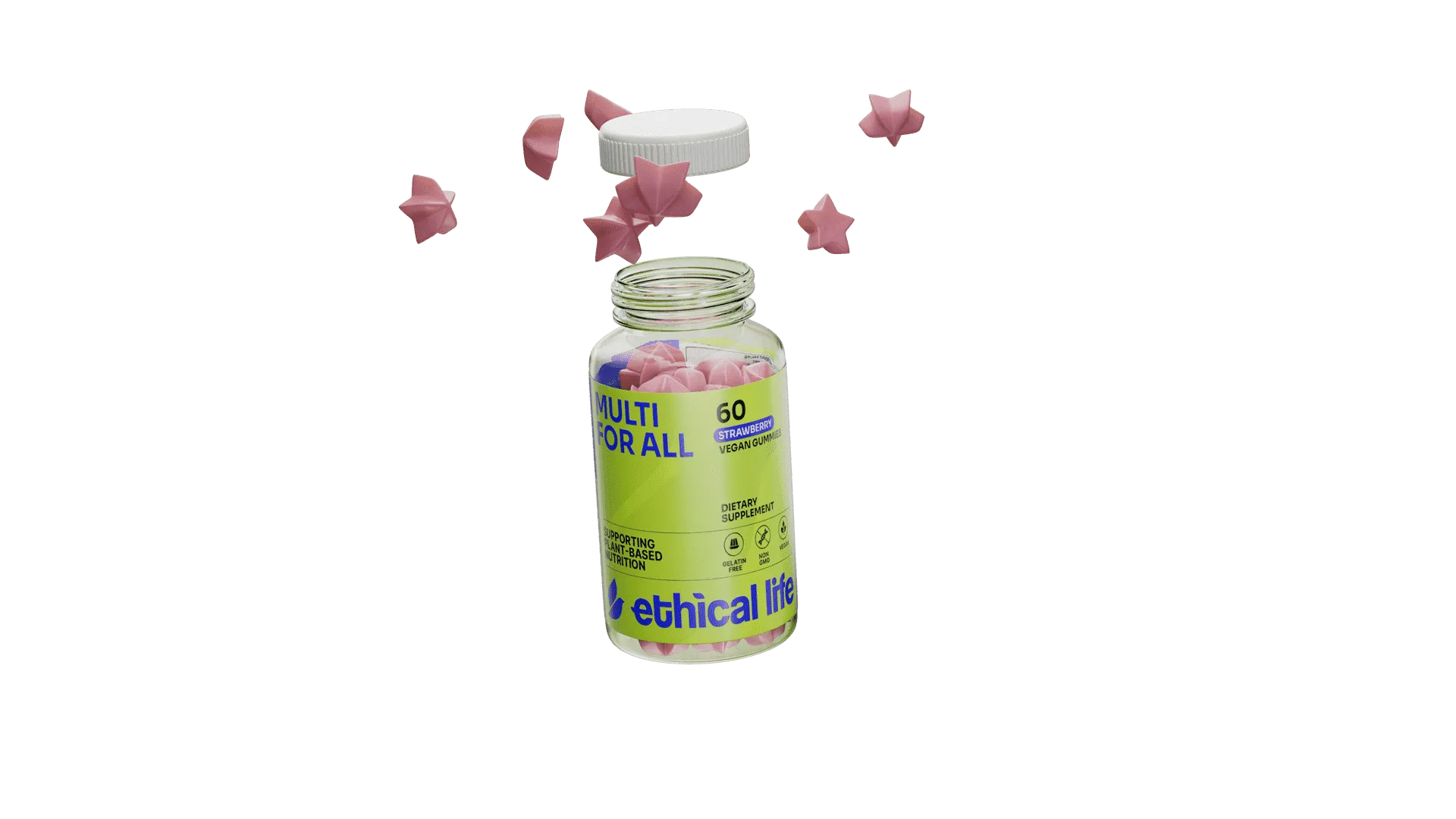
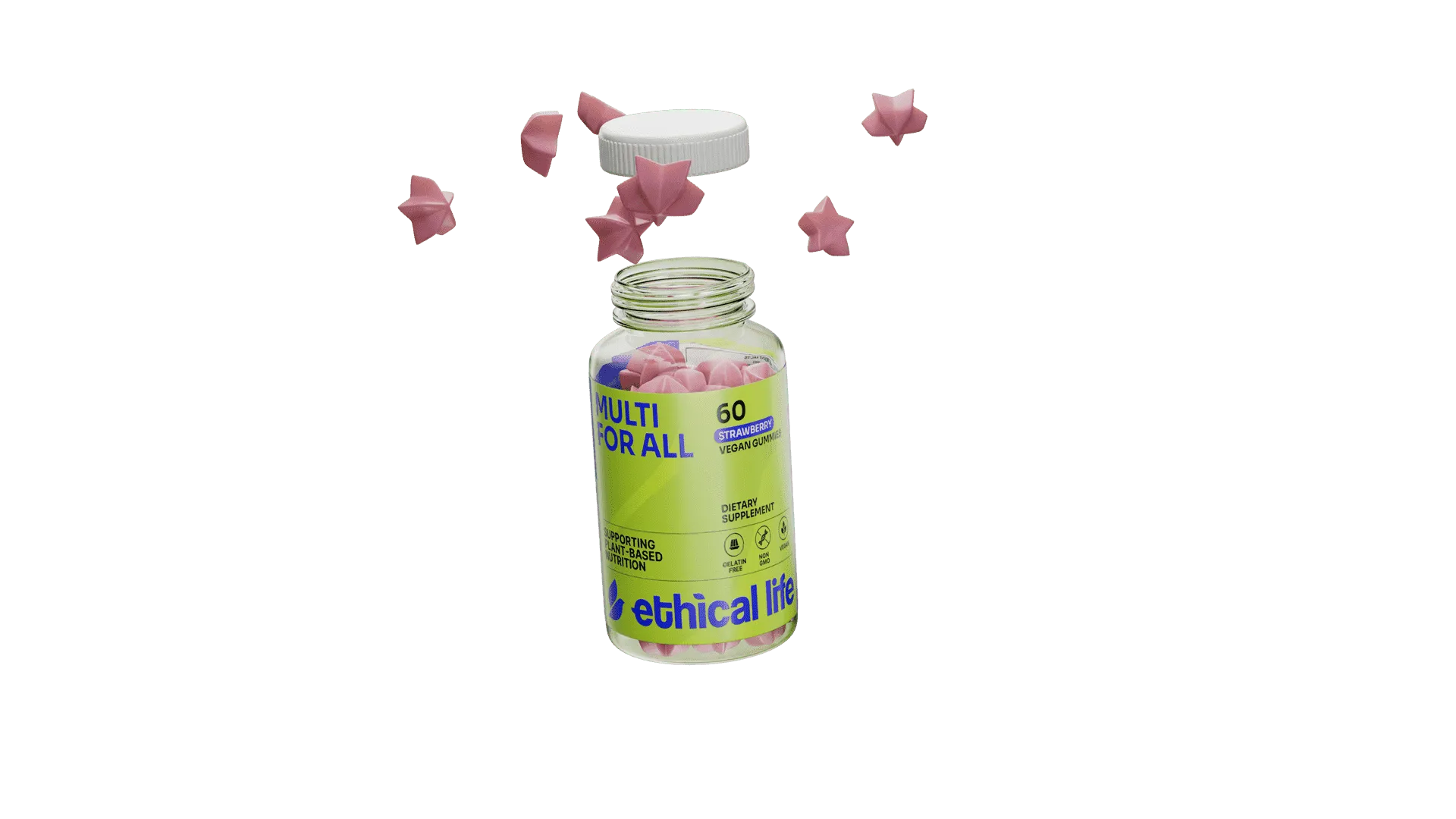
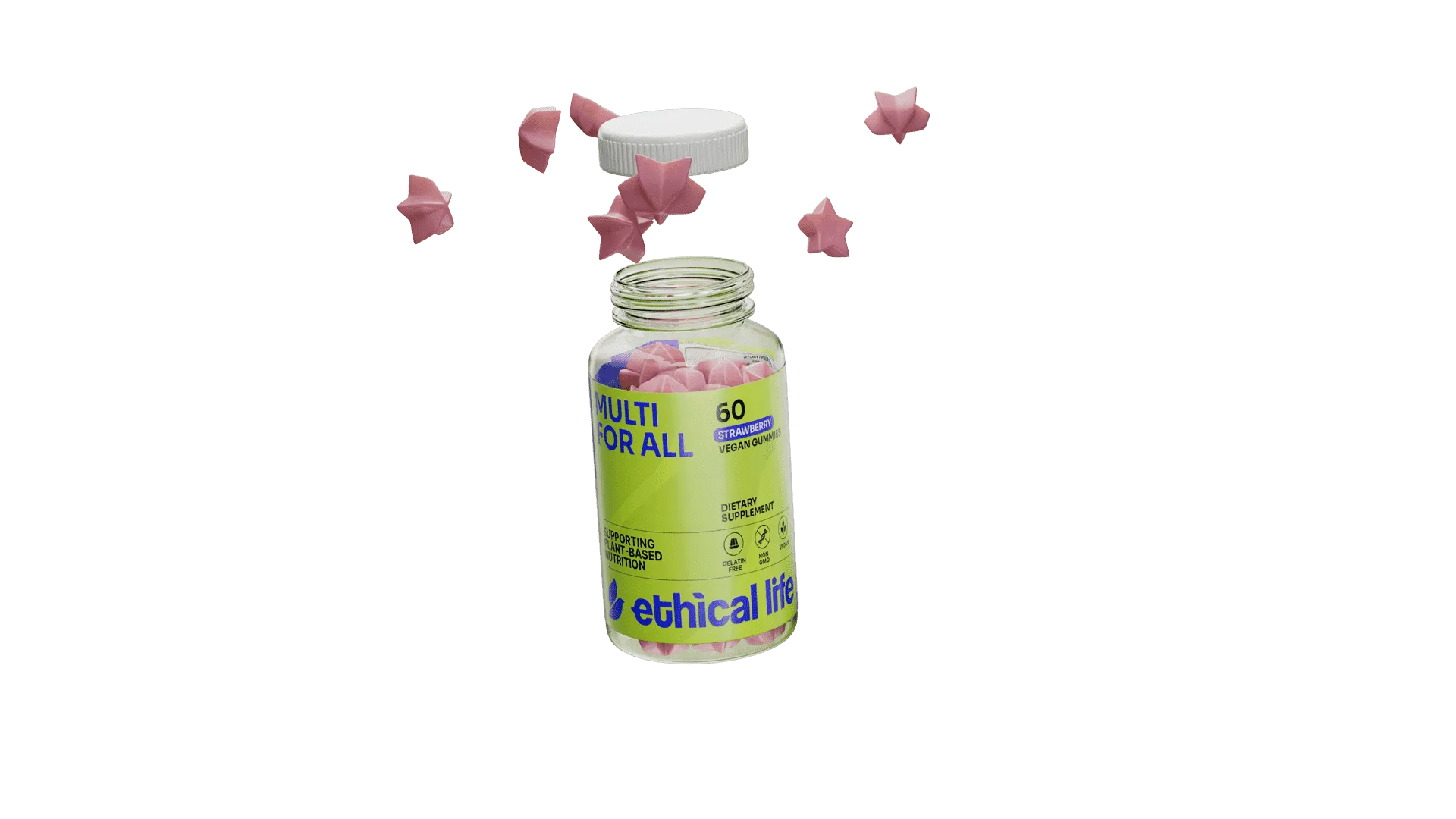
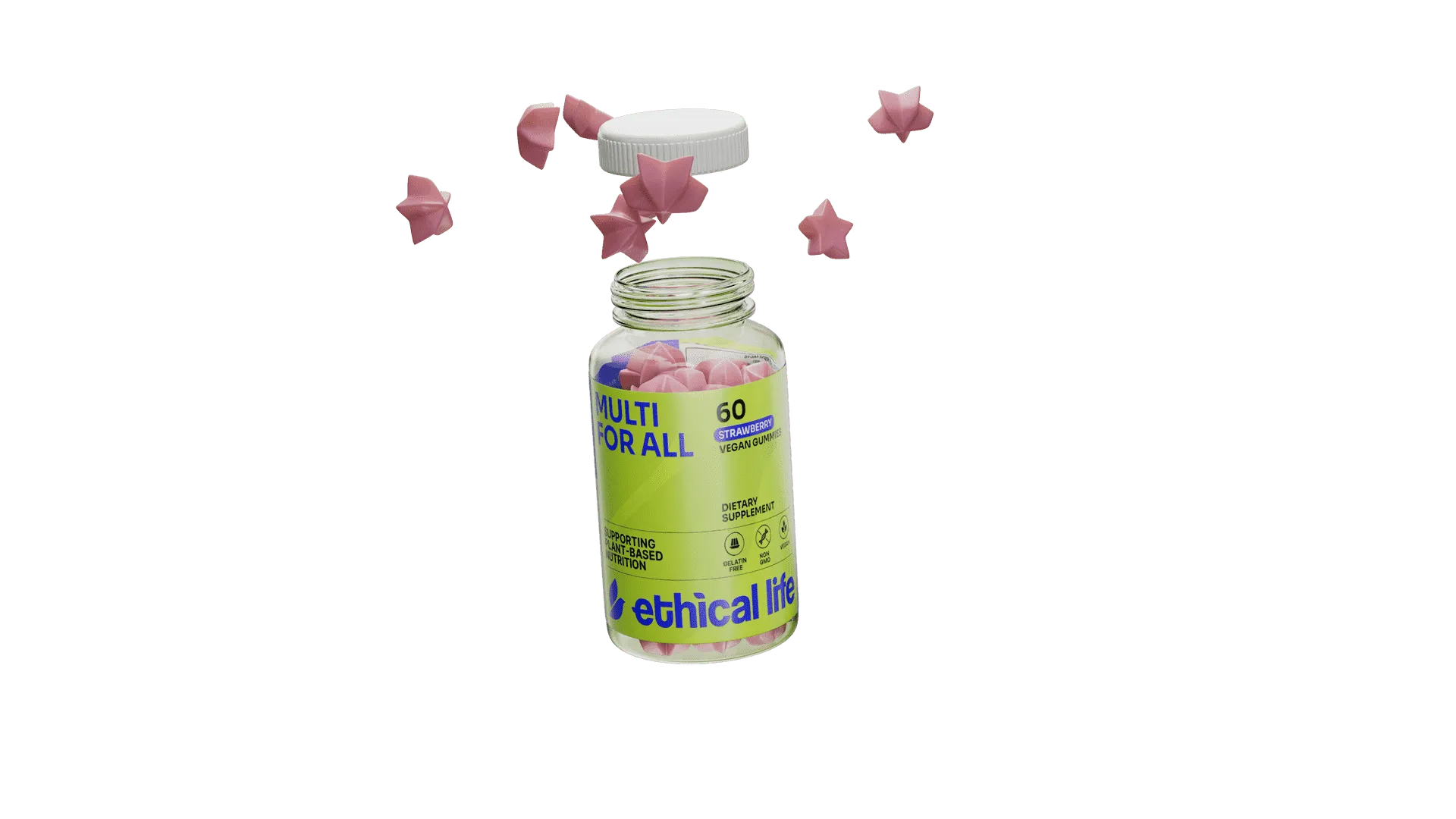
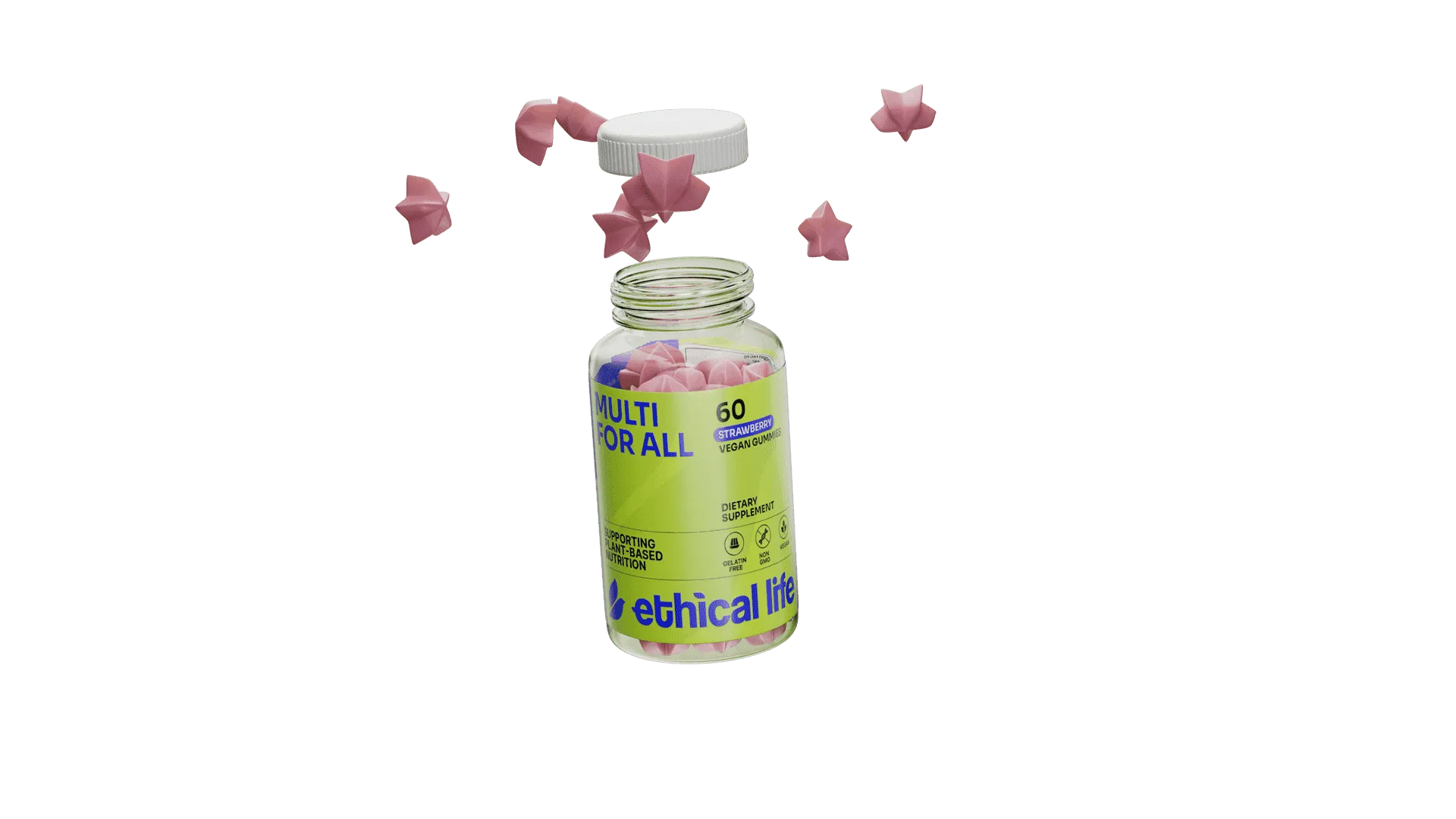
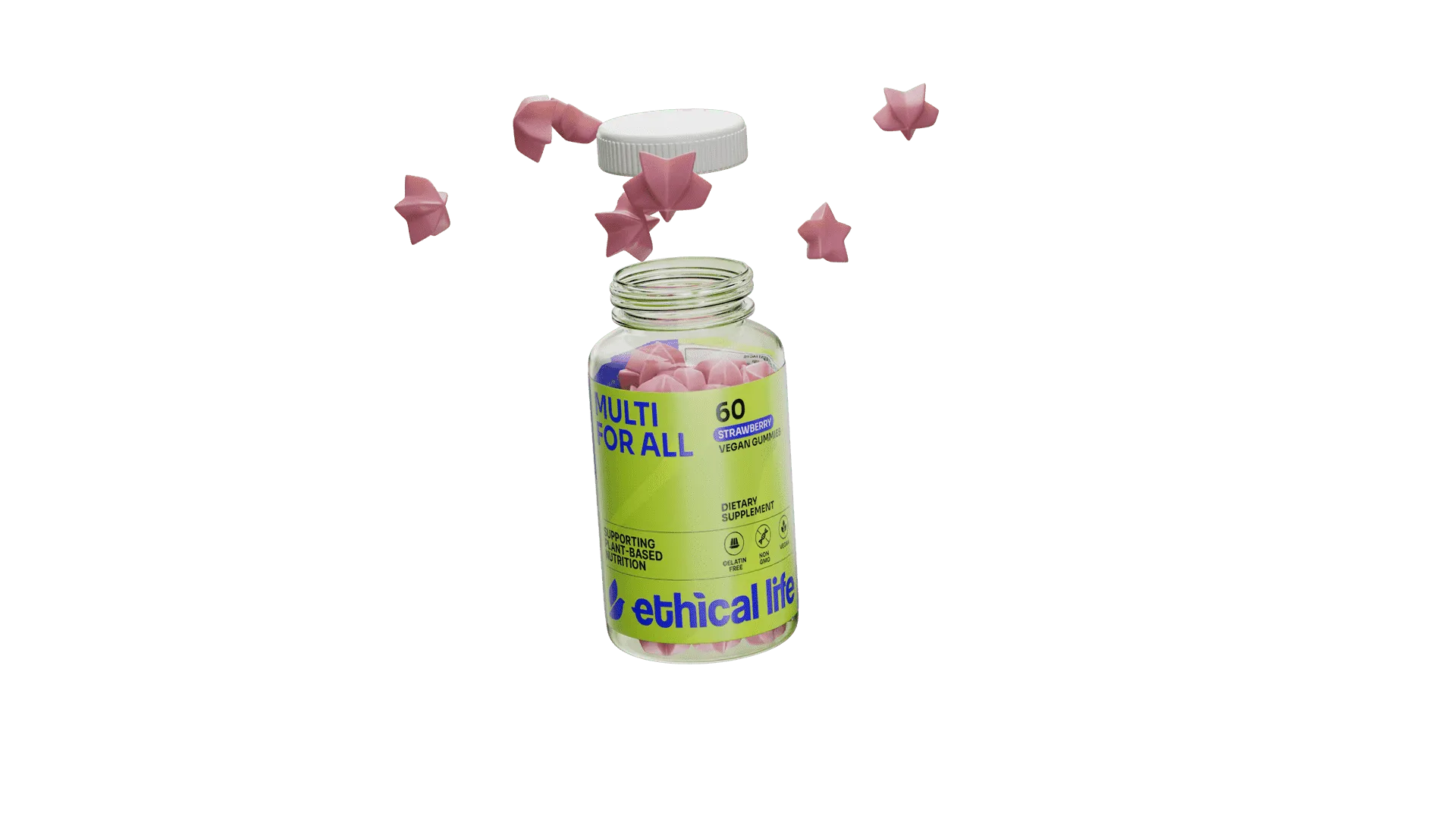
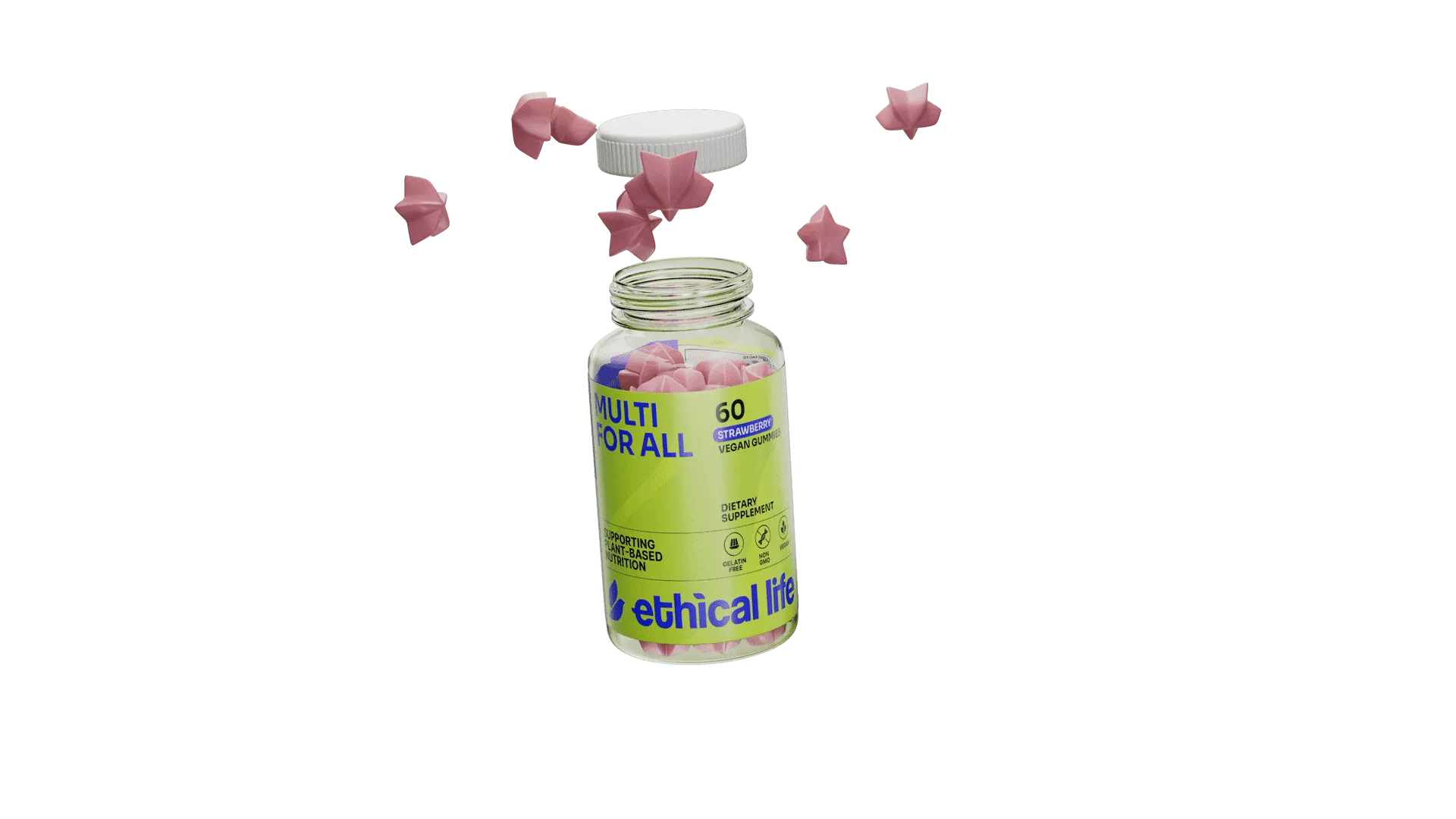
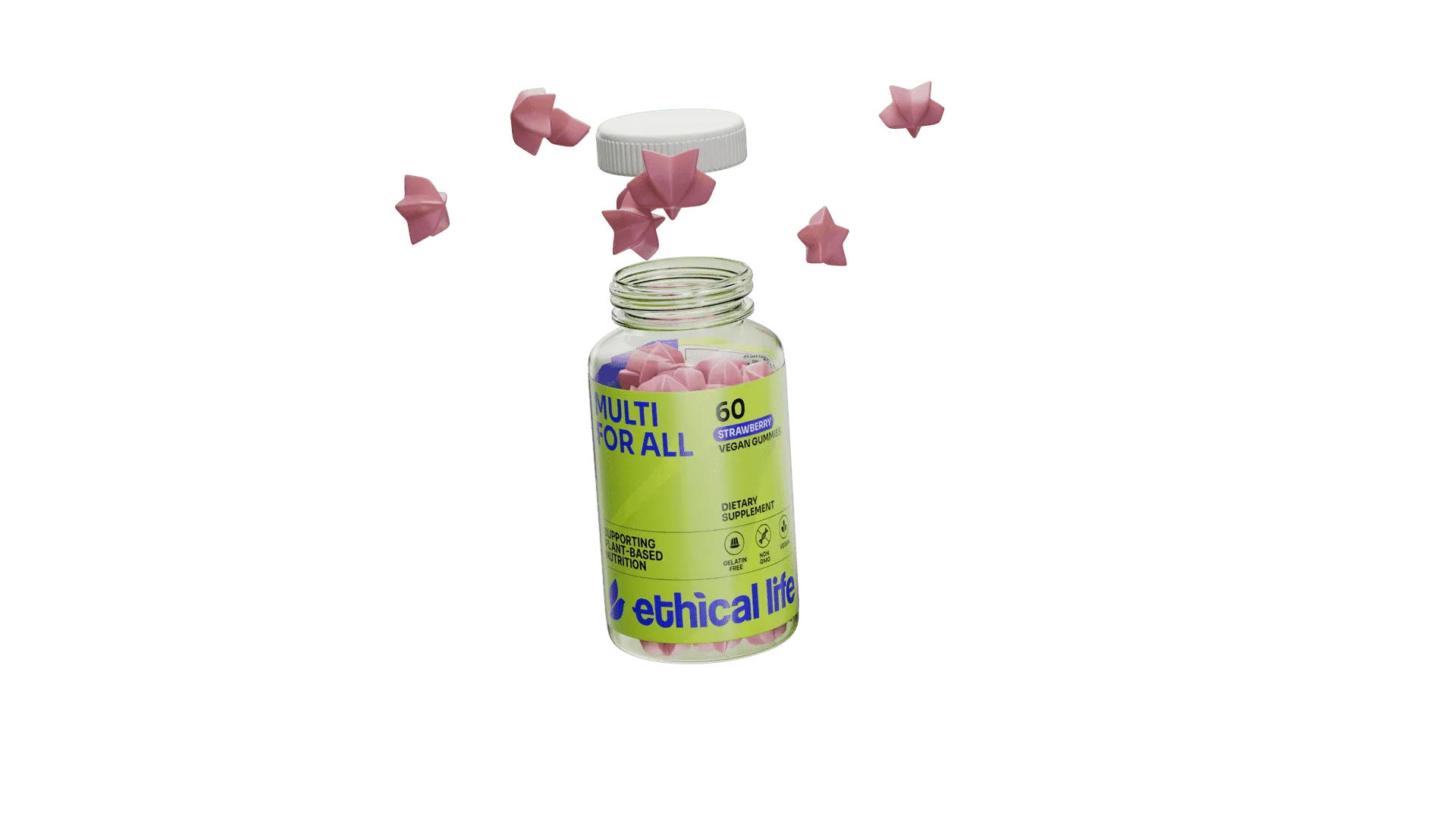
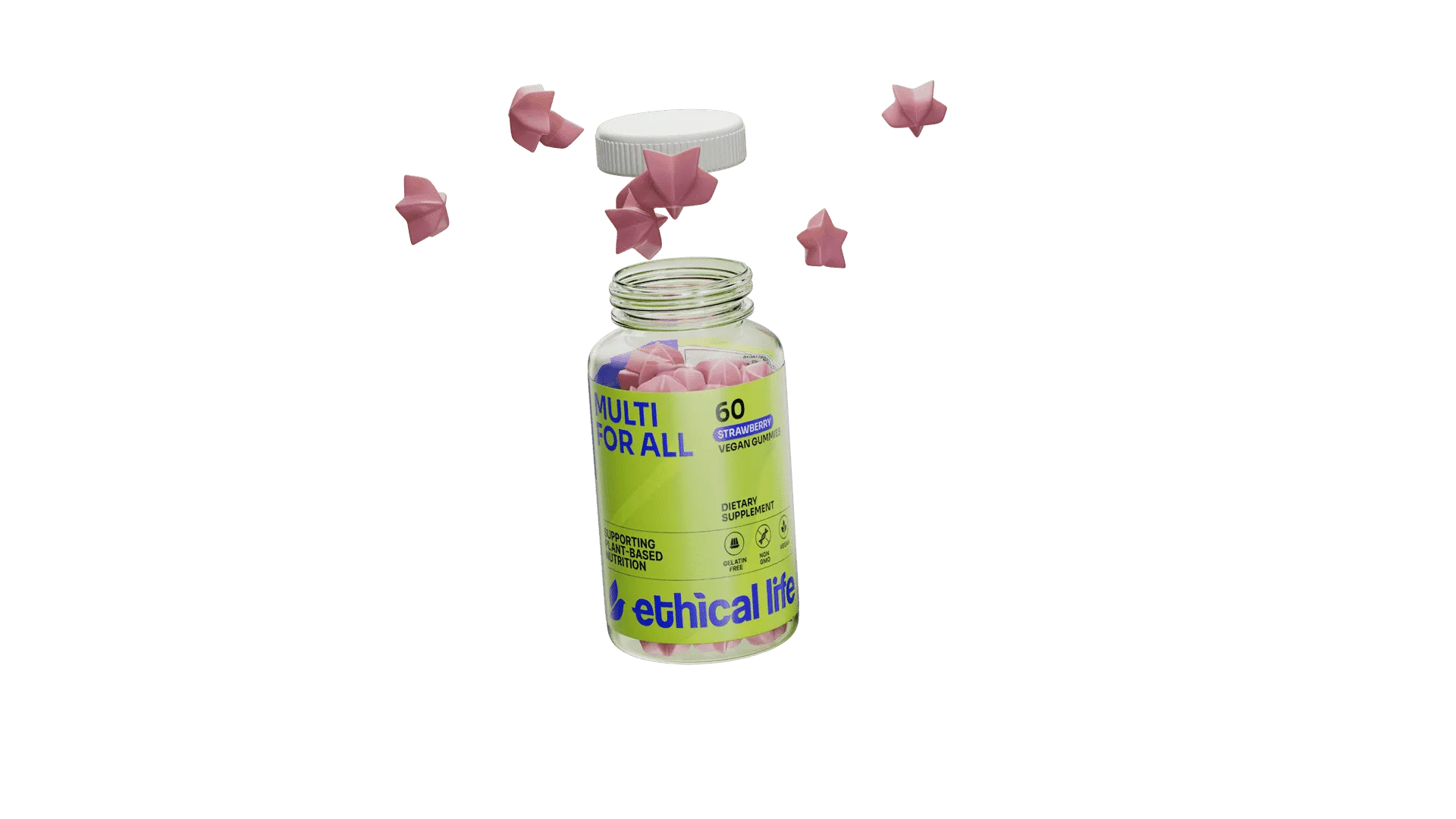
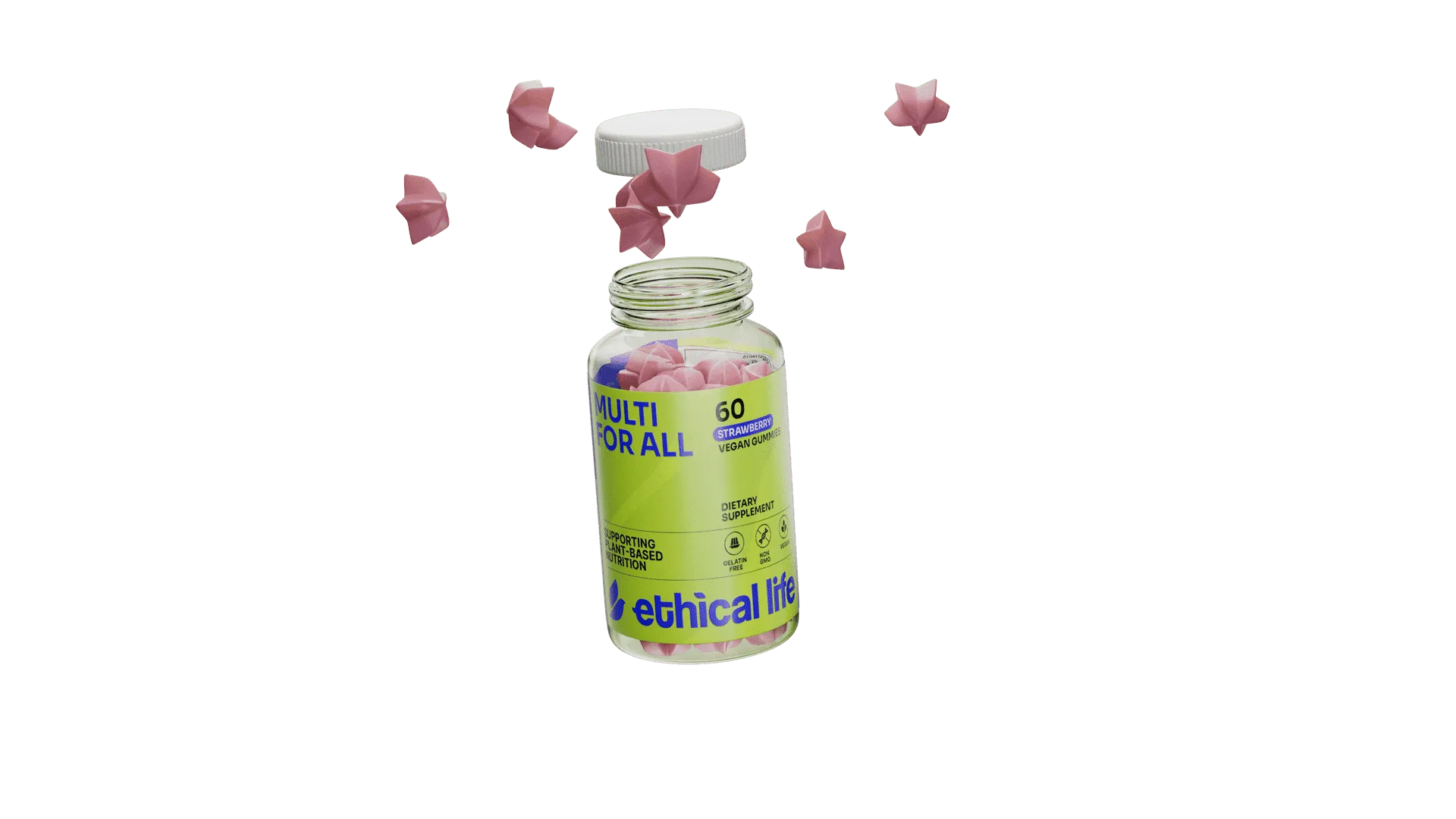
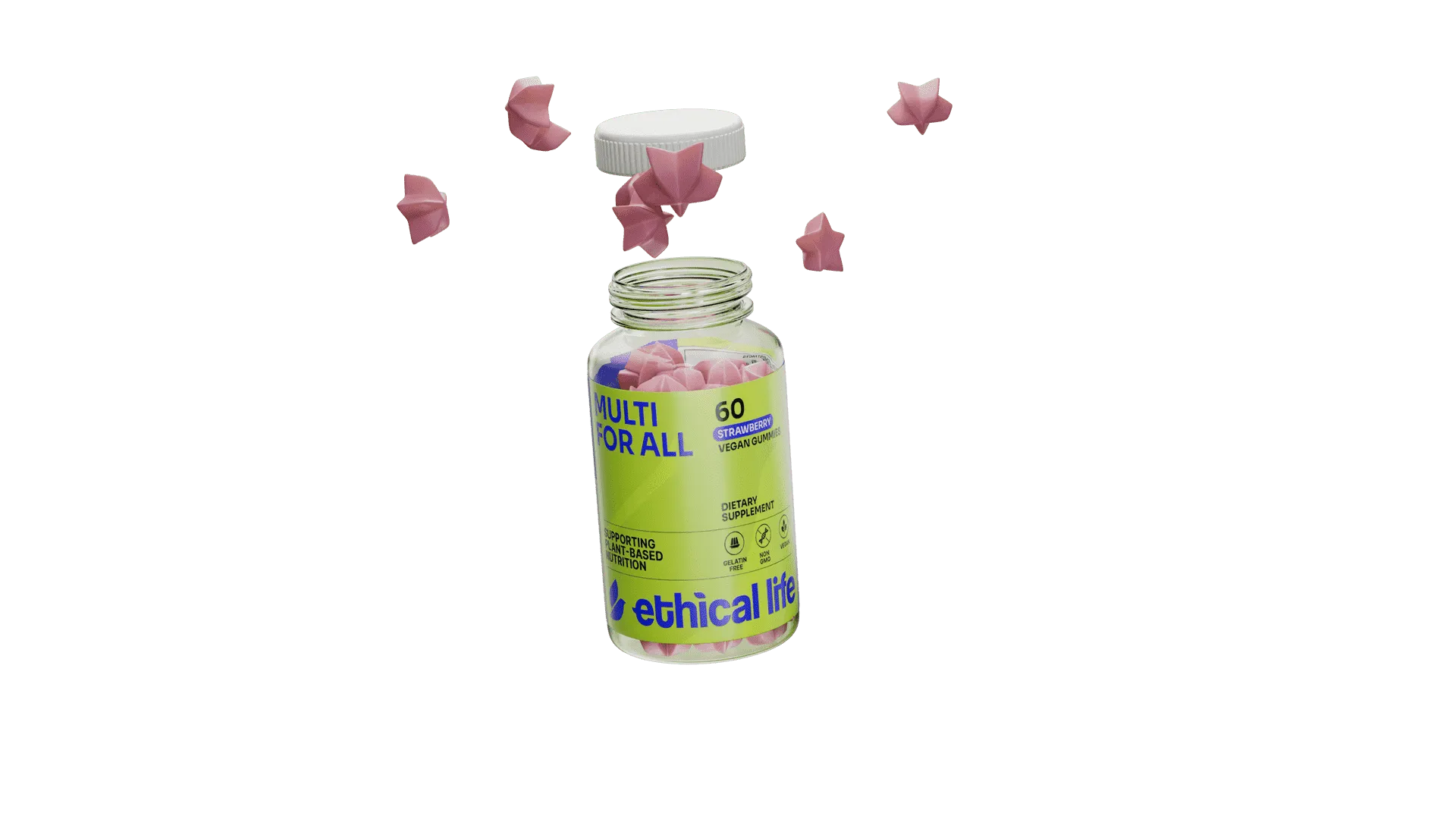
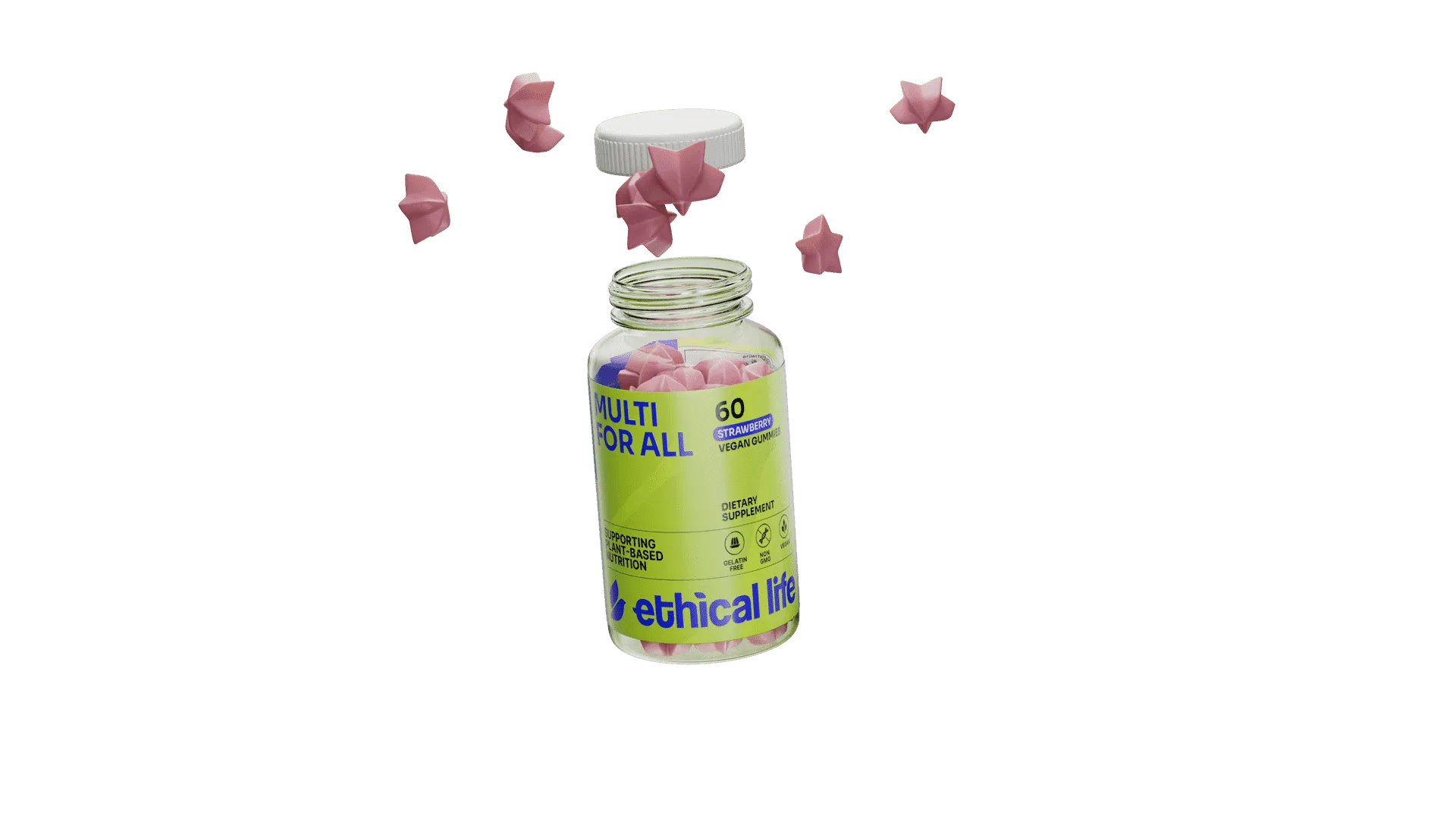
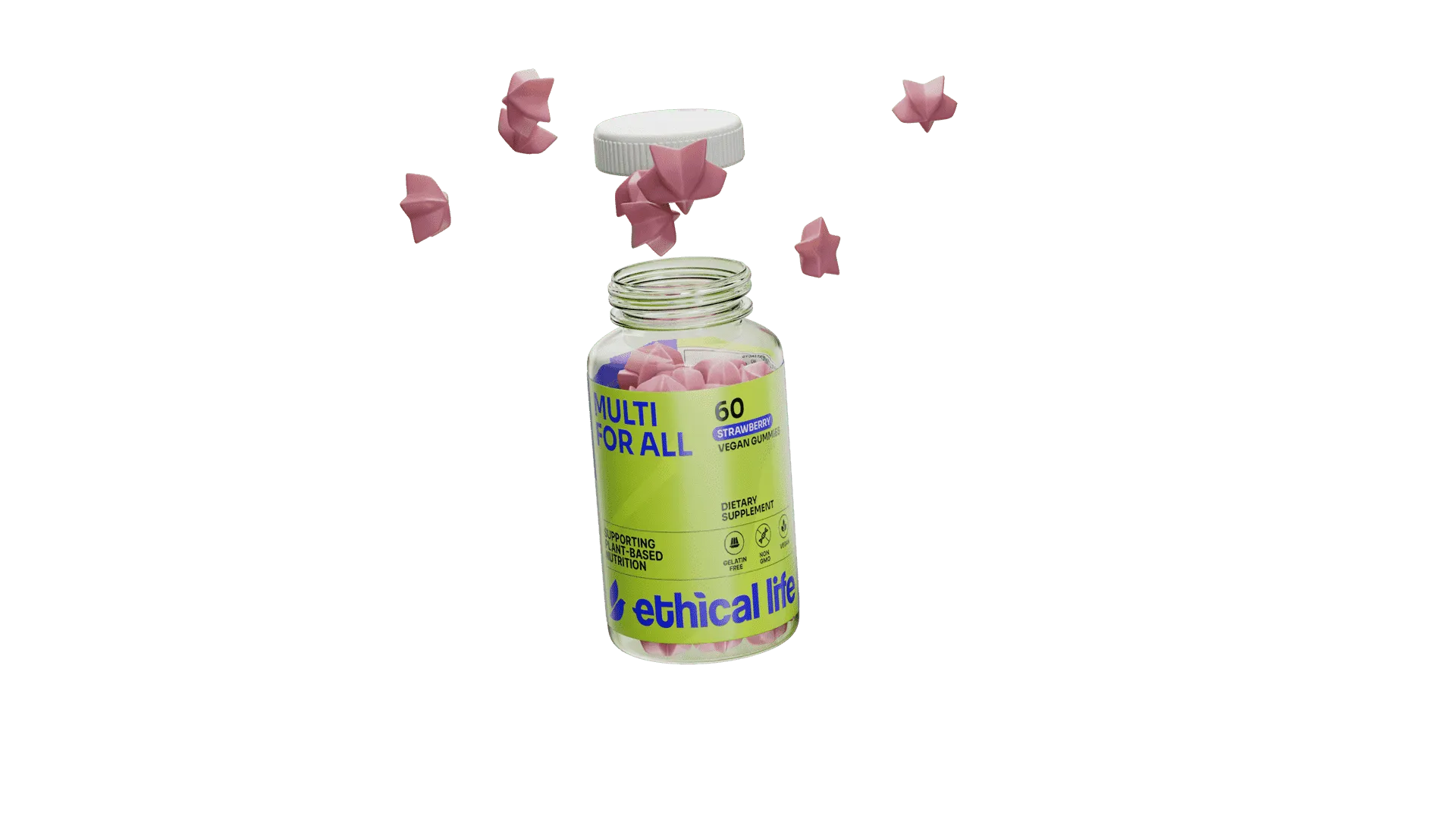
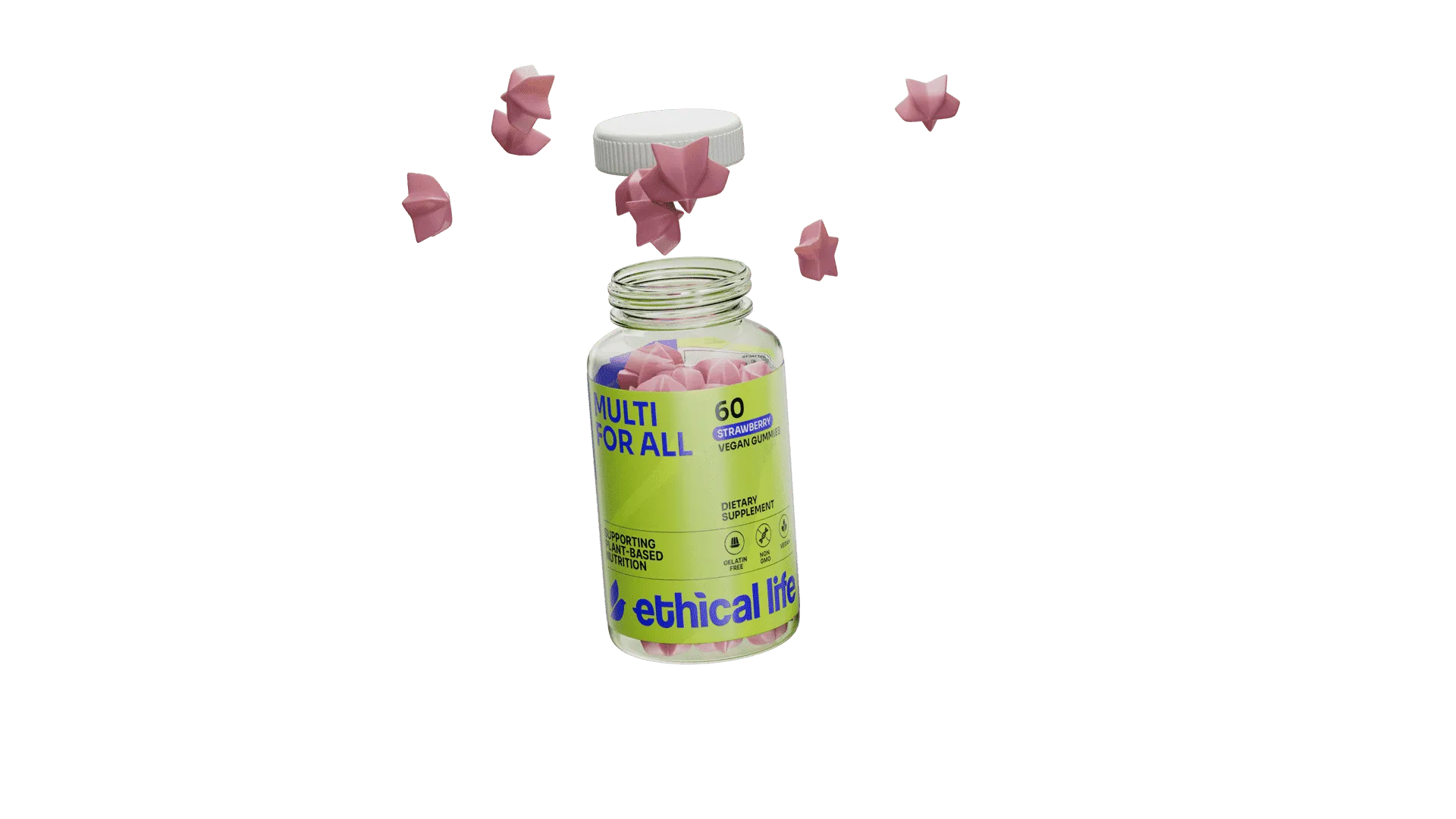
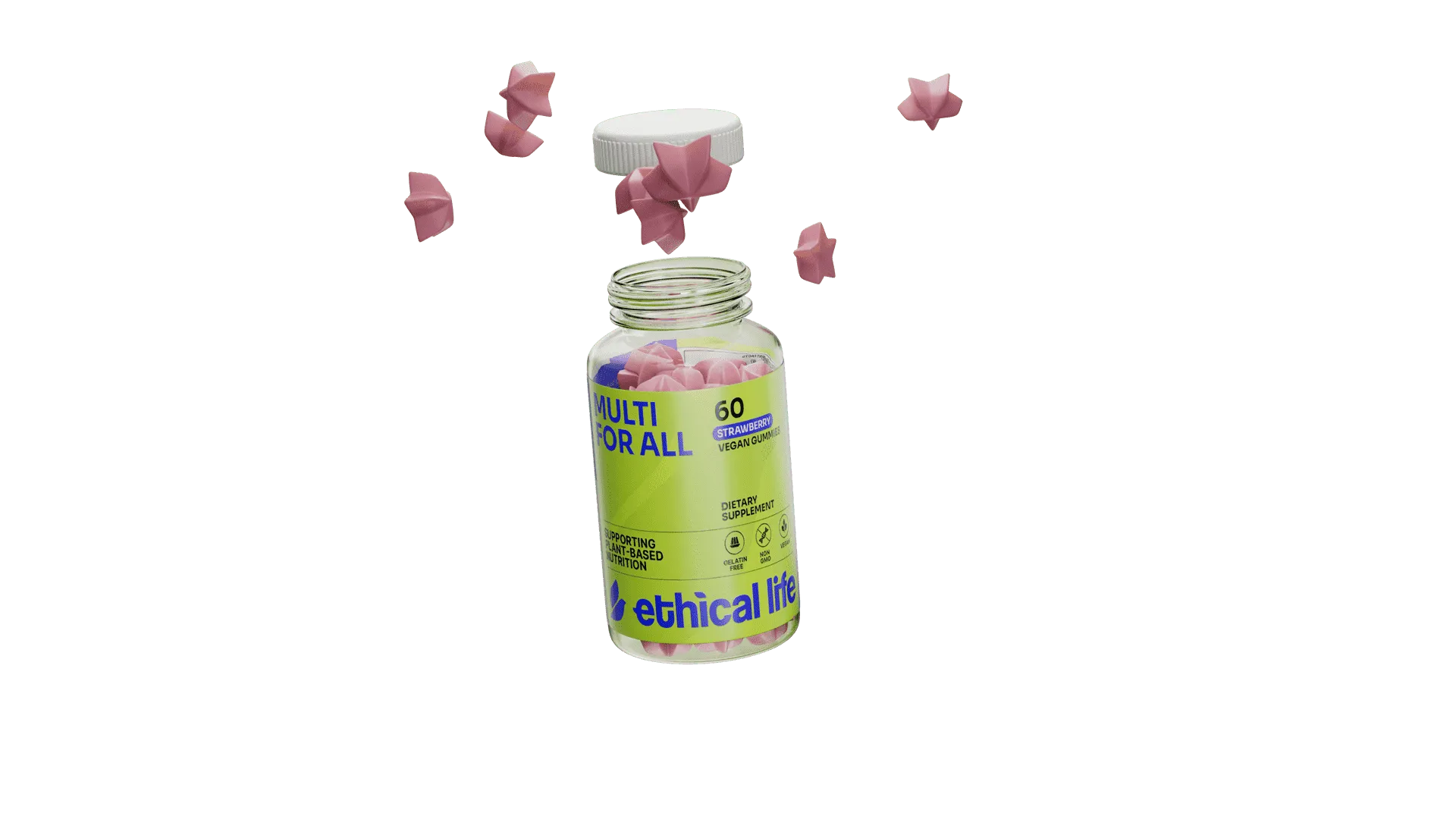
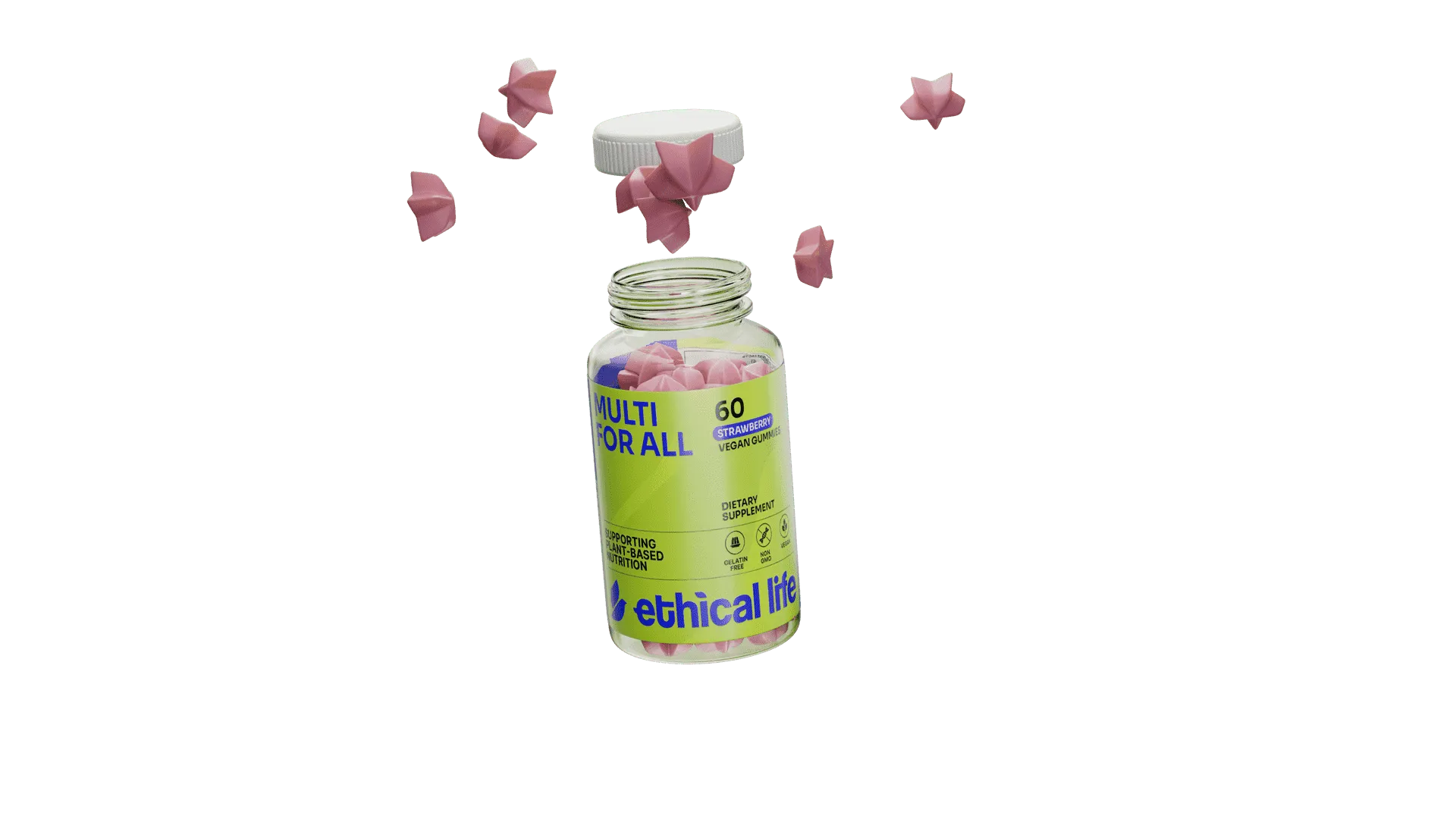
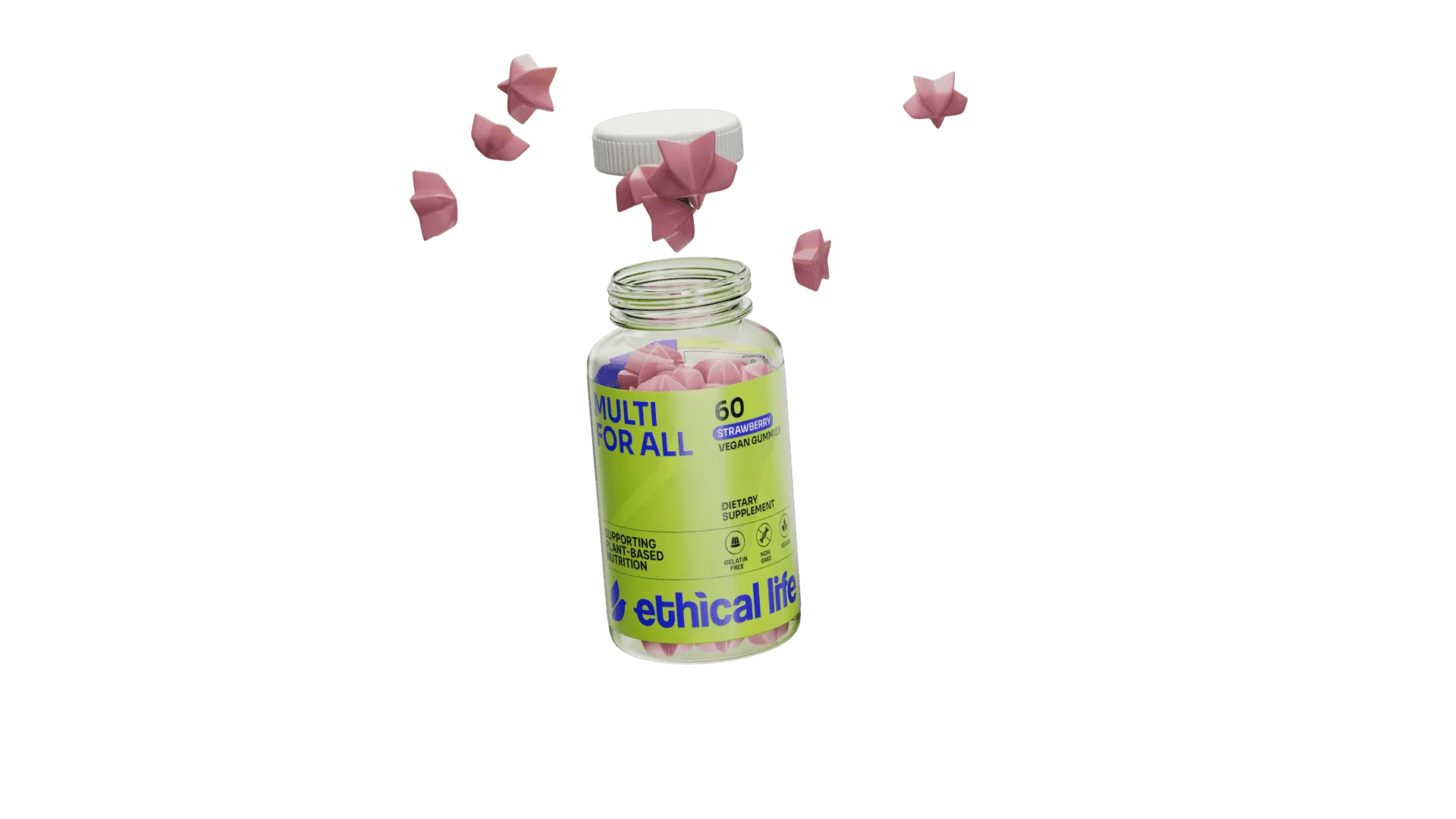
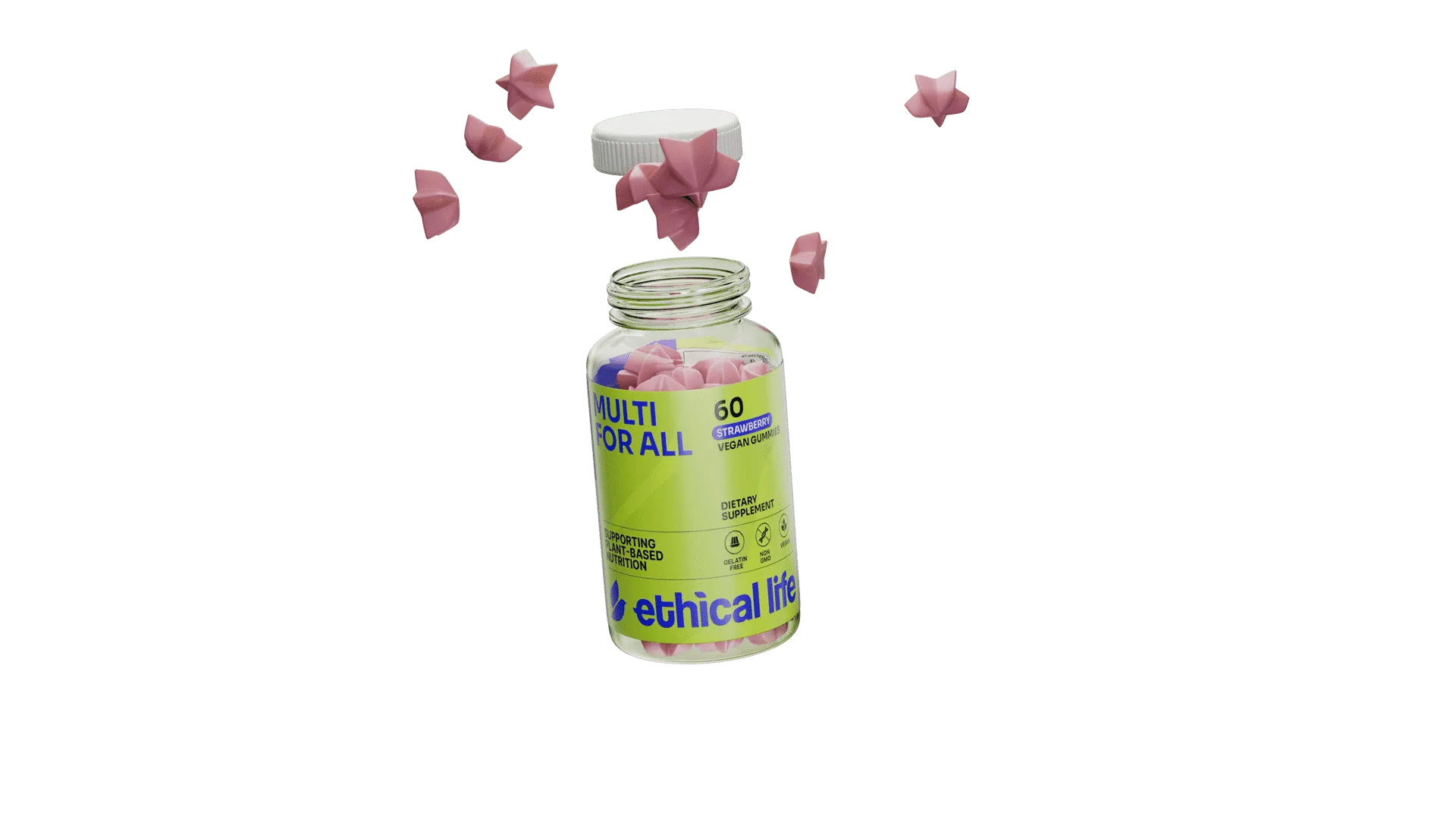
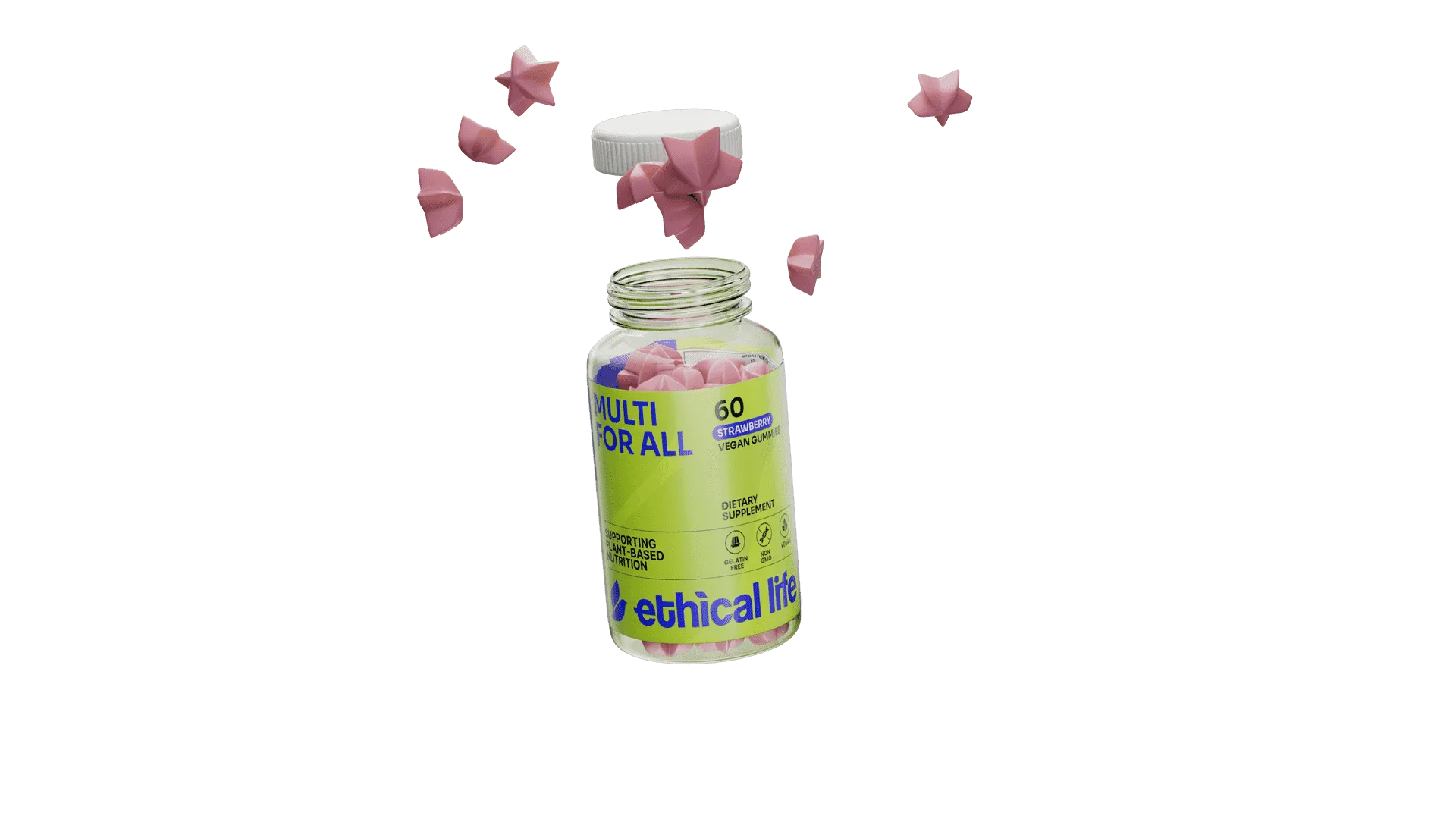
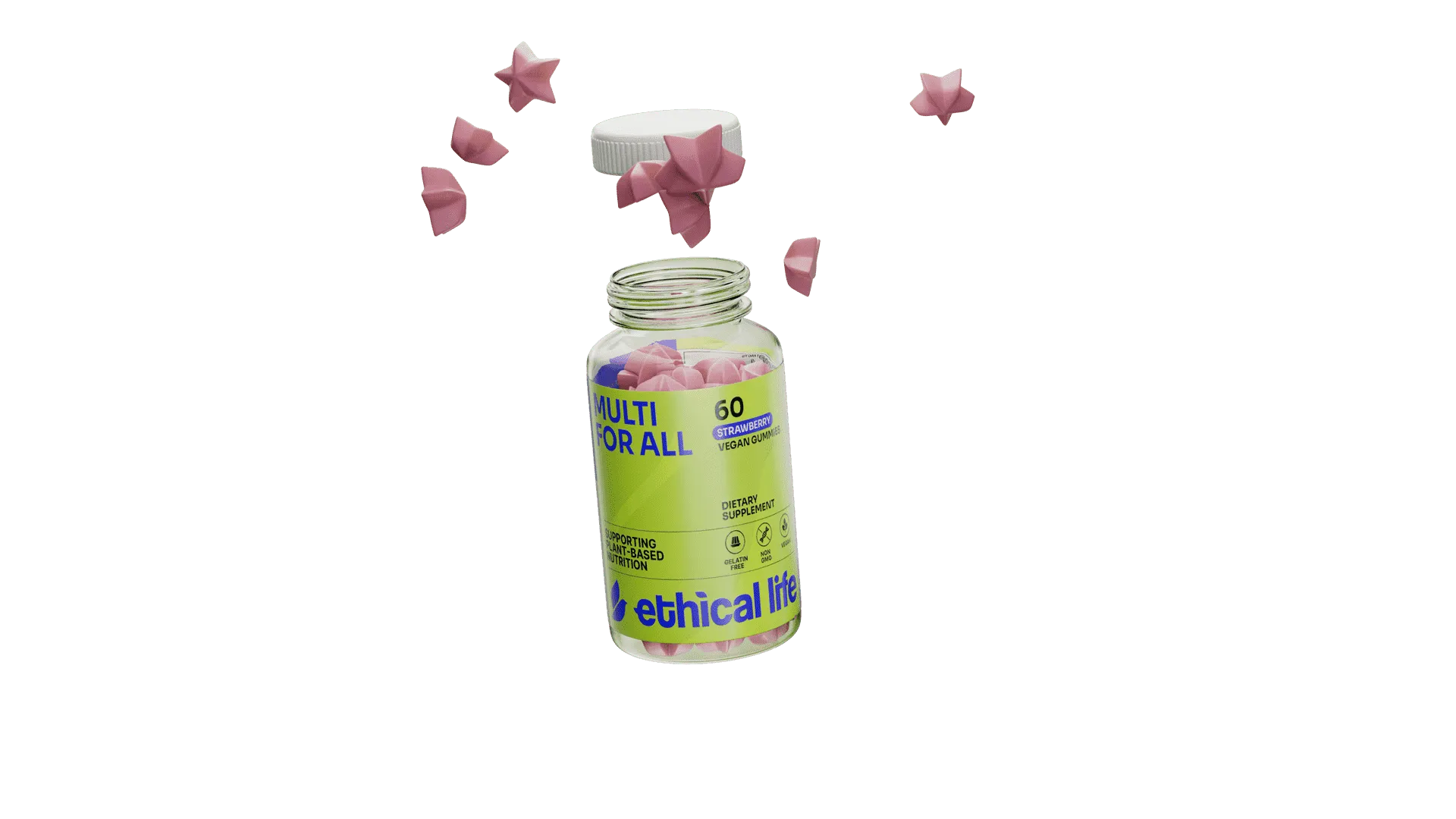
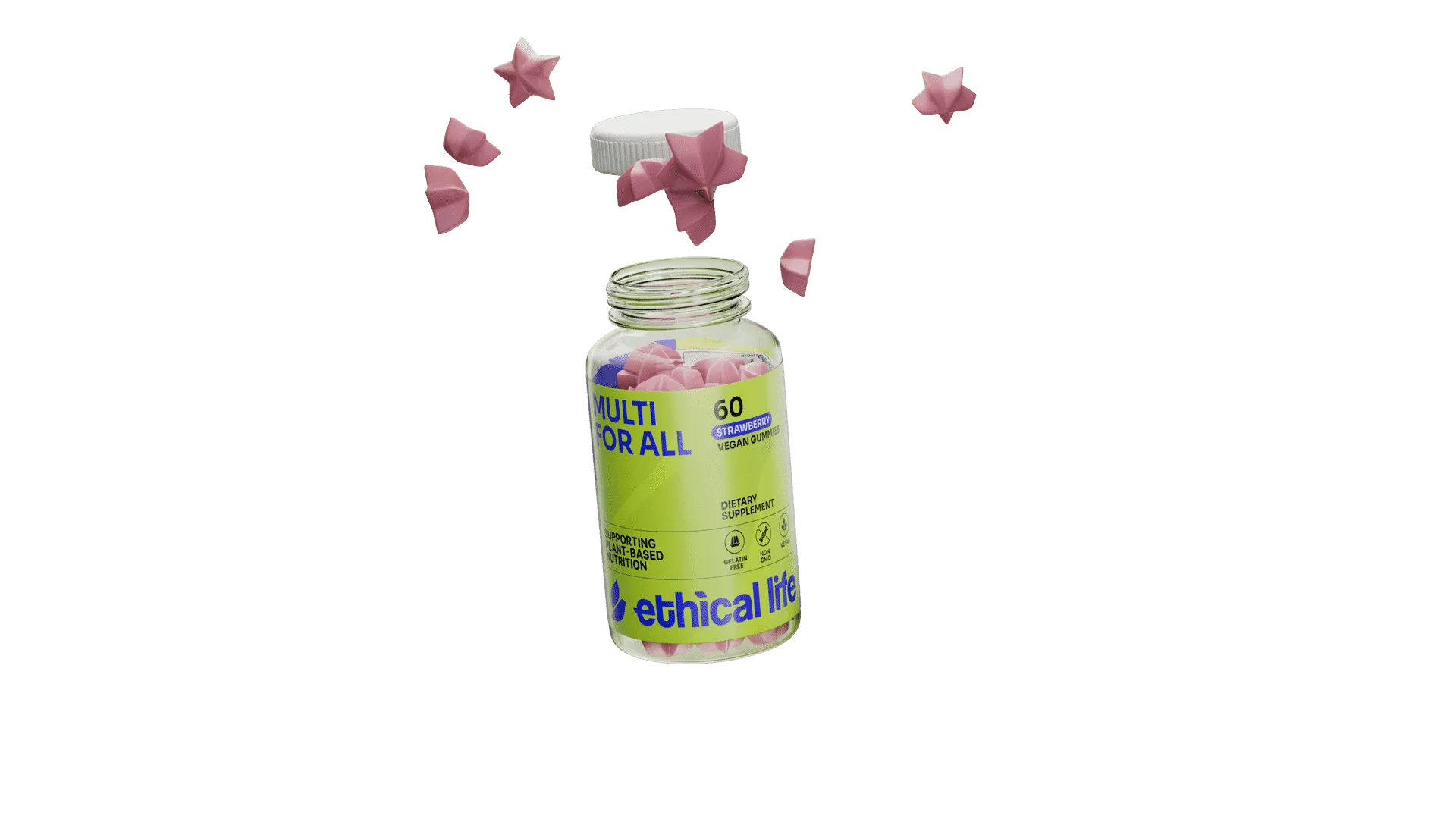
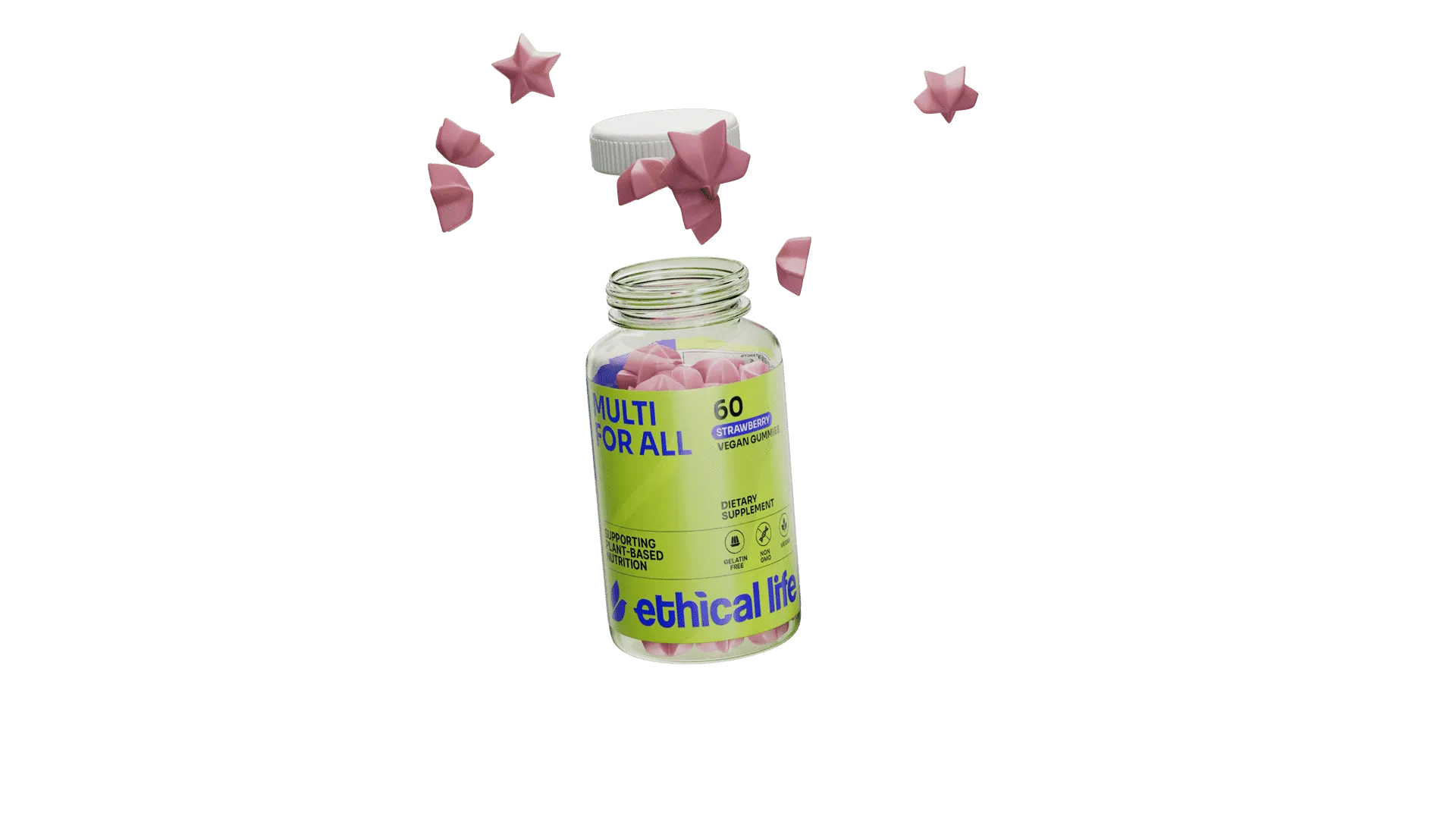
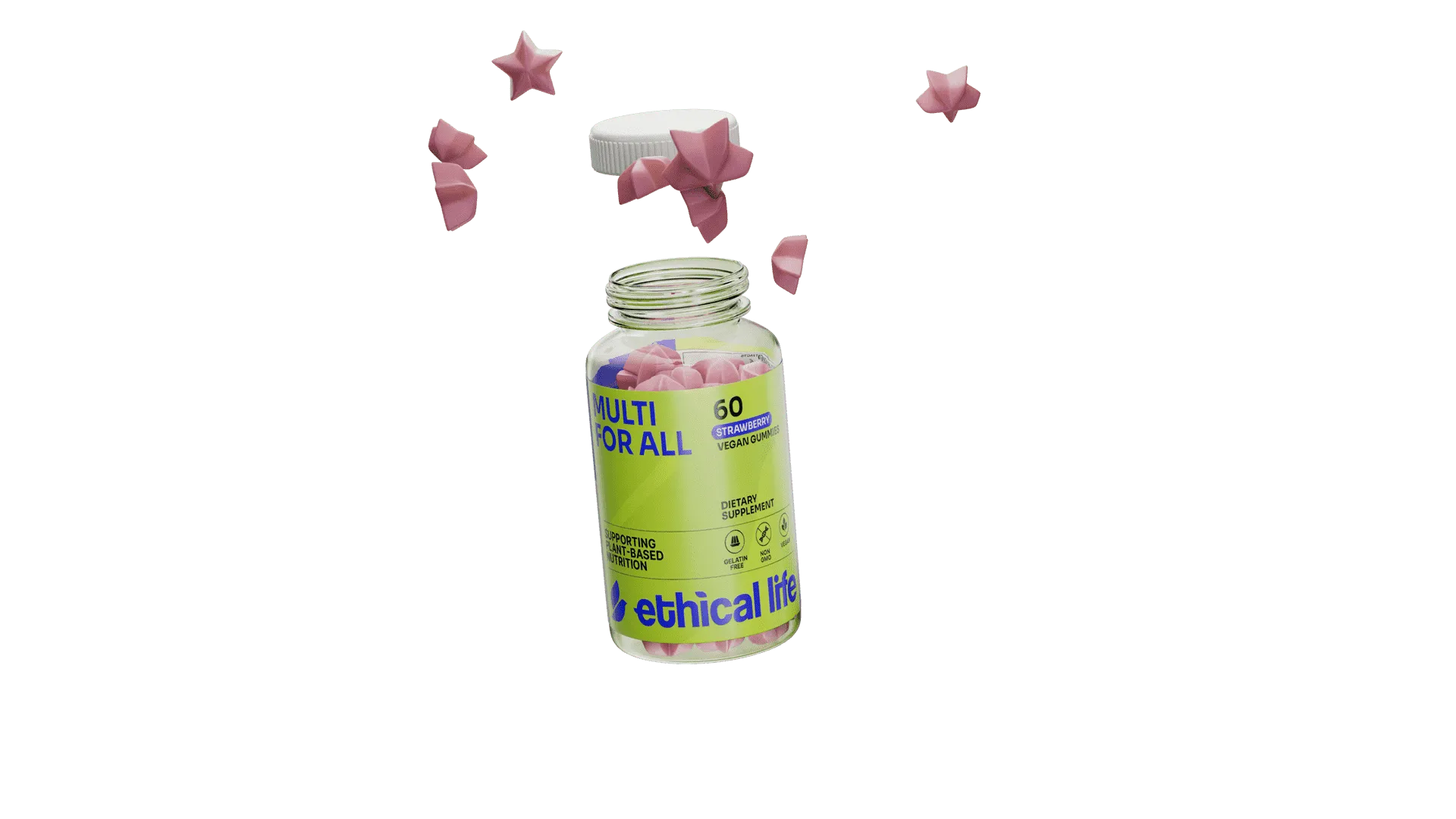
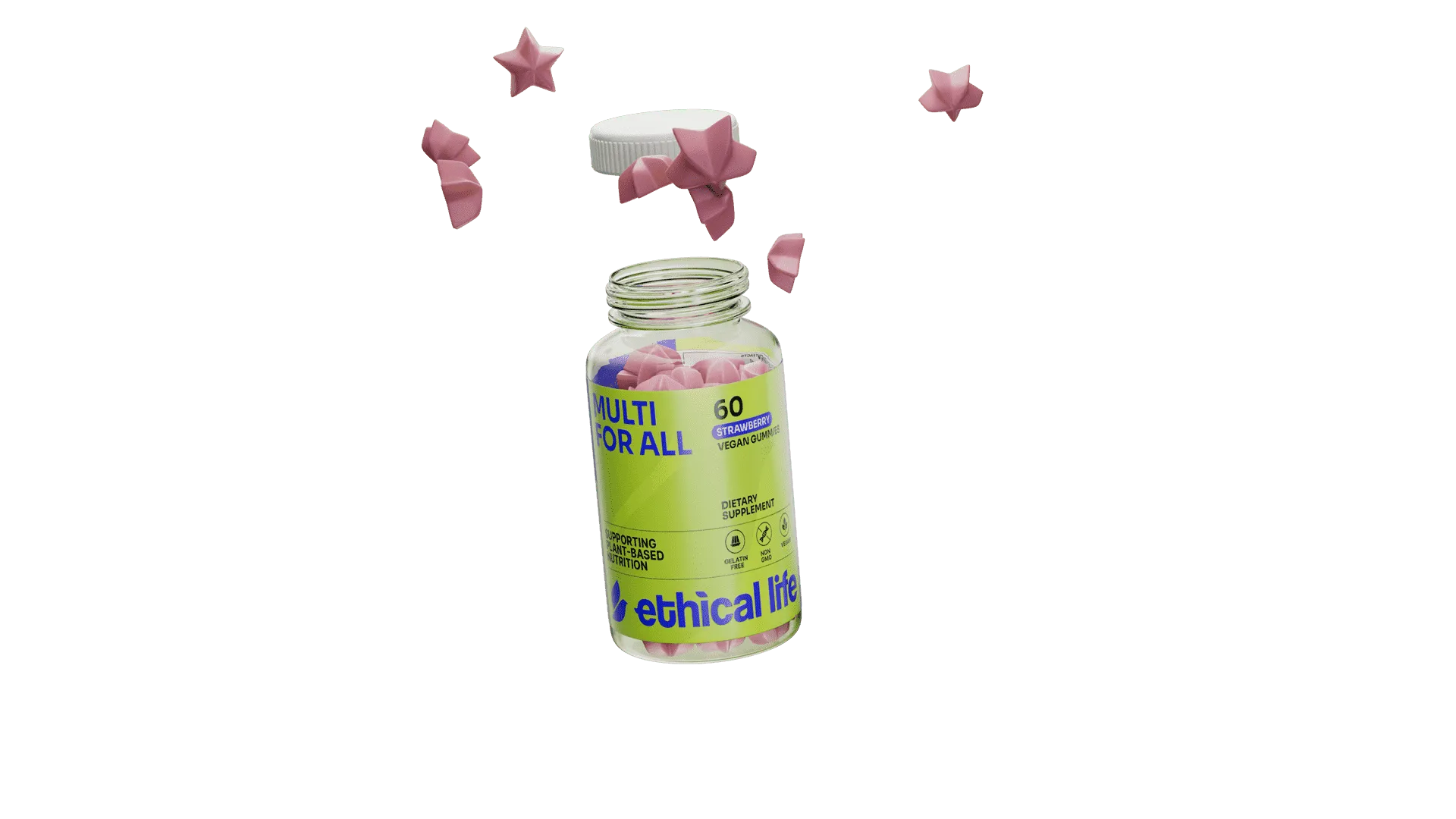
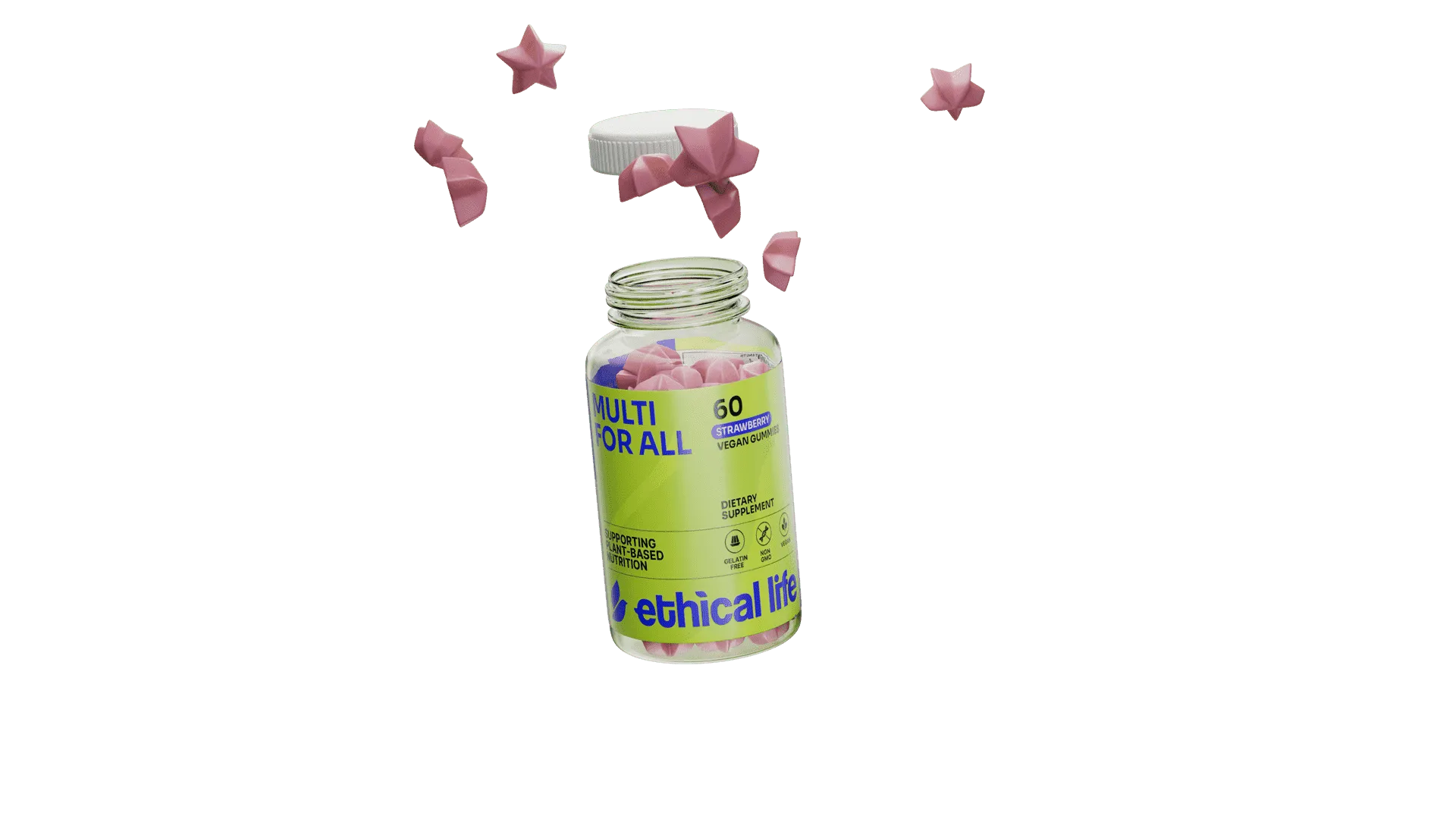
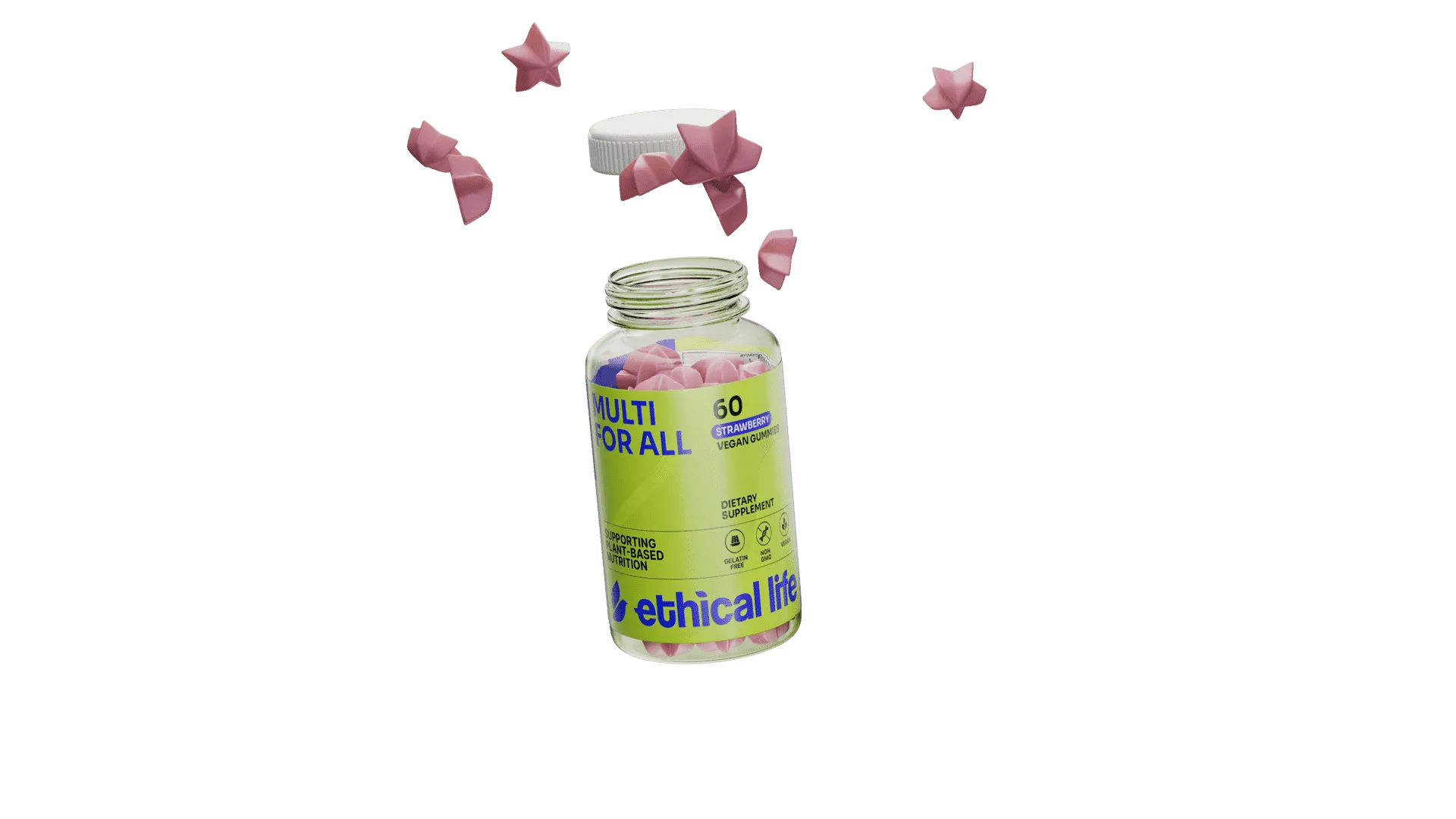
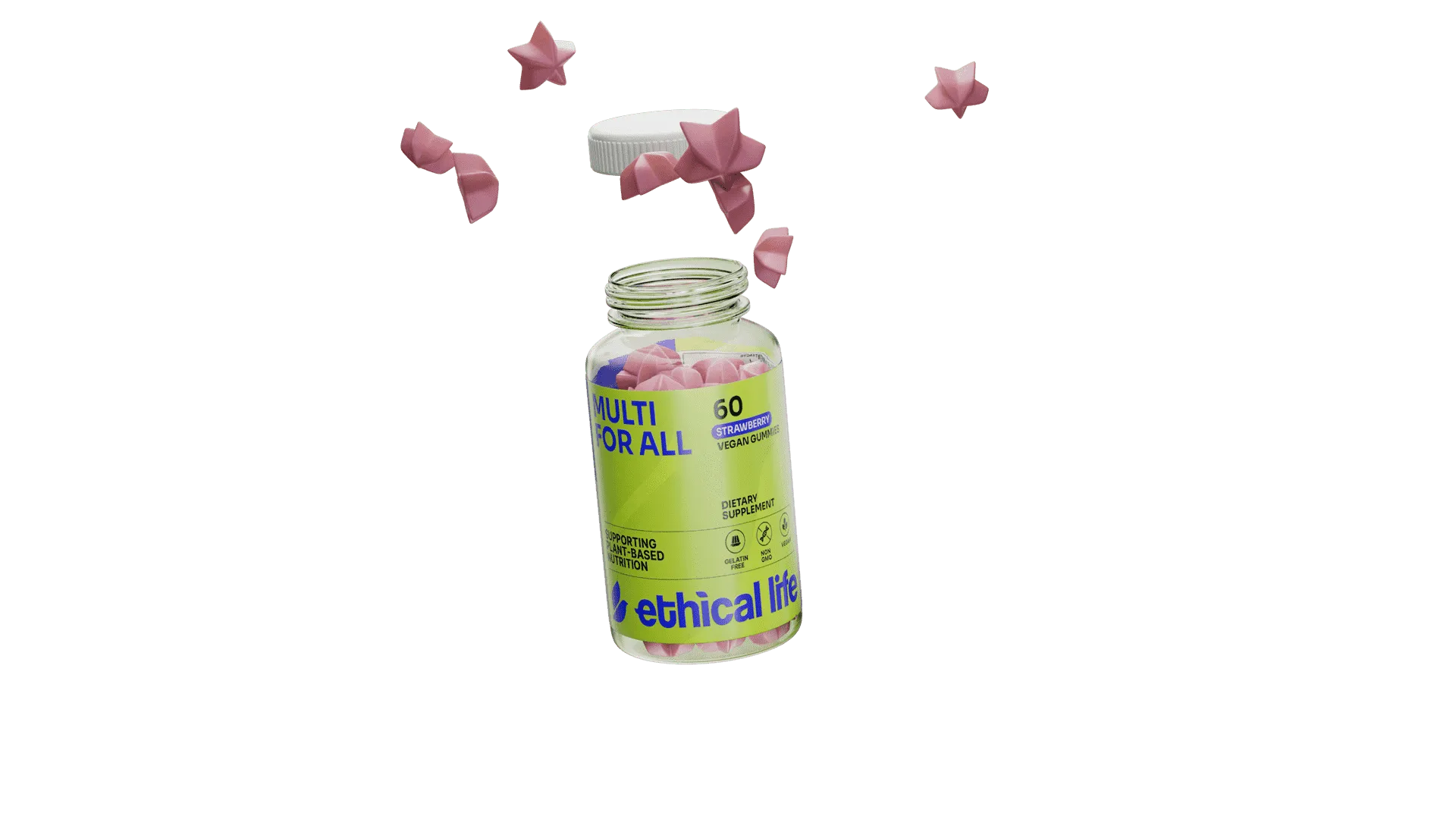
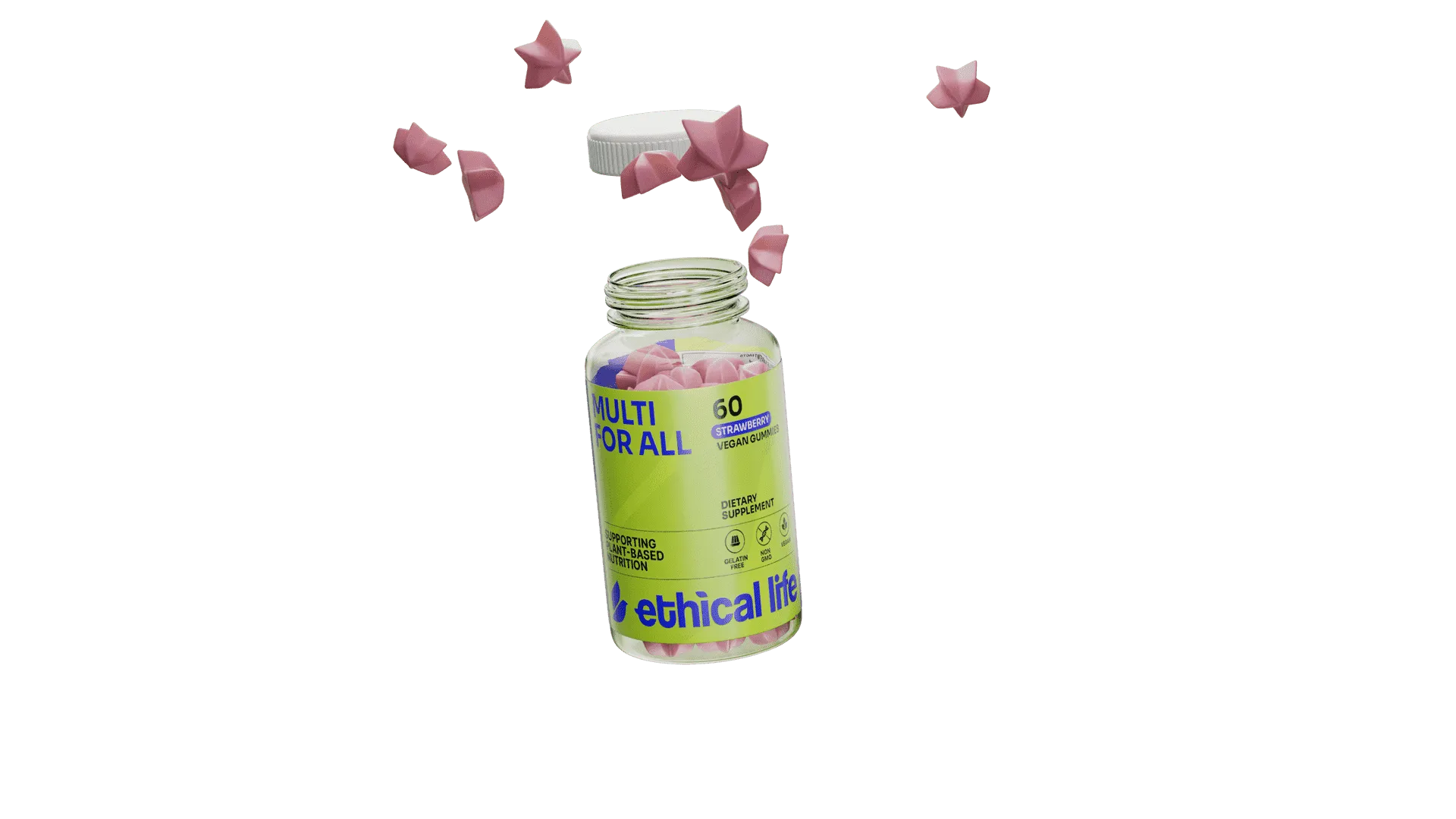
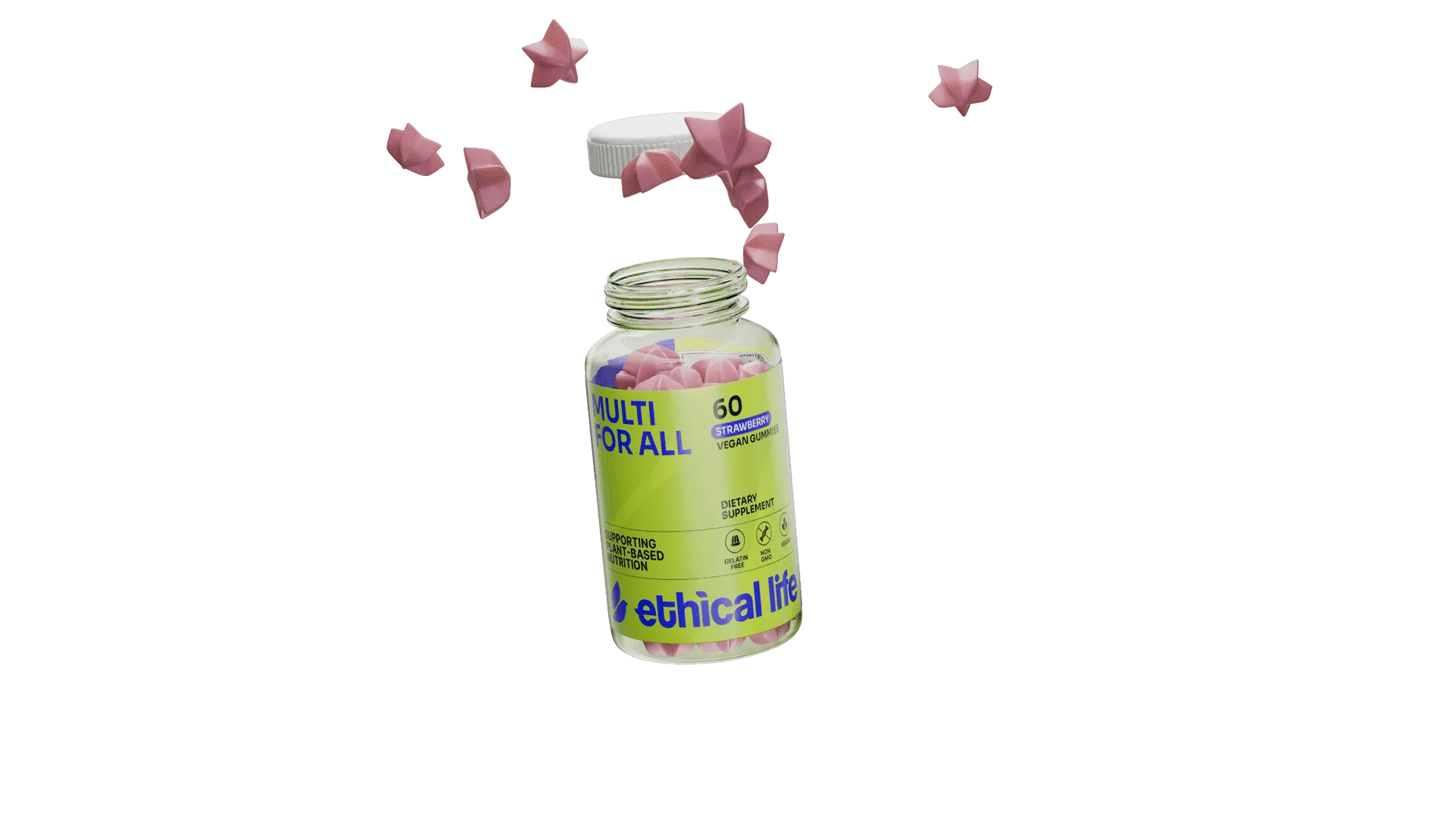
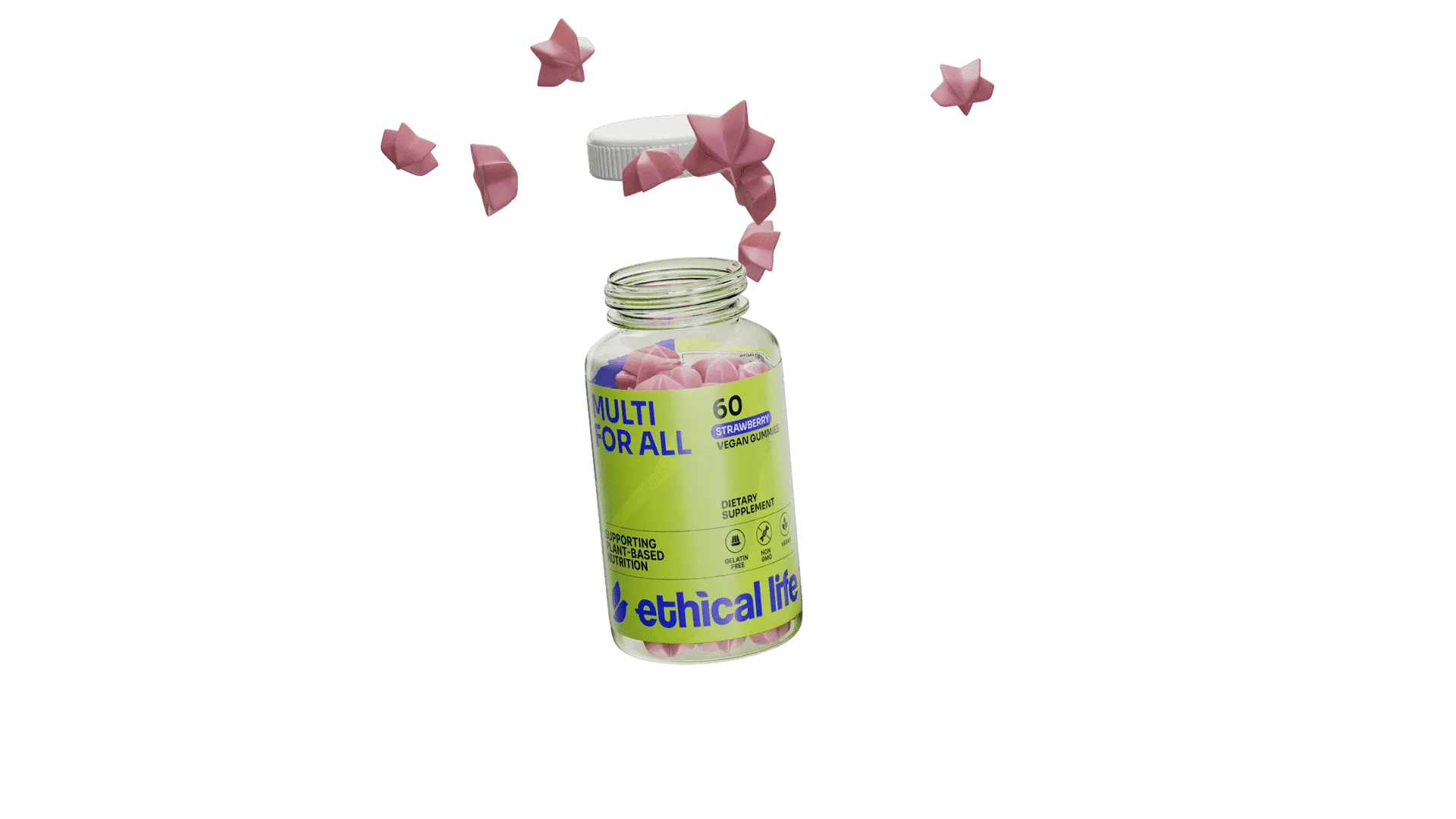
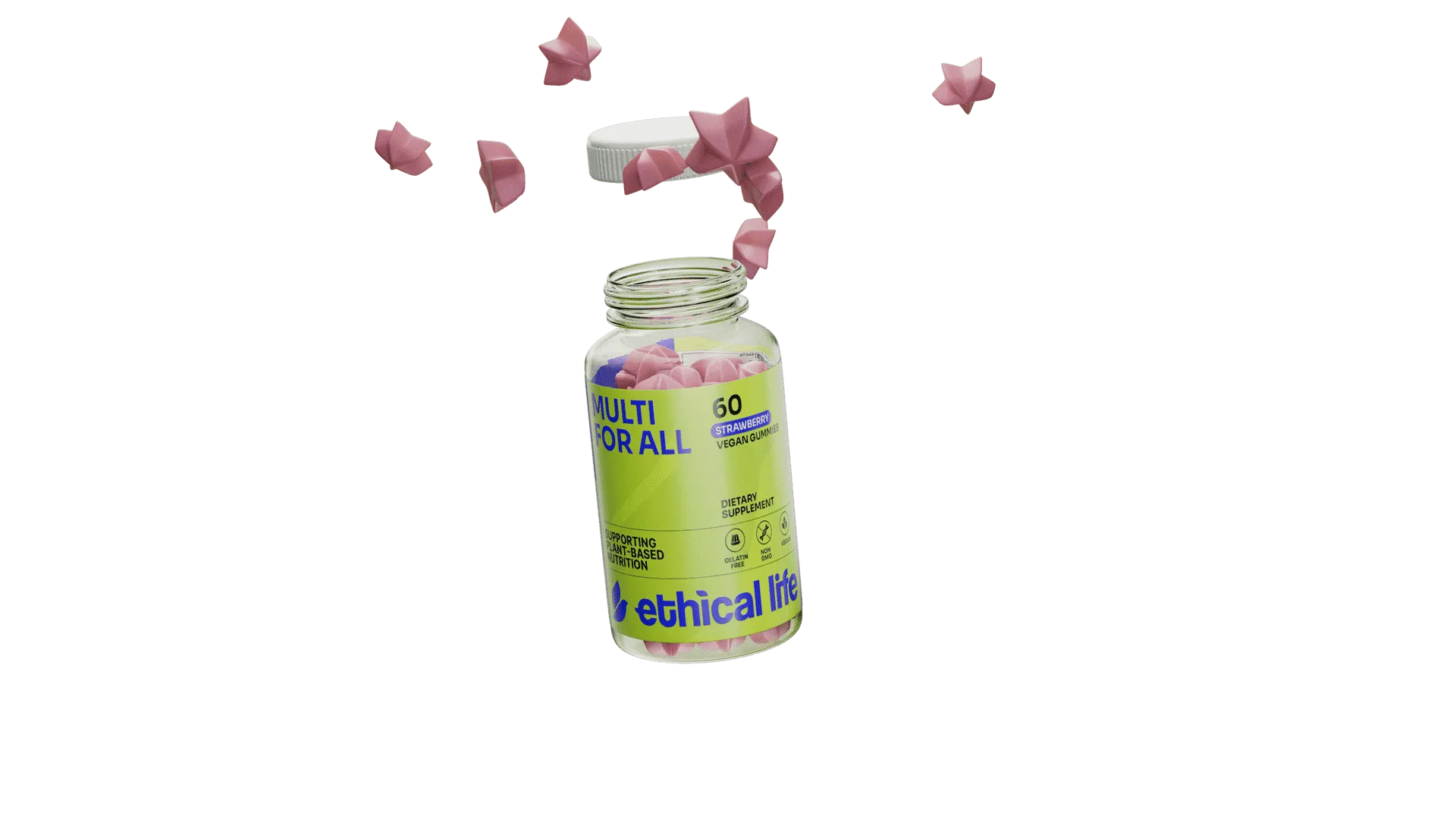
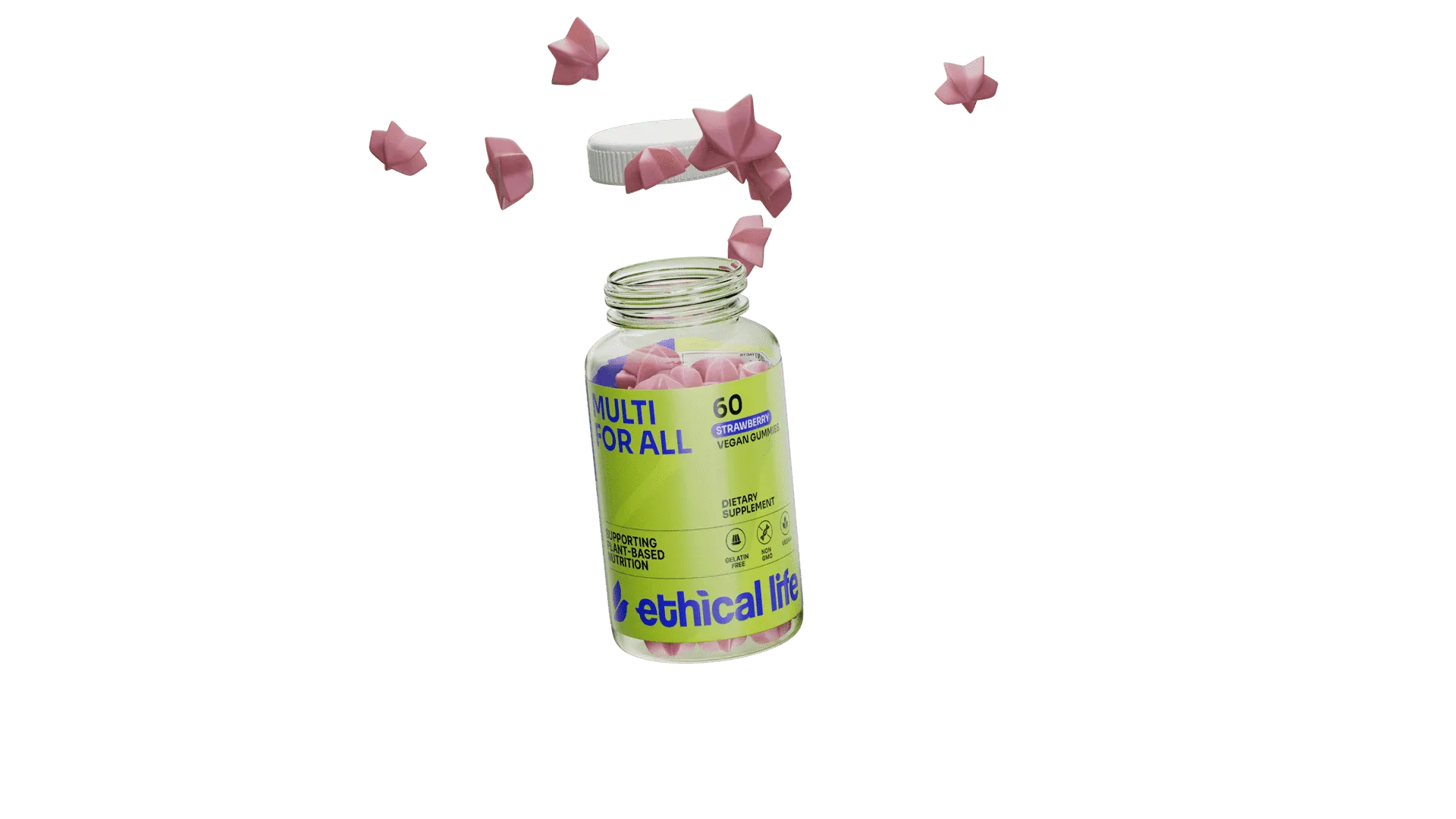
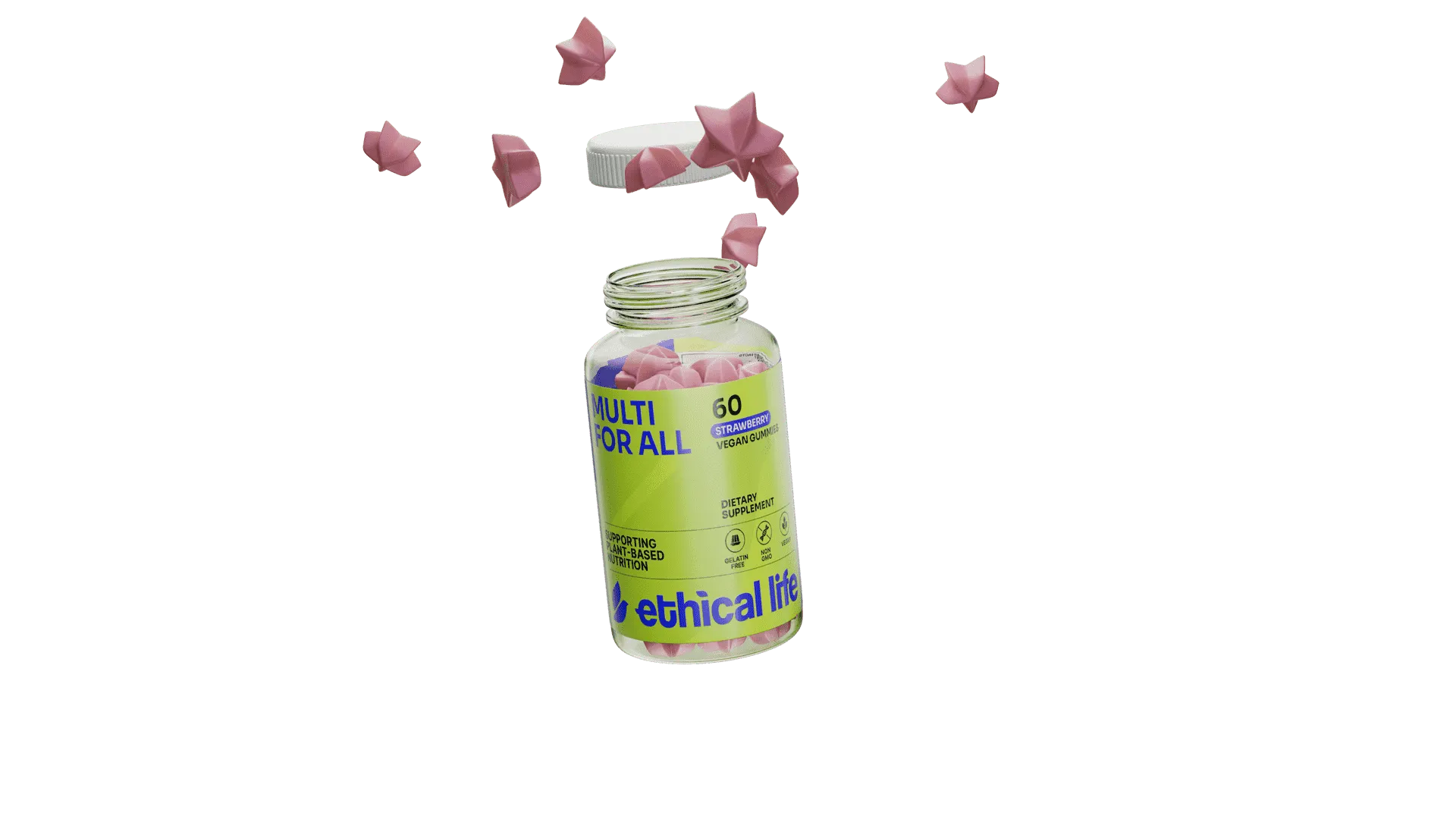
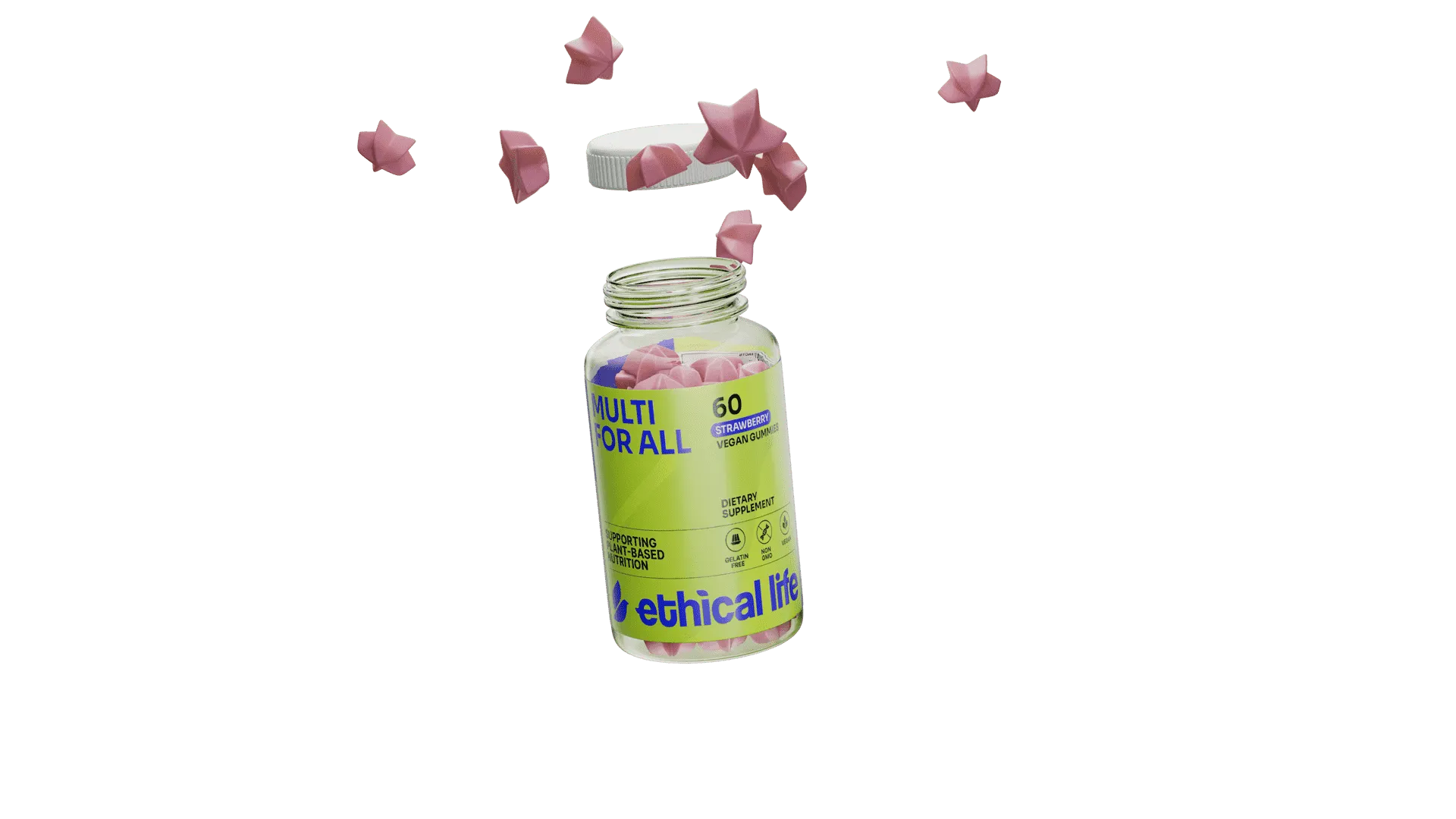
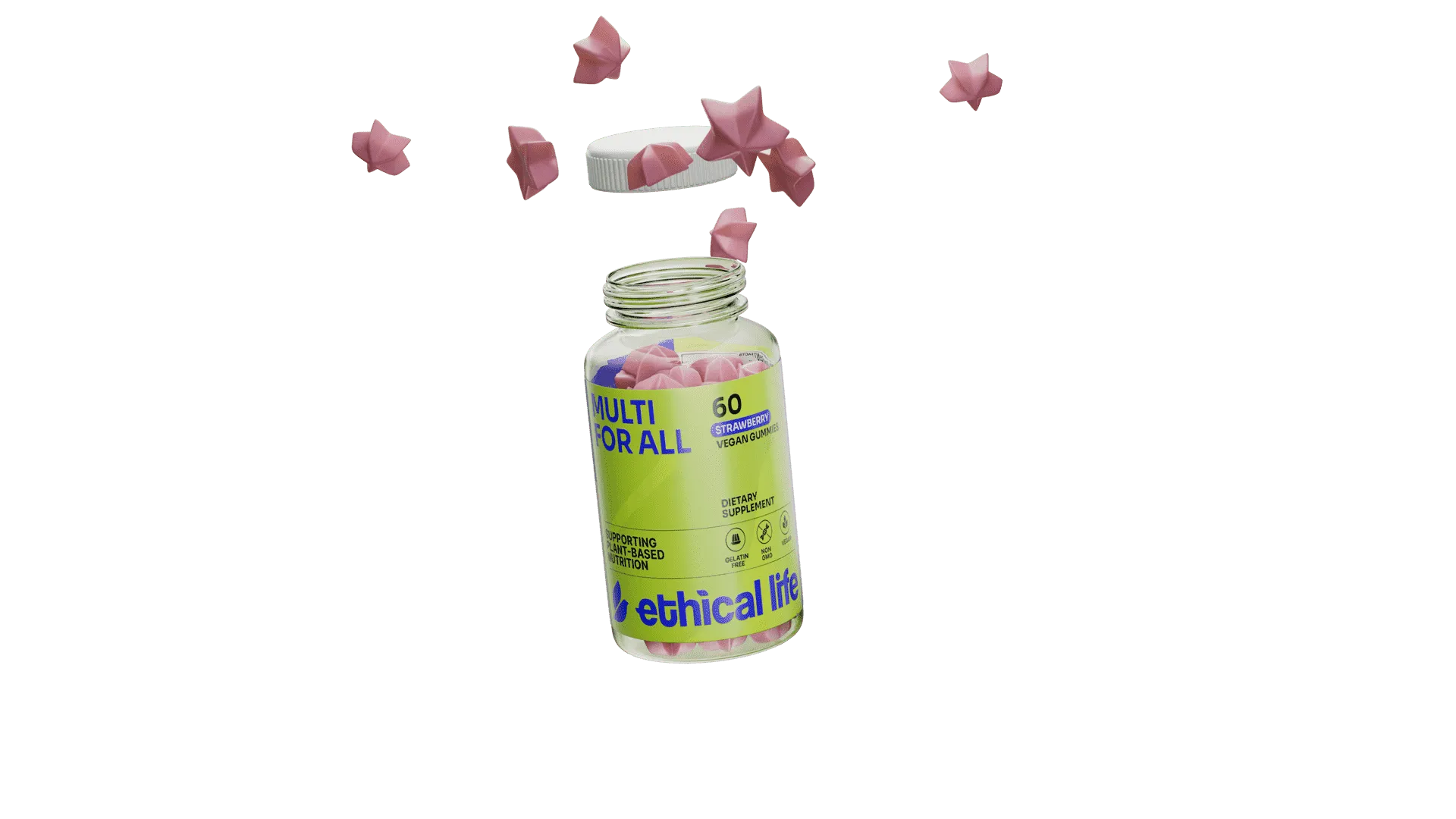
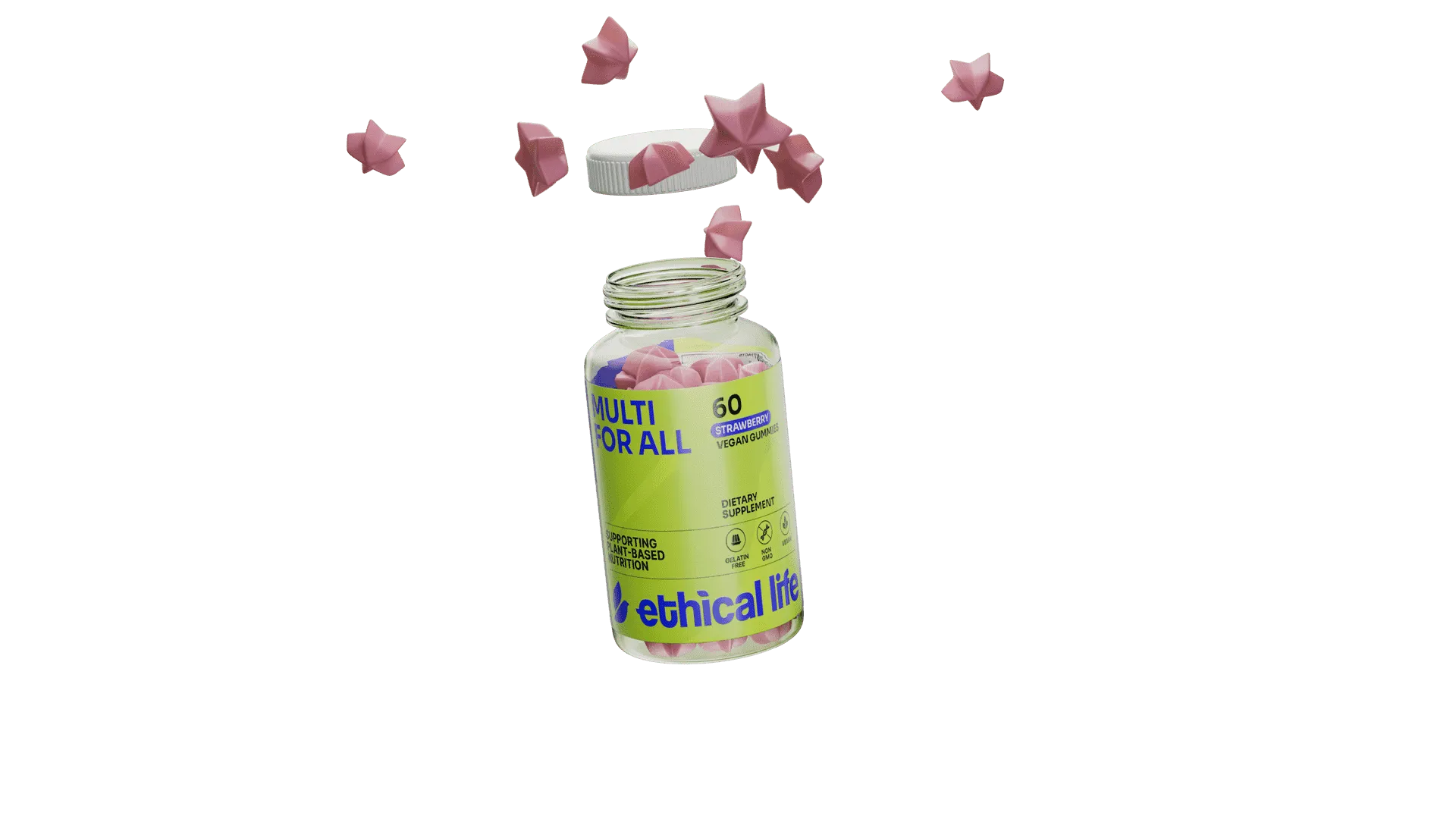
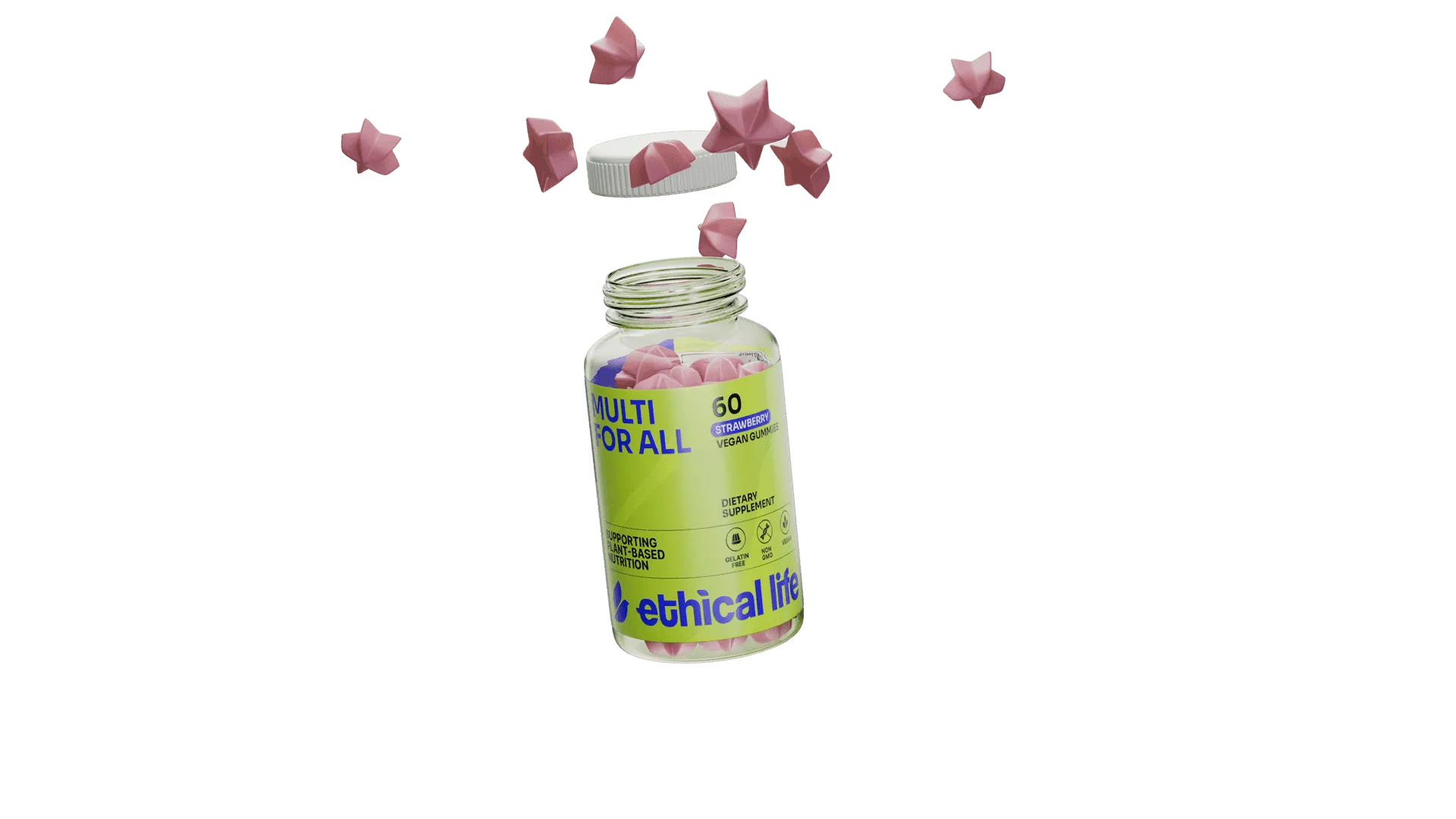
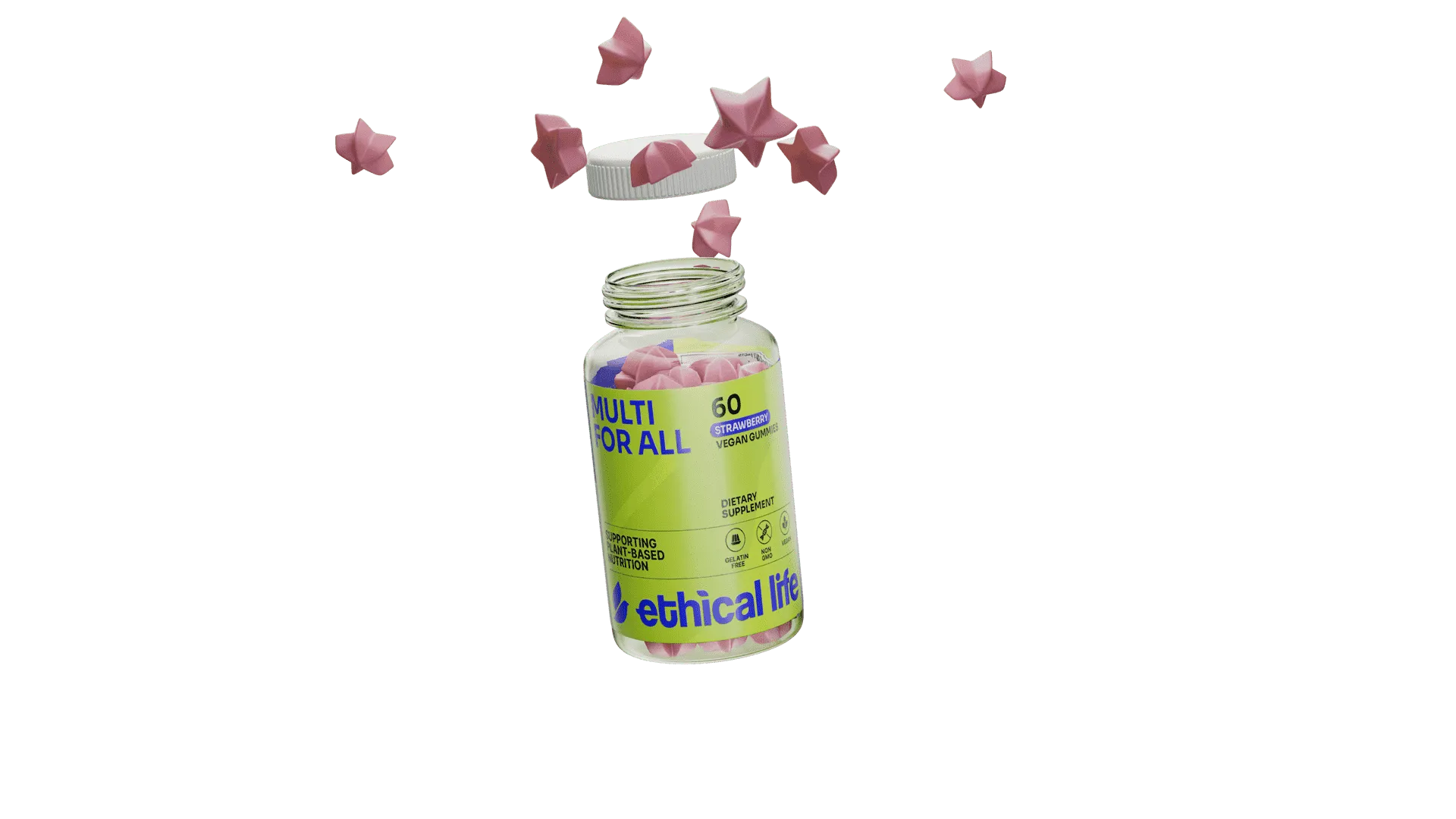
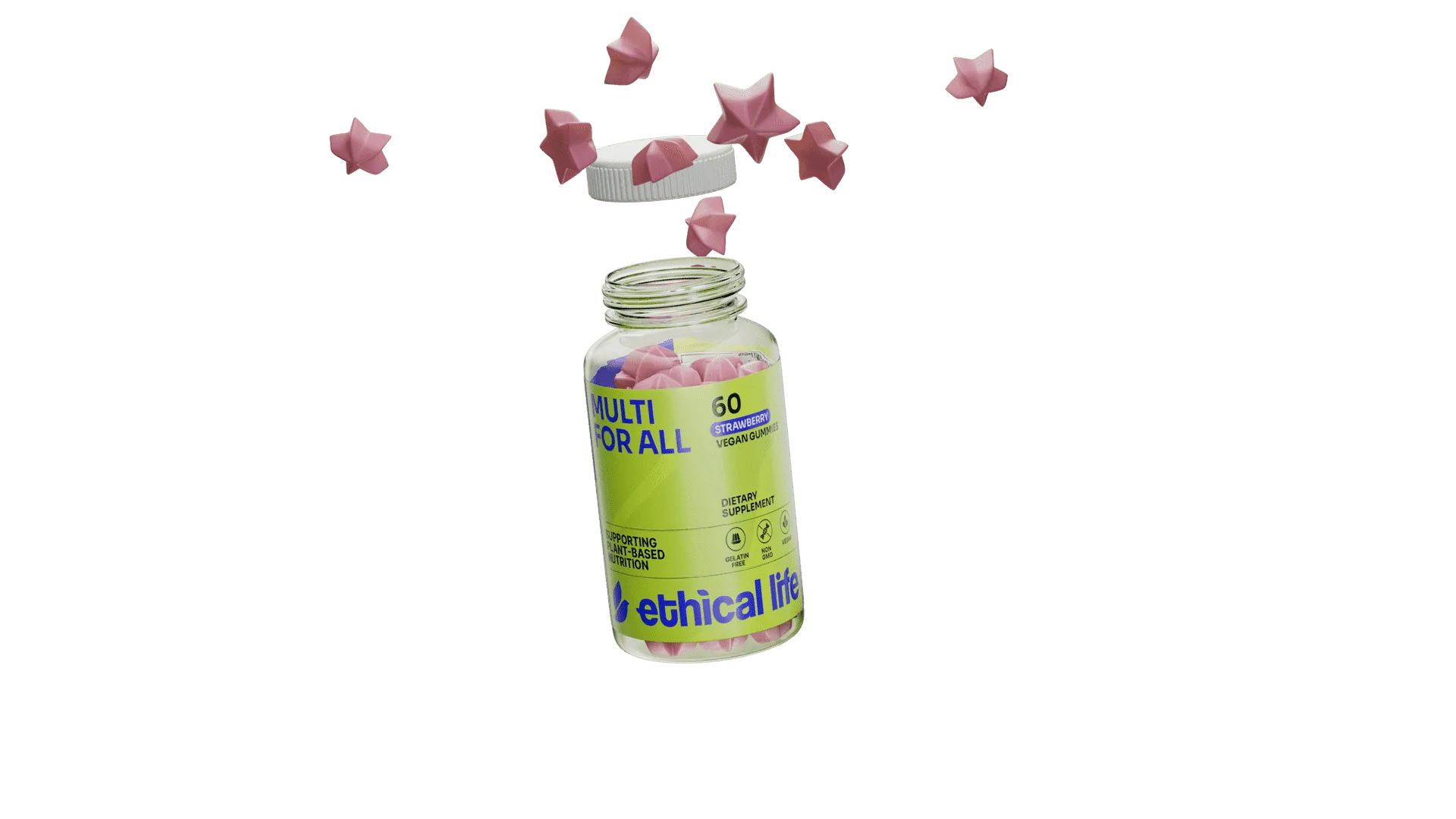
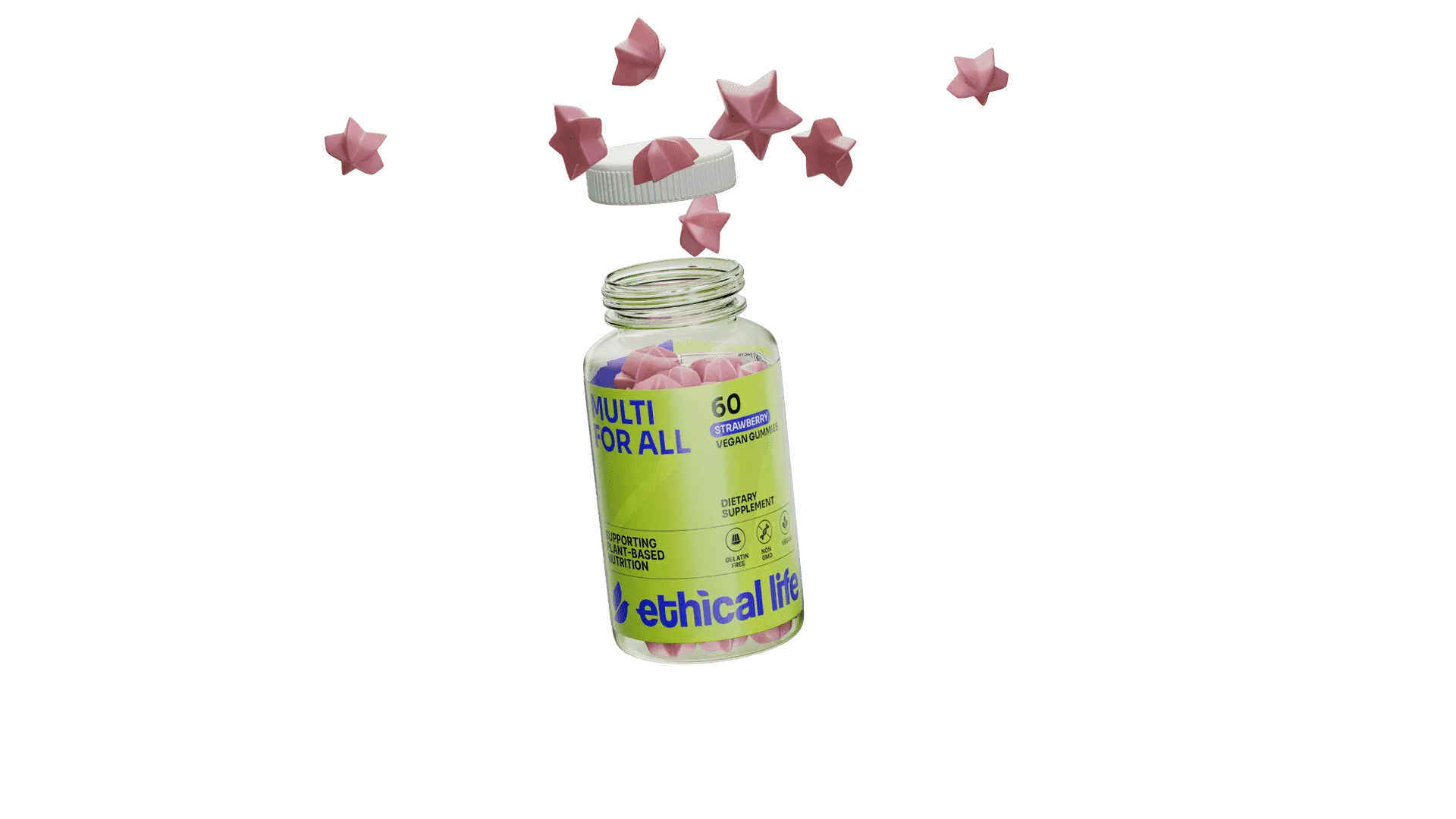
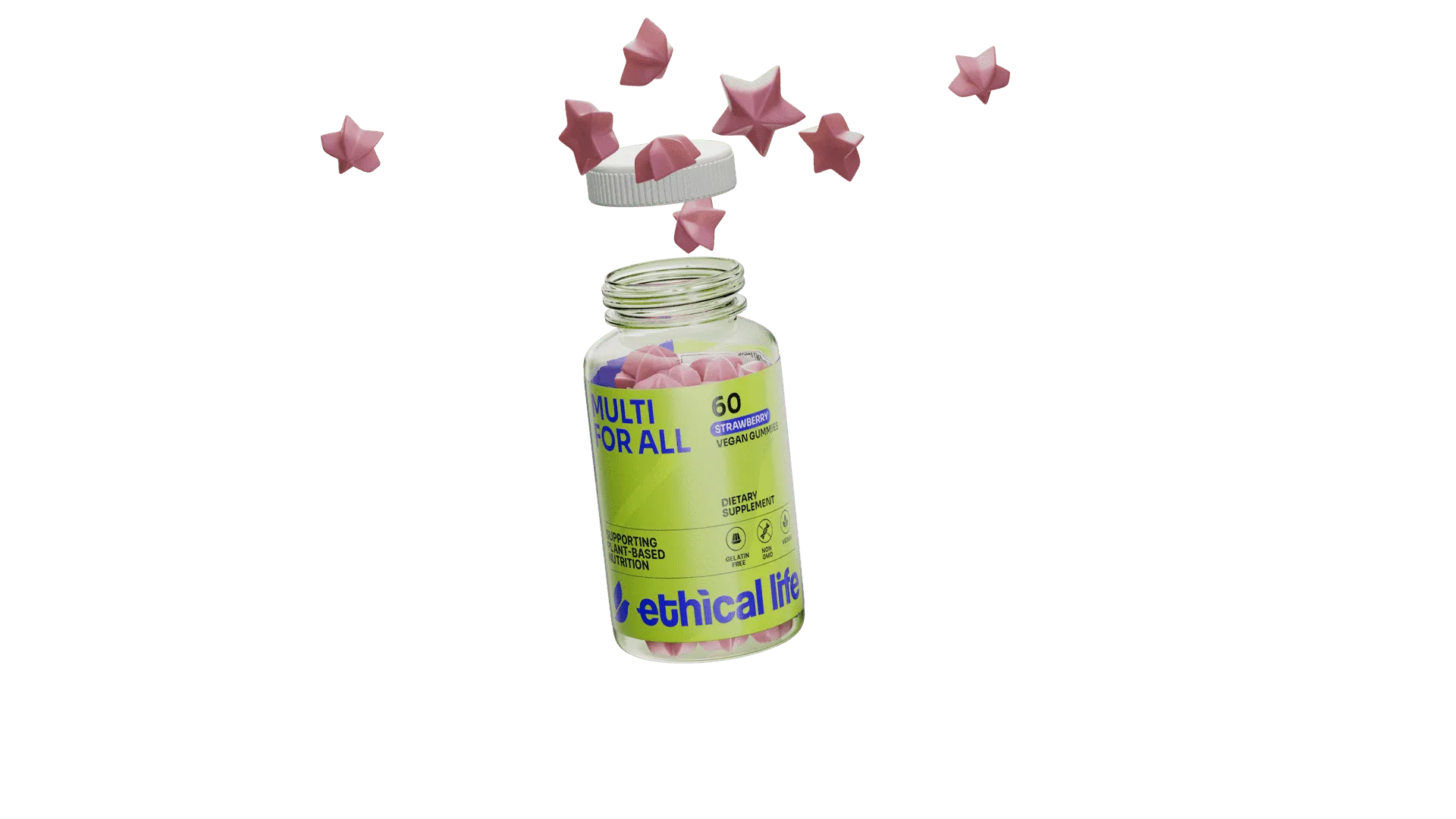
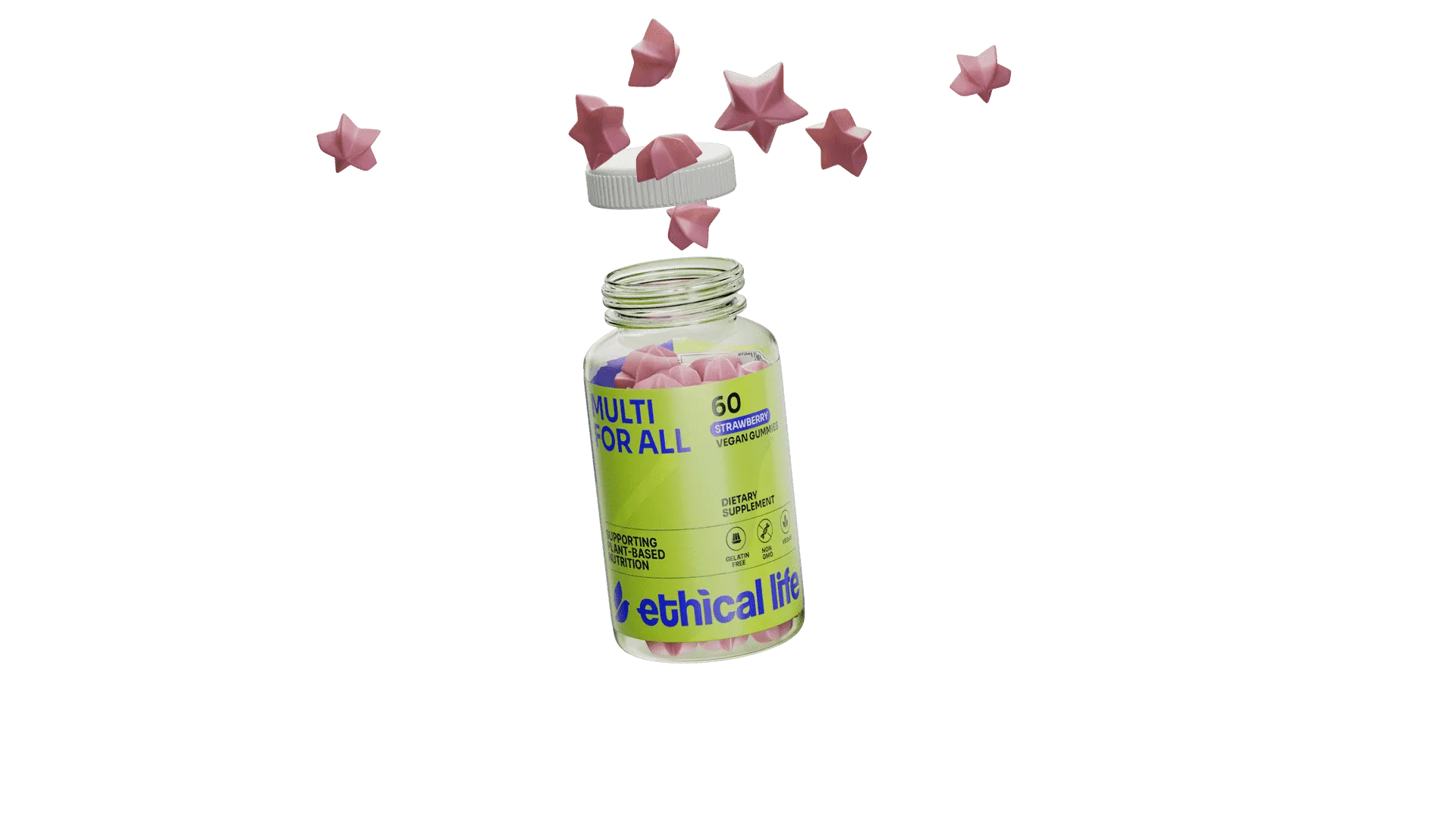
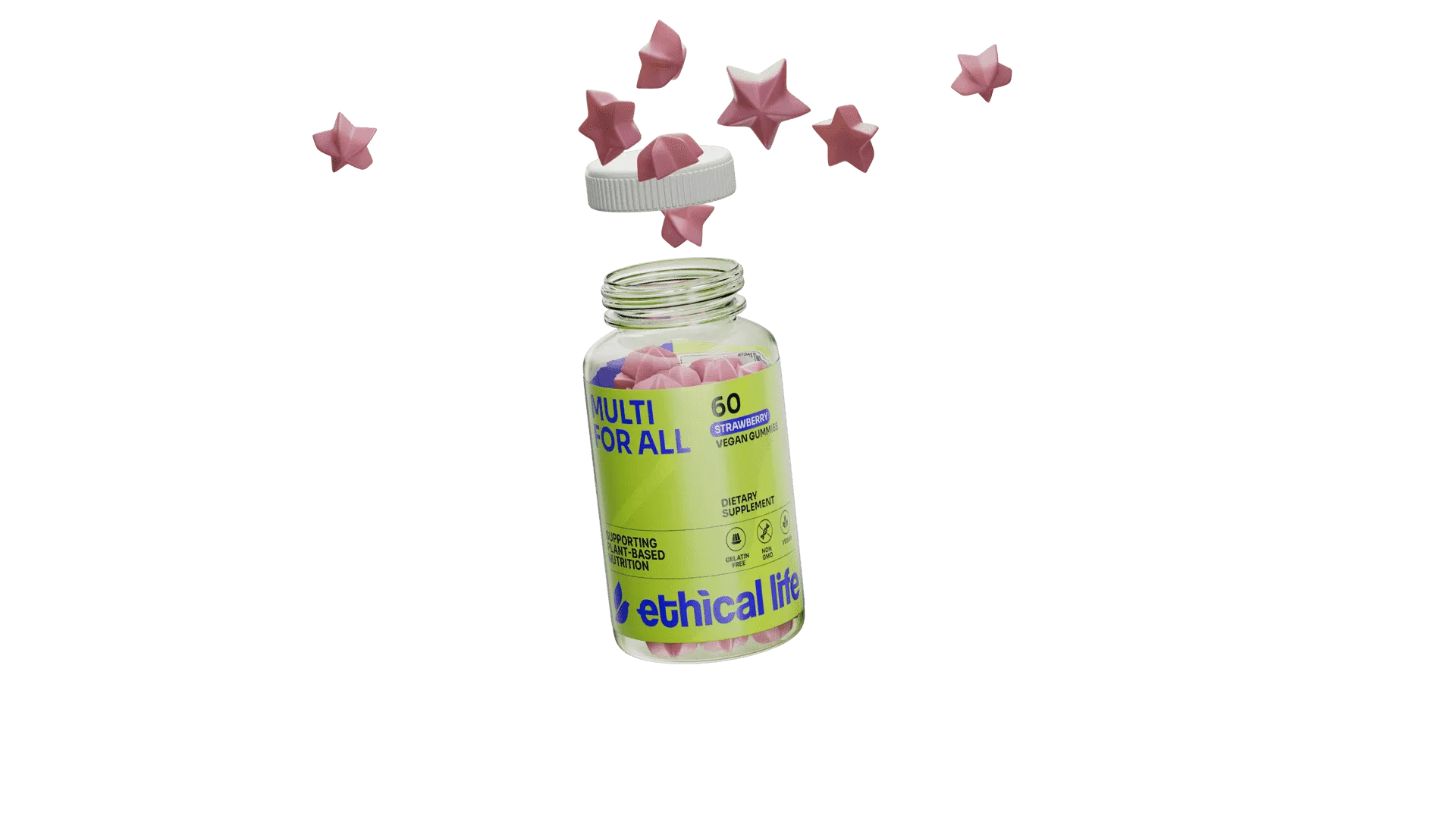
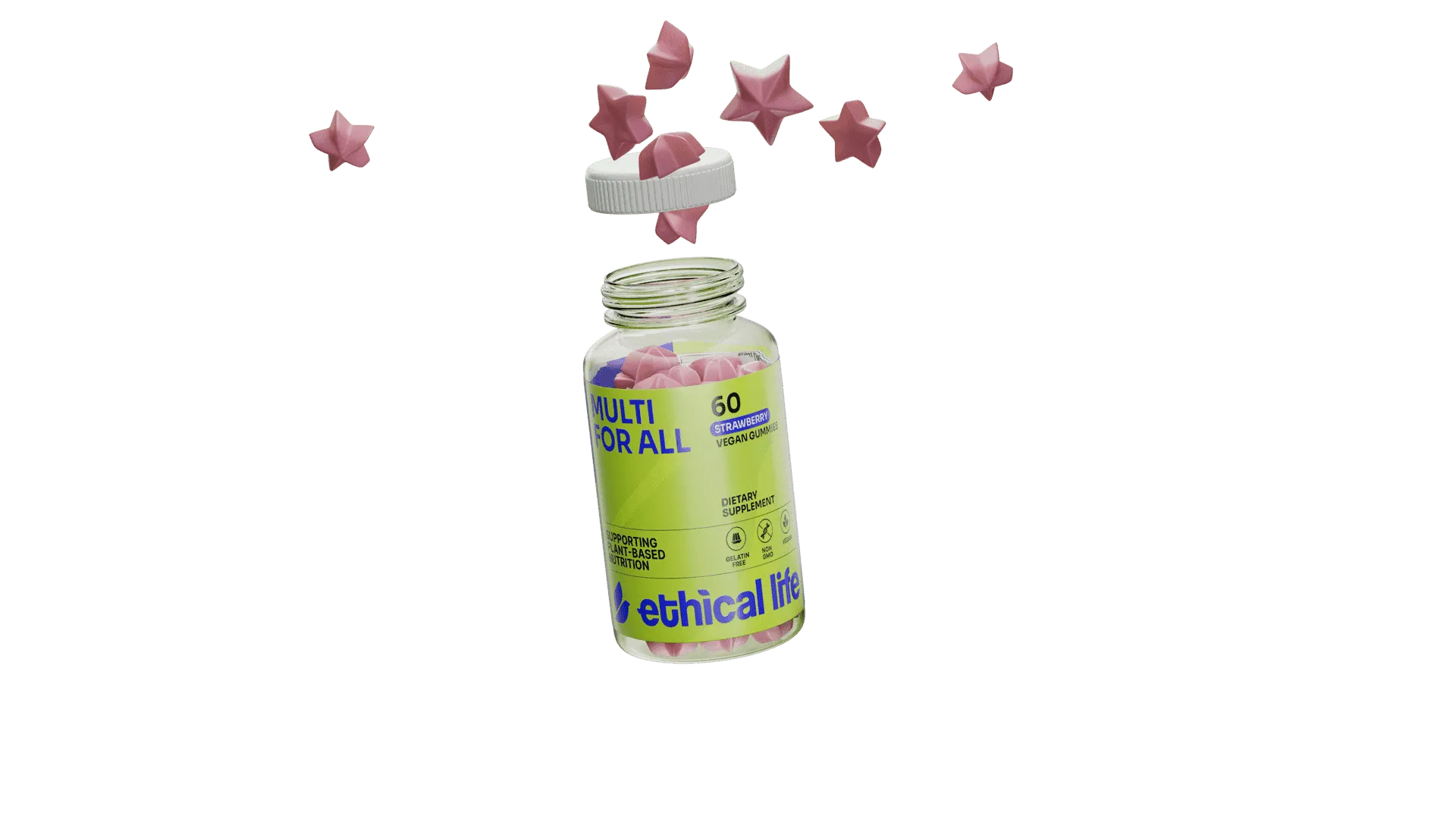
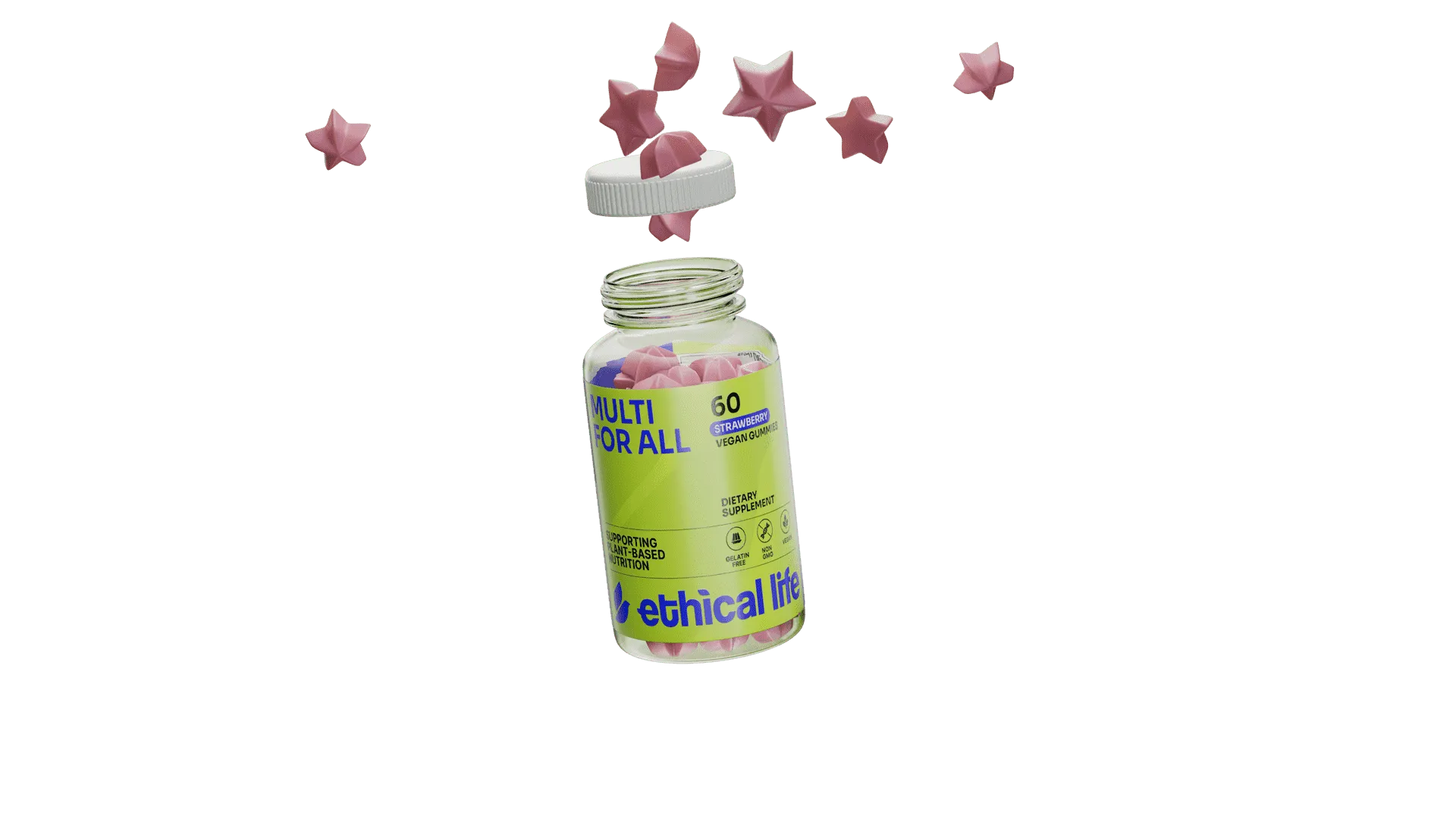
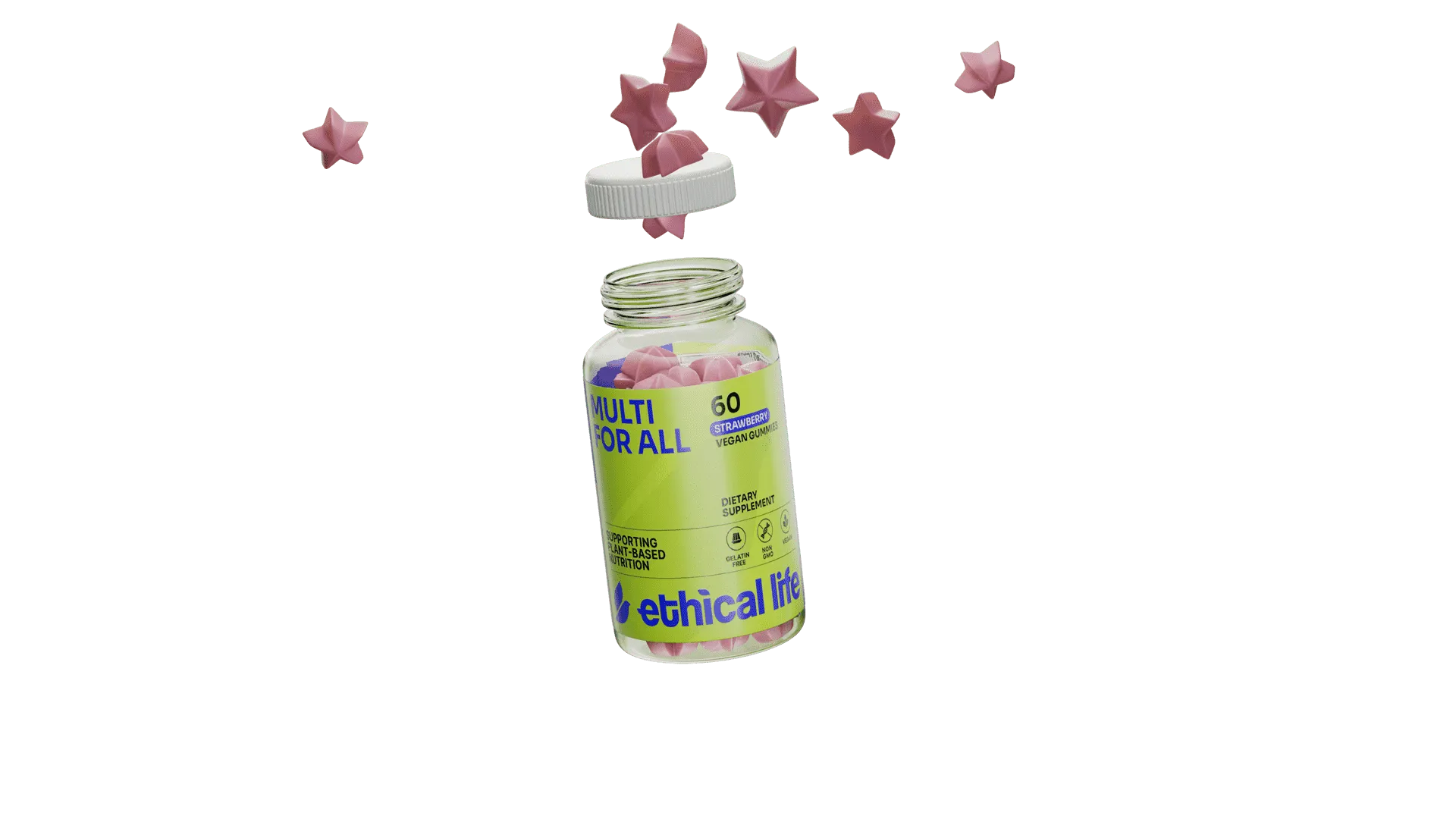
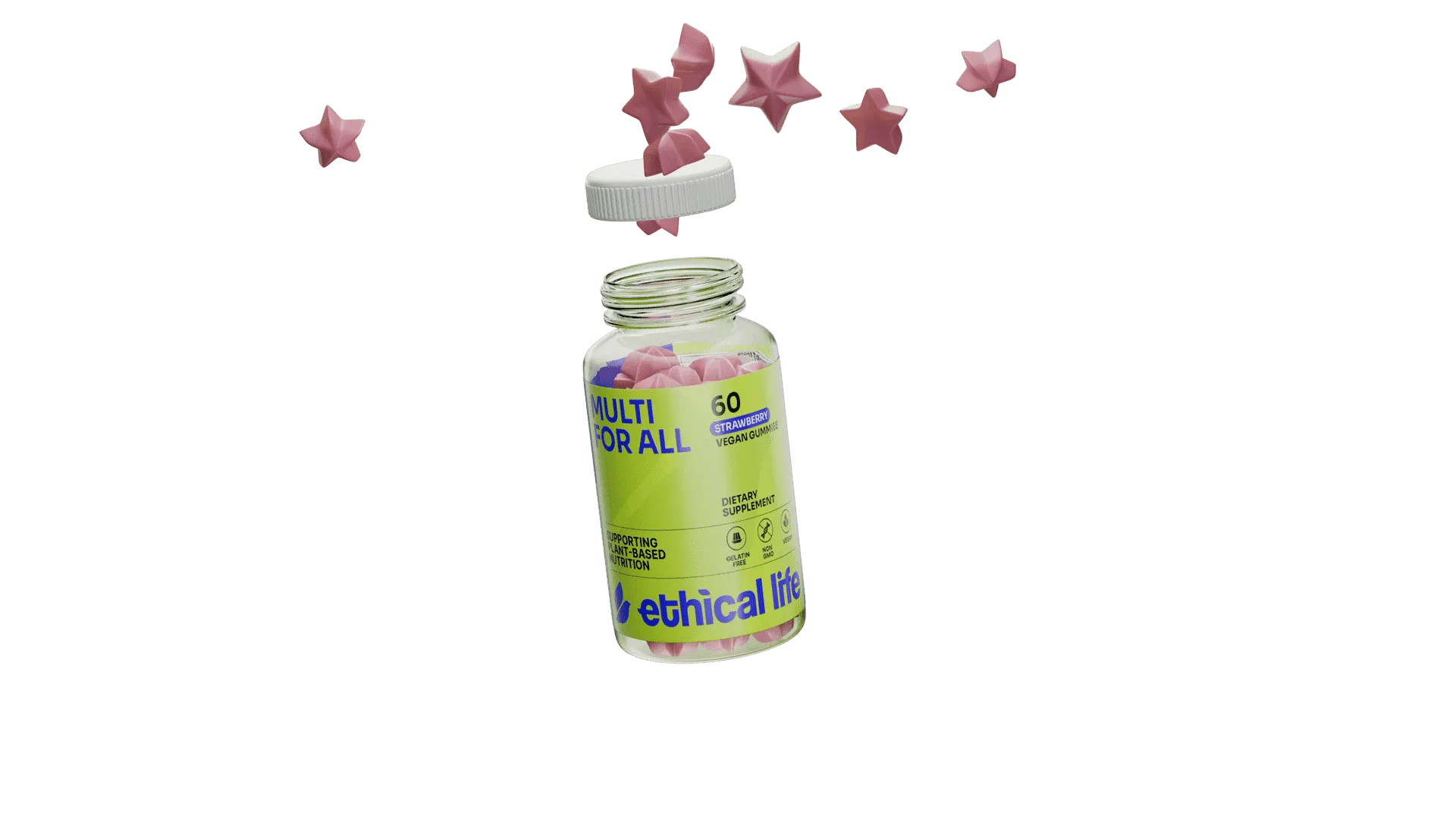
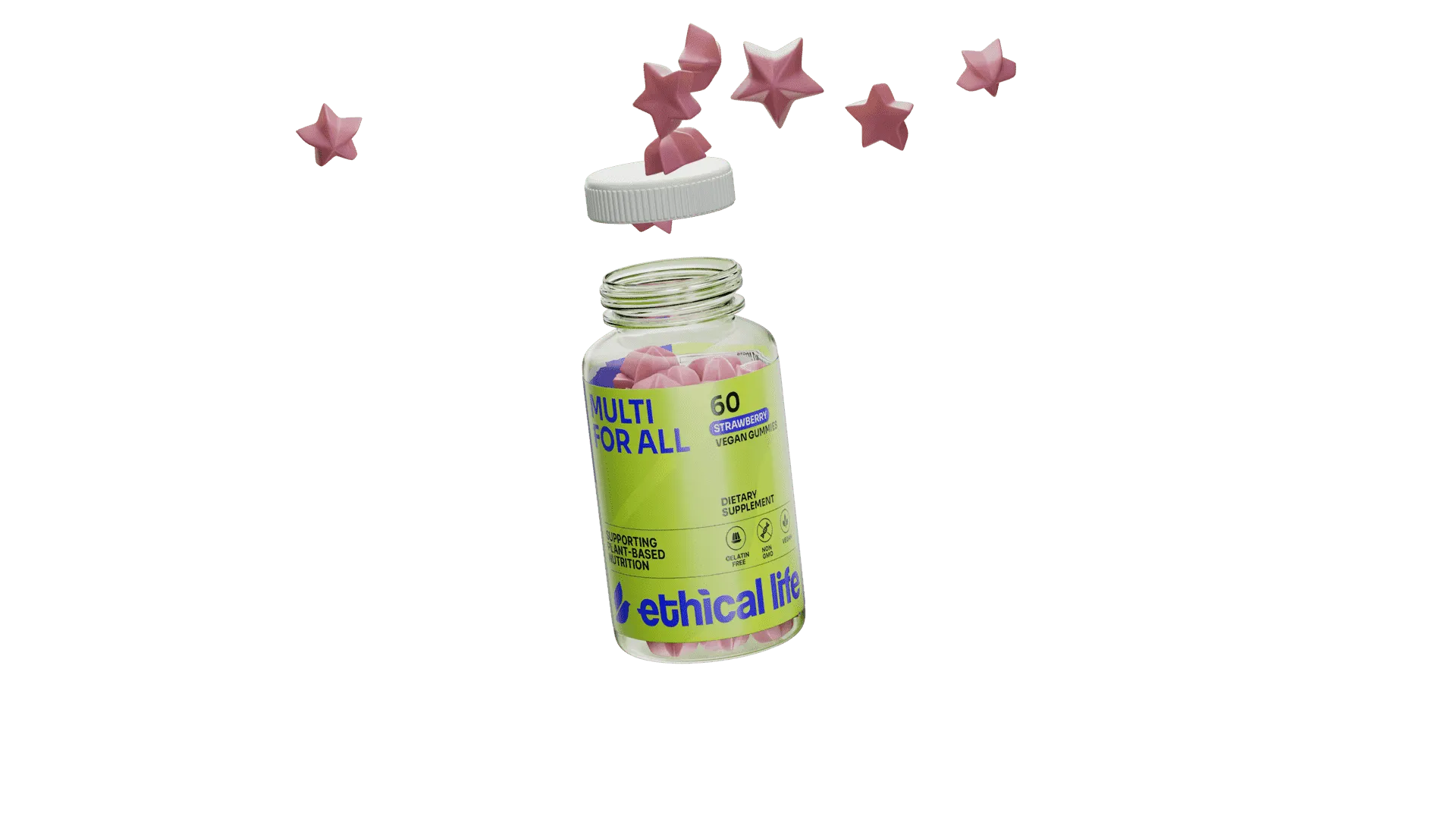
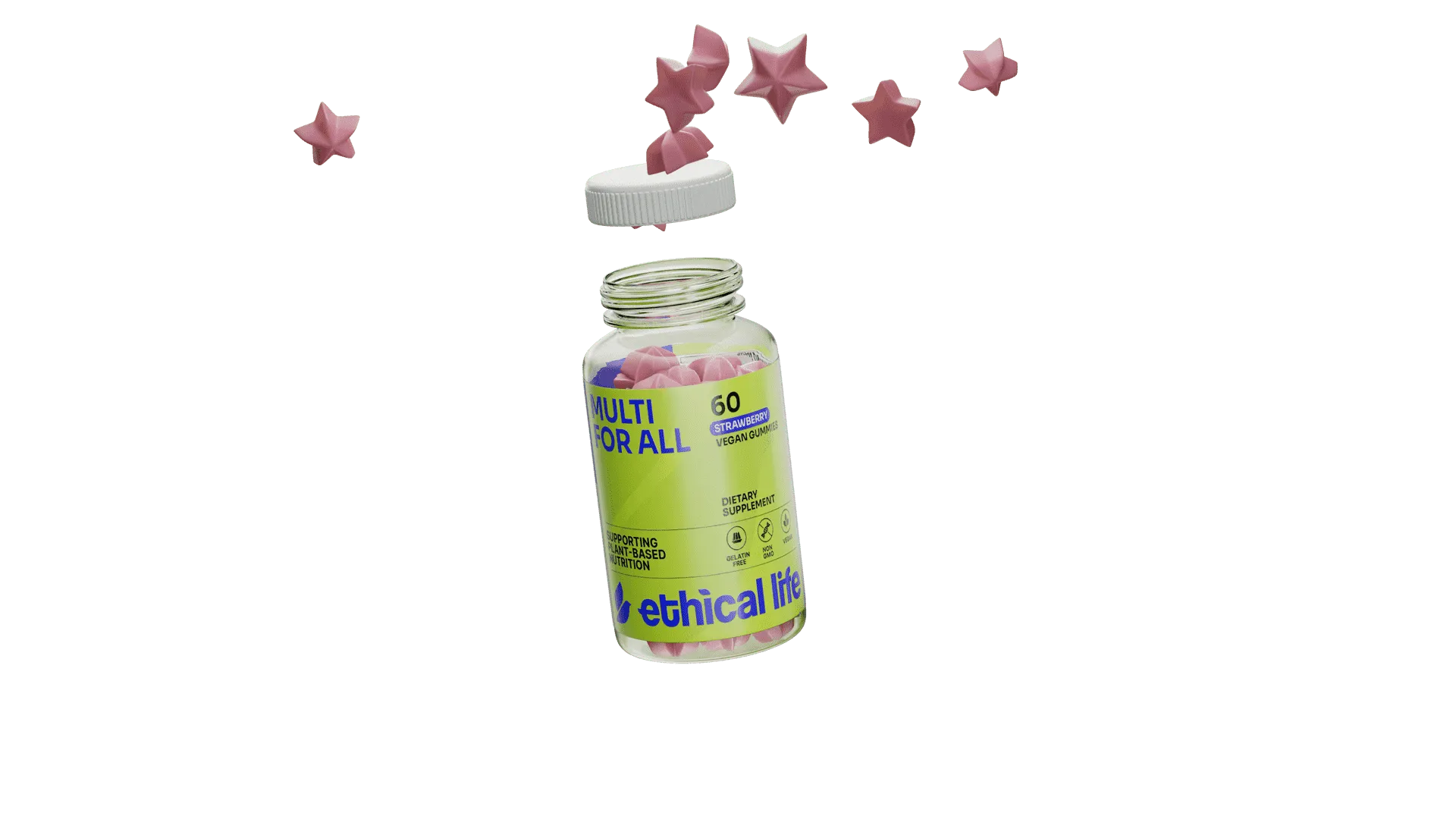
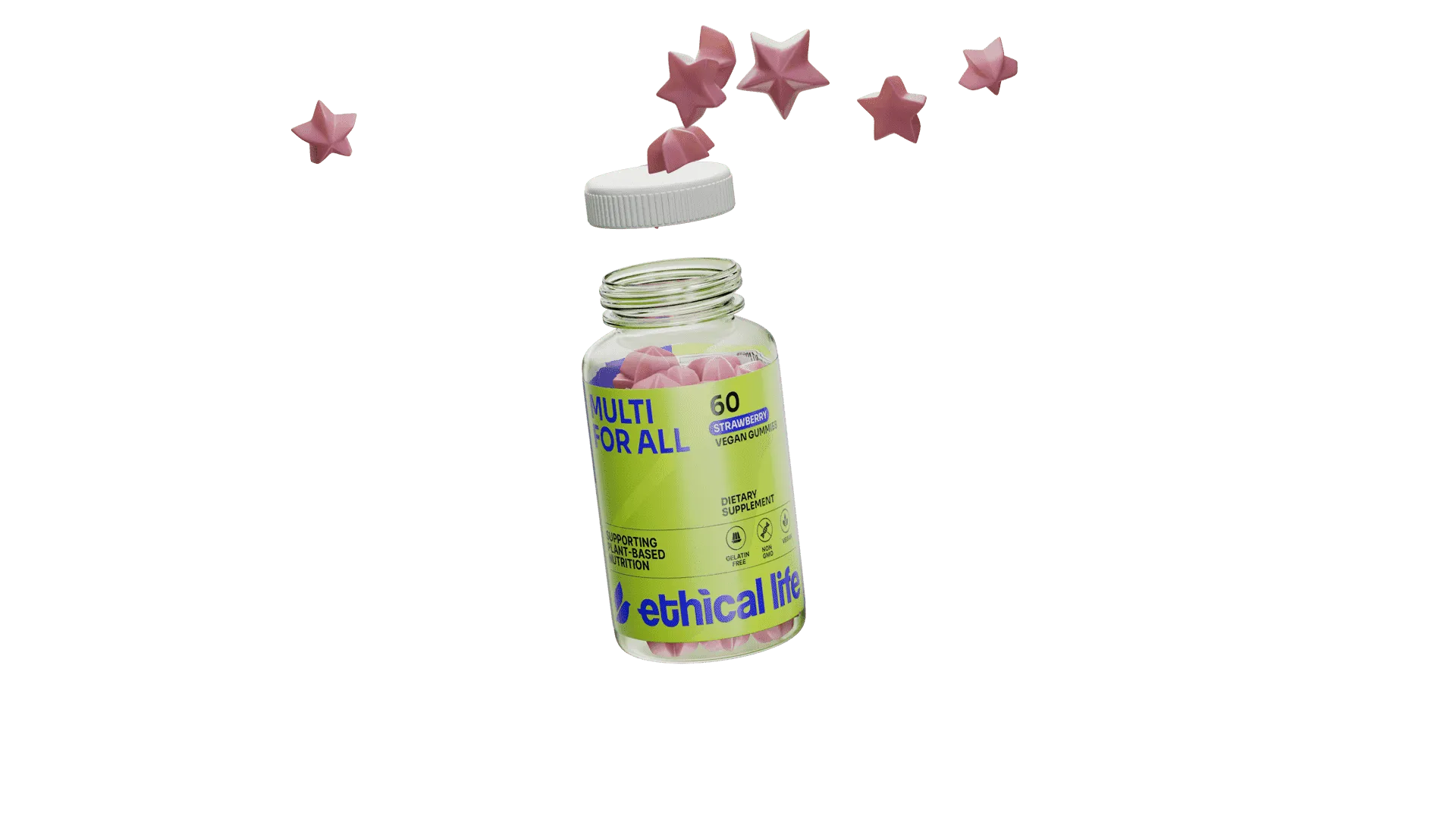
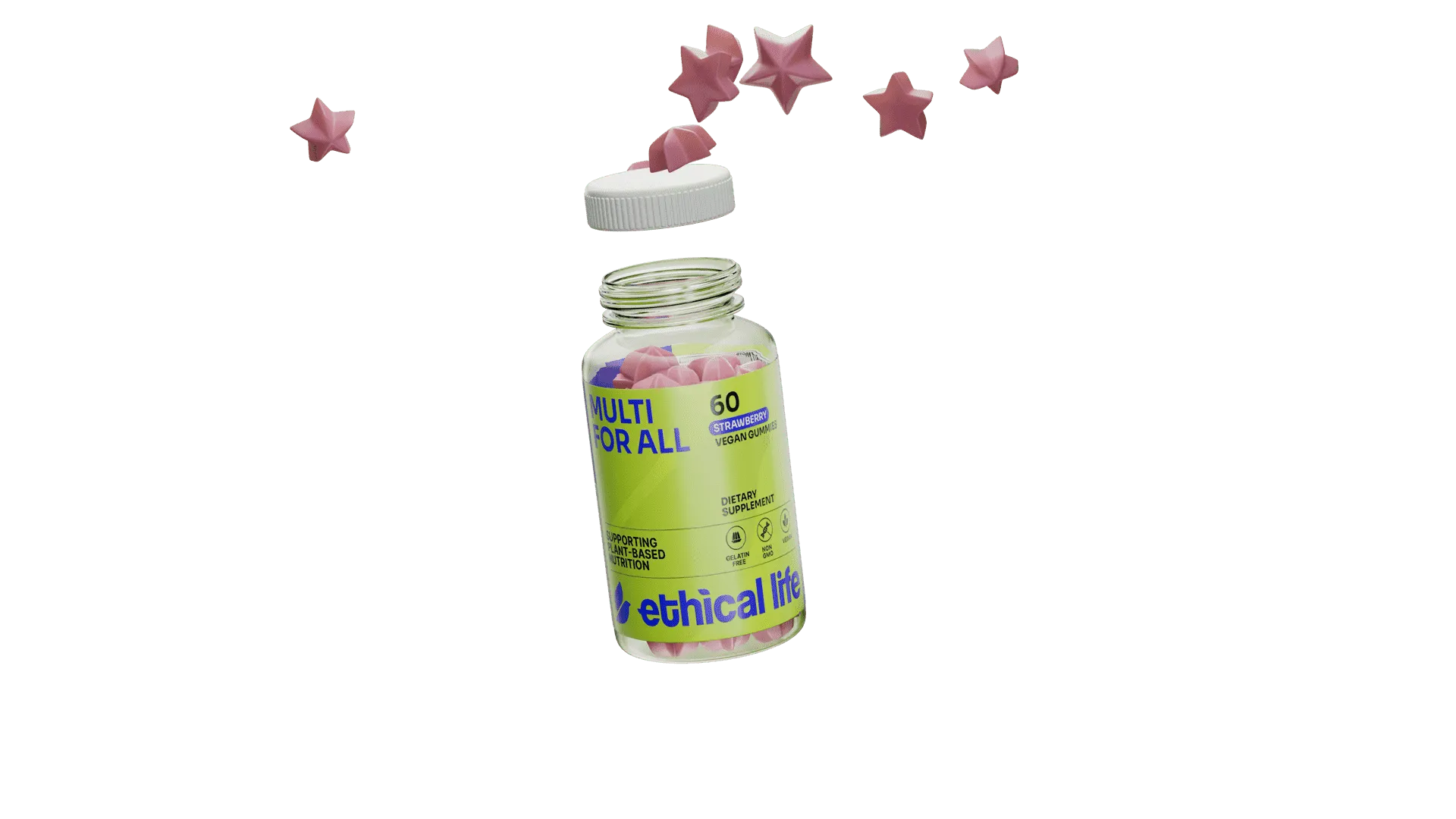
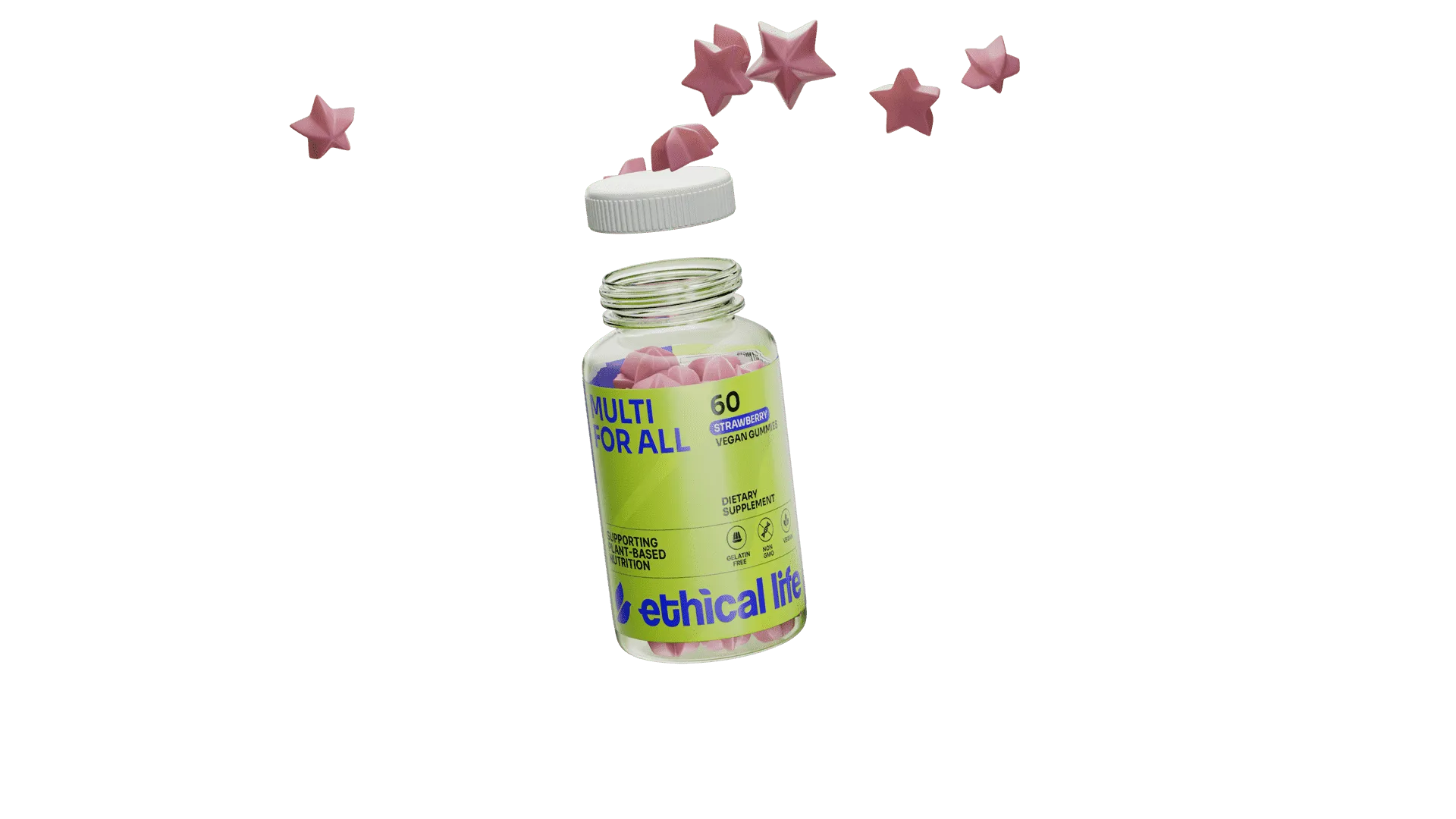
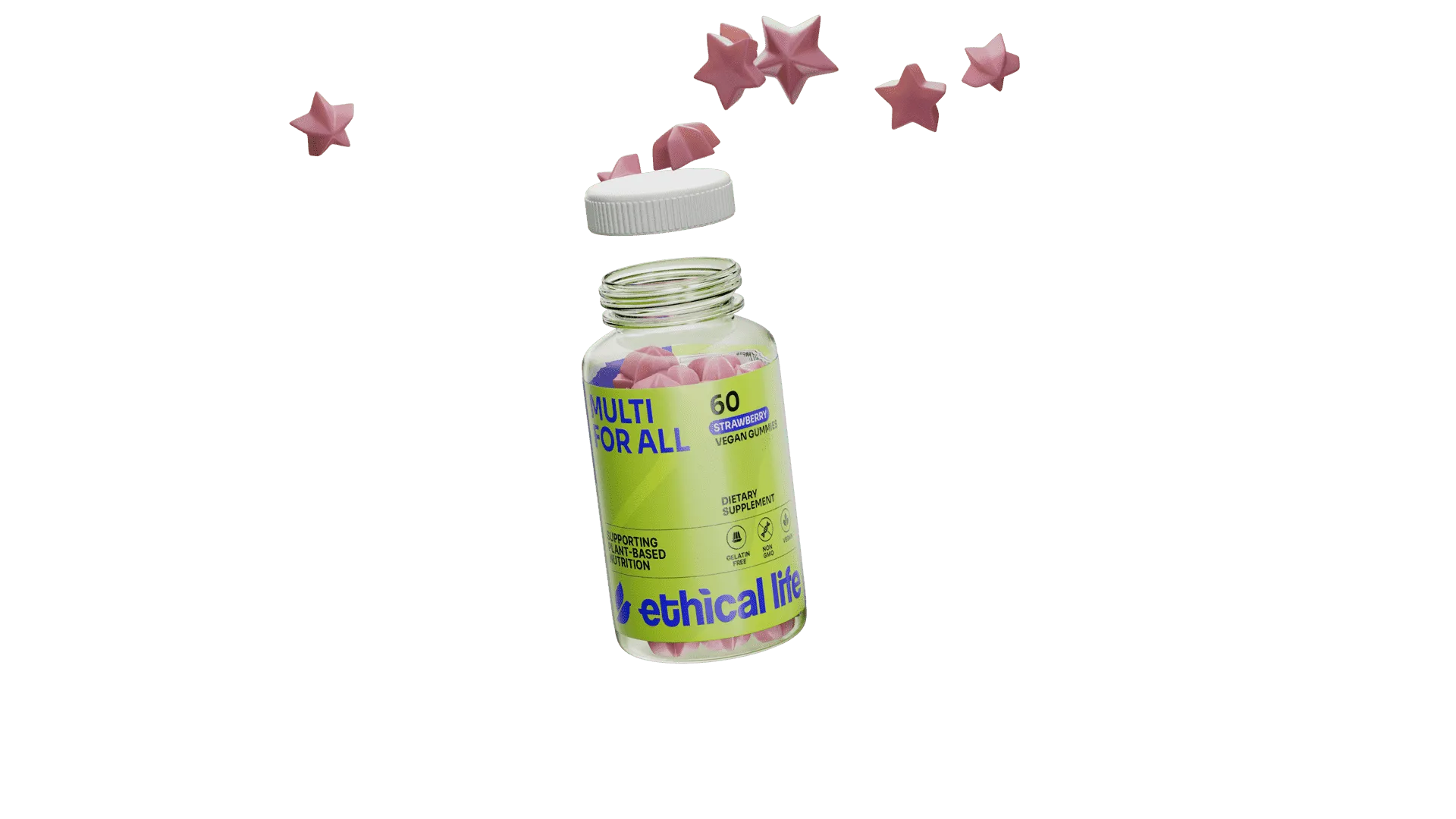
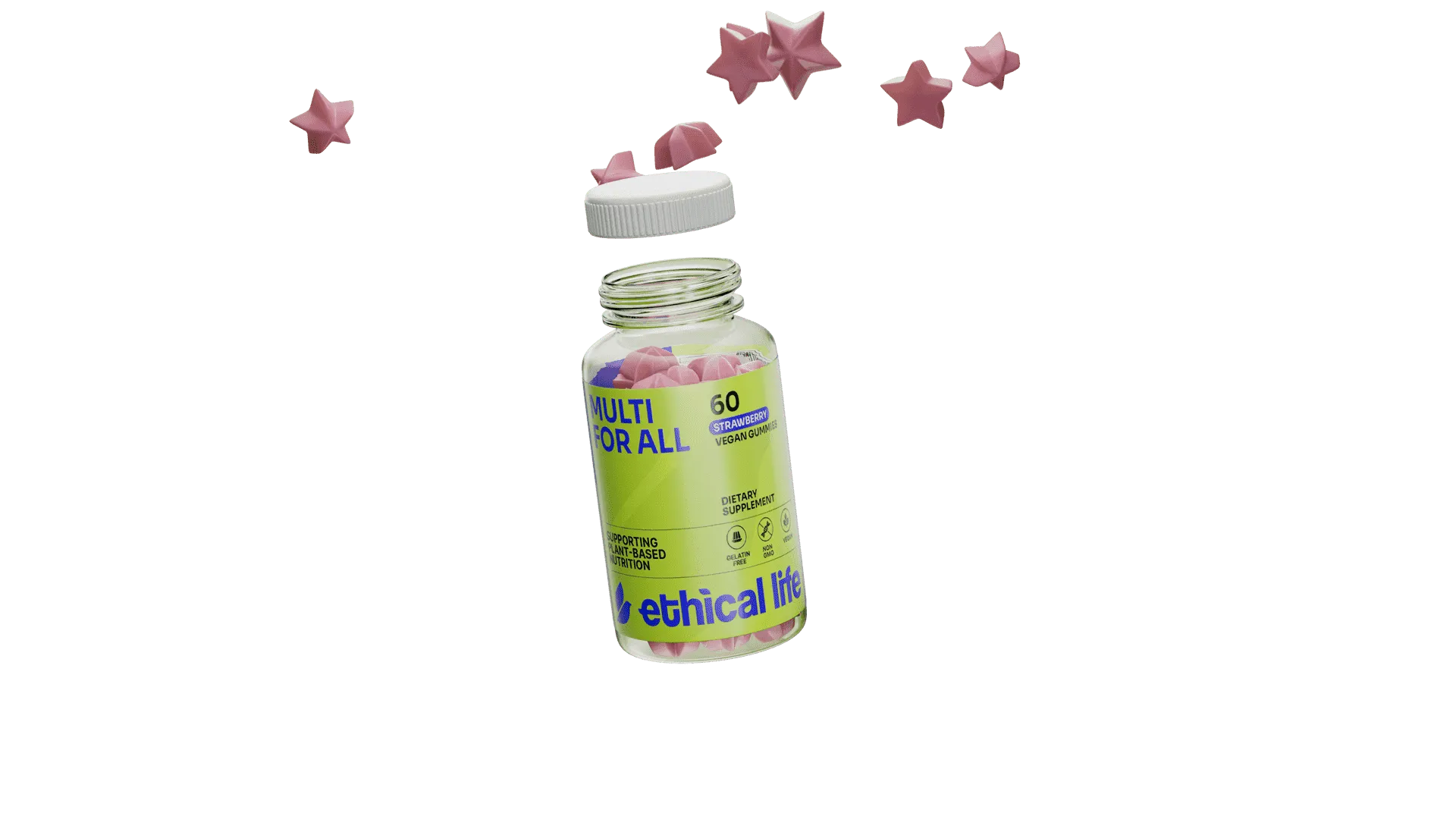
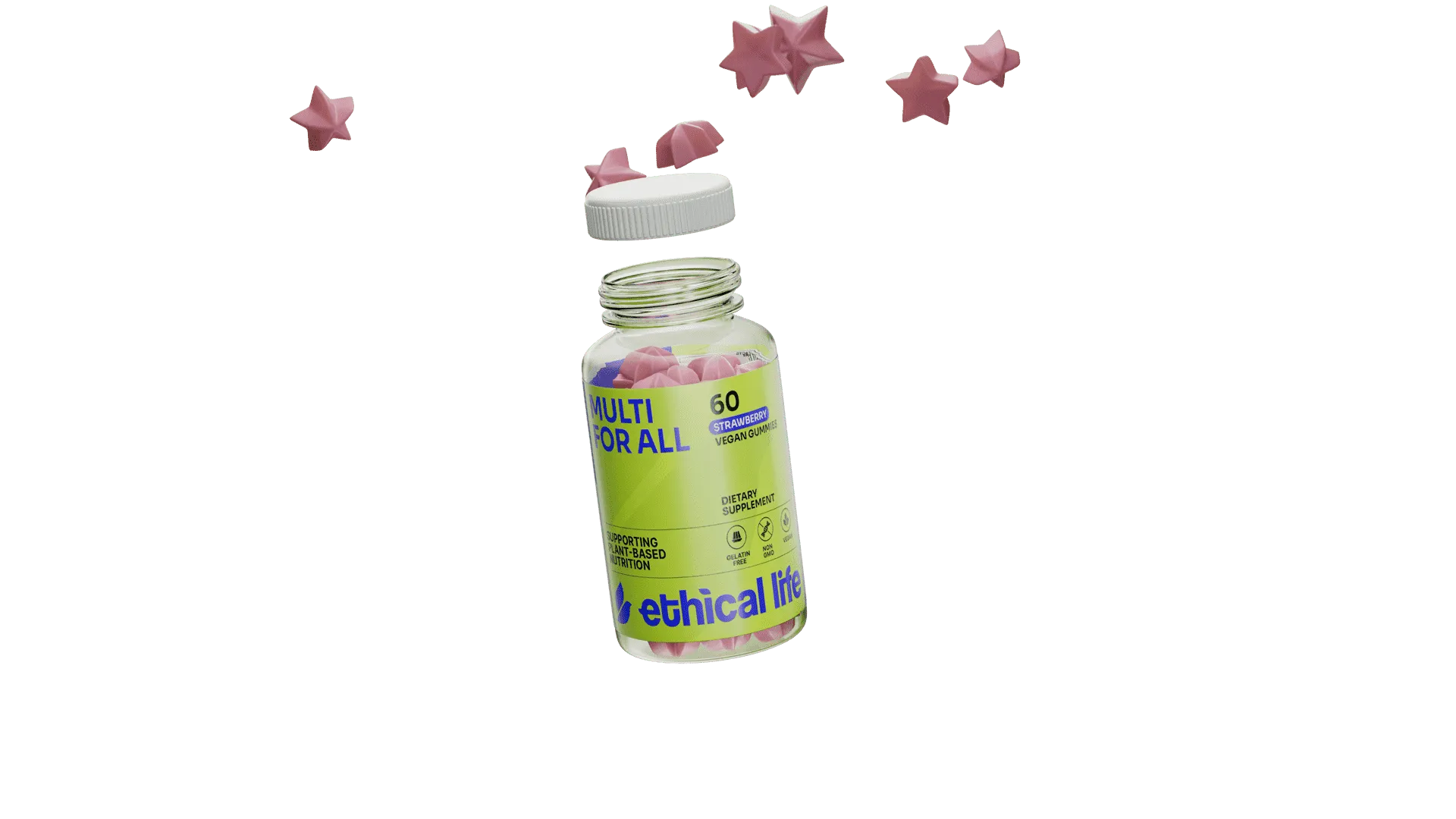
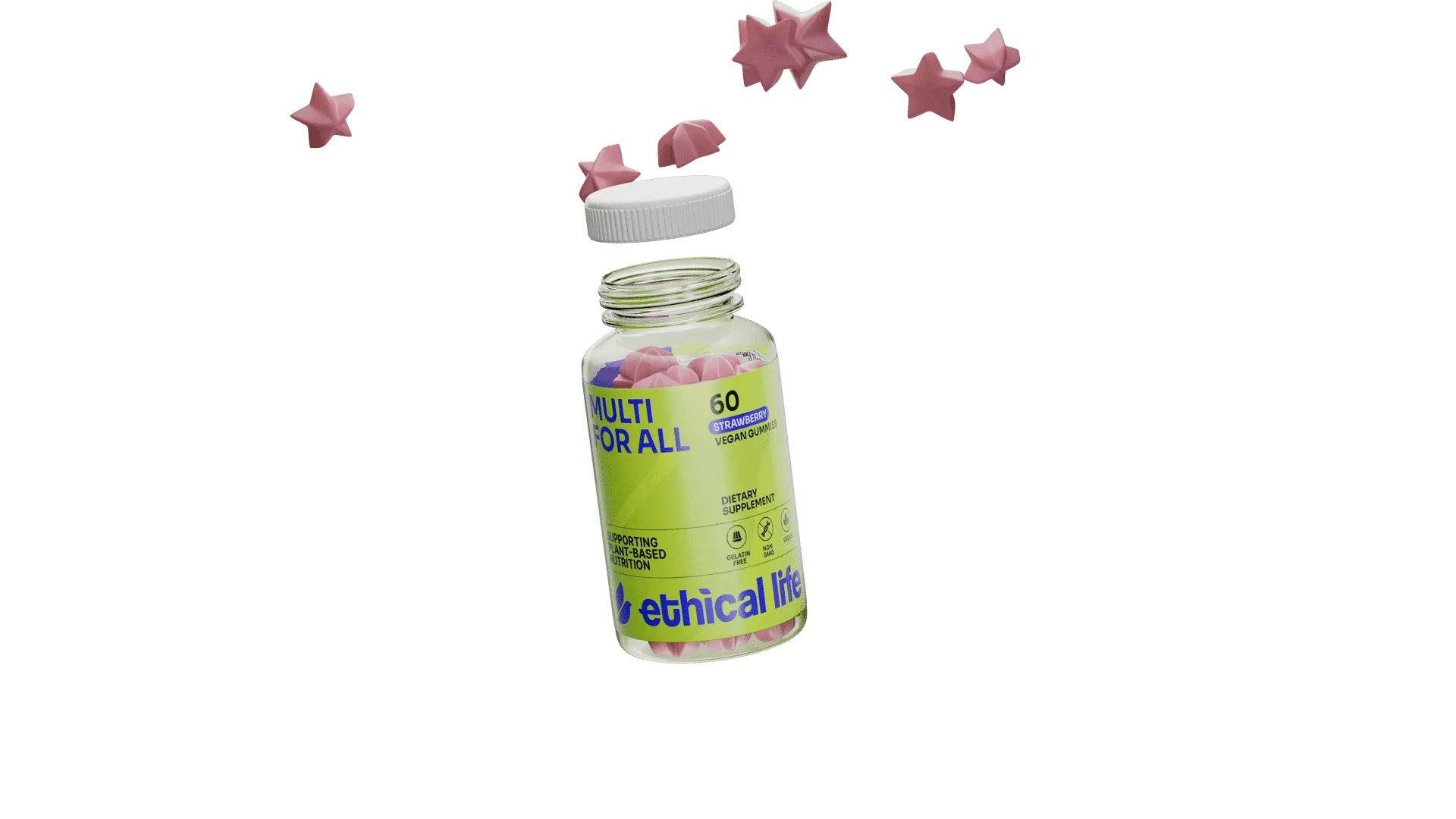
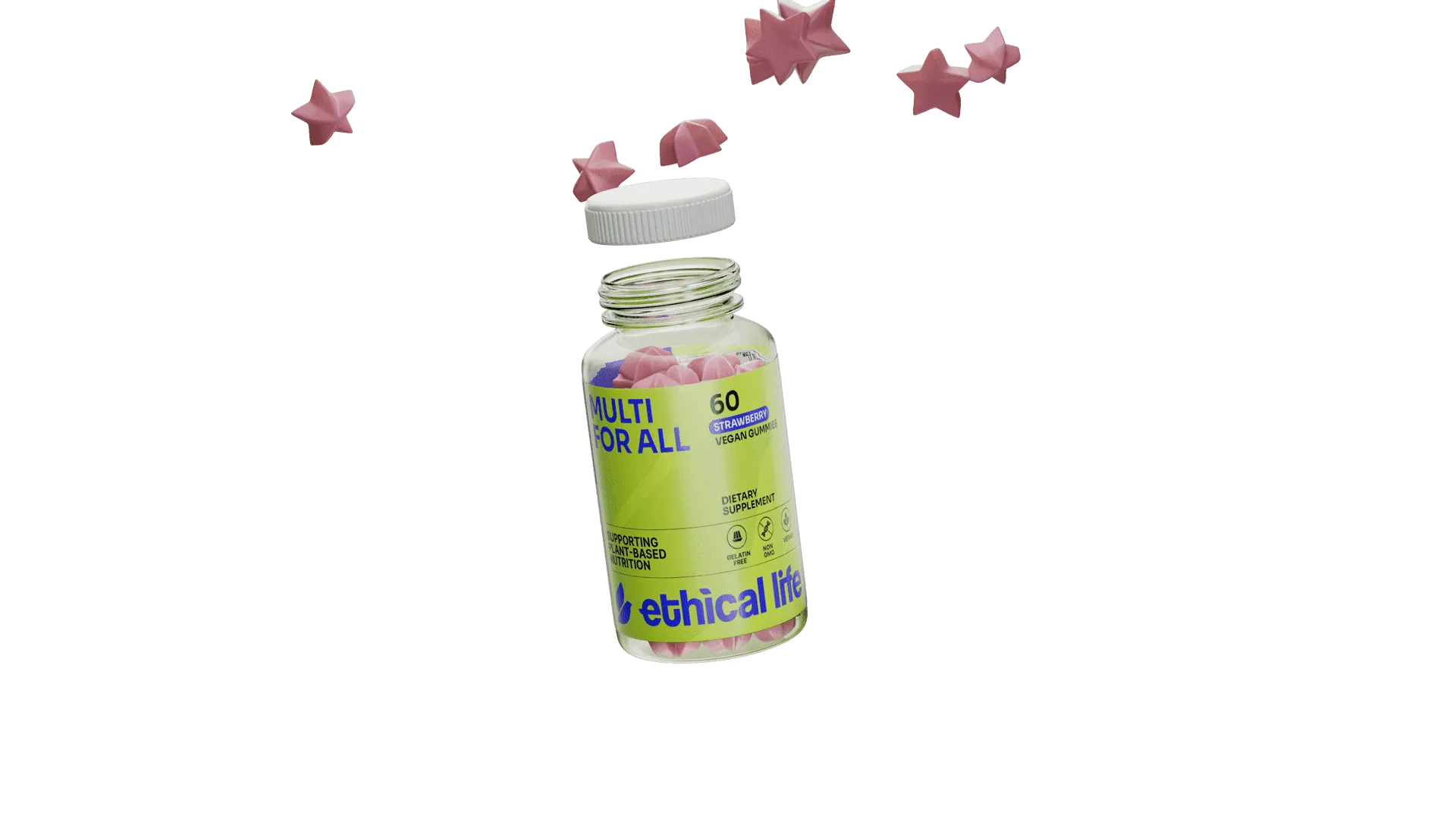
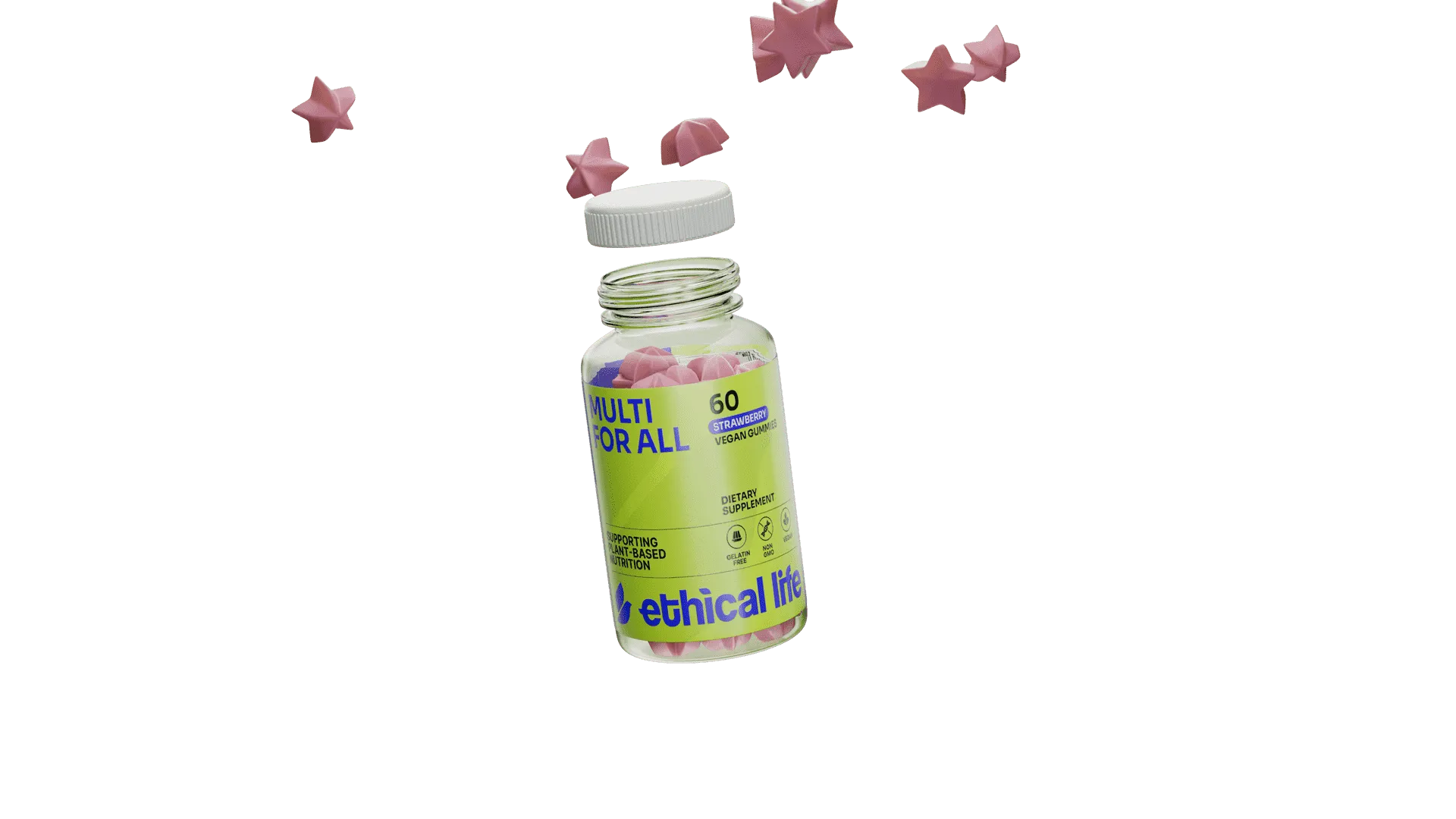
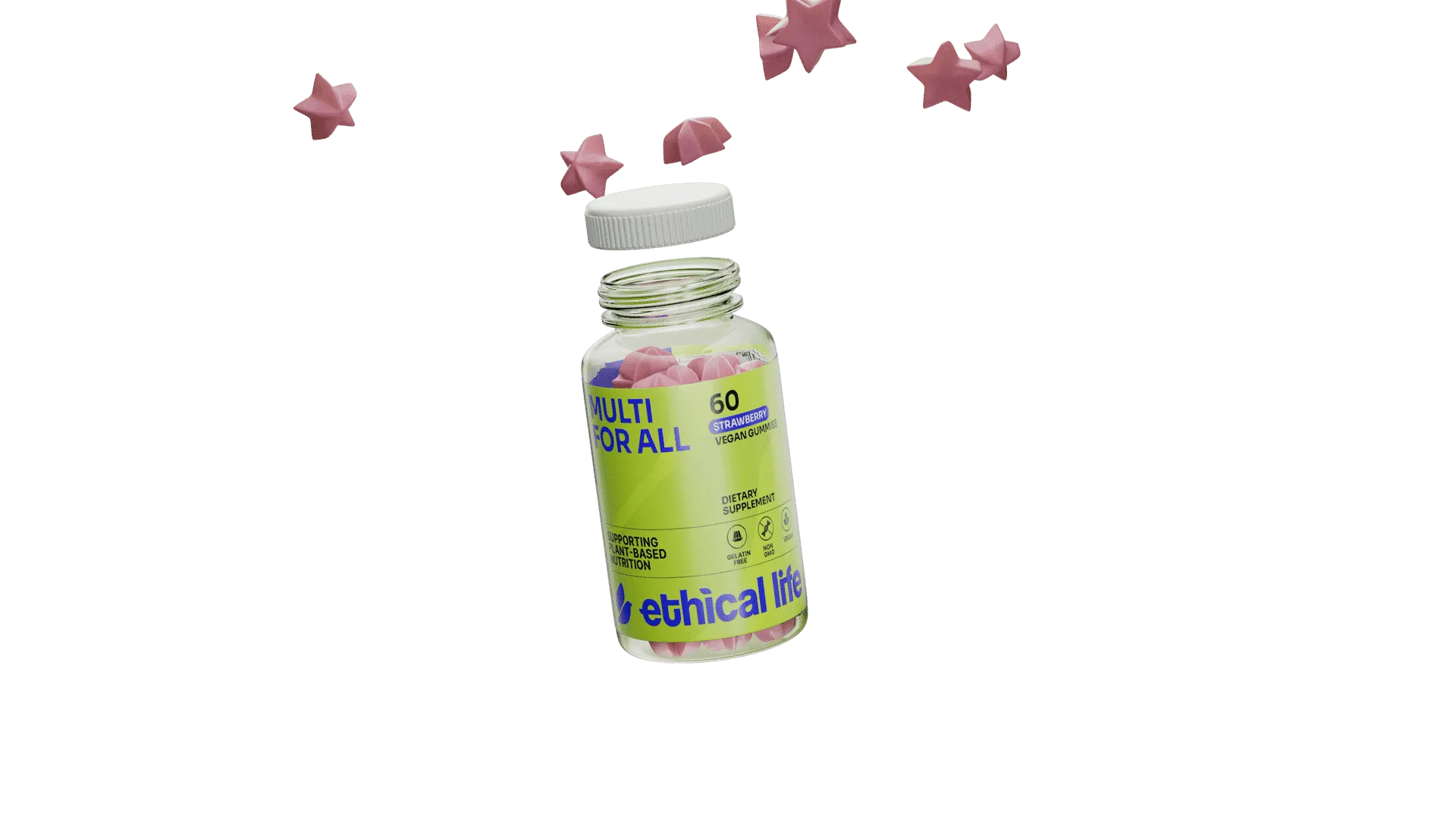
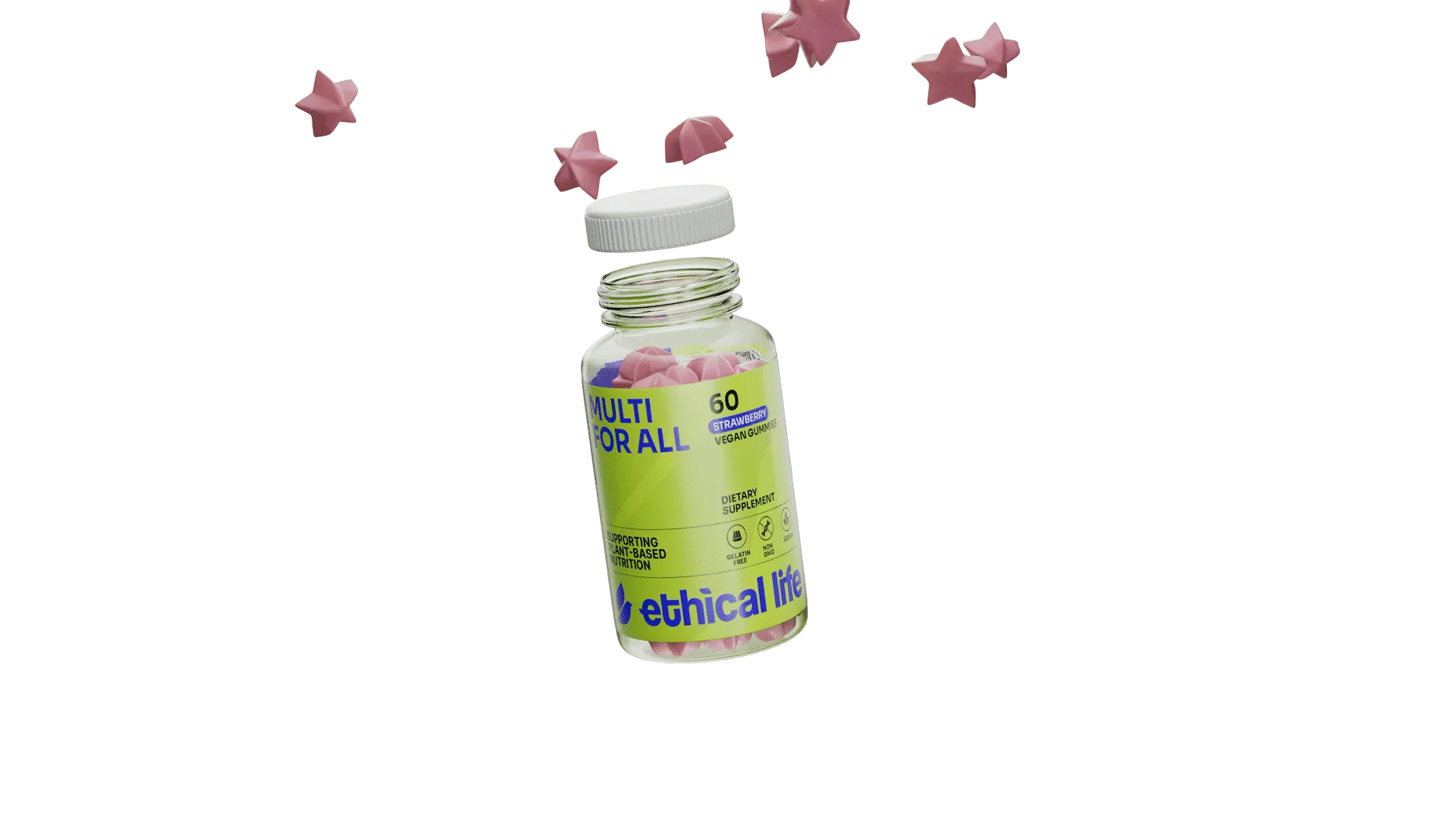
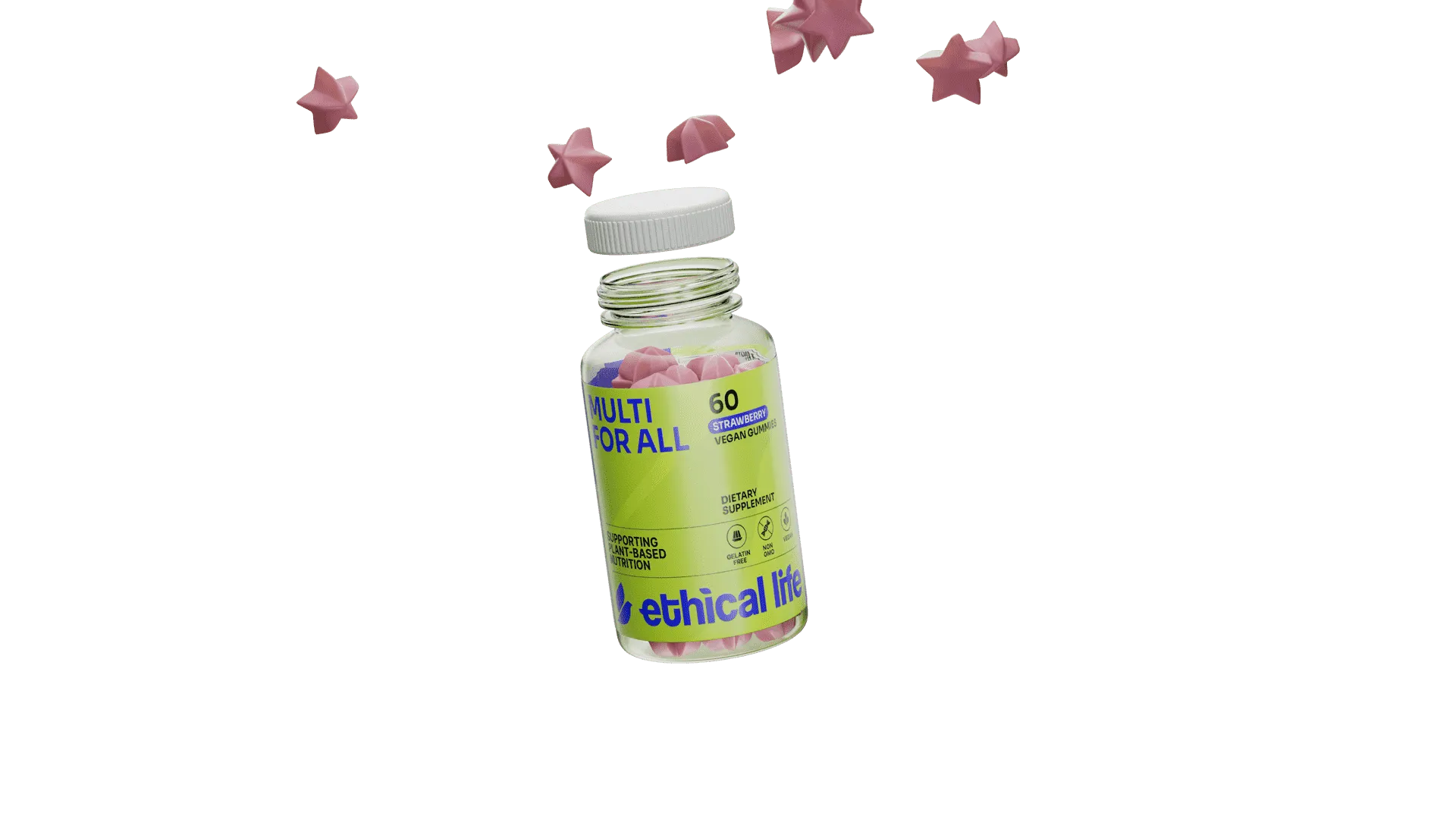
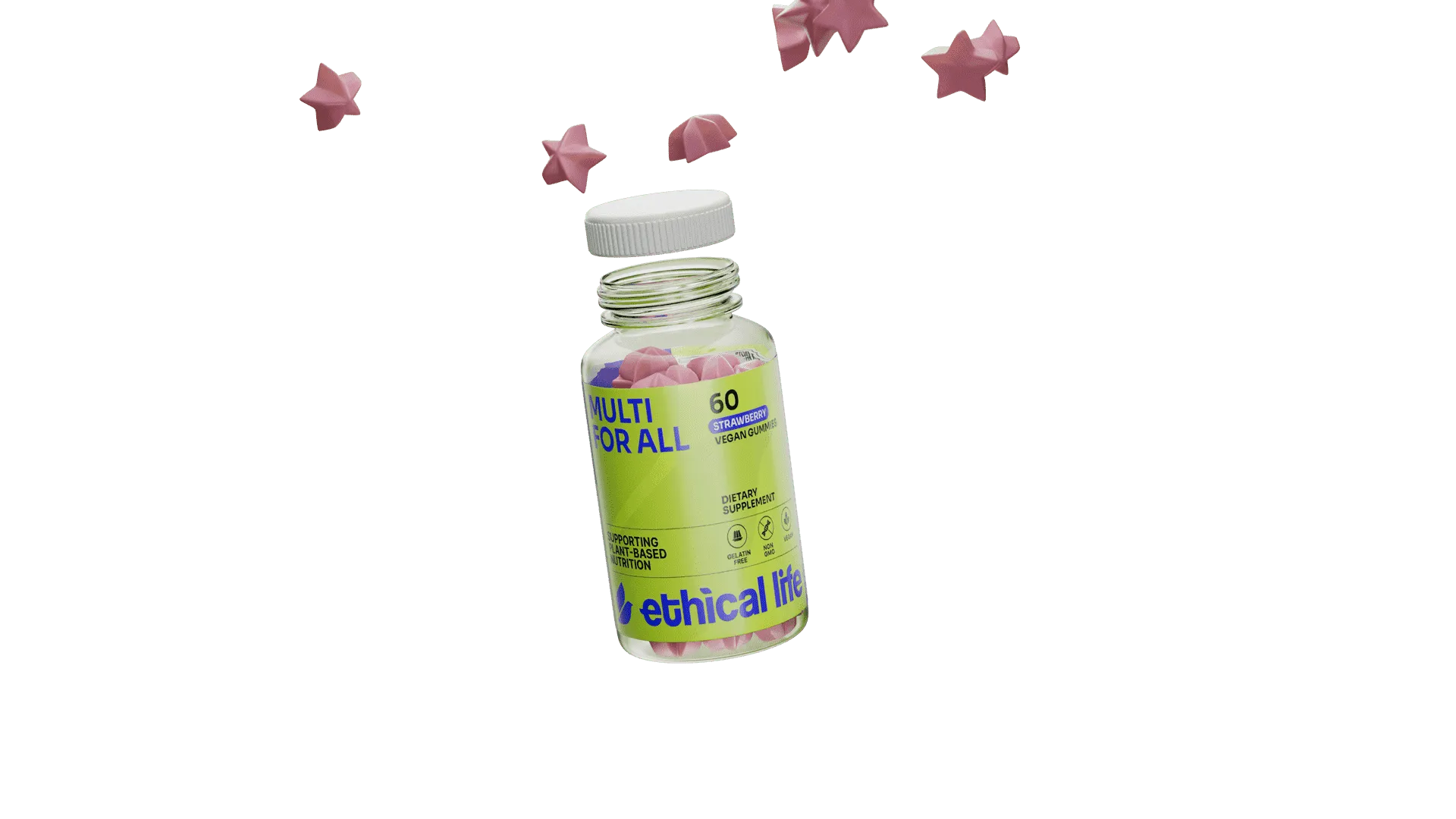
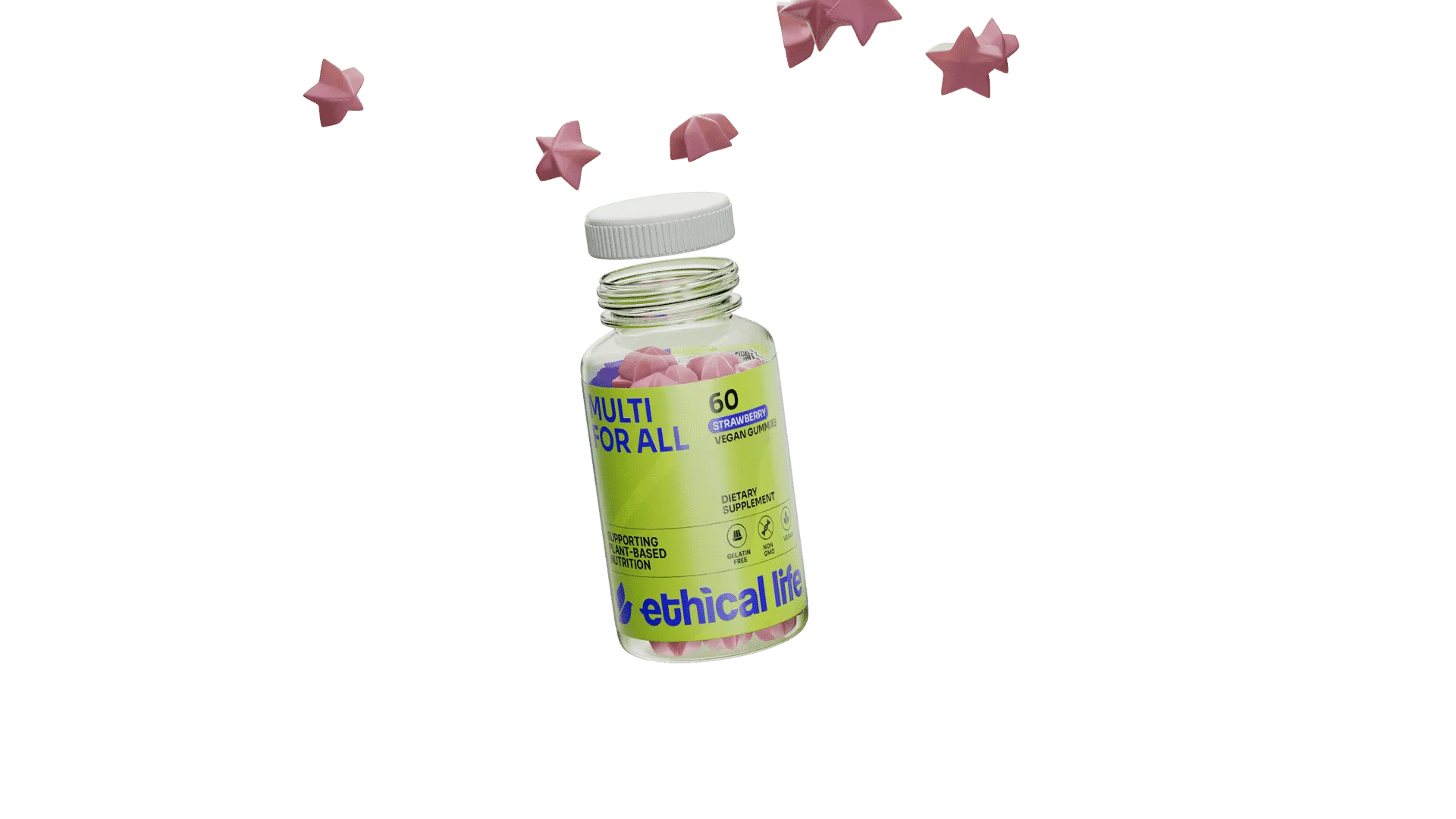
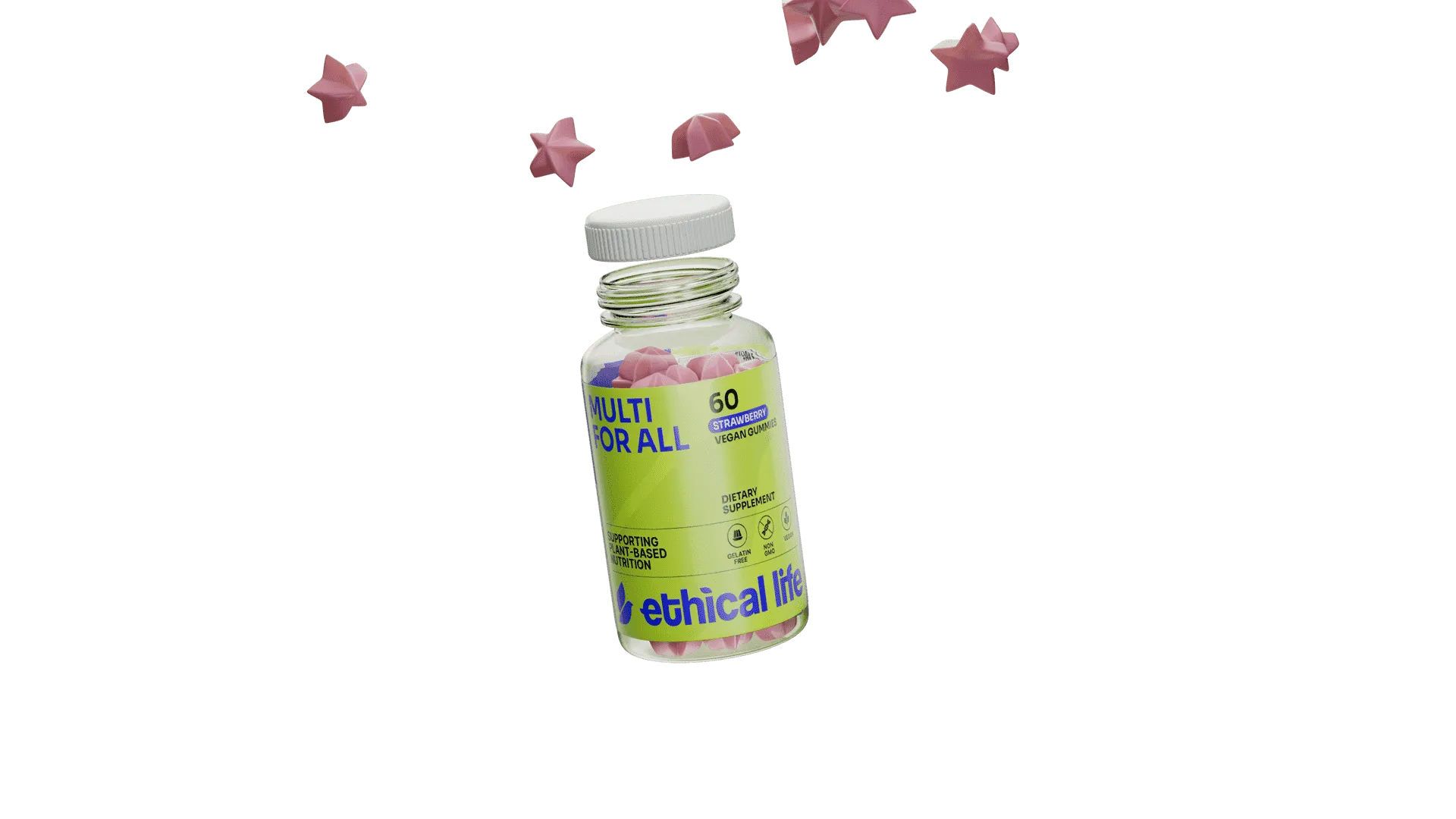
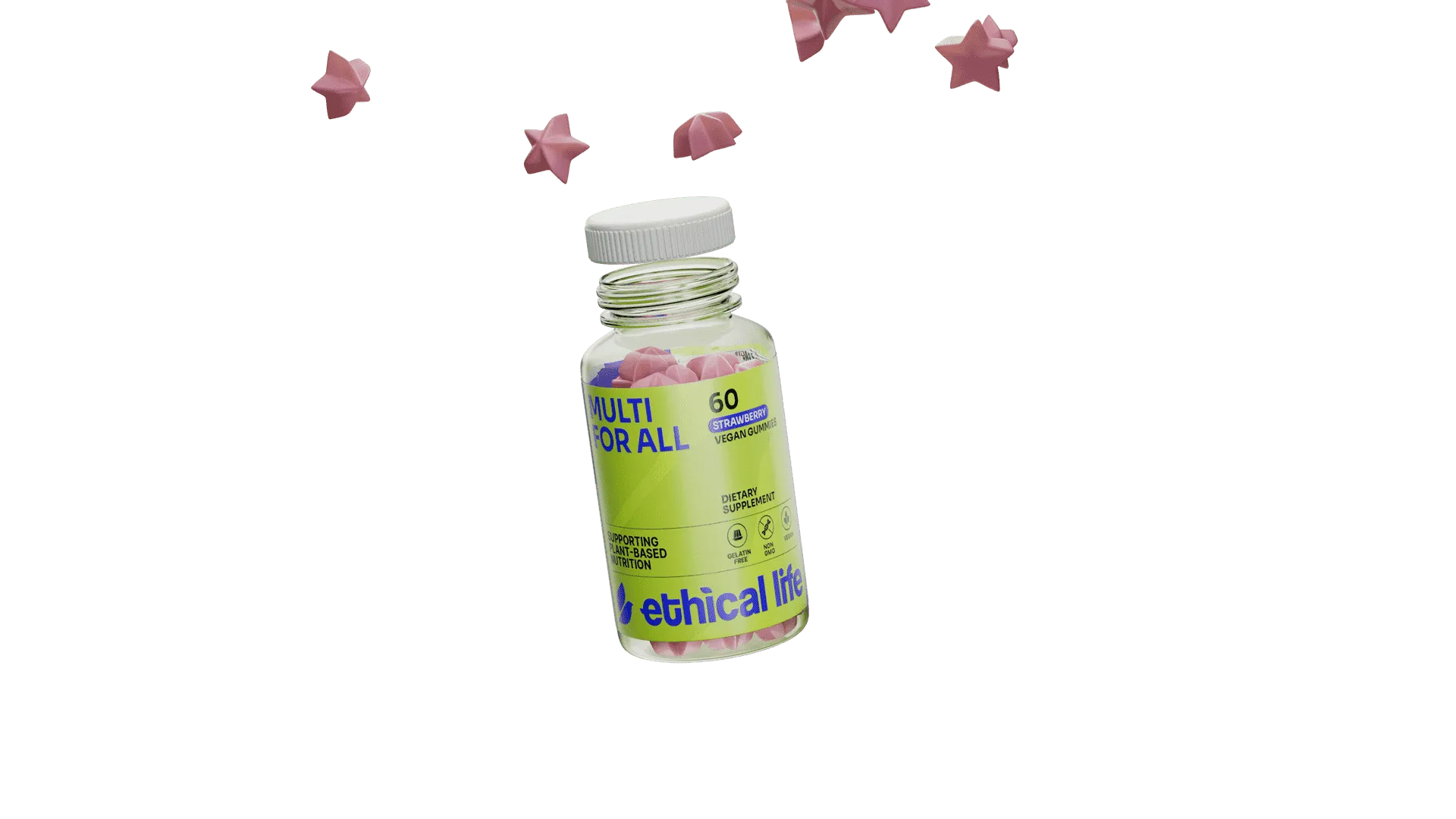
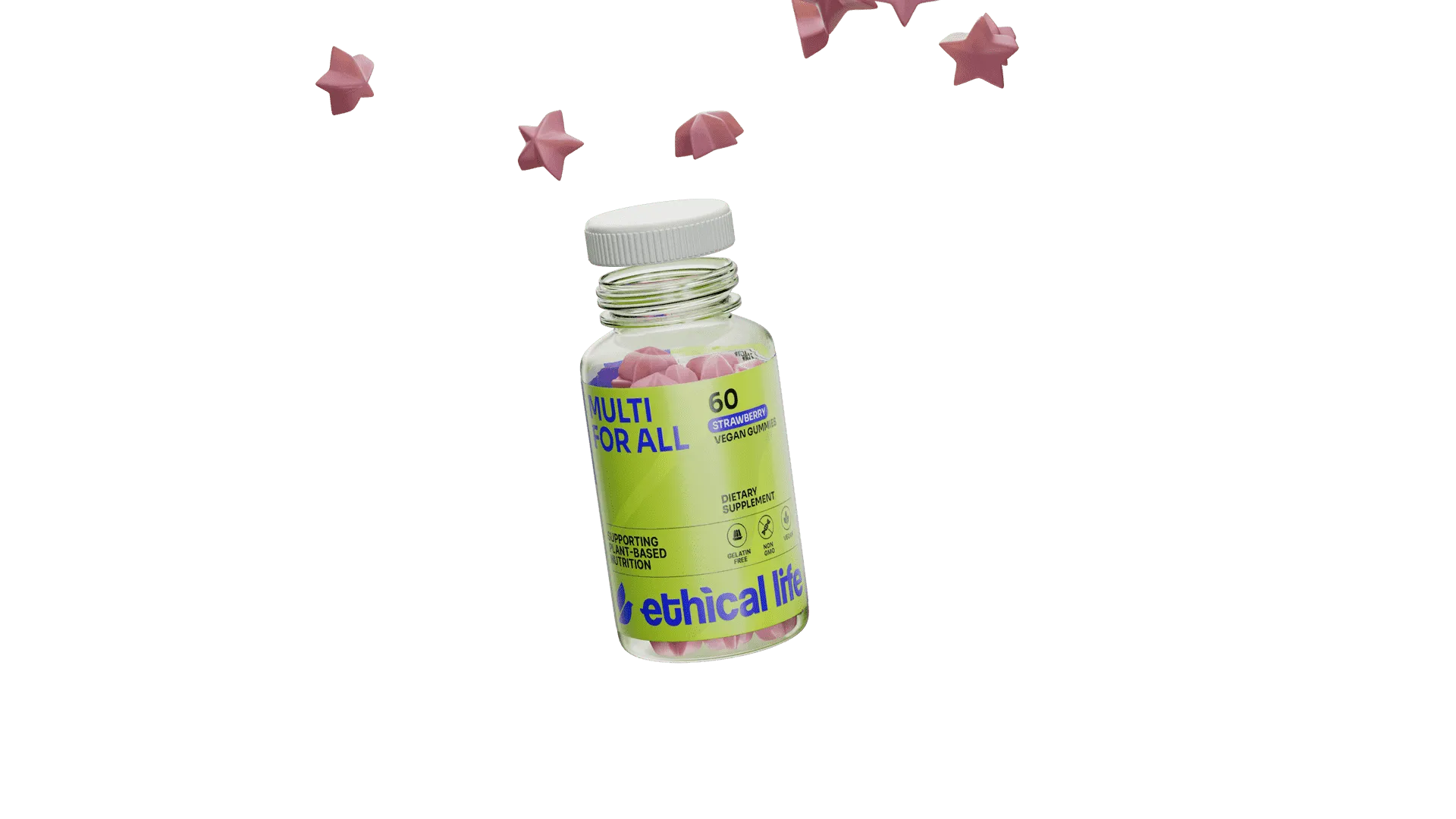
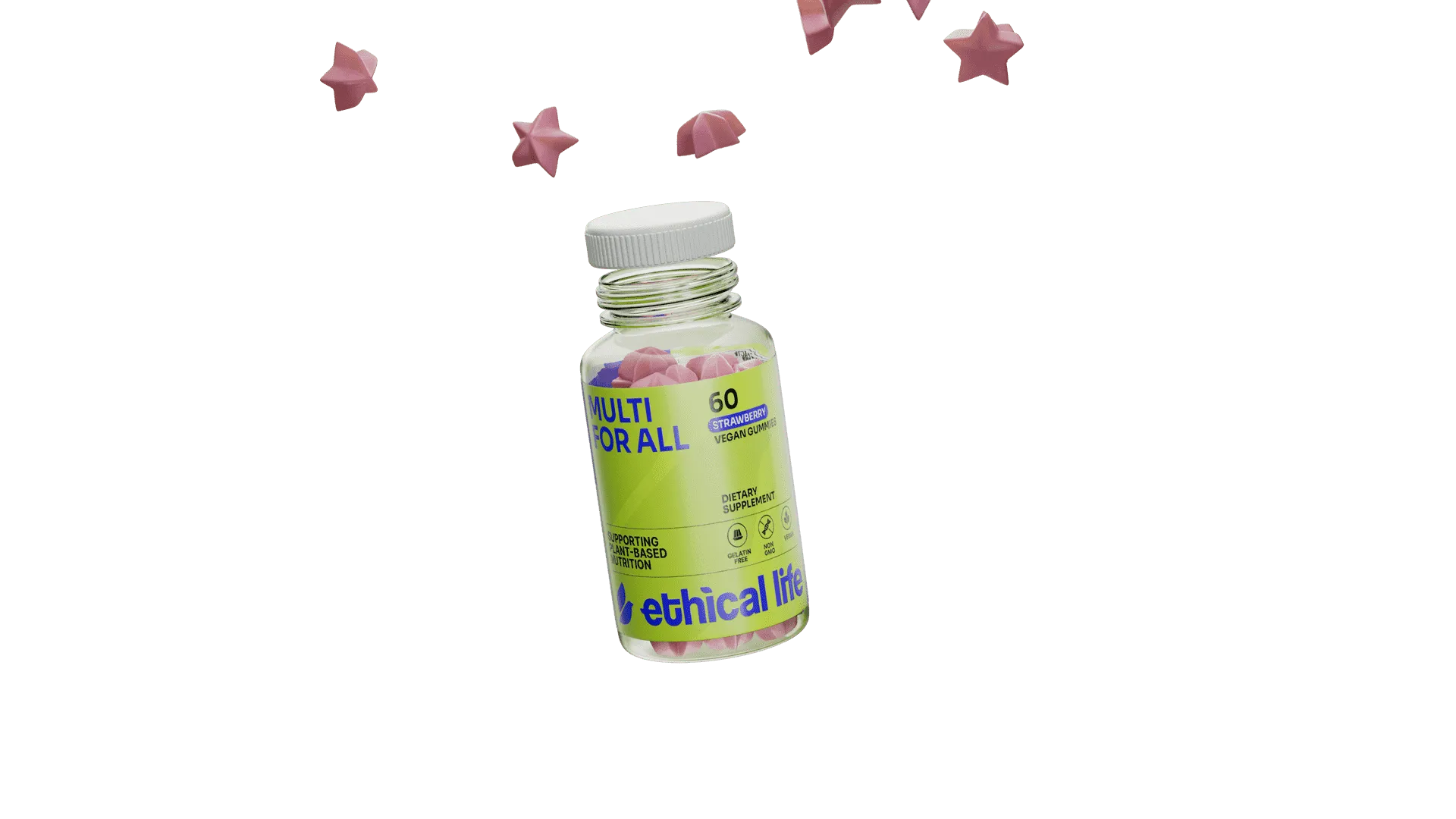
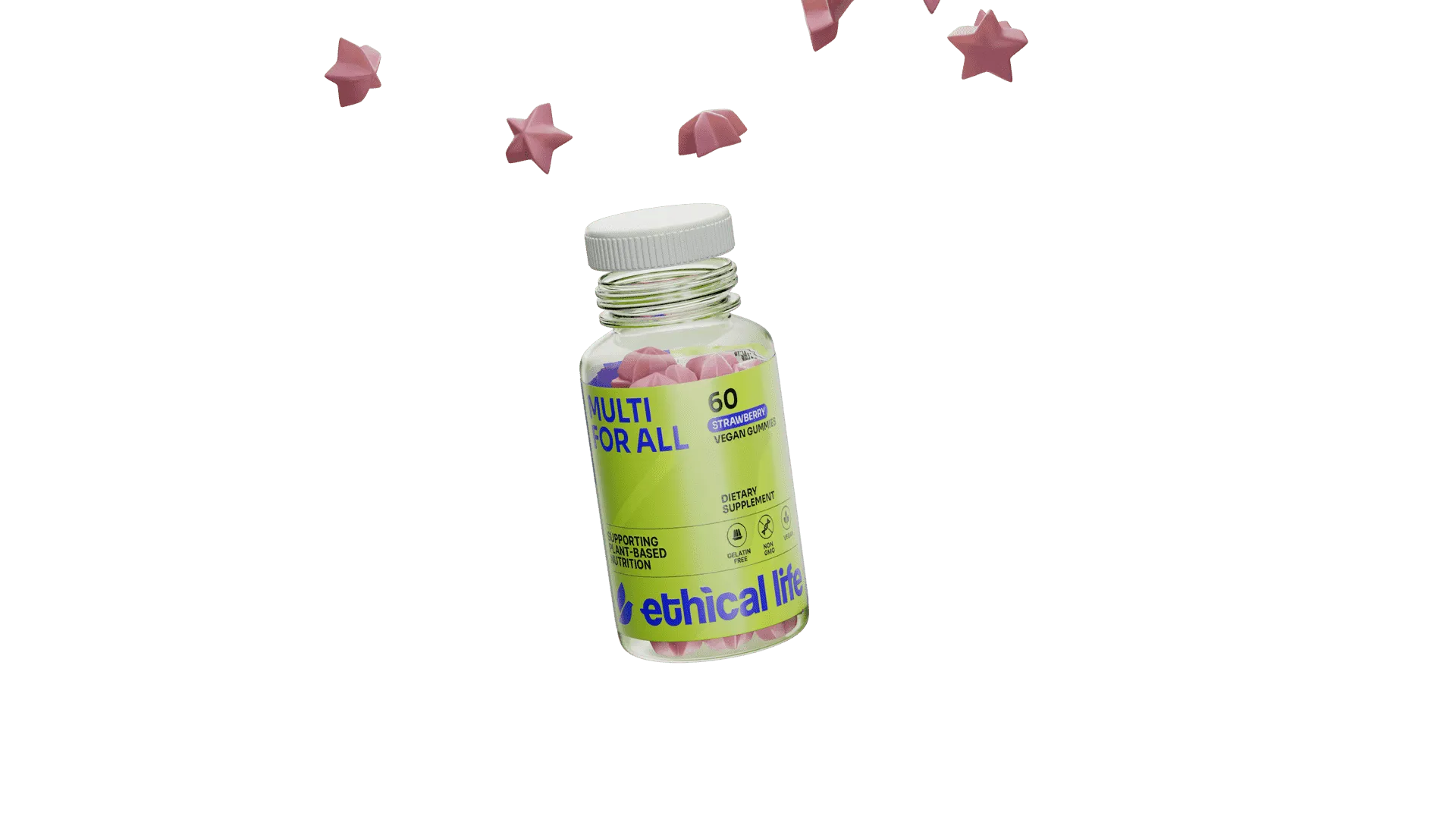
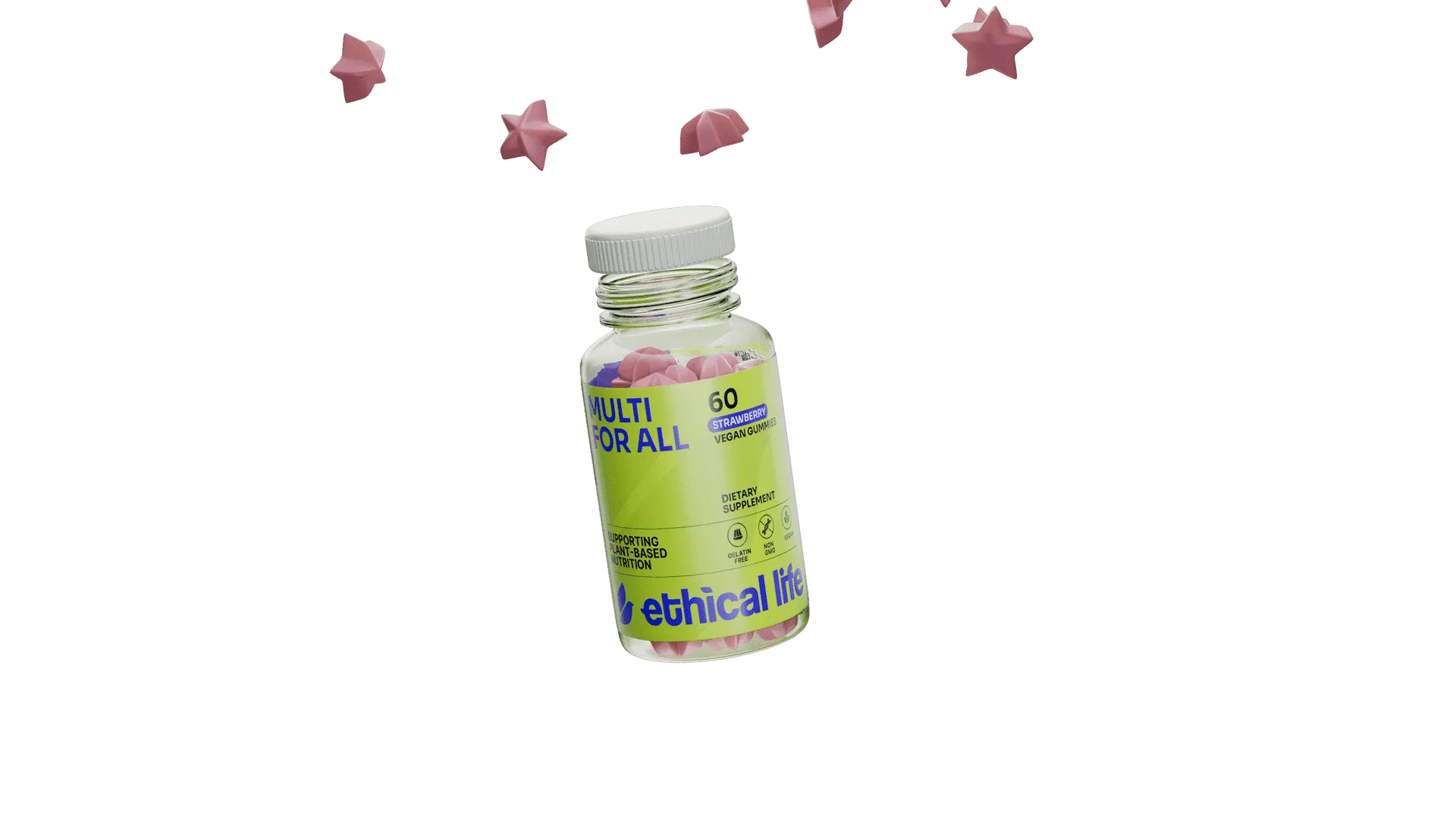
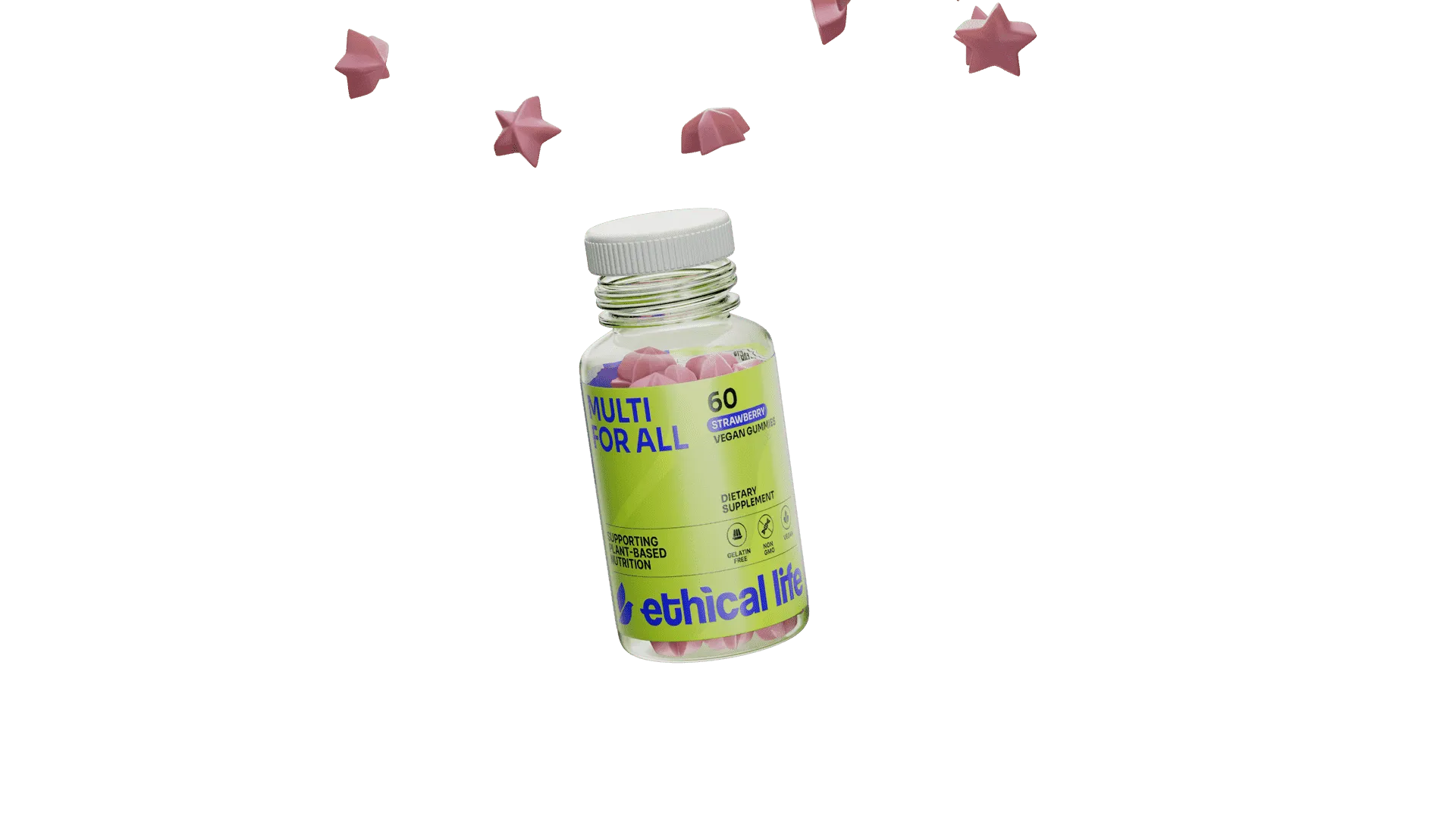
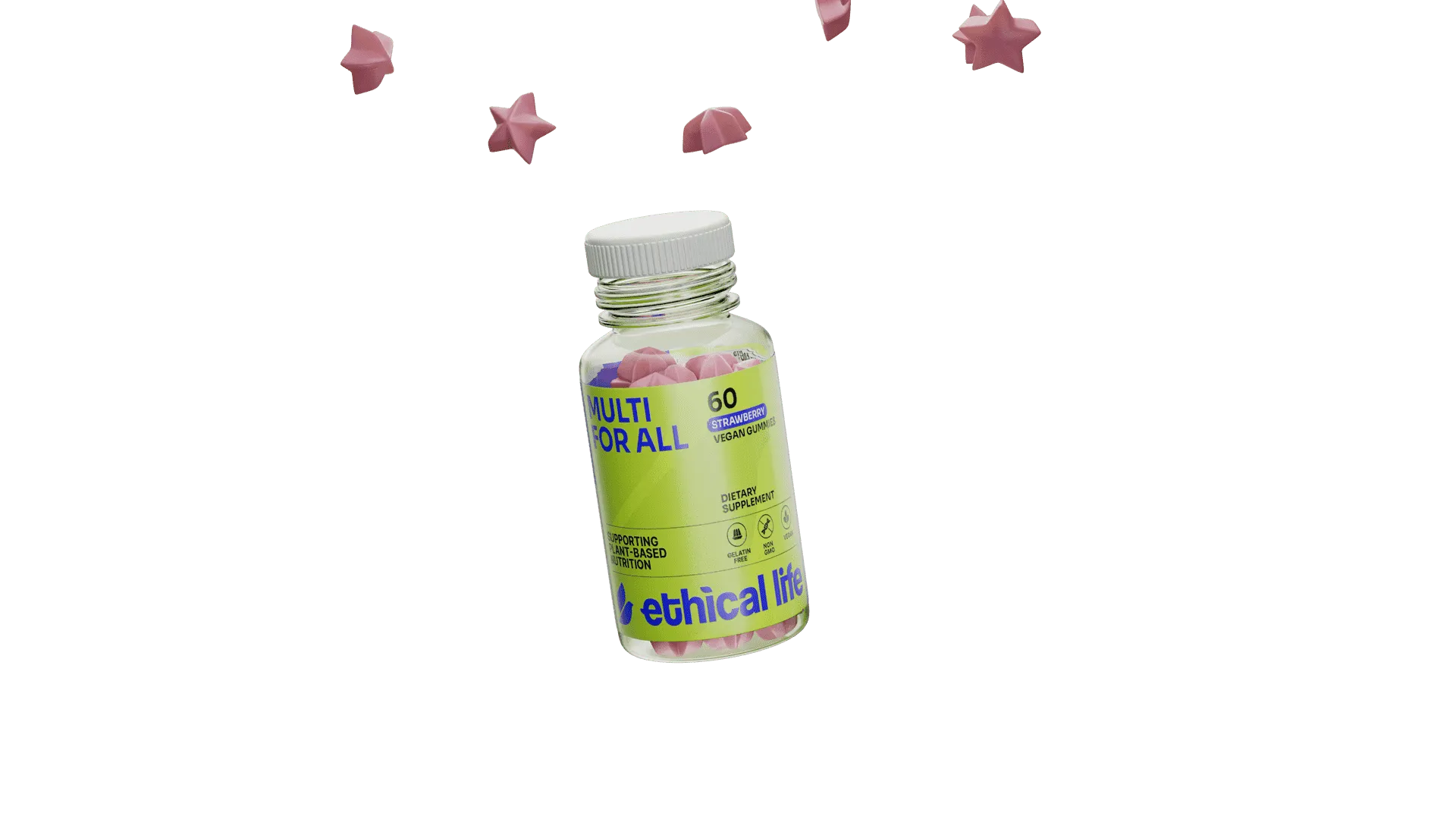
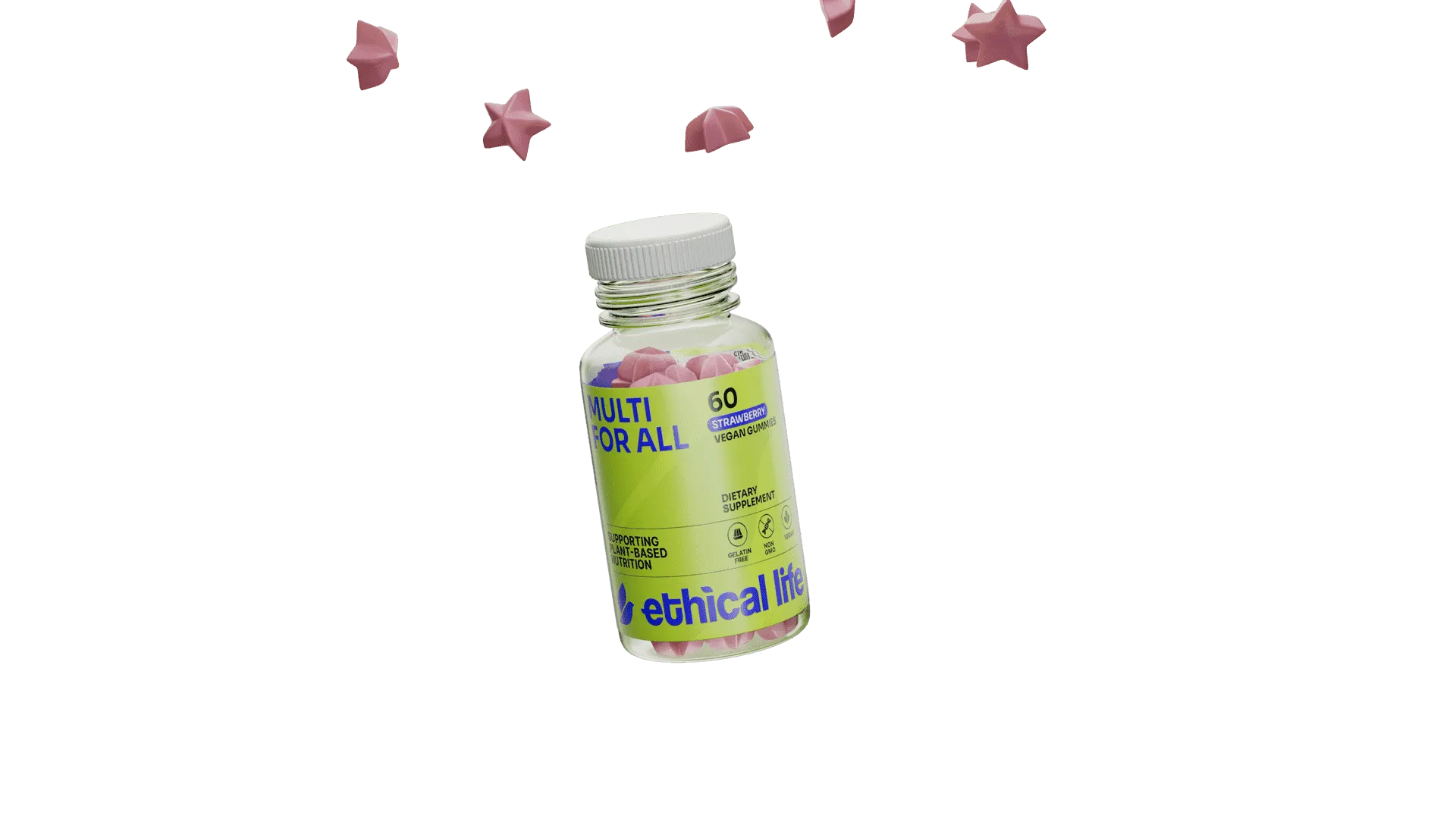
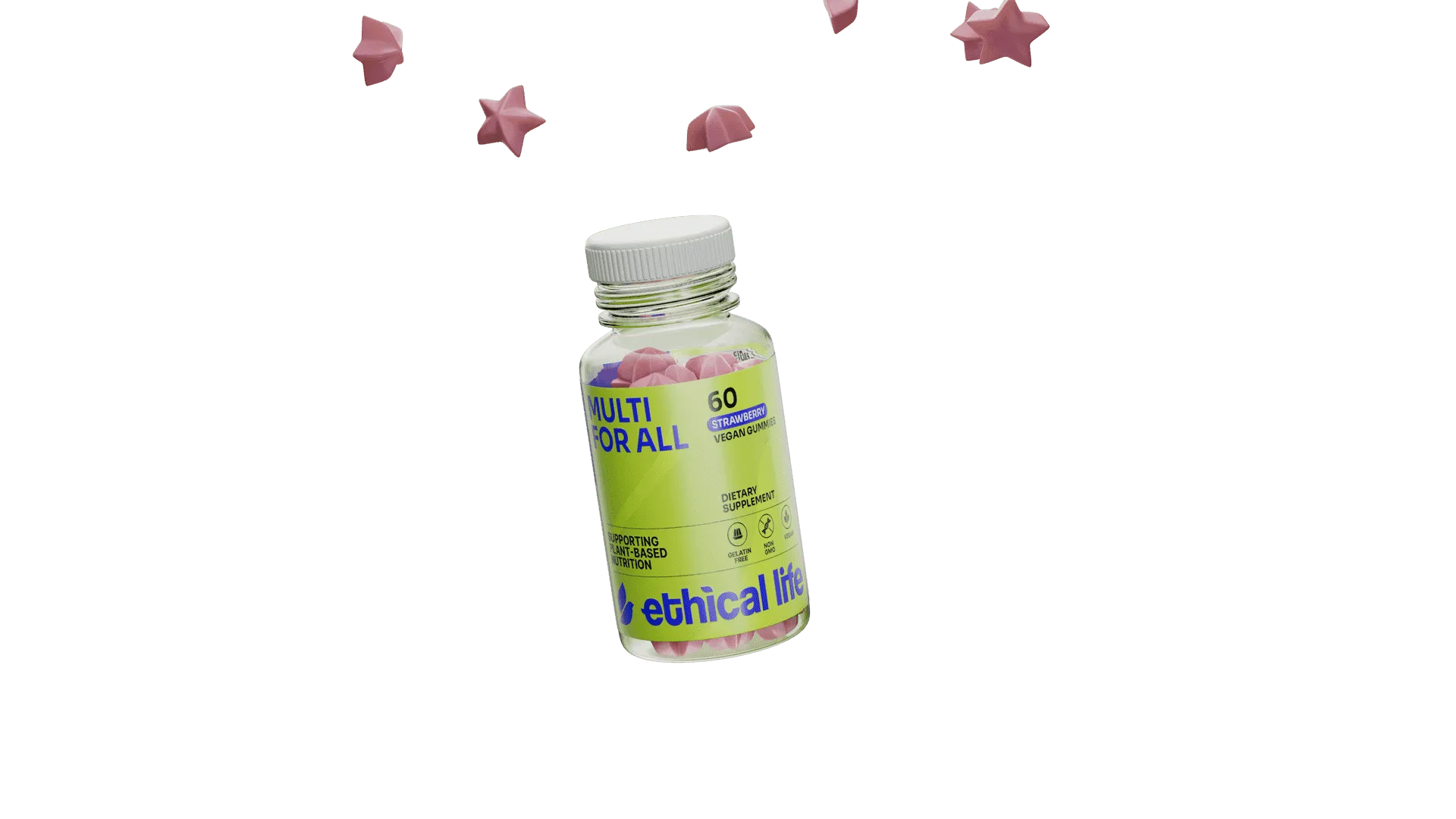
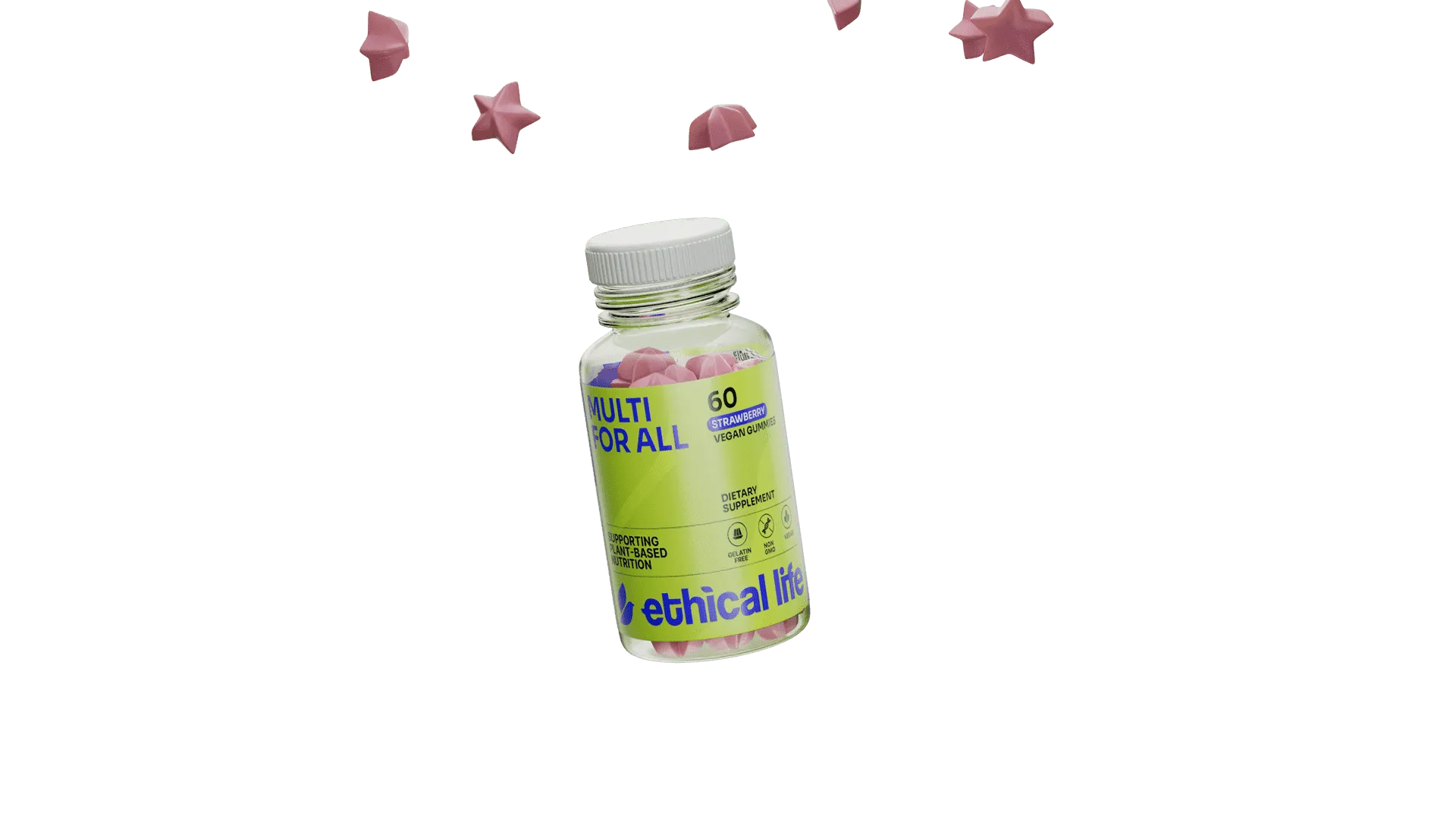
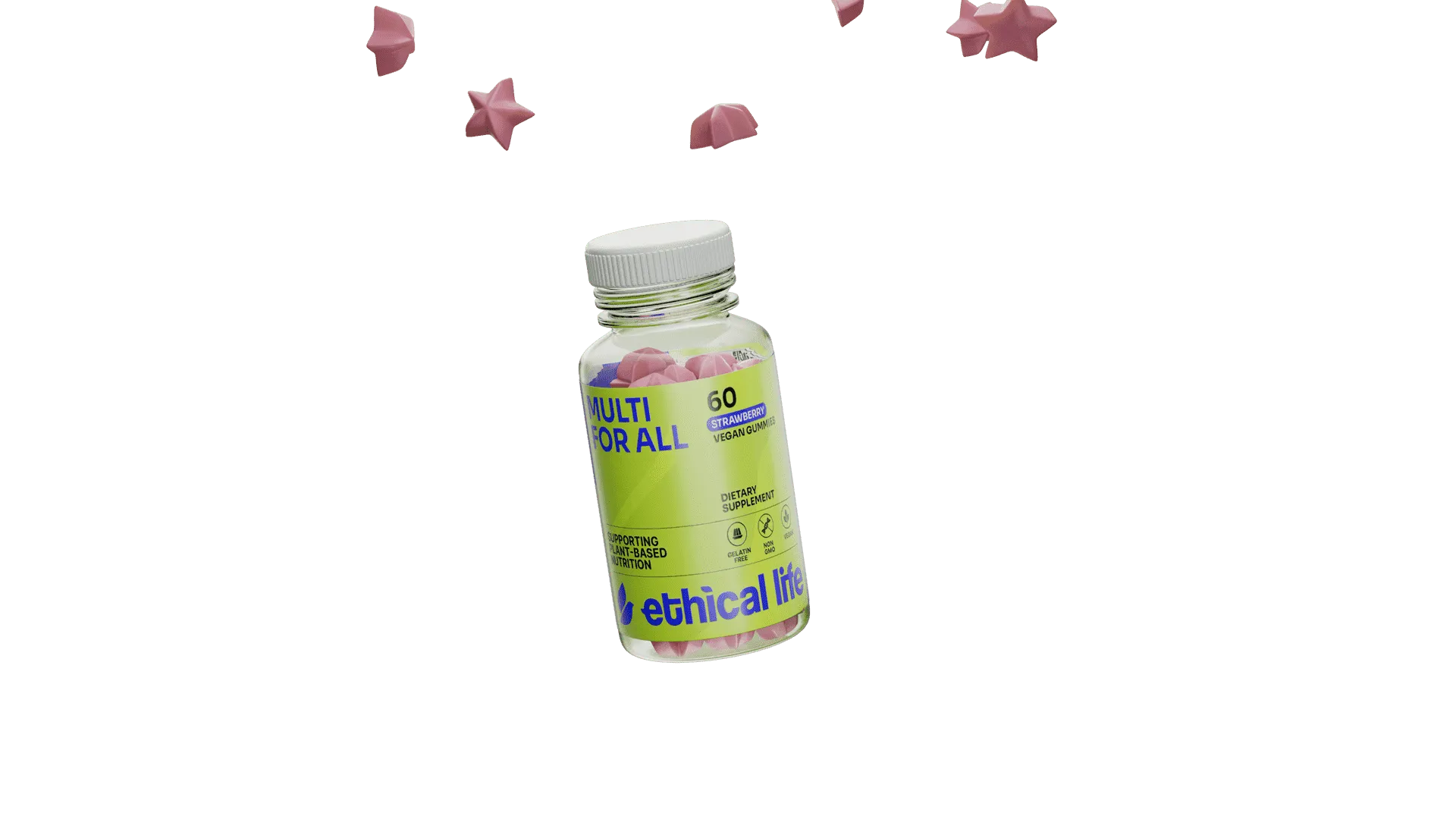
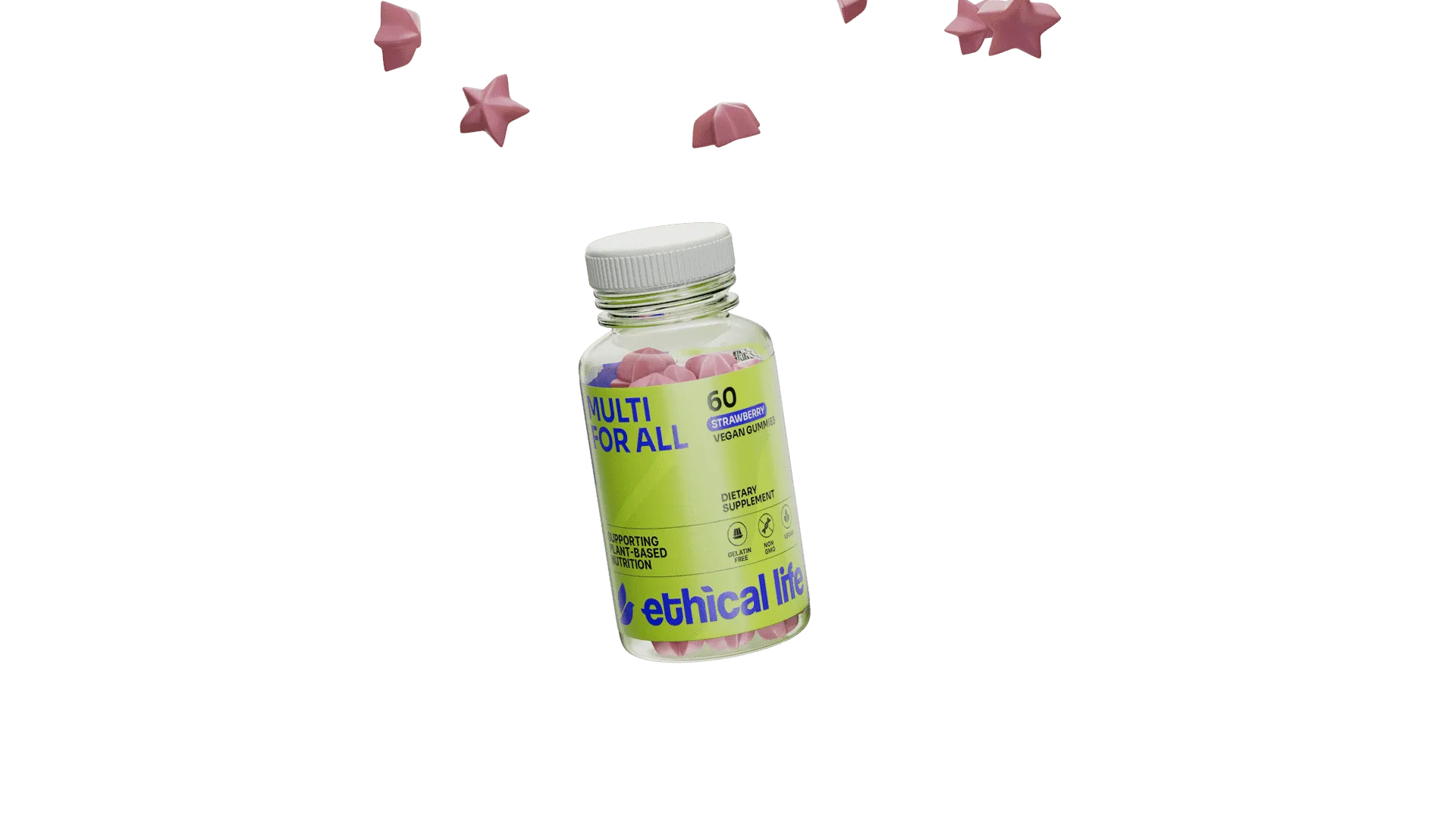
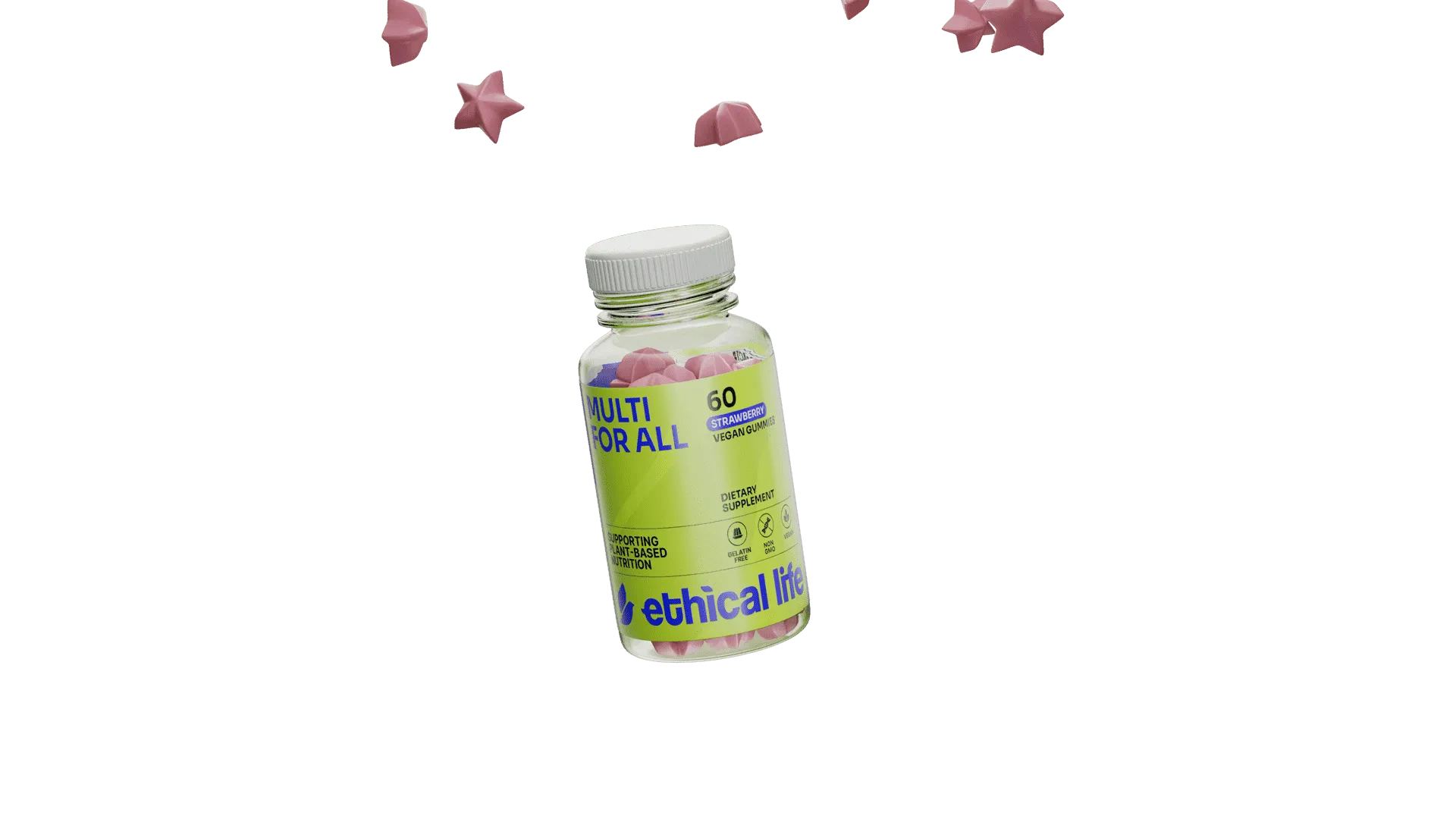
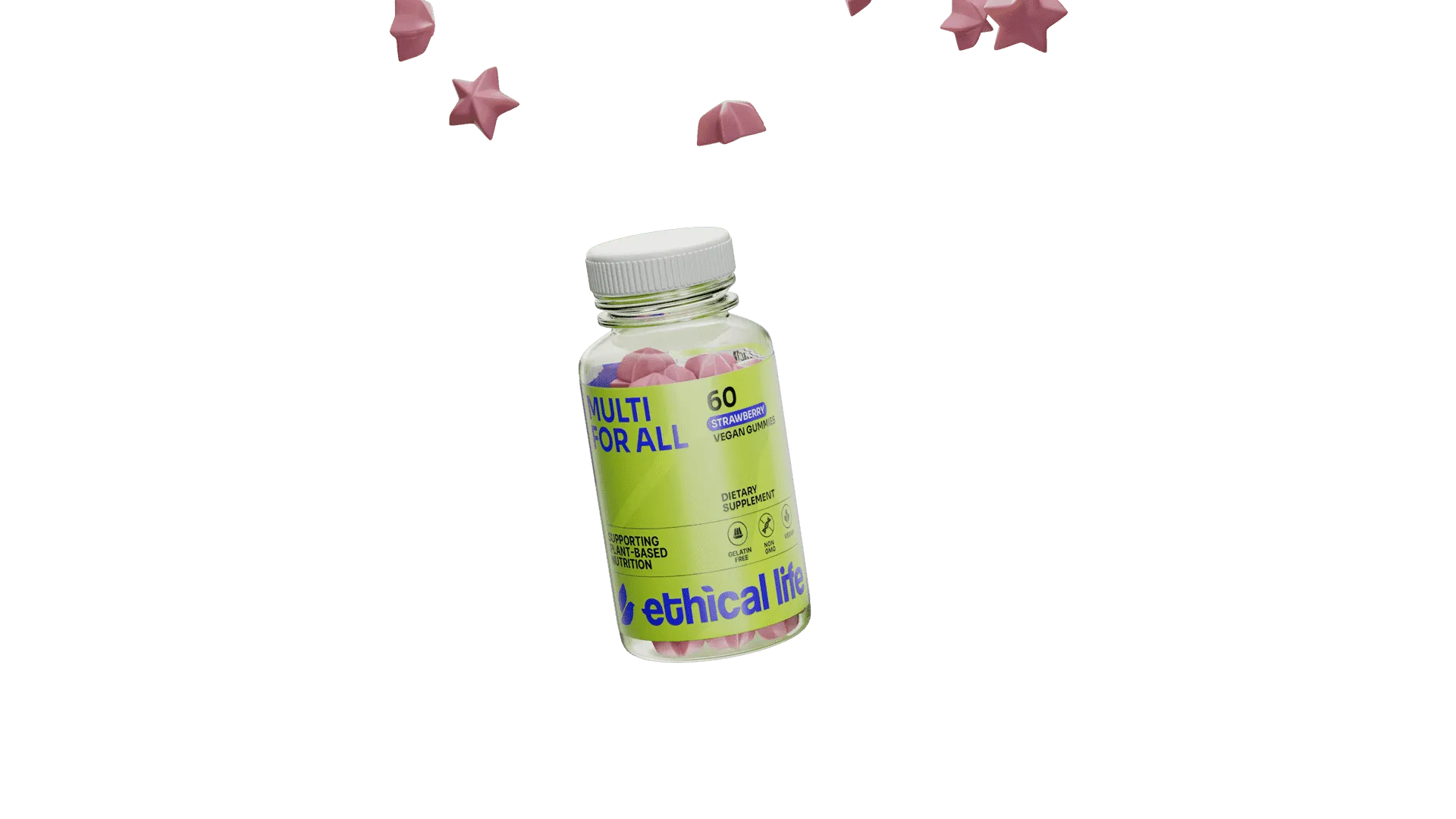
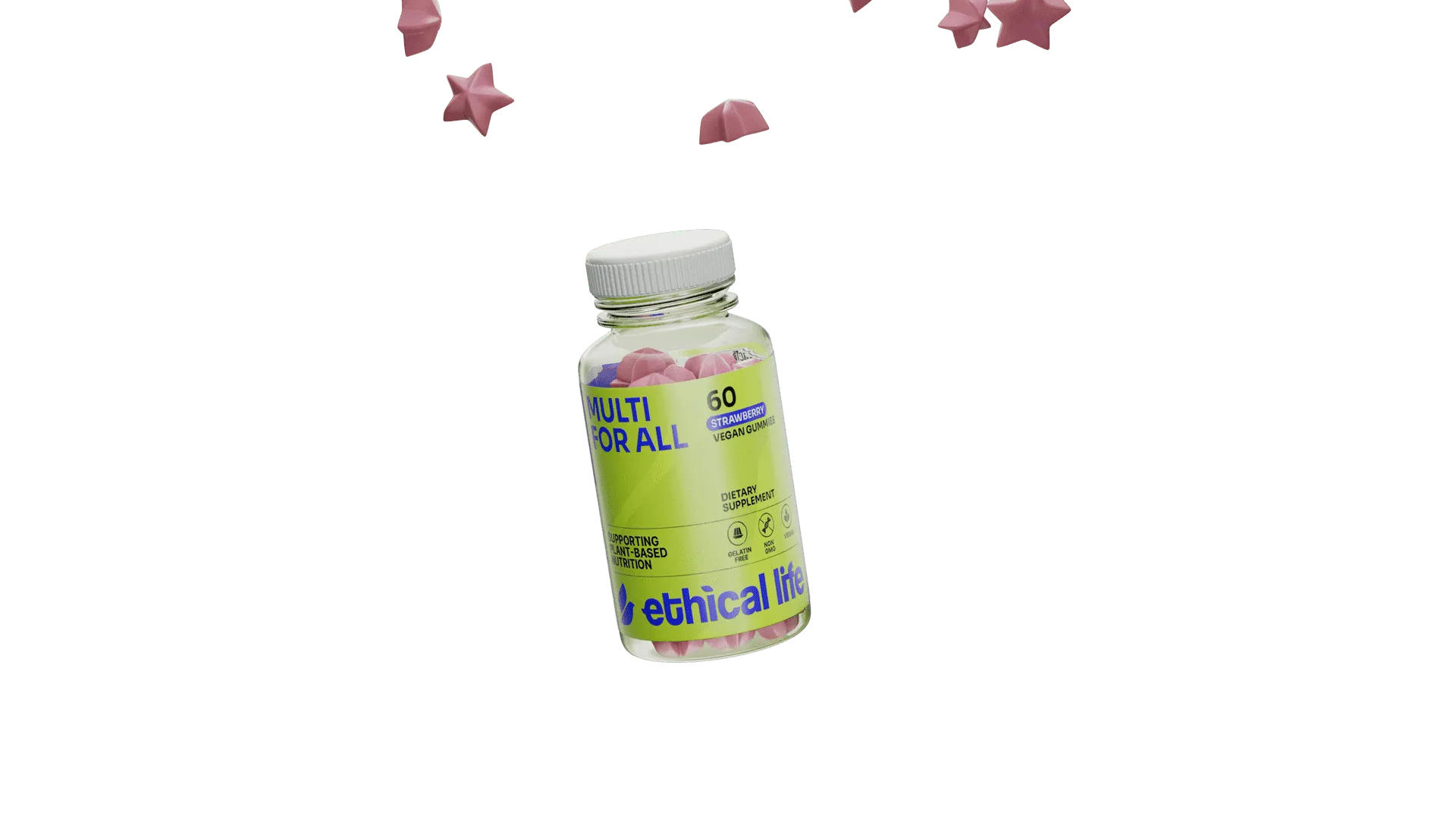
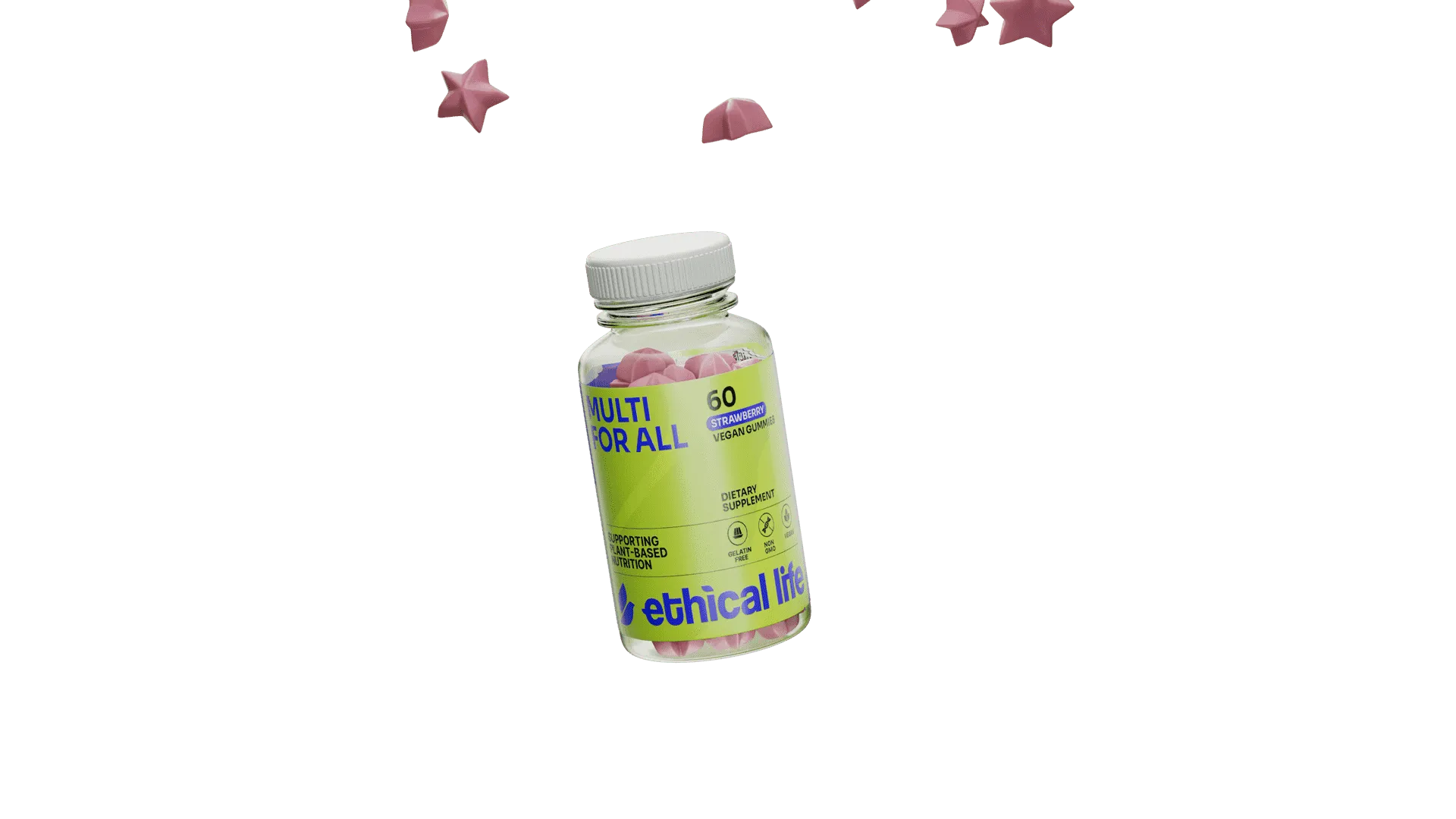
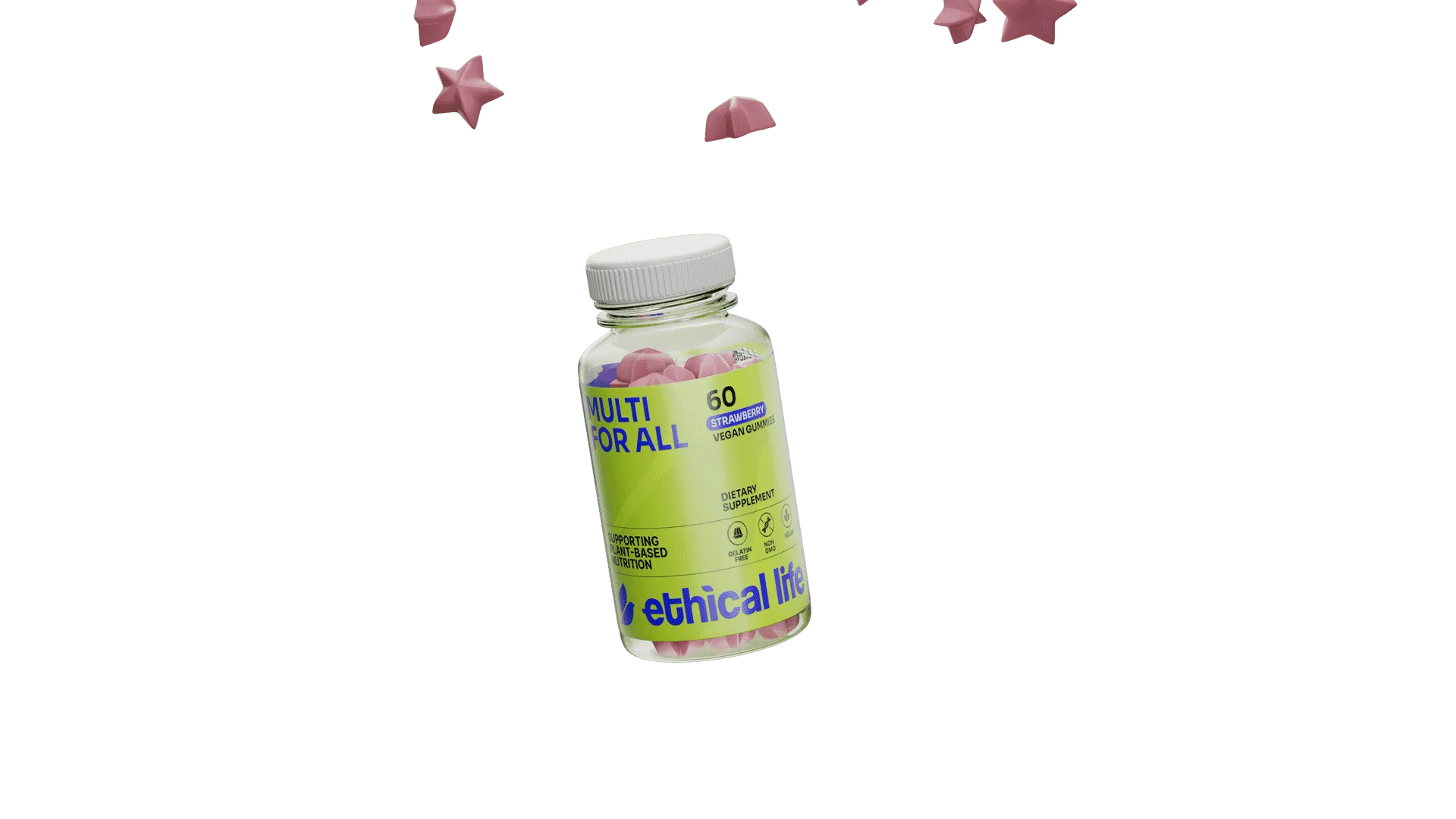
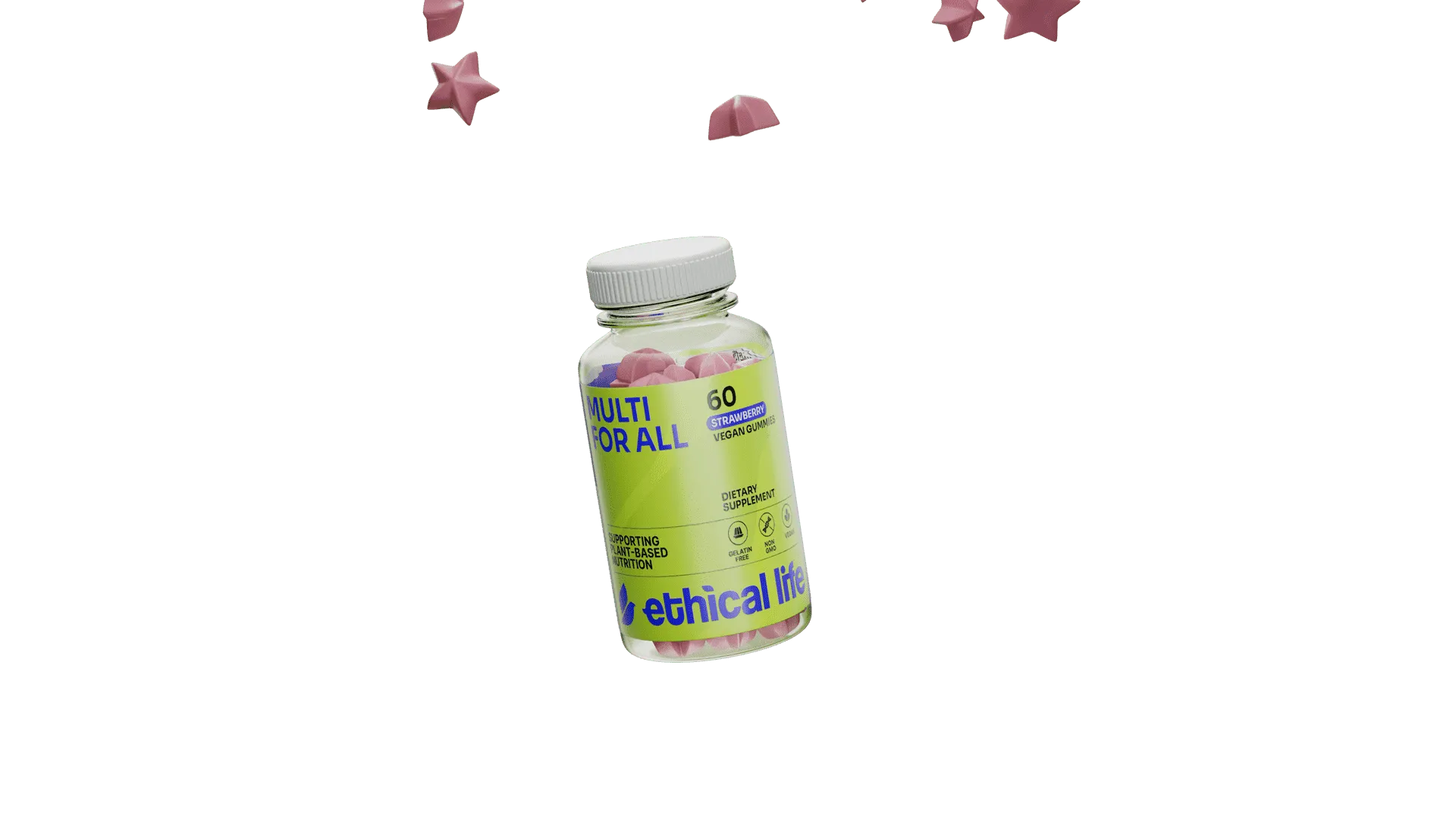
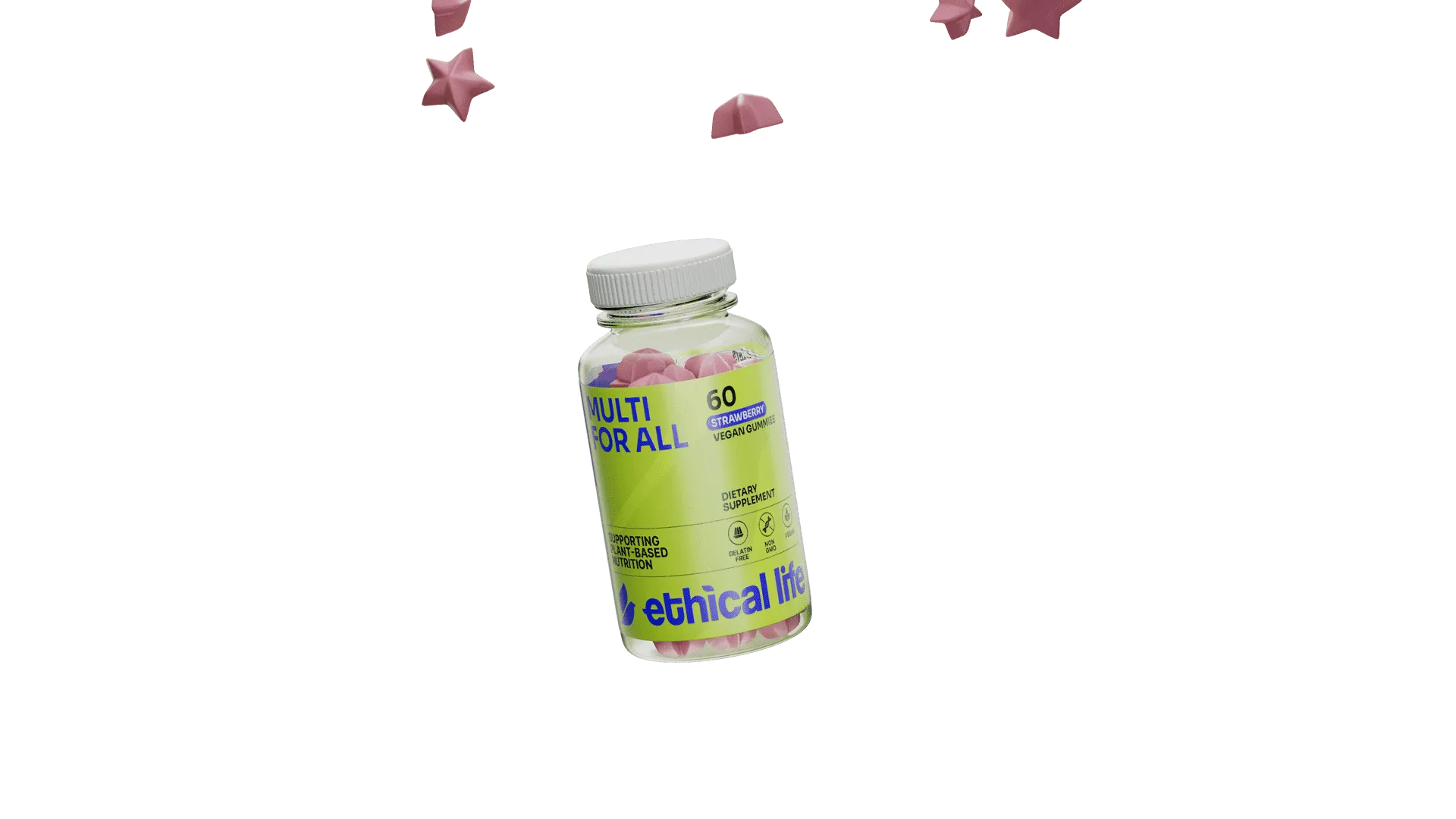
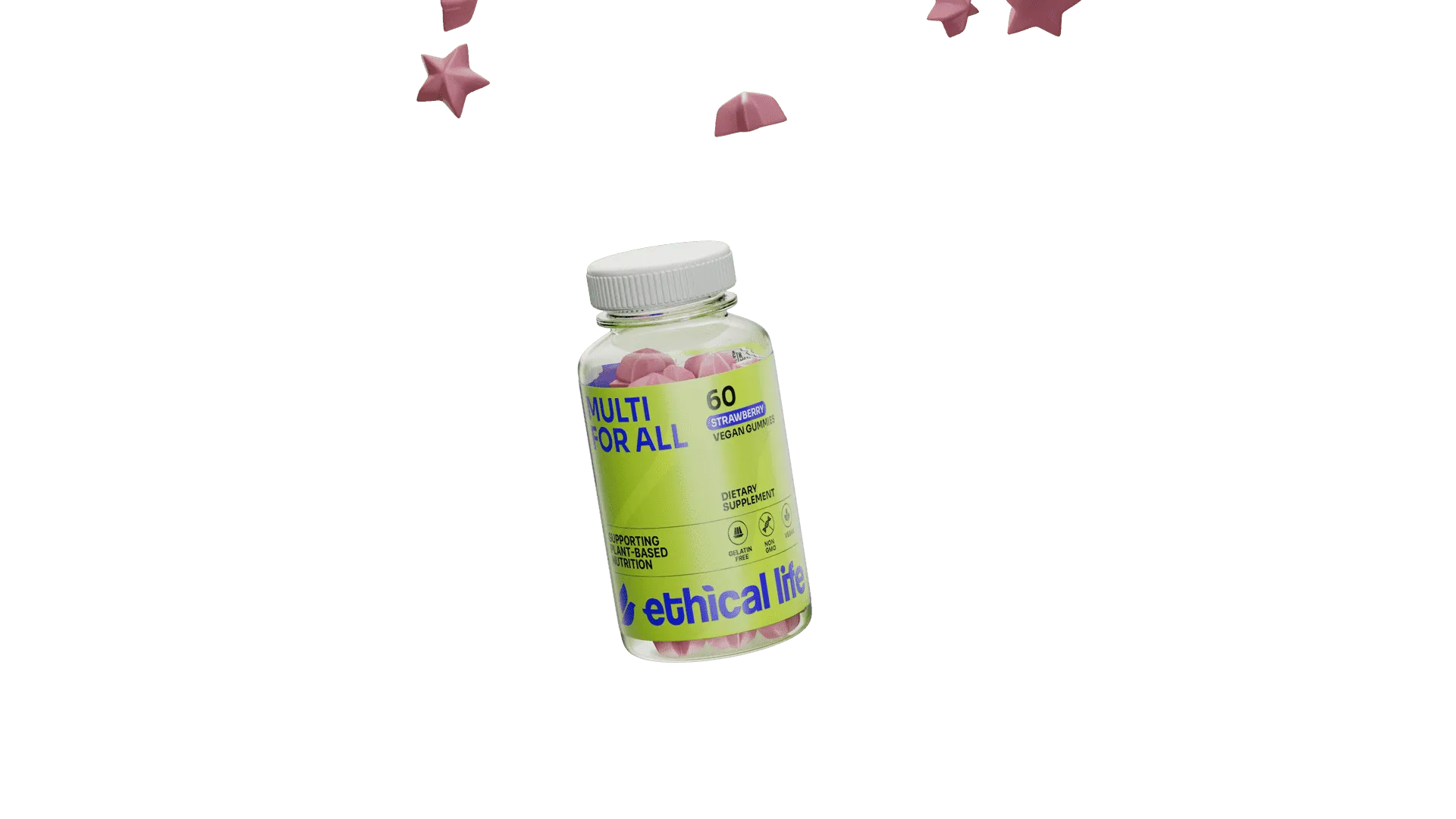
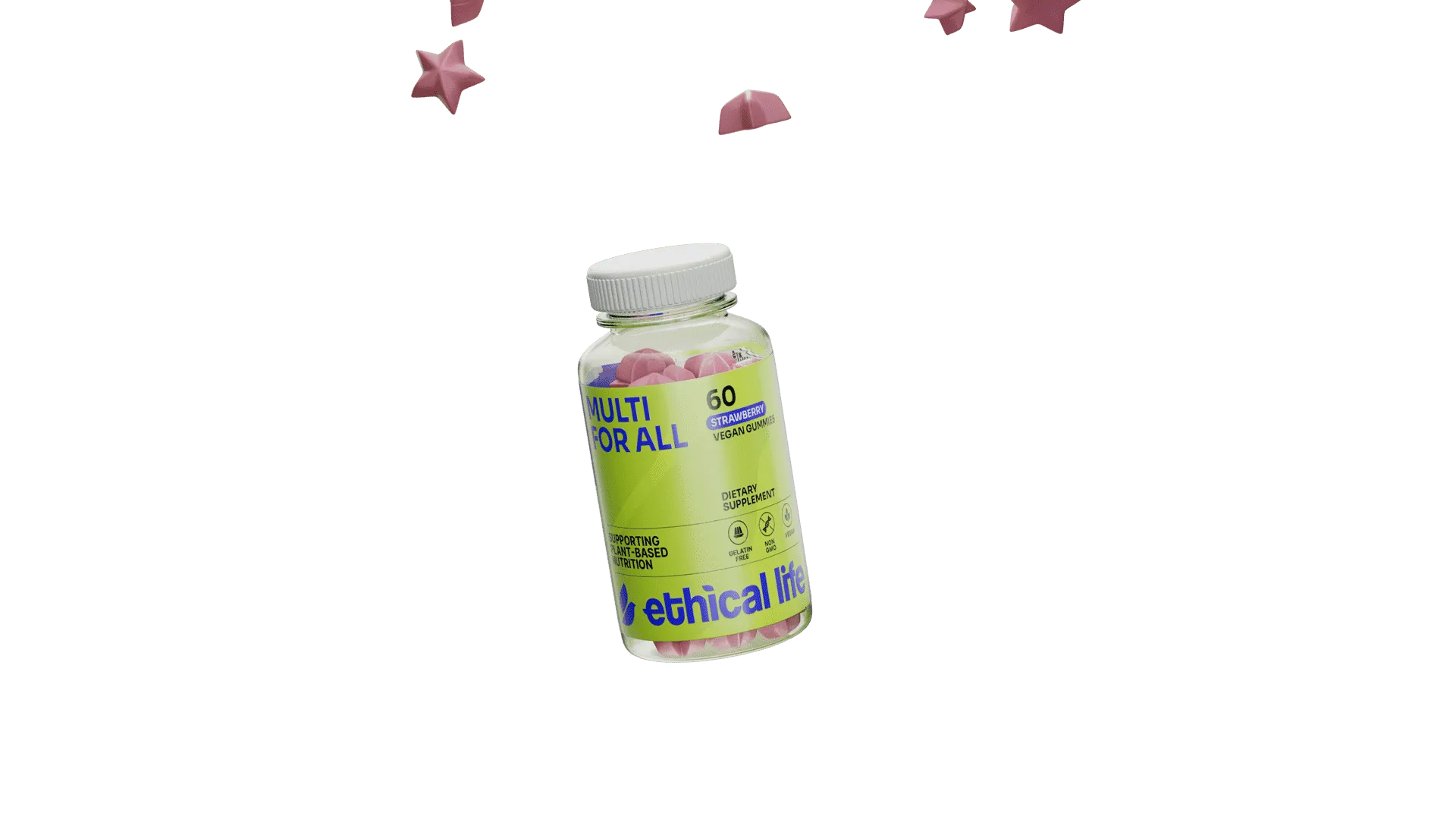
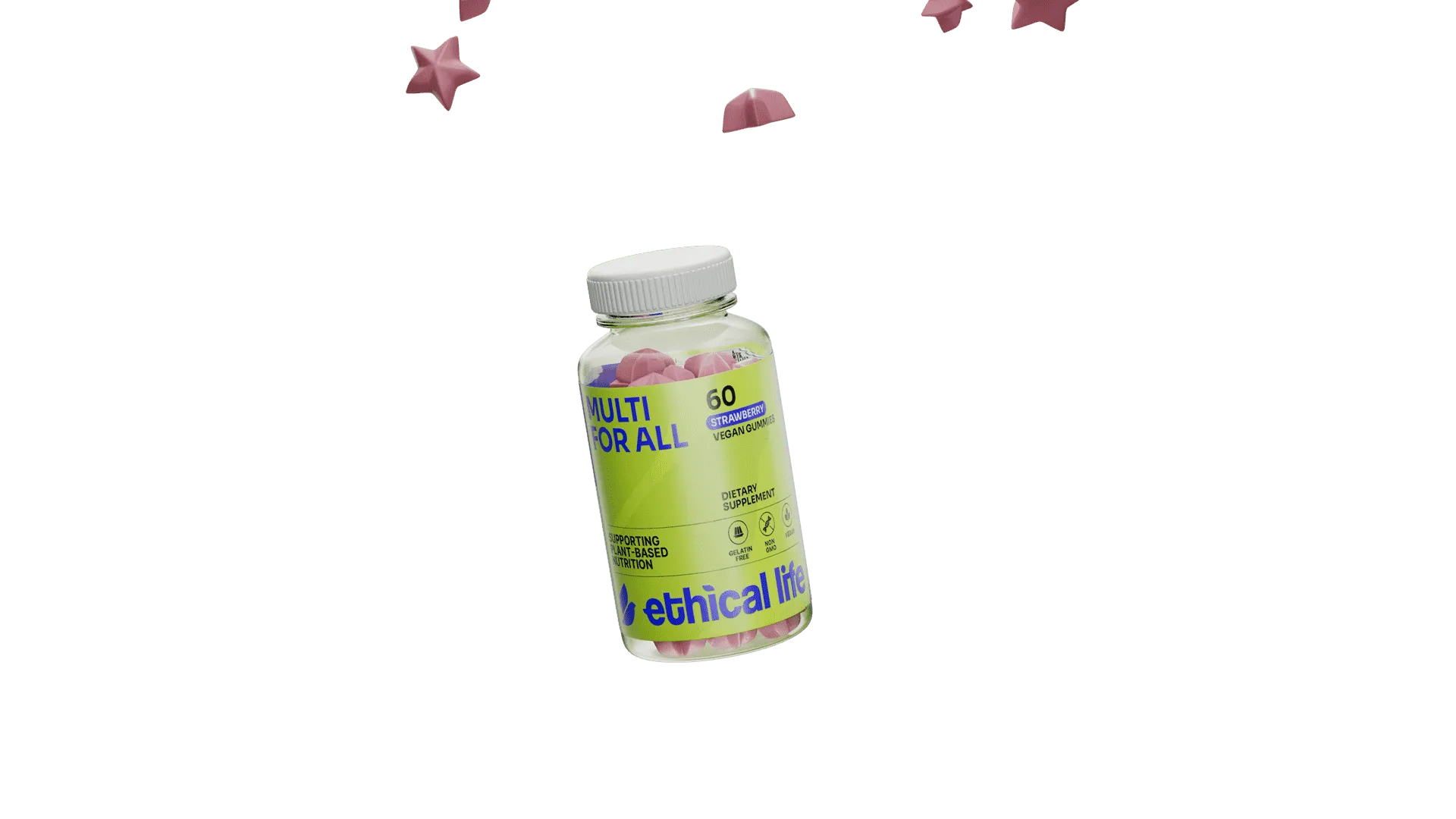
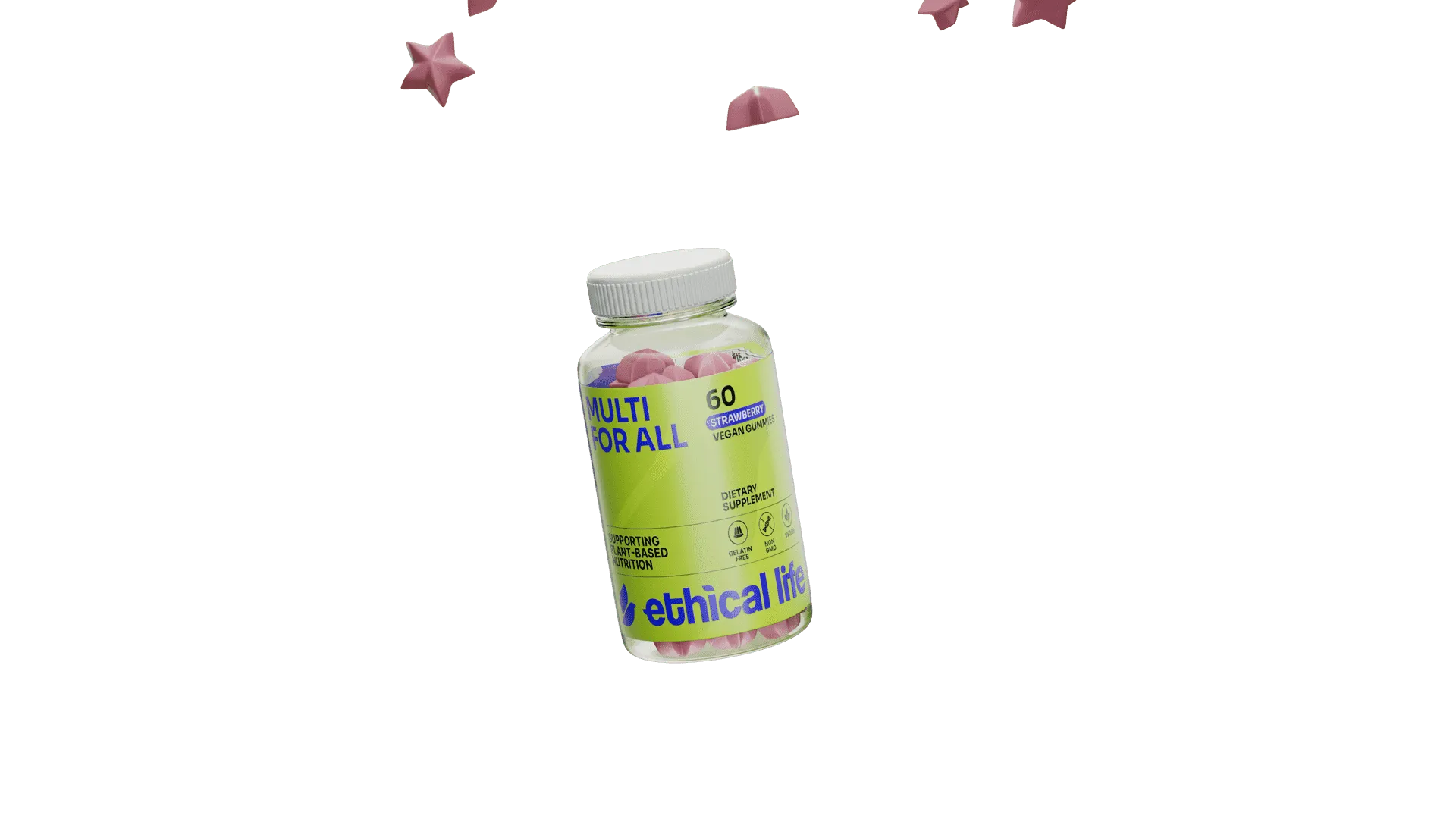
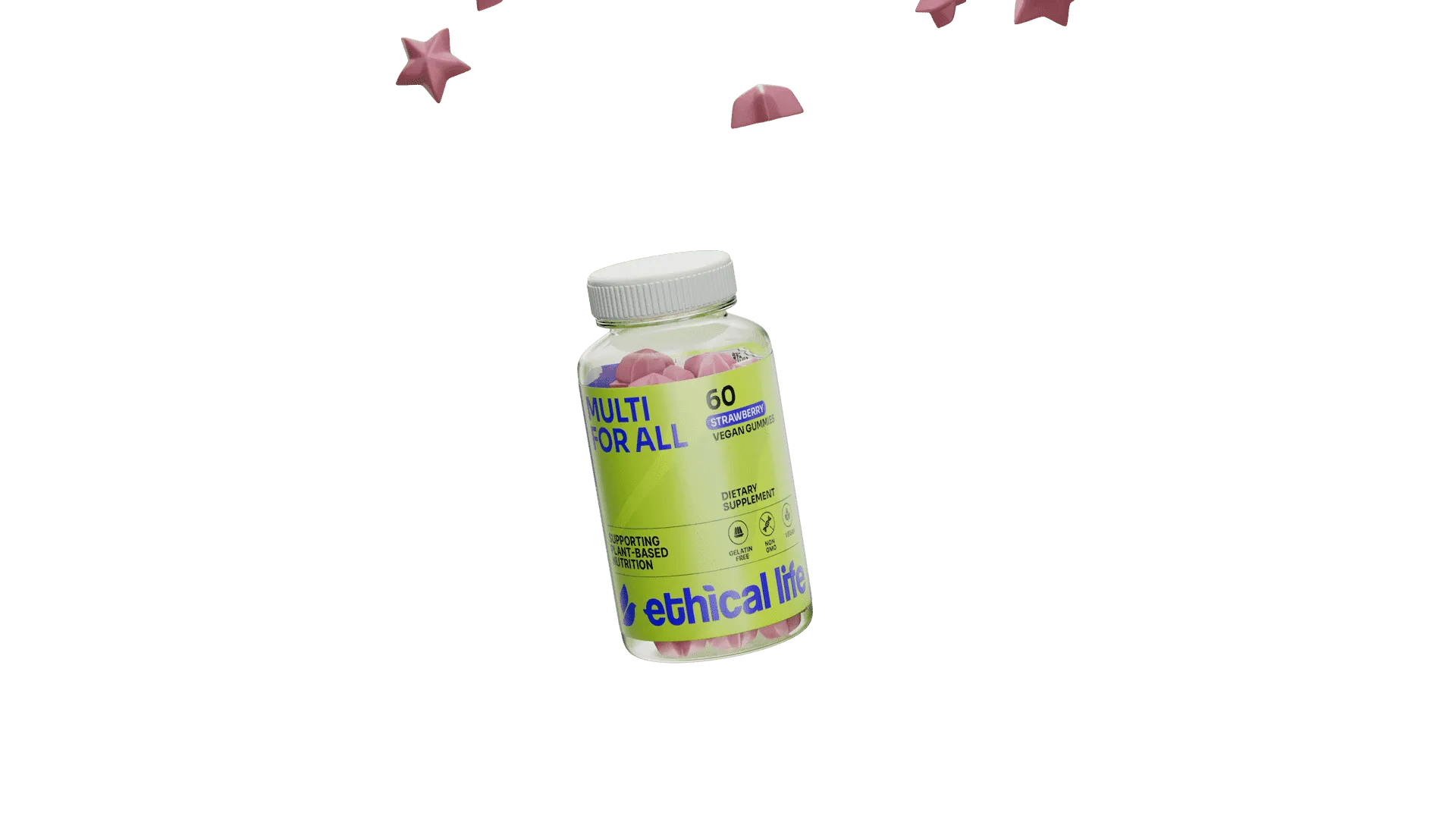
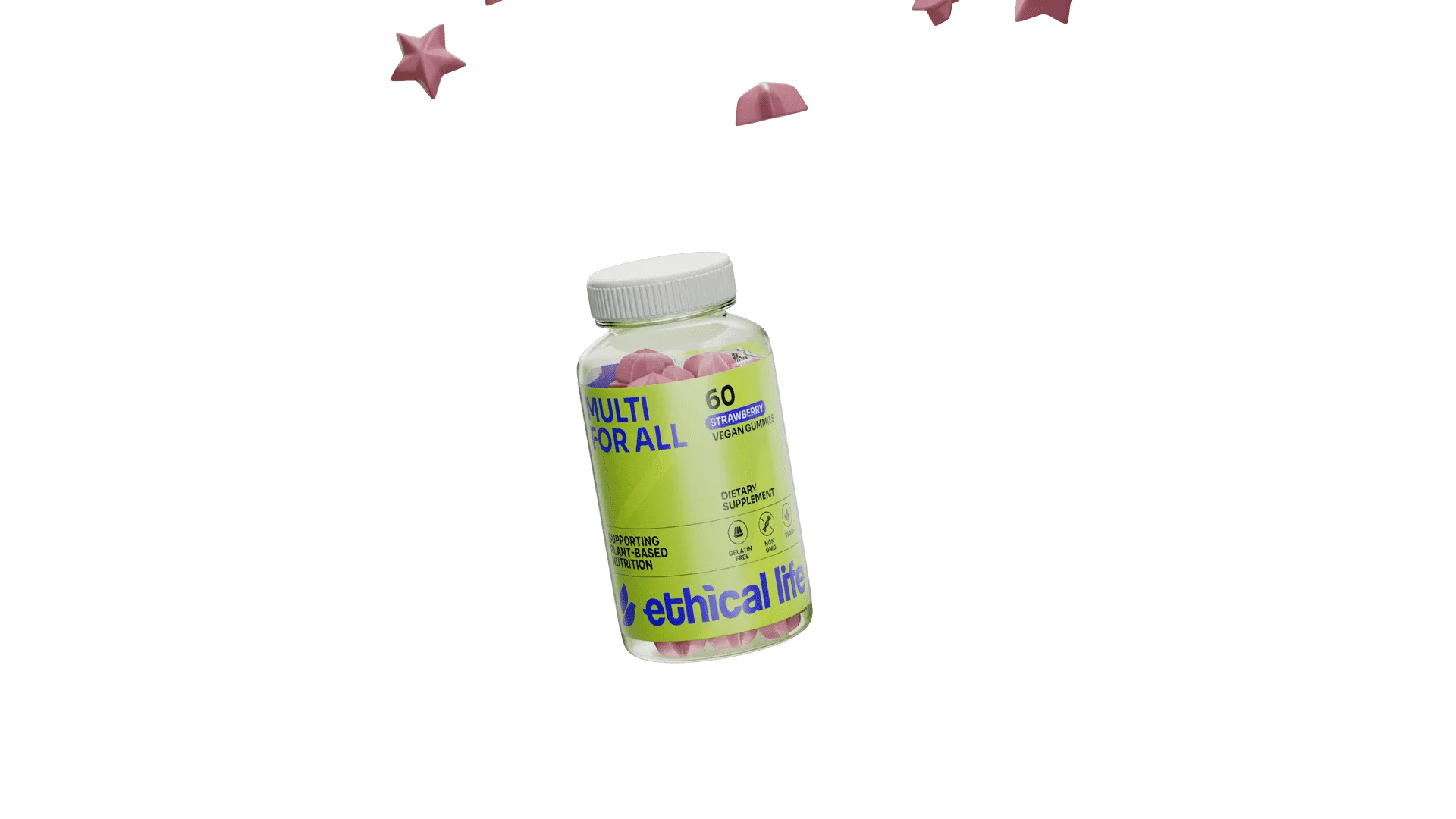
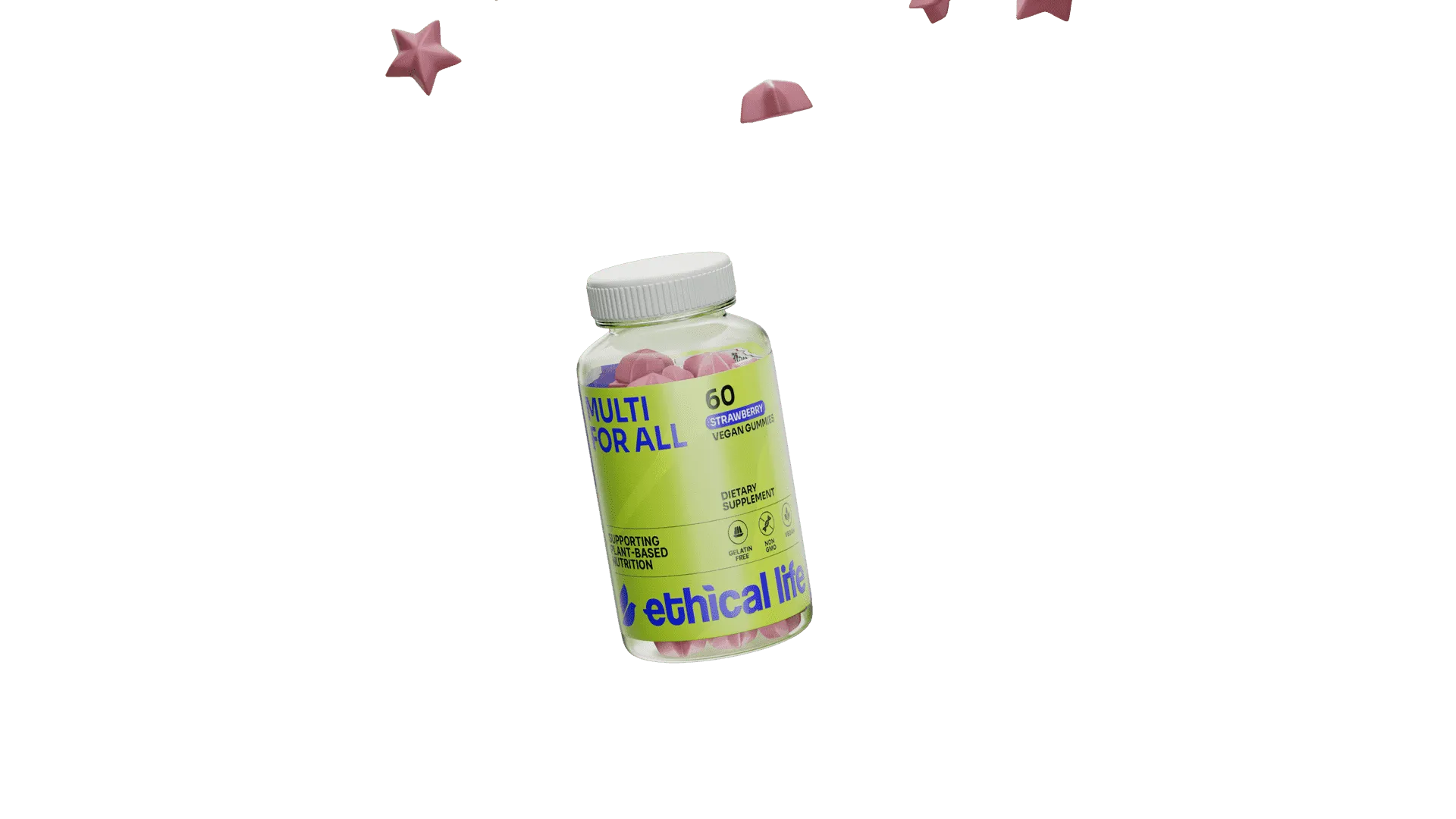
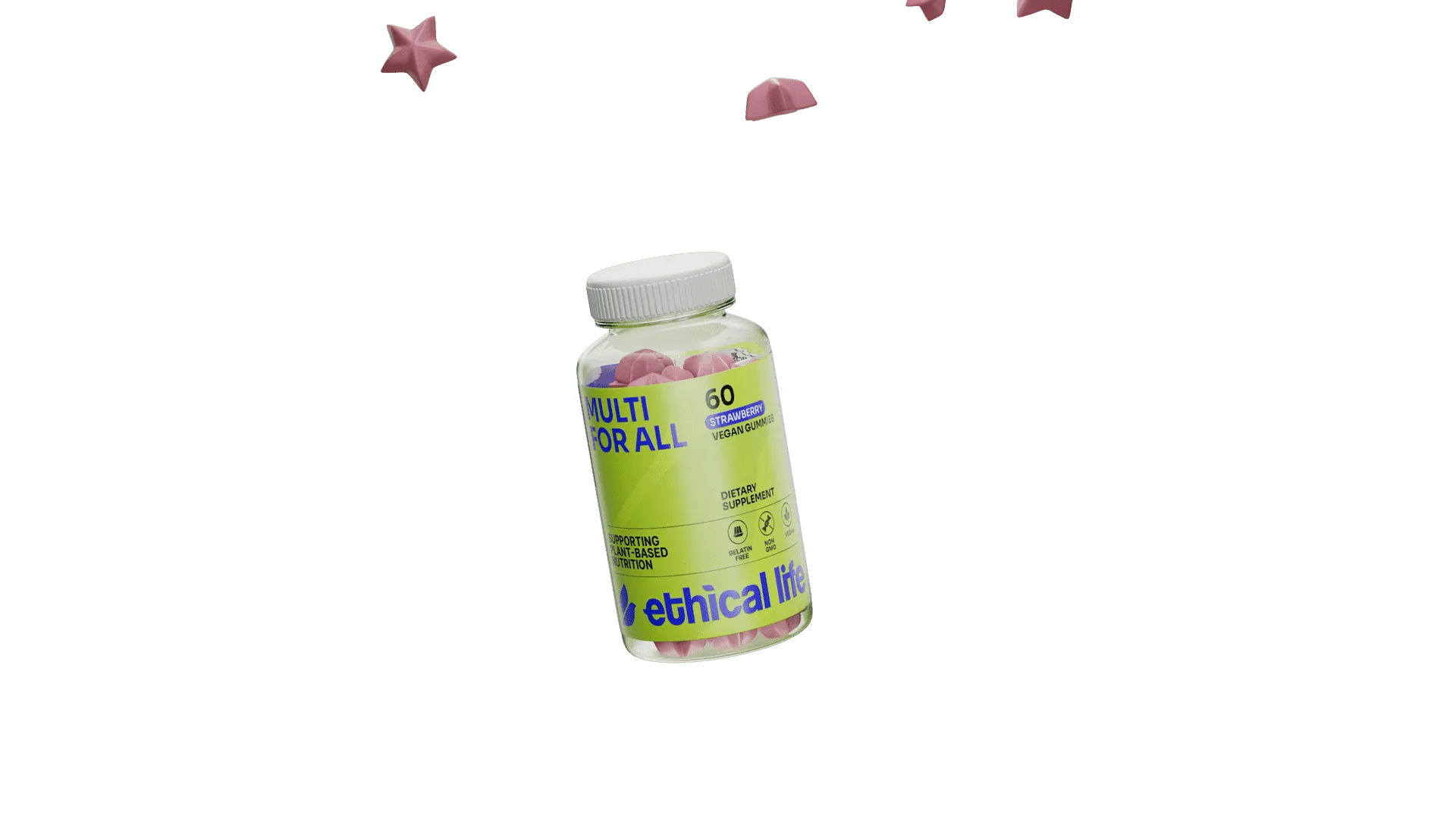
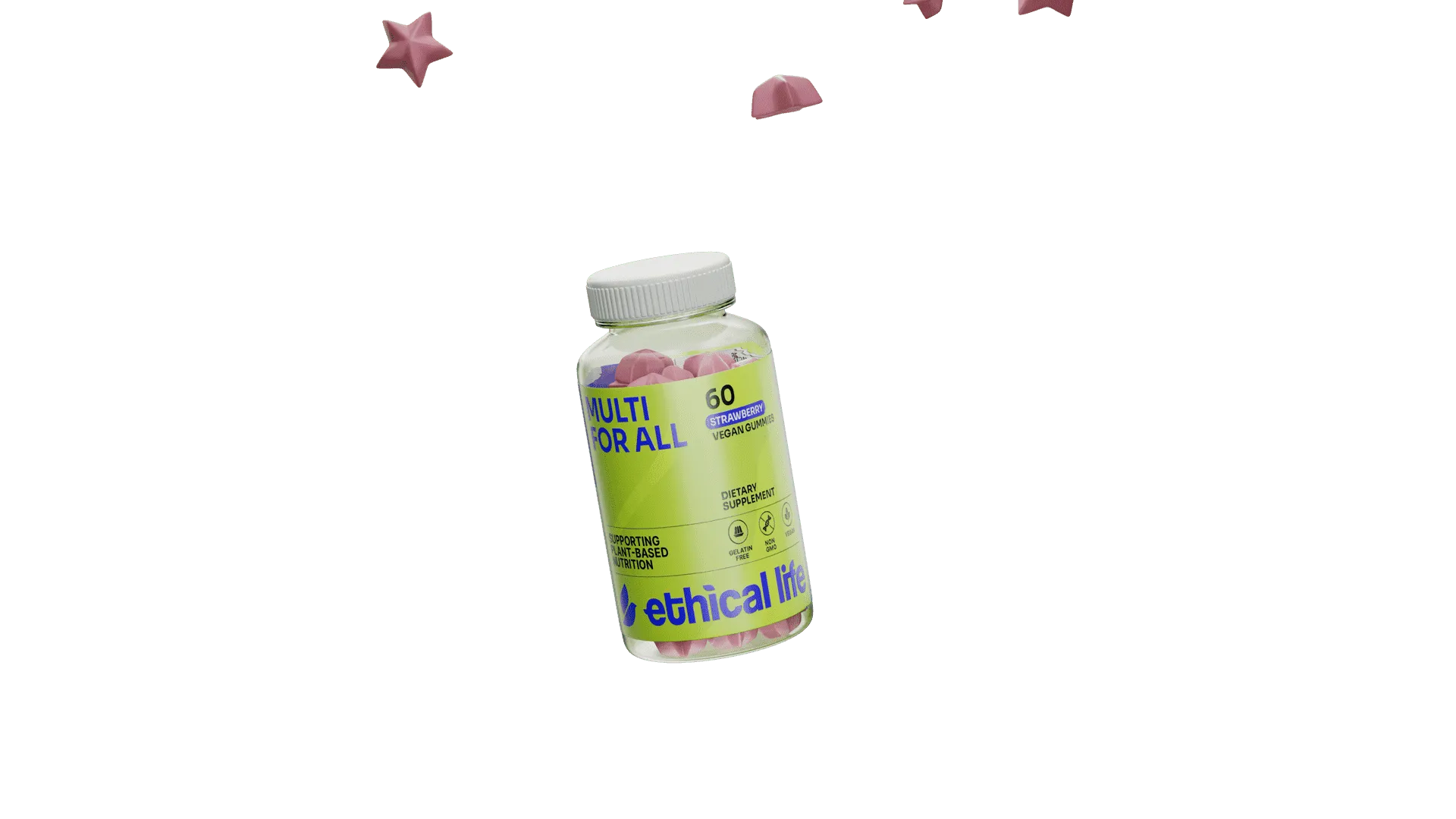
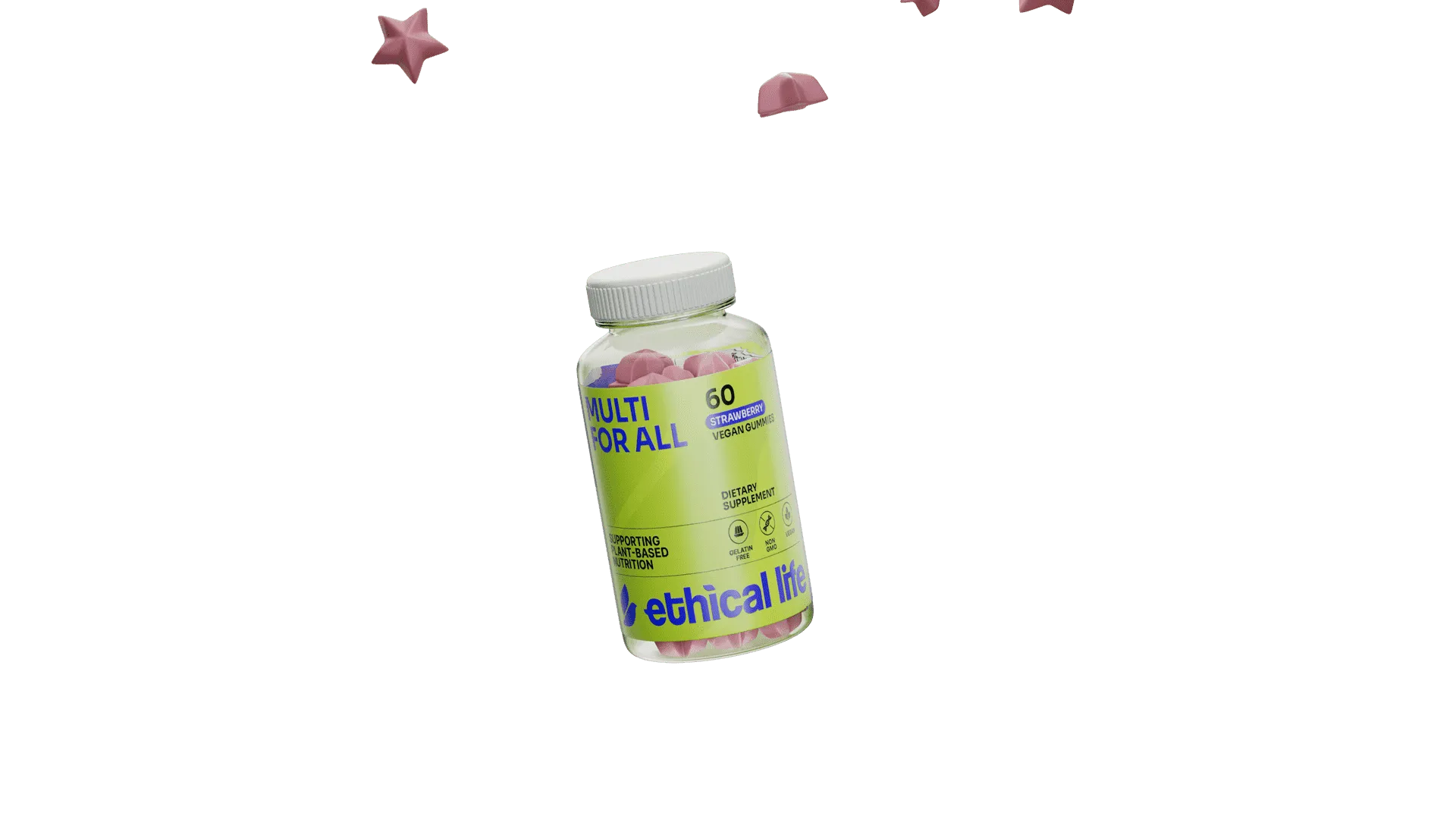
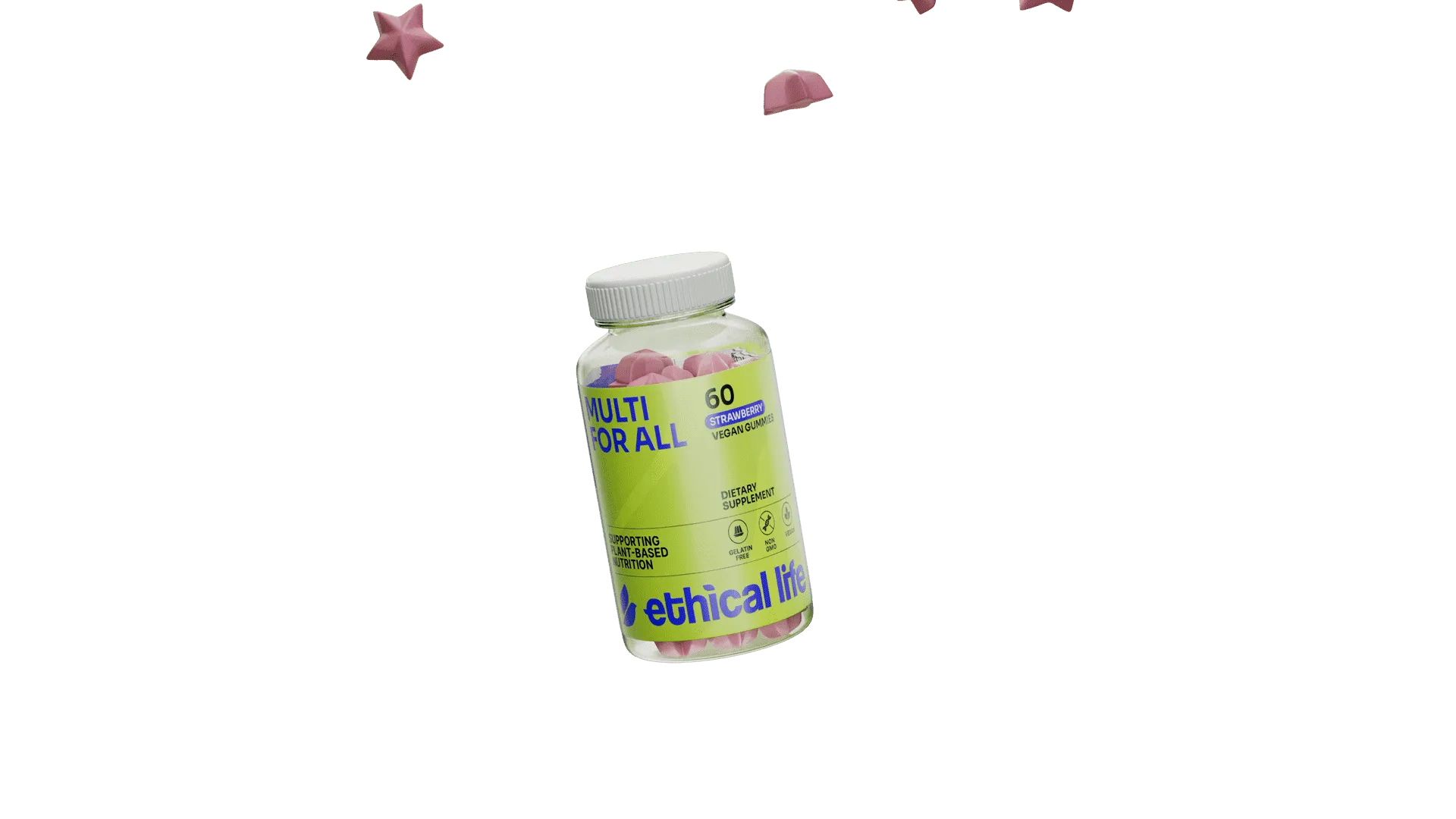
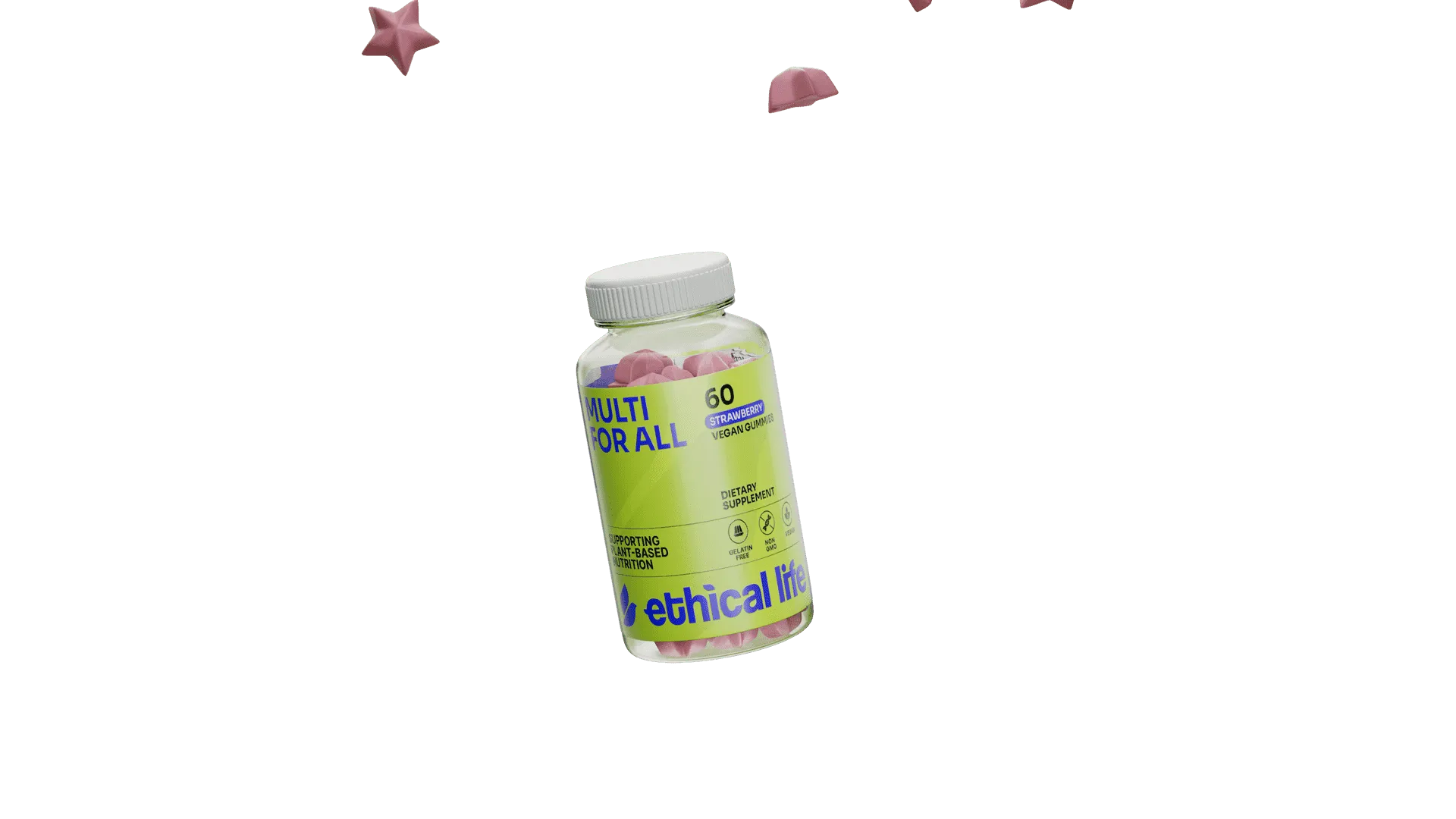
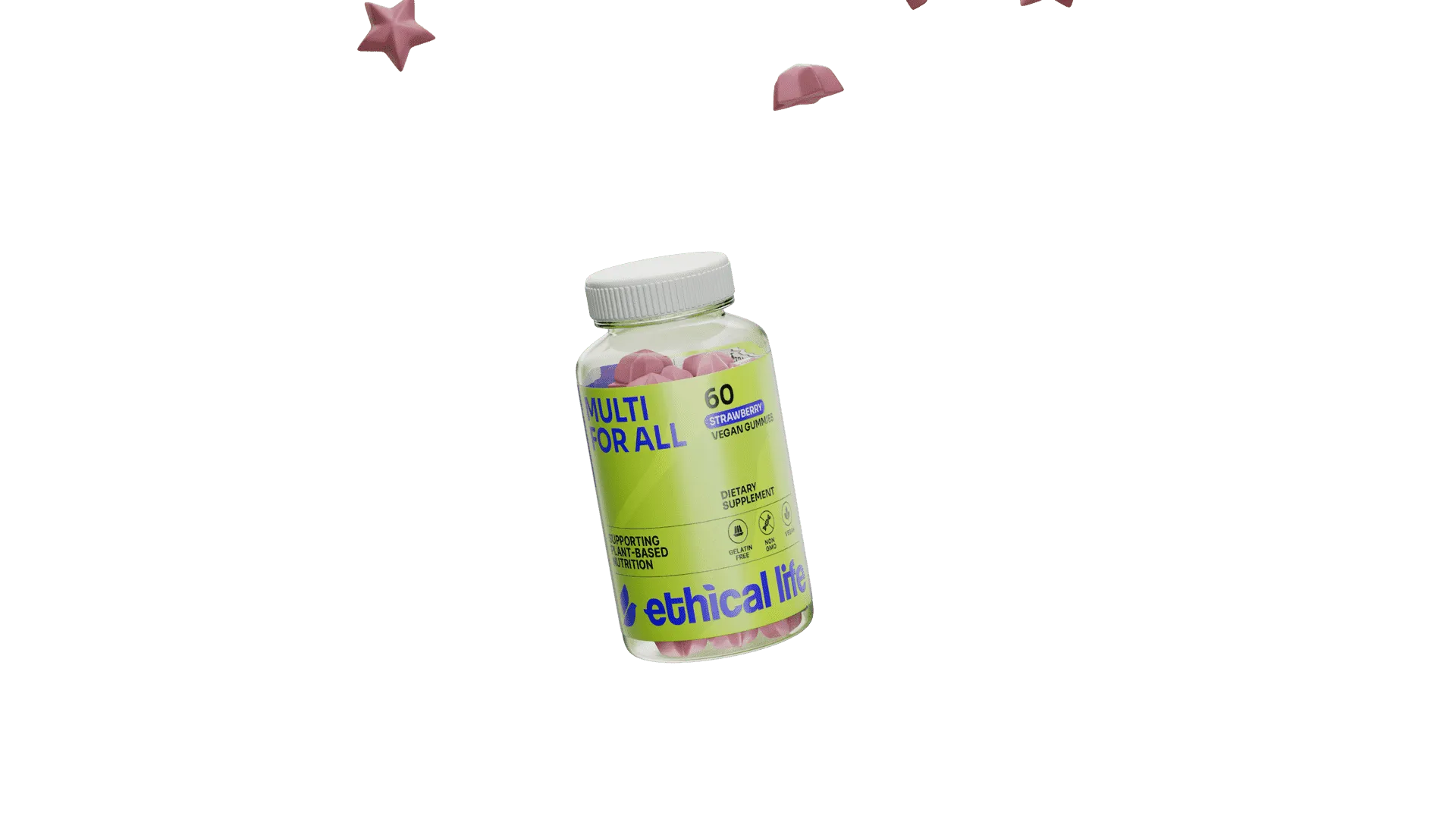
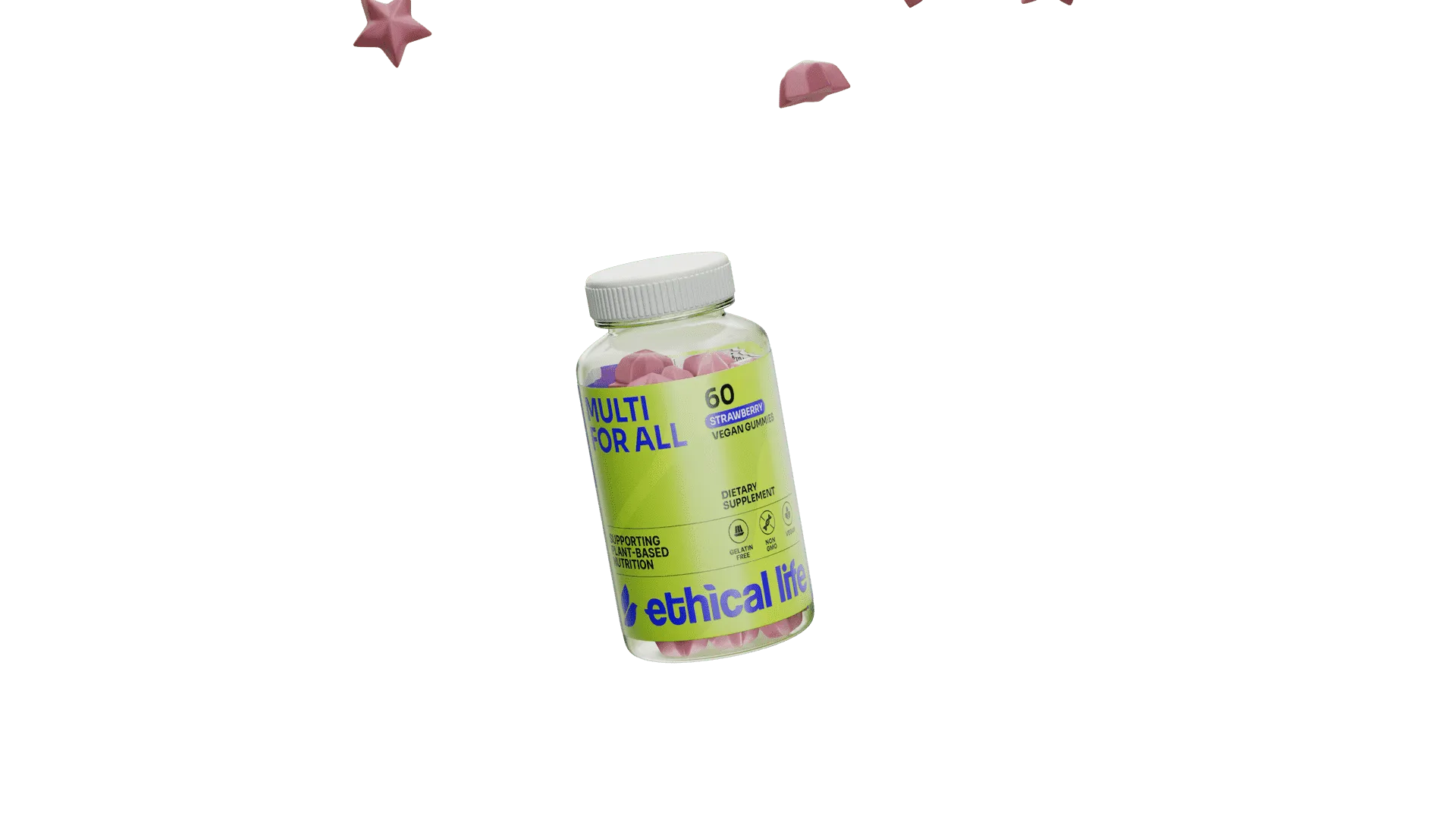
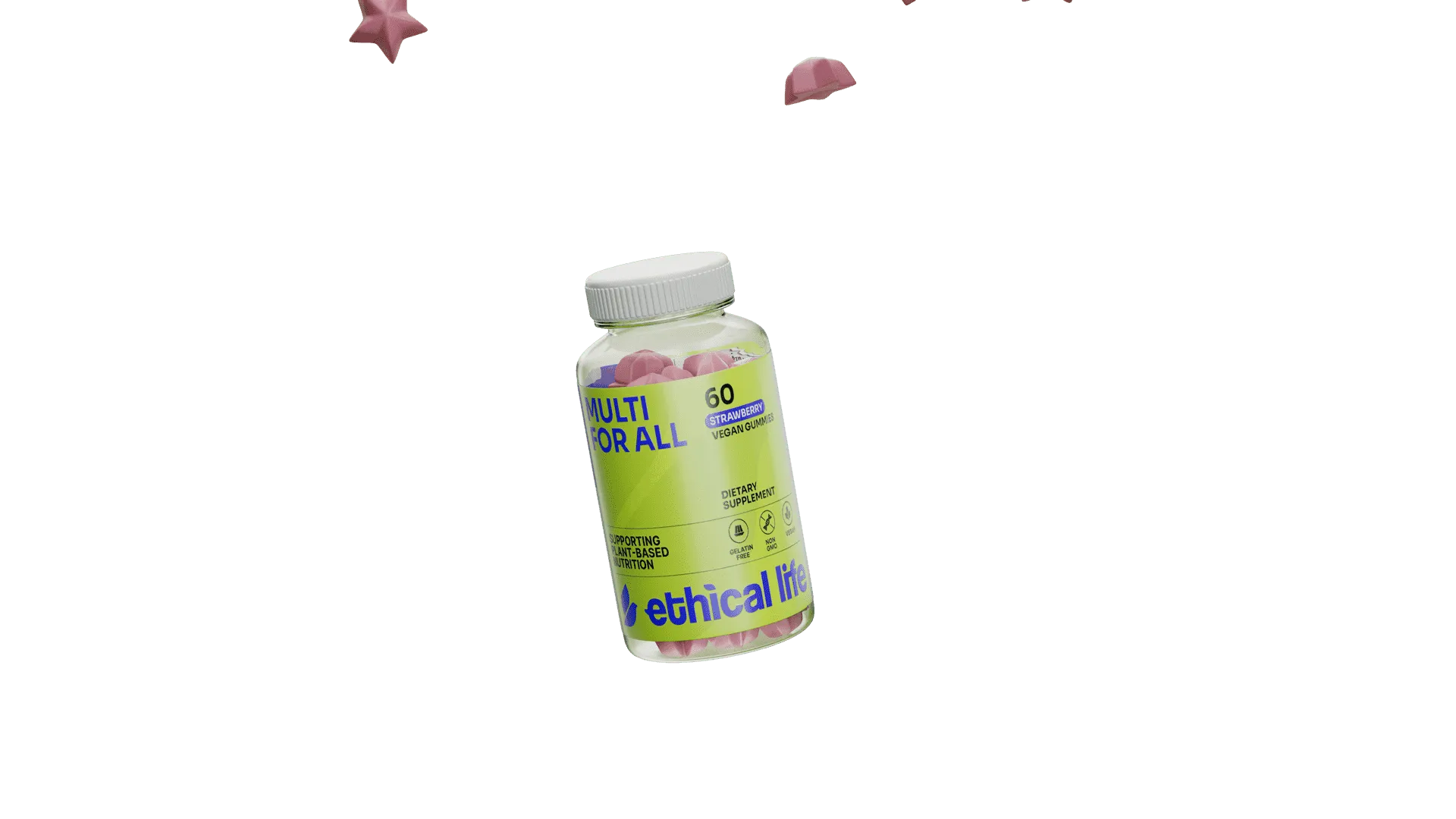
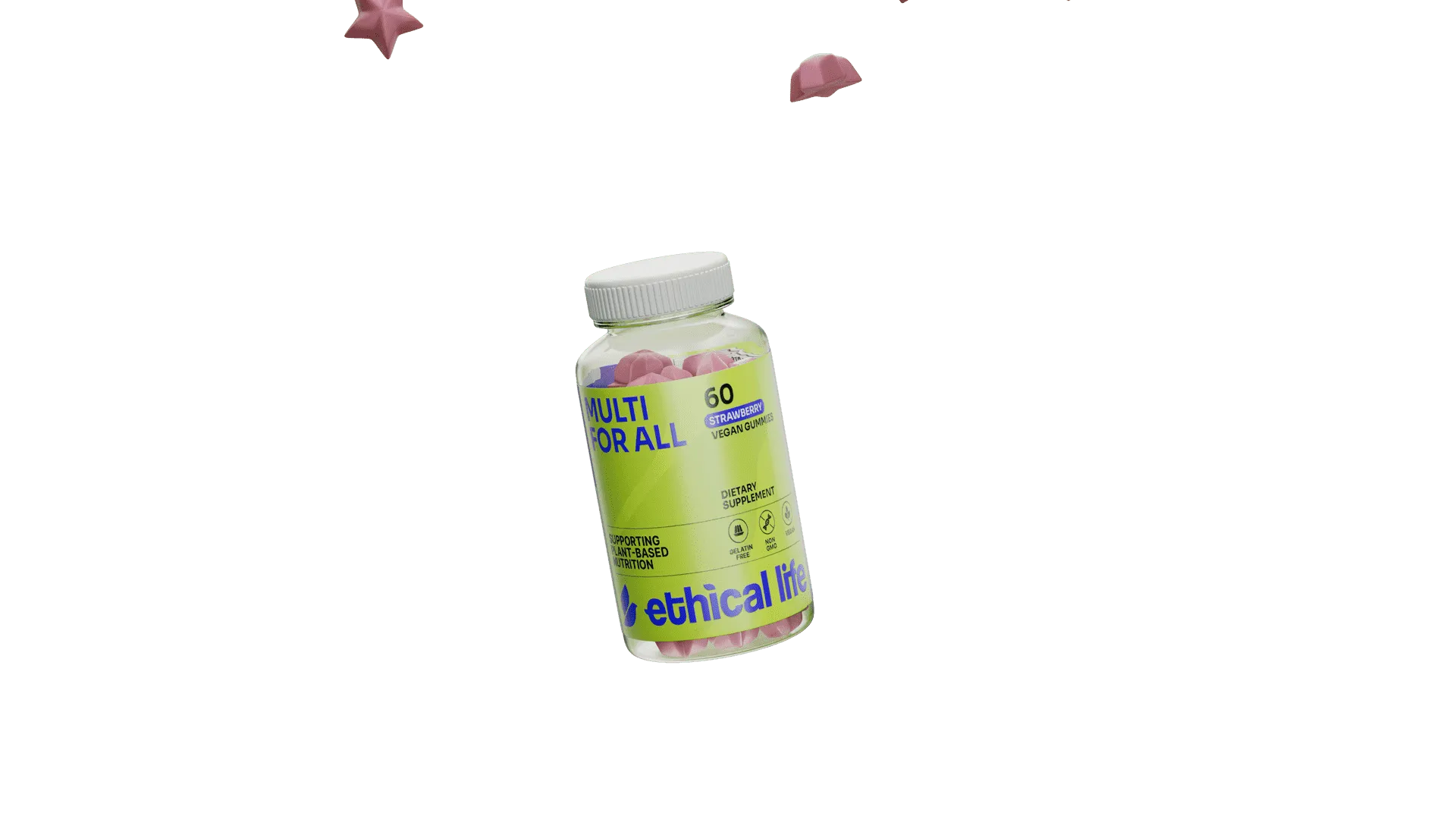
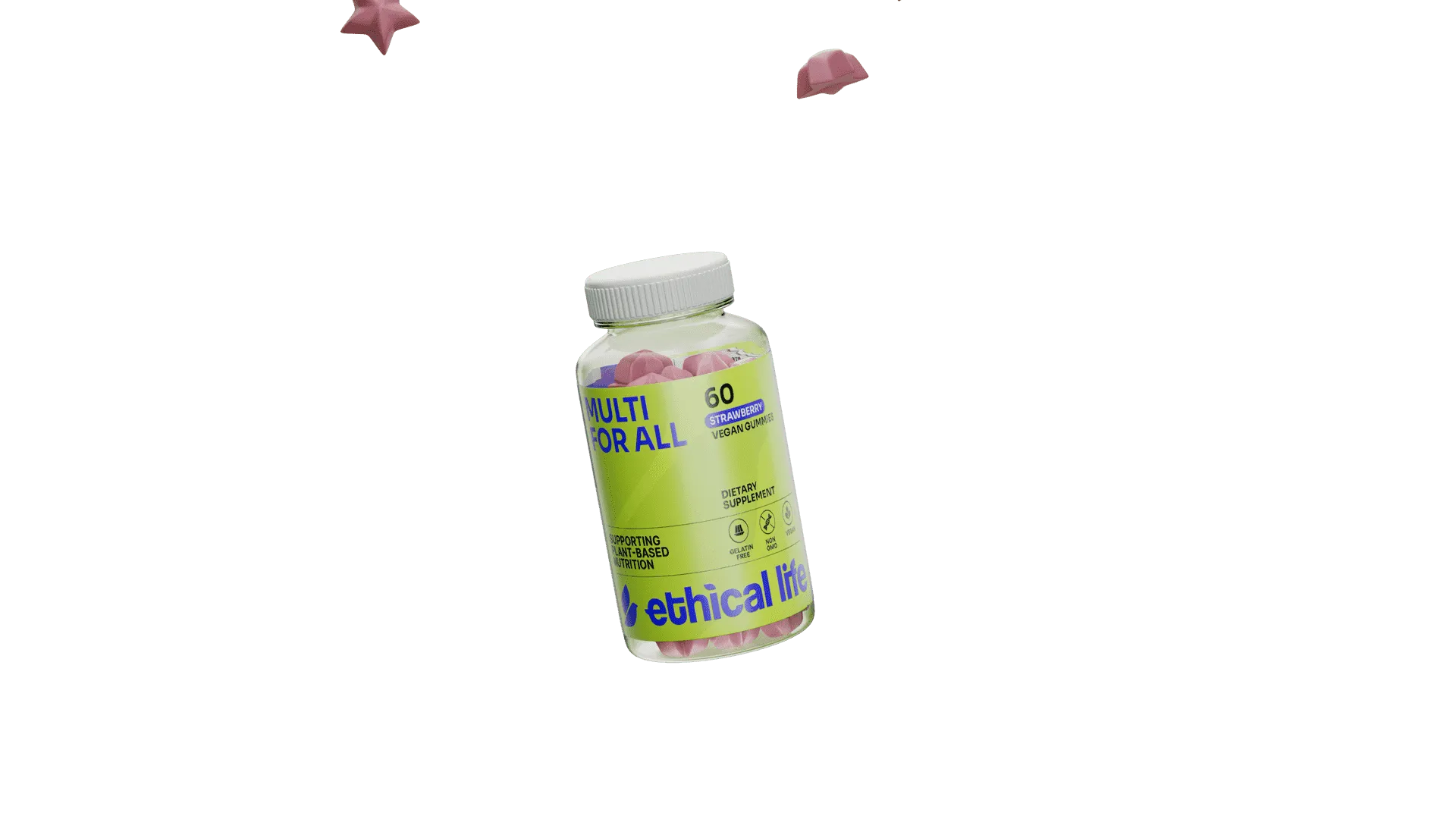
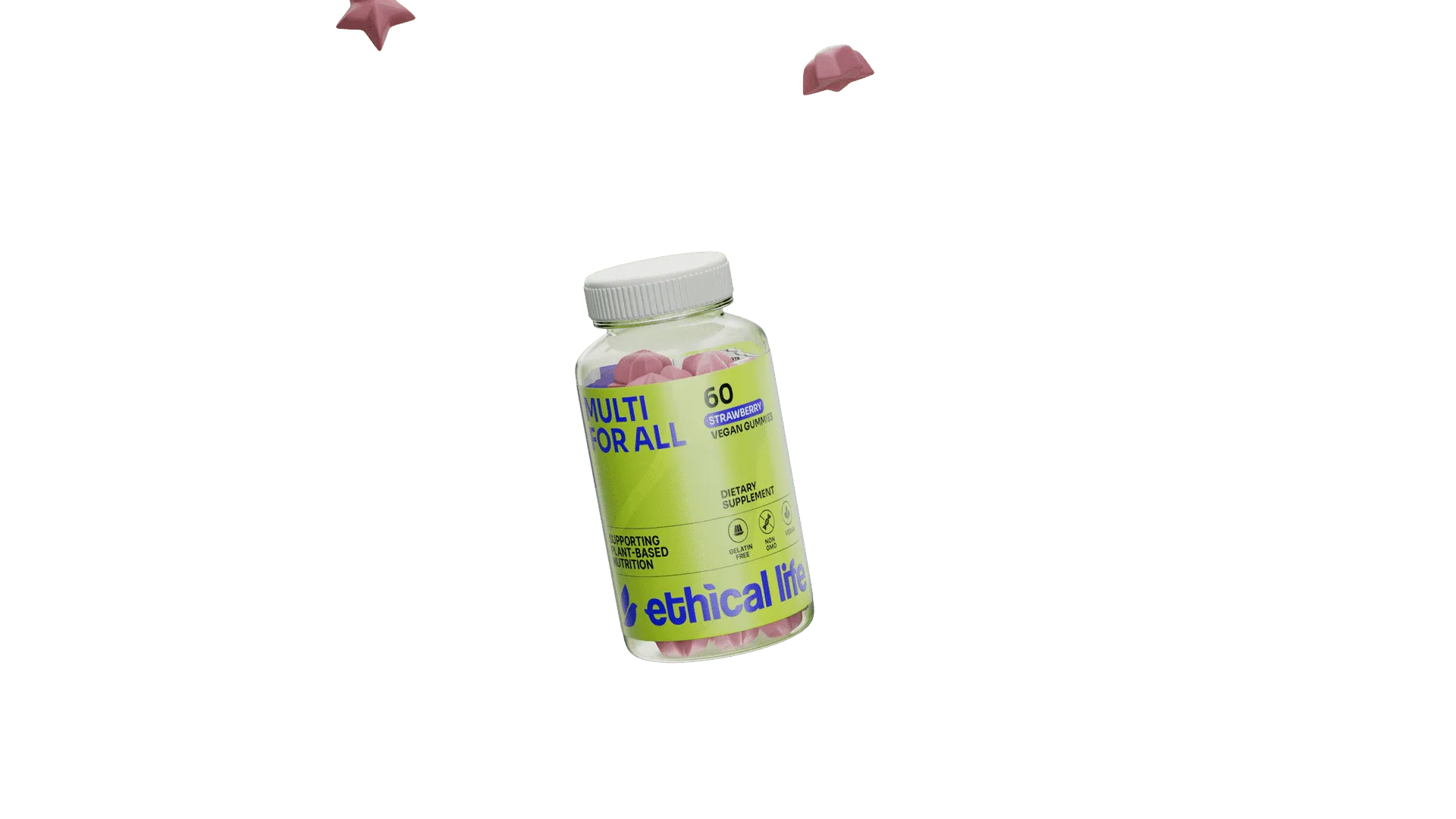
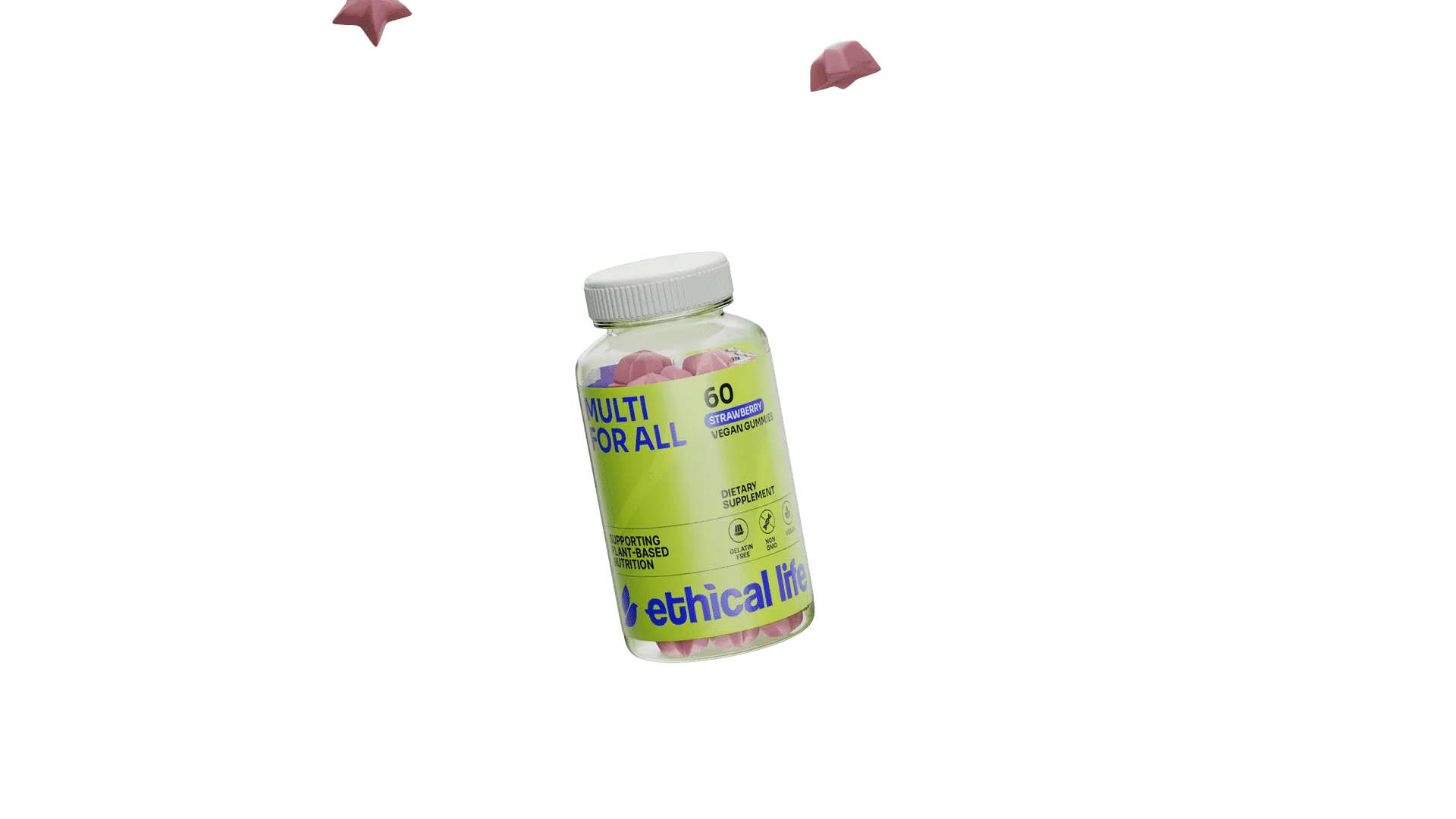
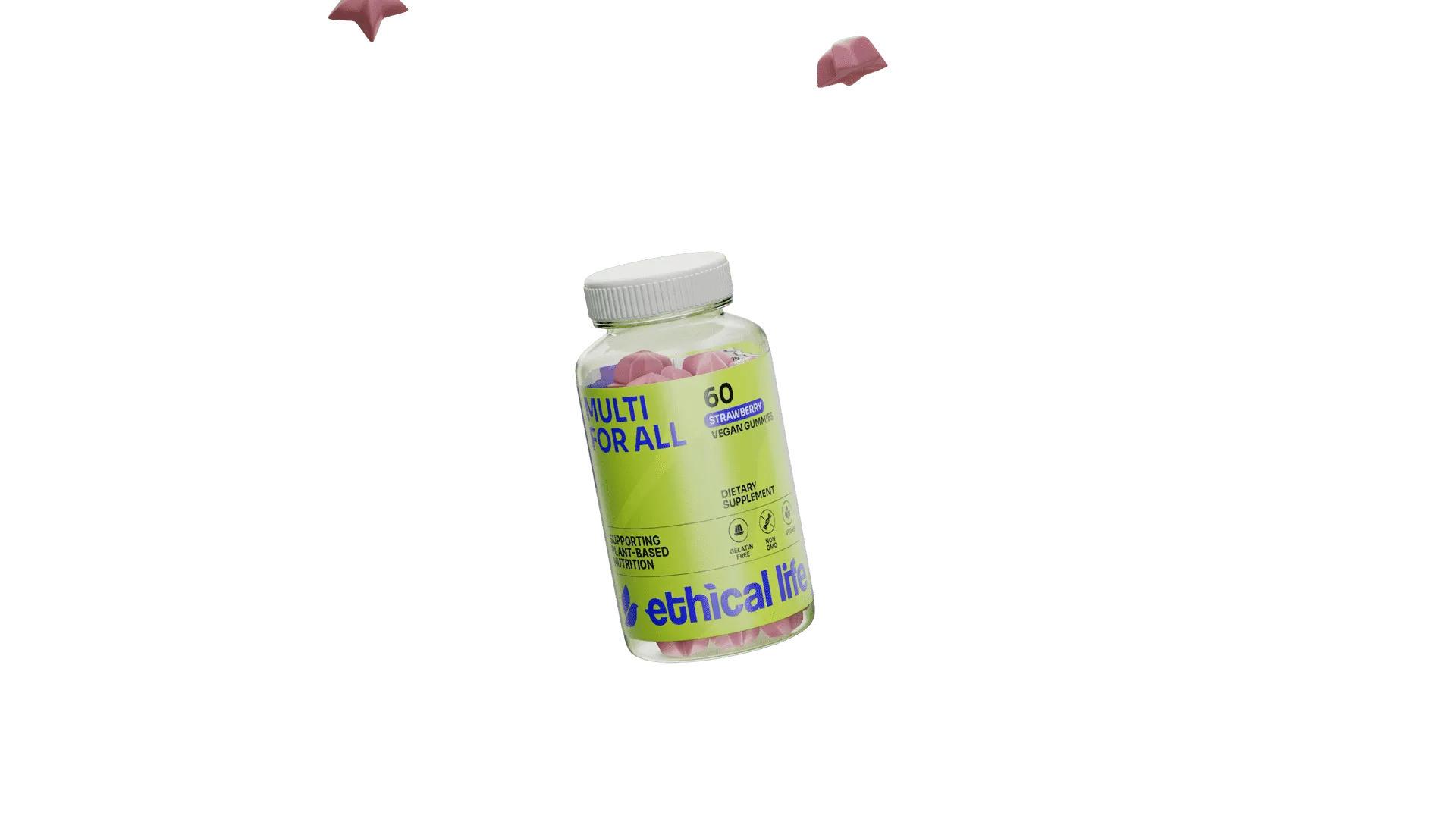
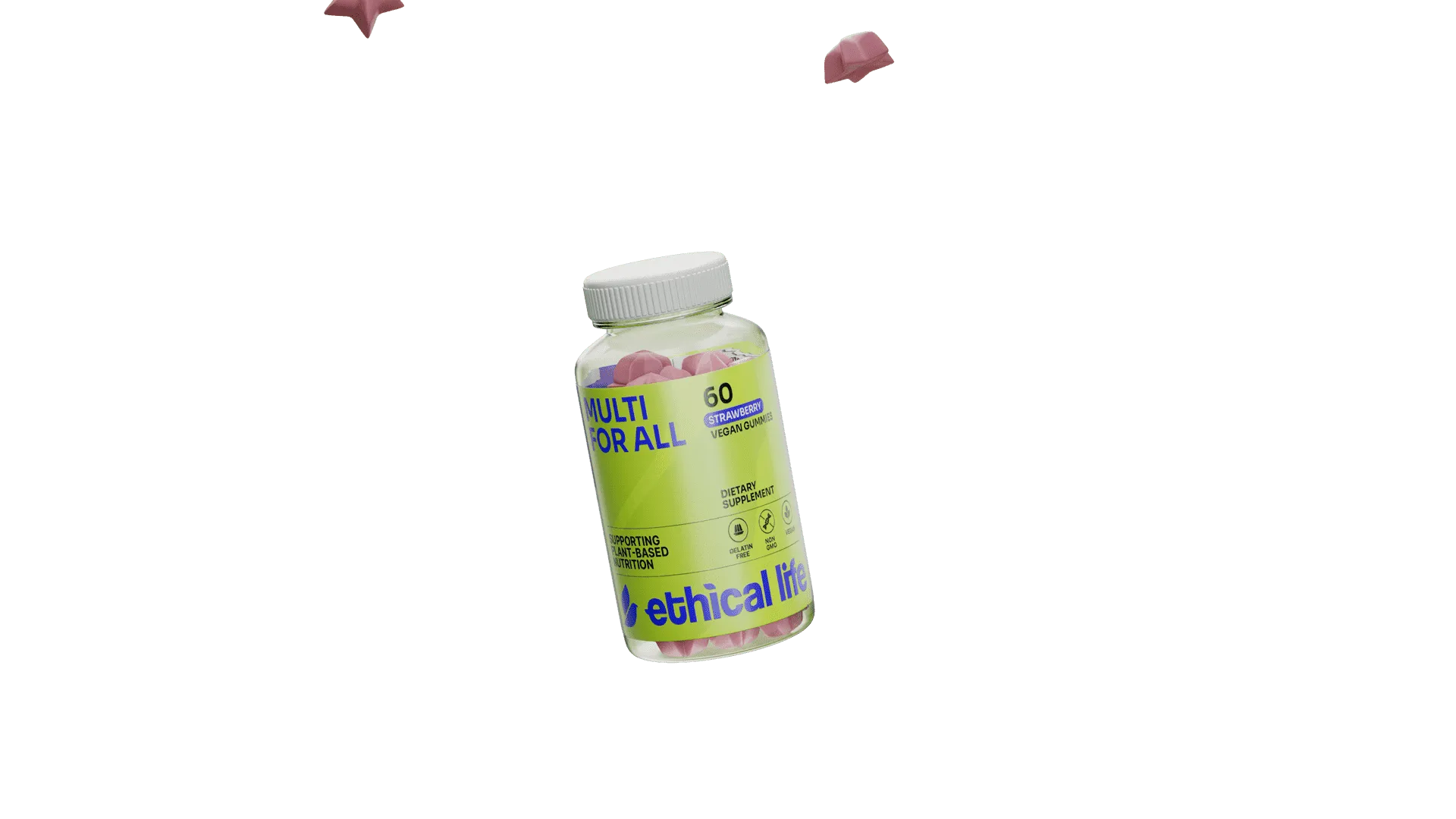
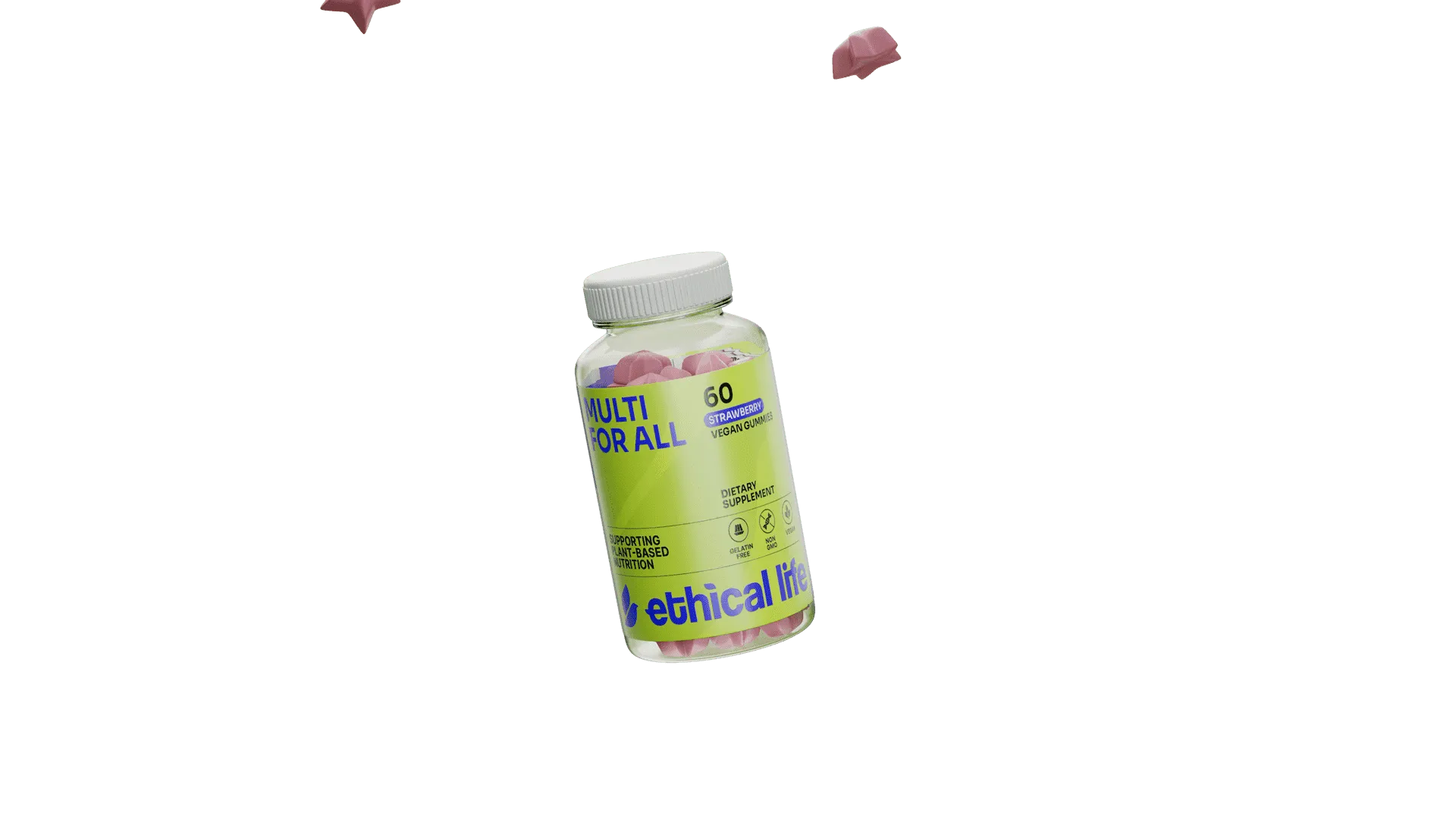
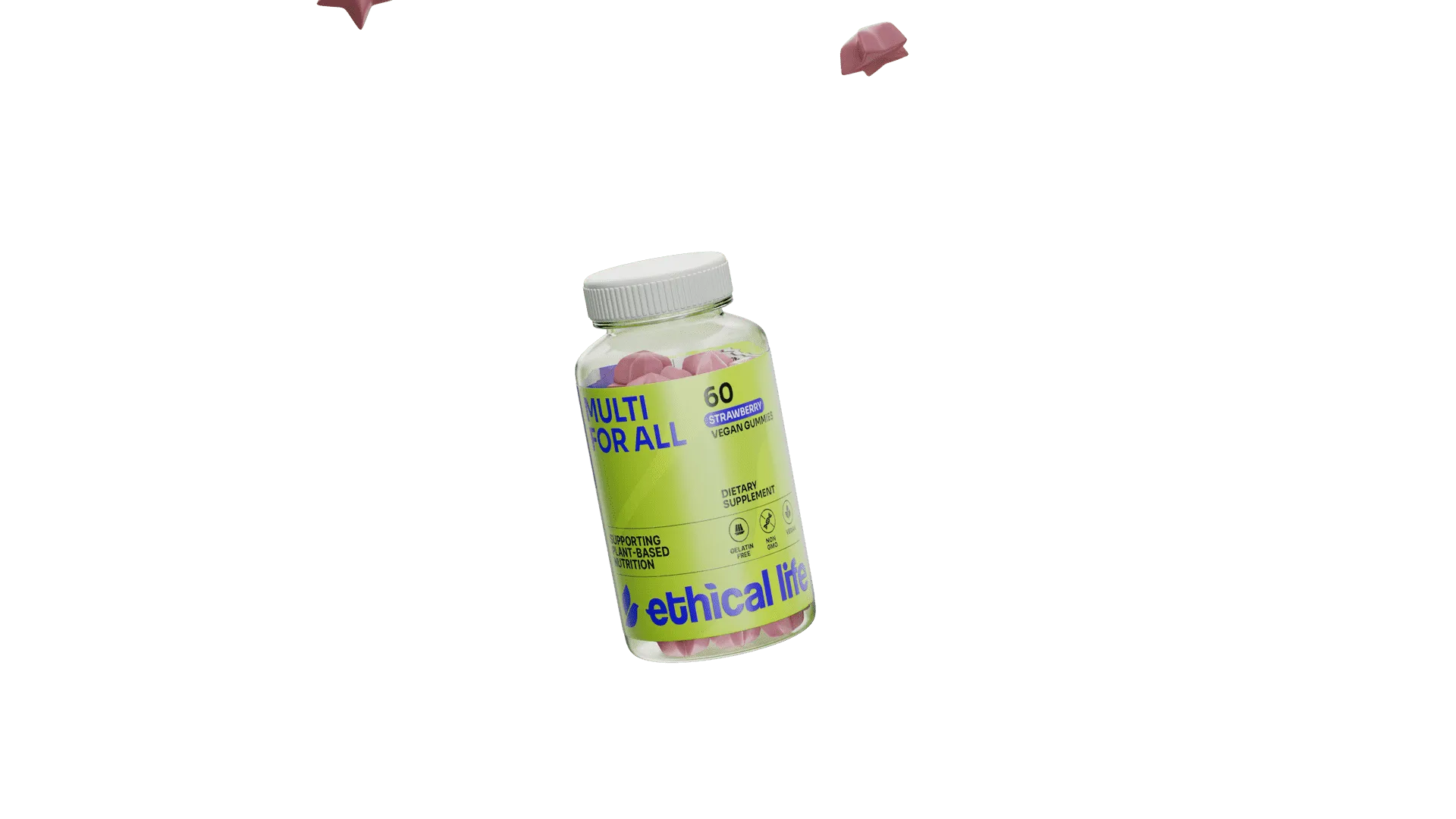
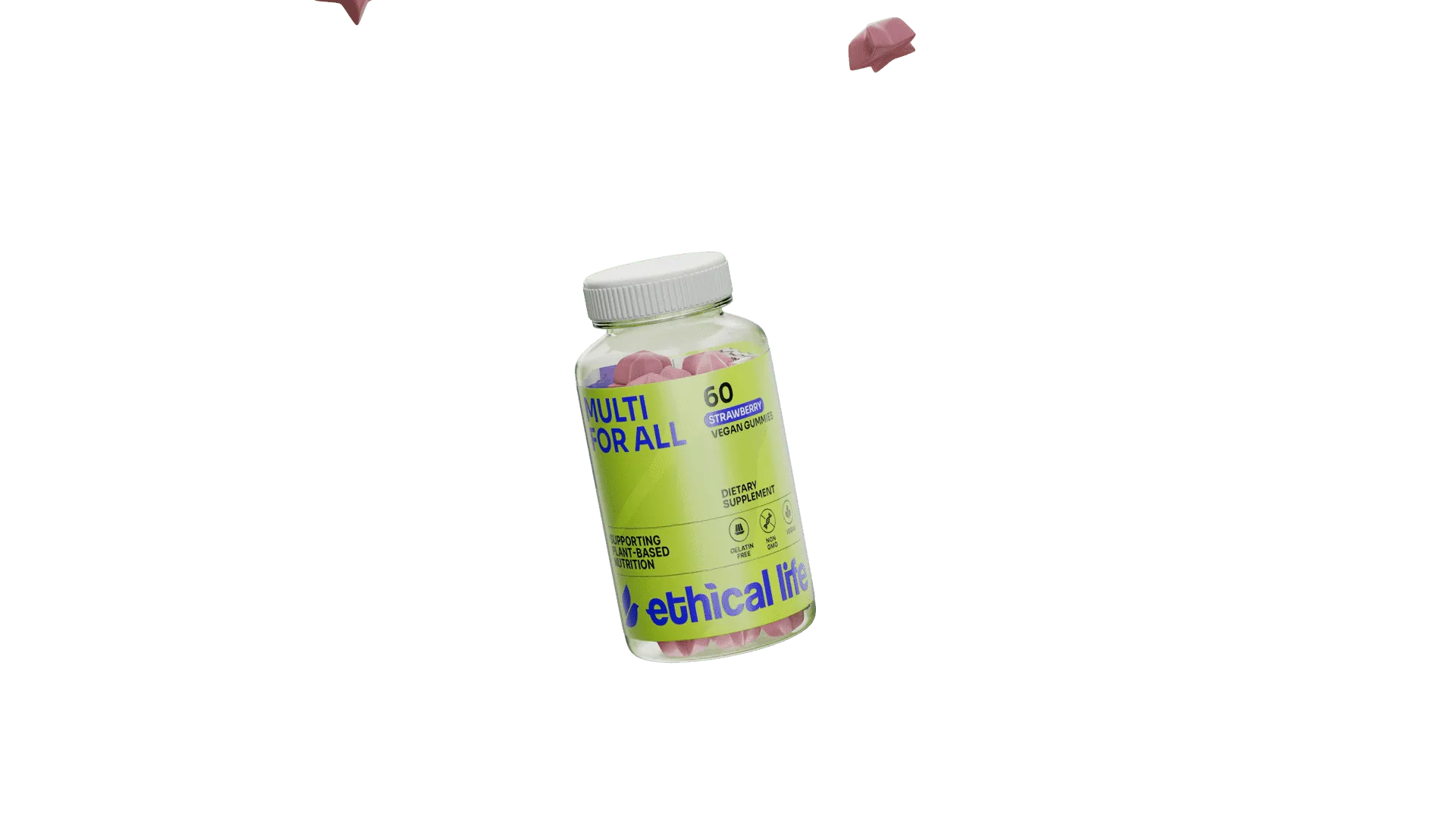
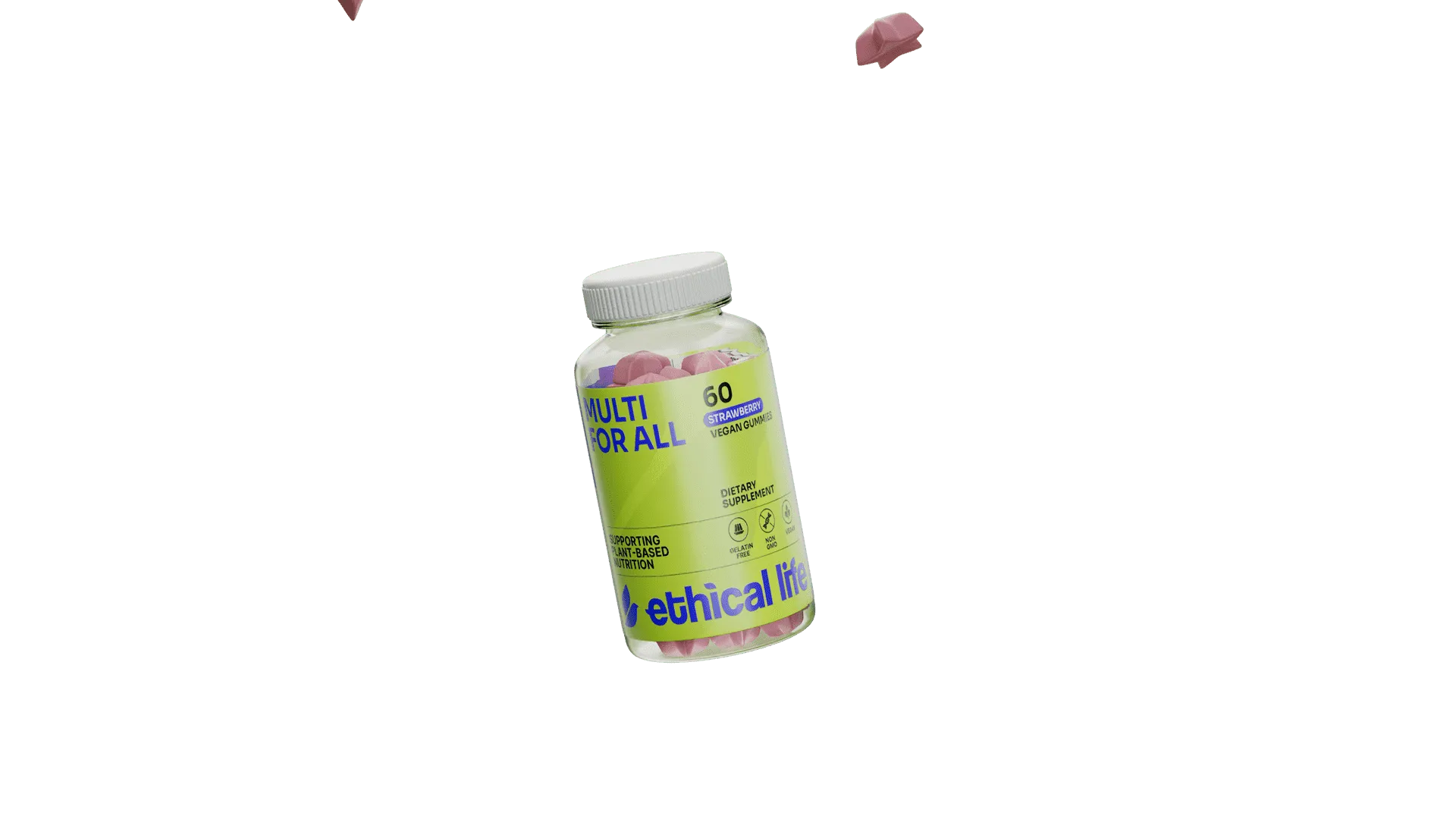
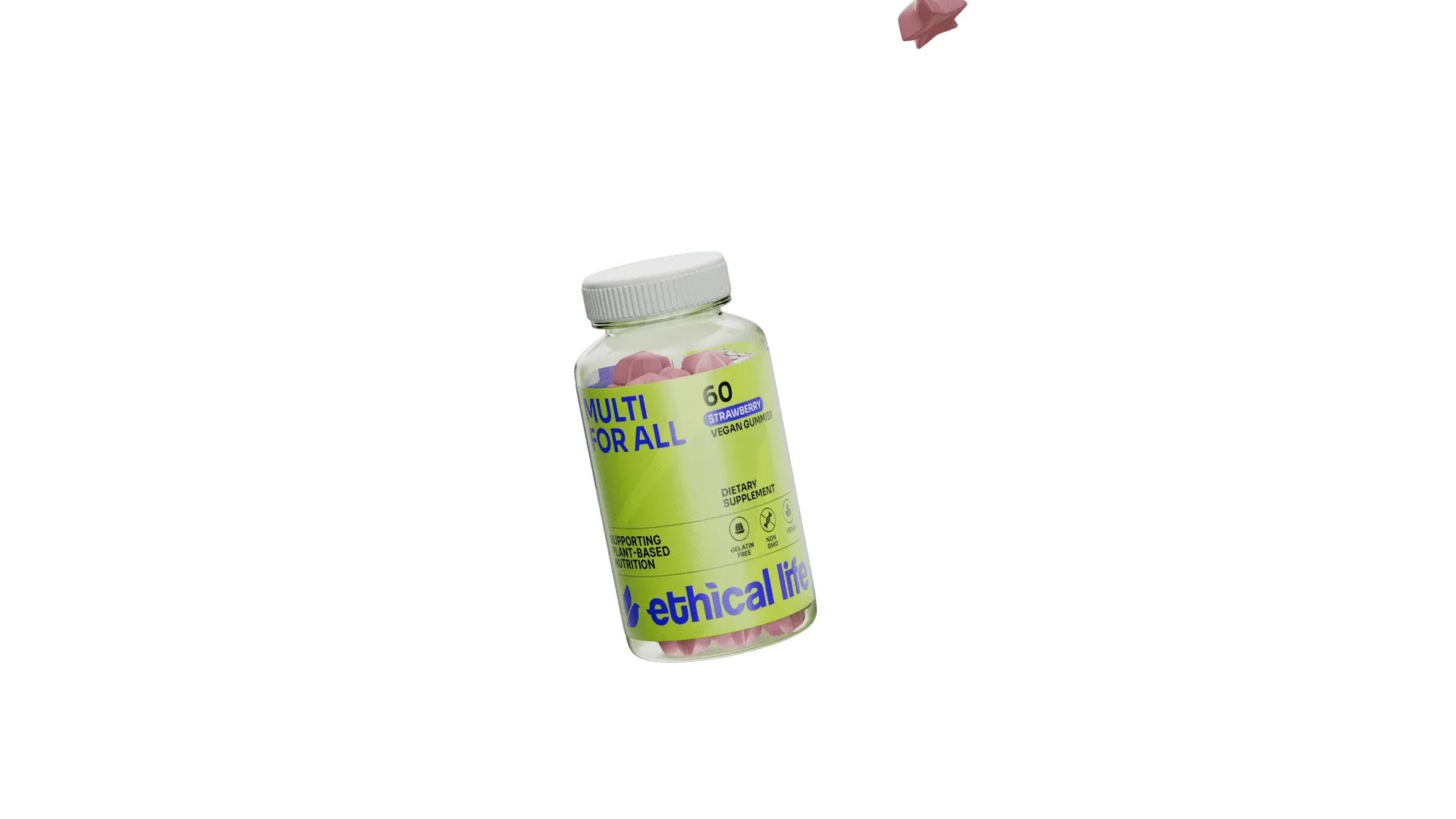
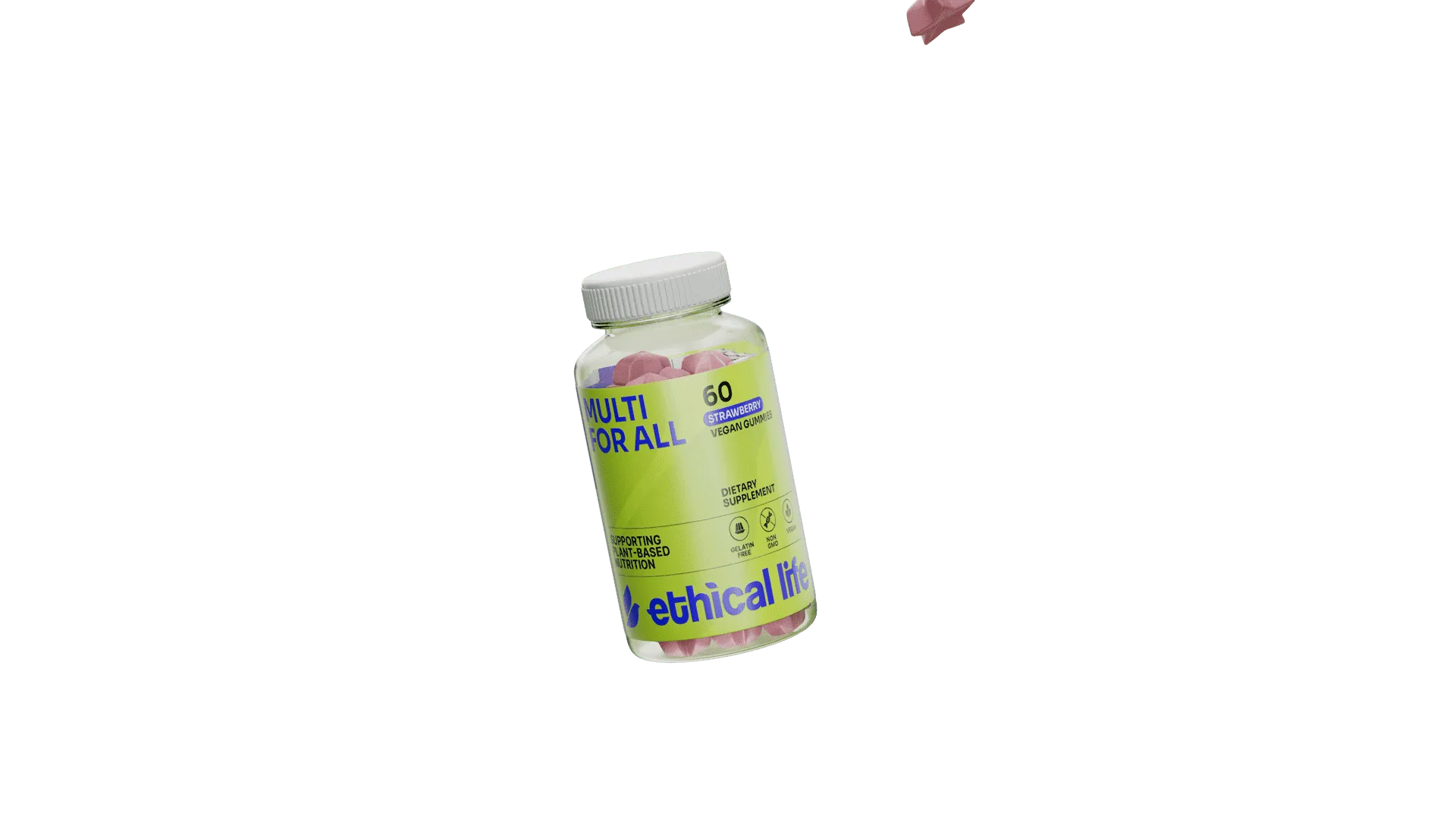
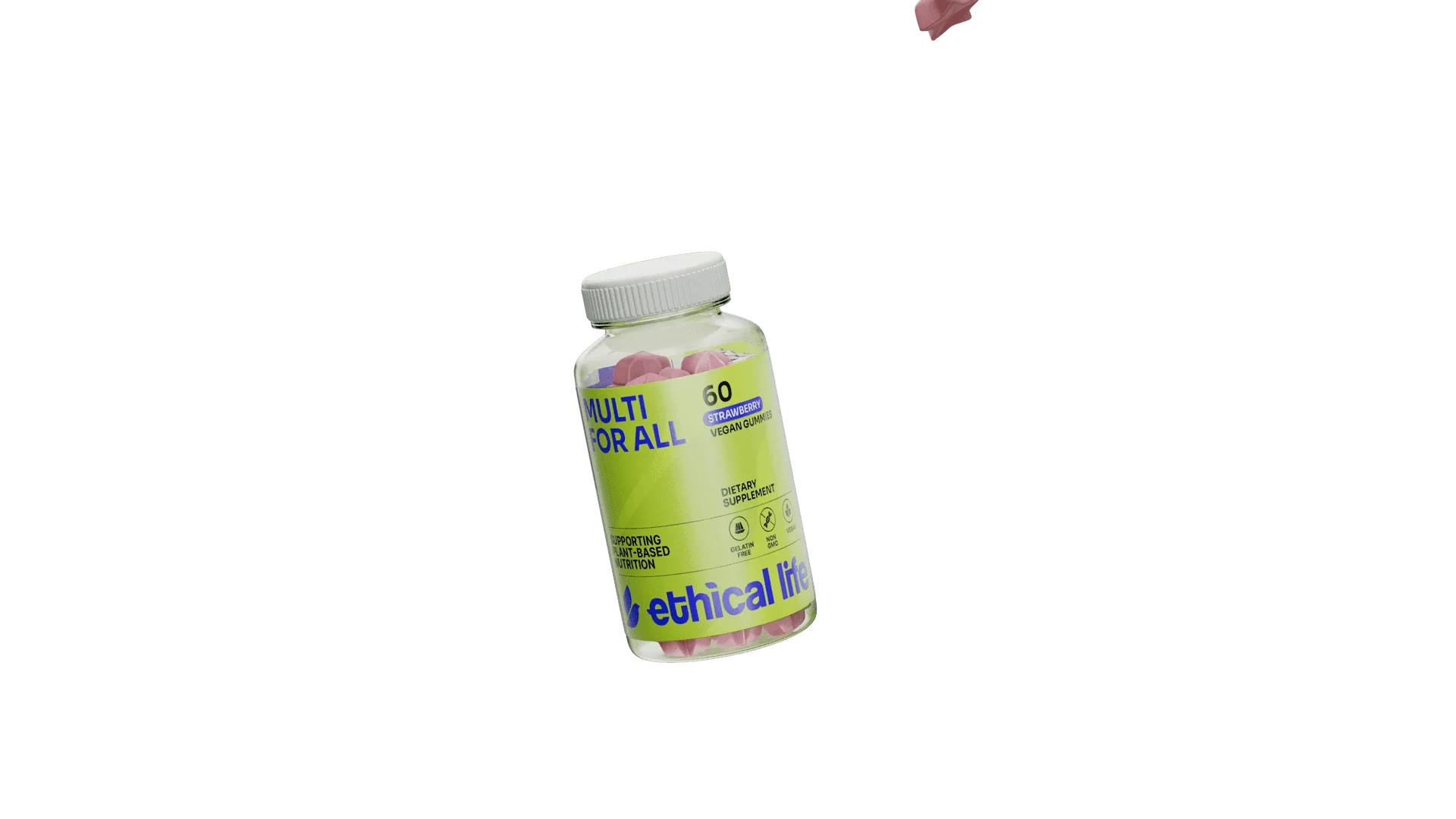
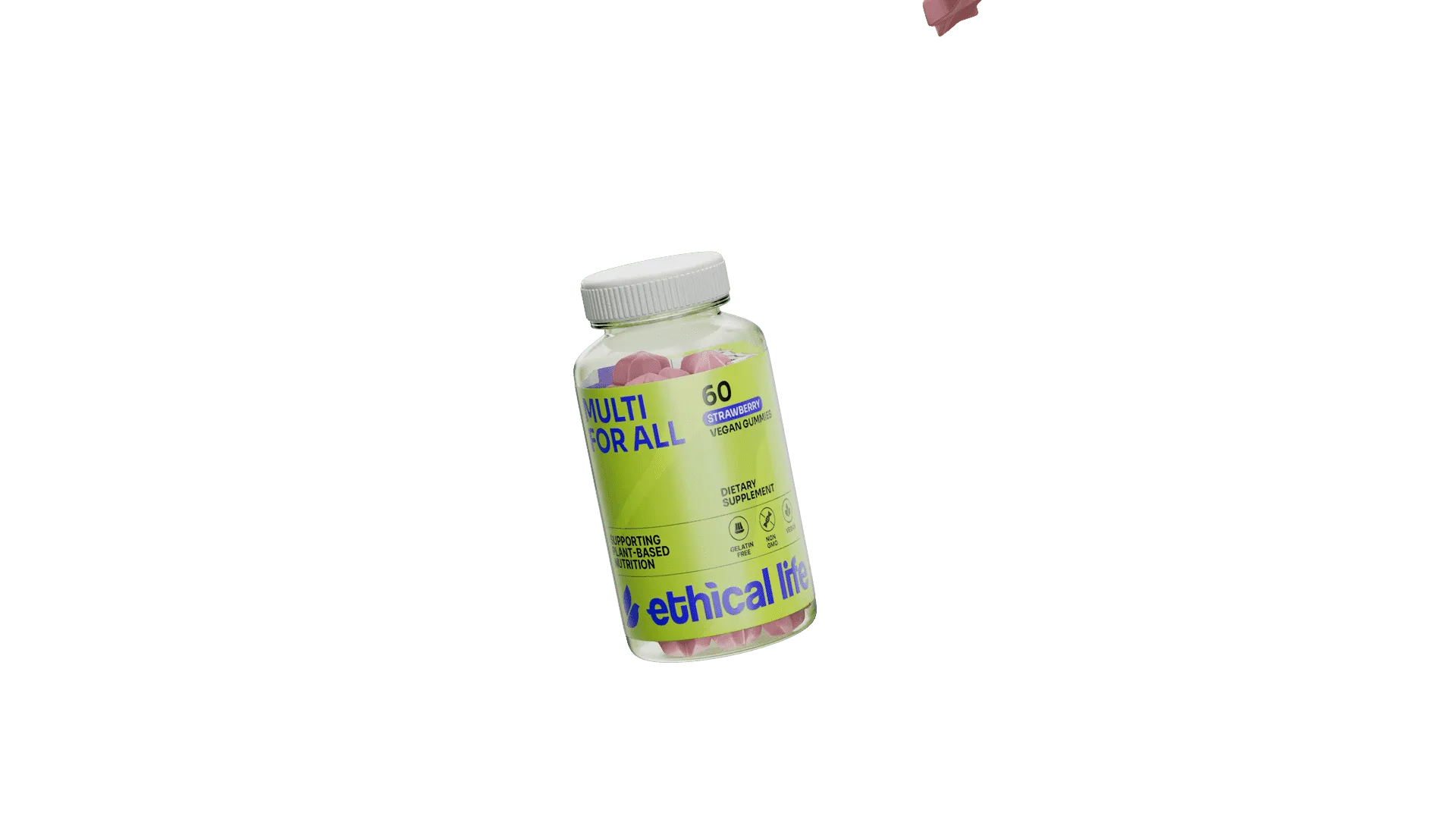
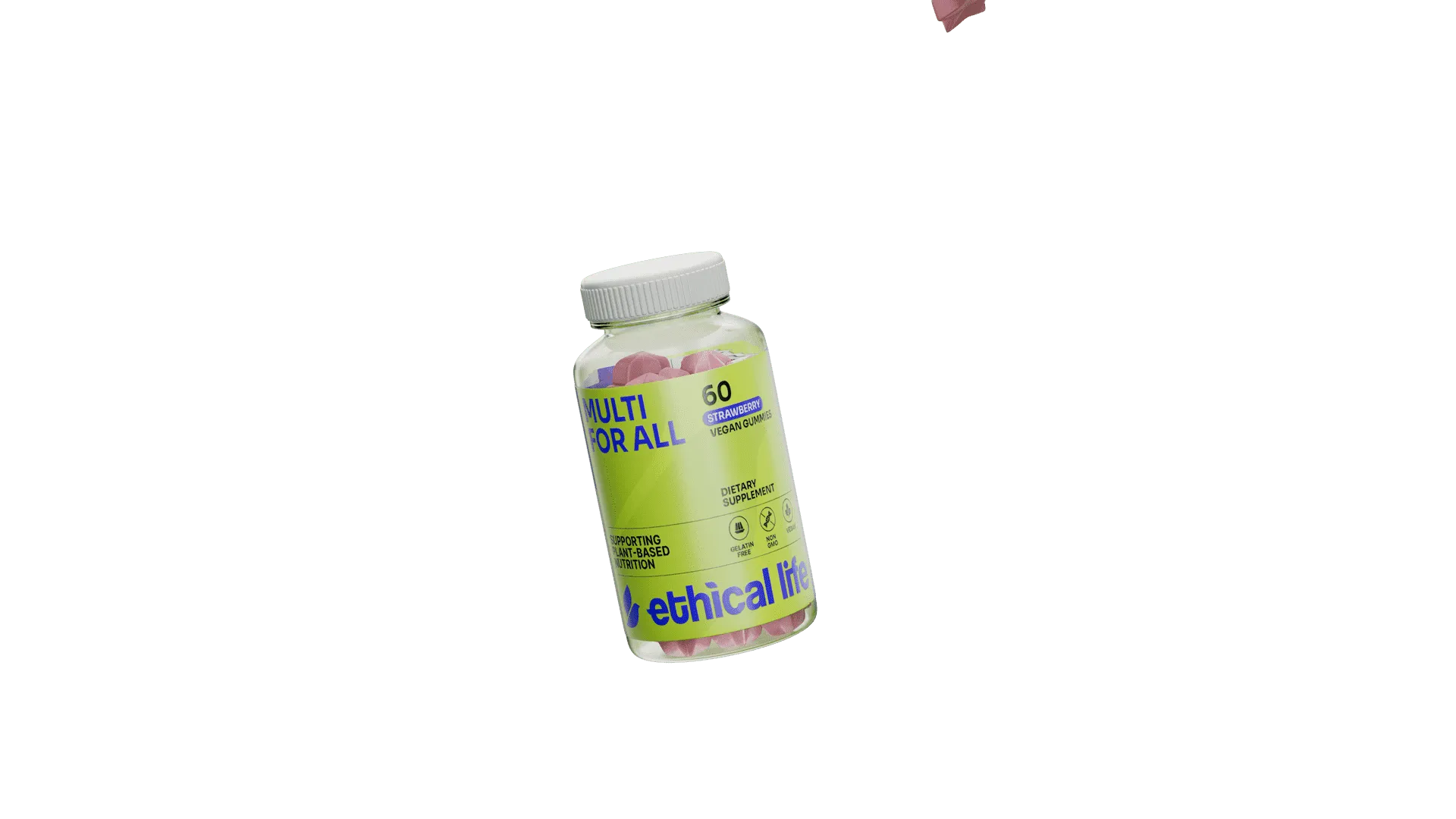
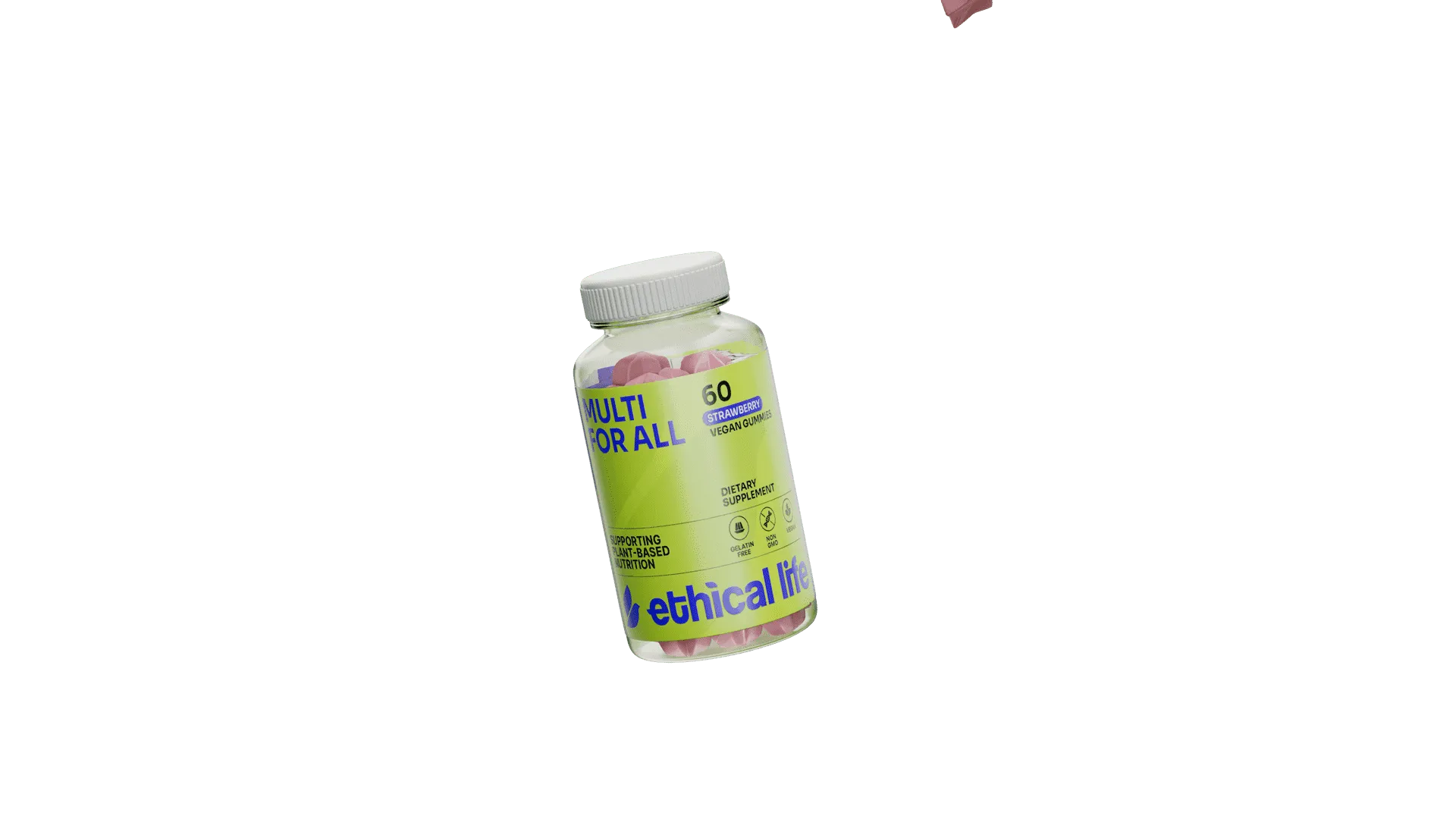
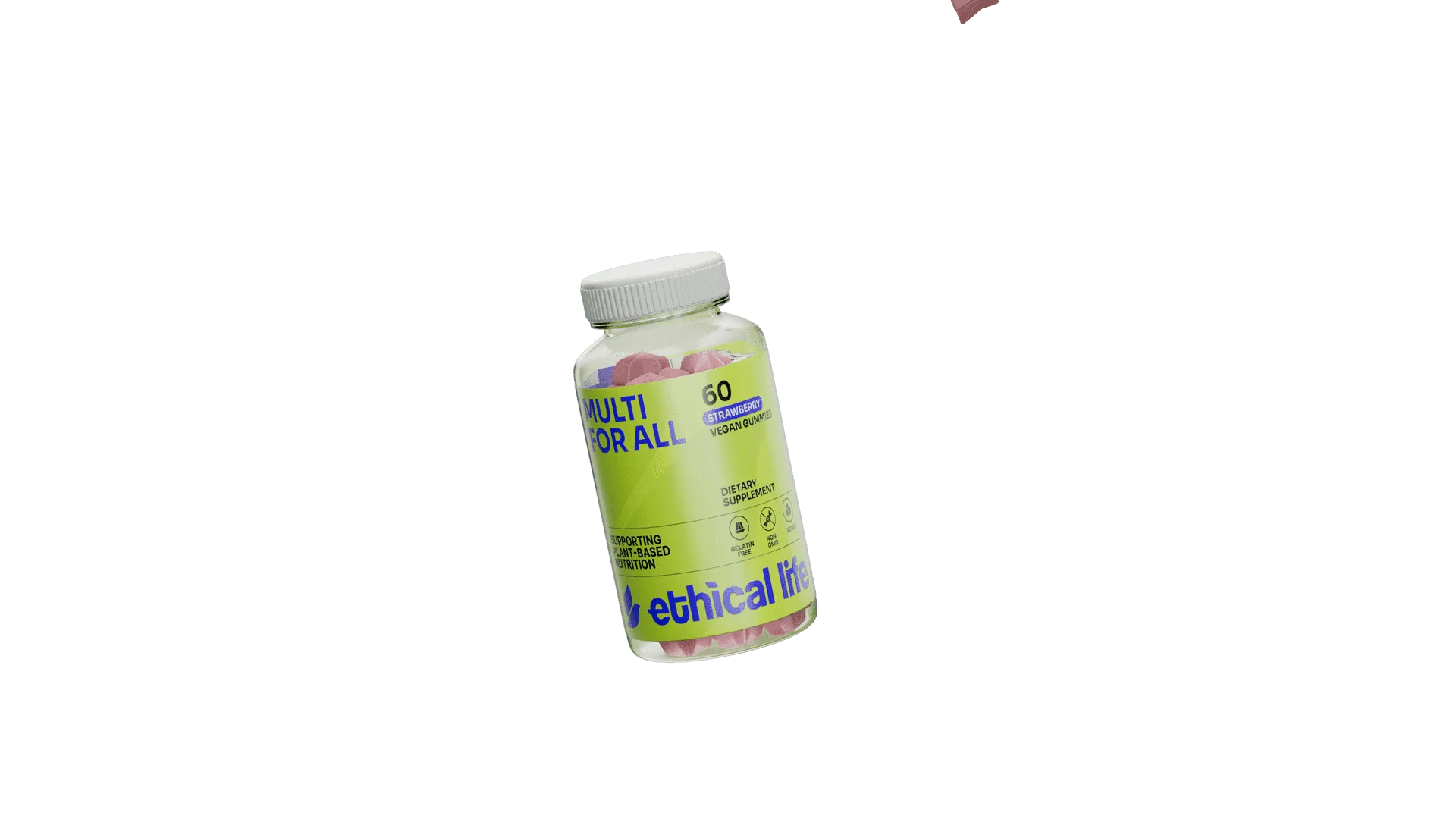
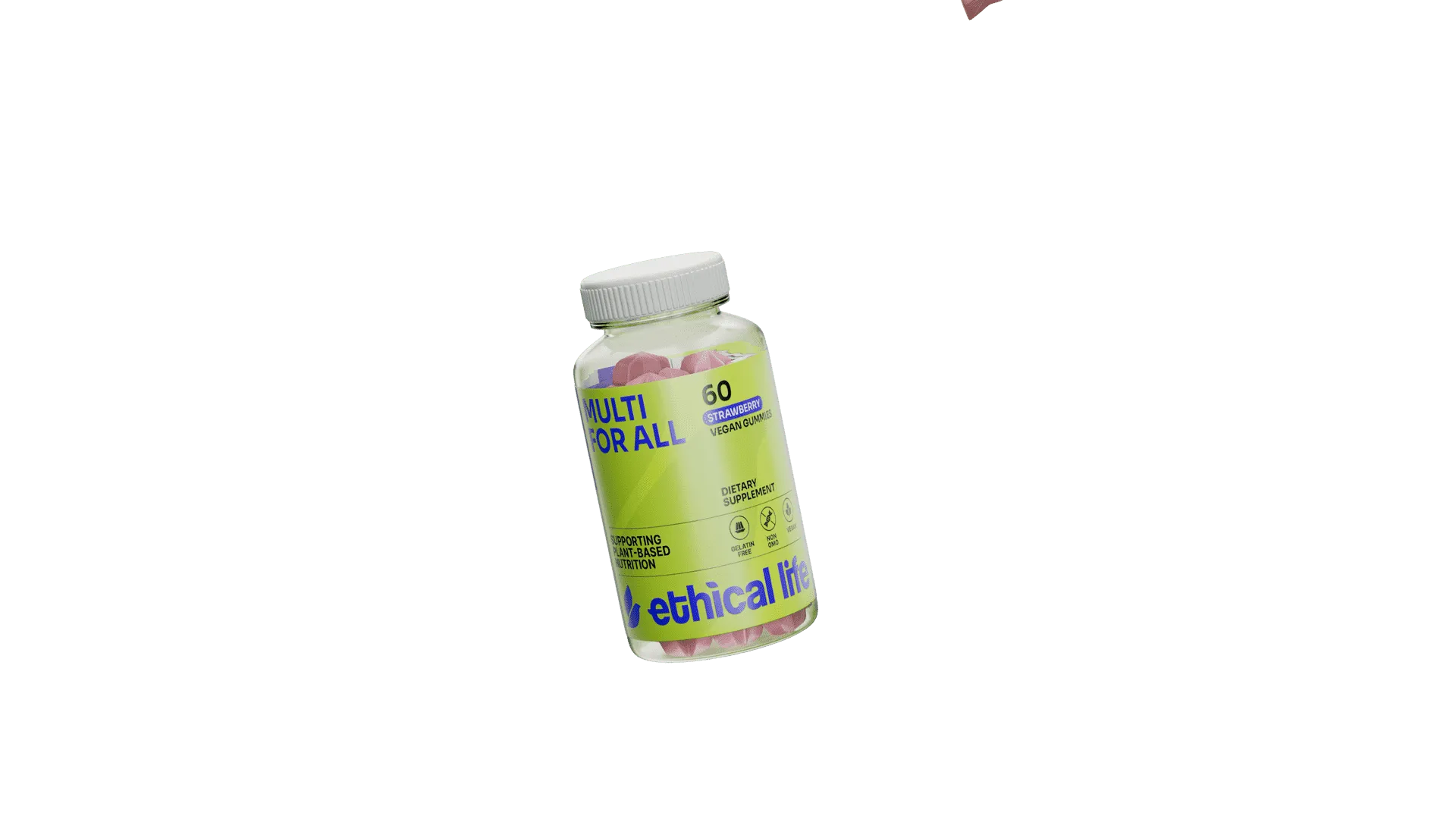
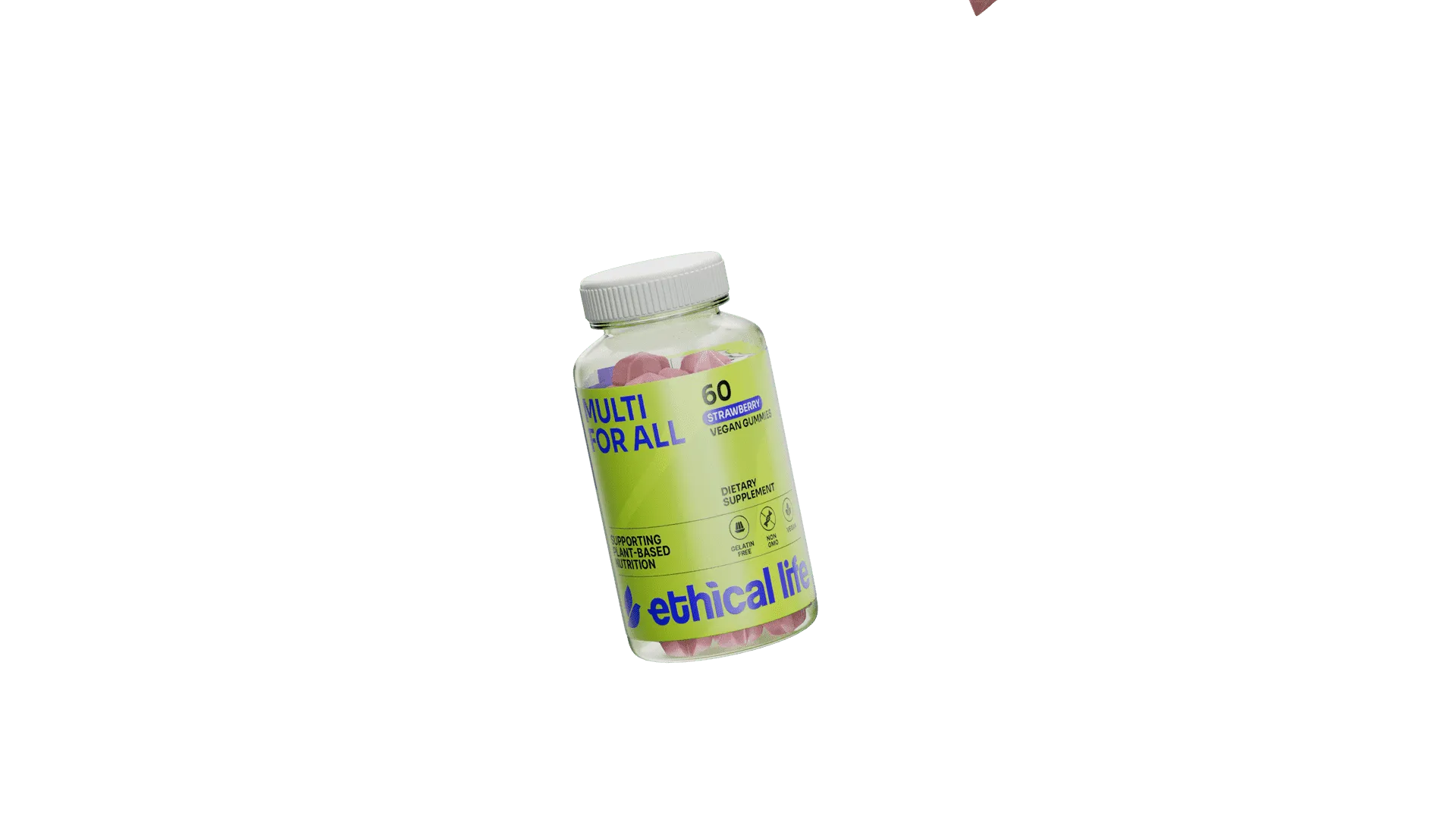
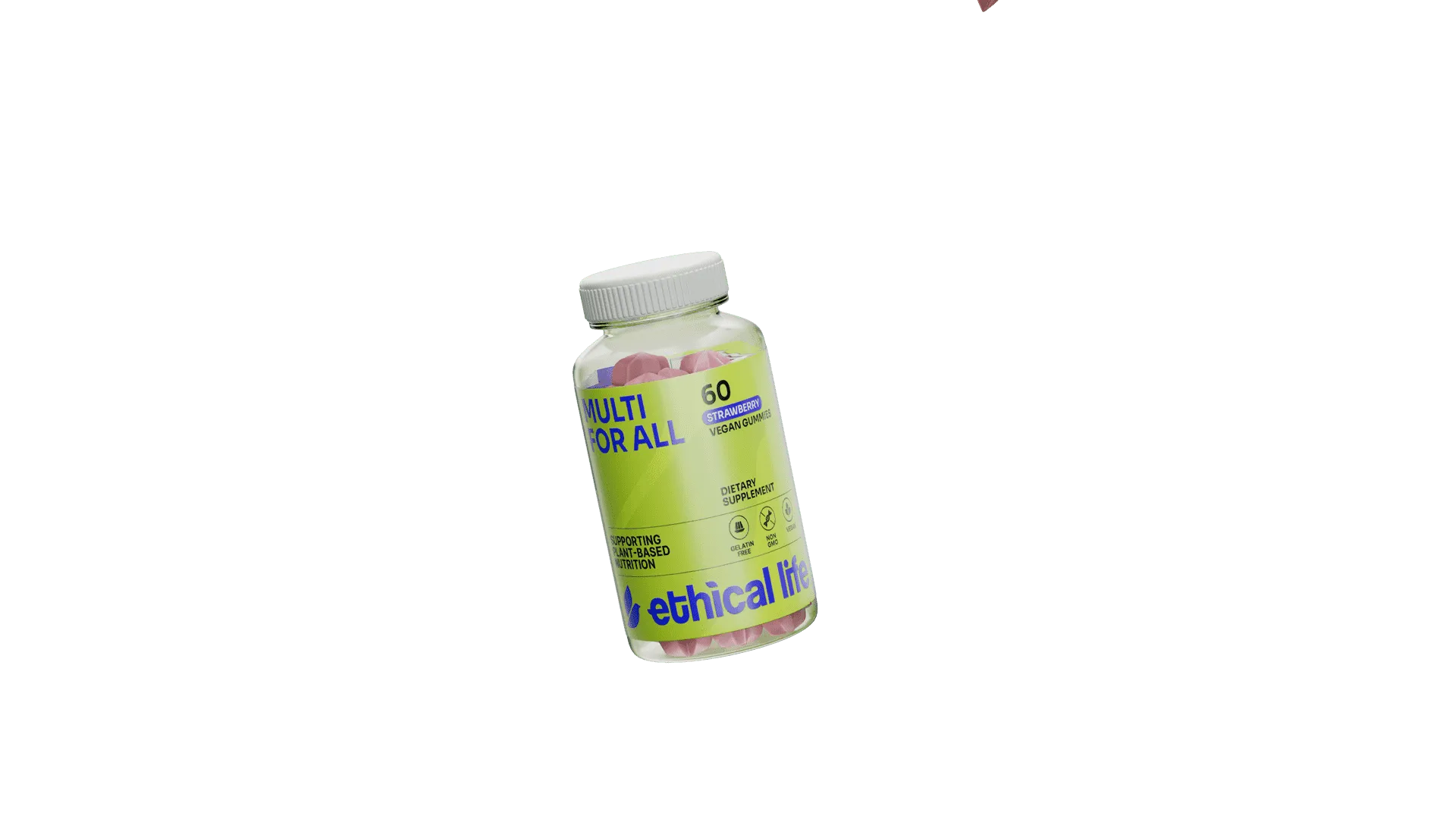
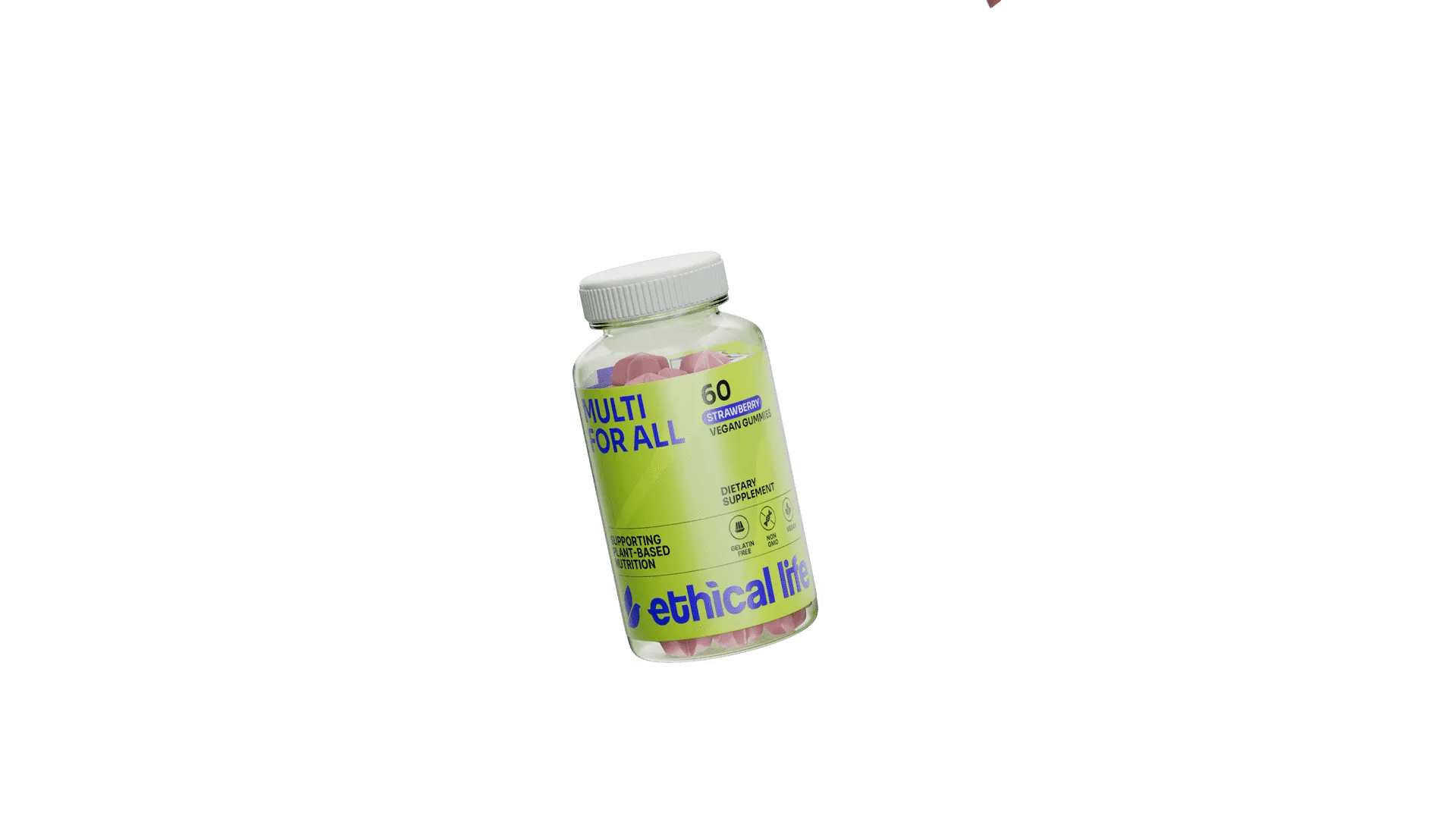
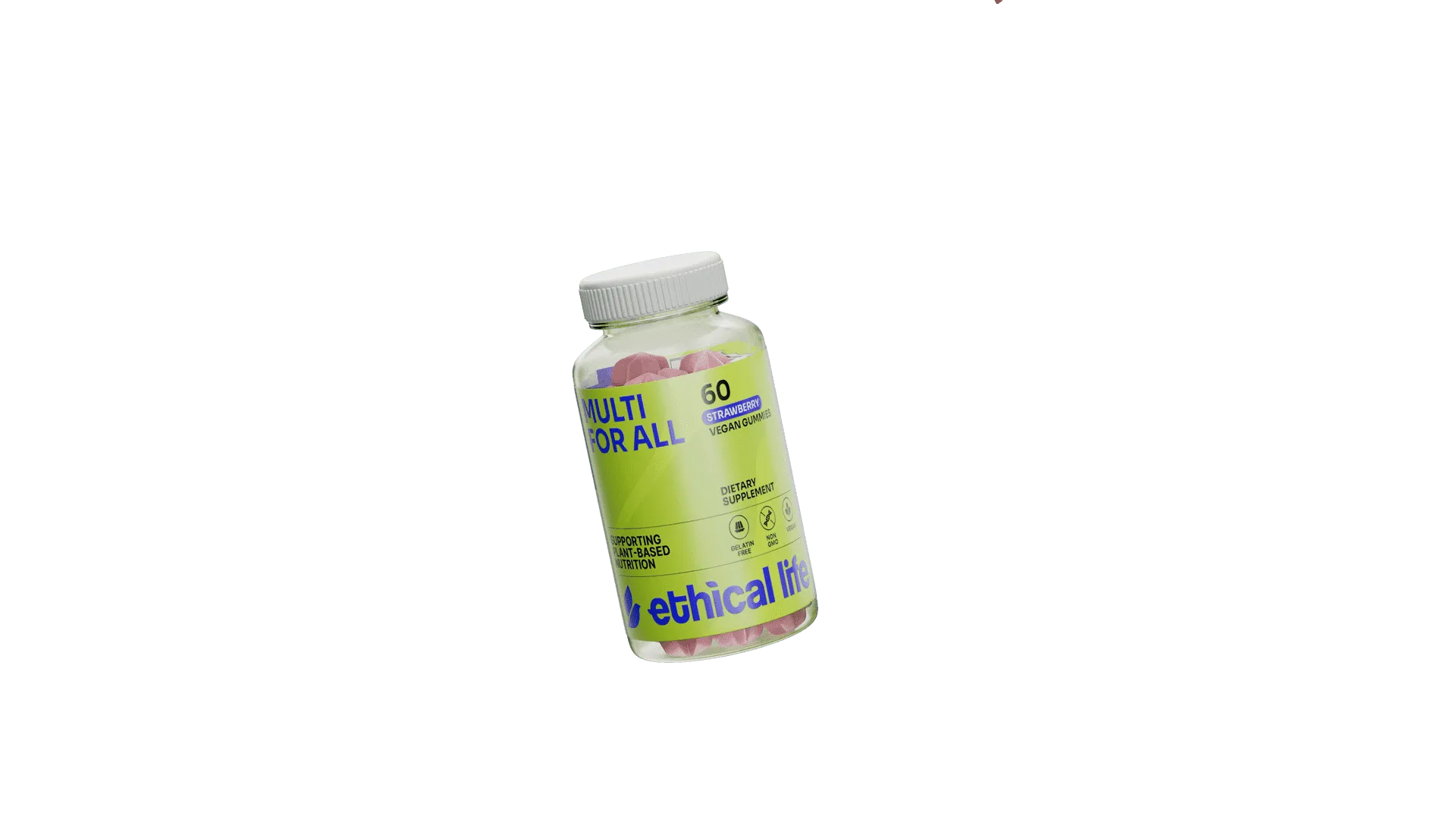
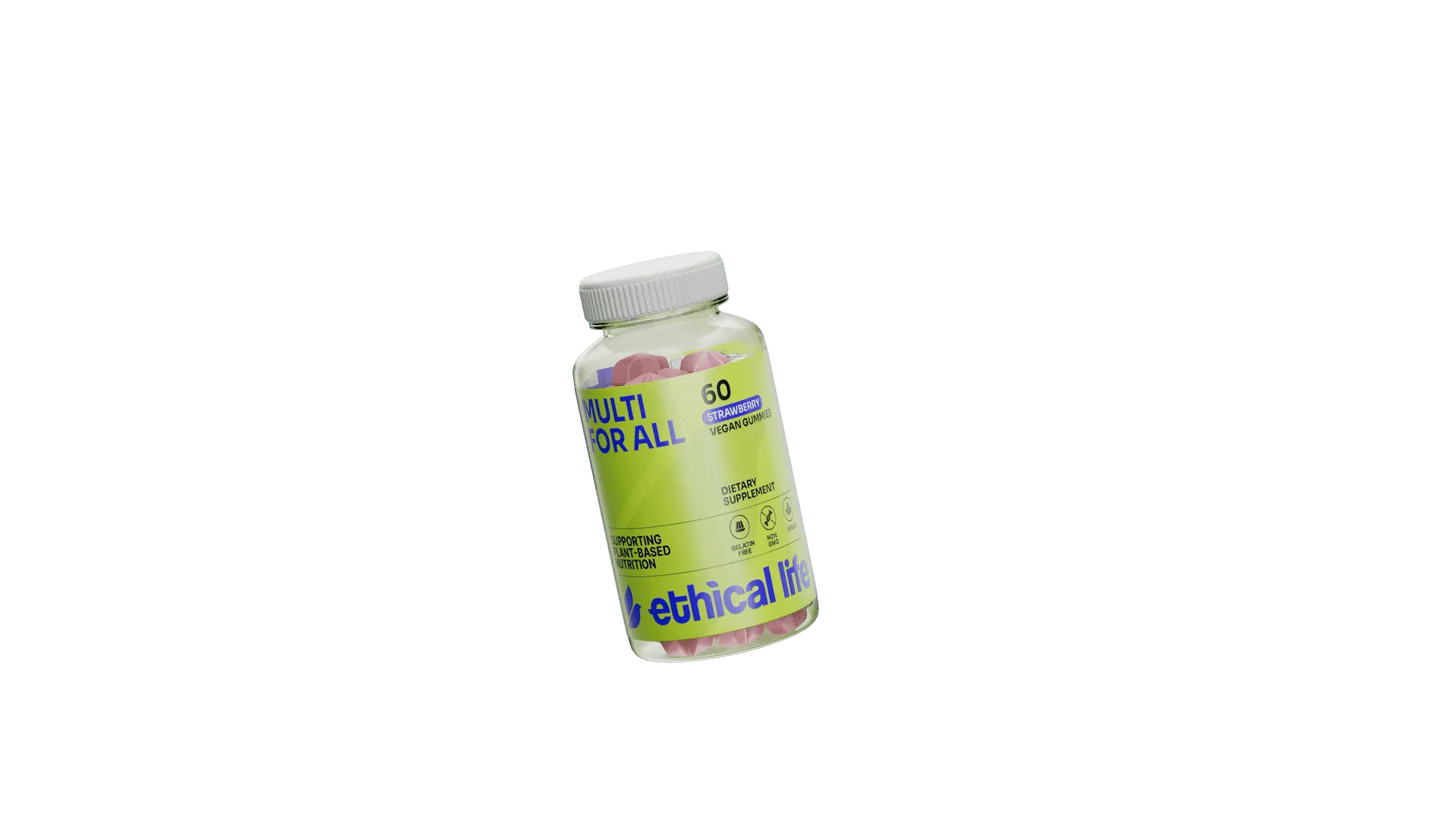
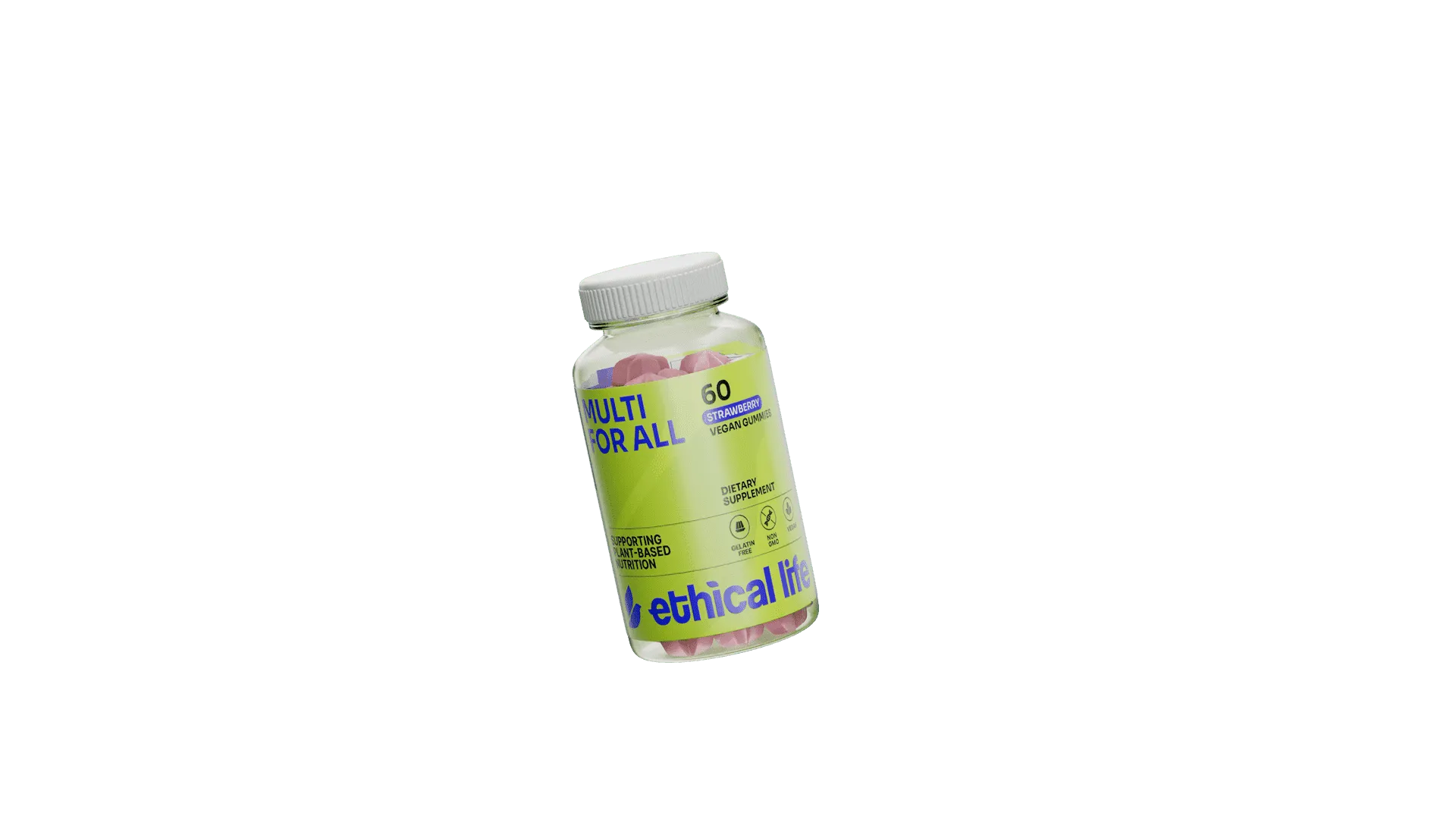
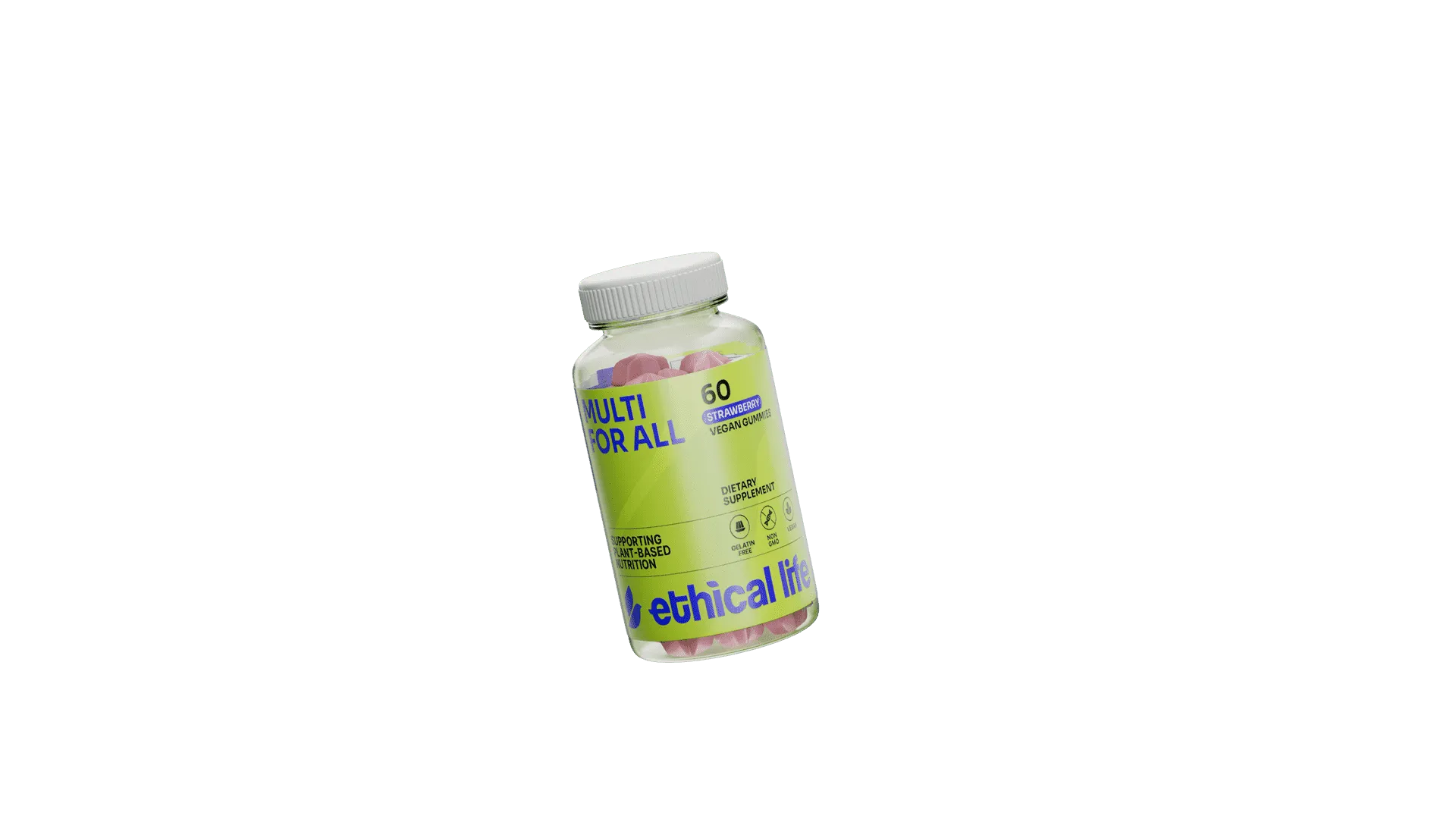
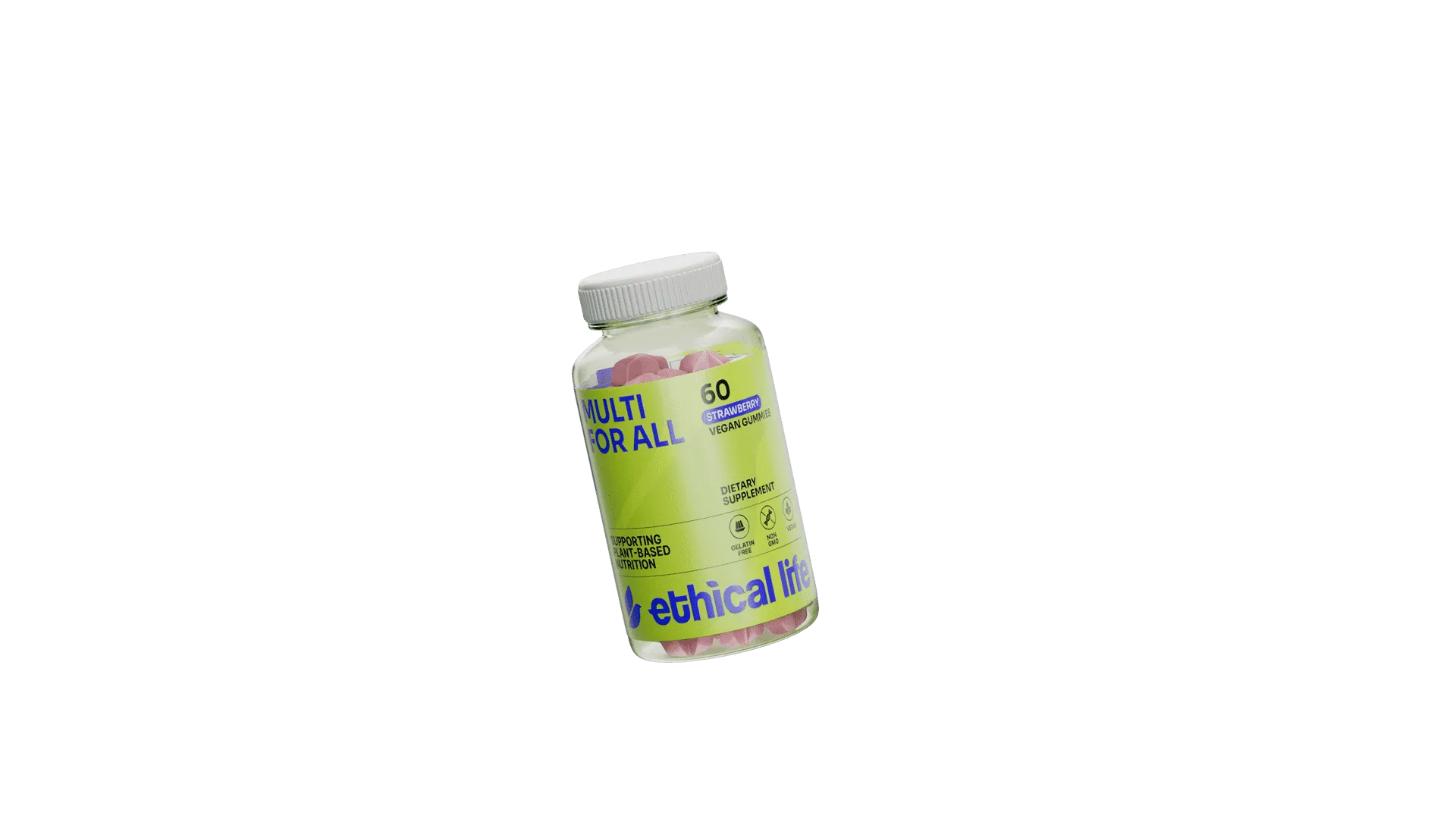
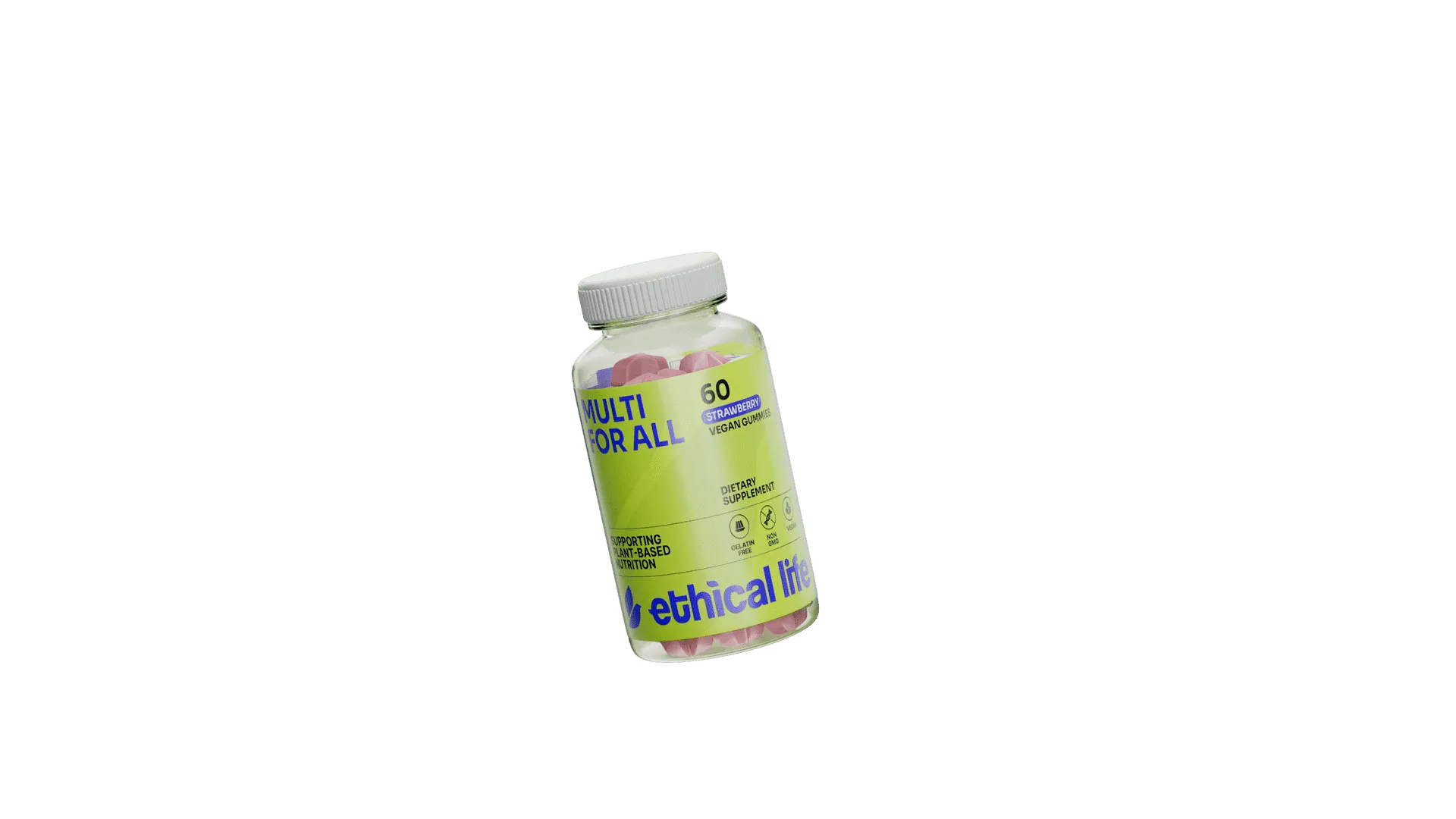
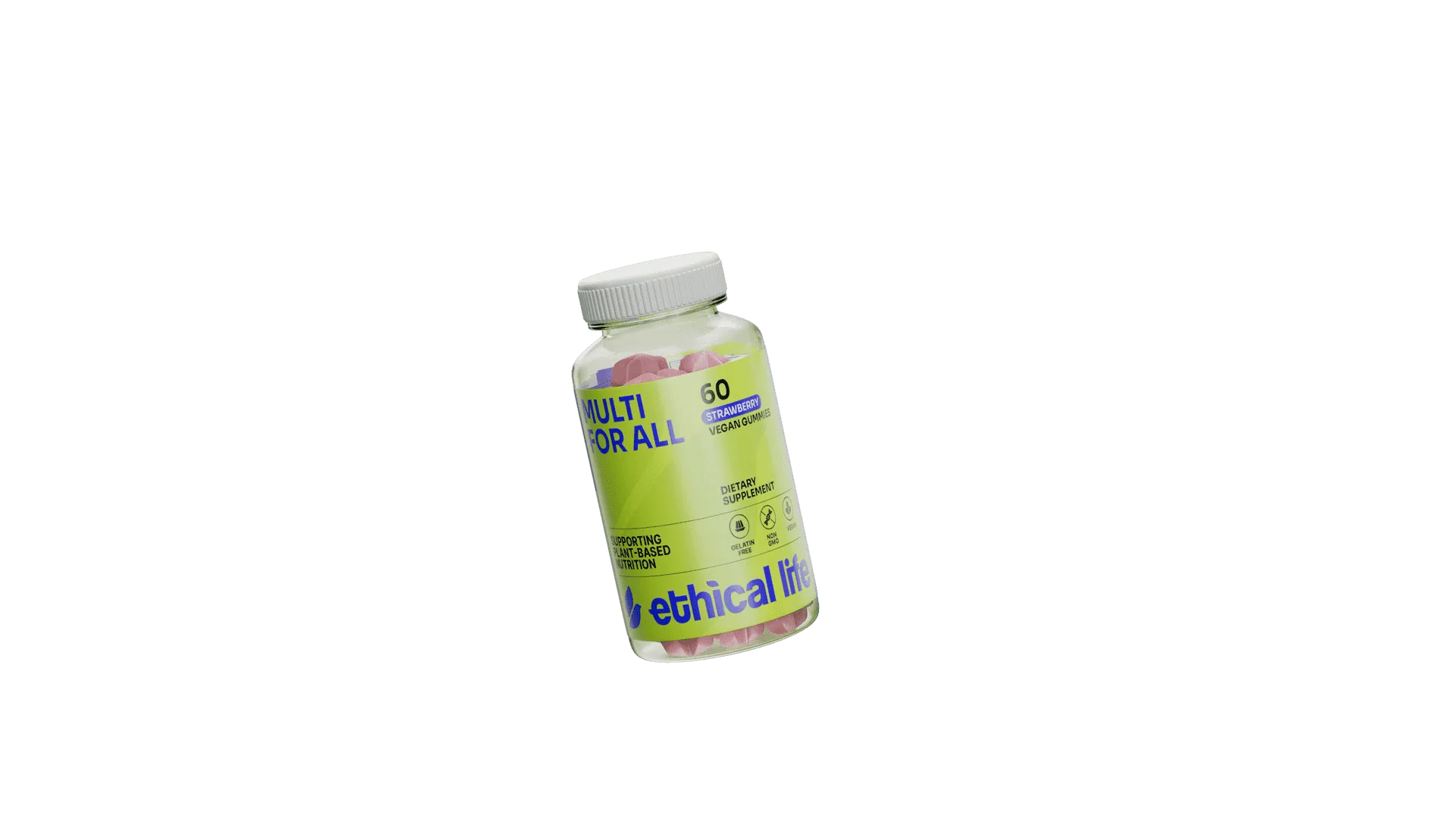
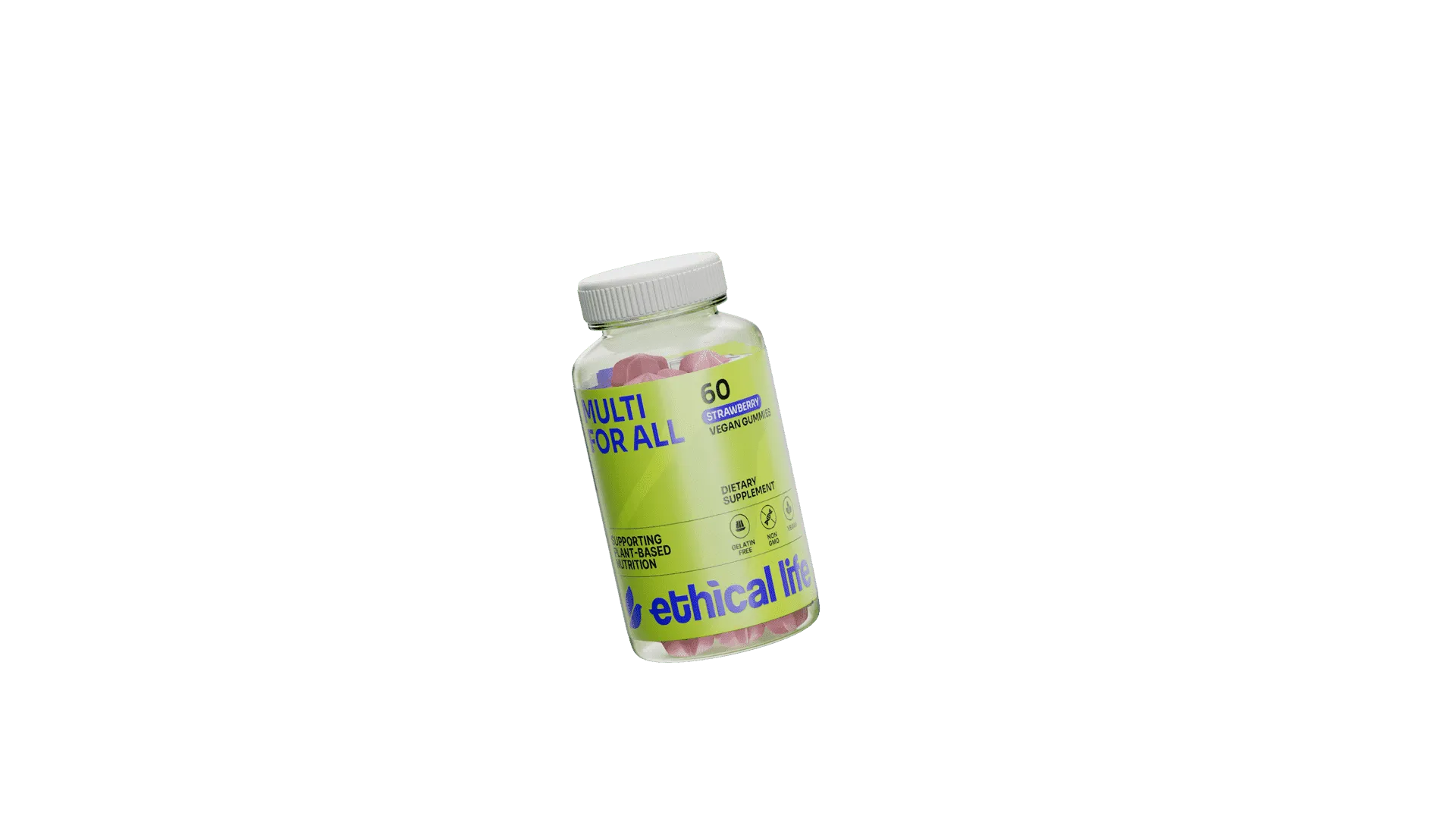
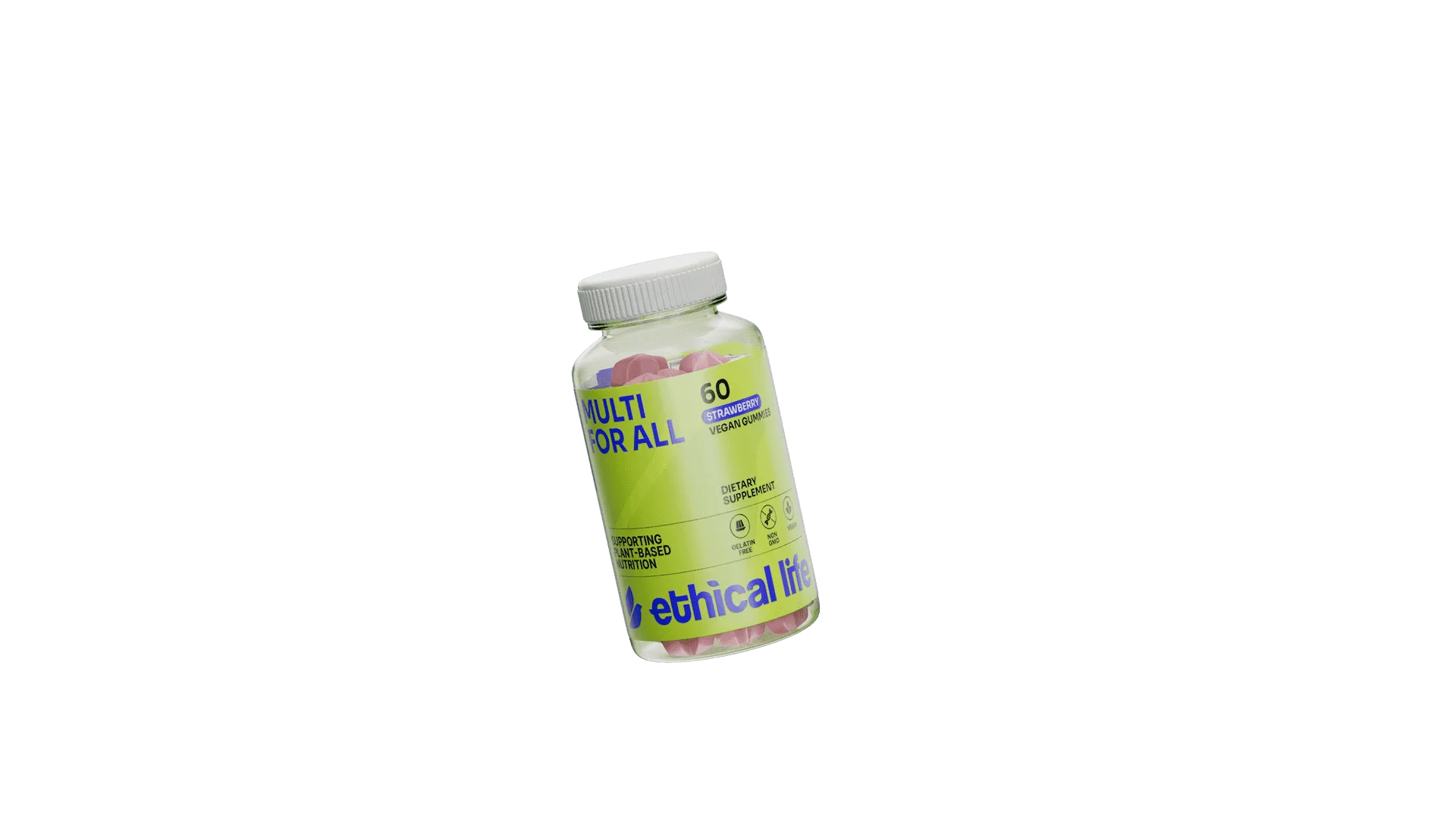
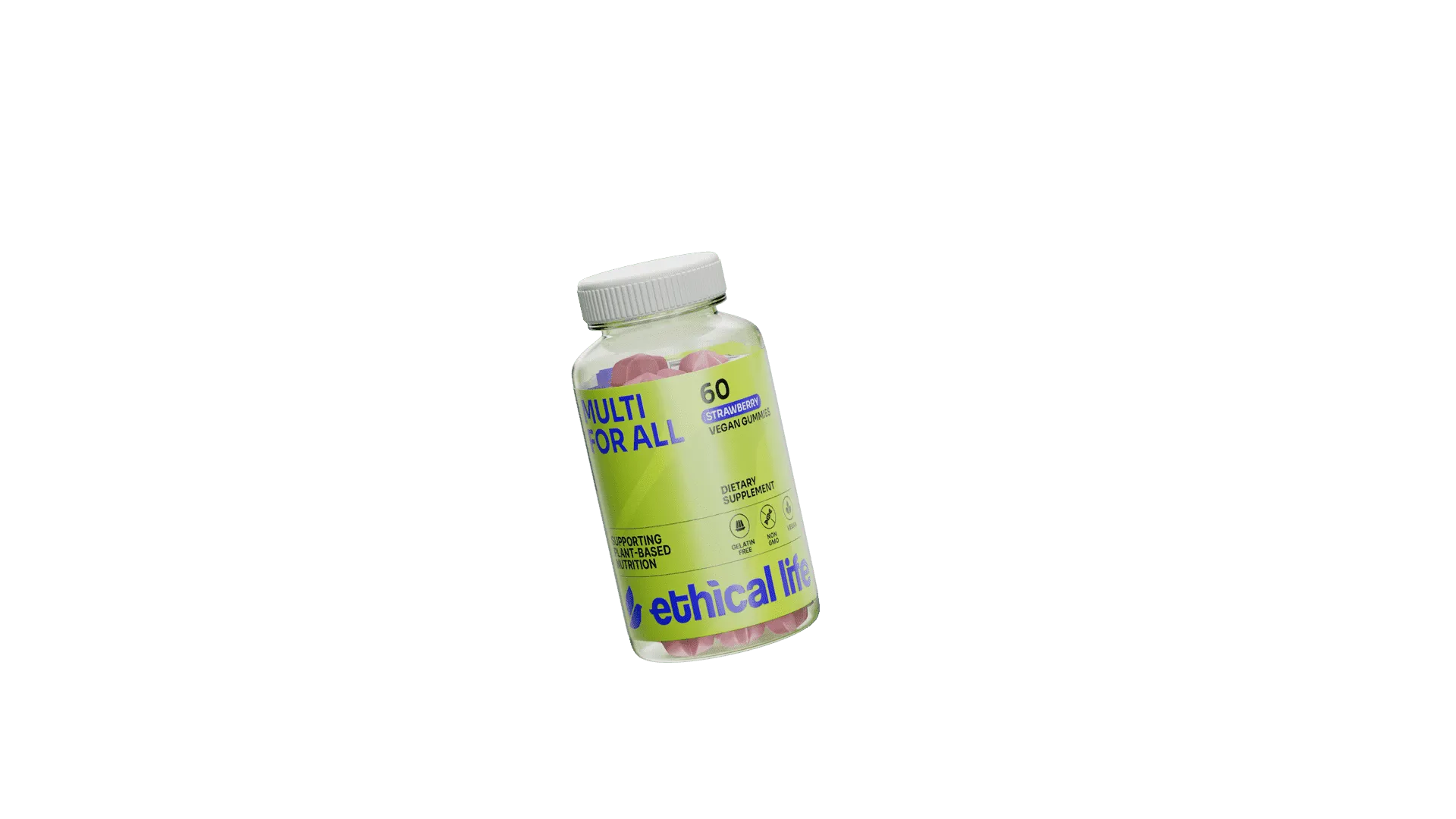
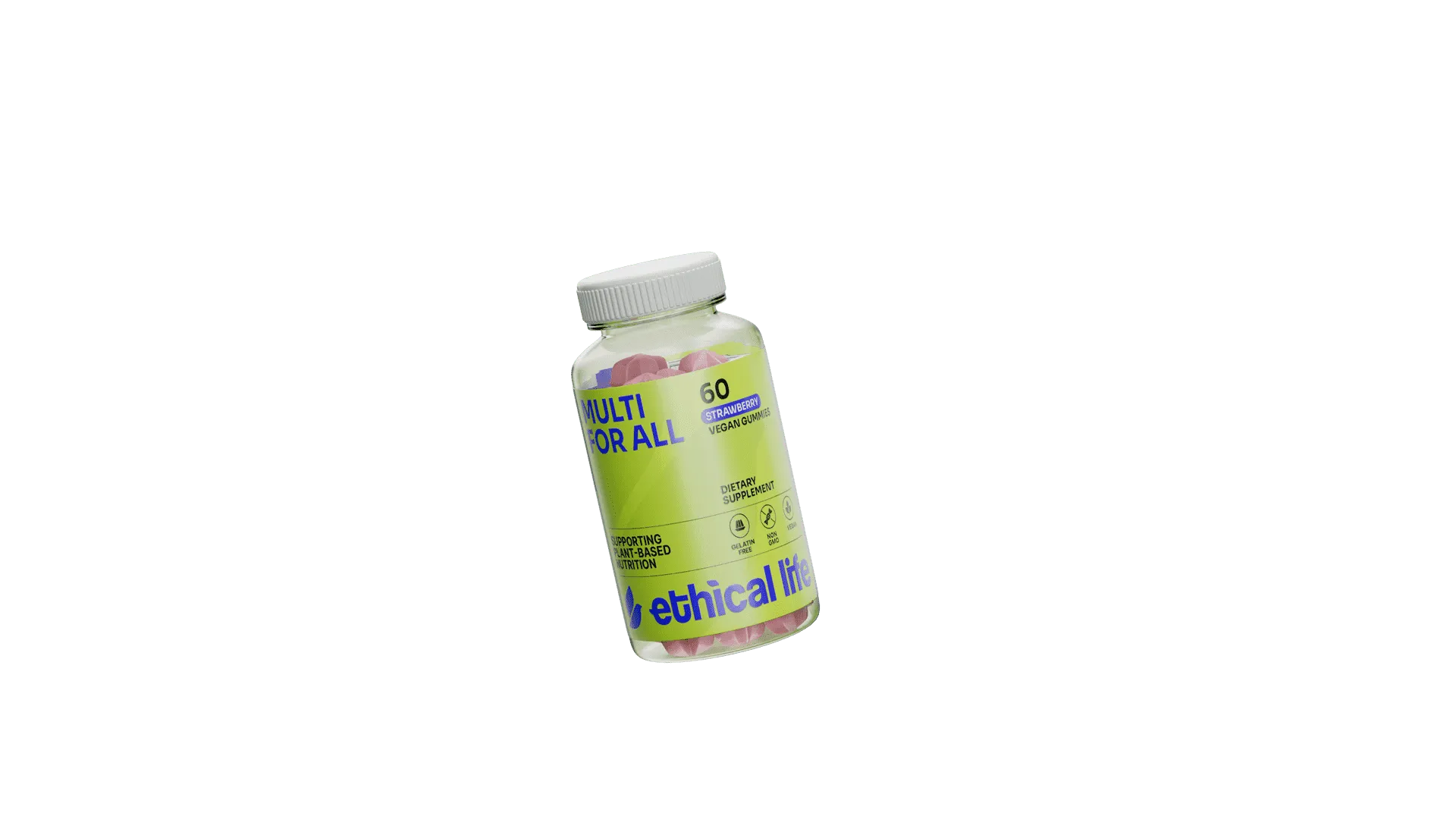
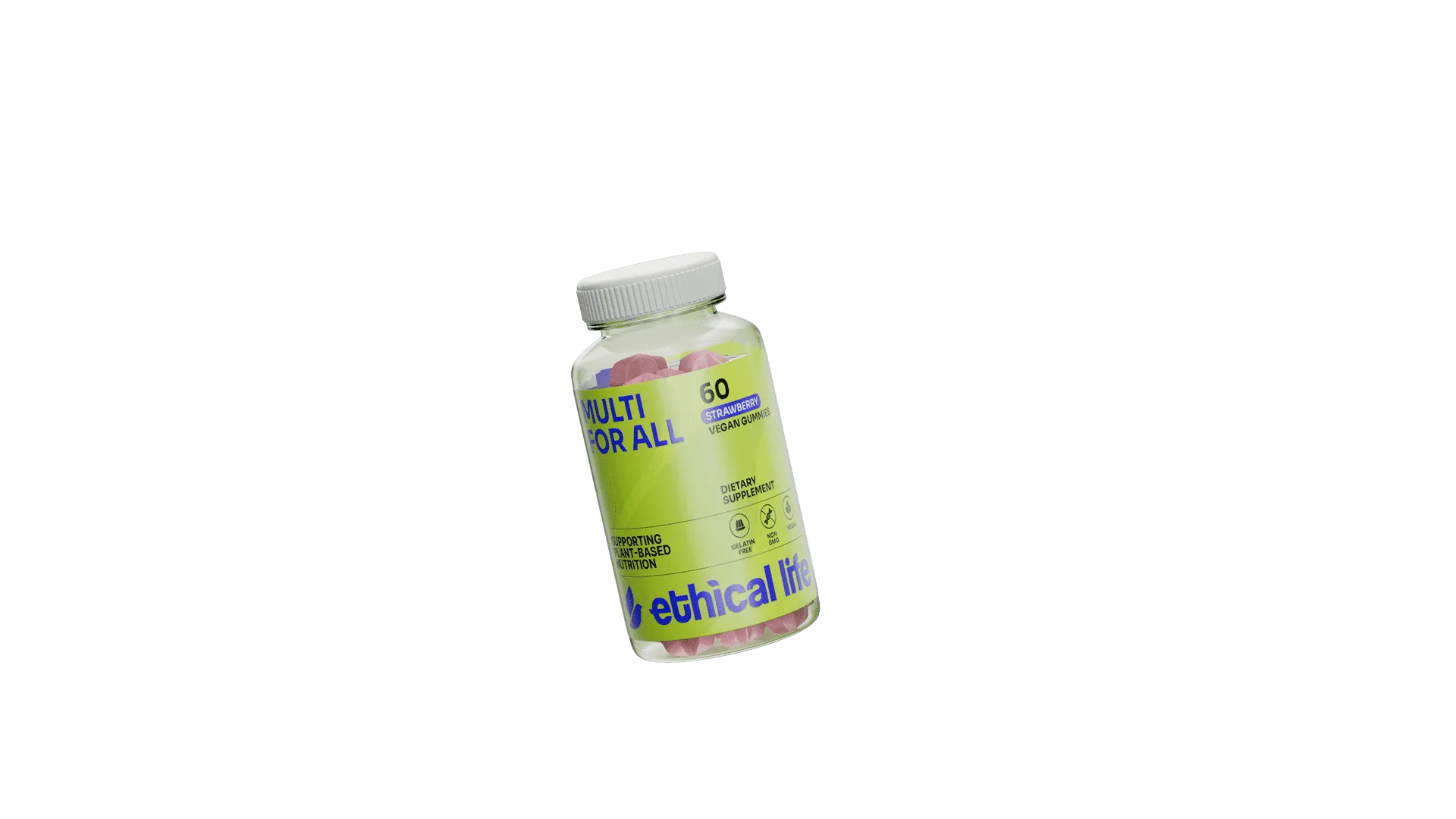
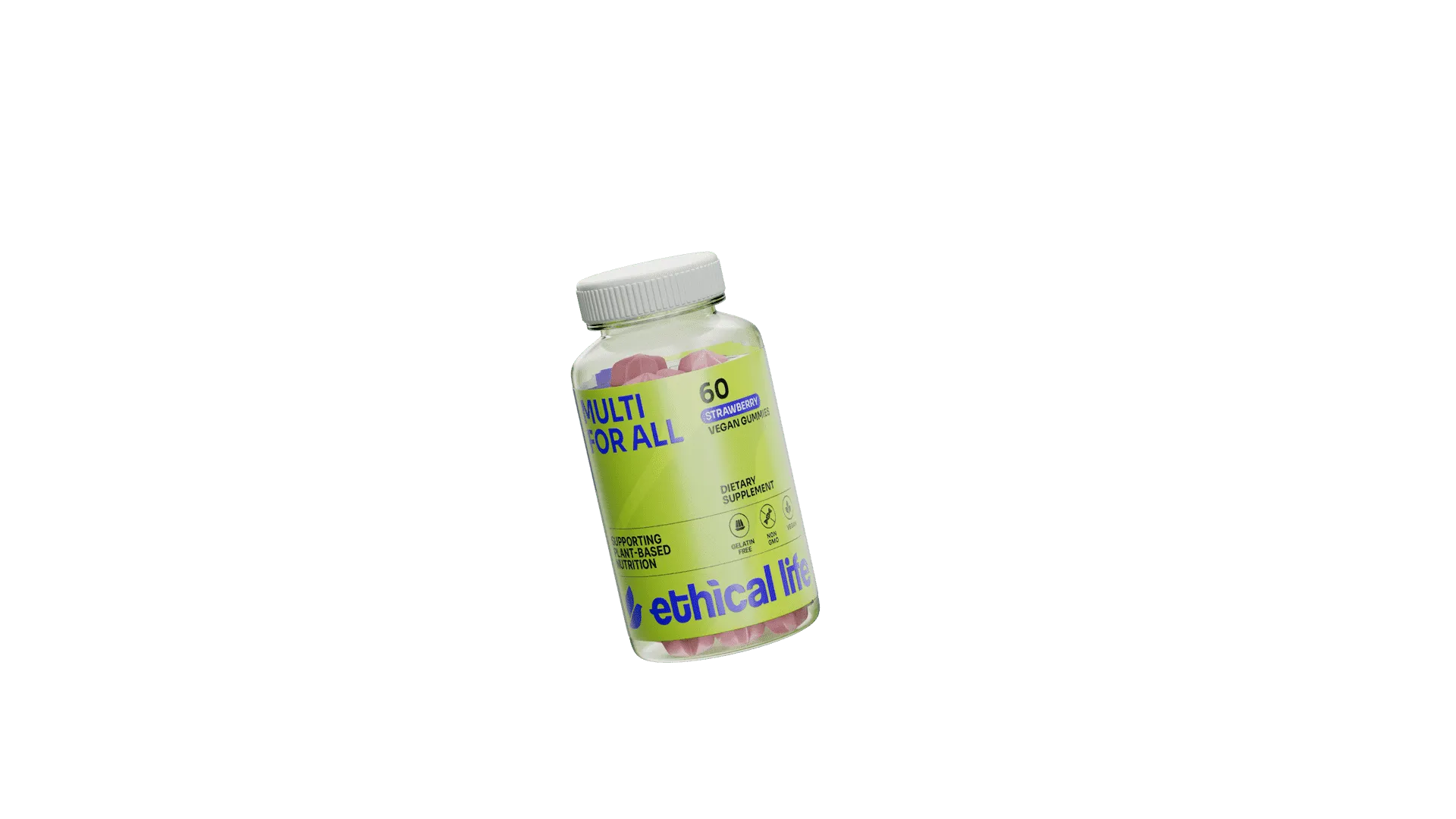
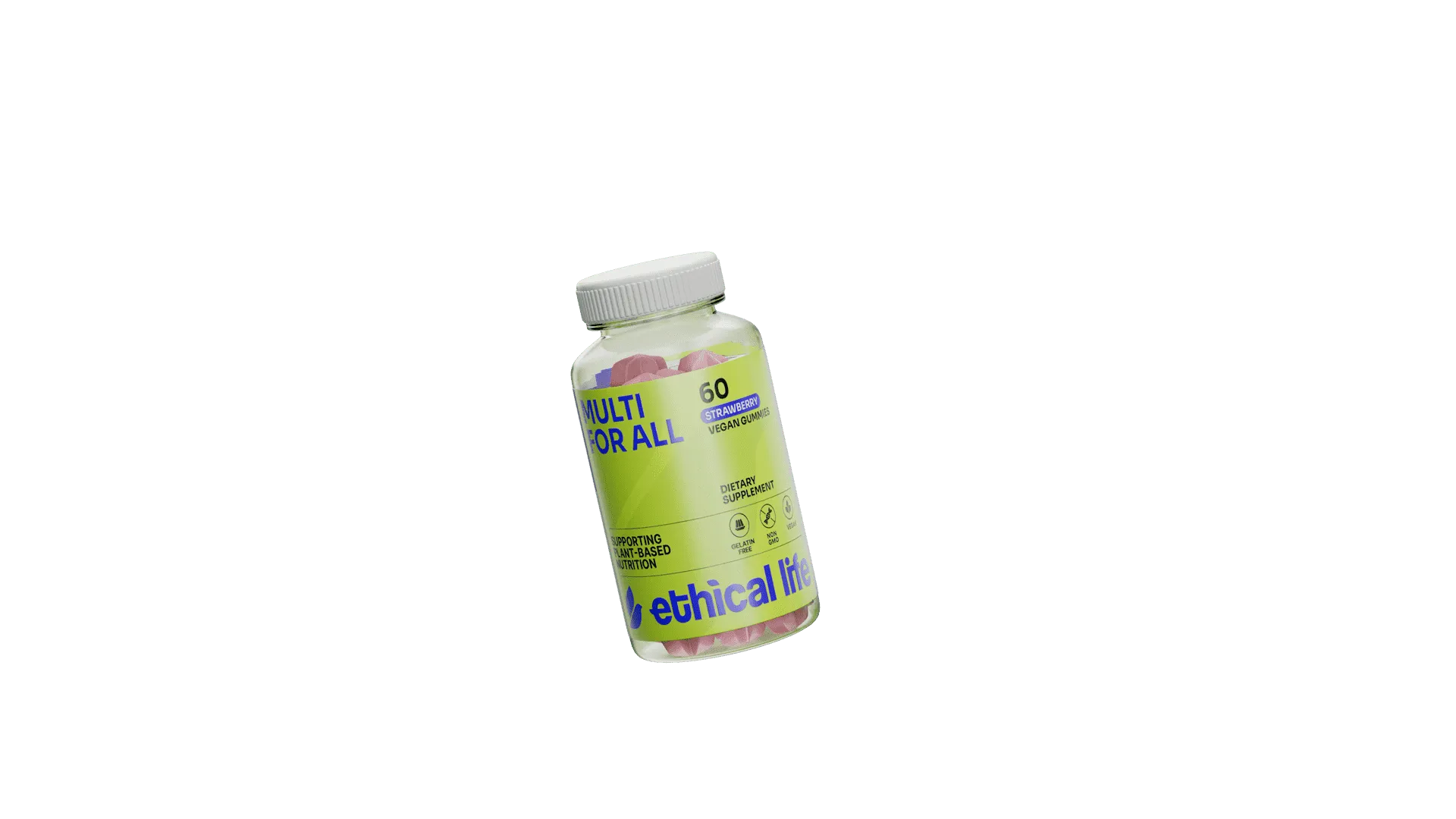
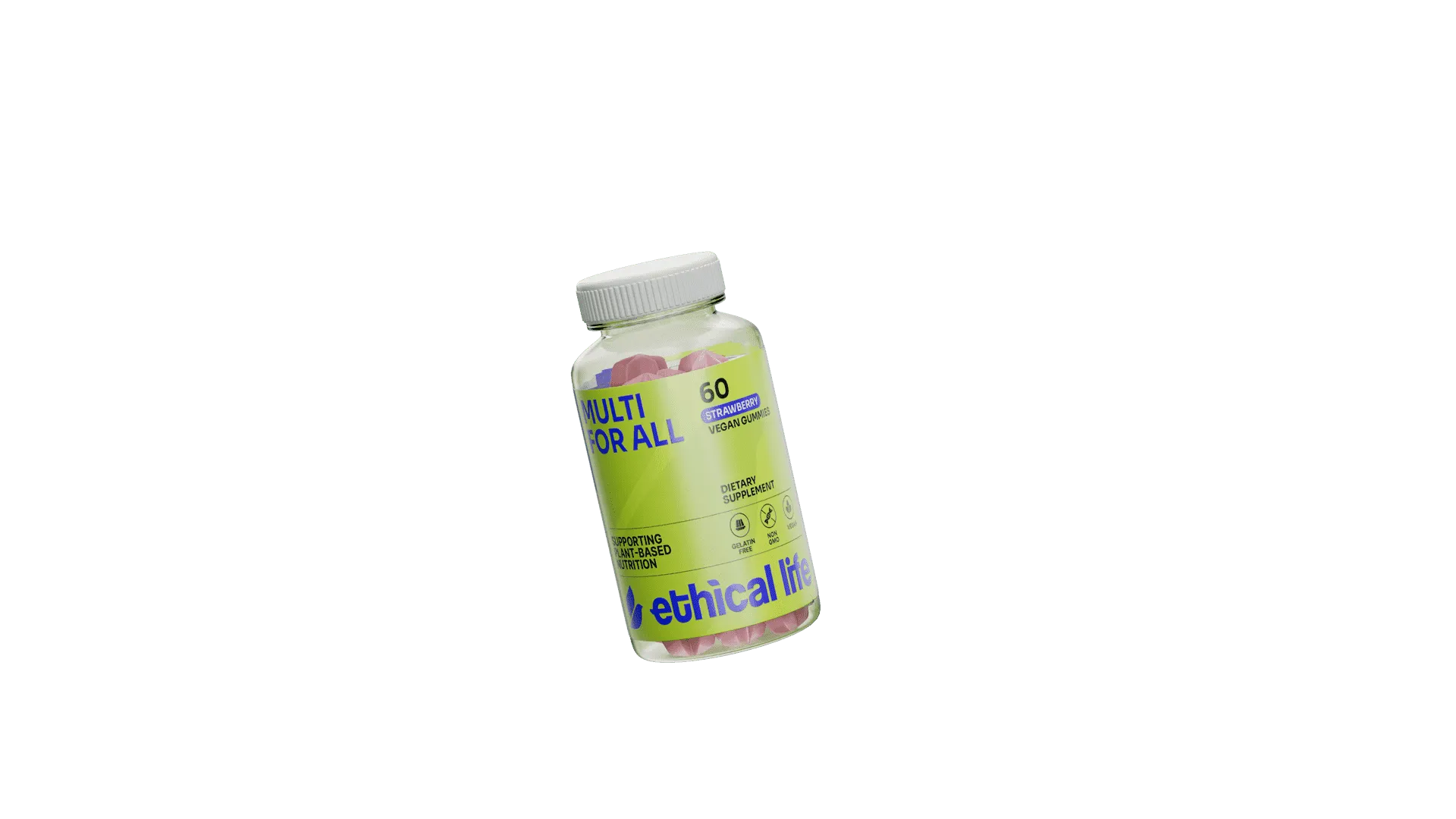
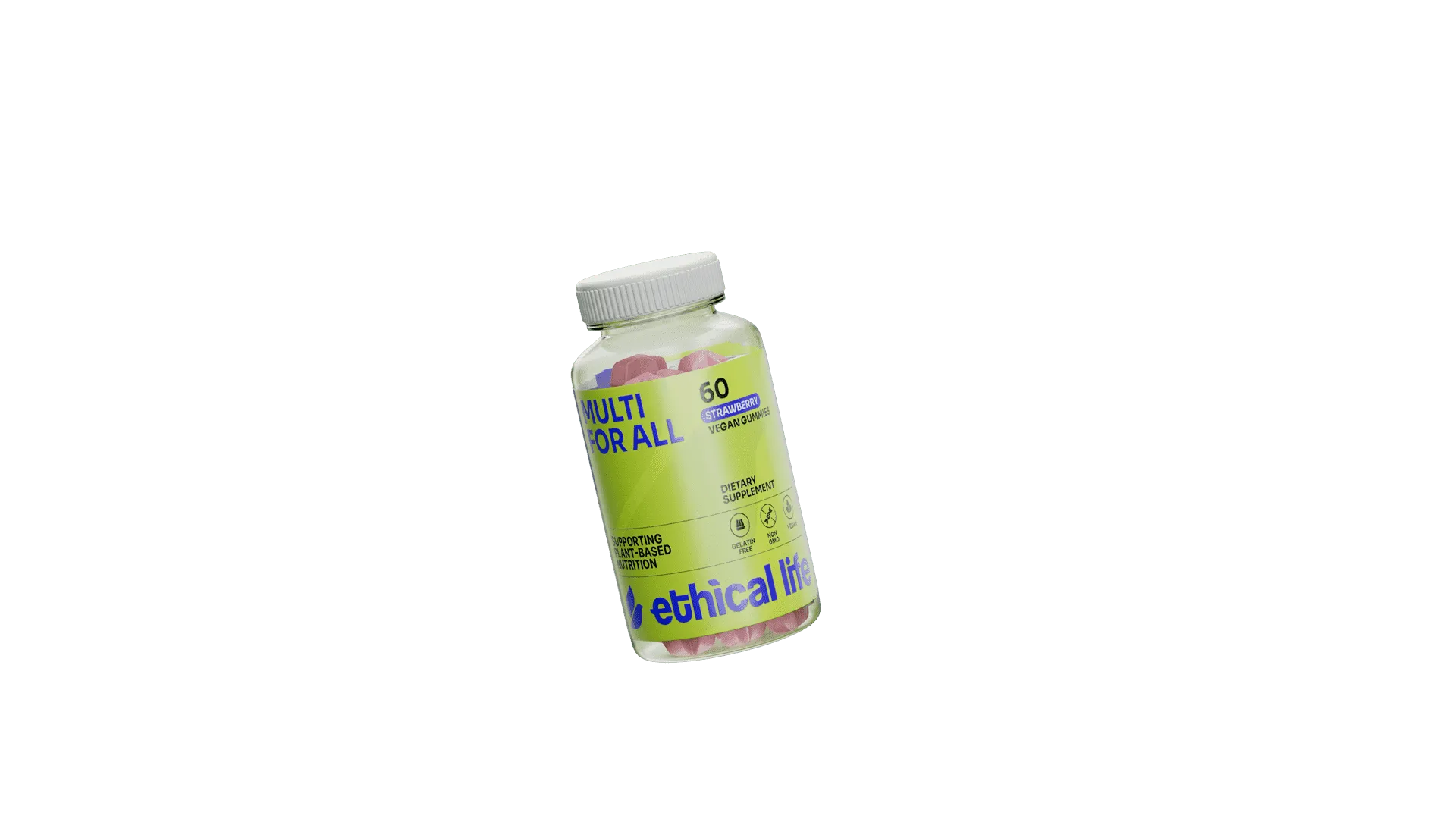
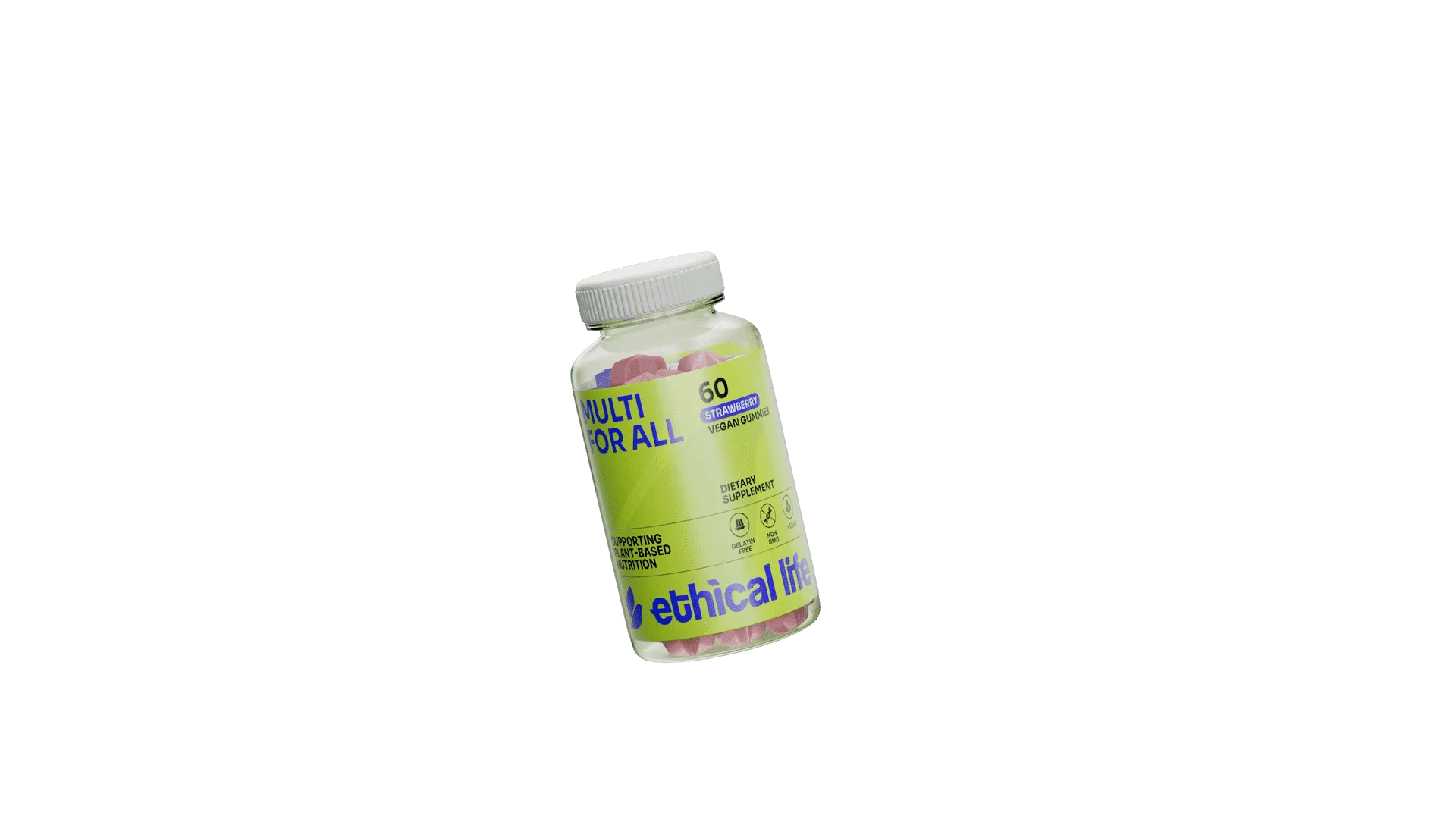
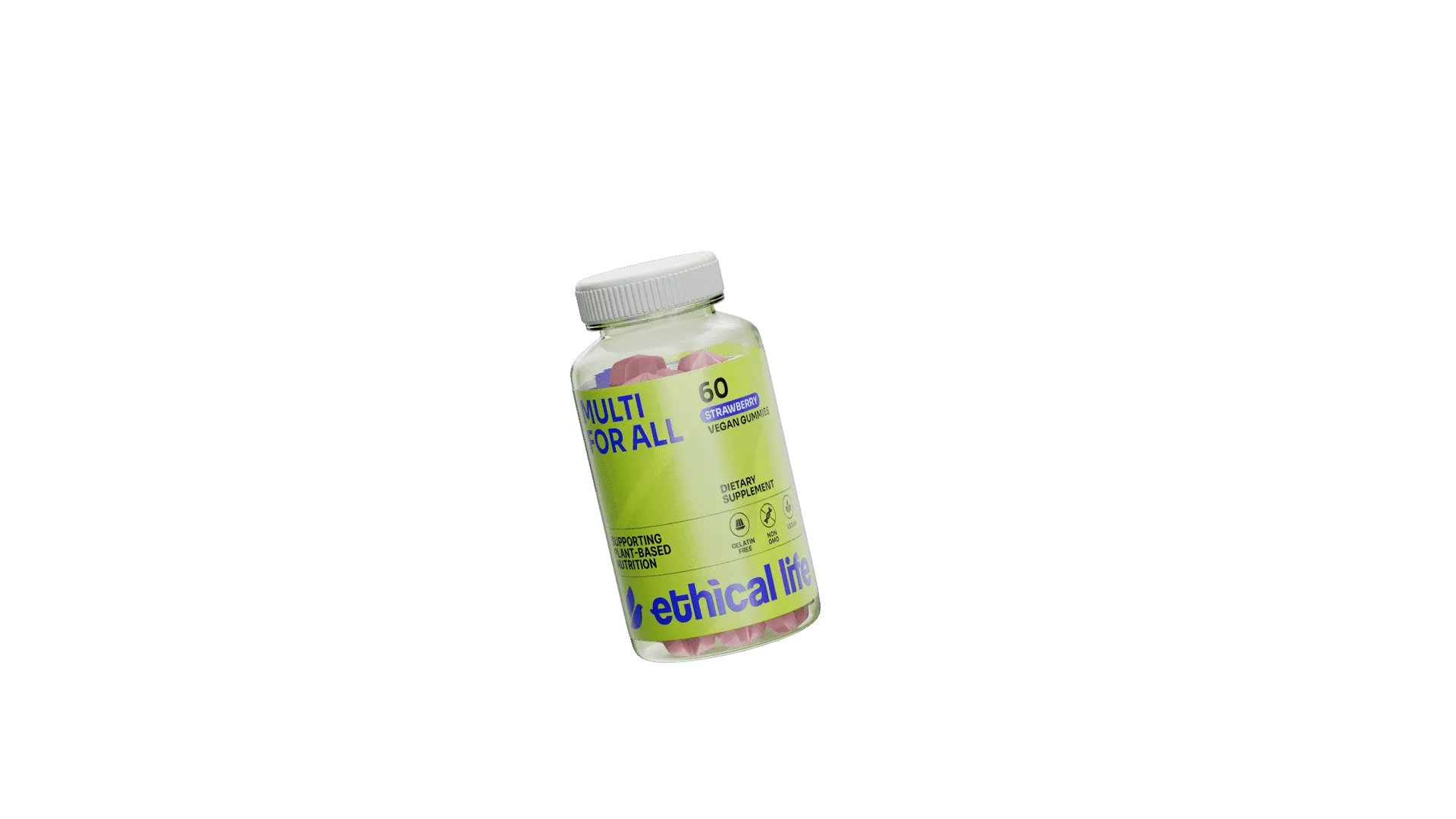
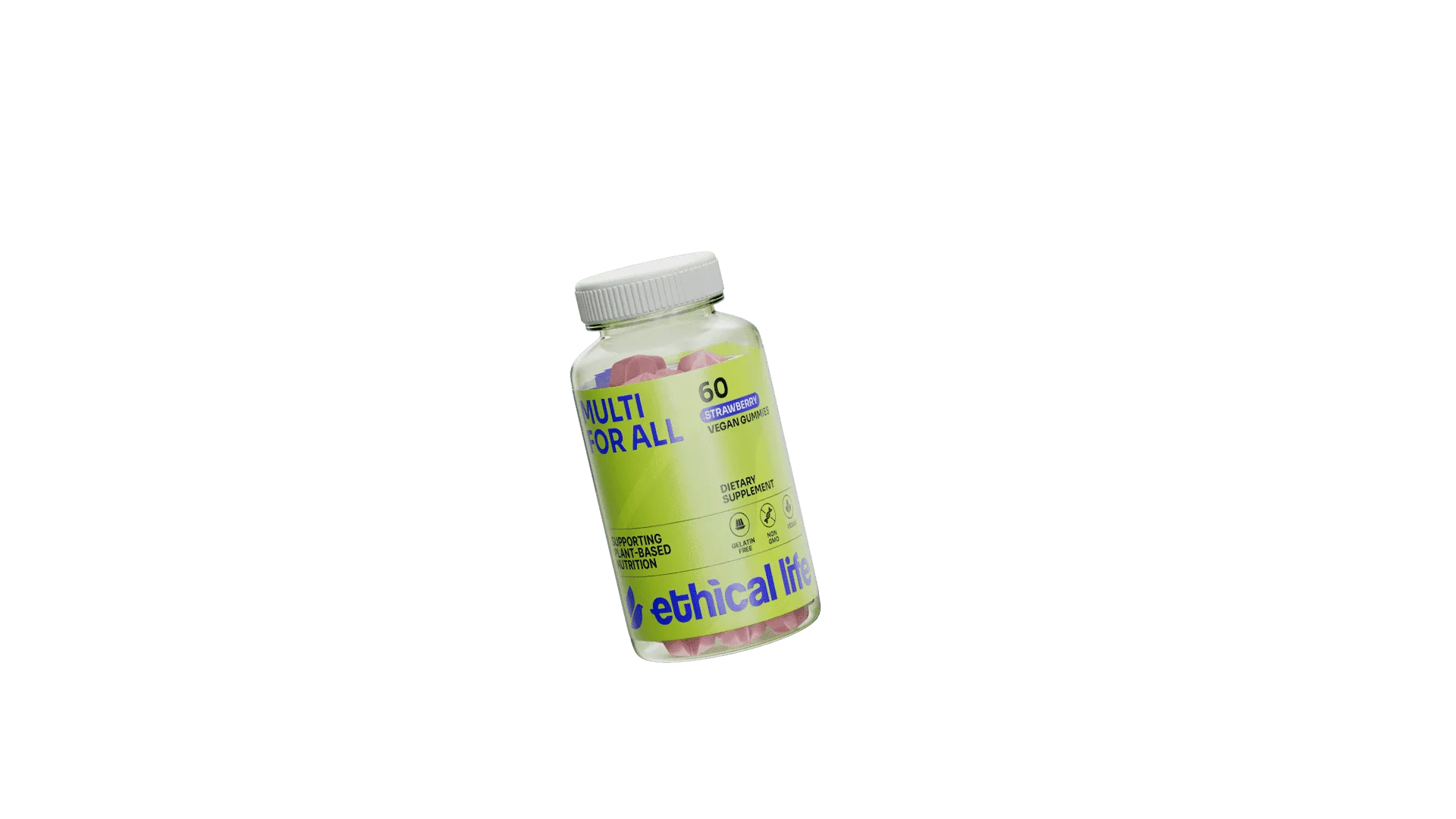
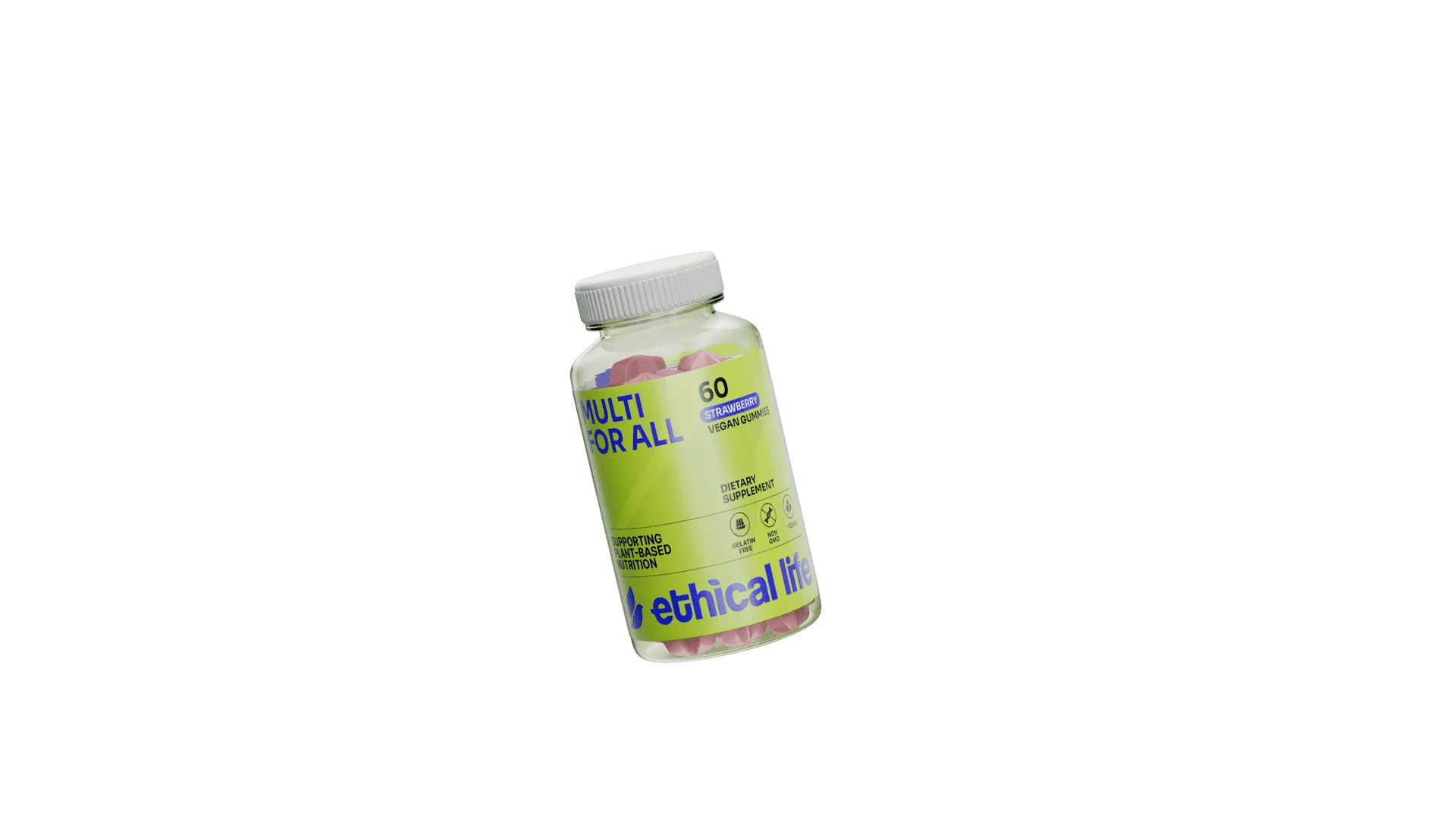
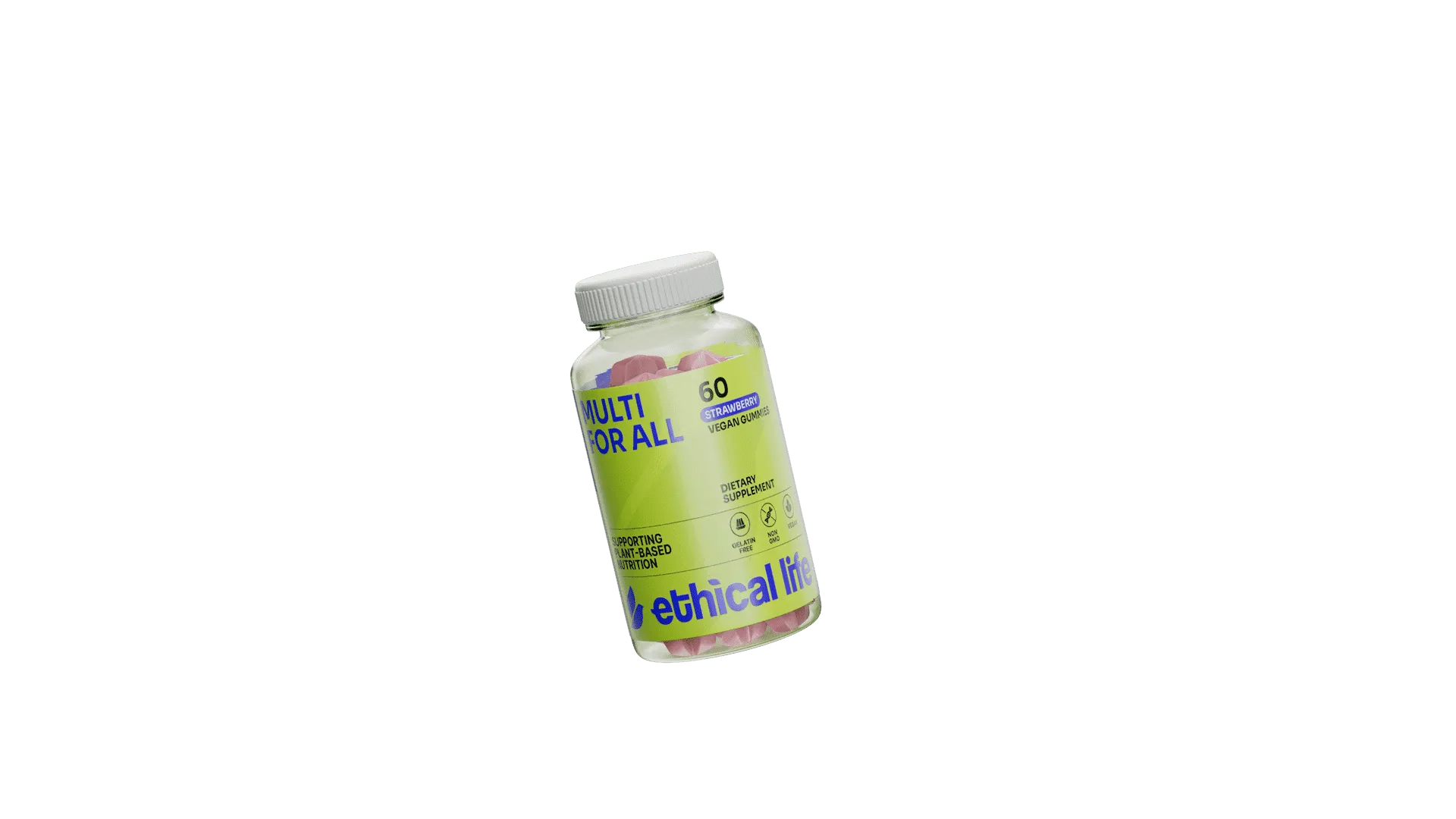
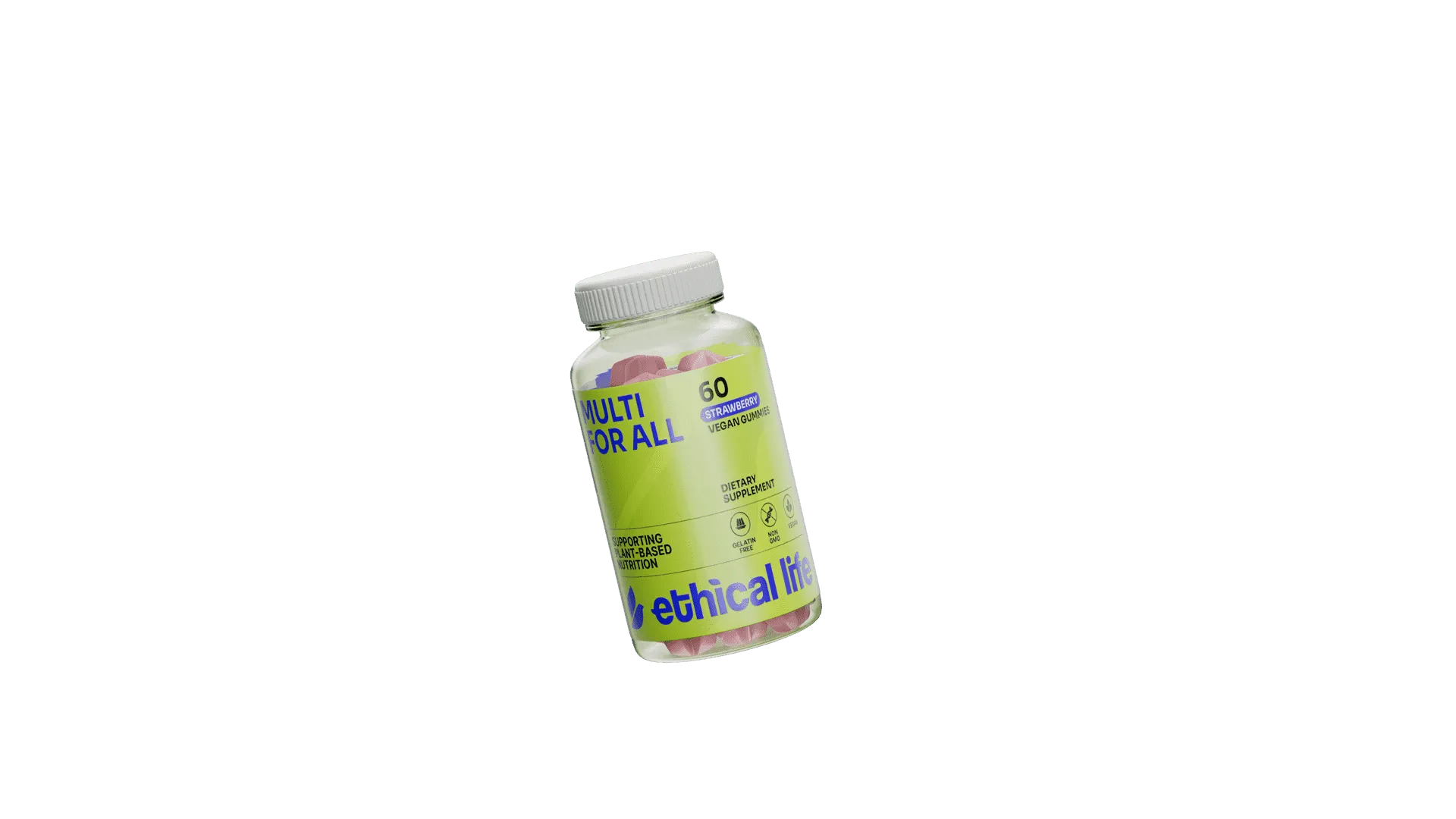
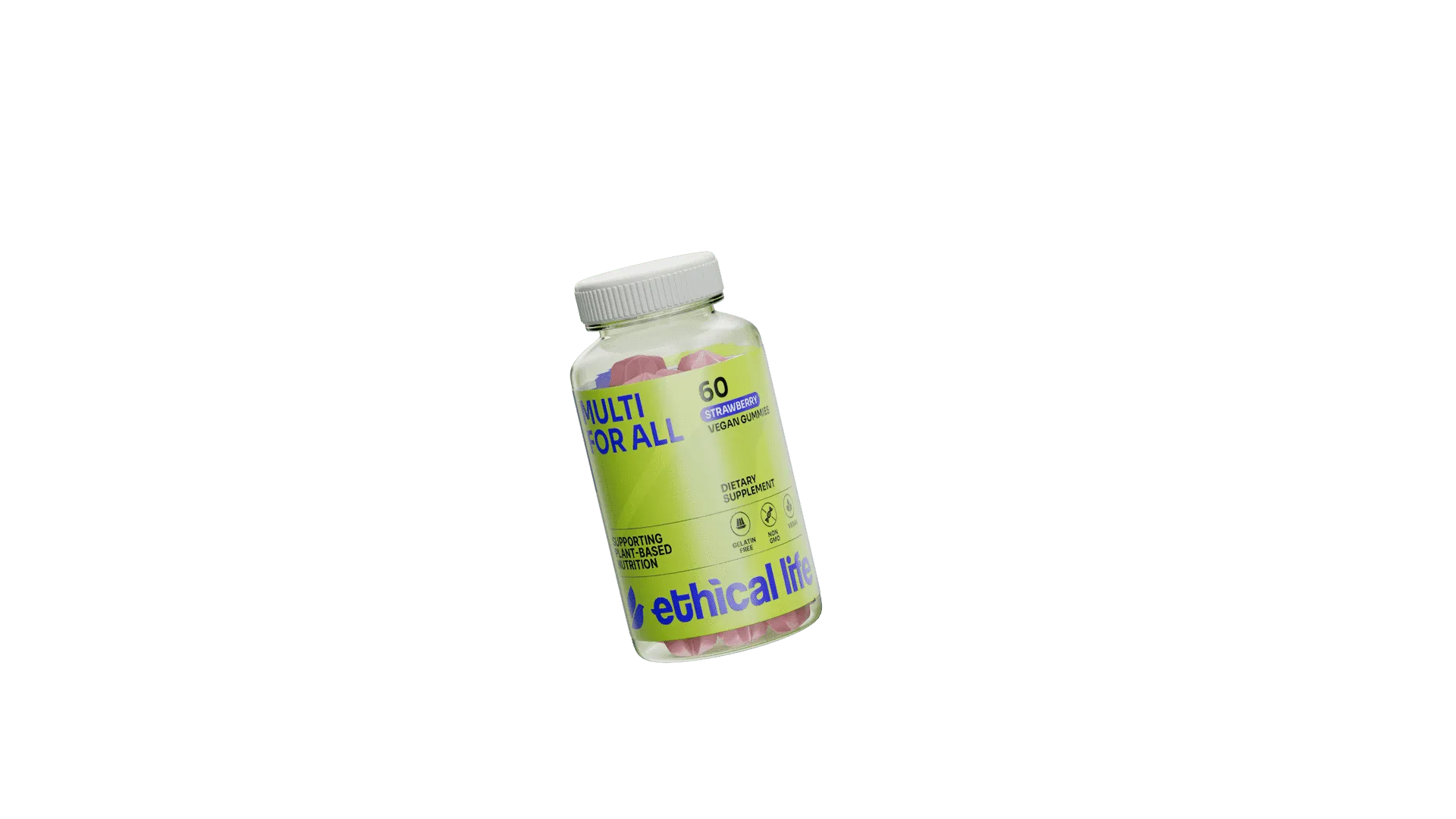
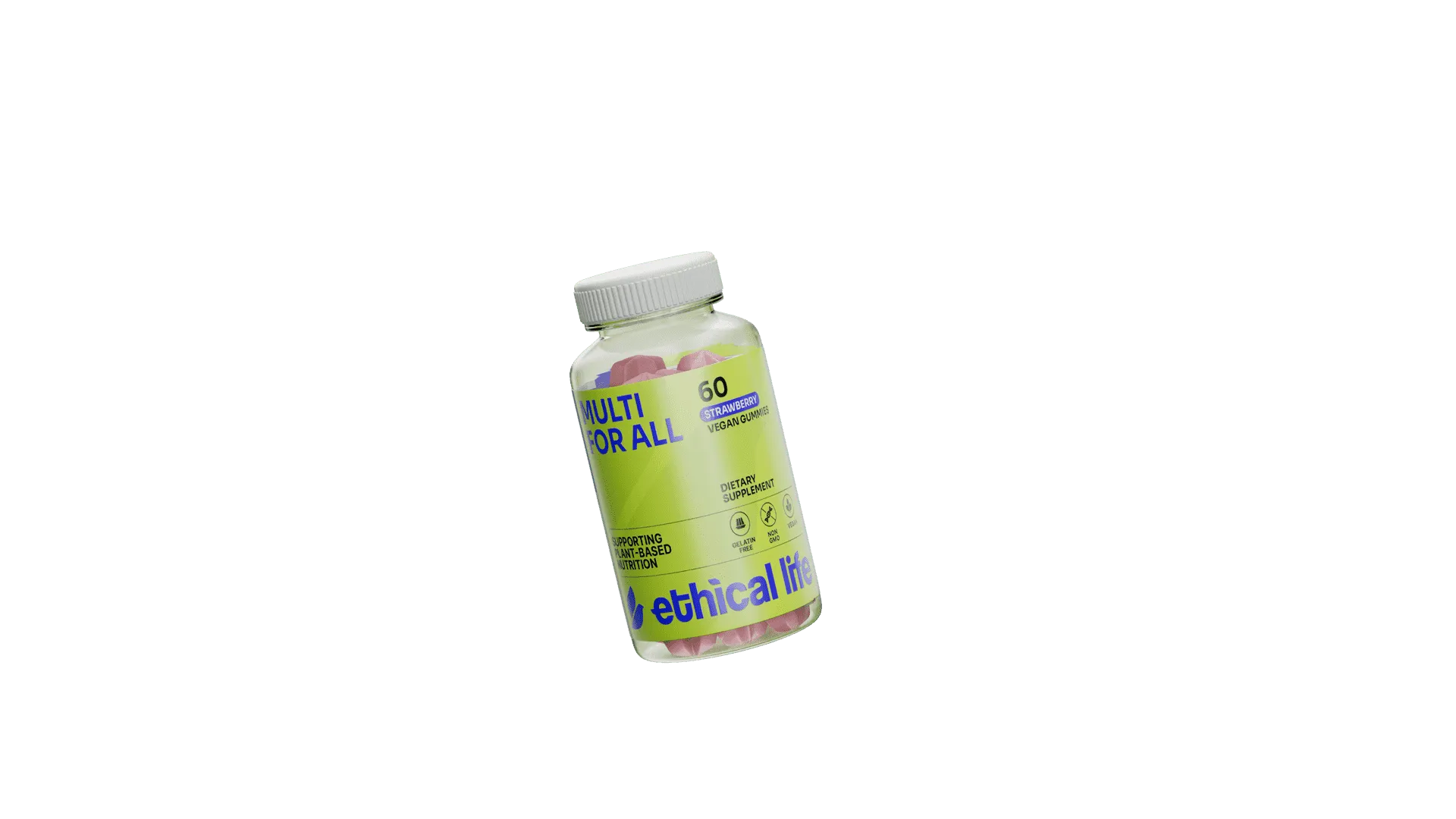
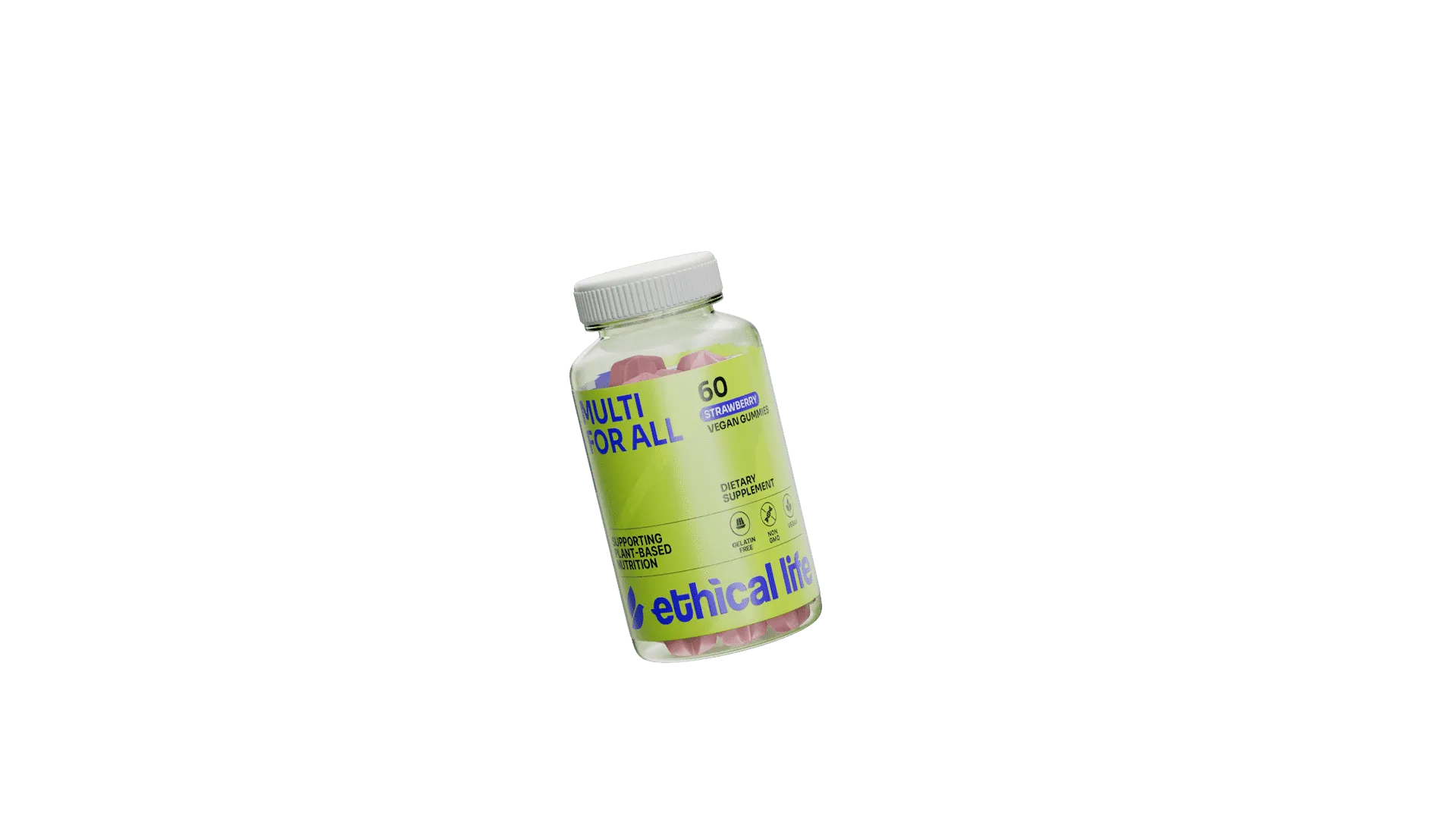
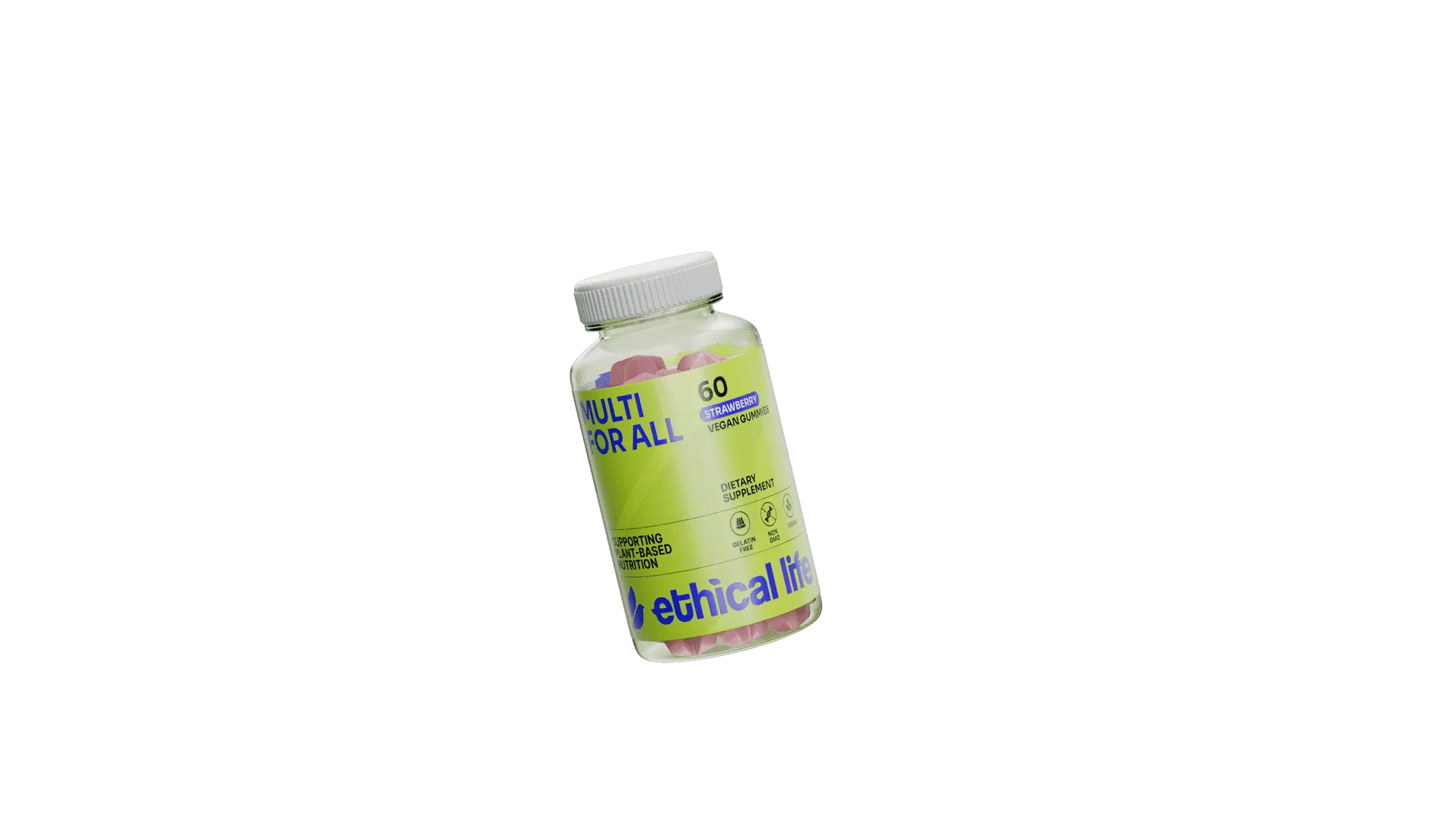
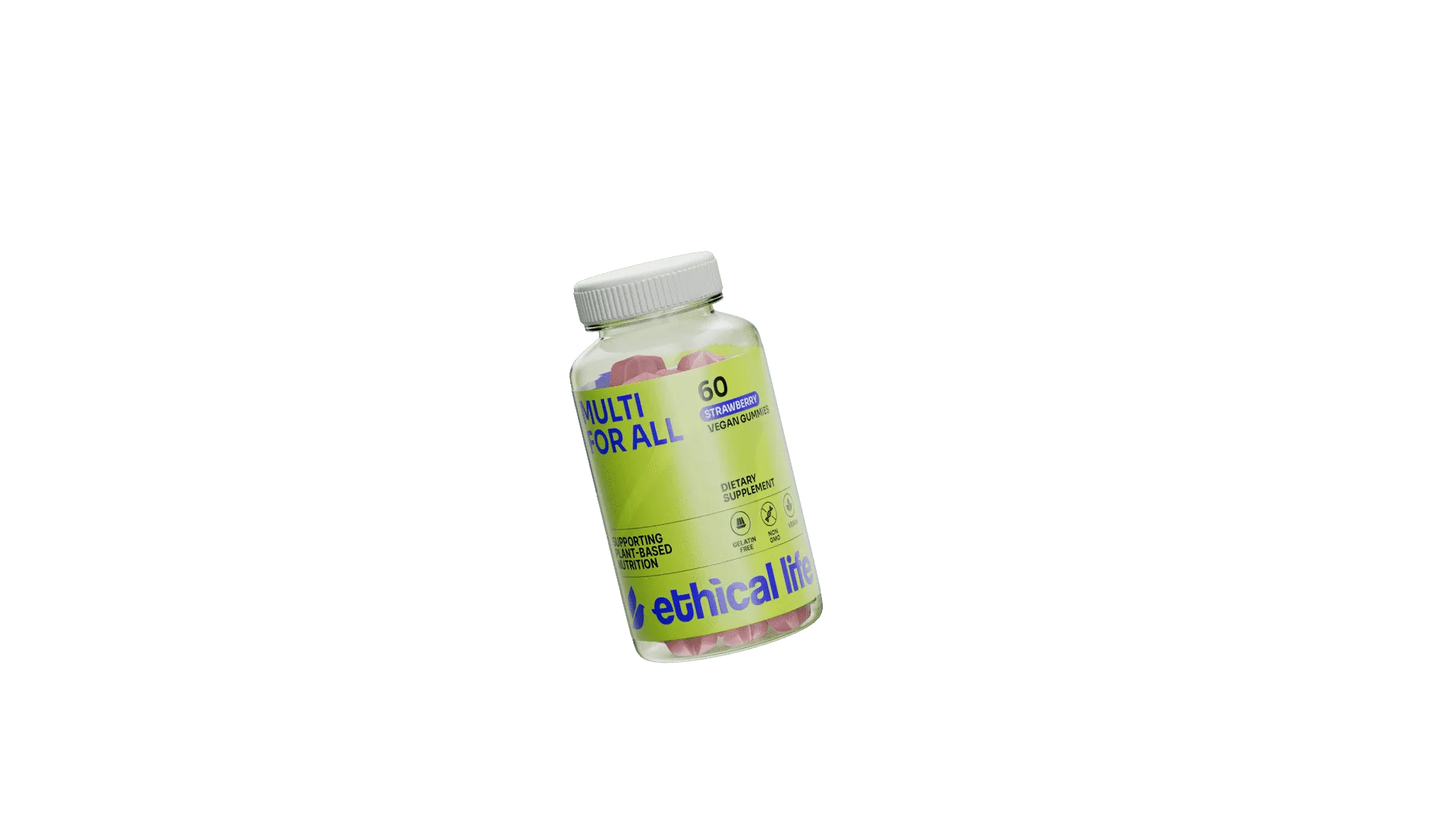
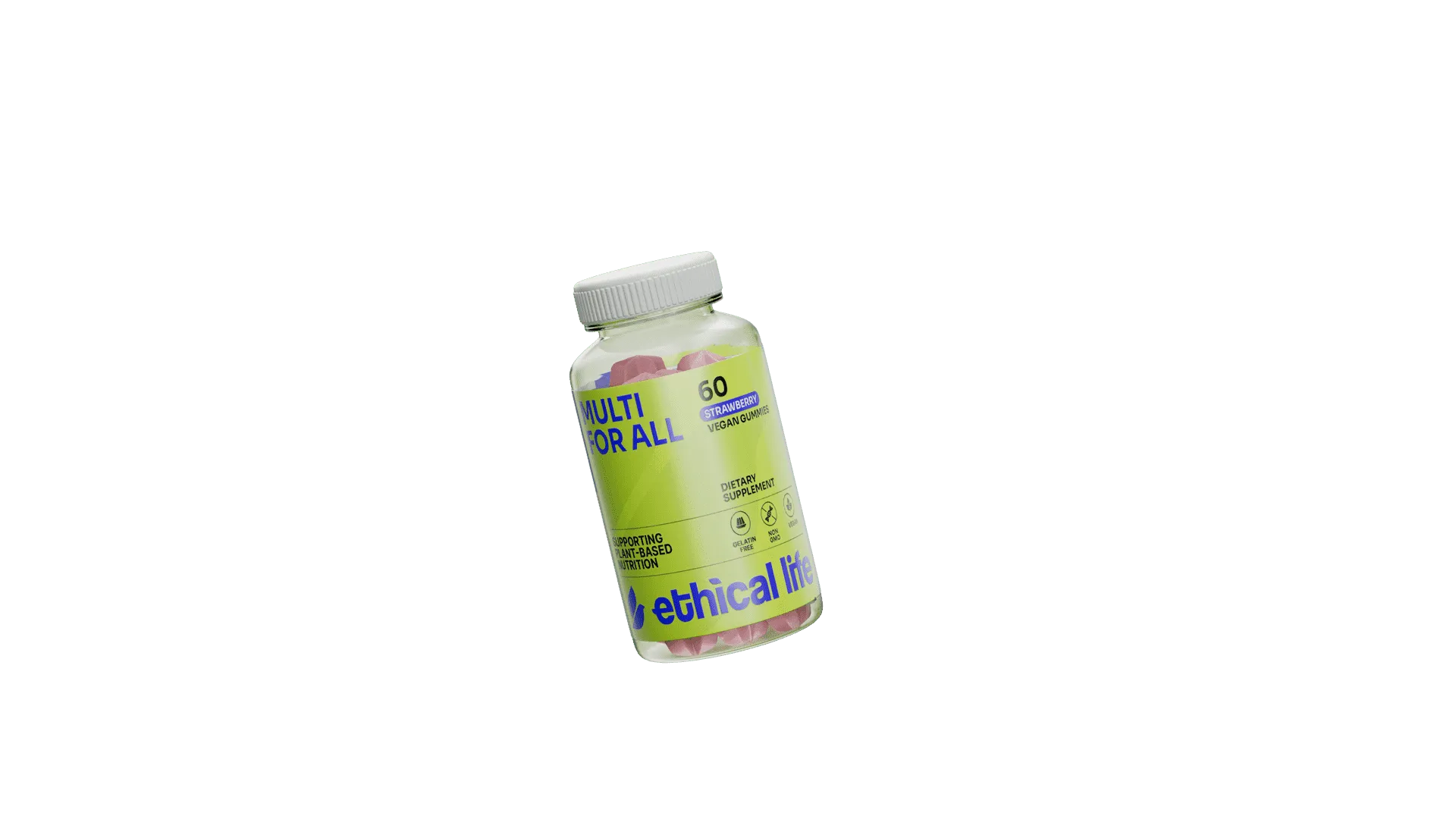
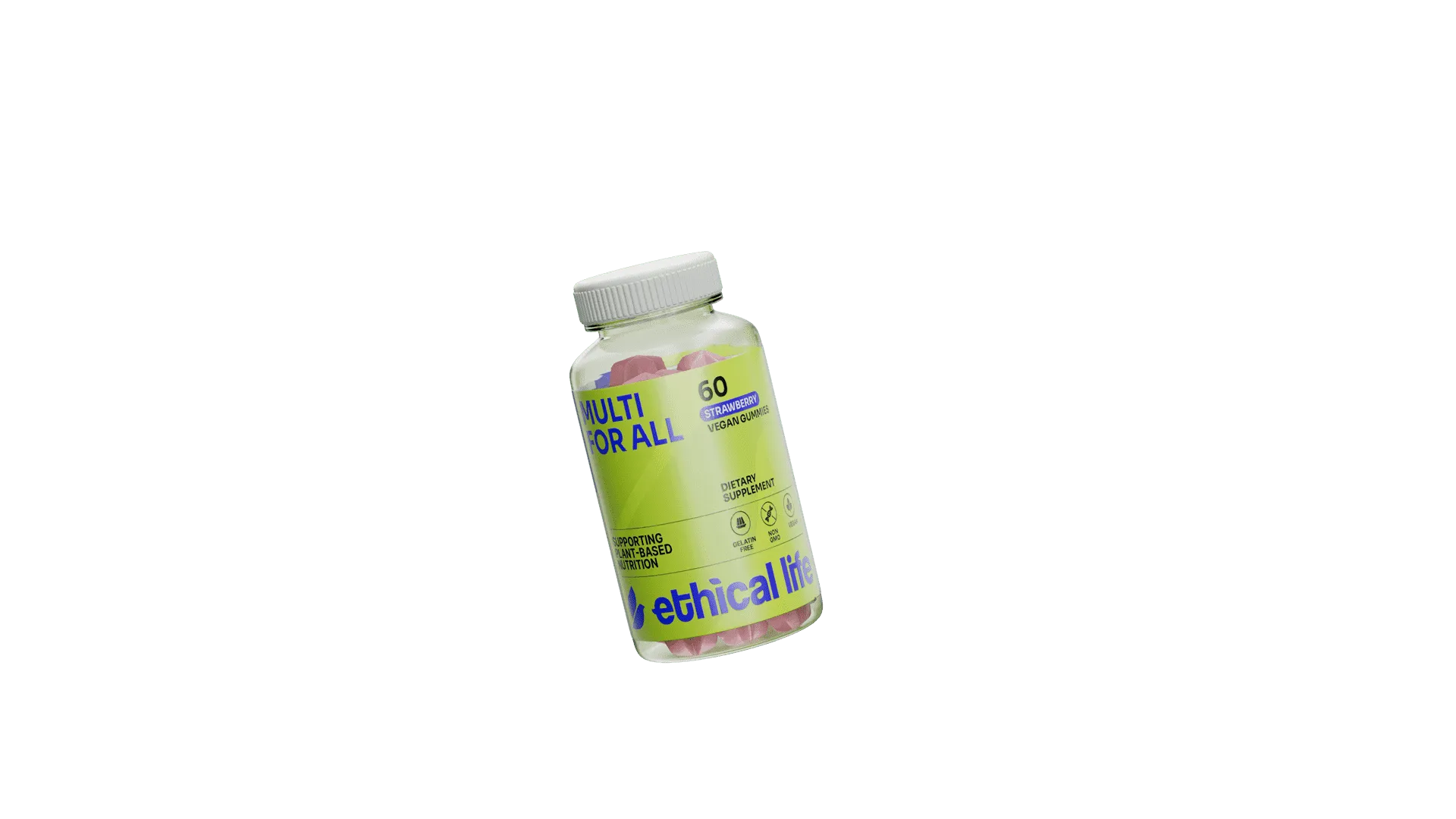
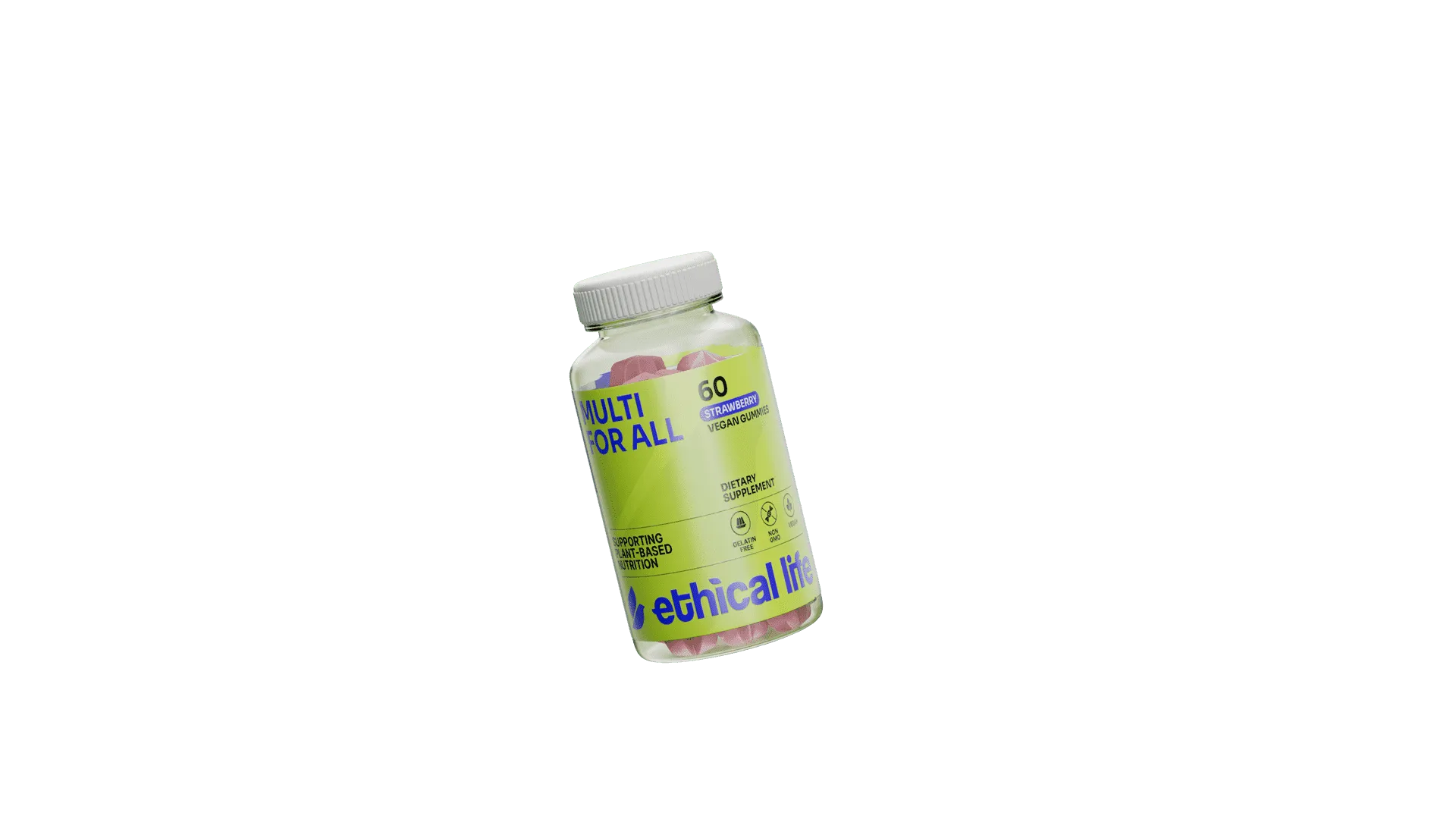
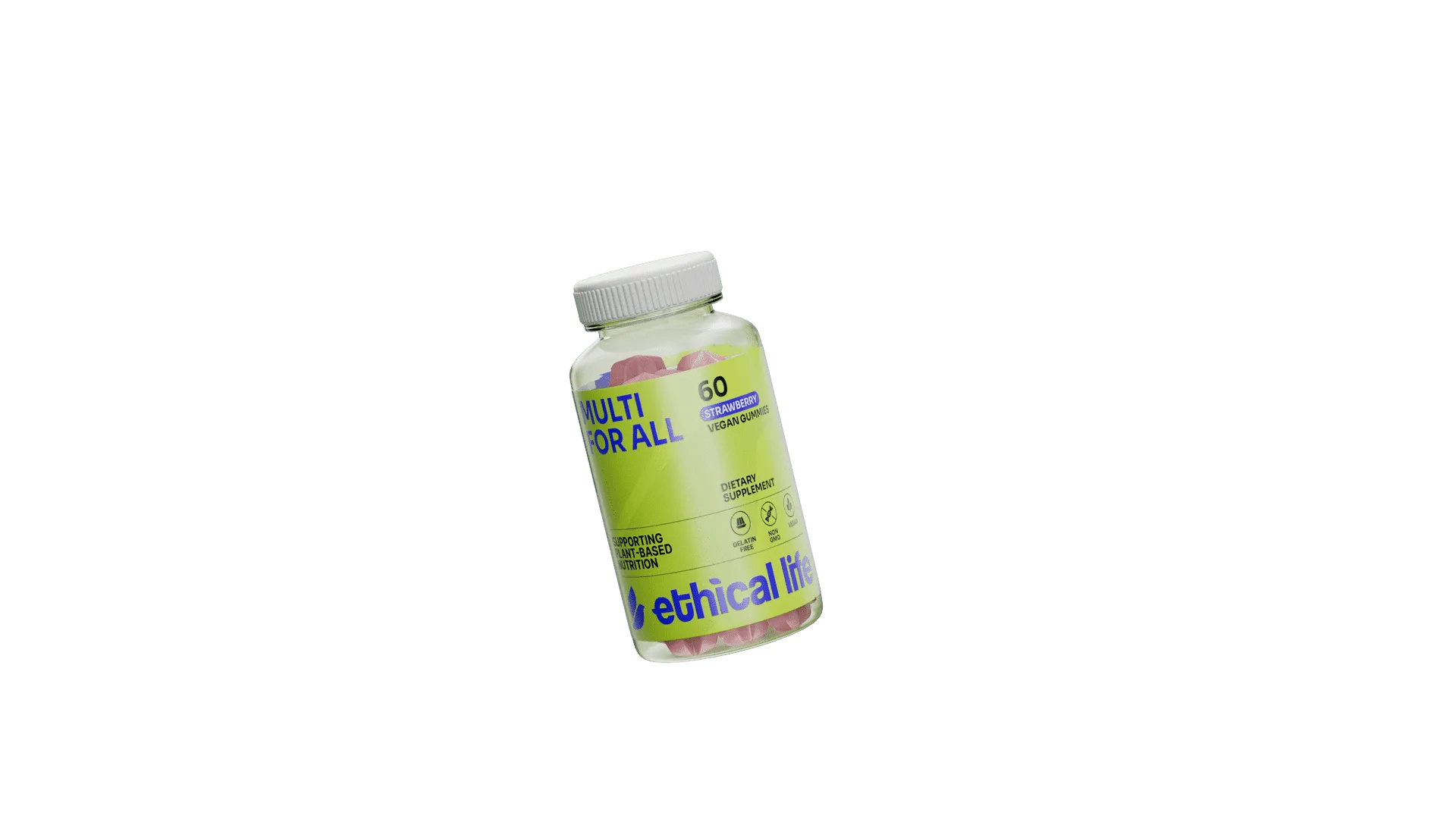
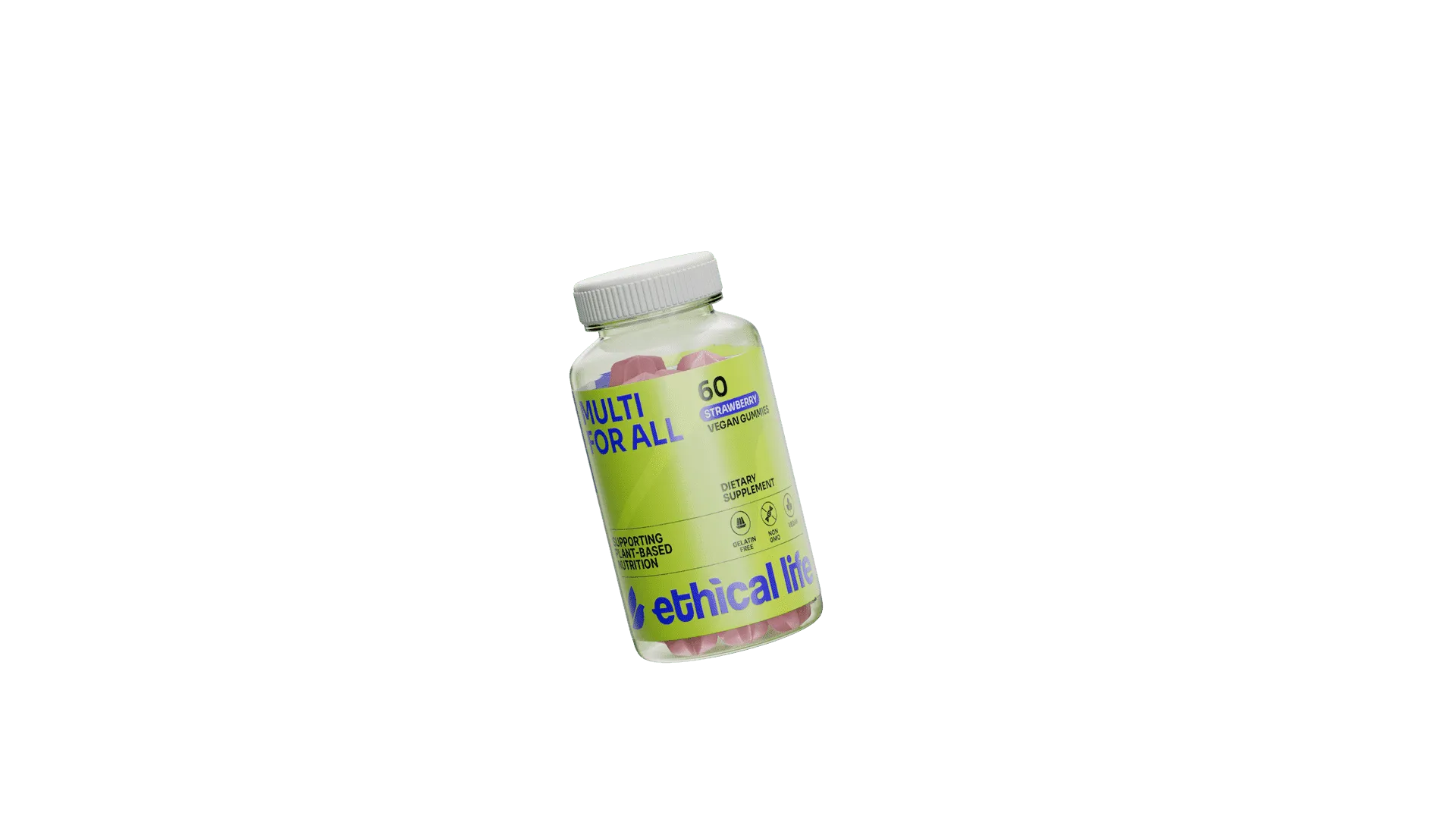
Ethical Life exists to prove this can be the standard, not the exception. Our Multi For All gummies are formulated by a pharmacist and a nutritionist, made with pectin from fruit and never gelatin, with nine essential nutrients in two strawberry gummies a day. They are 100 percent vegan, non-GMO, made in the USA, and third-party tested. Same daily habit, none of the cruelty.
Frequently asked questions
Is gelatin vegan?
No. Gelatin is made from the skin, bones, and connective tissue of animals, so it is neither vegan nor vegetarian.
What is gelatin made from?
It is collagen extracted by boiling the skin, bones, and cartilage of cows and pigs, then dried and ground into a powder.
What can replace gelatin in gummy vitamins?
Pectin, which comes from fruit, is the most common vegan replacement and gives the same chewy texture. Agar-agar and carrageenan from seaweed also work.
Are there vegan alternatives to gelatin capsules?
Yes. Plant cellulose (HPMC) and pullulan capsules are widely available and fully vegan.
Is vitamin D3 vegan?
Usually not, because most D3 is made from lanolin (sheep’s wool). Vegan D3 made from lichen is a cruelty-free option, and D2 from yeast or mushrooms is naturally vegan.
A vitamin should never cost an animal its life
Vegan alternatives to gelatin are here. They are affordable, they are proven, and they are often better. The only thing missing is the will to use them. Every time you choose a supplement, you get to vote for the kind of industry you want. At Ethical Life, we have already made that choice for you. No animal should suffer for a vitamin, and with your daily multivitamin, none has to. Ready to make the switch? Shop Multi For All on Amazon, or learn more at ethicallifeworld.com. These statements have not been evaluated by the Food and Drug Administration. This product is not intended to diagnose, treat, cure, or prevent any disease.

Published on August 6, 2026
Back to blog